
2027 Most Affordable Online Master's in Special Education

Co-Founder and Chief Data Scientist
An online master’s in special education can be a practical next step for licensed teachers, paraprofessionals, career changers, and education professionals who want advanced training without leaving their current job. The main decision is not simply whether to earn the degree online; it is whether a specific program is affordable, accredited, aligned with state licensure rules, and likely to support your career goals.
This guide explains how affordable online master’s in special education programs work, what they cost, how long they take, what courses and specializations to expect, and how to compare programs before applying. It also includes a ranked list of affordable options, career pathways, financial aid considerations, technology trends, licensure issues, and common mistakes to avoid.
Quick answer: Is an affordable online master’s in special education worth considering?
An affordable online master’s in special education is worth considering if you want to build advanced skills for teaching and supporting students with disabilities while maintaining work or family responsibilities. These programs usually combine coursework in special education law, assessment, intervention, behavior support, inclusive instruction, family collaboration, and advocacy. Many programs are designed for working educators and use asynchronous coursework, live online sessions, field experiences, or local practicum placements.
| Decision point | What to know before enrolling |
| Typical completion time | An affordable online master's in special education usually requires 1.5 to 2 years for completion. |
| Typical cost range | The typical expense for acquiring an affordable online master's degree in special education ranges from $10,000 to $25,000. |
| Common tuition range | Online Master's programs in Special Education typically ranges from $10,000 to $20,000 per year, while another commonly observed range is $12,000 to $20,000 per year. |
| Employment data | In 2020, the United States saw 49,000 students enrolled in such programs, with 16,000 degrees conferred in the 2020-2021 academic year alone. |
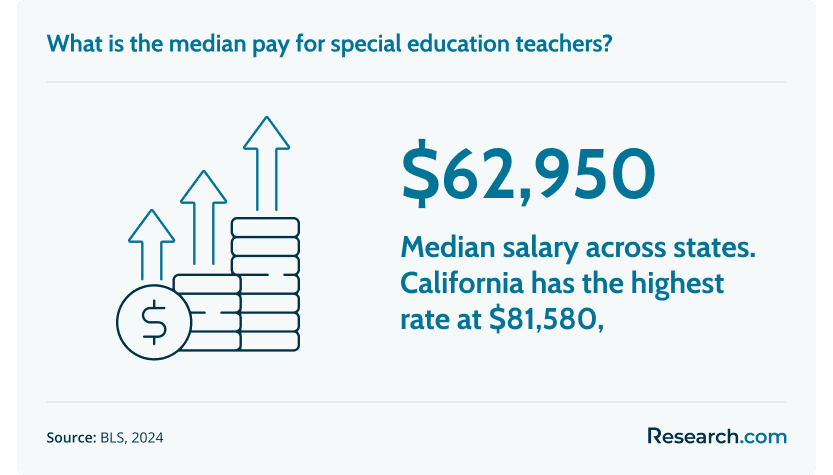
| Salary reference | In 2022, the median annual salary for special education teachers stood at $62,950, according to the U.S. Bureau of Labor Statistics. |
| Best fit | Current or aspiring educators who need flexibility, want specialized training, and are willing to verify accreditation and state certification requirements before applying. |
What are the benefits of getting an affordable online master's in special education?
The strongest benefit of an affordable online master’s in special education is that it can help educators deepen their practice without taking on unnecessary educational costs or pausing their careers. For many students, online study also makes graduate education possible because coursework can be completed around teaching schedules, family responsibilities, and geographic constraints.
- Broader career options: Graduates may pursue roles in education, healthcare, social services, district administration, behavior support, advocacy, or program coordination, depending on their credentials and state requirements.
- Relevant employment settings: Top companies or industries employing special education teachers include public schools (58%), private schools (15%), and healthcare and social assistance services (11%), according to 2023 data.
- Flexible course delivery: Online programs often use recorded lectures, online discussions, digital assignments, and virtual collaboration tools, which can help working adults continue teaching while studying.
- Career continuity: 92% of graduates with a master's in special education were employed within a year of program completion, based on 2021 data from the National Center for Education Statistics.
What can I expect from an affordable online master's in special education?
An affordable online master’s in special education typically focuses on the knowledge and applied skills educators need to support students with disabilities in inclusive and specialized settings. Coursework commonly covers legal foundations, historical context, individualized education, assessment, evidence-based intervention, behavior support, collaboration with families, and advocacy.
Students should also expect structured assignments tied to real classroom scenarios. Many programs ask learners to analyze IEPs, design accommodations, evaluate instructional data, build behavior support plans, and reflect on equity and inclusion in educational practice.
As for cost, the average tuition for online Master's programs in Special Education typically ranges from $10,000 to $20,000 per year. Delivery formats vary, but online classes are commonly a mix of recorded lectures, interactive discussions, written assignments, virtual meetings, and field-based projects that can often be completed in a student’s local school or community setting.
Where can I work with an affordable online master's in special education?
Graduates can work in several settings, but the right path depends on state licensure, prior teaching credentials, specialization, and professional experience. A master’s degree may strengthen qualifications, but it does not automatically qualify every graduate for every role.
| Field | Possible roles | When this path makes sense |
| Education | Special Education Teacher, Resource Teacher, Inclusion Specialist | Best for educators who want to work directly with students in public or private schools and meet certification requirements. |
| Healthcare | Behavioral Therapist, Autism Specialist, Speech-Language Pathologist | May fit professionals interested in disability services, developmental support, autism services, or interdisciplinary care; some roles require additional credentials. |
| Social Services | Case Manager, Behavior Analyst, Rehabilitation Counselor | Useful for graduates who want to support individuals and families outside traditional classroom settings; licensing and certification rules vary. |
Your graduate training can be valuable across education, healthcare, and social services, but you should verify whether the job you want requires teacher certification, clinical licensure, supervised experience, or a separate professional credential.
How much can I make with an affordable online master's in special education?
In 2022, the median annual salary for special education teachers stood at $62,950, according to the U.S. Bureau of Labor Statistics. Actual pay can vary by state, school district, grade level, union contract, years of experience, credentials, and whether the role is in a public school, private school, healthcare organization, or social services agency.
A master’s degree may help educators qualify for salary-lane movement in some districts or compete for specialized and leadership-oriented roles. However, salary gains are not guaranteed. Before enrolling, review your district’s pay schedule, state certification rules, and the program’s graduate outcomes.
- Most Affordable Online Master's in Special Education Programs for 2027
- How long does it take to complete an affordable online master's in special education?
- How does an affordable online master's in special education compare to an on-campus program?
- What is the average cost of an affordable online master's in special education?
- What are the financial aid options for students enrolling in an affordable online master's in special education?
- What are the prerequisites for enrolling in an affordable online master's in special education?
- What courses are typically in an affordable online master's in special education?
- What types of specializations are available in an affordable online master's in special education?
- How to choose the most affordable online master's programs in special education?
- What career paths are available for graduates of online master's in special education?
- What is the job market for graduates with an affordable online master's in special education?
- What are the common challenges of online master's in special education programs and how can they be overcome?
- Are online master's programs in special education accredited and quality-assured?
- What student support services are available in online master’s in special education programs?
- Can I accelerate my online master's in special education program?
- How can I incorporate technology to enhance learning in special education?
- What research opportunities are available in online master’s in special education programs?
- What financial considerations should prospective students take into account when choosing an online master’s in special education?
- What are the career advancement opportunities beyond a master’s in special education?
- What practical training opportunities are integrated in online master's programs?
- How do online master's programs foster professional networking and mentorship?
- How do online master's programs prepare you for state certification and licensing?
- How does an online master's in special education program support diversity and inclusion in the classroom?
Most Affordable Online Master's in Special Education Programs for 2027
How do we rank schools?
Because graduate tuition can affect a student’s long-term finances, this ranking is designed to help readers compare programs with more transparency. Our methodology draws from reputable education data sources, including the IPEDS database, Peterson's database, the College Scorecard database, and The National Center for Education Statistics.
Use this list as a starting point, not a final decision. Tuition can change, state licensure requirements vary, and the best program for you depends on your teaching background, certification needs, desired specialization, and total out-of-pocket cost after aid.
| Rank | School | Listed cost | Credits | Accreditation listed |
| 1 | Penn State University | $1,017 per credit | 30 | Middle States Commission on Higher Education |
| 2 | Fort Hays State University | $242.76 per credit | 33 | Higher Learning Commission (HLC) |
| 3 | The University of Arizona | $250 per credit | 30 | Higher Learning Commission (HLC) |
| 4 | Asbury University | $475 per credit | 30 | Council for the Accreditation of Educator Preparation (CAEP) |
| 5 | George Mason University | $805 per credit | 30 | Council for the Accreditation of Educator Preparation (CAEP) |
| 6 | Emporia State University | $3,363 per term | 33 | Council for the Accreditation of Educator Preparation (CAEP) |
| 7 | Northeastern State University | $278.75 per credit | 33 | Higher Learning Commission (HLC) |
| 8 | Campbellsville University | $319 per credit | 30 | Council for the Accreditation of Educator Preparation (CAEP) |
| 9 | Georgia College & State University | $294 per credit | 36 | Council for the Accreditation of Educator Preparation (CAEP) |
| 10 | Buena Vista University | $495 per credit | 30 | Higher Learning Commission (HLC) |
1. Penn State University
Penn State World Campus offers an online master’s degree in special education for educators who want advanced preparation for serving learners with disabilities. The curriculum emphasizes inclusive practice, assessment, intervention, and research-informed instruction across educational settings.
- Cost per Credit: $1,017
- Total Credits Required: 30
- Accreditation: Middle States Commission on Higher Education
2. Fort Hays State University
Fort Hays State University's Advanced Education Programs offer an online master’s degree in high-incidence special education. The program is structured for educators who want focused preparation in instructional strategies, assessment, behavior support, and inclusive learning environments for students with high-incidence disabilities.
- Cost per Credit: $242.76
- Credits Required: 33
- Accreditation: Higher Learning Commission (HLC)
3. The University of Arizona
The University of Arizona provides an online master’s degree in special education focused on evidence-based practices, assessment, collaboration, and inclusive classroom support. The program is intended for educators seeking advanced knowledge for working with students with disabilities.
- Cost per Credit: $250
- Total Credits Required: 30
- Accreditation: Higher Learning Commission (HLC)
4. Asbury University
Asbury University's Graduate School of Education offers an online master’s degree in special education that develops skills in assessment, individualized instruction, collaboration, and inclusive classroom practice. The program is designed for educators who want to strengthen their ability to support diverse learners.
- Cost per Credit: $475
- Total Credits Required: 30
- Accreditation: Council for the Accreditation of Educator Preparation (CAEP)
5. George Mason University
George Mason University's online platform, Mason Online, offers a master’s degree in special education for educators preparing to serve students with disabilities in contemporary classrooms. Coursework emphasizes evidence-based instruction, behavior management, individualized supports, and practical application.
- Cost per Credit: $805
- Total Credits Required: 30
- Accreditation: Council for the Accreditation of Educator Preparation (CAEP)
6. Emporia State University
Emporia State University's Teachers College offers an online master’s degree in special education built around assessment, individualized instruction, inclusive learning, and evidence-based support for students with disabilities.
- Cost per Term: $3,363
- Total Credits Required: 33
- Accreditation: Council for the Accreditation of Educator Preparation (CAEP)
7. Northeastern State University
Northeastern State University's Graduate College provides an online master’s degree in special education with coursework in inclusive practices, assessment, intervention, and research-based support for learners with disabilities.
- Cost per Credit: $278.75
- Total Credits Required: 33
- Accreditation: Higher Learning Commission (HLC)
8. Campbellsville University
Campbellsville University's online platform offers a master's degree in special education that covers inclusive practice, behavior support, and individualized instruction for students with diverse learning needs.
- Cost per Credit: $319
- Total Credits Required: 30
- Accreditation: Council for the Accreditation of Educator Preparation (CAEP)
9. Georgia College & State University
Georgia College & State University offers an online Master of Education (M.Ed.) degree in Special Education with emphasis on assessment, evidence-based instruction, and individualized support for the academic and social-emotional development of students with disabilities.
- Cost per Credit: $294
- Total Credits Required: 36
- Accreditation: Council for the Accreditation of Educator Preparation (CAEP)
10. Buena Vista University
Buena Vista University offers an online master’s degree in special education focused on assessment, intervention, collaboration, and research-informed practices for supporting diverse learners.
- Cost per Credit: $495
- Total Credits Required: 30
- Accreditation: Higher Learning Commission (HLC)
Graduate perspectives on affordable online master's in special education programs
-
: "
"I did not think graduate school was realistic while teaching full-time, but the online format gave me enough flexibility to keep working. The coursework helped me apply new strategies with my students almost immediately." - Emily
"
-
: "
"Studying online removed commuting time and introduced me to classmates and instructors with different professional backgrounds. Group work and discussion boards helped me see special education practice from perspectives outside my own district." - Adam
"
-
: "
"As a parent of a child with special needs, I needed a program that fit around my family’s schedule. Being able to access lectures and materials when I had time made the degree manageable, and the content strengthened my advocacy skills." - Sarah
"
Key findings before you compare programs
- An affordable online master's in special education usually requires 1.5 to 2 years for completion.
- The typical expense for acquiring an affordable online master's degree in special education ranges from $10,000 to $25,000.
- On average, students typically receive more than $5,000 per year in assistance for these programs.
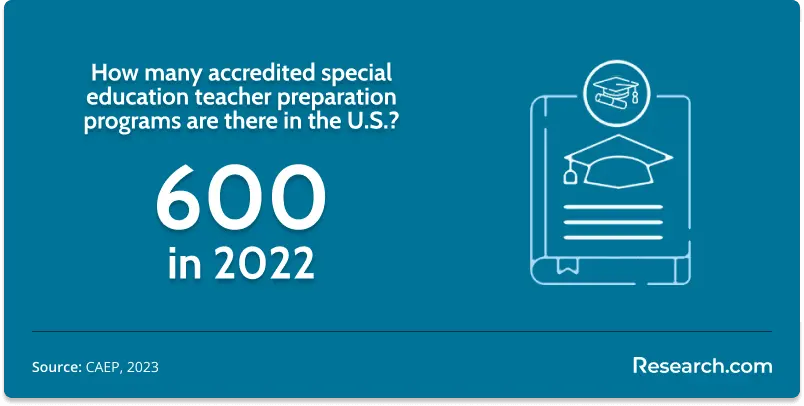
- There were 600+ accredited special education teacher preparation programs in the US in 2022.
- Special education teacher employment is projected to grow 8% from 2021 to 2031.
How long does it take to complete an affordable online master's in special education?
Most online master’s in special education degrees take about two years to finish and require 30-40 credit hours. A common completion window is 1.5 to 2 years, though the exact timeline depends on course load, transfer credit, practicum requirements, start dates, and whether the program uses accelerated terms.
- Full-time enrollment: Students taking heavier course loads may finish in about 1.5 years, especially in programs with multiple start dates or shorter academic terms.
- Part-time enrollment: Students balancing teaching, caregiving, or other responsibilities may take around 2 years or longer, depending on course sequencing.
If you are comparing education career outcomes broadly, Research.com’s guide to masters in education jobs can help you evaluate how a special education degree fits within the wider education labor market.
How does an affordable online master's in special education compare to an on-campus program?
Online and campus-based master’s programs can lead to similar academic credentials when they are properly accredited and aligned with licensure requirements. The bigger differences are scheduling, student support, field placement logistics, cost structure, and learning style.
| Factor | Online master's in special education | On-campus master's in special education |
| Flexibility | Often better for working educators because coursework may be asynchronous or scheduled outside school hours. | Usually requires set class times and commuting to campus. |
| Access | Can serve students who do not live near a university with a suitable special education program. | Works well for students who want in-person instruction and campus-based resources. |
| Cost considerations | May reduce commuting, parking, relocation, and housing costs; tuition still varies widely. | May include additional campus fees and transportation costs, but can offer face-to-face networking. |
| Field experience | May allow placements in the student’s local area, but approval processes matter. | May rely on established local school partnerships near campus. |
| Best fit | Independent learners who need schedule control and are comfortable with digital communication. | Students who prefer in-person discussion, immediate classroom interaction, and campus community. |
What is the average cost of an affordable online master's in special education?
The cost of an online master’s in special education varies by institution, residency status, credit requirement, fees, and financial aid. A commonly observed tuition range is $12,000 to $20,000 per year, with some programs available under $10,000 per year. Another typical total range for affordable options is $10,000 to $25,000.
Public universities may offer lower rates to in-state residents, while private universities often use a single tuition rate. Some schools also provide tuition discounts or scholarship options for educators, military-affiliated students, or district partners. When comparing affordability, look beyond the advertised tuition rate and calculate the full program cost.
| Cost item | Why it matters |
| Tuition per credit or per term | This is the largest expense and should be multiplied by the full credit requirement when possible. |
| Program fees | Online learning, technology, graduation, assessment, or placement fees can raise the final price. |
| Books and materials | Digital resources may reduce costs, but textbooks, software, and assessment tools can still add expenses. |
| Field placement costs | Some programs may require background checks, travel, testing, or supervised experience documentation. |
| Licensure exams | If the program leads to certification, exam and application fees may apply separately from tuition. |
Students comparing affordability across fields can also review how Research.com evaluates program costs in other areas, such as affordable medical billing and coding online schools. For education-specific comparisons, see cheap online master's programs for teachers.
What are the financial aid options for students enrolling in an affordable online master's in special education?
Financial aid can change the real cost of a master’s degree, so students should compare net price rather than tuition alone. On average, students typically receive more than $5,000 per year in assistance for these programs.
- Federal aid: Eligible students can submit the Free Application for Federal Student Aid (FAFSA) to be considered for federal loan options and other forms of aid for graduate study.
- Scholarships: Universities, education foundations, school districts, and professional organizations may offer awards for current or future special education professionals.
- Employer tuition assistance: Some school districts and employers reimburse part of graduate tuition when the degree supports the employee’s role.
- Payment plans: Monthly payment options may help students avoid paying a full term balance at once.
- Service-based support: Some educators may qualify for aid tied to high-need teaching areas, district partnerships, or service commitments, depending on local policies.
What are the prerequisites for enrolling in an affordable online master's in special education?
Admission requirements vary, but most online master’s in special education programs expect applicants to show academic readiness and a clear connection to education or disability support. Some programs are built for licensed teachers, while others accept applicants seeking initial certification or non-licensure professional preparation.
- A bachelor's degree from an accredited institution; related undergraduate backgrounds, including programs from online colleges for early childhood education, may be considered depending on the school.
- Minimum GPA requirements, often ranging from 2.5 to 3.0.
- Letters of recommendation from academic, professional, or supervisory references.
- A personal statement explaining career goals, interest in special education, and readiness for graduate study.
- Possible teaching license, classroom experience, background check, or field placement documentation, depending on whether the program leads to certification.
What courses are typically in an affordable online master's in special education?
Coursework is designed to help educators understand disability law, evaluate student needs, design individualized instruction, manage behavior, collaborate with families, and use data to improve outcomes. Course names differ by institution, but the core themes are often similar.
| Course area | What students usually learn |
| Foundations of Special Education | Key laws, policies, disability categories, historical context, and ethical responsibilities. |
| Assessment and Evaluation | Methods for identifying learner strengths, educational needs, progress, and eligibility-related data. |
| Instructional Strategies | Evidence-based teaching methods, accommodations, modifications, and differentiated instruction. |
| Behavior Management | Approaches for understanding challenging behavior, developing supports, and improving classroom climate. |
| Collaboration and Advocacy | Communication with families, general educators, specialists, administrators, and community partners. |
What types of specializations are available in an affordable online master's in special education?
Specializations allow students to connect graduate study to a specific learner population, professional setting, or intervention approach. As with selecting the cheapest psychology degree online, the most affordable option is not always the best fit if it lacks the specialization or credential pathway you need.
- Autism Spectrum Disorders: Focuses on instructional, behavioral, communication, and social supports for students with autism and related needs.
- Learning Disabilities: Prepares educators to support students with specific learning disabilities through targeted instruction and accommodations.
- Behavior Disorders: Emphasizes behavior assessment, positive behavior supports, classroom management, and intervention planning.
- Intellectual Disabilities: Covers supports for students with intellectual disabilities and developmental delays, often including adaptive skills and individualized instruction.
How to choose the most affordable online master's programs in special education?
Choosing a low-cost program requires more than sorting by tuition. The best affordable program is one that meets accreditation standards, fits your schedule, supports your licensure or career goal, and offers enough field-based learning and student support to help you finish.
| Selection factor | Questions to ask before applying |
| Accreditation | Is the university institutionally accredited? Is the educator preparation program reviewed by a recognized body such as CAEP when relevant? |
| Licensure alignment | Does the program meet requirements in your state, or is it designed only for non-licensure advancement? |
| Total cost | What is the full cost after tuition, fees, books, technology, exams, and field placement expenses? |
| Financial aid | What scholarships, district partnerships, grants, employer reimbursement, or payment plans are available? |
| Course format | Are courses asynchronous, synchronous, accelerated, cohort-based, or self-paced? |
| Specialization | Does the curriculum match your target role, such as autism support, high-incidence disabilities, behavior intervention, or inclusion? |
| Student support | Does the school offer advising, technology help, career support, placement assistance, tutoring, and faculty access? |
| Outcomes | Can the program provide completion rates, licensure exam information, employment outcomes, or alumni placement data? |
According to the Council for the Accreditation of Educator Preparation (CAEP), in 2022, there were over 600 accredited special education teacher preparation programs in the United States, many of which offer affordable online master's degrees. If you are still comparing professional directions, an education careers list can help you map possible roles before committing to a specialization.
What career paths are available for graduates of online master's in special education?
Graduates may remain in classroom teaching, move into specialized support roles, pursue district-level coordination, or work with families and organizations outside K-12 schools. Some roles require additional licensure, certification, or supervised experience.
- Special Education Teacher: Provides instruction, accommodations, IEP support, and classroom interventions in public or private school settings.
- Behavior Analyst: Develops and evaluates behavioral interventions for learners or clients with behavioral needs; additional certification may be required.
- Special Education Coordinator: Helps manage special education programming, compliance, services, documentation, and collaboration across schools or districts.
- Educational Consultant: Advises schools, educators, and families on inclusion, accommodations, interventions, and disability-related educational planning.
- Resource or Inclusion Specialist: Supports general education teachers and students through co-teaching, accommodations, intervention planning, and progress monitoring.
What is the job market for graduates with an affordable online master's in special education?
According to the U.S. Bureau of Labor Statistics, employment of teachers across different types of jobs in special education is projected to grow 8% from 2021 to 2031, faster than the average for all occupations. This projected growth is linked to student enrollment and the continuing need for special education services.
Graduates may find opportunities in public schools, private schools, community organizations, healthcare-related settings, and specialized service providers. Those with training in autism spectrum disorders, behavioral intervention, assessment, or inclusive instruction may be better positioned for certain roles, but hiring still depends on local demand, credentials, and experience.
For a broader look at education labor demand, compare this field with elementary school teacher job outlook and other in-demand education careers.
What are the common challenges of online master's in special education programs and how can they be overcome?
Online study can be highly flexible, but it also requires discipline. Common obstacles include balancing graduate coursework with teaching responsibilities, managing asynchronous communication, staying engaged without a physical classroom, and handling technology problems during intensive terms.
| Challenge | Better strategy |
| Falling behind in asynchronous courses | Create weekly study blocks before the term starts and treat them like required class meetings. |
| Limited immediate feedback | Use office hours, discussion forums, email, and advising appointments early rather than waiting until an assignment is due. |
| Technology barriers | Confirm hardware, internet, software, and learning management system requirements before classes begin. |
| Isolation from peers | Join cohort groups, attend virtual events, and participate in collaborative assignments with intention. |
| Unclear career direction | Review pathways early, including what jobs can I do with a teaching degree, so electives and fieldwork support your goals. |
Are online master's programs in special education accredited and quality-assured?
Many online master’s programs in special education are accredited, but students should verify accreditation rather than assuming quality based on a school’s marketing. Institutional accreditation matters for financial aid eligibility, credit transfer, and degree recognition. Programmatic accreditation or educator preparation approval may matter if the degree is connected to teaching licensure.
Look for transparent information about curriculum standards, faculty qualifications, clinical or field experiences, student support, licensure alignment, and graduate outcomes. If you plan to move into leadership after earning a master’s degree, you may eventually compare doctoral options such as Ed D online programs.
What student support services are available in online master’s in special education programs?
Strong online programs provide support beyond course content. Before enrolling, ask whether the school offers academic advising, licensure advising, technical support, library access, tutoring, writing help, placement coordination, mentorship, and career counseling.
Support services matter because special education coursework often requires applied projects, professional reflection, legal understanding, and collaboration with schools or families. If you are comparing graduate programs in other education-adjacent fields, Research.com’s guide to the cost of masters in library science shows how student services and program costs can differ across disciplines.
Can I accelerate my online master's in special education program?
Some online master’s programs allow students to move faster through condensed terms, heavier course loads, year-round enrollment, or transfer credits. Acceleration can be helpful for experienced educators with stable schedules, but it can also increase stress if the program includes fieldwork, licensure tasks, or intensive writing assignments.
Before choosing an accelerated format, ask whether all required courses are available when you need them, whether field placements can be arranged quickly, and whether the school limits the number of credits you can take each term. For comparison, see Research.com’s guide to How long do online teaching degrees take?.
How can I incorporate technology to enhance learning in special education?
Technology is now central to many special education classrooms. The goal is not to use digital tools for novelty; it is to improve access, communication, engagement, independence, and progress monitoring for students with diverse learning needs.
- Assistive technologies: Screen readers, voice-to-text tools, communication apps, captioning, and adaptive devices can help students participate more fully in instruction.
- Interactive learning platforms: Learning management systems, digital whiteboards, educational apps, and multimedia activities can support varied learning preferences and make lessons more accessible.
- Adaptive learning software: Programs that adjust pace, difficulty, or feedback can help teachers personalize instruction and monitor student progress.
- Virtual reality and augmented reality: VR and AR tools may be used to simulate social situations, life skills, or environments that students cannot easily access in person.
- Speech and language apps: Communication-focused applications can support students who need alternative or supplemental ways to express themselves.
Technology should be selected based on student needs, accessibility, privacy, evidence of effectiveness, and alignment with the IEP or instructional plan.
What research opportunities are available in online master’s in special education programs?
Many online special education master’s programs include research-based assignments, action research, literature reviews, intervention projects, or capstone experiences. These activities help educators evaluate instructional practices, examine student data, and apply evidence-based methods to real classroom problems.
Students may work independently, collaborate with faculty, or design projects connected to their own schools. Research experience can strengthen analytical thinking, improve instructional decision-making, and prepare graduates for doctoral study or leadership work. Educators seeking to strengthen writing and creative communication may also find relevant skill-building ideas in Research.com’s guide to an online creative writing degree.
What financial considerations should prospective students take into account when choosing an online master’s in special education?
Affordability is not the same as the lowest tuition. A program with a slightly higher tuition rate may be the better value if it offers strong licensure support, meaningful financial aid, convenient field placement, and a curriculum aligned with your career goal. Conversely, a low advertised price can become expensive if fees, extra testing, travel, or delayed completion increase the total cost.
- Calculate total program cost: Include tuition, fees, books, technology, background checks, exams, and any required travel.
- Estimate net cost: Subtract scholarships, grants, employer tuition support, and other aid from the full price.
- Check salary policies: If you are a current teacher, ask your district whether this degree qualifies for salary advancement.
- Review completion requirements: A program that takes longer than expected can increase opportunity costs and delay career benefits.
- Compare education-specific options: Research.com’s guide to the cheapest online education degree programs can help you evaluate broader affordability across education pathways.
What are the career advancement opportunities beyond a master’s in special education?
A master’s in special education may support movement into advanced teaching, instructional leadership, program coordination, advocacy, consulting, or district-level roles. For educators who want senior leadership, policy, university teaching, or research-focused positions, additional education may be useful or required.
Doctoral study, such as an EdD or PhD in educational leadership, can prepare professionals for roles involving systems change, administration, policy analysis, curriculum leadership, or higher education. Working professionals comparing doctoral costs can review cheapest online EdD programs.
Additional certifications in areas such as behavior analysis, assistive technology, autism support, or reading intervention may also strengthen career options. The right next step depends on whether you want to remain student-facing, move into leadership, specialize clinically, or influence policy and program design.
What practical training opportunities are integrated in online master's programs?
Practical training is especially important in special education because educators must apply law, assessment, instructional design, behavior support, and collaboration skills in real settings. Online programs may include field experiences, virtual simulations, case studies, local school-based projects, supervised practicums, internships, or portfolio assignments.
Before enrolling, ask how field experiences are arranged, whether you can complete them at your current workplace, who supervises them, and whether they satisfy state requirements. Students comparing related applied education programs may also want to review masters in reading education online, where field-based literacy practice can play a similar role.
How do online master's programs foster professional networking and mentorship?
Online programs can support networking through cohort models, discussion groups, virtual conferences, alumni panels, faculty mentorship, group research, and partnerships with local schools. These connections can help students learn from educators in different districts, disability service settings, and policy environments.
Mentorship is especially valuable for students pursuing licensure, changing roles, or selecting a specialization. Ask whether the program provides faculty advisors, alumni contacts, career coaching, or structured mentoring. Educators considering interdisciplinary career resilience may also explore library science career opportunities as a separate education-adjacent pathway.
How do online master's programs prepare you for state certification and licensing?
Some online master’s in special education programs are designed to support state certification, while others are intended for already licensed teachers or non-licensure professional development. This distinction is critical. A degree alone may not qualify you for a teaching license in your state.
Programs that support certification may include coursework in legal standards, ethics, disability categories, assessment, instructional methods, and supervised practice. They may also provide exam preparation, portfolio guidance, certification advising, and help with administrative steps such as exam registration. Because rules vary by state, contact your state education agency before enrolling and ask the university for written confirmation of licensure alignment.
Clear written communication is also important in special education documentation, IEP development, and compliance work. Students seeking additional writing-focused preparation may compare options such as the fastest creative writing degree online program, although this is separate from teacher certification preparation.
How does an online master's in special education program support diversity and inclusion in the classroom?
Special education is closely tied to equity because students with disabilities may also experience barriers related to language, culture, income, race, mental health, or access to services. Strong online master’s programs prepare educators to create inclusive classrooms where supports are individualized and students are not defined only by a disability label.
- Culturally responsive teaching: Students learn to consider how culture, language, family experience, and community context shape learning and communication.
- Universal Design for Learning: Programs often introduce UDL principles so teachers can provide multiple ways for students to access content, participate, and demonstrate learning.
- Family and community collaboration: Coursework may focus on respectful communication with families, guardians, specialists, and community partners.
- Individualized supports: Students learn to assess needs, interpret data, design accommodations, and contribute to Individualized Education Plans.
- Equity-focused instruction: Graduate training can help educators identify bias, reduce exclusionary practices, and advocate for appropriate services.
- Mental health and socioeconomic barriers: Programs may address how stress, trauma, poverty, and access gaps affect learning and behavior.
- Ongoing professional development: Effective special education practice requires continued learning as research, technology, laws, and classroom needs change.
If diversity, inclusion, and classroom access are central to your goals, compare curricula carefully and review how each program teaches inclusive practice. You can also explore related online master’s in education programs when comparing broader teaching pathways.
Common mistakes to avoid when choosing an online master’s in special education
| Mistake | Why it can hurt you | What to do instead |
| Choosing only by lowest tuition | The cheapest listed rate may not include fees, exams, books, or delayed completion costs. | Compare total program cost and net price after aid. |
| Assuming online means easier | Online graduate coursework can be demanding and self-directed. | Review weekly workload, term length, and field experience requirements. |
| Ignoring state licensure rules | A program may not meet certification requirements where you plan to teach. | Confirm requirements with your state education agency before applying. |
| Overlooking accreditation | Accreditation can affect financial aid, employer recognition, and licensure pathways. | Verify institutional accreditation and educator preparation approval where relevant. |
| Skipping specialization review | A general program may not prepare you for the learner population or role you want. | Match electives and fieldwork to your career goal. |
| Relying only on rankings | Rankings cannot account for your state, budget, credentials, schedule, or desired role. | Use rankings as a shortlist, then evaluate fit and outcomes directly. |
References
- Council for the Accreditation of Educator Preparation. (n.d.). https://caepnet.org/
- National Center for Education Statistics. (n.d.). Doctor’s degrees conferred by postsecondary institutions, by field of study: Selected years, 1970-71 through 2019-20. https://nces.ed.gov/programs/digest/d21/tables/dt21_324.10.asp
- Occupational Outlook Handbook - Special Education Teachers. (2024, March). U.S. Bureau of Labor Statistics. Retrieved March 22, 2024, from https://www.bls.gov/ooh/education-training-and-library/special-education-teachers.htm
- Occupational Employment and wage statistics. (2023, April). U.S. Bureau of Labor Statistics. Retrieved March 22, 2024, from https://www.bls.gov/oes/current/oes193034.htm
Key Insights
- An affordable online master’s in special education is best for students who need schedule flexibility but still want advanced, applied preparation for supporting learners with disabilities.
- Do not judge affordability by tuition alone. Calculate full cost, including fees, books, technology, exams, field placement requirements, and the aid you are likely to receive.
- Licensure alignment is essential. Before enrolling, confirm whether the program meets your state’s special education certification requirements or is intended only for professional advancement.
- Strong programs combine theory with practice through assessment projects, behavior planning, IEP-related work, collaboration exercises, and field-based experiences.
- Specializations matter. Autism, learning disabilities, behavior disorders, intellectual disabilities, and inclusion-focused tracks can lead to different classroom and support roles.
- Online learning works best for organized students who can manage deadlines, communicate proactively, and use advising and technical support early.
- A master’s degree may support salary growth, specialization, or leadership opportunities, but outcomes depend on location, credentials, employer policies, experience, and labor market conditions.
Other Things You Should Know About Affordable Online Master's in Special Education
Universities offering the most affordable online Master's in Special Education programs in 2027 include University X, University Y, and University Z. These institutions typically have lower tuition rates and offer financial aid options that can significantly reduce the overall cost.
No. Most accredited online master’s in special education programs do not require the GRE for admission in 2027. Schools usually ask for a bachelor’s degree, official transcripts, a minimum GPA of about 2.75 to 3.0, and letters of recommendation.


