2027 What Can You Do with a Teaching Degree? Costs & Job Opportunities

Co-Founder and Chief Data Scientist
Choosing a teaching degree is not just a college decision; it is a licensing, career, and financial decision. Most classroom teaching roles require formal educator preparation, supervised student teaching, and state certification, so the right program should match the grade level, subject area, state requirements, budget, and schedule you need. This guide explains what a teaching degree covers, what it can cost, which jobs it can lead to, how to compare programs, and when alternative certification or advanced degrees may make more sense.
You will also learn how to evaluate accreditation, financial aid, online versus campus formats, specializations, salary expectations, labor-market conditions, and common mistakes that can delay licensure or increase debt.
Teaching Degree Table of Contents
- What is a teaching degree?
- Cost of a Teaching Degree
- Job Opportunities with a Teaching Degree
- Requirements for a Teaching Degree
- What to Look for in a Teaching Degree Program
- Should Additional Certifications Enhance Your Teaching Degree?
- Financial Planning for Your Teaching Degree
- Can a Doctoral Degree Propel My Educational Leadership Forward?
- How Can a Master’s in Library Science Complement Your Teaching Degree?
- How Does a Research-Focused Doctorate Elevate Your Educational Impact?
- What Emerging Trends Are Shaping the Future of Teaching Degrees?
- Pathways to Advanced Degrees in Education
- Can I Fast-Track My Advanced Education Degree?
- Navigating the Challenges of Pursuing a Teaching Degree
- How Does Accreditation Impact Your Teaching Degree?
- Could an Accelerated Alternative Certification Program Enhance My Career Transition?
Quick Answer: Is a Teaching Degree the Right Path?
A teaching degree is the standard academic route for students who want to become licensed classroom teachers. It usually combines education theory, subject-area preparation, classroom management, assessment, and supervised student teaching. A bachelor’s degree is generally the minimum entry point for K-12 teaching, while master’s and doctoral programs are more often used for specialization, leadership, research, administration, or salary-lane advancement where applicable.
The degree can be worth it if you want a structured path to licensure, prefer working with children or adolescents, and are prepared for the realities of classroom work. It may not be the best first option if you already have a bachelor’s degree in another field and your state offers a faster alternative certification route.
What is a teaching degree?
A teaching degree is a college program designed to prepare future educators for work in schools and other learning environments. It teaches students how learning happens, how to design lessons, how to assess progress, how to manage classrooms, and how to support diverse learners. For many students, the degree is also the academic foundation needed to qualify for teacher certification or licensure.
Teaching degrees are offered at several levels. An associate degree can support entry-level childcare or paraprofessional work and may transfer into a bachelor’s program. A bachelor’s degree is the common requirement for becoming a licensed K-12 teacher. Graduate degrees are typically used by practicing teachers who want to specialize, move into leadership, or qualify for research, policy, library, curriculum, or administrative roles.
Students in teacher preparation programs commonly study subjects such as:
- Child and adolescent development
- Curriculum planning, lesson sequencing, and instructional design
- Classroom management, routines, and behavior-support strategies
- Teaching methods for different subjects and age groups
- Educational psychology, learning assessment, and data use
- Special education, accommodations, and inclusive classroom practices
- Cultural responsiveness, equity, and family engagement
- Educational technology, digital tools, and online instruction
- Legal, ethical, and professional responsibilities in education
- Field experience, practicum work, and supervised student teaching
Data USA indicates in its Teacher Education (2025) data that there were 5,051 total degrees awarded with 5.06 million teachers already in the workforce, growing 0.263% per year. The same data shows degree activity at institutions including Relay Graduate School of Education: 1,324 (16.1%), Washington State University: 266 (3.24%), San Jacinto Community College: 254 (3.1%), West Oregon University: 254 (3.1%), and The Pennsylvania State University: 243 (2.96%).
What can you do with a teaching degree?
A teaching degree prepares students for more than standing in front of a classroom. Whether completed through an early childhood education online degree or a campus-based teacher preparation program, the training builds skills that apply to instruction, student support, curriculum planning, coaching, training, and education-related leadership.
| Skill developed | How it is used in education careers | Why it matters |
| Communication | Explaining content, giving feedback, speaking with families, collaborating with colleagues | Clear communication improves classroom routines, student understanding, and family trust. |
| Critical thinking | Interpreting assessment results, selecting instructional strategies, adjusting lessons | Teachers must make daily decisions based on student progress, evidence, and context. |
| Problem-solving | Responding to behavior issues, learning gaps, attendance concerns, and curriculum challenges | Classrooms are dynamic environments that require practical judgment, not one-size-fits-all solutions. |
| Technology readiness | Using learning management systems, digital assessments, online resources, and classroom devices | Online, hybrid, and technology-supported instruction are now part of many K-12 settings. |
Communicating effectively with students and families
Teacher preparation programs train students to explain complex ideas in age-appropriate ways, listen carefully, ask useful questions, and communicate expectations clearly. Strong communication also matters outside the classroom because teachers regularly interact with parents, administrators, school counselors, specialists, and other educators.
Using critical thinking in instructional decisions
Teaching requires constant analysis. Educators review student work, identify misunderstandings, compare instructional options, and decide when to reteach, enrich, or intervene. A strong program should help candidates connect theory to actual classroom decisions rather than memorizing abstract concepts.
Solving classroom and learning problems
Future teachers learn how to respond when lessons do not work as expected, students need different supports, or classroom routines break down. Problem-solving skills are especially important in inclusive classrooms, high-need schools, online learning environments, and classrooms with wide differences in academic readiness.
Technology competence has also become more important as schools continue to use digital platforms, classroom devices, online assignments, and blended learning models. A practical teaching degree should give students hands-on experience using technology to improve instruction rather than treating it as a separate add-on.
Institutional Efforts for Higher Ed Faculty Development Access

Cost of a Teaching Degree
The cost of a teaching degree depends on the credential level, school type, residency status, delivery format, transfer credits, fees, books, testing costs, and whether the student must reduce work hours during field placements or student teaching. Public institutions are often less expensive for in-state students, while private institutions and graduate programs can cost substantially more.
| Degree level | Typical purpose | Cost information stated in available data | Best fit |
| Associate degree | Early childhood, childcare, paraprofessional work, or transfer preparation | The average annual tuition for an associate degree program in education was $3,570 for public school students and $14,587 for private educational institutions. | Students seeking a lower-cost start or planning to transfer into a bachelor’s program |
| Bachelor’s degree | Common route to K-12 teacher preparation and licensure | The average annual tuition and fees for in-state bachelor’s degree students at a public four-year institution is $25,707 per year, or $102,828 over four years. Average annual tuition for out-of-state students was around $26,290. | First-time college students who want the standard pathway to licensed teaching |
| Master’s degree | Advanced teaching, specialization, leadership, or career change depending on program design | According to the Education Data Initiative, the average annual tuition for a master’s degree program in education was $52,000 in the past years, which is 17% lower than the typical cost for a master’s degree. | Licensed teachers seeking advancement or graduates entering teaching through a master’s route |
| Doctoral degree | Research, higher education, policy, superintendent-level leadership, or senior administration | For a doctoral degree program, the average annual tuition is around $98,900. | Experienced educators targeting leadership, research, or academic roles |
Associate’s Degree
Associate programs are usually shorter and may be offered by community colleges and online institutions. Many students use associate degrees online to reduce commuting costs, complete general education coursework, and prepare for transfer. Before enrolling, confirm that credits will transfer into the bachelor’s or licensure program you plan to complete later.
Bachelor’s Degree
A bachelor’s program is the main route for students who want to become licensed teachers after college. Costs can rise beyond tuition because teacher candidates may also pay for background checks, testing, liability insurance, transportation to field placements, course materials, and unpaid or low-paid student teaching time.
Master’s Degree and Doctorate
Graduate education, including the best online masters degree programs, can support advanced practice, leadership, or career transitions, but students should compare cost against likely career benefits. A master’s degree may be valuable when it aligns with certification, specialization, district salary schedules, or leadership goals. A doctorate is usually most appropriate for experienced educators who need advanced research or leadership preparation.
Students can reduce the net cost of a teaching degree through federal and state aid, scholarships, grants, employer assistance, loan forgiveness programs where eligible, and tuition discounts tied to service in high-need schools or shortage areas. The key is to evaluate total cost, not just advertised tuition.
Is a Teaching Degree Worth It?
A teaching degree can be worth it for students who want a clear licensure pathway, structured classroom preparation, and a career centered on student learning. It is also a practical credential for people interested in curriculum development, education nonprofits, school administration, academic support, instructional design, and training roles. The value depends on program cost, certification outcomes, state hiring needs, salary expectations, and personal fit with the demands of teaching.
The labor-market picture is mixed rather than universally strong. The U.S. BLS has predicted that the demand for preschool teachers will increase by 15% in 2031, while the need for elementary, middle school, high school, and special education teachers will decline by two percent from 2024-2034. That means students should look beyond national averages and check demand by state, subject, grade level, and district.
A teaching degree is more likely to pay off when the program is accredited, leads to the correct license, offers strong student-teaching placements, has good certification exam support, and keeps debt manageable. It may be less attractive if the program is expensive, does not meet your state’s licensure rules, or prepares you for an area with limited hiring where you plan to live.
Job Opportunities with a Teaching Degree
Teaching degrees can lead to classroom and non-classroom roles. Many graduates teach in public, charter, private, virtual, or alternative schools. Others use their education training in curriculum design, tutoring, corporate learning, educational consulting, nonprofit programming, or research support. Your options will depend on your degree level, certification, subject expertise, experience, and state requirements.
Is a Teaching Degree in High Demand?
Demand for teachers varies by region, grade level, and subject. Our research indicates that employment of kindergarten, elementary, and middle school teachers is projected to grow 3.1% from 2024 to 2034, about as fast as the average for all occupations (BLS, 2026).
Teacher preparation graduates may also pursue work in educational administration, curriculum design, and academic research, although these roles often require additional education, certification, or experience. The University of Massachusetts reported that there is a teaching demand to replace 106,000 teachers—or about 1/3 of the current staffing level—just to maintain the current average student-to-teacher ratio.
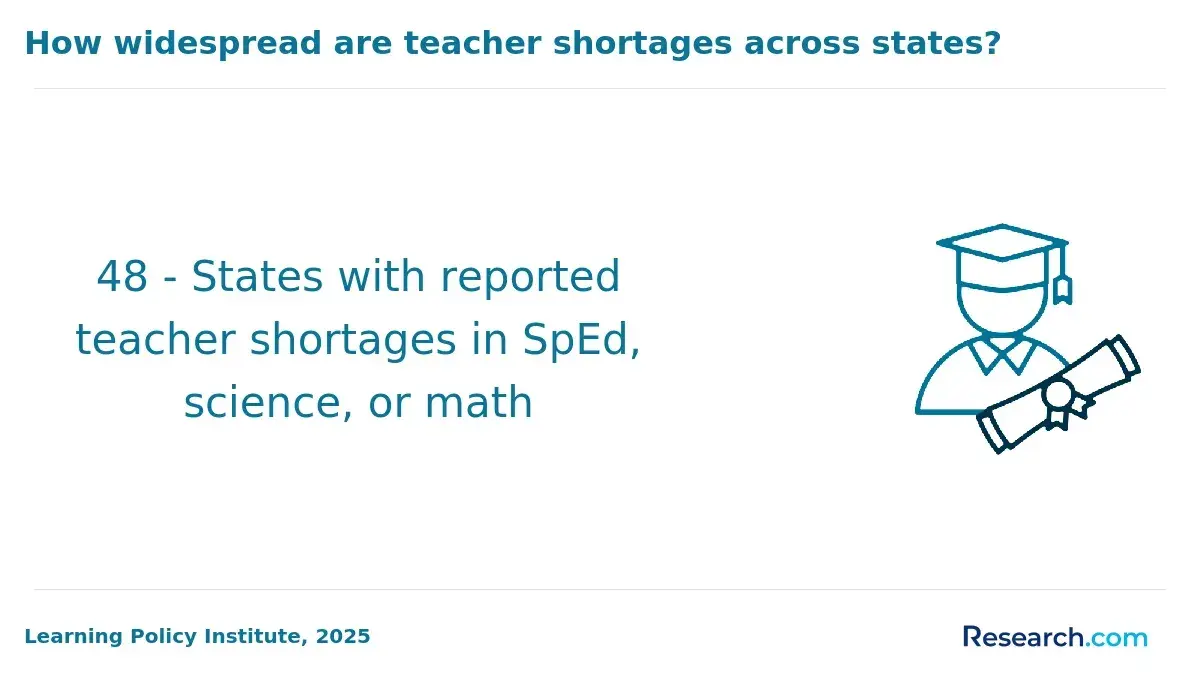
Shortages can be especially visible in certain states and specialty areas. The demand for teachers across various states has been at an all-time high. In Arizona, about 72,000 employees left the teaching system before reaching full retirement. In Illinois, more than 100 Chicago public schools classrooms are in need of permanent special education teachers. Similarly, South Dakota’s 10 regions and seven statewide academic disciplines lack the appropriate number of teachers per classroom.
What jobs can you get with a teaching degree?
| Career option | What the role involves | Additional requirements to check |
| Traditional classroom teacher | Teaches students in public, charter, or private schools; plans lessons; assesses learning; manages classroom routines | State licensure, grade-band certification, subject endorsement, student teaching |
| Alternative education teacher | Works in nontraditional schools, virtual programs, home-based education settings, recovery programs, or specialized learning environments | Certification rules vary by employer and state; experience with flexible instruction may help |
| Corporate trainer | Designs and delivers employee learning programs, onboarding, compliance training, or professional development | Teaching license may not be required; adult learning, training software, and industry knowledge can matter |
| Educational or research consultant | Supports schools, agencies, nonprofits, or companies with curriculum, policy, program design, research, or data analysis | Often requires advanced education, specialized expertise, or prior classroom and leadership experience |
- Traditional classroom teacher: This is the most direct outcome for many teaching degree graduates. Teachers may work across grade levels and subject areas, depending on their preparation and license.
- Alternative education teacher: Alternative education can include virtual schools, nontraditional programs, home-based learning, and specialized settings for students who need a different instructional model.
- Corporate trainer: Education graduates who enjoy teaching adults may develop training materials, facilitate workshops, and evaluate employee learning outcomes in business settings.
- Educational or research consultant: Educators with strong analytical skills may help organizations evaluate programs, interpret learning data, develop policy, or improve instructional systems.
What salary can I get with my teaching degree?
Salary depends heavily on location, school type, union or district pay scales, years of experience, subject area, advanced credentials, and local funding. The national average starting teacher salary was $44,530 in 2024, with experienced teachers earning an average of $69,544 annually. Starting salaries vary significantly by state, ranging from $38,811 in Nebraska to $58,409 in California.
Alternative education salaries also vary by employer. In our research across various job listings for alternative education, annual salaries for alternative education teachers can go as high as $85,682, with the median salary pegged at $67,768.
Corporate training may offer another compensation path for education graduates. Corporate trainers may earn competitive salaries, with the median annual salary for corporate trainers being $65,893 in 2026 and as high as $90,000, according to the job listing website Payscale.
Requirements for a Teaching Degree
Teaching degree requirements differ by institution, degree level, and state certification pathway. Students should review both admissions requirements and licensure requirements before enrolling because being admitted to a program does not always guarantee that the program meets every certification rule in the state where they want to teach.
Admission requirements
Most education programs evaluate academic preparation, communication ability, readiness for fieldwork, and commitment to teaching. Some applicants strengthen their writing and communication background through related study, including a writing degree online, but the most important step is meeting the requirements of the specific education program and licensing pathway.
- Diploma or proof of graduation: Bachelor’s programs usually require a high school diploma or recognized equivalent. Graduate programs generally require a bachelor’s degree from an accredited institution.
- Transcripts and GPA: Schools typically ask for official transcripts from prior institutions. Some universities require a 3.0 GPA if you plan to get into a merit-based financial aid program. Some less competitive schools require a 2.0 GPA on average.
- Prerequisite coursework: Programs may require prior general education, subject-area, or education-related credits before admission to the teacher preparation sequence.
- Standardized test scores: Some colleges request SAT or ACT scores, while others waive them for transfer students, adult learners, or applicants with prior college coursework.
Depending on the school, applicants may also submit a personal statement, recommendation letters, a resume, an interview, a background check, or a basic skills assessment. Because requirements can change by state and institution, prospective students should confirm details directly with the program.
Skill requirements
Teacher preparation programs also look for personal and professional traits that support success in schools. These skills matter during admission, field placements, student teaching, and eventual employment.
- Academic readiness: Students need the study habits and content knowledge to complete college-level coursework. You need at least a GPA of 3.0 or equivalent to be considered for teaching programs with merit-based financial aid. Some universities may also require a higher GPA before progressing to a higher educational degree in teaching, such as the 2.75 GPA requirement of Columbia University Teacher College.
- Communication skills: Teachers write lesson plans, explain ideas, speak with families, and collaborate with colleagues, so clear oral and written communication is essential.
- Commitment to teaching: Programs often seek applicants who understand the responsibilities of working with students and can explain why they want to enter the profession.
- Leadership potential: Teachers guide classrooms, coordinate with teams, and may later supervise activities, committees, or academic initiatives.
- Interpersonal judgment: Strong teachers build relationships with students, families, peers, and administrators while maintaining professional boundaries.
What to Look for in a Teaching Degree
If you want to study to become an educator, the most important question is not simply which school has the best marketing. The better question is whether the program can get you from enrollment to licensure, employment, and long-term career growth without unnecessary cost or delays.
| Factor to evaluate | What to ask before enrolling | Why it matters |
| Accreditation and state approval | Is the institution accredited, and is the teacher preparation program approved for certification in the state where I plan to teach? | Licensure boards and employers may reject degrees that do not meet required standards. |
| Licensure alignment | Does the program lead to the exact grade level, subject area, or endorsement I need? | A mismatch can force you to complete extra coursework or testing later. |
| Field placements | Where will I complete observation hours and student teaching? | Strong placements help students build practical classroom skills and employer connections. |
| Program format | Is the program online, hybrid, or campus-based, and how are in-person teaching requirements handled? | Even online education degrees usually require local fieldwork or student teaching. |
| Student outcomes | What are graduation rates, licensure exam pass rates, and job placement outcomes? | Outcomes help show whether students successfully move into teaching roles. |
| Total cost | What will I pay after tuition, fees, books, testing, transportation, and lost work time? | The lowest tuition is not always the lowest total cost. |
- Accreditation: Choose an institution and educator preparation program recognized by appropriate accrediting and state approval bodies. Accreditation can affect transfer credits, financial aid, licensure, and employment.
- Specialization: Programs may offer pathways in ESL, TESOL, TEFL, special education, early childhood, secondary subjects, or other areas. Select a specialization that matches your target students and labor market.
- Format: Online, campus, and hybrid programs can all work, but students should confirm how labs, practicum hours, and student teaching are arranged.
- Faculty: Look for instructors with classroom experience, research expertise, school partnerships, and availability for advising or mentorship.
- Support services: Helpful programs provide certification advising, tutoring, career support, test preparation, library access, and placement coordination.
- Student success: Review graduation rates, licensing exam pass rates, job placement information, and student teaching support.
- Cost: Compare net price, aid, fees, and the financial impact of fieldwork requirements before committing.
Online vs. Campus Teaching Degrees
| Format | Advantages | Trade-offs | Best for |
| Online | Flexible coursework, reduced commuting, easier access for working adults | Still requires in-person fieldwork; students must be self-directed | Adult learners, rural students, career changers, and students balancing work or family |
| Campus | Face-to-face faculty access, local school partnerships, structured schedule | Less flexible and may require relocation or commuting | Traditional students who prefer in-person learning and campus support |
| Hybrid | Combines online convenience with periodic in-person learning | Requires schedule planning for on-campus sessions and placements | Students who want flexibility but also value direct interaction |
Majors Related to Teaching Degree
Education students can specialize by age group, subject area, or learner need. The right major should match the students you want to teach and the license you plan to earn.
- Early childhood education: This major focuses on development and learning from birth to age eight, including child psychology, early literacy, family engagement, and age-appropriate curriculum.
- Elementary education: Elementary education prepares candidates to teach core subjects in primary grades, including reading, math, science, and social studies. A bachelor’s in English may be useful for students who want stronger language arts preparation.
- Secondary education: Secondary education prepares future middle school and high school teachers, often with deeper subject-area coursework in English, mathematics, science, social studies, or related fields. A philosophy major can also support teaching in areas that value logic, ethics, writing, and critical thinking.
- Special education: Special education programs prepare teachers to support students with disabilities through individualized instruction, accommodations, assessment, and legal compliance.
- Physical education: Physical education focuses on movement, health, fitness, wellness, and student development through activity-based instruction.
- Art education: Art education combines studio practice, art history, creativity, classroom management, and instructional methods for visual arts.
- Music education: Music education includes music theory, performance, ensemble leadership, classroom instruction, and age-appropriate music pedagogy.
Should Additional Certifications Enhance Your Teaching Degree?
Additional credentials can be useful when they fill a specific career gap. For example, an online teacher certification program may help candidates meet certification requirements, add an endorsement, or prepare for a specialized instructional setting. Certifications are most valuable when they are recognized by your state, match employer needs, and do not duplicate what your degree already provides.
| Certification or endorsement area | When it may help | What to verify |
| Special education | You want to work with students who need individualized supports or accommodations | State endorsement rules, practicum requirements, and exam requirements |
| ESL, TESOL, or bilingual education | You plan to teach multilingual learners or work in districts with language-support needs | Whether the credential is an endorsement, certificate, or full license pathway |
| Educational technology | You want to support digital learning, online instruction, or instructional design | Whether employers in your target role value the credential |
| Reading or literacy | You want to specialize in reading intervention, literacy coaching, or elementary instruction | State reading requirements and whether supervised experience is required |
Financial Planning for Your Teaching Degree
Financial planning should begin before applications are submitted. Teaching programs can include tuition, fees, books, background checks, testing, transportation, technology, and living expenses. Student teaching can also reduce the number of hours a candidate can work, so budgeting only for tuition can lead to surprises.
Students should complete the Free Application for Federal Student Aid (FAFSA) to determine eligibility for federal grants, loans, and work-study. They should also search for state aid, institutional scholarships, and awards for future educators, especially programs connected to high-need subjects, shortage areas, or underserved communities.
Online options can reduce some costs, particularly commuting and housing. Students comparing regionally accredited online universities should still confirm local field placement support, state authorization, tuition rates, fees, and whether online students receive the same licensure advising as campus students.
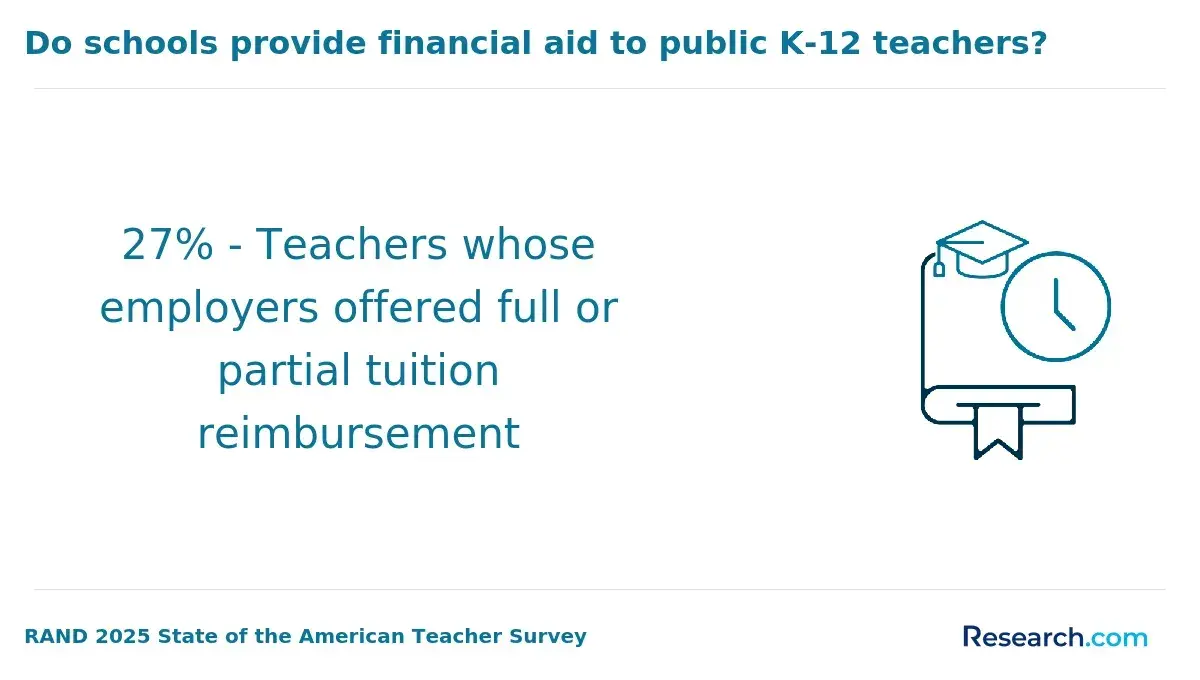
Working educators should also ask employers about tuition reimbursement, salary-lane policies, professional development funds, and partnerships with universities. These benefits can make graduate education more affordable when the degree aligns with district needs.
A strong financial plan compares total program cost with expected licensure outcomes, local salary schedules, available aid, and repayment obligations. The goal is not simply to find the cheapest program but to choose an affordable program that leads to the credential and role you actually want.
Can a Doctoral Degree Propel My Educational Leadership Forward?
A doctorate can support educators who want to move beyond classroom instruction into district leadership, organizational change, policy work, higher education, or senior administration. Doctoral study usually emphasizes research, systems thinking, strategic planning, data-informed decision-making, and organizational improvement. A program such as a PhD organizational leadership online program may be relevant for educators who want leadership preparation that extends beyond a single school setting.
Before enrolling, candidates should ask whether the doctorate is necessary for their target role, whether an Ed.D. or Ph.D. is the better fit, how the dissertation or capstone is structured, and whether the cost is reasonable compared with likely career benefits.
How Can a Master’s in Library Science Complement Your Teaching Degree?
A master’s in library science can broaden an educator’s role by adding expertise in information literacy, research support, digital resources, academic technology, and resource evaluation. This pathway may interest teachers who want to work as school librarians, media specialists, research-support professionals, or instructional partners who help students evaluate sources and use information responsibly.
Educators seeking a cost-conscious route can compare the cheapest master's degrees in library science while also checking accreditation, state school librarian requirements, practicum expectations, and whether the degree qualifies graduates for the specific role they want.
How Does a Research-Focused Doctorate Elevate Your Educational Impact?
A research-focused doctorate can help experienced educators investigate learning problems, evaluate programs, influence policy, and contribute to scholarship. This route is strongest for people who want to conduct original research, teach in higher education, lead institutional assessment, or design evidence-based improvement initiatives.
For educators whose goals center on higher education, policy, or research leadership, the best online PhD in higher education can be a relevant comparison point. Candidates should review research faculty, methodology training, dissertation expectations, cohort structure, and placement outcomes before choosing a program.
What Emerging Trends Are Shaping the Future of Teaching Degrees?
Teacher preparation is changing because classrooms are changing. Programs increasingly need to address digital learning, student mental health, inclusive education, data-informed instruction, culturally responsive teaching, and flexible delivery formats. Educators are also expected to collaborate across teams, use technology responsibly, and adapt instruction for students with diverse academic and social needs.
Leadership preparation is also becoming more important as schools face staffing challenges, technology adoption, policy shifts, and accountability demands. Educators considering administrative or systems-level roles may compare affordable online doctoral programs in educational leadership to determine whether advanced study aligns with their long-term goals.
Pathways to Advanced Degrees in Education
Advanced degrees can deepen expertise, open leadership options, and support specialization. A master’s degree may help teachers improve instructional practice, add endorsements, move into curriculum work, or qualify for leadership pathways depending on state and employer rules. Doctoral programs are generally better suited to research, policy, higher education, and senior leadership goals.
| Advanced pathway | Common goal | Best suited for |
| Master’s in education | Improve instruction, specialize, or prepare for leadership | Teachers who want advanced classroom strategies, curriculum skills, or possible salary advancement |
| Master’s in teaching | Enter teaching or deepen instructional preparation | Career changers or educators seeking focused teacher preparation |
| Ed.D. | Apply research to leadership and organizational improvement | Practitioners targeting school, district, or education organization leadership |
| Ph.D. in education | Conduct research and contribute to scholarship | Educators seeking academic, policy, or research-focused careers |
Many working educators choose online master’s options because they need to continue teaching while studying. Students comparing flexible programs, including easy master’s degrees, should look closely at academic quality, accreditation, workload, transfer policies, and whether the program supports their intended credential or promotion goal.
Can I Fast-Track My Advanced Education Degree?
Accelerated programs can help educators finish an advanced credential more quickly by using shorter terms, year-round enrollment, transfer credits, or condensed coursework. A fast format can be useful for motivated professionals, but speed should not replace quality, accreditation, licensure alignment, or strong faculty support.
Educators exploring a fast doctoral route, such as the online Ed.D., should ask how long the dissertation or capstone typically takes, whether courses are asynchronous or scheduled, how many credits can transfer, and whether the program is manageable alongside full-time teaching.
Navigating the Challenges of Pursuing a Teaching Degree
A teaching degree can be demanding because it combines academic study with practical classroom expectations. Students must manage coursework, field placements, certification tests, emotional labor, technology requirements, and financial pressure. If you want a simpler entry point, reviewing the easiest teaching degree can help you compare options, but the best program should still match your target license and career goals.
- Balancing coursework with field experience: Student teaching, observations, and practicum hours can compete with work and family obligations. Build a weekly schedule early, communicate with supervisors, and ask how placements are arranged before enrolling.
- Managing the emotional demands of teaching: Teacher candidates often encounter classroom stress, student needs, and difficult feedback for the first time. Mentorship, peer support, reflection, and self-care routines can help build resilience.
- Keeping up with educational technology: Programs now expect students to use digital gradebooks, learning platforms, assessment tools, and online resources. Take advantage of workshops and practice tools before student teaching begins.
- Handling tuition and related expenses: Certification exams, transportation, books, and unpaid fieldwork can increase total cost. Apply for aid early and ask the program for a full estimate of required expenses.
- Preventing burnout: Teaching preparation is intensive. Students should plan rest, set boundaries, build a support network, and avoid overloading work hours during major field placements.
Common Mistakes to Avoid
| Mistake | Why it can hurt you | Better approach |
| Choosing a program without checking accreditation | It may not qualify you for aid, licensure, transfer, or employment. | Verify institutional accreditation and state approval before applying. |
| Assuming every online program leads to licensure in every state | Licensure rules vary, and out-of-state programs may not meet local requirements. | Ask the program and your state licensing board in writing. |
| Looking only at tuition | Fees, tests, books, fieldwork travel, and lost work hours can change affordability. | Calculate total cost of attendance and expected out-of-pocket expenses. |
| Ignoring student teaching logistics | Poor placement support can delay graduation or certification. | Ask where placements occur and who coordinates them. |
| Choosing a specialization with limited local demand | You may struggle to find work in your preferred region. | Check district job postings and state shortage areas before selecting a major. |
| Assuming salary outcomes are guaranteed | Pay varies by state, district, school type, and experience. | Review local salary schedules and compare them with expected debt. |
How Does Accreditation Impact Your Teaching Degree?
Accreditation helps confirm that a college or university meets recognized academic standards. For teaching degrees, program approval and state alignment are especially important because certification boards and employers often require candidates to graduate from an approved educator preparation pathway.
Accreditation can affect financial aid eligibility, credit transfer, graduate admission, licensure, and employment. Students should verify both the institution’s accreditation and the teacher preparation program’s approval status. This step is especially important for online, out-of-state, and alternative certification programs.
An accredited and state-approved program can make it easier to move into professional roles and explore a wider range of careers in education. It does not guarantee a job or license, but it reduces the risk of completing coursework that does not count toward your goal.
Could an Accelerated Alternative Certification Program Enhance My Career Transition?
Alternative certification can be a practical route for professionals who already hold a bachelor’s degree and want to move into teaching without completing a traditional undergraduate education major. An accelerated alternative certification program may help career changers meet state requirements while gaining classroom experience more quickly.
This pathway is not ideal for everyone. It can move fast, require strong independent learning, and place candidates into classrooms with limited preparation time. Before choosing it, verify state approval, mentorship support, testing requirements, field experience, hiring partnerships, and whether the credential will be portable if you move.
Teaching Degree: Weighing Your Options
A teaching degree is a strong option when it leads directly to the license, grade level, and subject area you want. It is also valuable when the program offers practical fieldwork, strong advising, test preparation, and affordable tuition. The decision becomes weaker when the program is expensive, poorly aligned with state rules, or disconnected from local hiring needs.
Students just starting college may benefit most from a bachelor’s teacher preparation program. Career changers may want to compare master’s programs and alternative certification. Current teachers should evaluate whether a certification, master’s degree, Ed.D., Ph.D., or leadership program offers a clear professional benefit.
The best choice is the one that connects your career target, licensure requirements, financial reality, and preferred learning format. Do not rely on rankings or convenience alone. Confirm outcomes, ask detailed questions, and choose a program that can support you from admission through certification and employment.
Key Insights
- A bachelor’s degree is generally the minimum academic route for licensed K-12 teaching, but associate, master’s, doctoral, and alternative certification pathways can serve different goals.
- Licensure alignment matters as much as the degree itself. Always confirm that the program meets the requirements of the state, grade level, and subject you want to teach.
- Costs vary widely by degree level and institution. Compare total cost, including fees, certification exams, fieldwork travel, books, and potential lost income during student teaching.
- Teaching demand is uneven. Review local job postings, state shortage areas, and subject-specific needs rather than relying only on national projections.
- Online teaching degrees can be flexible, but they usually still require in-person field placements or student teaching in an approved setting.
- Additional certifications are most useful when they match a real employer need, such as special education, literacy, ESL, bilingual education, or educational technology.
- Advanced degrees can support leadership, research, curriculum, library, or higher education roles, but they should be chosen only after comparing cost, career value, and credential requirements.
- The most common mistakes are ignoring accreditation, assuming online programs automatically meet licensure rules, focusing only on tuition, and choosing a specialization without checking local demand.
References:
- Ash, A. M. (2025, September 24). Teachers Who Collaborate, Learn at Work Are More Satisfied. Gallup. https://news.gallup.com/poll/695492/teachers-collaborate-learn-work-satisfied.aspx
- EDUCAUSE. (2025). Findings From The 2025 Teaching and Learning Workforce Report. https://events.educause.edu/-/media/files/events/webinar/2025/web2513/slides.pdf
- Kurtz, H. & Baker, L. (2025, March 4). What Teacher Morale Looks Like in Every State. EdWeek. https://www.edweek.org/the-state-of-teaching/teaching-learning/what-teacher-morale-looks-like-in-every-state/2025/03
- National Student Clearinghouse Research Center. (2026, January 15). Final Fall Enrollment Trends. https://nscresearchcenter.org/final-fall-enrollment-trends
- Steiner, E. D., Levine, P. R., Doan, S., & Woo, A. (2025). Teacher WellBeing, Pay, and Intentions to Leave in 2025. RAND. https://www.rand.org/pubs/research_reports/RRA1108-16.html
Other Things You Should Know About Teaching Degrees
In 2027, the cost of a teaching degree varies widely depending on the institution, but generally ranges from $20,000 to $50,000 annually for tuition and fees. Additional costs for books, supplies, and living expenses should also be considered. Financial aid and scholarships can help offset these costs.
Yes, earning a teaching degree offers numerous advantages, including a positive job outlook, opportunities for career progression, and the potential to make a significant impact on students' lives. The demand for teachers is generally strong, and teaching roles offer good pay and benefits, particularly in high-need areas.
With a teaching degree, you can pursue various roles such as traditional classroom teacher, alternative education teacher, corporate trainer, educational consultant, and research consultant. Each role offers different opportunities and may require additional specialization or experience.
In 2027, teaching degree graduates face mixed job prospects. With an increased focus on STEM and special education, opportunities are growing in these fields, while general education remains competitive. Regional shortages in rural and urban areas might enhance job opportunities in those locations. **Question** How much does a teaching degree cost? **Answer** A teaching degree in 2027 typically costs between $20,000 to $60,000, depending on the institution. Public universities generally offer more affordable options due to government funding, while private institutions might charge higher tuition. Scholarships and grants can help offset these costs. **Question** Is a teaching degree worth it? **Answer** A teaching degree can be worthwhile in 2027 if you're passionate about education and skill development. It offers job security in growing fields like STEM and special education. However, weighing tuition costs against potential earnings is crucial for making an informed decision. **Question** What skills will I develop with a teaching degree? **Answer** Obtaining a teaching degree in 2027 equips you with skills such as classroom management, lesson planning, and student assessment. Additionally, technological integration and understanding diverse learning needs become crucial competencies for modern educators.
A teaching degree helps develop essential skills such as effective communication, critical thinking, problem-solving, leadership, and technological proficiency. These skills are crucial for managing classrooms, engaging students, and adapting to various educational environments.