2027 Best Online Master’s in Education Technology Degree Programs

Co-Founder and Chief Data Scientist
Choosing an online master’s in educational technology is no longer just about learning how to use classroom apps. In 2026, educators, instructional designers, school leaders, and corporate trainers are expected to understand digital course design, learning analytics, accessibility, AI-supported instruction, online assessment, and technology integration at scale.
This guide explains what an online master’s program in educational technology covers, how online and campus-based programs compare, what admission requirements and costs to expect, how employers may view the degree, and what to check before enrolling. It is designed for licensed teachers, aspiring instructional designers, education administrators, training professionals, and career changers who want a practical way to decide whether this graduate degree fits their goals.
If you are still comparing education pathways, reviewing the best online colleges for education degree options can help you understand how educational technology fits within the broader education field.
- Can you earn an educational technology master’s fully online?
- Do employers respect online master’s degrees?
- Are online degrees accepted internationally?
- Online vs. campus master’s programs in educational technology
- How much does an online master’s in educational technology cost?
- What are the admission and technology requirements?
- What courses are common in educational technology programs?
- How does educational technology support diverse learners?
- How to choose the right online educational technology program
- What related online education master’s options should you compare?
- How does education administration connect with educational technology?
- Should you consider a doctorate in educational technology?
- What trends are shaping educational technology?
- Where is educational technology used in real workplaces?
- What careers can this degree support?
- Are accelerated educational technology programs a good idea?
- How does educational technology connect with library science?
- What financial aid options can reduce the cost?
- How can educational technology support early childhood learning?
Quick Answer: Is an Online Master’s in Educational Technology Worth Considering?
An online master’s in educational technology can be a strong option if you want to design digital learning experiences, improve online instruction, support technology integration in schools, or move into instructional design, training, or education leadership. The degree is especially practical for working educators because many programs are built for part-time online study.
The degree is not automatically the right choice for everyone. Before enrolling, confirm accreditation, licensure or endorsement implications in your state, total program cost, field experience requirements, employer recognition in your target market, and whether the curriculum includes current topics such as accessibility, AI, learning analytics, and online assessment.
| Best Fit | Use Caution If | What to Check First |
| Licensed teachers who want to lead technology integration or online learning initiatives | You need an initial teaching license and the program does not lead to one | State licensure rules, endorsement eligibility, and school district salary policies |
| Instructional designers, trainers, and learning specialists moving into digital learning roles | You want a highly technical software development degree rather than an education-focused program | Coursework in learning design, LMS tools, accessibility, multimedia, and evaluation |
| Education administrators planning digital transformation projects | You are choosing only by tuition and not comparing student support or field requirements | Accreditation, faculty expertise, practicum expectations, and employer partnerships |
Can You Earn an Educational Technology Master’s Fully Online?
Yes. Fully online graduate programs are now widely available, including education-focused master’s degrees. Online learning was growing before the COVID-19 pandemic, and the pandemic accelerated both adoption and public familiarity. In a 2025 survey of chief online learning officers at higher education institutions, 47% said they planned to add one to four new online programs within the next three years. Another 30% planned to add five to nine programs, while 11% expected to launch more than 10 programs.
This growth matters for educational technology because the field itself focuses on designing, delivering, assessing, and improving learning with digital tools. Students in the best online masters degrees often experience the same learning environments they may later be asked to build, evaluate, or improve for others.
Many institutions offer online master’s degrees in educational technology and related accredited online teaching degrees. Examples include North Carolina State University at Raleigh and the University of Central Missouri. Program formats vary, so applicants should check whether a degree is fully online, hybrid, synchronous, asynchronous, cohort-based, or self-paced.
Will Employers Take an Online Educational Technology Degree Seriously?
Many employers now view online degrees as legitimate, especially when the institution is accredited and the program is academically comparable to its campus-based version. According to recent online education statistics, online degrees have gained more acceptance in the post-pandemic labor market. In a GMAC survey, 55% of global employers across multiple industries viewed online and traditional graduates equally.
That said, employer acceptance is not identical in every field, location, or organization. Some hiring managers still prefer campus-based graduates, particularly in local markets or professions where online education is less common. Applicants should research the expectations of school districts, universities, training departments, and education vendors in the places where they plan to work.
One useful caution comes from Cole J. Engel’s 2020 study of accounting employers in Kansas. The study found that employers were not inclined to hire graduates of online programs in Kansas for entry-level accounting roles. Engel wrote in “The acceptability of online degrees for obtaining entry-level employment in the accounting profession: A Kansas study,” published in Global Journal of Accounting and Finance, that “higher education institutions, especially those serving Kansans, must consider that online degree graduates are not as attractive to employers as traditional face to face graduates.” He also noted that it may “not be the right time for academic leaders in Kansas to allocate resources to develop online degree programs in accounting.”
That study focused on accounting, not educational technology, but it illustrates an important point: online degree acceptance can be local and profession-specific. Before enrolling, ask school districts, HR departments, alumni, and potential employers whether they distinguish between online and campus-based credentials.
Are Online Degrees Recognized Internationally?
Online degrees can be recognized internationally when they come from properly accredited institutions. For education programs, regional accreditation is important, and students comparing an online teacher degree should also review program-level recognition where relevant. In educational technology, commonly referenced professional bodies include the National Council for the Accreditation of Teacher Education (NCATE) and the International Society for Technology in Education (ISTE).
Accreditation is not a detail to skim. It affects transfer credit, employer trust, financial aid eligibility, licensure pathways, and international recognition. Even if a university has a strong reputation, confirm both institutional accreditation and any education-specific recognition connected to the program.
Market growth also signals broader acceptance of technology-supported education. In 2025, the worldwide EdTech market value was $199.74 billion, and it is projected to grow to $236.25 billion in 2026. By 2030, it will be $456.41 billion. These figures do not guarantee that every online degree will be accepted everywhere, but they do show that education technology is becoming a larger part of global learning systems.
Another sign of acceptance is the way established institutions have expanded online delivery. As discussed in a Harvard Business Review article by Gallagher and Palmer, the University of Illinois has used technology to scale programs to more students at a discounted rate while also changing faculty labor models.
Georgia Tech’s online Master’s in Computer Science Program, often discussed as a major example of online graduate education and compared by some with the best online computer science degree options, costs $7,000. The institution recently announced that fall enrollment reached 10,000. Examples like this have helped normalize online graduate study, although recognition still depends on the institution, program quality, and local credential rules.
Online vs. Traditional Master’s in Educational Technology
A master’s in educational technology teaches educators and learning professionals how to select, design, apply, and evaluate technology for instruction. Students may study digital curriculum design, learning management systems, multimedia learning, assistive technology, online teaching, assessment design, data-informed decision-making, and technology leadership.
Online delivery is a natural fit for this field because students often learn inside the same kinds of digital environments they will later analyze or manage. Recent online education trends show that online learning has become a major part of higher education, professional development, and workforce training.
Online programs typically offer more scheduling flexibility than campus programs. Some are built around weekly deadlines; others use competency-based models that allow students to progress after demonstrating mastery. This flexibility can help working teachers, trainers, and administrators continue their jobs while earning a graduate credential.
| Program Format | Advantages | Trade-Offs | Best For |
| Fully online | Flexible access, no commuting, often easier for working professionals | Requires self-direction, reliable technology, and strong time management | Teachers, trainers, and administrators balancing work and graduate study |
| Hybrid | Combines online coursework with limited face-to-face interaction | May require travel, campus sessions, or local practicum arrangements | Students who want flexibility but value in-person collaboration |
| Campus-based | Direct access to campus facilities, faculty, and peer networks | Less flexible for full-time workers or students far from campus | Students who prefer structured in-person learning and local networking |
Are Online Programs Usually Cheaper?
Online programs can be less expensive overall, but they are not automatically cheaper in every case. Students may save on commuting, housing, parking, relocation, and some campus-based expenses. These savings are one reason online master degrees in education are popular among working professionals.
However, the total cost should include more than tuition. Online students may pay technology fees, course platform fees, software subscriptions, digital materials, proctoring fees, and hardware costs. A high-quality computer, webcam, microphone, and stable internet connection are usually essential rather than optional.
Is an Online Degree Academically Comparable to a Campus Degree?
In many universities, online and campus students complete similar curricula and meet the same academic standards. Some online courses are taught by the same faculty who teach on campus. The main difference is often delivery format, not necessarily academic rigor.
Still, online and classroom learning can build different strengths. Ferreras-Garcia and colleagues found that classroom-based students have better competencies in some areas, while online learners may perform better in others. Their study, “Competencies in business degrees: A face-to-face and online comparative study,” published in the Journal of Education for Business, reported that classroom-based students achieved strong results in ethics-related competencies, while online university students performed well in ICT-related competencies.
For educational technology students, that comparison is especially relevant. It raises a useful good research question: how can instructional design improve both human-centered and technology-centered competencies in online learning?
How Much Does an Online Master’s in Educational Technology Cost?
Costs vary widely by institution, residency status, program length, fees, and whether the university is public or private. The College Board reports that tuition and fees for master's degrees cost $9,850 in public four-year institutions and $32,600 in private institutions. Education Data Initiative reports that the average cost of a master's degree is $62,820, with MEd averaging at $44,640.
Those figures are useful benchmarks, but your actual cost may differ. Review tuition per credit, required credits, online course fees, software fees, textbooks, practicum travel, graduation fees, and any campus visit requirements. Ask the school for a full cost-of-attendance estimate before applying.
Is an Online Master’s in Educational Technology Worth It Financially?
The financial value depends on your current role, pay scale, school district policies, career goals, and whether the degree leads to a salary step, leadership role, endorsement, or career change. For some teachers, a master’s degree can lead to an annual pay increase of $10,000 to $20,000 or more depending on their school districts. Master’s-educated teachers may earn more than teachers with only a bachelor’s degree, although grade level and local contracts matter.
The degree can also serve as preparation for advanced study, including a Doctorate Degree in Educational Leadership or a Doctorate Degree in Education.
| Grade Level | Bachelor's-Educated Teachers | Master's-Educated Teachers |
| Elementary School Teachers | $47,300 - $59,670 | $77,400 - $97,900 |
| Middle School Teachers | $47,850 - $59,660 | $76,430 - $96,280 |
| High School Teachers | $49,060 - $61,660 | $79,820 - $99,660 |
What Are the Admission and Technology Requirements?
Admission requirements differ by university and program type. Many master’s programs expect applicants to hold a bachelor’s degree, meet a minimum GPA, submit recommendation letters, and provide a statement of purpose. Some programs are designed for licensed teachers, while others welcome instructional designers, corporate trainers, or education professionals who do not hold teacher certification.
Some institutions, such as the University of Dakota, may accept students without teacher certificates or an undergraduate degree. Applicants should be careful with this type of pathway. Licensure rules differ by state, and a program that works for one career goal may not meet requirements in another state or school system. Graduates may be eligible for recommendations or endorsements outside the state through their university, but this should be verified before enrollment.
Common Admission Requirements
- Bachelor’s degree, although some programs may offer exceptions
- Active teaching license for programs intended for practicing educators
- Professional classroom experience, often 2-3 years
- Minimum GPA, commonly 3.0, though standards vary by institution
Typical Application Materials
- Recommendation letters from academic or professional references
- Application form and processing fees
- Statement of purpose explaining career goals and program fit
- CV or resume showing teaching, training, technology, or leadership experience
- Testing requirements, although many schools waived these during the pandemic
- TOEFL or IELTS scores for international applicants when required
Technology Requirements for Online Study
Because coursework is delivered online, students need a dependable computer, stable high-speed internet, webcam, microphone, and access to required software. Programs involving live demonstrations, video assessment, or field-based work may require stronger audiovisual tools. In communication-heavy fields such as online SLP programs, high-quality audio and video tools are especially important, and educational technology students face similar expectations when presenting projects or collaborating virtually.
What Courses Are Common in an Online Master’s in Educational Technology?
Educational technology affects curriculum design, teaching, assessment, accessibility, online program management, and professional training. It is used in K-12 schools, higher education, corporate learning, nonprofit education, and online graduate programs such as masters in higher education online programs.
Curricula vary, but most programs combine learning theory, instructional design, technology tools, evaluation, and applied projects. The strongest programs do not simply teach software; they teach students how to choose technology based on learning goals, learner needs, evidence, accessibility, and context.
| Course Area | What You Learn | Why It Matters |
| Foundations of Educational Technology | History, research, theories, and major debates in the field | Helps students understand how technology has shaped teaching and learning over time |
| Technology-Rich Curriculum Design | How to build digital, hybrid, and blended learning experiences | Prepares educators to design lessons that support engagement, access, and measurable outcomes |
| Distance Teaching and Learning | Synchronous and asynchronous instruction, online interaction, and course delivery models | Useful for K-12 online learning, higher education, and professional training |
| Technology for Learning and Communication | Tools for collaboration, multimedia instruction, accessibility, and communication | Supports inclusive digital learning environments and student participation |
| Evaluation in Educational Technology | Program evaluation, learner data, assessment design, and effectiveness measures | Helps graduates determine whether a technology initiative is actually improving learning |
Some programs also include coursework in assistive technology, including tools similar to IEP software, multimedia production, learning management systems, data privacy, universal design, and AI-supported instruction.
How Can Educational Technology Address Diverse Learning Needs?
One of the most important uses of educational technology is supporting learners who need different levels of access, pacing, language support, engagement, or assessment. Good technology integration is not about adding digital tools to every lesson. It is about removing barriers and helping more learners participate meaningfully.
Adaptive and Personalized Learning
Adaptive platforms can adjust content, pacing, feedback, and practice activities based on student performance. When used carefully, these tools can help educators identify gaps earlier and provide extra support without waiting for a major exam or end-of-term evaluation.
Accessibility and Assistive Technology
Educational technology can support learners through text-to-speech tools, captions, screen readers, adjustable display settings, alternative assessments, speech recognition, and flexible content formats. Students in educational technology programs should learn not only what these tools do but also how to evaluate them for usability and equity.
Culturally Responsive Digital Design
Technology can help educators build materials that reflect different languages, identities, communities, and learning contexts. However, inclusive design requires more than translating content or adding images. It requires thoughtful examples, accessible language, representative materials, and feedback from learners.
Immersive and Interactive Tools
Augmented reality, virtual reality, simulations, and gamified learning can make abstract concepts easier to explore. These tools may be useful for science, history, career training, and skills practice, but they should be matched to clear learning goals rather than adopted because they appear innovative.
Affordable Pathways to Build These Skills
Students who want to compare lower-cost graduate options can review programs such as the quickest cheapest master’s degree pathways, while still checking whether the curriculum includes accessibility, inclusive design, and learner support.
How to Choose the Right Online Master’s Program in Educational Technology
The best program is not always the cheapest, fastest, or highest ranked. It is the one that fits your career goal, state requirements, budget, schedule, and preferred learning style. Start by defining what you want the degree to do for you: improve your classroom practice, qualify you for a technology leadership role, move you into instructional design, or prepare you for doctoral study.
Accreditation should be your first filter. Confirm institutional accreditation and, when relevant, education-specific recognition such as NCATE or ISTE alignment. Then review whether the program is fully online or has in-person requirements, because campus visits, residencies, seminars, and practicum placements can add time and cost.
Support services also matter. Online students should have access to digital library resources, academic advising, technical support, career services, faculty office hours, and networking opportunities. Strong programs often connect students with school systems, education technology companies, research groups, or professional associations.
| Question to Ask | Why It Matters |
| Is the university accredited, and is the education program recognized by relevant bodies? | Accreditation affects credibility, transferability, financial aid, and employer trust. |
| Does the program lead to licensure, endorsement, or salary advancement in my state or district? | Not every educational technology degree changes your credential status or pay scale. |
| Are there required campus visits, practicums, or live sessions? | These requirements can affect scheduling, travel costs, and work-life balance. |
| Does the curriculum include accessibility, learning analytics, AI, online assessment, and instructional design? | These areas are increasingly important in modern digital learning roles. |
| What career support is available to online students? | Career advising, portfolios, internships, and employer networks can influence post-graduation opportunities. |
Common Mistakes to Avoid
- Choosing by tuition alone: A low tuition rate may not include fees, software, travel, or practicum costs.
- Ignoring accreditation: An unaccredited or poorly recognized program can limit employment, licensure, and transfer options.
- Assuming every online program is fully asynchronous: Some programs require live classes, campus meetings, or field placements.
- Overlooking state rules: Teacher licensure, endorsements, and district pay scales vary by location.
- Relying only on rankings: Rankings can be useful, but they may not reflect your budget, learning style, or career target.
- Skipping the portfolio question: For instructional design and technology roles, a strong project portfolio can matter as much as the credential.
What Related Online Education Master’s Options Should You Compare?
Educational technology is one of several graduate routes within education. If your primary goal is classroom teaching, school leadership, curriculum design, or special education, another program may be a better match. Comparing online education master's programs can help you see whether educational technology, teaching, curriculum and instruction, administration, or another specialization best aligns with your goals.
Use the curriculum as your guide. A true educational technology program should include digital learning design, technology integration, evaluation, accessibility, and online learning strategy. A general education master’s may include some technology coursework but may not go as deeply into learning systems, multimedia design, or digital transformation.
How Can an Online Education Administration Degree Support Technology Leadership?
Educational technology and education administration increasingly overlap. School and district leaders are expected to make decisions about learning platforms, data systems, device policies, cybersecurity, online instruction, accessibility, and professional development. An online education administration degree may be a better fit if your goal is principalship, district leadership, policy, or operations rather than hands-on instructional design.
For aspiring leaders, the key question is whether you want to manage people and systems, design learning experiences, or do both. Some professionals earn educational technology credentials first and later move into administration; others choose administration and add technology-focused professional development.
Should You Consider an Online Doctorate in Educational Technology?
A doctorate may be worth considering if you want to conduct research, teach at the university level, lead systemwide digital learning strategy, or influence policy. A master’s degree is usually more practical for classroom technology leadership, instructional design, or training roles, while a doctorate is better suited to advanced leadership and research-oriented work.
Doctoral study requires a longer commitment and a clear purpose. If your goal is to move quickly into academic leadership, reviewing the best EdD programs can help you compare accelerated doctoral pathways, but speed should not outweigh dissertation support, faculty fit, research expectations, and program quality.
Emerging Trends in Educational Technology for Online Learning
Educational technology changes quickly, but not every new tool improves learning. The most useful trends are those that help educators solve real problems: access, engagement, feedback, assessment, personalization, collaboration, and scalability.
Artificial Intelligence in Education
AI tools are increasingly used for tutoring support, content generation, feedback, learning analytics, translation, and administrative tasks. Educators need to understand both the opportunities and risks, including academic integrity, bias, privacy, overreliance, and the need for human judgment.
Gamification and Interactive Learning
Game elements such as points, badges, levels, and challenges can increase motivation when they are tied to meaningful learning goals. Poorly designed gamification can become a distraction, so instructional design principles remain essential.
Virtual and Augmented Reality
VR and AR can create simulations for science labs, historical environments, clinical practice, technical training, and classroom management scenarios. These tools are most valuable when they provide experiences that would be difficult, unsafe, or expensive to replicate in person.
Learning Analytics
Learning analytics can help educators identify participation patterns, performance gaps, and course design problems. However, data should be interpreted carefully and ethically. Numbers can guide decisions, but they do not replace teacher expertise or student context.
Cloud-Based Collaboration
Digital collaboration tools allow students, teachers, and teams to work together across locations. These tools are now common in schools, universities, and workplaces, making collaboration design an important skill for educational technology professionals.
Accessibility by Design
Accessibility is becoming a core design expectation rather than an afterthought. Students comparing online teaching degrees should look for coursework that addresses inclusive design, assistive tools, captions, alternative formats, and universal design principles.
Real-World Applications of Educational Technology
An online master’s in educational technology can apply to classrooms, universities, nonprofits, public agencies, and corporate training departments. The common thread is designing learning experiences that use technology for a clear purpose.
- Classroom technology integration: Teachers may use interactive displays, digital assessments, learning apps, and adaptive platforms to support instruction and personalize practice.
- Online course design: Instructional designers build online modules, multimedia lessons, assessments, discussion activities, and learner support systems.
- Corporate training: Learning professionals design onboarding, compliance training, simulations, microlearning, and professional development through e-learning platforms.
- Inclusive education: Educators use assistive technology, captions, text-to-speech tools, speech recognition, and flexible formats to help more learners access content.
- Program evaluation: Technology specialists review data, learner feedback, and performance outcomes to determine whether digital learning initiatives are working.
Professionals interested in early learning environments may also compare an affordable early childhood education degree online to understand how technology use differs for young children.
Why Educational Technology Skills Matter Now
Technology is part of daily life, work, and learning. Students use digital tools to communicate, collaborate, research, create, and complete assessments. Employers use online platforms for onboarding, compliance, knowledge management, and professional development. Schools use technology for instruction, intervention, assessment, communication, and administration.
This does not mean every learning problem requires a digital tool. It means educators need the judgment to decide when technology helps, when it distracts, and how to implement it responsibly. Educational technology is closely tied to interactive learning trends in both academic education and workplace training.
For graduates, the value of the degree often lies in being able to connect pedagogy, technology, accessibility, and evaluation. That combination can be useful in schools, colleges, edtech companies, government training, nonprofits, and corporate learning teams.
What Career Opportunities Can an Online Master’s in Educational Technology Support?
An online master’s in educational technology can support roles in teaching, instructional design, digital curriculum development, learning experience design, technology integration, faculty development, corporate training, and education program evaluation. It may also help educators qualify for leadership assignments related to online learning, blended learning, or instructional technology.
Students comparing career paths should review broader masters in education job options, but they should avoid assuming a degree guarantees a specific salary or title. Outcomes depend on experience, location, employer, portfolio quality, licensure, and the strength of the program.
| Potential Role | Common Work | Helpful Preparation |
| Instructional Designer | Designs online courses, training modules, assessments, and multimedia learning materials | Portfolio, LMS experience, learning theory, accessibility, and evaluation skills |
| Technology Integration Specialist | Helps teachers use digital tools effectively in classrooms and school programs | Teaching experience, coaching skills, curriculum knowledge, and tool evaluation |
| Learning Experience Designer | Creates user-centered learning experiences for schools, companies, or online platforms | Design thinking, multimedia, learner research, and assessment design |
| Online Learning Coordinator | Supports online programs, faculty training, course quality, and student engagement | Online pedagogy, analytics, project management, and communication skills |
| Corporate Training Specialist | Builds employee learning programs, onboarding, compliance training, and simulations | Adult learning theory, e-learning tools, needs analysis, and evaluation |
Are Accelerated Programs a Good Fit for Educational Technology Students?
Accelerated online master’s programs can help motivated students complete coursework faster, often through compressed terms, heavier course loads, or competency-based progress. They can be useful for professionals who already have teaching or training experience and a clear career goal.
The trade-off is intensity. Accelerated study requires strong time management, reliable weekly availability, and the ability to complete projects quickly. Before choosing a fast program, ask how long each term lasts, how many hours students typically spend each week, whether fieldwork is required, and how the pace affects portfolio quality. Students comparing timelines can review guidance on how long does it take to get a teaching degree online.
How Does Educational Technology Connect With Library Science?
Educational technology and library science overlap in digital literacy, information access, content curation, research support, and learning resource design. Professionals in both fields help users find, evaluate, organize, and apply information in digital environments.
For example, educational technology skills can support digital archives, online research guides, media-rich learning collections, open educational resources, and information literacy instruction. Students interested in this intersection can explore What can you do with a degree in library science? to compare career pathways in information science and learning support.
What Financial Aid and Scholarship Options Can Help Pay for the Degree?
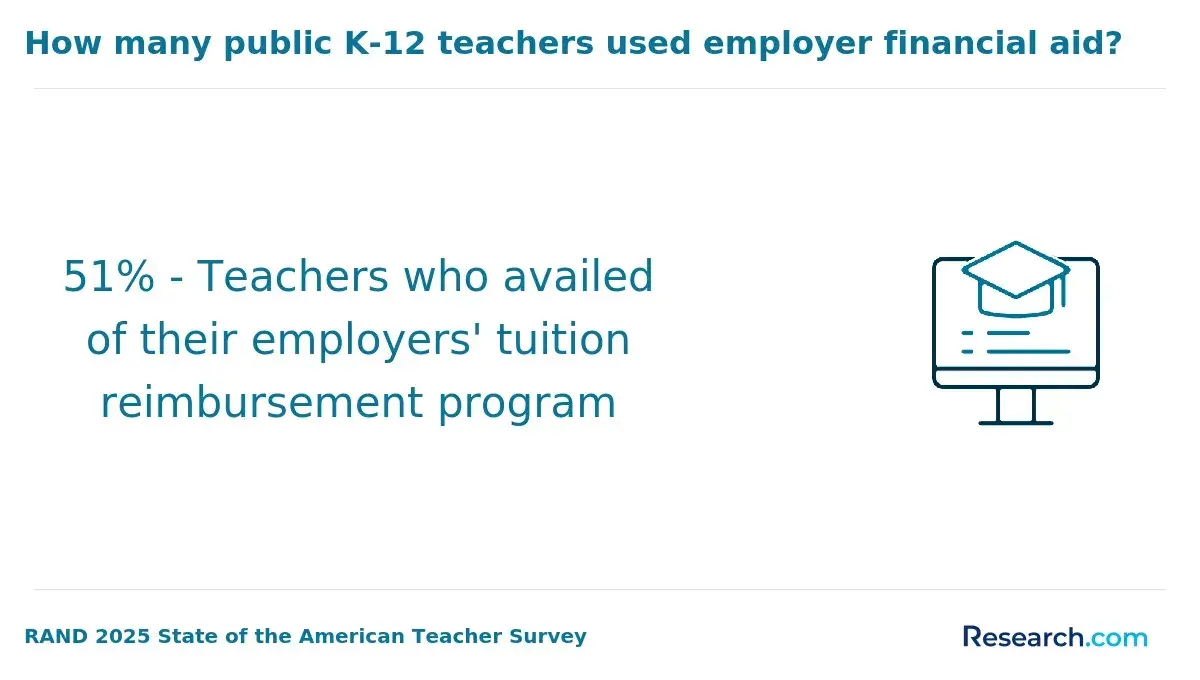
Graduate students may be able to reduce costs through federal aid, institutional scholarships, employer tuition reimbursement, military benefits, payment plans, assistantships, or merit-based awards. Availability depends on the university, enrollment status, program structure, and student eligibility.
Start financial planning early. Complete required aid forms, ask whether online students qualify for the same scholarships as campus students, and check whether your employer or school district reimburses graduate coursework. Also ask whether scholarships are renewable and whether they require a minimum GPA or course load.
Students considering related interdisciplinary programs can also review the most affordable library science master's programs online to compare how costs and aid structures differ across online graduate programs.
How Can Educational Technology Support Early Childhood Development?
Technology for young children requires extra care. Early childhood learning depends heavily on play, interaction, language development, movement, social-emotional growth, and relationships with adults. Digital tools should support these goals rather than replace hands-on learning or human interaction.
When used appropriately, educational technology can help teachers document development, individualize activities, communicate with families, provide accessible materials, and support early literacy or language practice. The key is age-appropriate design, limited and purposeful use, and alignment with developmental needs. Prospective educators who want deeper preparation in this area may compare masters programs in child development.
Key Insights
- An online master’s in educational technology is most valuable when it matches a clear career goal. It can support classroom technology leadership, instructional design, online learning, corporate training, and education program evaluation.
- Accreditation and state rules matter. Before enrolling, confirm institutional accreditation, education-specific recognition, and whether the program affects licensure, endorsements, or salary advancement in your location.
- Online degrees are more accepted than in the past, but employer views still vary. The GMAC survey found that 55% of global employers view online and traditional graduates equally, yet local markets and specific professions may differ.
- Total cost is more than tuition. Include fees, software, hardware, internet, digital materials, travel, and any practicum or residency requirements when comparing programs.
- The strongest programs focus on learning design, not just tools. Look for coursework in instructional design, accessibility, online assessment, learning analytics, AI, evaluation, and inclusive digital learning.
- Online study requires self-management. Flexibility is a major benefit, but success depends on time management, reliable technology, communication skills, and comfort learning independently.
- Educational technology is expanding across sectors. Schools, colleges, corporations, nonprofits, and public agencies all use digital learning systems, but career outcomes depend on experience, portfolio quality, location, and employer needs.
References:
- Bates, A. W. (2015, April 5). 6.2 a short history of educational technology Teaching in a digital age. BCcampus Open Publishing Open Textbooks Adapted and Created by BC Faculty.
- Engel, C. J. (2020). The acceptability of online degrees for obtaining entry-level employment in the accounting profession: A Kansas study. Global Journal of Accounting and Finance, 4(1), 16-37. IGBR.
- Ferreras-Garcia, R., Ribas, C., Sales-Zaguirre, J., & Serradell-López, E. (2021). Competencies in business degrees: A face-to-face and online comparative study. Journal of Education for Business, 96(2), 71-81. Taylor and Francis.
- Gallagher, S., & Palmer, J. (2020, September 29). The pandemic pushed universities online. The change was long overdue. Harvard Business Review.
- Graduate Management Admission Council. (2025). Corporate Recruiters Survey 2025 Report. GMAC.
- Hanson, M. (2024, November 23). Average Cost of a Master’s Degree. Education Data Initiative.
- Ma, J., Pender, M., & Hu, X. (2025). Trends in College Pricing and Student Aid 2025. College Board.
- Simunich, B., Garrett, R., Fredericksen, E. E., & Gay, K. (2025). CHLOE 10 | Meeting the Moment: Navigating Growth, Competition, and AI in Online Higher Education, 2025. Quality Matters.
- Steiner, E. D., Levine, P. R., Doan, S., & Woo, A. (2025). Teacher WellBeing, Pay, and Intentions to Leave in 2025. RAND.
- The Business Research Company. (2026, March). Education Technology (EdTech) Market Report 2026. The Business Research Company.
- U.S. Bureau of Labor Statistics. (2025, August 28). Occupational projections, 2024–2034, and worker characteristics. Retrieved February 2026, from BLS.
Other Things You Should Know About Online Master’s in Education Technology Degree Programs
In 2027, the cost of an online Master's in Education Technology varies significantly, typically ranging from $15,000 to $40,000. Prices depend on factors such as the institution, program length, and residency status. Be sure to research specific programs for the most accurate information.
Yes, employers increasingly recognize the value of online degrees. Many large companies, including Google and IBM, hire candidates with online credentials. However, acceptance can vary by locality and discipline.
In 2027, look for an online master's program in educational technology that offers updated curriculum aligned with current tech trends, accredited institutions, experienced faculty, and robust student support services. Ensure flexible scheduling and opportunities for hands-on learning or internships to enhance your practical experience.
Most online master's programs in educational technology require a bachelor's degree from an accredited institution, a minimum GPA (often around 3.0), letters of recommendation, a statement of purpose, and sometimes teaching experience. GRE scores may not be necessary for most 2027 programs.
Courses typically include Foundations of Educational Technology, Designing Technology-Rich Curriculum, Distance Teaching and Learning, Technology for Learning and Communicating, and Evaluation in Educational Technology.