
2027 Advancing in Education: How an EdS Degree Helps Teachers

Co-Founder and Chief Data Scientist
With 60% of teachers using an AI tool during the 2024–25 school year, many educators are looking to move beyond teaching into leadership roles where they can shape how innovation supports learning. An education specialist (EdS) degree bridges that path, preparing teachers to step into positions like school administrator, curriculum director, or instructional coach while leading a tech-driven change across their schools.
This guide explores the content of an EdS degree and the ways in which it can boost the career and earnings of teachers. It also presents information that prospective students will find useful, such as common admission requirements, the core skills developed, and the factors involved when choosing the ideal program.
Key Things You Should Know About EdS Degrees
- An EdS degree is an advanced, post-master's professional degree designed for experienced educators who want to move into leadership, specialized, and administrative roles.
- There are currently over 19,000 job openings for education administration roles nationwide.
- 47.94% of postsecondary education administrators earned a master's or professional degree, and 44.44% hold a doctorate or more.
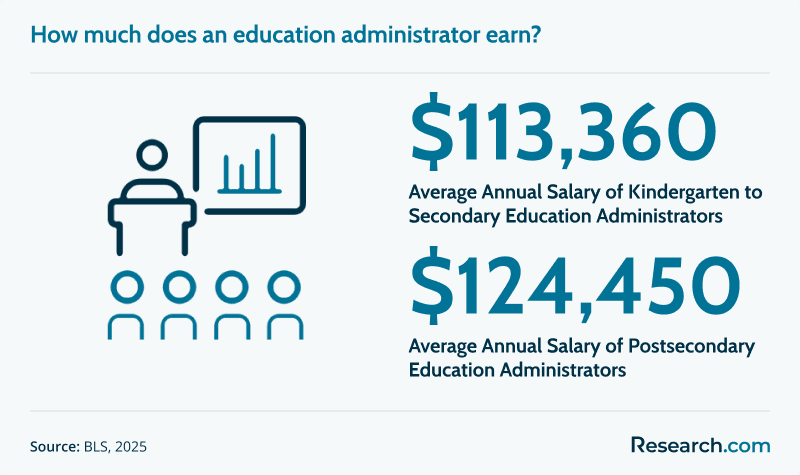
- Kindergarten to secondary school education administrators earn an average annual salary of $113,360 and a median annual salary of $104,070.
- Postsecondary education administrators receive an average annual salary of $124,450 and a median annual salary of $103,960.
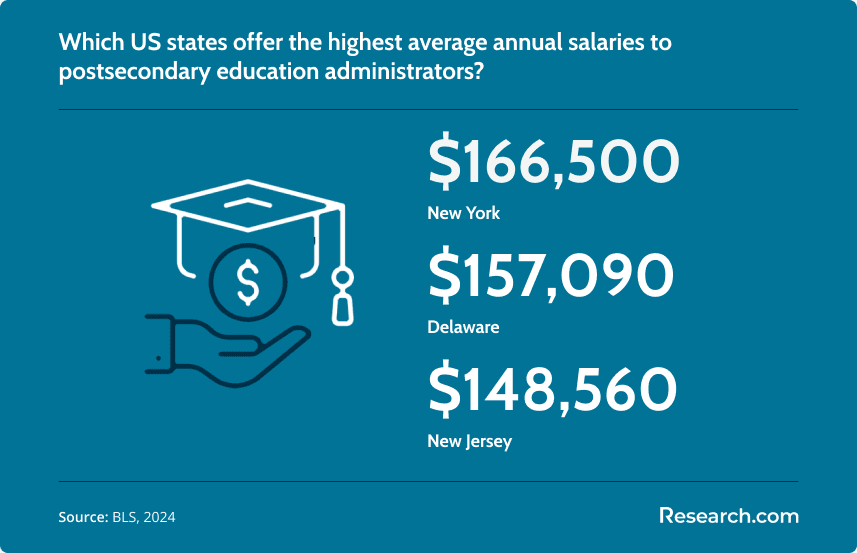
- The US states that offer the highest average yearly salaries for postsecondary education administrators are New York ($166,500), Delaware ($157,090), and New Jersey ($148,560).
- What is an EdS degree and how does it help teachers? Degree Overview
- How does an EdS degree prepare teachers for leadership roles? Leadership Roles
- What jobs can graduates get with an EdS degree? Typical Jobs
- What is the difference between an EdS degree, a master’s in education, and a doctor of education? What is the difference between an EdS degree, a master’s in education, and a doctor of education?
- What core skills are developed in EdS degree programs? Core Skills
- How much can a graduate earn with an EdS degree? Earnings
- What are the admission requirements for an EdS degree? Admission
- What are the specializations in an EdS degree? Specializations
- What are the courses to expect in an EdS degree? What are the courses to expect in an EdS degree?
- What factors should teachers consider when selecting an EdS program? What factors should teachers consider when selecting an EdS program?
- Is an EdS degree financially worthwhile? degree
- Is an EdS degree a stepping stone toward doctoral studies in education? Is an EdS degree a stepping stone toward doctoral studies in education?
What is an EdS degree—and is it the right next step for teachers?
An Education Specialist degree, commonly called an EdS, is a post-master’s professional credential for educators who want advanced responsibility without completing a full doctoral program. It is most useful for teachers, instructional coaches, counselors, and school professionals who already have graduate training and want to move into school leadership, district administration, curriculum design, school psychology, special education leadership, or another specialized education role.
The decision matters because an EdS is not a general-purpose degree. It can help teachers qualify for leadership roles, meet certain state credential requirements, improve salary lane placement in some districts, and build practical expertise in areas such as supervision, school improvement, student support, and data-based decision-making. But it also requires time, tuition, and careful program selection—especially if the goal is licensure as a principal, superintendent, or school psychologist.
Quick answer: What does an EdS degree do for teachers?
An EdS degree helps experienced educators move beyond classroom teaching into advanced leadership or specialist roles. It usually takes one to two years to complete, depending on course load and program format, and often focuses on applied practice rather than dissertation-based research. Teachers may use the degree to pursue positions such as principal, assistant principal, instructional coach, curriculum director, special education administrator, school psychologist, or district administrator.
Current job listings also suggest continuing demand for education leadership talent. Indeed reports over 19,000 job openings for education administration roles nationwide, not counting every related opening for roles such as deans, principals, or curriculum directors.
| What teachers often want from an EdS | How the degree may help | What to verify before enrolling |
| A move into school leadership | Builds preparation in supervision, school operations, staff development, and instructional improvement | Whether the program meets principal or administrator licensure rules in your state |
| A specialist role outside the traditional classroom | Supports tracks such as school psychology, instructional technology, special education, or curriculum and instruction | Whether the specialization matches the exact role you want |
| Higher pay through district salary lanes | May qualify teachers for salary advancement or stipends in some districts | Your district’s written salary schedule and degree approval policy |
| Doctoral preparation without committing yet | Can provide advanced coursework that may support later EdD study | Whether credits can transfer into a future doctoral program |
| A faster graduate path | Many EdS programs are shorter than an EdD and do not require a dissertation | Total credits, practicum hours, internship requirements, and pacing options |
Teachers who need a shorter path should compare program length carefully. Some options, including accelerated EdS in special education online programs, are built for faster completion, but speed should not outweigh accreditation, field placement quality, or licensure alignment.
How does an EdS degree prepare teachers for leadership roles?
An EdS prepares teachers for leadership by shifting the focus from managing one classroom to improving instruction, systems, staffing, culture, and outcomes across a school or district. The best programs connect theory to practical decisions educators face every day: how to evaluate instruction fairly, use student data responsibly, allocate resources, support teachers, implement policy, and lead change without losing trust.
Coursework commonly covers leadership models, organizational behavior, school finance, strategic planning, ethics, curriculum leadership, assessment, supervision, and education law. These topics help teachers understand how schools function as institutions—not only as collections of classrooms.
Many programs also include field-based learning through an internship, practicum, or applied capstone. That matters because aspiring administrators need more than academic knowledge. They need practice leading meetings, analyzing school performance data, communicating with families, supporting teachers, and navigating conflict.
The leadership value of an EdS depends heavily on the specialization. An educational leadership track may prepare a teacher for principal or district roles, while a curriculum and instruction track may be better for instructional coaching, professional development, or curriculum coordination. A school psychology track is a different pathway altogether and may have specific state credential requirements.
| Leadership competency | What EdS students learn to do | Why it matters in schools |
| Instructional supervision | Observe teaching, provide feedback, support professional growth, and align instruction with standards | School leaders are judged partly by their ability to improve teaching quality |
| Data-based decision-making | Interpret assessment, attendance, behavior, and program data | Leaders need evidence to prioritize interventions and resources |
| Legal and ethical judgment | Apply school law, privacy rules, equity principles, and compliance expectations | Poor decisions can create legal risk and harm students or staff |
| Communication and conflict resolution | Work with teachers, students, families, boards, and community partners | Leadership depends on credibility, clarity, and trust |
| Change management | Plan, implement, and evaluate school improvement efforts | New initiatives fail when leaders ignore culture and capacity |
An EdS is generally a better fit for educators who want to stay within education leadership than for professionals considering a full career pivot. If you are comparing education leadership with an unrelated field, it can help to review broader decision guides such as questions to ask before pursuing an accounting degree so you can compare cost, credential requirements, and long-term career fit across fields.
What jobs can graduates get with an EdS degree?
EdS graduates can pursue advanced positions in K–12 schools, districts, higher education, nonprofits, policy organizations, and education technology settings. The exact job options depend on specialization, state licensure, prior experience, and local hiring requirements. A broader overview of outcomes is available in Research.com’s guide to what you can do with an education specialist degree.
| Career path | Best-fit EdS specialization | Typical responsibilities | Important requirement to check |
| Principal or assistant principal | Educational leadership | Lead school operations, supervise staff, manage budgets, support instruction, and communicate with families | State administrator certification or endorsement rules |
| District administrator or superintendent | Educational leadership, policy, or administration | Oversee programs, implement policy, coordinate curriculum, and support school leaders | Whether your state requires additional superintendent certification |
| Curriculum and instruction director | Curriculum and instruction | Design, evaluate, and improve instructional programs across grade levels or departments | District expectations for leadership experience and content expertise |
| Instructional coach or academic coordinator | Curriculum and instruction, teacher leadership, or instructional technology | Coach teachers, lead professional learning, and support evidence-based classroom practices | Whether the role requires teaching licensure or specific content credentials |
| School psychologist | School psychology | Assess learning and behavioral needs, support interventions, counsel students, and collaborate with families and educators | State school psychology credential requirements; fast track school psychology online programs should still meet credential standards |
| Special education administrator | Special education leadership | Oversee services, IEP compliance, staffing, family communication, and inclusive programming | Special education licensure, administrative credentials, and IDEA compliance preparation |
| Instructional technology specialist | Instructional technology | Lead digital learning initiatives, evaluate tools, train staff, and support learning platforms | Evidence that the curriculum covers data privacy, AI use, accessibility, and implementation planning |
| Higher education administrator | Higher education leadership or community college leadership | Work in academic affairs, student services, advising, assessment, or program development | Whether the role values an EdS, master’s, EdD, or PhD |
| Assessment and accountability coordinator | Assessment, curriculum, research, or educational leadership | Coordinate testing, analyze student outcomes, and support reporting requirements | Experience with data systems, assessment policy, and district accountability rules |
| Policy analyst or education consultant | Educational policy, research, leadership, or curriculum | Evaluate programs, advise organizations, conduct research, and support education initiatives | Portfolio evidence, writing ability, research skills, and sector experience |
How is an EdS different from a master’s in education or a Doctor of Education?
The EdS sits between a master’s in education and a Doctor of Education. The main difference is purpose. A master’s usually deepens classroom or specialist knowledge, an EdS adds advanced professional preparation for leadership or specialization, and an EdD is a terminal doctoral degree focused on high-level applied research and system-wide change.
| Degree | Academic level | Main purpose | Common final requirement | Best for |
| Master’s in Education (M.Ed.) | Graduate degree after a bachelor’s | Develop stronger teaching, curriculum, leadership, or specialist skills | Varies by program; may include exams, projects, or capstones | Teachers seeking advanced classroom expertise, salary advancement, or entry into education leadership |
| Education Specialist (EdS) | Post-master’s professional degree | Prepare for advanced education leadership or specialized practice | Often a capstone, practicum, internship, or applied project rather than a dissertation | Experienced educators who want practical advancement without a full doctorate |
| Doctor of Education (EdD) | Terminal professional doctorate | Develop senior leadership, applied research, and change-management expertise | Typically requires a dissertation or doctoral research project | Professionals aiming for top administrative, policy, executive, or research-informed leadership roles |
Choose a master’s if you still need foundational graduate preparation. Choose an EdS if you already hold a master’s and want a shorter, practice-focused credential tied to leadership or specialization. Consider an EdD if your goals involve executive leadership, doctoral-level research, university-level roles, or positions where a terminal degree is preferred. Educators comparing long-term compensation can also review Doctor of Education salary information alongside EdS and M.Ed. career outcomes.
What skills do EdS programs build?
EdS programs are designed around applied professional skills rather than broad academic exploration. The strongest programs teach educators how to diagnose problems, lead people, interpret evidence, comply with regulations, and improve learning environments.
- School and organizational leadership: Students learn how to guide teams, manage change, create improvement plans, and make decisions under real-world constraints.
- Curriculum planning and instructional improvement: Programs often train educators to evaluate curriculum, align instruction with standards, support differentiated teaching, and improve classroom practice across grade levels.
- Data use and applied research: EdS students learn to interpret assessment results, attendance patterns, program outcomes, and other school data to make evidence-informed decisions.
- Coaching and professional collaboration: Graduates strengthen mentoring, feedback, facilitation, and stakeholder communication skills.
- Education technology leadership: Many programs now address learning management systems, data dashboards, digital assessment tools, AI-supported platforms, accessibility, and responsible implementation.
- Equity, inclusion, and student support: Students examine culturally responsive practice, inclusive programming, special education obligations, and strategies for supporting underserved learners.
- Legal, ethical, and policy judgment: Coursework helps educators understand school law, student rights, professional ethics, compliance, and risk management.
- Complex problem-solving: EdS programs push educators to evaluate competing priorities and design solutions that can be sustained in real schools.
These competencies align with skills commonly found in school administrator roles. Zippia reports that student issues (21%), student attendance (19.4%), and curriculum development (8.5%) appear frequently on school administrator resumes, as shown in the chart below.
Teachers who want a shorter skills-focused credential before or instead of an EdS may also compare the career benefits of college certificate programs, especially when the goal is a targeted skill such as instructional design, data analytics, or educational technology.
How much can you earn with an EdS degree?
An EdS can support access to higher-paying education roles, but earnings are not guaranteed by the degree alone. Salary depends on job title, state, district salary schedule, years of experience, licensure, union agreements, institution type, and whether the role is in K–12 or postsecondary education.
According to the United States Bureau of Labor Statistics (BLS), kindergarten to secondary school education administrators earn an average annual salary of $113,360 and a median annual salary of $104,070. Postsecondary education administrators earn an average annual salary of $124,450 and a median annual salary of $103,960.
| Role category | Average annual salary | Median annual salary | What affects pay |
| Kindergarten to secondary school education administrators | $113,360 | $104,070 | State, district salary schedule, leadership level, school size, and contract terms |
| Postsecondary education administrators | $124,450 | $103,960 | Institution type, department, years of experience, location, and administrative scope |
Location can make a major difference. For postsecondary education administrators, the highest average yearly salaries are reported in New York ($166,500), Delaware ($157,090), and New Jersey ($148,560). For kindergarten to secondary school education administrators, the highest-paying states are Washington ($148,750), New York ($145,530), and Connecticut ($142,630).
The chart below shows salary ranges for postsecondary education administrators. When evaluating ROI, compare education leadership salaries with other career salary guides, such as the biomedical engineer salary guide, only if you are seriously considering a cross-field career move and understand the retraining requirements.
What are the admission requirements for an EdS degree?
EdS admissions requirements vary by university and specialization, but most programs expect applicants to have graduate-level preparation and professional experience in education. Programs that lead to licensure may have stricter rules than non-licensure tracks.
| Common requirement | What it usually means | Why it matters |
| Master’s degree | Applicants typically need a master’s in education or a related field such as curriculum and instruction, special education, teacher leadership, counseling, or administration | The EdS is normally a post-master’s credential; online options such as the shortest master’s programs in teacher leadership online may satisfy this step if properly accredited |
| Teaching license or professional certification | Many programs require current educator licensure, especially for leadership or school-based tracks | Licensure-based programs need proof that applicants are already practicing educators |
| Professional experience | Many schools ask for at least 2–3 years of teaching or education experience | EdS coursework often assumes students can connect assignments to real school settings |
| Graduate GPA | A minimum graduate GPA of 3.0 is common | Programs use prior graduate performance as evidence of readiness |
| Recommendations | Applicants often submit two or three letters from supervisors, administrators, or faculty | References help confirm leadership potential and professional maturity |
| Statement of purpose | Candidates explain their goals, specialization interest, and reasons for pursuing the EdS | A clear goal helps admissions teams determine program fit |
| Resume or CV | Applicants document teaching, leadership, service, certifications, and accomplishments | Experience is especially important in leadership-oriented programs |
| Program-specific items | Some tracks may require an interview, writing sample, GRE scores, or proof of field placement access | Requirements vary most for licensure, school psychology, and administrator preparation tracks |
Graduate credentials are common among education administrators. College Board data show that 47% of postsecondary education administrators in the United States earned a master's or professional degree, while only 7% hold only a bachelor’s degree. The chart below provides additional context.
What EdS specializations are available?
Specialization choice is one of the most important EdS decisions because it shapes coursework, field experiences, licensure options, and career outcomes. A strong program should align with the exact role you want, not just with a broad interest in education.
| Specialization | Best for educators who want to... | Possible roles |
| Educational leadership | Lead schools, departments, or district initiatives | Principal, assistant principal, district administrator, superintendent in some states |
| Curriculum and instruction | Improve teaching, curriculum, assessment, and instructional systems | Instructional coach, curriculum director, academic coordinator |
| Special education | Lead inclusive services and support students with disabilities | Special education administrator, inclusion coordinator, special education specialist; compare the best online EdS degree in special education programs for support services and field expectations |
| School psychology | Support student learning, mental health, behavior, assessment, and intervention | School psychologist or student support specialist, depending on state credential rules |
| Instructional technology | Lead digital learning, AI tool evaluation, platform adoption, and technology training | Instructional technology specialist, digital learning coordinator, education technology leader |
| Early childhood education | Improve learning systems for young children and support family engagement | Early learning specialist, preschool administrator, early childhood program leader |
| Higher education and community college leadership | Work in postsecondary administration, advising, student success, or program management | Academic affairs administrator, student services leader, community college administrator |
| Reading and literacy | Lead literacy assessment, intervention, and district reading initiatives | Reading specialist, literacy coach, district literacy coordinator; educators focused on English language teaching can also compare fastest online TESOL master’s degree programs |
| STEM education | Strengthen science, technology, engineering, and mathematics instruction | STEM coordinator, curriculum specialist, instructional leader |
| Educational policy and research | Evaluate programs, analyze systems, and influence policy decisions | Policy analyst, education consultant, program evaluator |
What courses should you expect in an EdS program?
EdS curricula differ by specialization, but most programs combine advanced education foundations with applied leadership or specialist coursework. Students should expect assignments tied to workplace problems, school improvement plans, policy analysis, or practicum-based projects.
- Leadership in educational organizations: Examines leadership theory, organizational culture, decision-making, and supervision in schools or districts.
- Curriculum design and evaluation: Teaches students how to develop, review, and improve instructional programs and curriculum frameworks.
- Instructional strategies for diverse learners: Focuses on differentiation, inclusive teaching, culturally responsive practice, and student-centered interventions.
- Educational research and data analysis: Builds skills in interpreting research, analyzing school data, and applying evidence to improvement efforts.
- School law and ethics: Covers legal responsibilities, student rights, professional conduct, equity, and compliance issues.
- Technology integration in education: Explores digital tools, AI-supported platforms, learning management systems, digital assessments, accessibility, and implementation strategy.
- Assessment and accountability in schools: Prepares educators to interpret assessment results, design improvement measures, and respond to accountability expectations.
- Supervision of instruction: Develops coaching, teacher evaluation, feedback, and professional learning community leadership skills.
- Special education policy and practice: In special education tracks, this course may address IEPs, IDEA compliance, service delivery, and instructional interventions.
- Capstone, practicum, or internship: Many programs end with a field-based project or supervised experience that connects coursework to real school or district needs.
What should teachers look for when choosing an EdS program?
The best EdS program is not always the cheapest, fastest, or highest-ranked option. The right choice is the one that matches your career goal, state requirements, schedule, budget, and preferred learning format. Teachers should compare programs using practical criteria before applying.
| Selection factor | What to ask | Why it matters |
| Accreditation | Is the university regionally accredited, and does the education program hold relevant professional accreditation such as CAEP where applicable? | Accreditation may affect licensure, transfer credit, employer recognition, and financial aid eligibility |
| Licensure alignment | Does the program meet requirements for principal, superintendent, school psychologist, or other credentials in my state? | An EdS from another state or non-licensure track may not qualify you for your intended role |
| Specialization fit | Does the curriculum match the job I want after graduation? | A leadership track and a curriculum track can lead to very different outcomes |
| Program format | Is it online, hybrid, or campus-based? Are classes synchronous or asynchronous? | Working educators need a schedule that can realistically fit teaching, family, and fieldwork obligations |
| Field experience | Can I complete practicum or internship hours in my current district? | Placement logistics can affect completion time and workload |
| Total cost | What is the full cost including tuition, fees, books, travel, technology, and licensure exams? | Tuition alone does not show the true investment |
| Employer support | Will my district offer tuition reimbursement, salary lane credit, release time, or placement support? | District policies can change the degree’s financial value |
| Faculty and advising | Do faculty have relevant school leadership or specialist experience, and is advising proactive? | Strong mentoring is especially valuable for licensure and career transitions |
Common mistakes to avoid
- Choosing a program before checking state licensure rules: This is the biggest risk for aspiring principals, superintendents, and school psychologists.
- Comparing only tuition per credit: Fees, internship requirements, travel, books, exam costs, and extra terms can change the real price.
- Assuming online automatically means flexible: Some online programs have fixed live class times, cohort pacing, residency requirements, or daytime fieldwork.
- Ignoring salary lane policies: Your district may require preapproval or may treat an EdS differently depending on accreditation and relevance.
- Picking a specialization that sounds broad: A general leadership program may not prepare you for curriculum, school psychology, or technology roles.
- Relying only on rankings: Rankings can help with discovery, but licensure fit, placement support, cost, and curriculum alignment matter more.
Is an EdS degree worth the cost?
An EdS can be financially worthwhile when it leads to a specific career move, required credential, promotion pathway, or documented salary increase. It is less compelling when a teacher enrolls without confirming licensure rules, salary lane credit, total program cost, or realistic job availability in the target region.
Before enrolling, estimate the return on investment using your own numbers: total tuition and fees, expected time to completion, district reimbursement, likely salary lane adjustment, potential promotion pay, and the opportunity cost of internships or reduced work hours. Do not assume that the degree alone guarantees a leadership job or a specific salary.
| An EdS may be worth it if... | It may not be the best choice if... |
| Your state or district recognizes the credential for the role you want | You have not confirmed licensure or endorsement requirements |
| Your district provides salary advancement or tuition support | Your employer does not reward the degree and you do not plan to change roles |
| You want applied leadership training but not a full doctorate | Your goal requires an EdD, PhD, or a different professional license |
| The specialization directly matches your target job | You are choosing the program mainly because it is convenient or inexpensive |
| You can complete practicum or internship requirements without disrupting employment | Fieldwork would be difficult to schedule or unsupported by your district |
If you are comparing graduate programs across fields, reviewing cost-focused resources such as low cost online MLIS options can help you think more carefully about tuition, program format, employer demand, and credential value before committing.
Can an EdS degree lead to a doctorate in education?
An EdS can serve as a bridge to doctoral study, especially for educators who want to test advanced graduate work before pursuing an EdD. Because the EdS is practice-focused, it may strengthen leadership experience, applied research skills, and professional confidence before doctoral enrollment.
However, credit transfer is not automatic. Some universities allow EdS credits to count toward an EdD, while others limit transfer credits or require students to repeat certain doctoral courses. If a future doctorate is part of your plan, ask each school how many EdS credits may transfer, whether the EdS capstone aligns with doctoral research expectations, and whether the institution offers a clear EdS-to-EdD pathway.
Educators who already know they want a terminal credential should compare EdS programs with accelerated doctoral options such as the fastest doctorate in education pathways before choosing a route.
What graduates say about earning an EdS degree
-
: "Earning my Education Specialist degree online helped me focus on educational leadership while staying in my job. The coursework was practical, especially the emphasis on using data to make better decisions, and I was able to learn from educators working in different parts of the country. It prepared me to step into school administration with much more confidence.
Rebecca"
-
: "My EdS program strengthened the way I think about curriculum, assessment, and teacher support. The online format made it possible to keep teaching while learning from faculty who understood real school challenges.
Selma"
-
: "Balancing graduate school, parenting, and teaching felt intimidating at first. The online EdS structure made it manageable, and I could apply new leadership and instructional strategies immediately in my classroom.
April"
How AI and education technology are changing the value of an EdS
EdS programs are increasingly shaped by digital learning, AI-supported tools, data dashboards, student information systems, online assessment, and privacy concerns. School leaders now need to evaluate technology not only for convenience but also for learning impact, accessibility, data security, bias, and teacher workload.
Gallup’s report Teaching for Tomorrow: Unlocking Six Weeks a Year With AI reflects the growing attention on AI in K–12 work. For EdS students, the practical question is not whether schools will use AI, but how leaders can adopt tools responsibly, train staff effectively, protect student data, and avoid widening inequities.
Questions to ask before applying to an EdS program
- What exact job do I want after graduation?
- Does this specialization align with that job?
- Will the program meet licensure, endorsement, or certification rules in my state?
- Is the university accredited, and is the education program recognized by relevant professional bodies?
- Can I complete internship, practicum, or fieldwork requirements while employed?
- What is the total cost, including fees, books, travel, technology, and licensure exams?
- Will my district approve the degree for salary lane movement or tuition reimbursement?
- How many credits are required, and how long do students usually take to finish?
- What career support, advising, and placement help does the program provide?
- If I later pursue an EdD, will any EdS credits transfer?
References
- BLS (2024, April 3). 11-9032 Education Administrators, Kindergarten through Secondary. BLS
- BLS (2024, April 3). 11-9033 Education Administrators, Postsecondary. BLS
- BLS (2025, August 25). Industry: Cross-industry, Private, Federal, State, and Local Government Period: May 2024. BLS
- BLS (2025, April 18). Postsecondary Education Administrators. BLS; occupational data tool: BLS
- Gallup (2025). Teaching for Tomorrow: Unlocking Six Weeks a Year With AI. Gallup
- Zippia (2025, January 8). School administrator skills for your resume and career. Zippia
Key Insights
- An EdS is a post-master’s professional degree designed for experienced educators who want advanced leadership or specialist roles without completing a full doctorate.
- The degree is most valuable when it is tied to a clear goal, such as principal licensure, curriculum leadership, school psychology, special education administration, or instructional technology leadership.
- Program choice matters more than the credential name. Accreditation, state licensure alignment, specialization fit, field placement support, and total cost should drive the decision.
- Salary outcomes vary by job, location, district policy, and experience. BLS salary data show strong earnings for education administrators, but no degree guarantees promotion or pay increases.
- Online and accelerated EdS programs can work well for teachers, but applicants should check live class requirements, internship logistics, and whether the program meets local credential rules.
- An EdS can support later doctoral study, but transfer credit is not guaranteed. Ask about EdS-to-EdD pathways before enrolling if a doctorate is part of your long-term plan.
- The smartest next step is to identify your target role, confirm your state and district requirements, compare total program costs, and speak with admissions and licensure advisors before applying.
Other Things You Need to Know About EdS Degrees
In 2027, an EdS degree provides teachers with advanced pedagogical skills and leadership training, opening roles like curriculum specialist or assistant principal. It also enhances expertise in specific educational areas, making teachers more competitive and potentially leading to higher salaries.
In 2027, an EdS degree equips teachers with advanced leadership skills, data-driven decision-making abilities, and expertise in curriculum development. These competencies are designed to enhance their capabilities in addressing complex educational challenges and facilitating school improvements effectively.
In 2027, an EdS degree helps teachers advance their careers by providing specialized knowledge for leadership roles. It enhances their ability to implement educational improvements, qualify for higher administrative positions, and often results in increased salary potential compared to those with only a master's degree.


