
2027 Most Affordable Online Elementary Education Programs

Co-Founder and Chief Data Scientist
An affordable online elementary education degree can make sense if you want to become a licensed elementary teacher without taking on unnecessary college costs. The decision is not only about finding the lowest tuition. You also need to confirm accreditation, state licensure alignment, student teaching requirements, transfer-credit policies, and whether the program fits your schedule.
This guide is designed for future teachers, paraprofessionals, career changers, and working adults comparing low-cost online elementary education programs. It explains what these programs include, how online study compares with campus-based teacher preparation, what costs to expect, how licensure works, and which career paths may be available after graduation. Salary and job-market figures can vary by state, district, school type, credentials, and experience; the figures cited here should be used as planning benchmarks rather than guaranteed outcomes.
Quick answer: Is an affordable online elementary education degree worth it?
For many aspiring teachers, yes—if the program is properly accredited, approved for teacher preparation in the state where they plan to teach, and includes supervised fieldwork or student teaching. Elementary school teachers have been reported with an average salary of $61,990, and 2025 data places typical salaries between $55,000 and $74,000 per year depending on location and experience. A lower-cost online program can improve return on investment by reducing tuition, commuting, and relocation costs while still preparing students for licensure when state requirements are met.
- Best fit: students who need flexibility, plan to teach in a specific state, and are willing to complete local field placements.
- Use caution if: you have not verified licensure approval, you need extensive in-person support, or the program does not clearly explain student teaching arrangements.
- Common outcomes: elementary school teacher, curriculum developer, instructional designer, educational consultant, educational support specialist, and nonprofit education advocate.
How can educators engage with families and communities in online education?
Strong elementary teaching depends on more than lesson planning. Teachers must know how to communicate with families, coordinate support at home, and build trust with communities. Online elementary education programs often address this through assignments on family communication, virtual parent-teacher meetings, progress updates, community resource mapping, and strategies for supporting caregivers who help children learn outside school hours.
Community engagement also matters in online and hybrid learning environments. Future teachers may learn how to partner with local organizations, use digital tools to connect families with school resources, and design activities that respect students’ cultural, linguistic, and family backgrounds. These skills are especially useful when children need coordinated academic, social, or behavioral support.
If your long-term interest is younger learners and family-centered education, the cheapest online master's degree in early childhood education can be a related pathway for deepening expertise in early learning, family engagement, and inclusive classroom practice.
What should you expect from an online elementary education program?
An online elementary education program usually combines remote coursework with supervised teaching experience in a real school setting. The academic portion may be delivered through recorded lectures, live online meetings, discussion boards, digital assignments, and virtual collaboration. The clinical portion normally requires observation hours, field experiences, practicum placements, or student teaching arranged near where the student lives.
| Program feature | What it means for students | Why it matters |
| Online coursework | Complete readings, discussions, assignments, and projects through a learning platform. | Helps working adults and students with family responsibilities study with more flexibility. |
| Live or asynchronous classes | Some courses meet at set times, while others allow students to complete work on their own schedule. | Affects whether the program fits your work hours and time zone. |
| Field experience | Observe or assist teachers in elementary classrooms, often locally. | Builds classroom readiness and may be required for licensure. |
| Student teaching | Take on supervised teaching responsibilities in a K-6 or similar elementary setting. | Usually one of the most important requirements for teacher certification. |
| Licensure preparation | Courses may align with state exams, teaching standards, and classroom competencies. | Determines whether the degree can lead to a teaching license in your intended state. |
- Flexible scheduling: Many online programs allow students to complete weekly coursework around employment or caregiving responsibilities.
- Regular participation: Students should expect discussion posts, group projects, virtual presentations, and communication with instructors and classmates.
- Applied practice: A credible teacher-preparation program should include practical experience, not only theory.
- Core education courses: Common subjects include foundations of education, child and adolescent development, curriculum design, instructional methods, assessment, and classroom management.
Where can you work with an online elementary education degree?
The most direct career path is elementary school teaching, typically serving children from kindergarten through fifth or sixth grade, depending on the state and district. Graduates commonly work in public schools, private schools, charter schools, and faith-based schools. Public school teaching generally requires state licensure, and private school requirements can vary by employer.
The degree can also support roles outside a traditional classroom. Graduates may work in educational support services, curriculum development, instructional design, tutoring programs, after-school organizations, education nonprofits, and consulting. These alternatives may appeal to graduates who enjoy education but do not want a full-time classroom teaching role.
How much can you make with an online elementary education degree?
Earnings depend heavily on state, district salary schedules, years of experience, union agreements, credentials, and whether the teacher works in a public, private, or charter school. This guide cites several salary figures from the source material: elementary school teachers have been reported with an average salary of $61,990; 2025 data places typical salaries between $55,000 and $74,000 per year; another cited figure reports a median annual salary of around $58,775 in 2026; and online elementary school teachers in 2026 have an average annual salary of $52,101.
Because salary estimates come from different sources and definitions, students should check state education department salary schedules and local district pay scales before estimating ROI. Advanced degrees, endorsements, bilingual skills, special education credentials, and years of service may affect compensation, but no degree can guarantee a specific salary.
- Most Affordable Online Elementary Education Programs for 2027
- How long does it take to complete an online elementary education program?
- How does an online elementary education program compare to an on-campus elementary education program?
- What is the average cost of an online elementary education program?
- What are the financial aid options for students enrolling in an online elementary education program?
- What are the prerequisites for enrolling in an online elementary education program?
- What courses are typically in an online elementary education program?
- What types of specializations are available in online elementary education programs?
- What are the accreditation and licensing requirements for online elementary education programs?
- How can additional certifications and professional development boost my teaching credentials?
- What professional development and career support resources accompany online elementary education programs?
- How do online elementary education programs promote diversity, equity, and inclusion?
- How to choose the best online elementary education program?
- Can I accelerate my online elementary education degree?
- What challenges might I face in an online elementary education program?
- What career paths are available for graduates of online elementary education programs?
- How can emerging technologies reshape classroom engagement in online elementary education?
- What is the job market for graduates with an online elementary education degree?
- What kind of practical teaching experience can I gain from an online elementary education program?
- How can integrating library science strengthen my teaching credentials?
- How can a creative writing online degree enhance my teaching practice?
- What are the pathways to advanced degrees after an online elementary education program?
Most Affordable Online Elementary Education Programs for 2027
How do we rank schools?
Research.com rankings are built from structured research and data analysis. The process considers academic quality, affordability, institutional information, and publicly available education data. Data sources used in the ranking process include the IPEDS Database, Peterson’s Database, the College Scorecard Database, and the National Center for Education Statistics.
Because earning a teaching degree is a major financial and professional commitment, our ranking methodology emphasizes transparency, comparability, and practical value for students. Rankings should be used as a starting point, not as a substitute for checking licensure approval, total cost, transfer-credit rules, and student teaching requirements.
| School | Program length | Cost information | Credits | Accreditation or approval listed |
| Western Governors University | 30 months | Flat rate of $3,825 per six-month term | 120 | CAEP, AAQEP |
| University of the Cumberlands | 30 months | $220 | 120 | CAEP, EPSB in Kentucky |
| Fort Hays State University | 4 years | $242.76 | 127 | CAEP, KSDE |
| Wichita State University | 4 years | $241.55 (residents), $572.15 (non-residents) | 120 | HLC-NCA, CAEP, Kansas State Board of Education |
| Sterling College | 2 years | $145 per credit hour | 41 Credits | Kansas State Department of Education |
| University of Northern Iowa | 2 years | $350 | 51 Credits | HLC |
| East Carolina University | 4 years | $7,516 (residents), $23,793 (non-residents) | 120 | CAEP |
| University of South Carolina | 4 years | $433.25 (residents), $869.00 (non-residents) | 180 | CAEP |
| Campbell University | 4 years | $450 | 124 | AAQEP |
| Drexel University | 4 years | $459 | 180 | CAEP |
1. Western Governors University Online Elementary Education Program
Western Governors University offers an online elementary education bachelor’s program structured for students seeking teacher licensure. The program is designed with flexible coursework that students can access online, and the school states that the degree is intended to prepare students for licensure in any of the 50 states in the US. Students considering WGU should still confirm requirements with their own state licensing agency before enrolling.
- Program Length: 30 months
- Cost per Credit: Flat rate of $3,825 per six-month term
- Required Credits to Graduate: 120
- Accreditation: Council for the Accreditation of Educator Preparation (CAEP), Association for Advancing Quality in Educator Preparation (AAQEP)
2. University of the Cumberlands Online Elementary Education Program
The University of the Cumberlands offers an online bachelor of arts in elementary education for students who want a flexible route into teaching. The curriculum includes teaching preparation in areas such as English, Science, and Mathematics, and students may select a teaching concentration. The program is designed to prepare students for a teaching license in Kentucky, so out-of-state students should verify whether it meets their state’s rules.
- Program Length: 30 months
- Cost per Credit: $220
- Required Credits to Graduate: 120
- Accreditation: CAEP, Educational Professional Standards Board (EPSB) in Kentucky
3. Fort Hays State University Online Elementary Education Program
Fort Hays State University offers a Bachelor of Science in Elementary Education online that leads to licensure in Kansas. Students outside Kansas may be able to enroll, but they should review their own state’s licensing requirements before committing. The program combines general education, teaching theory, field placements, and internships so students can connect coursework with classroom practice.
- Program Length: 4 years
- Cost per Credit: $242.76
- Required Credits to Graduate: 127
- Accreditation: CAEP, Kansas State Department of Education (KSDE)
4. Wichita State University Online Elementary Education Program
Wichita State University offers the Bachelor of Arts in Education Early Childhood Unified / Elementary Education Teacher Apprentice program. It is especially relevant for current educators who want to complete a bachelor’s degree while continuing to work. The program provides separate curriculum options for students who already hold an Associate of Arts in Elementary Education and those who do not, and it is designed to lead to licensure in Kansas.
- Program Length: 4 years
- Cost per Credit: $241.55 (residents), $572.15 (non-residents)
- Required Credits to Graduate: 120
- Accreditation: Higher Learning Commission of the North Central Association of Colleges and Schools (HLC-NCA), CAEP, Kansas State Board of Education
5. Sterling College Online Elementary Education Program
Sterling College offers an online elementary education pathway through its Education Department. The program is built around teacher preparation and professional studies, with attention to accreditation expectations and collaboration across academic departments. It may appeal to students seeking a focused online route to elementary education preparation within the Kansas licensure context.
- Program Length: 2 years
- Cost per Credit: $145 per credit hour
- Required Credits to Graduate: 41 Credits
- Accreditation: Kansas State Department of Education
6. University of Northern Iowa Online Elementary Education Program
The University of Northern Iowa offers an online elementary education program through its College of Education. The program focuses on understanding elementary-aged learners, applying classroom best practices, and using current instructional methods. Students may also have options to add minors that match their interests and career goals.
- Program Length: 2 years
- Cost per Credit: $350
- Required Credits to Graduate: 51 Credits
- Accreditation: Higher Learning Commission (HLC)
7. East Carolina University Online Elementary Education Program
East Carolina University offers an online BS in Elementary Education with a strong practical component. Students complete a yearlong online internship in a K-6 elementary classroom and move from observation toward greater teaching responsibility. Support comes from ECU faculty, classroom mentors, and university supervisors, which can be valuable for students who want structured guidance during clinical preparation.
- Program Length: 4 years
- Cost per Credit: $7,516 (residents), $23,793 (non-residents)
- Required Credits to Graduate: 120
- Accreditation: Council for the Accreditation of Educator Preparation (CAEP)
8. University of South Carolina Online Elementary Education Program
The University of South Carolina Bachelor of Arts in Elementary Education prepares students to teach children in grades 2 through 6. The program emphasizes inquiry-based teaching, curriculum development, and the use of data to guide instruction. Students who complete all requirements and receive faculty recommendations are prepared for teacher certification in elementary education.
- Program Length: 4 years
- Cost per Credit: $433.25 (residents), $869.00 (non-residents)
- Required Credits to Graduate: 180
- Accreditation: Council for the Accreditation of Educator Preparation (CAEP)
9. Campbell University Online Elementary Education Program
Campbell University offers an online elementary education program with study-plan options tied to students’ professional goals. Students can pursue Elementary Education with K-6 licensure only or add preparation in Birth-Kindergarten, Middle Grades, or Special Education. The curriculum addresses curriculum design, content knowledge, assessment, instruction, and student diversity in elementary classrooms.
- Program Length: 4 years
- Cost per Credit: $450
- Required Credits to Graduate: 124
- Accreditation: Association for Advancing Quality in Educator Preparation (AAQEP)
10. Drexel University Online Elementary Education Program
Drexel University offers an online bachelor’s program in elementary education designed around PK-4 elementary teacher certification or PK-4 and Special Education certification. Students receive a plan of study focused on classroom leadership, teaching fundamentals, and preparation for elementary education careers. The special education option may be useful for students who want a broader teaching credential.
- Program Length: 4 years
- Cost per Credit: $459
- Required Credits to Graduate: 180
- Accreditation: Council for the Accreditation of Educator Preparation (CAEP)
What graduates say about online elementary education programs
-
: "
My online elementary education program gave me the schedule flexibility I needed while still helping me connect with other future teachers. Group projects, online discussions, and shared assignments made the experience feel collaborative rather than isolated. - Keith
"
-
: "
The online format helped me learn through simulations, classroom scenarios, and instructor feedback. I liked being able to practice teaching concepts before applying them in a real classroom setting. - Lin
"
-
: "
For me, online study worked because I could keep my job while completing recorded lessons, interactive activities, and coursework on a manageable schedule. The format made earning the degree more realistic. - Melvin
"
Key Findings
- Online elementary education degrees can make teacher preparation more accessible for students balancing work, family, or location constraints.
- Many programs take around four years, although some listed options use shorter timelines such as 30 months or 2 years.
- Most credible programs combine education theory with classroom-based experience, including fieldwork, practicum, internships, or student teaching.
- Graduates may pursue classroom teaching as well as curriculum development, educational consulting, instructional design, educational support, and nonprofit education roles.
- Online elementary school teachers in 2026 have an average annual salary of $52,101.
- Around 103,800 new jobs are expected for kindergarten and elementary school teachers each year until 2034.
How long does it take to complete an online elementary education program?
A bachelor’s degree in elementary education commonly takes around four years and often includes about 120 credits. The exact timeline depends on transfer credits, enrollment status, fieldwork requirements, state licensure rules, and whether the school offers accelerated or competency-based coursework. Some programs listed in this guide report timelines of 30 months, 2 years, or 4 years.
Students often ask, can you get your teaching degree online? Yes, many colleges now deliver the academic portion of teacher preparation online. However, elementary education is not fully virtual in the practical sense because licensure-oriented programs usually require in-person classroom experience.
| Student situation | Likely timeline impact | What to verify |
| First-time bachelor’s student | Often around four years | Total credits, general education requirements, and student teaching semester |
| Transfer student | May finish faster if credits apply | Transfer-credit limits and education-course residency rules |
| Working adult | May need part-time pacing | Whether field placements can fit around employment |
| Accelerated learner | May shorten completion time | Whether the accelerated option still meets licensure standards |
How does an online elementary education program compare to an on-campus elementary education program?
Online and campus-based elementary education programs can lead to similar outcomes when both are accredited and approved for licensure. The main difference is delivery. Online programs usually offer more scheduling flexibility, while campus programs often provide more immediate access to in-person faculty, classmates, school partnerships, and campus resources.
Some of the cheapest online teaching degree options may reduce commuting and relocation costs. Online platforms can also support peer and instructor interaction; research has examined the role of a dynamic online learning community in remote learning environments. Still, students who prefer face-to-face discussion, structured campus routines, and direct access to local school partnerships may prefer an on-campus program.
| Factor | Online elementary education | On-campus elementary education |
| Schedule | Often more flexible, especially for asynchronous courses | Usually follows set class times |
| Location | Coursework can be completed remotely | Requires regular campus attendance |
| Fieldwork | Usually completed in local schools approved by the program | Often arranged through campus-school partnerships |
| Peer interaction | Discussion boards, video meetings, group projects | In-person classes, study groups, campus events |
| Best for | Working adults, remote learners, students needing flexibility | Students who want campus structure and direct in-person support |
What is the average cost of an online elementary education program?
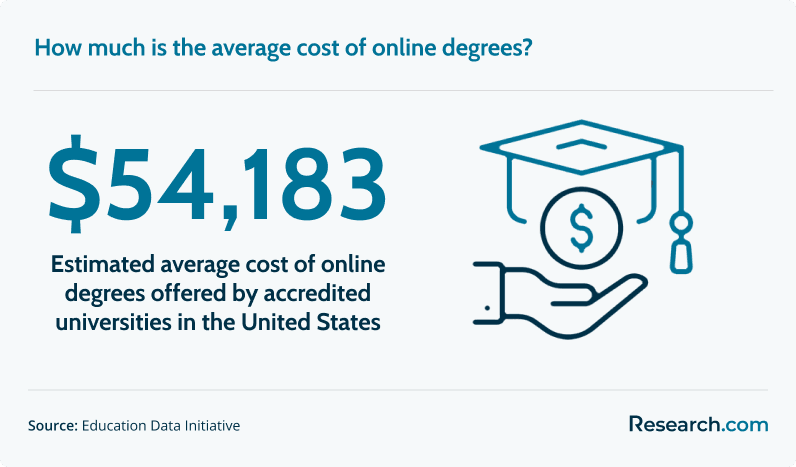
The source material places the typical cost of an online elementary education degree program between $10,000 to $30,000. It also cites $54,183 as the average cost of degrees in the United States. Actual cost depends on tuition rate, residency status, required credits, fees, books, background checks, testing fees, field placement costs, and whether previous credits transfer.
Online study can lower indirect expenses by reducing commuting, housing, and relocation costs. However, students should compare total cost, not just advertised tuition. A program with low per-credit tuition may become more expensive if it accepts few transfer credits, requires extra semesters, charges high online fees, or does not help with local student teaching placement.
| Cost factor | Why it matters | Question to ask |
| Tuition structure | Schools may charge per credit, per term, or different resident and non-resident rates. | What is the total estimated tuition through graduation? |
| Transfer credits | Accepted credits can reduce time and cost. | How many of my prior credits will apply to the degree? |
| Licensure exams | Testing fees may not be included in tuition. | Which exams are required, and who pays for them? |
| Field placement | Student teaching may require schedule changes or travel. | Will the program arrange placements near me? |
| Fees and materials | Online fees, books, software, and background checks can add costs. | Can I see a full cost breakdown before enrolling? |
What are the financial aid options for students enrolling in an online elementary education program?
Students in eligible online elementary education programs may be able to use federal grants, scholarships, student loans, work-study, institutional aid, and outside scholarships. Aid eligibility depends on the institution, program status, enrollment level, student financial circumstances, and federal or state rules.
Education majors should ask each school about scholarships for future teachers, state teacher grants, district partnerships, and service-based aid. Many universities also offer institutional awards for education students, including those pursuing online masters in early childhood education. Students can also review scholarships for elementary education majors to identify funding sources outside the university.
- Complete the FAFSA: This is usually the first step for federal financial aid consideration.
- Ask about teacher-specific aid: Some awards target students preparing for high-need schools, special education, STEM, bilingual education, or rural districts.
- Compare net price: A higher-tuition school may be cheaper after grants and scholarships.
- Be careful with loans: Borrow only after estimating likely monthly payments and entry-level teacher salary in your state.
What are the prerequisites for enrolling in an online elementary education program?
Admission requirements vary by institution and degree level. Bachelor’s programs normally require a high school diploma or equivalent, while master’s programs generally require a completed bachelor’s degree. Similar to affordable online master's programs for teachers, applicants should check whether the program expects prior coursework, minimum GPA, field experience, or state-specific eligibility.
- Educational background: Most bachelor’s programs require a high school diploma or equivalent. Some students may enter with an associate degree or transferable college credits.
- Application and fee: Applicants usually submit an online application and may need to pay an application fee.
- Official transcripts: Schools often request high school and any college transcripts, and some programs set minimum GPA requirements.
- Standardized tests: Some programs may request SAT or ACT scores, although many online programs have become more flexible.
- Recommendations: Certain programs ask for letters from teachers, supervisors, or professionals who can comment on the applicant’s readiness.
- Technology access: Online students need a reliable computer, internet access, required software, and basic digital skills.
- Background checks: Teacher-preparation students may need background clearance before working in schools.
What courses are typically in an online elementary education program?
Course titles differ by school, but most elementary education programs cover child development, teaching methods, subject-specific pedagogy, classroom management, assessment, and inclusive education. Students should look for a curriculum that connects theory to practice and prepares them for state licensure exams and supervised teaching.
| Course area | What students learn | Classroom relevance |
| Foundations of education | History, philosophy, policy, and social contexts of schooling | Helps teachers understand how schools operate and serve communities |
| Child development and psychology | Cognitive, social, emotional, and physical development in children | Supports age-appropriate instruction and behavior expectations |
| Elementary teaching methods | Strategies for teaching math, science, language arts, and social studies | Builds lesson-planning and instructional delivery skills |
| Classroom management | Routines, expectations, engagement, and behavior support | Helps create safe, productive learning environments |
| Assessment and evaluation | Designing assessments, interpreting results, and adjusting instruction | Helps teachers monitor progress and support different learners |
| Special education and inclusion | Inclusive practices and support for students with diverse learning needs | Prepares teachers to adapt instruction and collaborate with specialists |
What types of specializations are available in online elementary education programs?
Some online elementary education programs allow students to choose concentrations, endorsements, or electives that align with career goals. Specializations can be useful, but students should confirm whether they lead to a recognized endorsement or simply provide focused coursework.
- Special education: Focuses on teaching students with disabilities and diverse learning needs. Students who want to continue in this area after a bachelor’s degree may compare the best and cheapest online master's in special education.
- Mathematics education: Emphasizes strategies for helping elementary learners build number sense, problem-solving skills, and confidence with math concepts.
- Literacy and reading: Covers reading development, writing instruction, phonics, comprehension, and interventions for struggling readers.
- Science education: Prepares teachers to use inquiry, experiments, observation, and evidence-based reasoning in age-appropriate science lessons.
- Social studies education: Focuses on history, geography, civics, economics, and culturally meaningful ways to teach community and society.
What are the accreditation and licensing requirements for online elementary education programs?
Accreditation and state approval are among the most important checks before enrolling. Institutional accreditation shows that a college meets recognized academic standards. Programmatic accreditation or teacher-preparation approval can signal that the education program aligns with professional expectations. One major accreditor in teacher preparation is the Council for the Accreditation of Educator Preparation (CAEP).
Licensure is state-specific. A program that prepares students for certification in Kansas, Kentucky, or another state may not automatically satisfy requirements elsewhere. Before enrolling, contact the state education agency where you plan to teach and ask whether the program’s coursework, fieldwork, exams, and student teaching meet that state’s requirements. This is especially important for online students who live outside the school’s home state.
Many programs also include preparation for licensure exams such as the Praxis test. Exam requirements, passing scores, background checks, and student teaching expectations can differ by state. Students asking how long does it take to get a teaching license should factor in degree completion, exam timing, application processing, and any state-specific certification steps.
How can additional certifications and professional development boost my teaching credentials?
Additional certifications can help teachers build expertise beyond a general elementary education credential. Common areas include reading, literacy intervention, special education, English learner support, instructional technology, and digital classroom management. These credentials may improve a teacher’s ability to serve specific student groups, but their value depends on state recognition and employer needs.
Teachers who want deeper literacy preparation may consider a masters in reading education online. Before enrolling in any certificate or advanced program, confirm whether it leads to an endorsement, salary-lane movement, professional development credit, or simply additional knowledge.
What professional development and career support resources accompany online elementary education programs?
Career support can be especially important for online students who are not physically on campus. Strong programs may provide resume feedback, mock interviews, licensure advising, exam-preparation resources, job-search guidance, alumni networks, mentoring, and school placement support. Students should ask whether career services are available remotely and whether the education department has relationships with school districts.
Not every education graduate stays in a classroom forever. If you want to understand broader options, review what jobs can i do with a teaching degree to compare classroom, administrative, nonprofit, training, and curriculum-related roles.
How do online elementary education programs promote diversity, equity, and inclusion?
Elementary teachers work with children from many cultural, linguistic, economic, and learning backgrounds. A strong online program should prepare students to use culturally responsive teaching, inclusive lesson design, trauma-informed practices, differentiated instruction, and respectful family engagement. DEI should not be limited to a single course; it should appear across curriculum, fieldwork, assessment, and classroom management training.
Students interested in leadership, research, or systems-level improvement may eventually explore advanced study such as a doctorate in education online no dissertation. Advanced degrees are not necessary for entry-level elementary teaching, but they may support later work in administration, policy, curriculum, or district leadership.
How to choose the best online elementary education program?
The best online elementary education program is the one that is affordable, accredited, licensure-aligned, academically strong, and realistic for your life. Do not choose by tuition alone. A low-cost program that does not meet your state’s certification requirements can cost more in the long run.
| Selection factor | Why it matters | Best question to ask |
| Accreditation | Accreditation helps confirm academic legitimacy and may affect aid, transfer, and licensure. | Is the institution accredited, and is the teacher-preparation program recognized by the state? |
| Licensure alignment | Teacher certification rules differ by state. | Does this program meet requirements in the state where I plan to teach? |
| Field placement support | Online students still need hands-on classroom experience. | Who arranges my practicum and student teaching placement? |
| Total cost | Fees, transfer rules, and time to completion affect affordability. | What will I pay from enrollment through graduation? |
| Faculty and advising | Teacher preparation requires feedback, mentoring, and licensure guidance. | Will I have access to education faculty and licensure advisors? |
| Curriculum depth | Elementary teachers must teach multiple subjects and support diverse learners. | Does the program cover literacy, math, science, assessment, inclusion, and classroom management? |
Use teaching-specific criteria when comparing programs. A checklist designed for unrelated fields, such as the cheapest online industrial engineering degree programs, will not address licensure, student teaching, classroom placement, or state approval. If you plan to pursue related graduate study later, a strong undergraduate curriculum may also help you transition into fields such as online MLIS programs or education-focused master’s programs.
Students should also review what accreditation means in educator preparation before relying on program claims.
Can I accelerate my online elementary education degree?
Some online elementary education programs offer accelerated formats through shorter terms, competency-based pacing, transfer credits, prior learning credit, or year-round enrollment. An accelerated teaching program may help motivated students graduate sooner, but faster is not always better if it compresses fieldwork, increases weekly workload, or creates licensure complications.
- Accelerate if: you have transfer credits, strong time-management skills, reliable weekly study time, and a clear licensure plan.
- Avoid accelerating if: you work full time, have limited classroom experience, struggle with online learning, or need more time to build teaching skills.
- Always verify: accelerated pacing should still include required practicum, student teaching, and exam preparation.
What challenges might I face in an online elementary education program?
Online teacher preparation can be convenient, but it also requires discipline. Students must manage deadlines, participate consistently, communicate proactively, and arrange fieldwork around personal and professional responsibilities. Hands-on classroom skills can be harder to develop without intentional mentoring and feedback.
Technology can also be a barrier. Students need a stable internet connection, familiarity with learning platforms, and comfort using video, digital assessment tools, and online collaboration systems. Educators who want to broaden resource-management and information-literacy skills may also explore related areas such as the article What kind of jobs can you get with a library science degree?.
| Common mistake | Why it causes problems | Better approach |
| Choosing the cheapest program without checking licensure | The degree may not qualify you to teach in your state. | Confirm state approval in writing before enrolling. |
| Ignoring student teaching logistics | You may struggle to find or complete required classroom placements. | Ask who secures placements and how far you may need to travel. |
| Looking only at tuition | Fees, exams, books, and extra terms can raise total cost. | Compare full cost to graduation. |
| Assuming online means self-paced | Many programs still have weekly deadlines and live meetings. | Review course formats before enrolling. |
| Relying only on rankings | A highly ranked program may not fit your state, budget, or schedule. | Use rankings as one tool among several decision factors. |
What career paths are available for graduates of online elementary education programs?
Many graduates become elementary school teachers, but the degree can also support other education-related work. The source material cites 20,600 new positions for elementary education teachers in the coming decade, and graduates may also consider education jobs that aren’t teaching if they want to use their teaching knowledge outside a standard classroom role.
| Career path | Typical focus | When it may be a good fit |
| Elementary school teacher | Teach core subjects and support academic and social development in young learners. | You want direct daily work with children in kindergarten through sixth grade. |
| Curriculum developer | Create or revise instructional materials and learning sequences. | You enjoy lesson design, standards alignment, and content development. |
| Educational consultant | Advise schools, programs, or organizations on instruction and educational improvement. | You have teaching expertise and want a broader advisory role. |
| Instructional designer | Build learning materials for online or classroom-based environments. | You like technology, learning design, and structured content creation. |
| Educational support specialist | Assist students who need academic, behavioral, or social support. | You want to work closely with students but not necessarily as the lead classroom teacher. |
| Non-profit education advocate | Support community education programs, outreach, and policy initiatives. | You are interested in access, equity, and education-focused nonprofit work. |
Some graduates later pursue educational leadership careers, especially after gaining classroom experience and earning advanced credentials.
How can emerging technologies reshape classroom engagement in online elementary education?
Technology is changing both teacher preparation and elementary classrooms. Online programs may use virtual teaching simulations, adaptive learning tools, digital assessment platforms, video-based feedback, and AI-supported analytics. These tools can help future teachers practice decision-making, review classroom scenarios, and understand how data can inform instruction.
Technology should support—not replace—strong pedagogy. Teachers still need relationship-building, classroom management, content knowledge, and ethical judgment. Creative digital assignments can also strengthen literacy and communication; for educators interested in storytelling and writing instruction, a fast online degree in creative writing may offer complementary skill development.
What is the job market for graduates with an online elementary education degree?
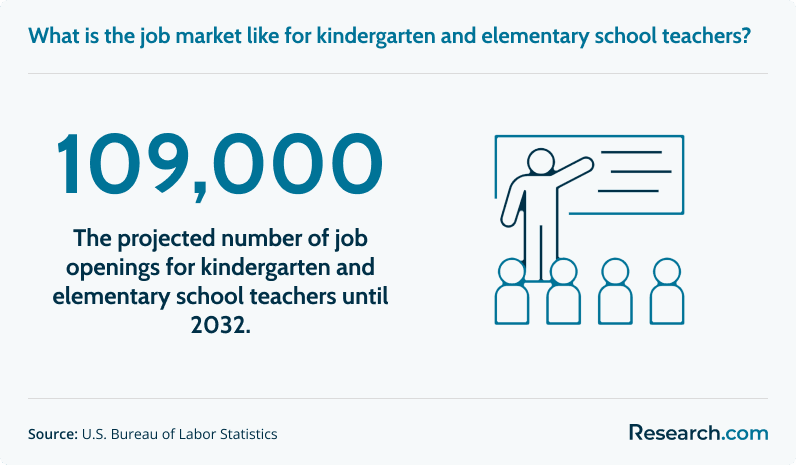
The job market for elementary education graduates depends on geography, certification area, district budgets, population shifts, and teacher turnover. According to data cited from the U.S. Bureau of Labor Statistics, jobs for kindergarten and elementary school graduates are projected to reach 109,000 each year over the next decade. Another figure in this guide notes that around 103,800 new jobs are expected for kindergarten and elementary school teachers each year until 2034.
Teacher demand can be shaped by class-size goals, retirements, shortages, and the need to serve diverse learners. Reporting on the demand for elementary education teachers has highlighted hiring challenges in U.S. schools. Still, local conditions matter. Before enrolling, review job postings and salary schedules in the districts where you hope to work.
The chart below indicates in which states elementary school teachers can expect the highest number of job vacancies.
Institutional Efforts for Higher Ed Faculty Development Access

What kind of practical teaching experience can I gain from an online elementary education program?
Practical experience is essential in elementary education because teaching skills develop through observation, practice, feedback, and reflection. Online programs typically deliver coursework remotely while requiring students to complete classroom-based experiences in approved school settings.
Student Teaching Practicum
Most licensure-focused programs require supervised student teaching in an elementary classroom. During this experience, students gradually take on instructional responsibilities under the guidance of a certified teacher and program supervisor.
Virtual Class Simulations
Some programs use digital simulations to help students practice classroom management, lesson delivery, student engagement, and decision-making. Simulations can be helpful preparation, but they do not replace real classroom experience.
Field Experience Assignments
Field assignments may include observing teachers, assisting with small groups, tutoring students, collecting classroom data, or reflecting on instructional strategies. These experiences expose students to different school environments and teaching styles.
Collaboration with Local Schools
Although coursework is online, students often complete practicum and student teaching in nearby schools. Ask whether the university arranges these placements or expects students to identify eligible schools themselves.
How can integrating library science strengthen my teaching credentials?
Library science can complement elementary education by strengthening information literacy, research instruction, digital resource evaluation, and reading support. These skills can help teachers guide students in finding trustworthy information, using classroom libraries, and developing early research habits.
Teachers who are interested in school libraries, media resources, or information literacy may explore affordable online MLIS programs. This pathway is most relevant for educators who want to combine classroom teaching with library, media, or instructional resource roles.
How can a creative writing online degree enhance my teaching practice?
Creative writing can help elementary teachers design stronger literacy lessons, storytelling activities, writing prompts, and cross-curricular projects. It can also support student engagement by making reading and writing feel more expressive and connected to children’s experiences.
Educators who want structured writing development may consider a creative writing online degree. This type of study is not required for elementary licensure, but it can be useful for teachers who want to deepen their writing instruction, children’s literature activities, or literacy enrichment work.
What are the pathways to advanced degrees after an online elementary education program?
An online elementary education degree can be the first step in a longer education career. After gaining classroom experience, many teachers pursue graduate study, endorsements, or certifications to move into specialized teaching, curriculum work, coaching, administration, or leadership.
- Master’s in Education (M.Ed.): An M.Ed. can help teachers specialize in curriculum and instruction, educational technology, special education, literacy, or leadership. Online formats can allow educators to continue working while studying.
- Doctor of Education (Ed.D.): An Ed.D. is often designed for educators interested in leadership, policy, district improvement, or advanced professional practice. Students comparing cost-conscious options can review the cheapest online EdD programs.
- Specialized Certifications: Post-baccalaureate certificates may focus on literacy coaching, ESL, special education, instructional technology, or other targeted areas. These may take less time than a full degree but should be checked for state recognition.
- Advanced Licensure: Some roles require additional credentials, such as special education, school counseling, reading specialist, or administration. Requirements vary by state and position.
Advanced credentials can broaden career options, but they should be chosen strategically. Before enrolling, ask whether the credential improves licensure status, salary placement, job eligibility, or classroom effectiveness in your target district.
References
- EDUCAUSE. (2025). Findings From The 2025 Teaching and Learning Workforce Report. https://events.educause.edu/-/media/files/events/webinar/2025/web2513/slides.pdf
- Learning Policy Institute. (2025, July). An Overview of Teacher Shortages: 2025 Fact Sheet. https://learningpolicyinstitute.org/media/4764/download?inline&file=Teacher_Shortages_Overview_2025_FACTSHEET.pdf
- Steiner, E. D., Levine, P. R., Doan, S., & Woo, A. (2025). Teacher WellBeing, Pay, and Intentions to Leave in 2025. RAND. https://www.rand.org/pubs/research_reports/RRA1108-16.html
- U.S. Bureau of Labor Statistics. (2025). Kindergarten and Elementary School Teachers. U.S. Bureau of Labor Statistics.
- Zippia. (2025). Elementary Education teacher trends. Zippia.
Key Insights
- An affordable online elementary education degree is most valuable when it is accredited, licensure-aligned, and includes supervised classroom experience.
- Do not judge programs by tuition alone. Compare total cost, accepted transfer credits, fees, exam costs, field placement support, and time to completion.
- Licensure rules are state-specific. Before enrolling, confirm that the program satisfies requirements in the state where you plan to teach.
- Online coursework can be flexible, but student teaching is still hands-on. Plan early for scheduling, transportation, background checks, and placement requirements.
- Career outcomes extend beyond elementary teaching. Graduates may also work in curriculum, instructional design, educational consulting, student support, nonprofits, or later pursue educational leadership.
- Salary and job-market data should be treated as planning information, not promises. Local district salary schedules and state demand are the best sources for personal ROI decisions.
Other Things You Should Know About an Online Elementary Education Degree
Yes, many affordable online elementary education programs in 2027 include student teaching placements. These are essential for gaining practical experience. Placements are often coordinated with local schools, aligning with certification requirements and usually spanning 12-16 weeks, depending on the program and state requirements.
The program must be approved by the state educator licensing agency and, in many cases, accredited by CAEP or a regional accreditor. Graduates usually also need a supervised student-teaching placement and passing scores on the required state exams, such as Praxis or state-specific tests.
Many affordable online elementary education programs in 2027 offer scholarships to eligible students. These scholarships can be based on academic merit, financial need, or specific fields within elementary education, significantly reducing the overall tuition cost.


