
2027 Best Jobs You Can Get With an Education Degree That Aren’t Teaching

Co-Founder and Chief Data Scientist
An education degree does not lock you into a classroom role. If you studied teaching, curriculum, learning science, child development, educational leadership, or instructional methods, you may be able to move into careers in training, curriculum design, educational technology, academic support, policy, research, publishing, nonprofit programs, and digital learning.
This decision matters more now because schools, employers, nonprofits, and online learning companies need people who understand how people learn. The U.S. Bureau of Labor Statistics (2025) notes continued relevance for work tied to online education, remote learning, instructional support, and training. At the same time, many educators are reconsidering traditional teaching roles because of changing work conditions, geographic job availability, and career-growth goals. Some professionals also use the classroom as a launchpad into technology, consulting, corporate learning, or program management by emphasizing transferable skills developed through teaching and classroom leadership.
This guide explains the best jobs you can get with an education degree, how to compare career paths, which skills matter most, when additional credentials are worth considering, and how to make a practical transition into non-teaching work.
Jobs You Can Get With an Education Degree Table of Contents
- Career paths for education graduates outside classroom teaching
- Can accredited certifications improve your options?
- Best jobs you can get with an education degree for 2027
- How to position your education background for non-teaching jobs
- How to approach salary negotiation in a new field
- Is library science a smart pivot for education graduates?
- Is an advanced online degree worth the cost?
- Steps for moving from teaching or education into another role
- Remote and freelance jobs for education graduates
- Can short specialized programs speed up a transition?
- How creative writing can widen your career choices
- When advanced specialization can help
- Networking strategies for a non-teaching career move
- Common mistakes to avoid when changing paths
Quick Answer: What Jobs Can You Get With an Education Degree?
With an education degree, you can pursue roles such as educational consultant, instructional designer, curriculum developer, training and development specialist, educational program manager, education policy analyst, academic advisor, education technology specialist, corporate trainer, education researcher, online curriculum developer, educational content writer, virtual tutor, and library or information science professional.
The best fit depends on three factors: the level of your degree, your experience with learners or programs, and whether you can show evidence of skills such as curriculum planning, assessment, digital learning tools, writing, data analysis, facilitation, project coordination, and stakeholder communication.
If you are just beginning your education pathway, an online associate degree in education can provide an entry point. Many higher-paying or leadership-oriented roles, however, often favor bachelor’s, master’s, or doctoral preparation. For example, a master’s degree in elementary education may support advancement in curriculum, instructional leadership, or specialized education roles.
Why Education Degrees Transfer Well Beyond Teaching
An education degree is built around a practical question: how do people learn, grow, stay motivated, and demonstrate progress? That question matters in many settings outside K-12 classrooms. Employers need trainers who can teach employees new systems. Colleges need advisors who can guide students through complex requirements. Edtech companies need professionals who understand learning design. Nonprofits need program managers who can turn goals into measurable learning outcomes.
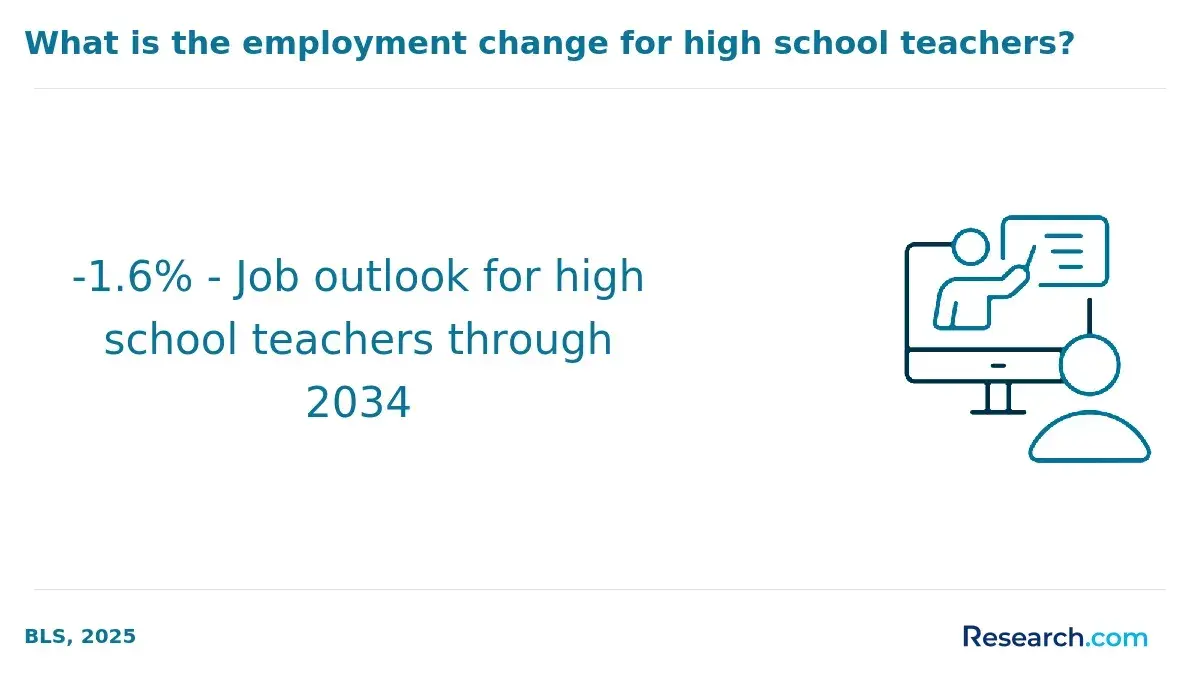
Career changes are also shaped by labor-market realities. Limited teaching openings in some locations, workload concerns, or changing career priorities may lead educators to investigate new options. A K-12 Dive report noted that professionals may consider career changes in response to job conditions and market pressures (K-12 Dive). For education graduates, the key is not to abandon their background but to translate it into the language of the target industry.
Career Options Beyond Teaching with an Education Degree
Education graduates can be strong candidates in sectors where learning, communication, program design, training, and behavior change are central. Common destinations include educational technology, higher education administration, corporate learning and development, nonprofit education programs, government education initiatives, educational publishing, workforce development, and academic support services.
Corporate training is one especially relevant area. Wiley (2025) reported that 78% of companies in the United States prioritize employee upskilling to address critical skill gaps. That creates room for professionals who can design training, assess learning needs, support adult learners, and explain complex information clearly.
Education technology is another practical pathway. People with education training can help organizations choose learning platforms, design online lessons, create digital assessments, support faculty or staff, and improve learner engagement. If you are still teaching or designing online instruction, Research.com’s guide to effective online teaching strategies can help you strengthen skills that also transfer into instructional design and edtech roles.
| Career direction | Best fit for education graduates who enjoy | Common evidence employers look for |
| Instructional design and e-learning | Building lessons, organizing content, using learning technology | Course samples, LMS experience, assessment design, multimedia projects |
| Corporate training | Facilitating workshops, coaching adults, improving performance | Training plans, facilitation experience, measurable learning outcomes |
| Curriculum development | Writing learning materials and aligning content to standards | Curriculum maps, lesson units, rubrics, standards alignment |
| Program management | Coordinating people, budgets, timelines, and learner outcomes | Project plans, stakeholder communication, evaluation reports |
| Academic advising | Helping students make informed academic and career decisions | Student support experience, policy knowledge, advising or mentoring examples |
| Policy and research | Analyzing systems, evaluating programs, interpreting evidence | Research writing, data analysis, policy briefs, evaluation experience |
Can Accredited Certifications Expand Your Career Opportunities?
Additional credentials can help when your education degree is relevant but not enough on its own for a specific role. Certifications are most useful when they prove a skill employers can immediately recognize, such as instructional design, learning management system administration, accessibility, project management, data analysis, special education support, or adult learning and training.
Before enrolling, check whether the credential is accredited, recognized by employers in your target field, and connected to a portfolio or practical project. If your goal is to strengthen your formal credentials while staying flexible, compare accredited online teacher certification programs carefully. The strongest option is not always the fastest one; it is the program that fits your target role, state requirements if applicable, schedule, and budget.
Top Jobs You Can Get With an Education Degree for 2027
The following roles are practical options for education graduates who want to use their learning, communication, curriculum, and leadership skills outside a traditional classroom teaching job. Salary figures are listed exactly as provided in the source article and should be treated as reference points, not guarantees. Actual pay depends on location, employer, experience, degree level, specialization, and industry.
If you are still paying for your degree or planning graduate study, review funding options such as scholarships for education majors before taking on additional debt.
1. Educational Consultant
Educational consultants advise schools, districts, nonprofits, education companies, families, or learning organizations. They may evaluate programs, recommend curriculum changes, support staff development, review instructional practices, or help organizations solve performance problems. This path can be a strong fit for experienced educators who can combine credibility, analysis, and communication.
Median salary: $107,301
2. Instructional Designer
Instructional designers create courses, training modules, digital lessons, assessments, and learning experiences for schools, universities, companies, nonprofits, and online learning providers. Education graduates often bring an advantage because they understand learning objectives, scaffolding, feedback, assessment, and learner engagement. To compete, build a portfolio with sample modules, storyboards, course outlines, and assessment examples.
Median salary: $77,564
3. Curriculum Developer
Curriculum developers design, revise, and organize educational materials. They may align content with learning standards, create lesson sequences, write assessments, review materials for accessibility or inclusivity, and work with subject matter experts. This role is a natural option for education graduates who enjoy planning instruction more than delivering it every day.
Median salary: $68,897
4. Training and Development Specialist
Training and development specialists help employees learn job-related skills. They may assess training needs, design learning materials, facilitate workshops, deliver virtual training, and evaluate results. Education graduates can stand out by showing how their teaching methods improved learner performance, engagement, or retention.
Median salary: $58,104
5. Educational Program Manager
Educational program managers coordinate learning initiatives from planning through evaluation. They may manage timelines, budgets, staff, vendors, curriculum, reporting, and stakeholder communication. This path fits education graduates who are organized, comfortable leading projects, and interested in improving systems rather than focusing on one classroom or group of learners.
Median salary: $80,540
6. Education Policy Analyst
Education policy analysts study laws, funding models, program rules, equity concerns, and educational outcomes. They may write reports, evaluate policy effects, review research, and recommend changes. This role is especially suited to education graduates who enjoy research, writing, public systems, and evidence-based decision-making.
Median salary: $63,336
7. Academic Advisor
Academic advisors help students understand degree requirements, choose courses, monitor progress, resolve academic problems, and connect academic choices to career goals. Education graduates can bring valuable counseling, communication, and student-support experience, especially if they have worked with diverse learners or complex academic needs.
Median salary: $52,500
8. Education Technology Specialist
Education technology specialists help schools, colleges, training departments, or education companies select and use digital tools. Responsibilities may include supporting learning management systems, training instructors, troubleshooting adoption issues, improving online learning workflows, and helping teams use technology in ways that support learning rather than distract from it.
Median salary: $59,224
9. Corporate Trainer
Corporate trainers design and deliver employee learning programs. They may teach onboarding sessions, compliance training, customer service skills, leadership development, software systems, or sales processes. Former teachers often do well in this role when they can adapt classroom teaching into adult learning, business goals, and measurable performance outcomes.
Median salary: $56,835
10. Education Researcher
Education researchers investigate learning outcomes, program effectiveness, instructional methods, student experiences, and education systems. They may collect data, conduct interviews, analyze findings, and prepare reports or publications. This path can require stronger research preparation, so graduate study or experience with evaluation methods may improve competitiveness.
Median salary: $49,803
| Occupation | Median Salary (in USD) | Strong fit if you have |
| Educational Consultant | $107,301 | Deep classroom, school, curriculum, leadership, or program-improvement experience |
| Instructional Designer | $77,564 | Course design samples, digital learning skills, and assessment knowledge |
| Curriculum Developer | $68,897 | Experience writing lessons, aligning standards, and building learning materials |
| Training and Development Specialist | $58,104 | Facilitation ability, adult learning awareness, and training evaluation skills |
| Educational Program Manager | $80,540 | Project coordination, stakeholder communication, and program evaluation experience |
| Education Policy Analyst | $63,336 | Research, writing, data interpretation, and interest in education systems |
| Academic Advisor | $52,500 | Student support, mentoring, policy navigation, and communication skills |
| Education Technology Specialist | $59,224 | Comfort with learning platforms, teacher support, and digital tool adoption |
| Corporate Trainer | $56,835 | Presentation, coaching, employee training, and performance-improvement skills |
| Education Researcher | $49,803 | Research methods, evaluation, academic writing, and data analysis experience |
How Can You Effectively Market Your Education Background for Non-Teaching Careers?
Do not present yourself only as a teacher or education graduate. Present yourself as someone who can design learning, manage groups, explain complex ideas, measure progress, adapt content, and improve outcomes. Employers outside education may not understand classroom terminology, so translate your experience into business, nonprofit, or higher education language.
- Replace classroom-only wording with employer-friendly outcomes. Instead of saying you “taught lessons,” explain that you designed learning experiences, assessed performance, adapted materials for varied needs, and used feedback to improve results.
- Show evidence. Include curriculum samples, training decks, evaluation summaries, LMS screenshots, advising resources, program plans, or writing samples when appropriate.
- Quantify carefully when you can. Mention numbers only when they are accurate and relevant, such as learners supported, programs coordinated, training sessions delivered, or materials created.
- Target the resume to the role. An instructional design resume should emphasize course design and technology. A program manager resume should emphasize coordination, reporting, timelines, and stakeholder management.
- Use additional education strategically. If you want specialized support, inclusive learning, or leadership roles, compare options such as online master’s degree programs in special education to determine whether a graduate credential fits your target position.
How Can You Effectively Negotiate Your Salary in Non-Teaching Roles?
Salary negotiation becomes easier when you can connect your education background to the employer’s needs. Start by researching pay ranges in your target industry, location, and role level. Then prepare a short case that explains how your background can solve the organization’s problem.
For example, an instructional design candidate might emphasize curriculum design, assessment writing, online learning tools, and learner feedback. A training candidate might point to facilitation experience, adult learning methods, coaching, and measurable performance improvement. A program-management candidate might highlight stakeholder coordination, reporting, compliance, and cross-functional communication.
Advanced credentials may help for leadership, policy, research, or higher education roles, but only if the degree aligns with the job market you are entering. If you are considering doctoral-level preparation, compare options such as fast-track online EdD programs with caution. Faster is not automatically better; accreditation, fit, cost, faculty support, and career relevance matter more.
Is Library Science a Strategic Career Pivot for Education Graduates?
Library and information science can be a logical pivot for education graduates who enjoy research, information organization, academic support, digital resources, literacy, archives, or public service. The work may take place in school libraries, academic libraries, public libraries, corporate information centers, museums, government settings, or digital knowledge-management environments.
This path is strongest for people who want to combine learner support with information systems. Education graduates may already understand instruction, student needs, research guidance, and resource evaluation. Library science adds technical and professional preparation in cataloging, digital curation, information access, research services, and information management.
If you are exploring this direction, review affordable online MLIS programs and compare admission requirements, accreditation, field experience, technology coursework, and whether the program supports the type of library or information role you want.
Is an Advanced Online Degree a Cost-Effective Investment for Your Career Transition?
An advanced online degree can be worth it if it fills a clear gap between your current qualifications and the role you want. It is less useful if you enroll only because you feel stuck or assume another degree will automatically increase your salary.
Before committing, compare total cost, accreditation, transfer-credit policies, schedule flexibility, practicum or capstone requirements, employer recognition, and career services. Also ask whether a shorter certificate, portfolio project, or targeted professional development course could help you reach the same goal at a lower cost.
If price is a major concern, review Research.com’s guide to the most affordable online master’s degrees in teaching and compare costs against your expected career outcome. Do not evaluate tuition alone; include fees, books, technology requirements, lost work time, and any required field placements.
How to Transition into Non-Teaching Jobs You Can Get With an Education Degree
- Choose a target role before applying broadly. “Non-teaching job” is too broad. Decide whether you are aiming for instructional design, training, advising, curriculum writing, edtech, research, policy, or program management. Each requires a different resume and portfolio.
- Map your current skills to the job description. Education graduates often have communication, leadership, critical thinking, problem-solving, lesson planning, assessment, and learner-support experience. Translate those into the terms employers use in postings.
- Study the qualifications for your target field. Data USA reported that 8.54% of training and development managers have an education degree (Data USA, n.d.), which suggests that education backgrounds can appear in training leadership. Still, many roles also require business communication, analytics, software, or project-management skills.
- Fill the most important gap first. If you lack child development depth, an option such as a bachelor’s in child development may be relevant. If your target is corporate learning, build knowledge of training evaluation, learning platforms, and ways to document progress, including methods for tracking employee training progress.
- Create proof of work. Build a small portfolio: a sample online module, a curriculum map, a training agenda, a policy brief, an advising checklist, or an evaluation report. A portfolio helps hiring managers understand how your education degree applies outside the classroom.
- Network with people already doing the work. Ask for informational interviews, join professional groups, attend webinars, and connect with alumni. The goal is to learn how people entered the field, which tools matter, and what hiring managers actually value.
- Apply with a tailored narrative. Your cover letter should not apologize for leaving teaching. It should explain why your background makes you useful in the new setting and how your learning-design, communication, and problem-solving skills match the employer’s needs.
Remote/Freelance Jobs for Education Graduates
Remote and freelance work can be attractive for education graduates who want flexibility, project variety, or a gradual transition away from full-time classroom teaching. These roles usually reward portfolio quality, responsiveness, writing ability, comfort with digital tools, and the ability to work independently.
- Online curriculum developer: Creates lessons, activities, assessments, and teacher-facing resources for online programs, publishers, tutoring companies, or private clients.
- Educational content writer: Writes lesson plans, explainers, study guides, workbook content, articles, scripts, assessment items, or learning resources for education companies and publishers.
- Virtual tutor or academic coach: Supports students remotely through individual or group sessions. This can be a practical bridge role for educators who still enjoy direct learner interaction but want more flexibility.
- Freelance instructional designer: Builds e-learning modules, training materials, storyboards, slide decks, facilitator guides, and assessments for organizations that need online or hybrid training.
- Edtech implementation support: Helps teachers, trainers, or institutions use learning platforms, digital tools, and online course systems more effectively.
Remote work is not automatically easier than classroom work. Freelancers often handle client communication, deadlines, revisions, pricing, invoices, and portfolio development. Before relying on freelance income, test the market with small projects and build repeatable samples.
Can Rapid Specialized Programs Accelerate Your Non-Teaching Career Growth?
Short programs, micro-credentials, and accelerated online degrees can be useful when they build a specific skill tied to a target job. They are less useful when they add another credential without improving your portfolio, technical skill, or credibility.
For education graduates interested in content strategy, learning materials, publishing, communications, or digital media, writing-focused study may help. A fast online creative writing degree can support storytelling, editing, audience awareness, and content development skills, which may transfer into educational publishing, training content, and digital learning roles.
Professional Development and Additional Certifications
Professional development should be intentional. Instead of collecting unrelated certificates, identify the skills that appear repeatedly in job postings for your target role and prioritize those first.
- Continue learning in a focused area. If you are interested in how learners think, develop, and respond to instruction, an educational psychology degree may support deeper study. If your goal is senior leadership or research, a doctorate in educational leadership online may be more relevant.
- Choose certifications that match the job. Instructional design, accessibility, project management, LMS administration, data analysis, and adult learning credentials may be useful depending on the role.
- Join the right professional communities. Associations, webinars, alumni groups, and industry events can help you understand hiring trends and meet people who can explain the realities of the work.
- Build job-specific skills through projects. Zippia (2022) reported that customer service is the most common skill for training managers, appearing on 19.3% of training manager resumes. For training-focused paths, it can also help to understand broader industry context through resources such as Research.com’s corporate training statistics.
How Can Creative Writing Expand Your Career Horizons?
Creative writing can strengthen an education graduate’s ability to explain ideas, shape narratives, write for different audiences, and produce engaging learning materials. These skills are useful in educational publishing, e-learning scripts, marketing for education companies, nonprofit communications, training manuals, grant writing, and content strategy.
The best reason to pursue writing study is not simply to add another degree. It is to build a portfolio of polished work. If this direction fits your goals, compare online creative writing degree programs based on curriculum, faculty feedback, flexibility, cost, and the kinds of writing samples you will produce.
Could Advanced Specialization Accelerate Your Career?
Advanced specialization can help when the role you want requires deeper expertise than a general education degree provides. This is especially true in special education, educational leadership, policy, research, instructional design, assessment, library science, and higher education administration.
For example, an education graduate interested in inclusive learning, adaptive instruction, intervention planning, or specialized learner support may benefit from online master’s programs in special education. The value depends on how directly the program connects to your intended career path, whether it meets any relevant professional requirements, and whether the cost is reasonable compared with your goals.
| If your goal is | Consider | Ask before enrolling |
| Move into instructional design | Portfolio-based training, instructional design coursework, e-learning tools | Will I create work samples employers can review? |
| Enter leadership or administration | Graduate study in educational leadership or program management | Does the program match the level of role I want? |
| Specialize in learner support | Special education, educational psychology, or child development programs | Does this credential meet employer or state expectations? |
| Work in library or information services | MLIS or library science preparation | Is the program aligned with the type of library or information role I want? |
| Enter research or policy | Research methods, evaluation, policy, or advanced graduate study | Will I gain data, writing, and applied research experience? |
What Networking Strategies Can Accelerate Your Non-Teaching Career Transition?
Networking is often the fastest way to understand how education experience is viewed outside schools. It can also help you learn which job titles to search, which skills to build, and how to avoid applying for roles that are a poor match.
- Start with informational interviews. Ask instructional designers, trainers, academic advisors, program managers, or policy analysts how they entered the field and what they would do differently.
- Use alumni networks. Graduates from your college may be more willing to discuss career pivots and recommend practical next steps.
- Join field-specific communities. Choose communities tied to your target role rather than general job-search groups.
- Share proof of work. Post or send a sample portfolio, short article, course outline, or project summary when appropriate. Concrete examples are more persuasive than general claims.
- Consider networking through graduate study. Programs such as online master’s in library science programs may provide faculty contacts, peer networks, practicum connections, and field-specific career resources.
Common Mistakes to Avoid When Using an Education Degree Outside Teaching
- Applying to every “education-related” job without a target. A curriculum role, corporate training role, and academic advising role require different resumes and examples.
- Assuming your degree explains your value automatically. Hiring managers outside education may not understand the depth of teaching or curriculum work. Translate your experience clearly.
- Choosing a program without checking accreditation or employer recognition. A credential only helps if it is credible and relevant to your goal.
- Focusing only on tuition. Include fees, time commitment, technology costs, fieldwork requirements, and lost income when comparing programs.
- Expecting salary outcomes to be guaranteed. Median salary figures are useful benchmarks, but your offer will depend on market, location, role level, experience, and negotiation.
- Ignoring portfolio development. For instructional design, curriculum, writing, and training roles, samples of your work may matter as much as your formal education.
- Using classroom language in every application. Replace school-specific terms with language the employer uses, such as training outcomes, stakeholder needs, program evaluation, learner engagement, and performance support.
Explore New Career Pathways with an Education Degree
An education degree can lead to far more than one career track. The strongest opportunities usually go to graduates who can connect their background to a specific organizational need: better training, clearer curriculum, stronger student support, more effective technology use, improved programs, or evidence-based decision-making.
If you are considering a transition, start by selecting one target path, identifying the skills gap, building proof of work, and comparing credentials only after you know what employers expect. Teaching experience and education coursework can be valuable, but you need to package them in a way that makes sense to the industry you want to enter.
Key Insights
- An education degree is highly transferable. It can support careers in instructional design, corporate training, curriculum development, advising, edtech, policy, research, program management, publishing, and library science.
- The best non-teaching path depends on your evidence. Employers want to see portfolios, projects, writing samples, training materials, technology experience, or measurable outcomes.
- Edtech and workforce learning are important opportunity areas. Online learning, remote instruction, and employee upskilling continue to create demand for professionals who understand learning design.
- Credentials should solve a specific problem. Consider certificates or graduate programs only when they clearly support your target role, improve your skills, or meet employer expectations.
- Salary figures are benchmarks, not promises. The listed salaries vary by role, employer, geography, experience, and negotiation strength.
- Career transition works best with a plan. Pick a target role, translate your teaching or education experience, close skill gaps, network with professionals, and apply with role-specific materials.
References:
- American Association of Colleges for Teacher Education. (2025). Education degree career pathways. https://aacte.org
- Association for Talent Development. (2025). Training and development career resources. https://www.td.org
- National Center for Education Statistics. (2025). Education employment trends. https://nces.ed.gov/programs
- Society for Human Resource Management. (2025). Human resources career information. https://www.shrm.org
- U.S. Department of Labor. (2025). CareerOneStop: Training and development specialist. https://www.careeronestop.org/Toolkit/Careers/Occupations/occupation-profile.aspx?keyword=Training%20and%20Development%20Specialists
- U.S. Department of Labor. (2025). CareerOneStop: Instructional coordinator. https://www.careeronestop.org/Toolkit/Careers/Occupations/occupation-profile.aspx?keyword=Instructional%20Coordinators
- U.S. Bureau of Labor Statistics. (2025). Career outlook for training and development specialists. https://www.bls.gov/ooh/business-and-financial/training-and-development-specialists.htm
- U.S. Bureau of Labor Statistics. (2025). Instructional coordinators. https://www.bls.gov/ooh/education-training-and-library/instructional-coordinators.htm
- U.S. Bureau of Labor Statistics. (2025). Social and community service managers. https://www.bls.gov/ooh/management/social-and-community-service-managers.htm
- Wiley. (2025). Closing the Skills Gap 2025: Employer Perspectives on Workforce Upskilling. https://www.wiley.com/en-us/network/institutions/research/closing-the-skills-gap-2025
Other Things You Should Know About Jobs You Can Get With an Education Degree
Non-teaching career options include educational consultants, instructional designers, curriculum developers, training and development specialists, educational program managers, education policy analysts, academic advisors, education technology specialists, corporate trainers, and education researchers.
Education technology specialists facilitate the integration of technological tools in educational settings. They train teachers to use digital resources effectively, support curriculum development, and ensure that technology enhances student learning experiences. In 2027, their expertise is vital as schools increasingly adopt tech-driven solutions for personalized and hybrid learning models.
Transitioning from teaching to a non-teaching role involves assessing your transferable skills, researching alternative careers, gaining additional experience and skills, networking, and seeking mentorship from professionals in your desired field.
An education degree provides foundational skills in curriculum development and instructional design, which are vital in corporate training. This background enables professionals to create effective training programs that facilitate employee learning and development.
Essential skills for non-teaching roles in education include communication, leadership, critical thinking, problem-solving, instructional design, curriculum development, technology integration, and data analysis.
You can gain experience in non-teaching roles by pursuing part-time internships, volunteering, taking online courses, or participating in professional development workshops related to your desired career path.
High-paying non-teaching jobs for education degree holders include educational consultants, instructional designers, curriculum developers, educational program managers, and education policy analysts.
Current trends in educational consulting include a focus on technology integration, personalized learning, inclusive practices, and the use of data-driven strategies to improve educational outcomes.


