2027 Best Online Master’s in Special Education Programs

Co-Founder and Chief Data Scientist
Choosing an online master’s in special education is not just a degree decision. It affects where you can teach, whether you qualify for licensure or endorsements, how much field experience you must complete, and whether the program will be respected by school districts, state agencies, and future employers. For current teachers, the right program can deepen expertise in autism, applied behavior analysis, learning disabilities, behavior support, or inclusive instruction. For career changers, the key question is whether the degree actually leads to the certification required in your state.
This guide explains what an online master’s in special education includes, how online and campus programs compare, what the degree may cost, which careers it can support, and how to evaluate programs before applying. It also includes a Research.com-ranked list of online master’s in special education programs, plus practical advice on accreditation, licensure, specializations, financial aid, and career advancement.
Quick Answer: Is an Online Master’s in Special Education Worth It?
An online master’s in special education can be worth it if you want to qualify for advanced teaching roles, meet special education licensure requirements, earn endorsements, move into leadership or specialist positions, or gain deeper skills for working with students with disabilities. A bachelor’s degree is often enough for entry-level teaching, but a master’s degree may improve salary potential and make you more competitive for specialized roles. As a career planning advisor with more than a decade of experience, I have seen entry-level educators with a master’s degree earning around 20% more than those with only a bachelor’s degree, although actual pay depends on the school district, state salary schedule, certification area, and years of experience.
What are the benefits of getting an online master's degree in special education?
- A master’s degree can help you qualify for special education teaching roles and related positions with average annual earnings above $69,000 in several special education categories.
- Online delivery can make graduate study more realistic for working teachers, paraprofessionals, parents, and career changers who need to manage coursework around existing responsibilities.
- The degree can support employment in public schools, private schools, specialized schools, behavioral health agencies, early intervention programs, advocacy organizations, and curriculum or consulting roles.
What can I expect from an online master's degree in special education?
An online master’s in special education usually combines graduate-level theory, applied teaching strategies, special education law, assessment, behavior support, and field-based practice. Most programs are designed to help educators support students with disabilities through individualized instruction, inclusive classroom practices, data-informed interventions, and collaboration with families and school teams.
Course delivery varies by school. Many programs use asynchronous lessons, recorded lectures, readings, discussion boards, and written assignments so students can complete work on a flexible schedule. Some also require synchronous components such as live evening classes, virtual seminars, group meetings, or real-time supervision sessions. Because the format requires independent work, successful online students need strong time management, steady communication with instructors, and comfort using learning management systems and video tools.
You can expect to study disabilities such as learning disabilities, emotional and behavioral disorders, intellectual disabilities, autism spectrum disorder, and developmental delays. Strong programs also teach how to interpret assessment data, write and support individualized education programs, adapt curriculum, use assistive technology, apply positive behavior interventions, and advocate for legally compliant and inclusive services.
| Program component | What it usually includes | Why it matters |
| Core coursework | Special education law, disability categories, assessment, instruction, IEP development, behavior support | Builds the foundation needed for compliant and effective special education practice |
| Specialization courses | Autism, applied behavior analysis, learning disabilities, behavior disorders, early intervention, or transition services | Helps align the degree with a target role, endorsement, or student population |
| Field experience | Practicum, supervised teaching, school-based projects, or applied intervention assignments | May be required for licensure and gives students practice working with learners in real settings |
| Online learning tools | Recorded lectures, digital readings, virtual meetings, discussion forums, simulations, collaborative documents | Determines how flexible the program will feel week to week |
| Capstone or portfolio | Research project, teaching portfolio, intervention plan, or applied case study | Documents professional growth and can support job applications or advancement reviews |
Where can I work with an online master's degree in special education?
Graduates can work in several education and support settings, but the exact roles available depend on licensure, endorsements, prior teaching experience, and state rules. If your goal is classroom teaching in a public school, confirm before enrolling that the program meets your state’s certification requirements.
Traditional school settings
- Public and private schools. Graduates may work as special education teachers, either in self-contained classrooms, inclusive general education classrooms, or settings that support students through individualized education programs.
- Resource rooms. Teachers may provide targeted academic, behavioral, or skill-based support to students who spend part of the day outside the general classroom.
- Itinerant teaching roles. Some educators travel across schools to support students with specific learning needs while they remain in general education environments.
Specialized programs and institutions
- Early intervention programs. Educators and specialists may support infants and toddlers with developmental delays or disabilities through family-centered services and early learning interventions.
- Specialized schools or programs. Graduates may work in schools designed for students with specific disability categories or intensive support needs.
- Behavioral health agencies. Some roles combine educational support with behavioral intervention for children and adolescents with emotional or behavioral disorders.
The degree can also lead beyond classroom instruction. Some graduates develop adapted curriculum, consult with schools, train staff, support family advocacy, contribute to nonprofit programs, or work on policy and systems improvement for students with disabilities.
How much can I make with an online master's degree in special education?
Salary varies by grade level, district, location, union contract, years of experience, and credential level. According to the United States Bureau of Labor Statistics, special education preschool teachers earn an average of $69,620 annually. Special education kindergarten and elementary school teachers earn an average annual salary of $68,580, while special education middle school teachers earn an annual average salary of $69,530. Special education secondary school teachers earn an average of $71,290 annually. All other types of special education teachers make an average of $74,310 per year.
| Special education role category | Average annual salary stated by BLS |
| Special education preschool teachers | $69,620 |
| Special education kindergarten and elementary school teachers | $68,580 |
| Special education middle school teachers | $69,530 |
| Special education secondary school teachers | $71,290 |
| All other types of special education teachers | $74,310 |
- 2027 Best Online Master’s in Special Education Programs
- Can you get a master's in special education degree completely online?
- Will employers take my online degree seriously?
- Are online degrees recognized all over the world?
- How does an online master's in special education program compare to an on-campus one?
- How much does a master’s in special education online program cost?
- What are the requirements for a master’s in special education online program?
- What courses are included in an online master’s program in special education?
- How do you choose the best online master’s in special education program?
- What types of specializations are available in online master's in special education programs?
- What are the emerging trends shaping online master's in special education programs?
- Can an online adult education degree complement your special education expertise?
- How can I meet state licensure requirements with an online master’s in special education?
- How can you leverage your online master's degree to secure high-paying roles?
- Can I Fast-Track My Online Master’s in Special Education?
- How can interdisciplinary learning boost your special education qualifications?
- What is the job outlook for graduates with a master's degree in special education?
- What are the career advancement options for special education professionals with a master's degree?
- What are the funding and financial aid options for online master’s in special education programs?
- What are related doctoral program opportunities?
- Can integrating complementary online degrees enhance your career opportunities in special education?
- Is Accreditation a Key Quality Indicator for Your Online Master's in Special Education?
- Exploring Alternative Graduate Programs: Is Early Childhood Education a Better Fit for You?
2027 Best Online Master’s in Special Education Programs
How do we rank schools and programs?
Research.com evaluates online master’s programs in special education with the understanding that graduate school requires a major commitment of time, money, and professional energy. The goal of this list is to help readers compare credible options without having to sort through hundreds of special education programs and graduate education degree pathways on their own.
Our program review uses Research.com’s established methodology and draws from verified education data sources, including the IPEDS database, Peterson’s database and its Distance Learning Licensed Data Set, the College Scorecard database, and the National Center for Education Statistics.
The programs below were selected for factors such as academic reputation, curriculum strength, online accessibility, specialization options, practical learning opportunities, and institutional quality. Before applying, students should still verify each program’s current tuition, state authorization, licensure alignment, practicum requirements, and support services.
1. University of Kansas
The University of Kansas offers an online master’s in special education with concentration options that let students focus on autism spectrum disorder, high-incidence disabilities, or secondary special education and transition. The program emphasizes special education research, evidence-based instruction, and applied practice through field experiences.
- Program Length: 2 years
- Tracks/concentrations: Autism Spectrum Disorder (ASD); High Incidence Disabilities (HI); and Secondary Special Education and Transition
- Cost per Credit: $595
- Required Credits to Graduate: 36
- Accreditation: Higher Learning Commission (HLC)
2. University of Florida
The University of Florida program combines special education theory with classroom application. Coursework covers assessment, intervention, inclusion, technology use, and autism spectrum disorders. Students considering this option should review the program page carefully and compare it with their state’s licensure and endorsement rules. Research.com also covers education and technology career routes, including coding careers, for readers comparing multiple professional paths.
- Program Length: 12 months
- Tracks/concentrations: Autism Endorsement
- Tuition cost: $18,300
- Required Credits to Graduate: 36
- Accreditation: Southern Association of Colleges and Schools Commission on Colleges (SACSCOC)
3. University of North Carolina at Pembroke
UNC Pembroke offers an online Master of Arts in Teaching with a Special Education General Curriculum focus. The program is designed for students preparing to serve exceptional children in K-12 schools and can be a practical option for those seeking initial teaching licensure in North Carolina.
- Program Length: 14 to 20 months
- Tracks/concentrations:
- Cost per Credit: $237.78 (in-state); $963.28 (out-of-state)
- Required Credits to Graduate: 30
- Accreditation: Southern Association of Colleges and Schools Commission on Colleges (SACSCOC)
4. University of Oregon
The University of Oregon offers graduate study in special education through its College of Education. Students may pursue a master of arts, master of science, or master of education degree, with options that can include licensure coursework and endorsements in early intervention or K-12.
- Program Length: 1 to 2 years
- Tracks/concentrations: K-12/Generalist (Master’s + Licensure); Early Intervention (Master’s + Licensure)
- Tuition cost: $18,120 (in-state); $30,567 (out-of-state)
- Required Credits to Graduate: 45
- Accreditation: Northwest Commission on Colleges and Universities (NWCCU)
5. Pennsylvania State University World Campus
Pennsylvania State University World Campus offers an online master’s degree built for educators who want advanced preparation in disability services, inclusive practice, behavior support, IEPs, and collaboration with families and professionals. The program’s concentration options allow students to align coursework with academic, behavioral, autism, or ABA-related goals.
- Program Length: 1 to 2 years
- Tracks/concentrations: Academic and Behavioral Supports, Applied Behavior Analysis (ABA), Autism
- Cost per credit: $1,007
- Required Credits to Graduate: 33
- Accreditation: Northwest Commission on Colleges and Universities (NWCCU)
6. Michigan State University
Michigan State University offers a fully online Master of Arts in Special Education for K-12 educators. The curriculum focuses on Learning Disabilities (LD) and Autism Spectrum Disorders (ASD), with instruction from faculty experienced in research and teaching in special education.
- Program Length: 2 years
- Tracks/concentrations: Learning Disabilities (LD); Autism Spectrum Disorders (ASD)
- Cost per Credit: $933
- Required Credits to Graduate: 30
- Accreditation: Higher Learning Commission
7. Arizona State University
Arizona State University offers several online master’s options in special education: MA Special Education (Applied Behavior Analysis), MA Special Education (Autism Spectrum Disorders), MEd Special Education (Teacher Certification), and MEd Special Education. These pathways serve different goals, including ABA-focused work, autism services, teacher certification, and advanced K-12 special education practice.
- Program Length: 2 years
- Tracks/concentrations: MA Special Education (Applied Behavior Analysis); MA Special Education (Autism Spectrum Disorders); MEd Special Education (Teacher Certification); and MEd Special Education
- Total Cost of Attendance for Online Graduate Programs: $42,042
- Required Credits to Graduate: 30-35
- Accreditation: Higher Learning Commission
8. George Mason University
George Mason University offers an online Master of Education in Special Education for students who want to address complex learning needs and inclusive education. Students may choose supporting graduate certificate tracks in Autism Spectrum Disorder or Applied Behavior Analysis.
- Program Length: 2 years
- Tracks/concentrations: Autism Spectrum Disorders; Applied Behavior Analysis
- Cost per Credit: $805
- Required Credits to Graduate: 30
- Accreditation: Southern Association of Colleges and Schools Commission on Colleges (SACSCOC)
9. Indiana University - Bloomington
Indiana University - Bloomington offers an online Master of Science in Education in Special Education. The curriculum is aligned with standards from the Council for Exceptional Children and the State of Indiana and emphasizes research-supported teaching methods for high-incidence disabilities.
- Program Length: 2 years
- Cost per Credit: $490.60 (in-state); $588.66 (out-of-state)
- Required Credits to Graduate: 36
- Accreditation: Higher Learning Commission
10. Clemson University
Clemson University offers a fully online MEd in Special Education for educators who want to strengthen their practice. Coursework includes Multi-Tiered Systems of Support in academics and behavior.
- Program Length: 2 years
- Cost per Semester: $5,214 (in-state)
- Required Credits to Graduate: 33
- Accreditation: Southern Association of Colleges and Schools Commission on Colleges
Key Findings
- More than 200 academic institutions offer an online master’s program in special education, so students can find fully online options across many regions and program types.
- The average tuition for a master’s in special education online program is around $15,000 per year, although total annual cost can reach $30,000 or more.
- Special education teachers with a master’s degree can earn 20% more than those with only a bachelor’s degree, although salary gains depend on district pay rules and credentials.
- About 33,500 job openings for special education teachers are projected each year up to 2032.
- Federal law requires states to allocate financial support for special education, but actual hiring and compensation still depend on state and local funding decisions.
Can you get a master's in special education degree completely online?
Yes. Many universities offer fully online master’s degrees in special education. These programs are commonly designed for licensed teachers, aspiring special education teachers, paraprofessionals, and education professionals who want advanced skills in disability services, assessment, inclusive instruction, and student support. Students learn to design and apply instructional strategies, monitor progress, collaborate with families and related-service professionals, and advocate for inclusive education.
The important caveat is fieldwork. Even if coursework is fully online, licensure-track programs may require in-person practicum, student teaching, supervised observation, or school-based assignments in an approved local setting. The National Center for Education Statistics reports that, currently, you can pick from around 209 institutions in the United States to acquire a special education master’s degree online, and many of them are also offering Ph.D. programs across the United States.
Will employers take my online degree seriously?
Employers are generally most concerned with accreditation, licensure eligibility, clinical preparation, and demonstrated teaching competence. An online special education degree from an accredited institution is more likely to be viewed as credible when it meets state certification standards and includes appropriate field experience. Online credentials are widely accepted in many fields, including technology-related areas such as an online computer science associate degree, but teaching adds another layer because state licensure rules matter.
To strengthen employer confidence, choose a reputable accredited program, verify state authorization, keep records of practicum hours, and build a portfolio that shows IEP work, assessment interpretation, intervention planning, behavior support strategies, and collaboration with families and school teams.
Are online degrees recognized all over the world?
Recognition of an online degree depends on the institution, accreditation status, country, employer, licensing authority, and the purpose for which the degree is being used. A degree from a properly accredited university may be academically credible, but that does not guarantee it will meet every country’s teacher certification, visa, scholarship, or professional registration requirements.
Online learning can offer flexibility and access advantages, but students who plan to work outside the United States should confirm recognition with the relevant ministry of education, licensing board, school system, or credential evaluation agency. This is especially important for regulated fields such as teaching. The same caution applies to related programs, including an online elementary education degree, because certification rules can vary by state, region, and country.
How does an online master's in special education program compare to an on-campus one?
Online and campus-based master’s programs can cover similar academic content, but they differ in scheduling, interaction, field placement logistics, and the type of student experience they provide. The better option depends on your learning style, work schedule, location, licensure needs, and access to local school placements.
| Factor | Online master’s in special education | On-campus master’s in special education |
| Schedule | Often more flexible, especially if courses are asynchronous | Usually tied to fixed class times and campus attendance |
| Interaction | Uses discussion boards, video meetings, group projects, and online office hours | Provides regular in-person conversations with faculty and peers |
| Fieldwork | May be completed in approved schools near the student, depending on the program | Often arranged through campus partnerships with local schools |
| Resources | Relies on digital libraries, online advising, virtual tutoring, and remote tech support | Offers physical libraries, campus facilities, in-person events, and local networking |
| Best fit | Working teachers, rural students, career changers, and students who need schedule flexibility | Students who prefer face-to-face learning, campus community, and local placement networks |
Is an online degree cheaper?
An online degree can be cheaper, but it is not automatically the lowest-cost option. Online students may save on commuting, relocation, parking, and campus housing, while some universities charge separate online program fees or the same tuition as campus students. The best comparison is total cost of attendance, not tuition alone. Ask each school about per-credit tuition, technology fees, course materials, practicum costs, background checks, testing fees, and whether online students qualify for in-state tuition or educator discounts.
Is an online degree as good as a regular degree?
An online degree can be academically comparable to a campus degree when it comes from an accredited institution, uses qualified faculty, includes rigorous assessment, and prepares students for any required licensure or endorsement. The format matters less than program quality, state approval, fieldwork supervision, and outcomes. Students should not assume that “online” means easier; strong online programs often require intensive reading, applied projects, collaboration, and independent work.
How much does a master’s in special education online program cost?
The cost of an online Master’s Degree in Special Education depends on the university, credit requirements, residency status, program length, and fees. We estimate that the average tuition for a master’s in special education online program is around $15,000 per year but it can range up to $30,000 or even more. Some programs reduce costs through in-state rates, accelerated pacing, employer partnerships, or tuition discounts.
For example, the University of North Carolina at Chapel Hill offers an online master’s in special education program that costs $11,506 for residents and $26,716 for non-residents. Southern New Hampshire University lists a similar program at $627 per credit, or about $22,572 for the entire degree.
| Cost factor | What to check before enrolling |
| Tuition structure | Per-credit rate, flat-rate tuition, semester charges, and whether tuition differs for in-state and out-of-state students |
| Credit requirement | Total credits required, including endorsement or licensure add-ons |
| Fees | Technology, online learning, graduation, transcript, practicum, testing, and background check fees |
| Materials | Books, digital platforms, assessment tools, and assistive technology materials |
| Licensure expenses | Exam fees, fingerprinting, state application fees, and travel to field placements |
| Time away from work | Possible income trade-offs if practicum or student teaching affects work hours |
Is an online master’s in special education degree worth it?
The degree is most likely to be worth it for students who have a clear career goal: earning special education licensure, qualifying for a district salary lane, moving into a specialist role, or building expertise in autism, ABA, learning disabilities, behavior support, or inclusive education. If your goal is broader education leadership, you may also compare this path with a doctorate in higher education later in your career.
Financial value depends on tuition, salary rules in your district, licensure status, and advancement options. In 2024 academic year, the median annual salary for special education teachers in the U.S. is approximately $66,480, compared with a median of $48,250 across all occupations, reflecting the earnings advantage of specialized teaching skills (U.S. Bureau of Labor Statistics, 2025). Salaries for special education teachers can range widely, from about $38,500 at the lower end to $95,200 at the higher end, depending on experience, location, and school district.
The right ROI question is not simply whether the degree sounds valuable. It is whether the credential improves what you can do with a teaching degree in your state, district, and target specialization.
What are the requirements for a master’s in special education online program?
Admission requirements vary by university and by whether the program is designed for licensed teachers, career changers, or students seeking initial certification. Most applicants should expect to provide academic records, professional documents, and evidence of readiness for graduate-level education.
- Bachelor’s degree. Most programs require a bachelor’s degree from an accredited institution. Some prefer or require a background in education or a related field.
- Minimum GPA. Many programs expect a minimum GPA, often around 3.0 on a 4.0 scale, although some review applicants holistically.
- Recommendation letters. Schools may request academic or professional references who can speak to teaching ability, communication skills, work ethic, and graduate potential.
- Statement of purpose. Applicants usually explain why they want to study special education, which populations they hope to serve, and how the degree fits their career plans.
- Resume or CV. Programs commonly ask for a current resume showing education, teaching experience, certifications, classroom work, volunteer experience, or related service roles.
Students pursuing licensure may face additional requirements such as background checks, prerequisite coursework, basic skills exams, teaching experience, or placement approval. The O*NET skill profile for special education teachers can help applicants understand the broader abilities expected in the field.
Professional skills needed in special education
- Patience and empathy. Special education professionals must support students whose communication, behavior, academic progress, or sensory needs may vary widely.
- Clear communication. Teachers need to explain student needs, collaborate with families, document services, and coordinate with general educators, administrators, therapists, and support staff.
- Adaptability. Instruction often must be modified quickly based on student progress, accessibility needs, behavior data, and classroom context.
- Problem-solving. Effective special educators analyze barriers, adjust interventions, and use data to decide what should change.
- Collaboration. IEP development and student support are team-based, so strong teamwork is essential.
What are the technological requirements of students for online learning?
Online students typically need reliable broadband internet, a computer that meets the university’s specifications, a webcam, a microphone, updated browsers, and access to required software. Programs may use video conferencing tools, learning management systems, document-sharing platforms, digital libraries, and online assessment tools. Students should also confirm whether any courses require specific accessibility software, assistive technology demonstrations, or secure testing platforms.
What courses are included in an online master’s program in special education?
Course titles differ by school, but most online master’s programs in special education cover legal foundations, disability characteristics, assessment, instructional design, IEPs, behavior support, collaboration, and research-based intervention.
- Foundations of Special Education. Introduces disability categories, historical context, major laws such as IDEA, inclusive practice, and the teacher’s role in supporting students with disabilities.
- Assessment and Individualized Education Plans. Covers evaluation methods, progress monitoring, data interpretation, and the development and implementation of IEPs.
- Differentiated Instruction. Teaches how to adapt curriculum, materials, pacing, supports, and technology for students with varied learning needs.
- Behavior Management and Positive Behavior Support. Focuses on understanding challenging behavior, designing supports, and creating structured learning environments.
- Collaboration and Family Engagement. Develops communication strategies for working with families, general educators, administrators, service providers, and community partners.
Electives may allow students to focus on autism, learning disabilities, assistive technology, inclusive education, transition planning, applied behavior analysis, or early childhood special education.
How do you choose the best online master’s in special education program?
The best program is the one that fits your licensure needs, career goals, budget, schedule, and preferred specialization. Do not choose based on rankings alone. Use rankings as a shortlist, then verify the details that determine whether the degree will actually help you reach your goal.
| Selection factor | What to ask | Why it matters |
| Accreditation | Is the institution accredited by a recognized accreditor? | Accreditation affects credibility, transfer options, financial aid eligibility, and licensure review. |
| State licensure alignment | Does the program meet requirements in the state where I plan to teach? | Online programs may not satisfy every state’s certification rules. |
| Specialization | Does the curriculum match my target population or role? | Autism, ABA, learning disabilities, and early intervention pathways can lead to different opportunities. |
| Field experience | Who arranges practicum or student teaching, and where can it be completed? | Fieldwork is often the biggest logistical challenge for online students. |
| Faculty expertise | Do instructors have current special education research or practice experience? | Experienced faculty can improve mentoring, feedback, and applied learning quality. |
| Student support | Are advising, tech help, library services, licensure guidance, and career services available online? | Strong support reduces delays and helps students navigate certification steps. |
| Total cost | What is the full cost including fees, materials, testing, and fieldwork expenses? | The cheapest tuition rate may not reflect the actual cost of completion. |
Is a master’s in special education online program right for you?
An online master’s in special education may be a strong fit if you are self-directed, comfortable with technology, and need flexibility while working or managing family responsibilities. It can also work well for licensed teachers who want to add a specialization while staying employed. Students comparing related literacy-focused options may also review online master’s in reading and literacy programs.
This path may not be ideal if you need frequent in-person instruction, cannot secure a local field placement, or want a program that automatically guarantees licensure in every state. Unlike more independent career pathways such as an online software engineering degree, special education requires sustained interaction with students, families, and school teams. Students interested in broader STEM teaching preparation may compare programs such as an online master’s in science education.
Common mistakes to avoid when choosing a program
- Assuming every online program leads to licensure. Always verify state approval before enrolling.
- Looking only at tuition. Add fees, books, testing, background checks, and practicum expenses.
- Ignoring field placement logistics. Ask who finds the placement and whether your local school site is acceptable.
- Choosing a specialization too casually. Autism, ABA, early intervention, and learning disabilities can support different roles.
- Relying only on rankings. Rankings are helpful, but your state requirements and career target matter more.
- Forgetting transfer and employer policies. Check whether your district recognizes the degree for salary advancement.
What types of specializations are available in online master's in special education programs?
Specializations let students tailor the degree toward a disability category, age group, instructional approach, or career goal. Availability varies by school, and not every specialization leads to a separate endorsement or license.
- Learning Disabilities (LD). Focuses on conditions such as dyslexia, dysgraphia, and dyscalculia, along with assessment, intervention, accommodations, and academic support strategies.
- Emotional and Behavioral Disorders (EBD). Prepares educators to support students with emotional and behavioral challenges through structured environments, positive behavior interventions, and collaborative support plans.
- Autism Spectrum Disorder (ASD). Covers communication, social interaction, sensory needs, behavioral supports, and evidence-based practices for learners on the autism spectrum.
- Visual Impairments (VI). Introduces support for students with visual disabilities, including assistive technology, Braille-related instruction, accessibility, and adapted learning strategies.
- Behavior Disorders (BD) Specialization. Emphasizes behavior management, crisis planning, positive behavior support, and classroom systems for students with behavior-related needs.
- Intellectual and Developmental Disabilities (IDD) Specialization. Focuses on students with intellectual disability, Down syndrome, developmental delays, and related support needs, including inclusion and transition planning.
- Curriculum and Instruction. Teaches educators to design, adapt, and evaluate curriculum for students with disabilities in inclusive and specialized settings.
- Assistive Technology (AT). Develops skill in using tools such as screen readers, communication devices, and accessibility technologies to increase student participation.
- Early Childhood Special Education (ECSE). Prepares educators to support young children from infancy to age 8 through early intervention, developmental assessment, and family-centered practice.
What are the emerging trends shaping online master's in special education programs?
Online special education programs are increasingly shaped by digital learning tools, adaptive platforms, virtual collaboration, and data-informed instruction. Many programs now emphasize practical use of technology for progress monitoring, accessible content, behavior tracking, and differentiated instruction. Strong programs also align coursework with current policy requirements and evidence-based practices, rather than treating online delivery as a simple transfer of campus lectures to video.
Students should look for programs that teach how technology supports student learning, not just how to complete graduate coursework online. If affordability is a top concern, comparing special education programs with broader low-cost teaching pathways such as an affordable online teaching degree can help set realistic cost expectations.
Can an online adult education degree complement your special education expertise?
Yes, in the right career context. Special education expertise can pair well with adult learning if you want to work in workforce training, disability services for adult learners, community education, continuing education, transition services, or professional development. Educators who understand both disability support and adult learning theory may be better prepared to design inclusive training for older learners and career-transition programs.
If this direction interests you, an online adult education degree may complement special education preparation without replacing the need for special education licensure when working in K-12 teaching roles.
How can I meet state licensure requirements with an online master’s in special education?
Start with your state education agency, not the university’s marketing page. Licensure rules are state-specific and may include approved coursework, supervised fieldwork, student teaching, background checks, exams, and application steps. Ask the program to confirm in writing whether it meets requirements in your state and whether it is designed for initial licensure, add-on endorsement, or advanced study only.
Students who eventually want district or system-level leadership may later compare doctoral options, including fast-track EdD programs, but licensure for special education teaching should be addressed first.
How can you leverage your online master's degree to secure high-paying roles?
Use the degree strategically. Higher-paying opportunities usually require more than finishing coursework. Build a specialization, document results, earn relevant endorsements, pursue roles with salary-lane recognition, and use field experiences to demonstrate practical expertise. A portfolio with intervention plans, behavior support data, IEP-related work, and collaboration examples can be more persuasive than a transcript alone.
Graduates should also study local district salary schedules and compare specialist, coordinator, consultant, and leadership roles. Research.com’s guide to high-paying jobs for master’s in education graduates can help identify roles where advanced education may be rewarded.
Can I Fast-Track My Online Master’s in Special Education?
Some online master’s in special education programs offer accelerated formats, but fast completion is not right for everyone. Shorter timelines may use condensed courses, year-round enrollment, intensive summer sessions, transfer credit, or competency-based elements. These options can work for disciplined students with strong support systems and predictable schedules.
Before choosing an accelerated path, ask whether faster pacing affects field placement, licensure preparation, faculty access, and workload. Students exploring shorter teaching routes can also review fast-track teaching programs.
How can interdisciplinary learning boost your special education qualifications?
Special education overlaps with instructional design, psychology, behavior analysis, assistive technology, literacy, family services, policy, and information access. Adding interdisciplinary skills can help educators design better interventions, manage resources, analyze research, and collaborate across service systems.
For example, library and information science skills can support curriculum curation, accessibility, research literacy, and resource development. If you are considering a broader education career, reviewing jobs with a library science degree can show how information-focused credentials may connect with school and learning-support roles.
What is the job outlook for graduates with a master's degree in special education?
The employment outlook for special education teachers is stable but not uniform across every region, grade level, or disability category. According to the U.S. Bureau of Labor Statistics, overall employment for special education teachers is projected to grow about 3 % from 2024 to 2034, which is roughly in line with the average for all occupations.
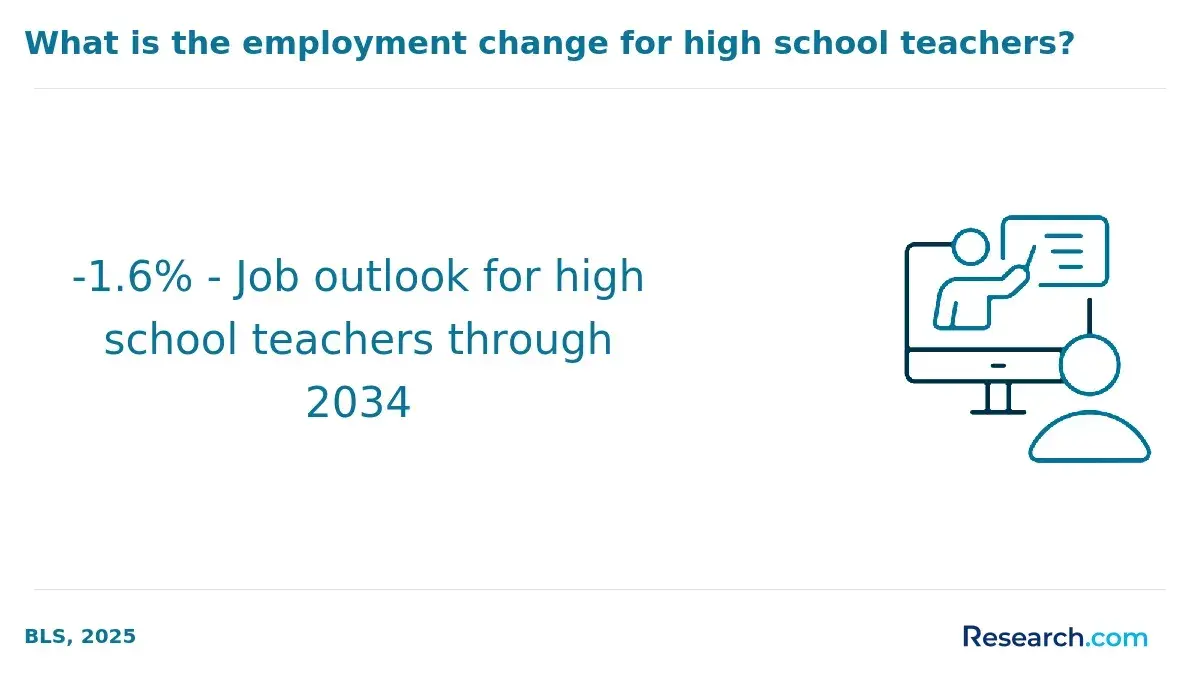
Despite modest overall growth, about 34,000 annual openings are expected for special education teachers over this period, primarily to replace educators who retire, change careers, or leave the workforce for other reasons (U.S. Bureau of Labor Statistics, 2025).
Demand is influenced by school enrollment, identification of students with disabilities, early intervention needs, district budgets, and federal and state funding rules. Federal law requires that every state maintain the same level of financial support for special education every year, but local staffing and compensation still depend on available funding.
To give you an idea of which cities have great funding for special education teachers, the chart below lists the hotspots for special education teachers in terms of pay. The cities with the highest average annual salary for them are Denver, Colorado ($82,100), Washington, D.C. ($71,291), and Bronx, New York ($70,347).
What are the career advancement options for special education professionals with a master’s degree?
A master’s degree can support advancement beyond a standard classroom teaching role, especially when paired with licensure, experience, and a clear specialization.
- Special Education Administrator. Experienced educators may move into roles such as special education director, program coordinator, or district-level administrator, overseeing compliance, services, staffing, and budgets.
- Instructional Coordinator or Curriculum Specialist. Graduates may design curriculum, train teachers, evaluate instructional materials, and support implementation of inclusive or specialized programs.
- Behavioral Specialist or Applied Behavior Analyst (ABA). Professionals may focus on behavior assessment, intervention planning, and positive behavior supports for students with behavioral needs.
- Educational Consultant. Consultants advise schools, families, nonprofits, or districts on accommodations, IEPs, inclusive practice, and service delivery.
- University Faculty or Researcher. Some graduates continue toward doctoral study and later teach, conduct research, or contribute to special education policy and practice.
- Policy Advocate or Nonprofit Program Director. Professionals may work with advocacy groups, nonprofits, or public agencies to improve access, services, and educational outcomes for students with disabilities.
What are the funding and financial aid options for online master’s in special education programs?
Funding options may include federal financial aid, scholarships, grants for educators, employer tuition reimbursement, district partnerships, and loan forgiveness programs for qualifying teachers. Many schools and districts support special education because it is a high-need area, but eligibility requirements can be strict.
The TEACH Grant is one federal option for students who agree to teach in designated low-income schools for a specified period. Employer reimbursement can also be valuable for current teachers, paraprofessionals, or school employees whose districts encourage advanced credentials. Federal student loan options such as the Stafford Loan or Federal Perkins Loan may also be available, and some programs include forgiveness options for teachers in critical subject areas.
Students seeking lower tuition should compare accredited programs carefully. Research.com’s guide to the most affordable online master’s in special education programs can help identify lower-cost options while keeping quality and licensure considerations in view.
What are related doctoral program opportunities?
Doctoral study may make sense for special education professionals who want to move into research, university teaching, policy work, district leadership, or advanced administrative roles. A doctorate in education with a special education or educational leadership focus can support roles such as district special education director, faculty member, researcher, or policy advisor.
Online doctoral programs can be more flexible for working educators, but they still require intensive research, writing, leadership projects, or dissertations. If cost is a concern, review options such as the most affordable online EdD programs in educational leadership.
Can integrating complementary online degrees enhance your career opportunities in special education?
Complementary degrees can broaden your professional range when they support a defined goal. For example, combining special education with library science, instructional design, child development, literacy, or educational leadership may help with curriculum development, resource management, research, accessibility, and program design.
Students interested in information access, research support, and resource curation may compare special education preparation with the most affordable online MLIS programs.
Is Accreditation a Key Quality Indicator for Your Online Master's in Special Education?
Yes. Accreditation is one of the first quality checks for an online master’s in special education. It helps verify that the institution meets recognized academic standards and can affect federal financial aid, transfer credit, employer recognition, and licensure review. However, accreditation alone is not enough. Students should also confirm whether the program is approved for special education licensure or endorsement in the state where they plan to work.
Students who want deeper knowledge of development may also explore an online master’s degree in child development, especially if their work focuses on early childhood, developmental delays, or family-centered services.
Exploring Alternative Graduate Programs: Is Early Childhood Education a Better Fit for You?
Special education is not the only graduate path for educators who want to support children’s learning and development. If your primary interest is early learning, preschool leadership, curriculum for young children, or developmental foundations, early childhood education may be a better match than a special education degree.
Why choose early childhood education?
Early childhood education focuses on the development, instruction, and care of young learners. Coursework often addresses child development, family engagement, early literacy, classroom management, curriculum design, and assessment for young children. Career options can include preschool director, curriculum developer, early learning consultant, or early education specialist.
Flexible online programs available
Many early childhood education programs are available online, making them accessible to working professionals and students with family responsibilities. These programs often combine theoretical coursework with practical teaching experiences. Students comparing lower-cost options can review affordable online early childhood education degree programs.
Key Insights
- An online master’s in special education can be a strong investment when it aligns with your state’s licensure rules, your target specialization, and your district’s salary or advancement policies.
- Do not assume that “online” means fully remote in every sense. Licensure-track programs may still require in-person fieldwork, student teaching, background checks, and exams.
- Accreditation is essential, but program approval for your state and certification area is just as important for teaching careers.
- Cost comparisons should include tuition, fees, course materials, licensure exams, practicum expenses, and potential time away from work.
- Specializations matter. Autism, ABA, learning disabilities, behavior support, early intervention, and assistive technology can lead to different roles and employer expectations.
- The best program is not always the highest-ranked or cheapest. It is the accredited program that fits your licensure path, budget, schedule, field placement needs, and long-term career goal.
References:
- Gray, K. (n.d.). Differential in starting salaries between bachelor’s and master’s grads is diminishing. NACE. https://www.naceweb.org/job-market/compensation/differential-in-starting-salaries-between-bachelors-and-masters-grads-is-diminishing/
- Indeed. (n.d.). How much does a degree increase your earnings? (with median salaries). Indeed.
- National Center for Education Statistics. (n.d.). Fast facts: Distance learning (80). NCES.
- National Center for Education Statistics. (n.d.). College navigator. NCES.
- U.S. Bureau of Labor Statistics. (2025). Special education teachers: Occupational outlook handbook. U.S. Bureau of Labor Statistics.
- U.S. Bureau of Labor Statistics. (2025). Special education teachers: Occupational outlook handbook. U.S. Bureau of Labor Statistics.
- National Center for Education Statistics. (2025). Digest of Education Statistics: Salaries of public school teachers by level and type of school. U.S. Department of Education.
Other Things You Should Know About Master's Degree in Special Education
The top online Master’s in Special Education programs in 2027 often include virtual simulations, school partnerships for in-person practicums, and opportunities for student teaching under licensed special education instructors. These elements ensure hands-on experience while accommodating flexible learning schedules.
Yes. Many programs require a supervised practicum or student-teaching placement, often 100 to 150 hours, completed in an approved K–12 setting. Some states also require a licensed special education mentor and university supervision before the placement counts toward certification.