2027 Best Online Bachelor's in Healthcare Administration for Working Adults

Co-Founder and Chief Data Scientist
Choosing an online bachelor's in healthcare administration is really a decision about flexibility, cost, and career direction. The field is expanding: the U. S. Bureau of Labor Statistics projects employment for medical and health services managers to grow 23% from 2024 to 2034, much faster than average.
This guide is for working adults who need a practical path into healthcare leadership without pausing their careers. You will learn how programs compare, what they cost, how accreditation works, and how to choose a reputable option with a realistic return on investment.
Key Things You Should Know
- The strongest online healthcare administration bachelor's programs for working adults are regionally accredited, accept transfer credits, offer asynchronous coursework, and include applied learning in finance, compliance, quality improvement, health informatics, and operations.
- Cost varies widely, but tuition is only one part of the decision; working adults should also compare fees, transfer-credit limits, employer tuition assistance, books, technology costs, and whether the program can be completed without reducing work hours.
- The clearest labor-market benchmark is medical and health services management: BLS data lists a 2024 median annual wage of $117,960, but bachelor's graduates often start in coordinator, analyst, supervisor, or practice-management roles before reaching senior management.
What is a healthcare administration bachelor's degree?
A healthcare administration bachelor's degree is an undergraduate business-and-management degree focused on how healthcare organizations operate. Instead of training students to provide direct clinical care, it prepares them to manage people, budgets, records, compliance obligations, patient-access systems, insurance workflows, and quality-improvement projects.
For working adults, the best online options usually fall into one of three formats. Each can be a strong choice, but the right fit depends on your previous credits, schedule, and career goal.
| Program type | Best fit | Typical trade-off |
| Bachelor of Science in Healthcare Administration | Students who want a broad management degree with healthcare-specific coursework | May include more quantitative, analytics, or operations courses than a general business degree |
| Bachelor of Health Services Administration | Students targeting administrative roles in hospitals, clinics, long-term care, or public health organizations | Can be less portable outside healthcare than a broader business administration major |
| Bachelor's completion program | Adults who already have an associate degree or substantial transfer credits | Requires careful review of transfer policies, residency requirements, and prerequisite courses |
This degree is a good fit if you already work in healthcare and want to move from frontline, billing, scheduling, records, or support roles into supervisory or operations positions. It can also fit students from business, military, public service, or customer-service backgrounds who want to enter healthcare management.
It may not be the best first choice if your goal is a licensed clinical profession such as nursing, physical therapy, occupational therapy, or radiologic technology. Those paths usually require separate clinical programs, supervised practice, licensure exams, and state-specific requirements. Healthcare administration can support leadership growth after clinical training, but it does not replace clinical credentials.
Are online healthcare administration degrees accredited?
Yes, many online healthcare administration bachelor's degrees are accredited, but students need to check two different layers: institutional accreditation and programmatic accreditation. Institutional accreditation is the baseline. It means the college or university has been reviewed by a recognized accreditor for academic quality, student support, governance, and financial practices.
Programmatic accreditation is more specialized. In healthcare administration, some bachelor's programs may hold accreditation from healthcare-management-focused accreditors, while related health information programs may use different standards. For example, students comparing data-heavy administrative pathways may also research online health information management degree programs CAHIIM accredited because CAHIIM is associated with health information management rather than general healthcare administration.
Accreditation matters because it can affect credit transfer, graduate-school eligibility, employer recognition, and access to federal financial aid. It is also one of the easiest ways to avoid low-value programs that market aggressively but provide weak academic support.
Before applying, verify accreditation directly rather than relying only on advertising language. A practical check should include these steps.
- Confirm the institution appears in the U.S. Department of Education's recognized accreditation database or the accreditor's official directory.
- Check whether the program page clearly states the degree title, delivery format, total credits, tuition structure, and accreditation status.
- Ask admissions whether online students receive the same transcript and diploma wording as campus students in the same degree.
- Review whether credits are likely to transfer if you later pursue a master's degree, a different bachelor's program, or a professional certificate.
A red flag is any school that says it is "fully recognized" or "internationally accredited" but does not identify a recognized U.S. institutional accreditor. Another warning sign is pressure to enroll immediately before you have reviewed tuition, transfer credits, and refund policies in writing.
How do online and campus healthcare administration programs compare?
Online and campus healthcare administration programs usually teach similar management concepts, but they differ in scheduling, interaction, cost structure, and access to local networks. For working adults, the best choice is often the format that lets you finish consistently without sacrificing job income or family responsibilities.
The table below compares the factors that matter most for adults balancing school with work. Use it to decide whether flexibility or in-person access should carry more weight in your decision.
| Factor | Online bachelor's program | Campus bachelor's program |
| Schedule | Often asynchronous or evening-friendly, which helps students study around shifts | Usually tied to fixed class times, though some programs offer evening sections |
| Networking | May rely on virtual discussions, remote advising, employer projects, and online career services | May offer more in-person events, faculty access, and local employer connections |
| Learning style | Works best for self-directed students who can manage deadlines independently | Works best for students who prefer face-to-face structure and immediate classroom interaction |
| Cost structure | Can reduce commuting and relocation costs, but technology and online fees may apply | May involve commuting, parking, housing, or schedule-related work reductions |
| Career fit | Strong for adults already working in healthcare who can apply coursework at work | Strong for students who want campus-based internships, student organizations, or local recruiting |
Online study is not automatically easier. It often requires more planning because deadlines are less visible than in a classroom routine. The best online programs reduce that risk through clear weekly modules, responsive advising, tutoring, career coaching, and early alerts when students fall behind.
Campus study may be worth considering if you learn best through live discussion, need structured accountability, or want access to a specific local health system that recruits from the university. However, adults with unpredictable schedules should be cautious about programs that require frequent daytime attendance.
What courses are in a healthcare administration curriculum?
A healthcare administration curriculum combines business fundamentals with healthcare-specific policy, compliance, finance, and operations. The goal is to help students understand both how organizations are managed and how healthcare differs from other industries because of regulation, reimbursement, patient safety, and privacy requirements.
Common courses vary by school, but most reputable programs include several core areas. If you are comparing healthcare administration courses online, look beyond course titles and read descriptions to see whether assignments are applied to real healthcare settings.
- Healthcare systems and policy: How hospitals, clinics, insurers, public agencies, and community organizations interact.
- Healthcare finance and reimbursement: Budgeting, billing models, revenue cycles, payer contracts, and financial decision-making.
- Law, ethics, and compliance: HIPAA, patient rights, risk management, fraud prevention, and ethical leadership.
- Human resources and organizational behavior: Staffing, conflict resolution, leadership, workforce planning, and employee engagement.
- Quality improvement and patient safety: Performance measurement, process improvement, care coordination, and error reduction.
- Health informatics and data analytics: Electronic health records, reporting dashboards, data governance, and decision support.
- Strategic planning and operations: Capacity planning, project management, service-line growth, and operational efficiency.
Many programs end with a capstone, internship, practicum, or applied project. Working adults should ask whether they can complete this requirement at their current workplace. That option can save time and make the degree more valuable because coursework connects directly to real operational problems.
Current technology trends make informatics and analytics especially important. Healthcare administrators increasingly work with electronic health record reports, patient-access metrics, staffing dashboards, telehealth workflows, and AI-supported scheduling or documentation tools. A strong program should teach students how to use data responsibly, not just how to read management theory.
What admissions requirements do online healthcare administration programs have?
Admissions requirements for online healthcare administration bachelor's programs depend on whether the program accepts first-year students, transfer students, or only degree-completion students. Working adults should pay close attention to transfer rules because previously earned credits can change both the cost and timeline of the degree.
Most programs ask for a combination of academic records and basic application materials. The details below are common, but each school sets its own requirements.
- High school diploma, GED, or equivalent for first-year applicants.
- Official transcripts from all colleges previously attended.
- Minimum GPA requirement, often with different standards for first-year and transfer applicants.
- Completed general education prerequisites for some bachelor's completion programs.
- Application form and fee, though some online programs waive the fee during certain enrollment periods.
- Resume, personal statement, or work-history summary for programs designed for adults.
- English proficiency documentation for applicants whose prior education was not completed in English.
Standardized tests are less common for adult-focused online bachelor's programs than they once were. Many schools have test-optional or test-free policies, especially for transfer and completion students. That said, admissions flexibility does not mean academic expectations are low; accredited programs still require college-level writing, quantitative reasoning, and consistent participation.
Transfer evaluation is one of the most important steps for working adults. Ask for a written transfer-credit estimate before enrolling, not after. A program that appears affordable can become expensive if it accepts fewer credits than expected or requires you to repeat courses similar to ones you already completed.
Students with healthcare work experience should also ask about prior learning assessment, credit for military training, professional certifications, or portfolio review. These options are not universal, but when available, they may shorten the path to graduation.
How long does a healthcare administration bachelor's take?
A traditional bachelor's degree usually requires about 120 semester credits and takes four years of full-time study. For working adults, the timeline can be shorter or longer depending on transfer credits, course load, term structure, and whether the program offers accelerated sessions.
The most important timeline question is not simply "How fast can I finish?" but "How fast can I finish without stopping out?" The table below shows how common enrollment patterns affect completion planning.
| Student profile | Typical path | Planning consideration |
| No prior college credit | About four years full time; longer if part time | Choose a program with strong advising because the degree plan is longer and course sequencing matters |
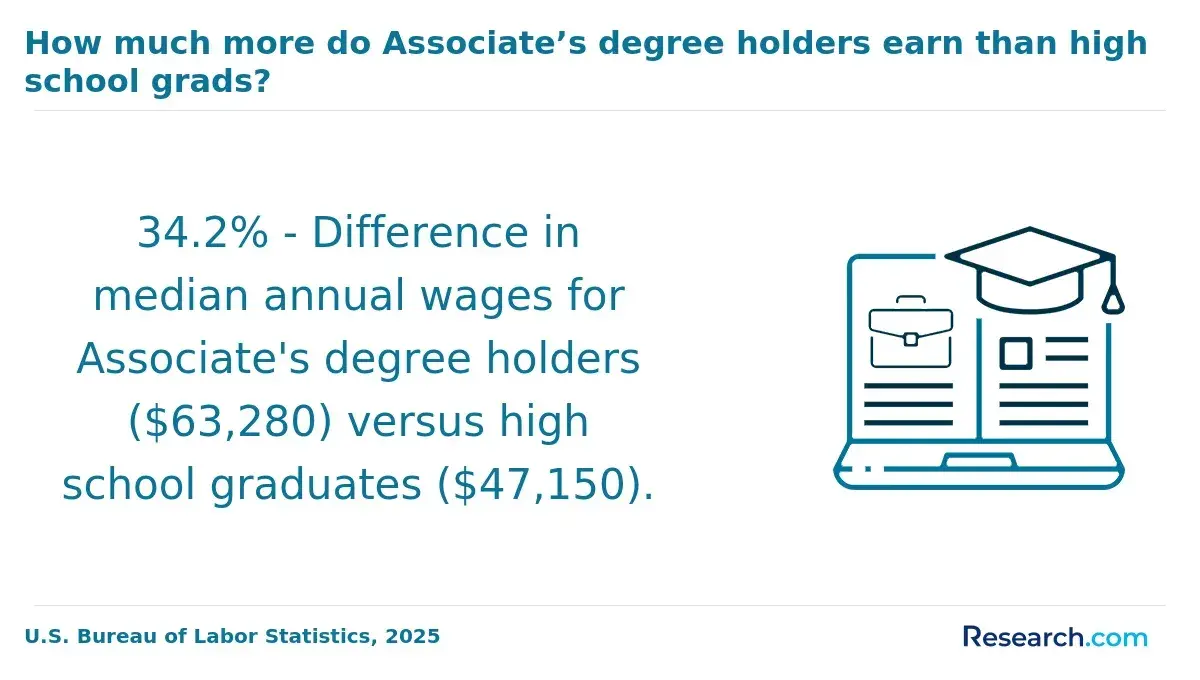
| Associate degree completed | Often about two years full time if most credits transfer | Confirm whether general education and lower-division requirements are fully satisfied |
| Some college, no degree | Varies widely based on accepted credits | Request an official or pre-enrollment credit evaluation before committing |
| Accelerated online student | May complete faster through shorter terms or heavier course loads | Works best for students with predictable schedules and strong time-management skills |
Accelerated programs can be useful, but speed has trade-offs. Seven- or eight-week courses may allow faster progress, yet they compress assignments and exams into a shorter window. For adults working full time, taking two accelerated courses at once can feel like a full academic workload.
Acceleration is common across many workforce-oriented online degrees, not just healthcare. If you are comparing formats, reviewing how a fast track construction management degree structures transfer credits and shortened terms can help you understand the broader trade-off between speed, workload, and support.
A practical strategy is to start with one course in the first term if you have been away from school for several years. After you understand the learning platform, instructor expectations, and weekly workload, you can decide whether to increase your course load.
How much does an online healthcare administration degree cost?
The cost of an online healthcare administration degree depends on tuition, fees, transfer credits, books, technology requirements, and the number of terms needed to finish. Working adults should calculate total program cost rather than comparing only cost per credit.
For context, College Board's 2024 pricing data listed average published tuition and fees for in-state students at public four-year institutions at $11,610 for the academic year, while private nonprofit four-year institutions averaged $43,350. Those figures are not specific to healthcare administration, but they show why school type, residency status, and institutional aid can sharply change the sticker price.
When schools publish prices, they may list tuition by credit, term, or academic year. Ask admissions or financial aid staff to translate that into an estimated total cost based on your transfer credits and expected pace.
- Per-credit tuition multiplied by remaining credits.
- Online learning, technology, graduation, transcript, and course-specific fees.
- Books, digital access codes, software, and exam-proctoring costs.
- Potential loss of income if the schedule forces you to reduce work hours.
- Interest costs if you borrow and take longer to repay.
Cost comparisons are useful across fields because the same hidden-expense issues appear in many online professional degrees. For example, guides to construction management degree online cost often emphasize the same lesson: the lowest tuition is not always the lowest total price if fees, transfer-credit limits, or delayed completion add expense.
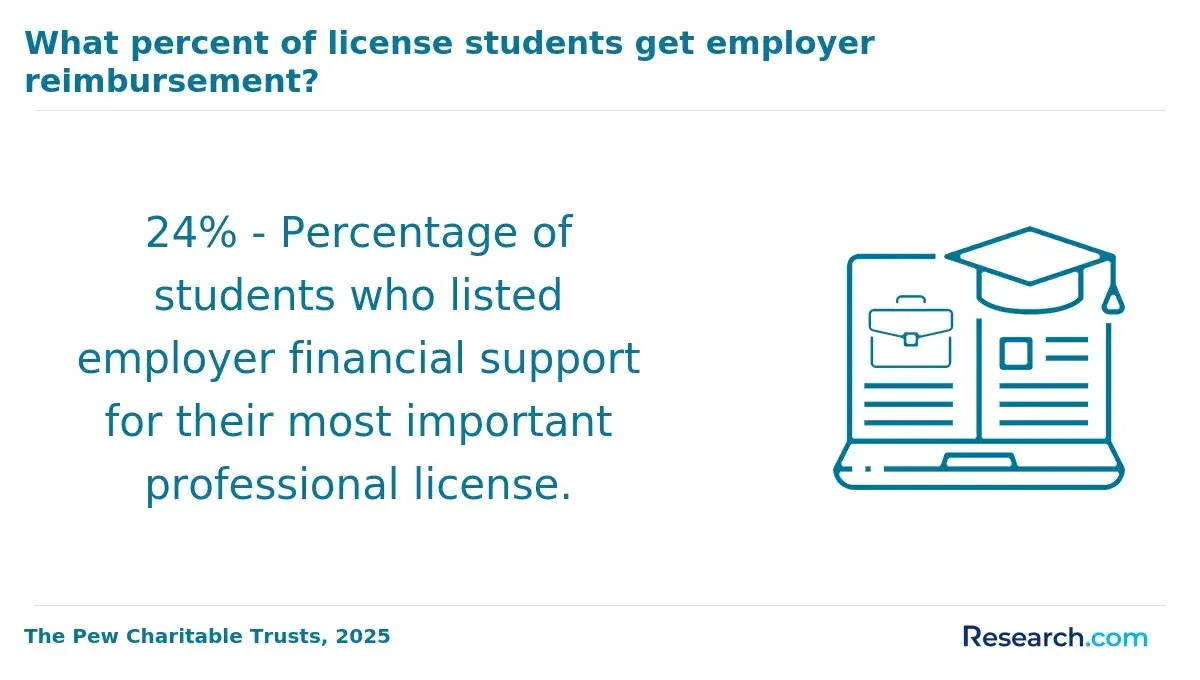
To reduce cost, start with your employer. Many hospitals, insurers, clinics, and healthcare vendors offer tuition assistance for job-related degrees. Also complete the FAFSA if you plan to use federal aid, compare scholarship options for adult learners, and ask whether the school has payment plans that do not require high-interest private borrowing.
A common mistake is choosing the cheapest program without checking graduation support. A slightly higher-cost program with strong transfer acceptance, predictable course availability, and responsive advising may be less expensive in practice if it helps you finish faster and avoid repeated courses.
What jobs can you get with a healthcare administration degree?
A bachelor's in healthcare administration can lead to entry-level and mid-level administrative roles in hospitals, physician practices, long-term care organizations, insurance companies, public health agencies, healthcare technology firms, and nonprofit health organizations. The degree is broad, so your first job title will depend heavily on your prior work experience, internships, local market, and technical skills.
The table below summarizes common paths. It is especially useful for working adults because many students use the degree to move up from a role they already hold rather than to start over completely.
| Role | What the job typically involves | Good fit for |
| Healthcare administrative coordinator | Scheduling, documentation workflows, department support, reporting, and communication between teams | Students entering healthcare administration or moving from clerical roles |
| Practice manager or assistant practice manager | Clinic operations, staffing, patient access, vendor coordination, billing workflow, and service quality | Students with experience in physician offices, dental offices, urgent care, or outpatient services |
| Patient access supervisor | Registration, insurance verification, front-end revenue cycle, staff scheduling, and patient flow | Students with customer service, admissions, scheduling, or revenue-cycle experience |
| Revenue cycle analyst or coordinator | Claims processes, denials, billing data, payer issues, and process improvement | Students who are detail-oriented and comfortable with data, insurance, and compliance |
| Quality improvement coordinator | Performance measures, audits, patient-safety projects, reporting, and workflow redesign | Students interested in analytics, compliance, and operational problem-solving |
| Health information or records supervisor | Records workflows, privacy practices, documentation quality, and information governance | Students interested in data, compliance, and electronic health record systems |
Some leadership roles require experience beyond the bachelor's degree. For example, department manager, operations director, compliance director, or hospital administrator positions often expect several years of progressive responsibility and may prefer a master's degree such as an MHA, MBA with healthcare concentration, or MPH.
Technology is changing the work, but it is not eliminating the need for administrators. AI-supported documentation, automated scheduling, predictive staffing, and analytics dashboards can reduce manual tasks, but organizations still need people who understand workflow, compliance, patient experience, and ethical use of data. Students who combine healthcare administration with analytics, project management, or informatics skills may have stronger options than those who focus only on general management.
This degree is most valuable when paired with practical experience. If you are not yet in healthcare, look for internships, part-time roles, volunteer work, or administrative positions in clinics, hospitals, insurance companies, or community health organizations while completing the degree.
What is the salary for healthcare administration graduates?
Salary outcomes for healthcare administration graduates vary because the degree can lead to many different roles. Location, employer type, prior experience, supervisory responsibility, and graduate education all affect pay. A new graduate in a coordinator role should not expect the same salary as an experienced medical and health services manager overseeing a department or facility.
The clearest national benchmark is the BLS category for medical and health services managers. BLS data shows a 2024 median annual wage of $117,960 for this occupation. That figure is useful for understanding the long-term management market, but it should be interpreted as a benchmark for established managers rather than a guaranteed starting salary for bachelor's graduates.
The table below shows how to think about salary progression by career stage without assuming that every graduate follows the same path.
| Career stage | Common role examples | How to interpret pay potential |
| Entry-level administration | Administrative coordinator, patient services representative, scheduling lead, records coordinator | Pay is often tied to local healthcare labor markets and prior clerical, customer-service, or healthcare experience |
| Early supervisory roles | Patient access supervisor, billing supervisor, assistant practice manager, operations coordinator | Compensation usually increases when the role includes staff supervision, metrics ownership, or revenue-cycle responsibility |
| Experienced management | Practice manager, department manager, quality manager, revenue cycle manager | Pay depends on budget size, facility type, team size, and measurable operational responsibility |
| Senior leadership | Director, administrator, executive roles | Employers may prefer or require graduate education plus years of progressive leadership experience |
Working adults should evaluate salary potential against total education cost and time to completion. A lower-cost program that lets you keep working full time may provide a better practical return than a more expensive option that requires schedule disruption, even if both degrees have similar academic content.
When researching outcomes, ask schools for career-services data, employer partnerships, internship support, and examples of roles held by recent graduates. Be cautious if a program advertises high salaries without explaining whether the figures refer to experienced managers, graduate-degree holders, or students who already worked in healthcare before enrolling.
How do you choose a reputable online healthcare administration program?
The best online bachelor's in healthcare administration for a working adult is not necessarily the most famous, fastest, or cheapest program. It is the program that is accredited, affordable for your situation, realistic for your schedule, aligned with your career goal, and transparent about outcomes.
Use the following process before enrolling. These steps help you compare programs on evidence rather than marketing claims.
- Verify institutional accreditation through an official accreditor or federal database.
- Request a written transfer-credit review that shows exactly how many credits apply to the degree.
- Calculate total remaining cost, including tuition, fees, books, technology, and expected time to completion.
- Review the curriculum for healthcare finance, compliance, quality improvement, informatics, leadership, and applied projects.
- Ask whether courses are asynchronous, synchronous, or blended, and confirm any required login times.
- Check student support services, including advising, tutoring, library access, disability services, career coaching, and technical support.
- Ask how capstones, internships, or practicums work for online students who are employed full time.
- Compare career outcomes carefully and look for role examples rather than broad salary promises.
Red flags deserve attention because online students may not see campus resources in person before committing. Avoid programs that pressure you to enroll quickly, refuse to provide a clear cost estimate, make vague accreditation claims, promise unrealistic salaries, or cannot explain how online students receive advising and career support.
Also avoid choosing based only on rankings. Rankings can be useful starting points, but they rarely account for your transfer credits, employer tuition benefits, schedule, commute, childcare responsibilities, or local healthcare job market. A program that is "best" for one student may be impractical for another.
Before you decide, ask yourself one final question: will this program help you finish? For working adults, completion support is a major part of quality. Clear degree maps, predictable course availability, flexible pacing, and proactive advising can matter as much as the catalog description.
Other Things You Should Know About Healthcare Administration
It can be worth it if you want to move into healthcare operations, supervision, revenue cycle, compliance, quality improvement, or practice management. The value is strongest when the program is accredited, accepts your transfer credits, fits your work schedule, and supports a realistic career step rather than a vague goal.
No, clinical experience is not always required. Many administrators come from business, customer service, billing, scheduling, military, public service, or office-management backgrounds. However, healthcare experience can make coursework more practical and may help when applying for supervisory roles.
In 2027, top online schools for a bachelor’s in healthcare administration for working adults include Purdue University Global, University of Central Florida, and Southern New Hampshire University. These programs are designed to be flexible and accommodating to the needs of working professionals.
Important skills include communication, budgeting, data interpretation, compliance awareness, project management, staff coordination, problem-solving, and comfort with healthcare technology. Employers also value administrators who can improve workflows while protecting patient privacy and service quality.
References
- CAHME-Accredited Healthcare Administration Programs by State https://www.healthcareadministrationedu.org/accredited-healthcare-administration-programs/
- Healthcare Administrator Salary https://www.publichealthdegrees.org/careers/healthcare-administrator/salary/
- What is the Timeline for Obtaining a Degree in Healthcare Management? - Healthcare Management Degree Guide https://www.healthcare-management-degree.net/faq/what-is-the-timeline-for-obtaining-a-degree-in-healthcare-management/
- Online Bachelor's Degree in Healthcare Administration | CSU Global | Accredited https://csuglobal.edu/academic-programs/undergraduate-degrees/bachelors-degree-healthcare-administration-management
- Healthcare Administration and Management - Course Requirements https://www.holyfamily.edu/healthcare-administration-and-management-course-requirements
- 10 careers you can pursue with a Healthcare Administration Degree - SMWC https://www.smwc.edu/10-careers-you-can-pursue-with-a-healthcare-administration-degree-blog-december-22/
- Online Health Administration Degree Program | University of Phoenix https://www.phoenix.edu/online-healthcare-degrees/health-administration-bachelors-degree.html
- 2025 Most Affordable Healthcare Administration Degrees Online https://www.onlineu.com/most-affordable-colleges/healthcare-administration-degrees
- Bachelor's in Health Services Administration https://www.monroeu.edu/academics/undergraduate-programs/school-allied-health-professions/bachelors-health-services