2027 Online BA in Psychology - General Psychology for Psychology of Family Development: Which Courses Should You Look For?
Audited and Verified:
Our Editorial and Data Verification Process
Research.com uses government datasets, official education statistics and primary institutional information to support its career and degree guides. Our review process checks factual accuracy, occupational definitions, source dates and the requirements associated with the credentials discussed.
How This Article Was Fact-Checked
Our editorial team verifies salary estimates, employment projections, education requirements and program information against original data providers and official organizations. Salary figures are checked against the relevant occupational definitions and reporting periods. Information about licensure, accreditation and required in-person training is reviewed separately.
Fact-checked and verified on:

Co-Founder and Chief Data Scientist
A family development focus can mean different things across online psychology degrees. One program may offer strong lifespan development and research training; another may rely on a few loosely related electives. If you hope to work with children and families, support a community program, or prepare for graduate study, that difference matters. This guide identifies the courses and experiences worth prioritizing, explains what they can - and cannot - prepare you to do, and shows you how to check whether an online BA fits your schedule, budget, and next step.
Key Things You Should Know
- Prioritize lifespan development, family relationships, research methods, statistics, and culturally responsive study of families over a concentration name alone.
- Check whether the courses are required, offered online often enough to complete your degree, and paired with appropriate research or supervised nonclinical experience.
- A general psychology BA can support family-serving roles or graduate preparation, but it does not qualify you to diagnose, provide therapy, or practice independently.
What is an online BA in general psychology with a family development focus?
It is usually a broad psychology bachelor's degree shaped by electives or a formally designated concentration in how people develop within families. The focus may cover parenting, relationships, childhood and adolescence, aging, culture, and the social conditions that affect family life. "Family development focus" is not necessarily an official credential: check the catalog and transcript rules before assuming the school awards a named concentration.
The broad major matters because family development draws on more than child psychology. Social psychology helps explain relationships and group influences; research methods help you judge claims about parenting or prevention programs; and lifespan study keeps you from treating childhood as the only relevant stage. Compare the actual course requirements - not just degree labels - when reviewing online psychology programs and academic pathways.
What courses should you look for in a family development psychology program?
Start with the scientific core, then choose family-focused depth. An appealing elective is less useful if the degree leaves you unable to evaluate research or document what a family program accomplishes. The table separates essential foundations from courses whose value depends on your goal; course titles and availability vary by school.
| Course area | What it adds | What to check |
| Lifespan developmental psychology | Changes from infancy through later adulthood, including developmental variation | Whether coverage extends beyond childhood |
| Statistics and research methods | Ability to interpret studies, evaluate evidence, and avoid confusing association with causation | Whether both are required and whether methods has a statistics prerequisite |
| Family, child, or adolescent psychology | Closer study of relationships, caregiving, and developmental contexts | Whether relevant electives are offered regularly online |
| Social, cultural, or community psychology | Attention to family diversity, social systems, and community resources | Whether coursework addresses context without assuming one family structure is universal |
| Psychopathology or health psychology | Academic understanding of mental-health or health challenges affecting families | Whether the course is clearly distinguished from clinical training |
A sensible sequence is introductory psychology, developmental psychology and statistics, followed by research methods and more focused electives. If you hope to study family services in graduate school, seek an approved research project or capstone that requires you to frame a question, assess evidence, and explain limitations. If your target is substance-use treatment rather than broader family support, compare the curriculum with an addiction counseling degree comparison resource; an addictions elective alone does not establish counseling eligibility.
Is an online psychology bachelor's degree accredited and career-relevant?
Check the institution's accreditation status and confirm it covers the institution awarding the online degree. Do not look for APA accreditation as a test of a general psychology BA: APA's accreditation scope concerns specified professional psychology training, not general undergraduate majors. Institutional accreditation also does not prove that a particular elective, internship, or career service is strong.
Career relevance depends on the work you intend to do. Research literacy, clear writing, and knowledge of development can be useful in family-service administration, outreach, and research support; an employer may also require experience, screening, or role-specific training. If your goal is licensed counseling, investigate a qualifying professional program and applicable state rules rather than treating the BA as a license pathway. Resources on accredited clinical mental health counseling completion pathways address a different degree and credential decision.
The academic subjects can be comparable, but access and scheduling may differ. An asynchronous lecture can accommodate work or caregiving; a live seminar, group study, research meeting, or approved placement may not. Campus students may find it easier to join a lab or meet local agencies, while online students may need to ask more deliberately how research supervision and community-based experience work.
Request the delivery details for the specific courses you plan to take: live attendance, exam times, group-project expectations, campus visits, and whether an internship can be arranged near home. Online delivery does not eliminate supervised experience requirements. This distinction becomes even more consequential if you later compare clinical mental health master's programs by study pace, where professional placements may impose separate scheduling demands.
Requirements vary by institution and by whether you apply as a first-year or transfer student. Schools commonly review prior academic records, but admission to the university, entry into the major, and satisfaction of major requirements are separate decisions. A prior developmental psychology course, for example, might transfer as elective credit without replacing the school's required course.
Transfer and returning students should request a written degree audit showing how prior work applies to general education, statistics, psychology prerequisites, electives, and remaining institutional requirements. Ask who approves course equivalencies and when the family-focused electives will next run. Guidance on evaluating transfer options before psychology enrollment can help you prepare questions, but only the receiving school can decide how your credits apply.
Completion time depends less on the word "online" than on accepted credits, enrollment pace, prerequisite order, and how often required courses run. A working student taking fewer courses per term may need more time, while a transfer student could finish sooner if prior credits satisfy - not merely transfer toward - degree requirements. Examine the actual course rotation before relying on an advertised completion estimate or a guide to speeding up an online psychology degree.
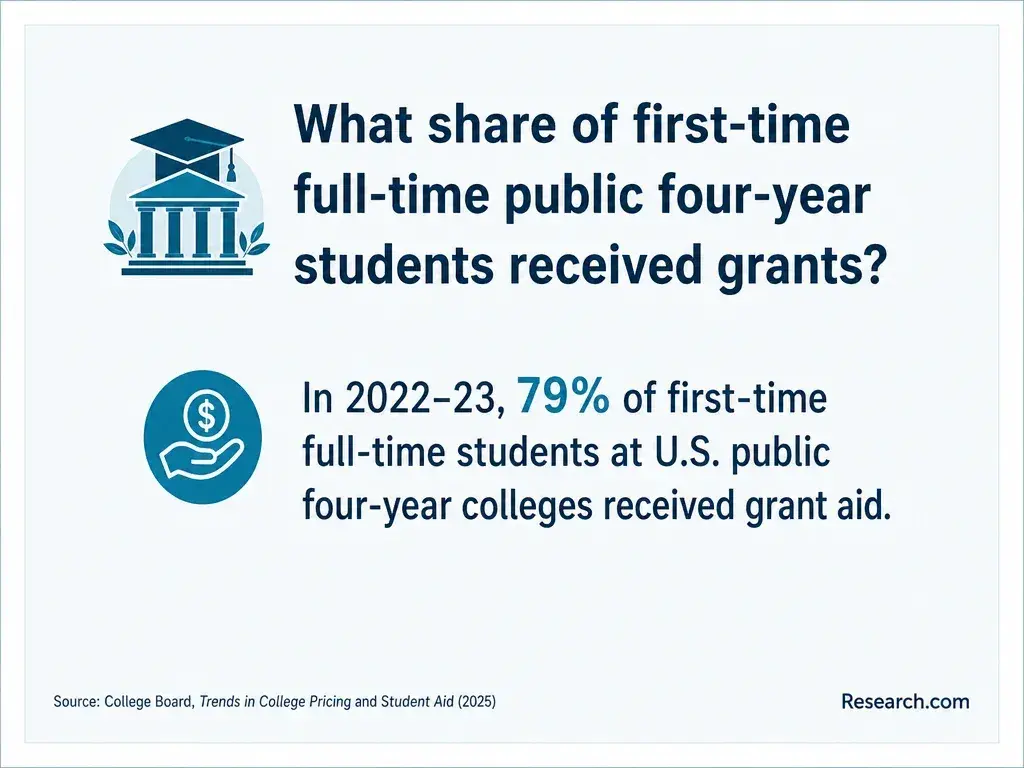
For cost, request a personalized estimate of remaining tuition and mandatory fees, then account for books, technology, possible placement travel, and time away from paid work. Compare the estimate against your expected role and whether that role requires additional education. No generic online price can tell you what you will owe after transfer evaluation and financial aid review.
Potential nonclinical roles include family-service program assistant, community outreach coordinator, human-services support worker, and research assistant on a developmental or family study. Tasks may involve scheduling services, explaining referral options, documenting program activity, supporting participant recruitment under approved procedures, or summarizing evidence. Job titles and minimum qualifications differ by employer; experience with families and local service systems can matter as much as an elective.
Seek a supervised project, volunteer role, or internship that demonstrates a relevant skill without exceeding your responsibilities. In work involving minors or sensitive records, ask about safeguarding, confidentiality, site approval, and supervision before accepting tasks. If substance-use support interests you, explore career options in recovery services and check the credential rules for your intended state and position.
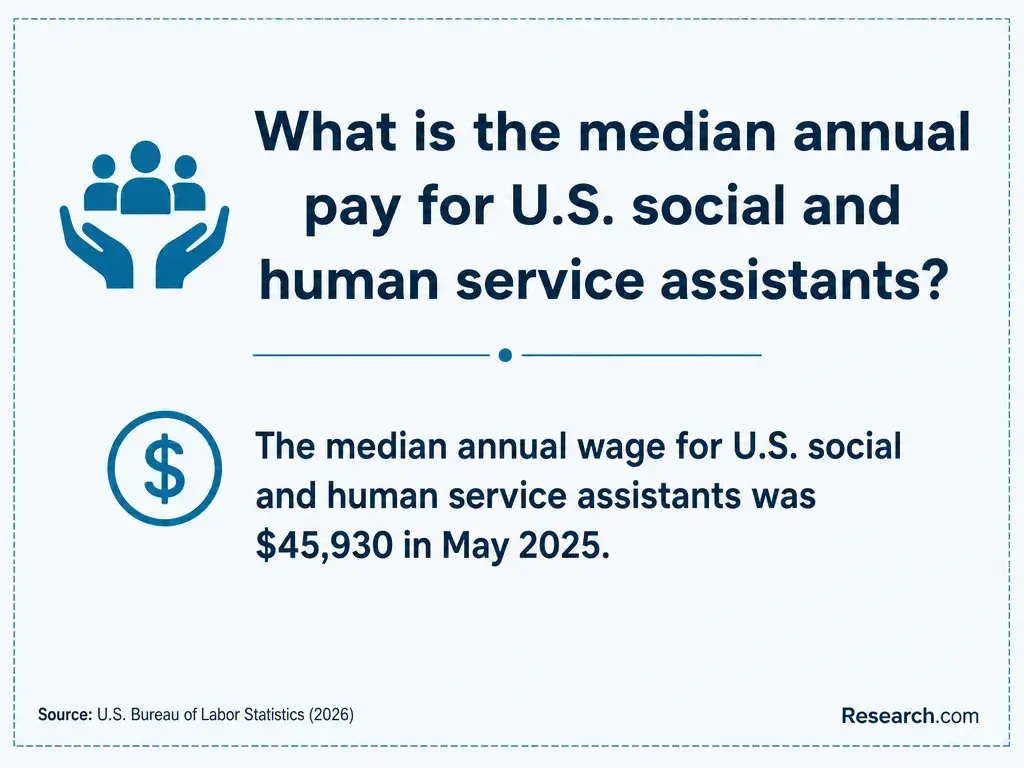
There is no reliable single salary for "family development psychology graduates." Pay attaches to an occupation, location, employer, duties, and experience - not to a concentration name. For a useful estimate, identify an actual entry-level job posting, check its required credentials and posted range, then compare it with the US Bureau of Labor Statistics wage data for the closest matching occupation. An occupation-wide median is not a starting salary or a program outcome.
Be especially careful when comparing pay across degree levels or specialties. Figures associated with forensic psychology master's career progression options, for example, do not describe the likely pay or qualifications of an applicant seeking a bachelor's-level family-services job. Use local postings for the role you would actually pursue when weighing tuition against potential earnings.
It depends on what "practice" means. A BA can prepare you to apply for nonclinical support, coordination, or research work, subject to employer requirements. It does not authorize independent psychotherapy, diagnosis, restricted psychological assessment, or use of a protected professional title. Those activities can require a distinct qualifying degree, supervised experience, examination, and state authorization.
If you want to become a therapist, identify the precise license and state first, then ask programs how their curriculum and placements meet that state's educational rules. A general psychology master's degree is not automatically a qualifying counseling, social-work, or marriage and family therapy degree. Compare any proposed next degree's full cost and credential fit; lower-tuition psychology master's options may serve research or nonclinical goals without meeting clinical licensure requirements.
How can you choose a reputable online psychology degree program?
Judge programs against a short list of courses and experiences tied to your goal, rather than an attractive concentration label. Before applying, ask an advisor for the current catalog, an individual degree plan, recent course schedules, and the rules for research projects or placements. Confirm institutional accreditation independently with the accreditor or the US Department of Education.
Then compare total remaining cost, live-session commitments, access to faculty supervision, and evidence that students can complete the family-relevant courses they want. If you already work in a community organization, ask whether a project there could meet academic requirements - but obtain school and site approval before assuming it counts. Use psychology college costs for online students as a comparison starting point, not a substitute for a personalized estimate. The best fit is the program whose verified coursework, schedule, and next-step preparation match your objective at a manageable cost.
Other Things You Should Know About Psychology
No. A school may offer relevant electives without awarding a named concentration. If the distinction matters to you, ask the registrar what the transcript and diploma will show.
No. Child development focuses on changes in children; family development also considers relationships, caregiving, and changing needs across generations. Look at course descriptions to see how much of each a program covers.
Compare required courses rather than the letters. A BS may require more science or quantitative study, but requirements vary; either degree can be useful if it provides the preparation your next step calls for.
Yes. Research support, program evaluation, and service administration can draw on family development knowledge. Check whether your chosen curriculum gives you the methods and writing practice those roles require.
- Emerging Adulthood as a Critical Stage in the Life Course | nih.gov https://www.ncbi.nlm.nih.gov/books/NBK543712/
- Designing Culturally Responsive Education Strategies... - PMC https://pmc.ncbi.nlm.nih.gov/articles/PMC9777010/
- Children's Learning and Development Benefits from High-Quality Early Care and Education: A Summary of the Evidence https://acf.gov/opre/report/childrens-learning-and-development-benefits-high-quality-early-care-and-education
- Accreditation in the U.S. | ed.gov http://www.ed.gov/laws-and-policy/higher-education-laws-and-policy/college-accreditation/accreditation-in-the-us
- Family Science and Human Development | Montclair State University https://www.montclair.edu/academics/programs/ba-family-science-and-human-development
- Transfer Credit - UF Online - University of Florida https://ufonline.ufl.edu/apply/transfer-credit/
- Community Agency Internships (CADV) | CSU Northridge | California State University, Northridge https://www.csun.edu/health-human-development/child-adolescent-development/current-students/internship-program/community
- Human Development and Family Studies | Lourdes University https://lourdes.edu/human-development-and-family-studies/
- HDFS vs. Psychology: Which Major is Right for You? | Oregon State University https://health.oregonstate.edu/hdfs/difference-between-HDFS-and-psychology
- FAQs - Transfer Students | University of Cincinnati Admissions https://www.admissions.uc.edu/information/transfer/ts-faq.html