
2027 How to Become a Licensed Counselor (LPC) in South Carolina

Co-Founder and Chief Data Scientist
Becoming a licensed professional counselor in South Carolina is a multi-step decision: you need the right graduate education, supervised clinical experience, exam preparation, and a clear plan for the population you want to serve. The need is substantial. According to the National Alliance on Mental Illness, 706,000 adults in South Carolina have a mental health condition, a number that is more than five times the population of Charleston.
This guide explains how to become a licensed counselor in SC, how to compare counseling graduate programs, what the state requires for licensure and renewal, where counselors work, and how to think about salary, specialization, technology, and long-term career fit. It is written for prospective graduate students, career changers, recent psychology or social work graduates, and current helping professionals who want a practical roadmap rather than a vague overview.
Quick answer: How do you become a licensed counselor in South Carolina?
To become a licensed professional counselor in South Carolina, you generally need a bachelor’s degree, a graduate counseling degree that satisfies state educational standards, a passing score on an approved national counseling exam, a Professional Counselor Associate period with supervised clinical experience, and a final LPC application through the South Carolina licensing board. South Carolina LPCs must also complete 40 hours of Continuing Education every two years to keep their license active.
| Step | What you need to do | Why it matters |
| 1. Complete undergraduate preparation | Earn a bachelor’s degree, ideally with coursework in psychology, human development, social work, counseling, or behavioral science. | Graduate counseling programs look for academic readiness and relevant preparation. |
| 2. Earn a graduate counseling degree | Complete a master’s-level counseling program, preferably one that meets CACREP or comparable standards. | South Carolina requires graduate-level counseling education for LPC eligibility. |
| 3. Pass an approved exam | Complete either the National Counselor Examination for Licensure and Certification or the National Clinical Mental Health Counseling Examination. | The exam verifies core professional counseling knowledge and clinical judgment. |
| 4. Practice under supervision | Work as a Professional Counselor Associate under an approved supervision plan. | Supervised practice helps new counselors move from classroom learning to safe, ethical clinical work. |
| 5. Apply for LPC licensure | Submit documentation, fees, examination verification, and supervised experience records to the state board. | The LPC license allows independent professional counseling practice within the state’s scope of practice. |
| 6. Renew and maintain the license | Complete required Continuing Education and follow state ethical and legal standards. | Licensure is not a one-time requirement; ongoing compliance protects clients and your career. |
Key reasons to consider counseling licensure in South Carolina
- In 2025, only 14,240 counselors served South Carolina's population of 5,463,604, and about 47% of them are educational, guidance, and career counselors and advisors, and 39% work as substance abuse, behavioral disorder, and mental health counselors.
- In 2025, the average salary of licensed professional counselors in South Carolina is $68,410.
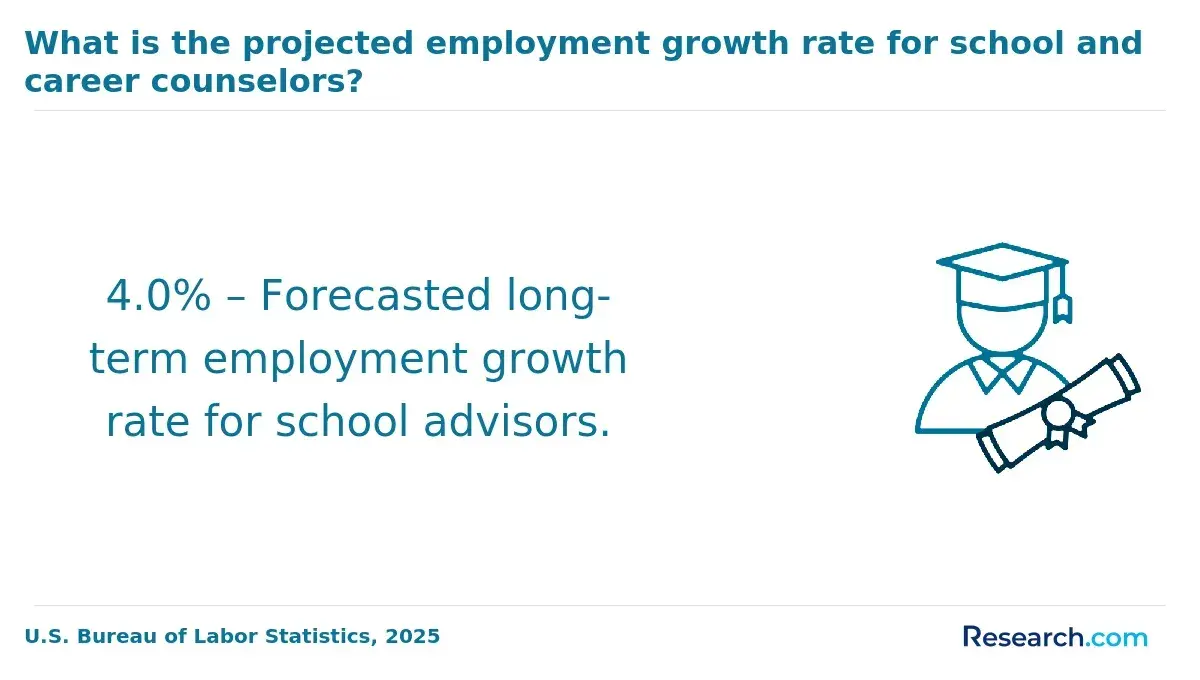
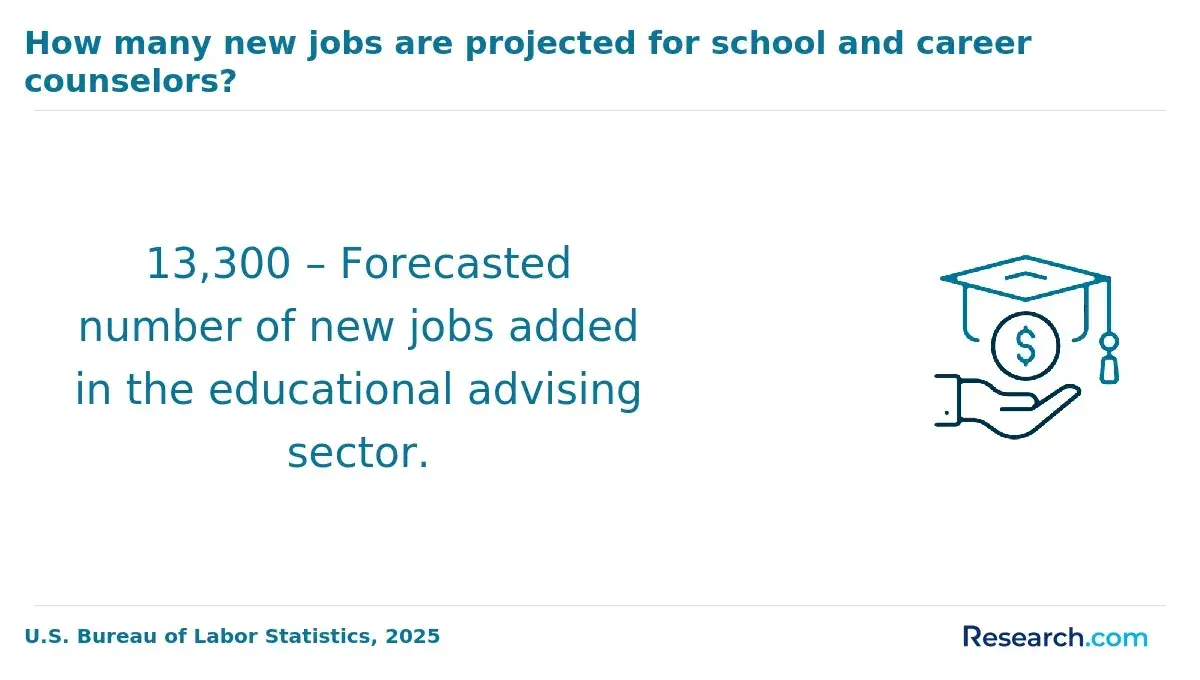
- Educational, guidance, school, and vocational counseling jobs are expected to increase by 5.0% through 2033. Rehabilitation counseling jobs are estimated to increase by 2.0%, generating an additional 2,000 jobs for the same period with an average annual job opening of 9,100.
- Among four major occupational groups or counselors, about 1,220 jobs are expected to be generated by 2030 in South Carolina.
- In South Carolina, LPCs must complete 40 hours of Continuing Education every two years to maintain their professional license.
- Top counseling graduate programs in South Carolina for 2027
- What does the counseling field look like in South Carolina?
- How much do licensed counselors earn in South Carolina? Review counseling demand
- What is the job outlook for counselors in South Carolina?
- What do you need before entering an LPC program in South Carolina?
- How do South Carolina LPC application and renewal requirements work?
- Which counseling specializations are available?
- Why do specialized counseling roles matter in South Carolina?
- How should you choose a counseling specialization?
- Where can counselors work in South Carolina?
- Is LPC work in South Carolina a good career choice?
- What should substance abuse counseling candidates know?
- What related careers can counselors pursue?
- How is counseling licensure different from psychology licensure?
- What ethical and legal responsibilities do South Carolina counselors have?
- Where can you compare counseling and psychology programs in South Carolina?
- How does interdisciplinary care improve mental health services?
- Can counselors use behavior analysis in practice?
- What is the fastest route to becoming a counselor in South Carolina?
- How can an LPC move into school counseling?
- Are South Carolina LPC requirements changing?
- What challenges do licensed counselors face?
- How can LPCs advance through continuing education?
- What should you do after earning the LPC?
- What financial aid options can counseling students explore?
- How is technology changing counseling careers? Continuing education Related licensing topics Work settings Specialization choice Counseling roles Program requirements Job outlook Salary Programs
Top counseling graduate programs in South Carolina for 2027
How this program list should be used
Your graduate program is the foundation of LPC eligibility. Before enrolling, confirm that the curriculum, practicum, internship, faculty qualifications, and accreditation status align with South Carolina licensure expectations. A strong program should not only teach counseling theory; it should help you build supervised clinical skills, prepare for licensure exams, and understand ethical practice.
Because counseling degrees require a major financial and time commitment, our rankings rely on verifiable data sources, including the IPEDS database, Peterson's database, the College Scorecard database, and the National Center for Education Statistics. These sources help evaluate licensed professional counselor programs in South Carolina using consistent education and institutional data. For more detail on how Research.com evaluates schools, see our methodology page.
| Program | Format | Credits | Cost information | Accreditation |
| Clemson University MEd in Clinical Mental Health Counseling | On-campus | 60 | $4,853 (in-state); $10,064 (out-of-state) | CACREP |
| University of South Carolina EdS in Clinical Mental Health Counseling | On-campus | 66 | $6,867 (in-state); $14,880 (out-of-state) | CACREP |
| Columbia International University MA in Clinical Mental Health Counseling | On-campus/online | 60 | $605 per credit | CACREP |
| Webster University MA in Clinical Mental Health Counseling | On-campus | 60 | $730 per credit | CACREP |
| University of South Carolina PhD in Counselor Education and Supervision | On-campus | 96 | $6,867 (in-state); $14,880 (out-of-state) | CACREP |
1. Clemson University: On-Campus MEd in Clinical Mental Health Counseling
Clemson University offers an on-campus MEd in Clinical Mental Health Counseling for students who want structured preparation for professional counseling practice in South Carolina. The program is built around graduate counseling coursework, applied learning, and clinical preparation that supports future LPC candidates.
- Program Length: ~2 to 3 years
- Required Credits to Graduate: 60
- Tuition Cost: $4,853 (in-state); $10,064 (out-of-state)
- Accreditation: Council for Accreditation of Counseling and Related Educational Programs (CACREP)
2. University of South Carolina: On-Campus EdS in Clinical Mental Health Counseling
The University of South Carolina provides an EdS in Clinical Mental Health Counseling for students seeking advanced preparation in clinical counseling. The program may appeal to learners who want a more extensive graduate credential and clinical training for work in mental health agencies, private practice, and community-based services.
- Program Length: ~2 to 4 years
- Required Credits to Graduate: 66
- Tuition Cost: $6,867 (in-state); $14,880 (out-of-state)
- Accreditation: CACREP
3. Columbia International University: On-Campus/Online MA in Clinical Mental Health Counseling
Columbia International University’s MA in Clinical Mental Health Counseling is available in on-campus/online delivery and is designed for students who want flexibility while preparing for clinical counseling work. Its 60-credit structure fits the common educational expectation for LPC preparation.
- Program Length: 32 months
- Required Credits to Graduate: 60
- Cost per Credit: $605
- Accreditation: CACREP
4. Webster University: On-Campus MA in Clinical Mental Health Counseling
Webster University’s MA in Clinical Mental Health Counseling gives students graduate-level preparation in counseling theory, clinical skills, ethical practice, and supervised experience. It is best suited for learners who want an on-campus route into mental health counseling practice.
- Program Length: ~2 to 4 years
- Required Credits to Graduate: 60
- Cost per Credit: $730
- Accreditation: CACREP
5. University of South Carolina: On-Campus PhD in Counselor Education and Supervision
The University of South Carolina’s PhD in Counselor Education and Supervision is a doctoral option for experienced counseling professionals who want to move into teaching, supervision, research, leadership, or advanced counselor education roles. It is not the standard first step for LPC eligibility, but it can support long-term academic and supervisory career goals.
- Program Length: ~3 to 5 years
- Required Credits to Graduate: 96
- Tuition Cost: $6,867 (in-state); $14,880 (out-of-state)
- Accreditation: CACREP
What South Carolina counseling graduates say about their careers
-
: "
Graduate counseling training pushed me academically and personally. Studying therapy approaches while learning how complex human behavior can be was demanding, but seeing clients make progress now makes the difficult nights of studying feel worthwhile. —Amber
"
-
: "
My program gave me more than coursework. Faculty served as mentors, and the relationships I built with classmates still support me professionally. That peer network has been one of the most valuable parts of entering the counseling field. —Hayes
"
-
: "
The internship changed everything for me. Working with clients under experienced supervision helped me connect theory to practice, build confidence, and confirm that counseling was the right professional path. —Eliza
"
What does the counseling field look like in South Carolina?
South Carolina’s counseling workforce is shaped by high mental health need, uneven access to care, and growing reliance on counselors in schools, community agencies, substance use programs, healthcare settings, and private practice. In 2021, the National Alliance on Mental Health reported that around 53,000 South Carolinians aged 12 to 17 underwent depression. In February of the same year, 37.6% of adults in the state had reported symptoms of depression or anxiety, and 23.3% of adults who reported such symptoms could not receive the therapy or counseling they needed.
In 2025, only 14,240 counselors served the state’s population of 5,350,000, as shown in the image below. About 48% are educational, guidance, and career counselors and advisors, and 36% work as substance abuse, behavioral disorder, and mental health counselors. This workforce remains under pressure because an estimated 745,000 adults in the state have mental conditions.
How much do licensed counselors earn in South Carolina?
Counselor salaries in South Carolina vary by role, setting, credentials, region, specialization, and whether the counselor works in private practice, education, healthcare, nonprofit, or government service. Salaries also differ from psychologist earnings because LPC preparation typically requires a master’s degree, while licensed psychologists generally need doctoral training.
In 2025, the average LPC salary South Carolina practitioners can expect is $66,740. In South Carolina, the average annual salary for educational, guidance, and career counselors and advisors was $56,480, according to the U.S. Bureau of Labor Statistics. This is the highest among different occupational groups. During the same year, different types of psychologists earned $112,430 on average.
| Career category | Reported South Carolina salary information | How to interpret it |
| Licensed professional counselors | In 2025, the average LPC salary South Carolina practitioners can expect is $66,740. | This figure is a general salary benchmark and should not be treated as a guaranteed outcome. |
| Licensed professional counselors | In 2025, the average salary of licensed professional counselors in South Carolina is $68,410. | Salary estimates may differ by source and methodology, so compare multiple references. |
| Educational, guidance, and career counselors and advisors | $56,480 | School and career counseling salaries often reflect education system pay structures. |
| Psychologists | $112,430 | Psychology licensure usually involves doctoral preparation and a different scope of practice. |
What is the job outlook for licensed counselors in South Carolina?
The employment outlook is strongest in areas tied to mental health treatment, addiction services, school support, and rehabilitation. Projections should be used as planning tools rather than promises; actual hiring depends on state funding, insurance reimbursement, local demand, and employer budgets.
Educational, guidance, school, and vocational counseling jobs are expected to increase by 10.2% through 2032, according to Projections Central. This includes average annual job openings of 610 throughout the period. Substance abuse, behavioral disorder, and mental health counselors are projected to see a 24.3% increase, translating to 530 additional jobs with average annual openings of 280.
Rehabilitation counseling jobs are estimated to increase by 13.5%, generating an additional 120 jobs for the same period with an average annual job opening of 100. Among four major occupational groups or counselors, about 1,220 jobs are expected to be generated by 2030 in South Carolina.
What do you need before entering an LPC program in South Carolina?
The education path usually begins with a bachelor’s degree and continues through a graduate counseling program that meets state licensure standards. A psychology, social work, counseling, human services, or education background can be useful, but applicants from other majors may still qualify if they meet a program’s prerequisites. If you are still choosing an undergraduate major, review coursework in human development, abnormal psychology, research methods, ethics, and helping skills. For broader degree planning, see Research.com’s guide to the best degree for counseling.
Graduate education in clinical mental health counseling
South Carolina LPC candidates typically need a master’s degree in clinical mental health counseling or a closely aligned counseling field. The degree should include graduate counseling coursework and supervised clinical experiences such as practicum and internship. Programs accredited by the Council for Accreditation of Counseling and Related Educational Programs are often the clearest fit for licensure preparation.
Applicants who graduate from a non-CACREP program may still be considered by the South Carolina State Board of Examiners for Licensure of Professional Counselors, Marriage and Family Therapists, Addiction Counselors, and Psycho-Educational Specialists if the program meets comparable educational standards and includes at least 60 graduate semester hours in counseling.
Online study can be an option, especially for working adults, but students must be careful. Some masters in psychology online programs may be useful for related career goals, but not every psychology or counseling-related online program satisfies LPC requirements. You can search CACREP’s directory for accredited options. None, however, are offered by South Carolina institutions. The closest CACREP-accredited online offerings are in North Carolina, Georgia, and Alabama.
Exams and supervised clinical experience
South Carolina LPC applicants must complete either the National Counselor Examination for Licensure and Certification (NCE) or the National Clinical Mental Health Counseling Examination (NCMHCE), both administered through the NBCC. Many new graduates apply to the Board before testing and receive exam instructions after their education and application materials are reviewed, although some candidates may test before applying.
For supervised experience, candidates must complete a minimum of 1,500 hours of post-master’s clinical experience and supervision over two years. Of these hours, 1,380 must involve direct client contact and 120 hours are designated for supervision. Supervision may come from an LPCS or another approved licensed mental health practitioner. Sixty hours must be individual/triadic supervision, with the remaining 60 hours being individual/triadic or group supervision. A professional counselor associate cannot provide professional counseling services until the supervision plan is approved and the Associate license is received.
How do South Carolina LPC application and renewal requirements work?
After completing the required graduate education, candidates move into the state application process. Requirements can vary by license type and specialization, so you should match your graduate program and practicum experiences to the credential you intend to pursue. For example, someone researching how to become a guidance counselor in SC may need to consider school counseling, psycho-educational, or education-related requirements that differ from clinical mental health counseling.
The South Carolina Board publishes specific requirements for licensure categories and may revise forms, procedures, and standards. Always verify current requirements directly with the Board before enrolling, applying, testing, or beginning supervised practice.
South Carolina LPC application process
- Apply for an Associate License: Submit the Professional Counselor Associate application to the South Carolina Board of Examiners, including required forms, fees, and proof of education and examination status.
- Complete the required examination: Pass the National Counselor Examination (NCE), administered by the National Board for Certified Counselors (NBCC), or follow Board instructions for the approved examination pathway.
- Accumulate supervised experience: Practice as a PCA under an approved clinical supervision plan. This entails at least 1,500 hours of direct client contact and 150 hours of individual or group supervision over at least two years.
- Apply for the LPC license: Once supervised experience is complete, submit the LPC application, fees, supervision verification, and any additional documentation the Board requires.
- Keep the license in good standing: Follow state ethical rules, renew on schedule, and complete the continuing education required for ongoing practice.
Continuing education for South Carolina LPC renewal
South Carolina LPCs must complete 40 hours of Continuing Education (CE) every two years. The reporting cycle runs from September 1 to August 31 every two years, and the deadline is August 31st of odd years.
At least 25 of the 40 required hours must involve formal face-to-face instruction. Counselors who hold multiple licenses must complete 50 formal hours every two years. Of those 50 hours, 6 hours must focus on ethical standards, while the remaining 44 should be distributed as evenly as possible across related disciplines. CE Broker, available through the Board’s website, can help licensees monitor continuing education records.
LPCs licensed in other states may be able to pursue South Carolina licensure through reciprocity or endorsement. The Board is authorized to offer LPC reciprocity in South Carolina, and endorsement may be possible for applicants who hold an equivalent license elsewhere.
Which counseling specializations are available?
Specialization affects your coursework, supervised experience, job settings, client population, and long-term career path. Before choosing a program, confirm whether it prepares you for the specific license or role you want.
- Licensed Professional Counselor (LPC). After completing the education and training to be a mental health counselor, LPCs provide counseling services for clients facing emotional, behavioral, relational, and mental health concerns. They assess client needs, develop treatment plans, provide therapy, and coordinate care when appropriate.
- Licensed Professional Counselor Associate. A counselor associate works under approved supervision while gaining post-master’s experience. This is the transitional license stage before independent LPC practice.
- Marriage and Family Therapist. Marriage and family therapists focus on relational issues involving couples, families, and family systems. They help clients improve communication, manage conflict, and address patterns that affect emotional health.
- Addiction Counselor. Addiction counselors work with clients affected by substance use and related behavioral health concerns. Candidates interested in this path may benefit from a substance abuse counseling degree from an accredited institution or addiction-focused graduate coursework.
- Psycho-Educational Specialist. Psycho-educational specialists work at the intersection of psychology and education. They may conduct assessments, support learning interventions, and help address behavioral or academic challenges.
Why do specialized counseling roles matter in South Carolina?
Specialized counseling roles help address needs that generalist training may not fully cover. South Carolina communities need clinicians who can support families, students, rural clients, people with substance use disorders, trauma survivors, and clients with overlapping behavioral and medical needs. Specialization can also make a counselor more competitive for particular jobs or private practice niches.
Marriage and family therapy is one example. Counselors interested in relational and systems-based work should review the educational and licensure pathway for how to become a marriage and family therapist in South Carolina. This field may be especially relevant for professionals who want to work with couples, parenting challenges, family transitions, and relational conflict.
Specialization should be chosen deliberately. It can deepen your clinical value, but it may also require additional coursework, supervision, certification, or continuing education. The best choice is the one that matches your strengths, your preferred client population, and the settings where you want to work.
How should you choose a counseling specialization?
Choosing a specialization is not just about what sounds interesting. It should be based on your temperament, preferred work setting, tolerance for certain types of clinical complexity, salary goals, and willingness to complete additional training.
| If you are drawn to... | Consider this specialization | Ask yourself before committing |
| Helping students with academic, emotional, and career decisions | School counseling or educational counseling | Do I want to work within school calendars, education rules, and student support teams? |
| Working with anxiety, depression, trauma, and adjustment concerns | Clinical mental health counseling | Am I prepared for ongoing clinical documentation, risk assessment, and treatment planning? |
| Supporting couples and families | Marriage and family therapy | Do I enjoy working with relationship dynamics instead of only individual concerns? |
| Helping clients recover from substance use disorders | Addiction counseling | Can I handle relapse risk, co-occurring disorders, and coordination with recovery systems? |
| Assessment and learning support | Psycho-educational services | Do I want a role that involves testing, school collaboration, and learning-related interventions? |
- Start with your interests. Identify the client groups, concerns, and settings that consistently hold your attention.
- Evaluate your strengths. Consider whether you are strongest in crisis response, long-term relationship building, assessment, group work, systems thinking, or coaching-style support.
- Research the license requirements. A specialization may require different supervision, exams, or approvals.
- Talk to practicing counselors. Ask what their week actually looks like, what they wish they had known, and what work drains or energizes them.
- Use internships strategically. Practicum and internship placements can help you test whether a specialty fits before you commit long term.
- Think beyond the first job. Choose a specialty that can support advancement, private practice, supervision, or leadership if those goals matter to you.
Where can counselors work in South Carolina?
South Carolina counselors can work in schools, clinics, hospitals, community agencies, substance use programs, government offices, nonprofit organizations, colleges, telehealth platforms, and private practice. The best setting depends on your license, specialization, supervision status, preferred client population, income goals, and tolerance for administrative demands.
Students exploring counseling careers in South Carolina should compare work settings before choosing a graduate program or internship site.
| Work setting | Typical counseling focus | Best fit for counselors who... |
| Schools and educational institutions | Academic planning, career development, social-emotional support, student crises | Want to work with children, adolescents, families, teachers, and school teams. |
| Healthcare facilities | Behavioral health, integrated care, crisis support, care coordination | Are comfortable collaborating with medical providers and documenting within healthcare systems. |
| Private practice | Individual, family, couples, group, or specialty therapy | Want more independence and are prepared for business, billing, and marketing responsibilities. |
| Government agencies | Public mental health, community programs, family services, justice-related referrals | Want mission-driven work and are comfortable with public systems and documentation requirements. |
| Substance abuse centers | Addiction assessment, relapse prevention, group counseling, recovery support | Want to work with substance use disorders and co-occurring mental health concerns. |
Private practice may provide higher earning potential for some counselors, especially those with specialized skills, strong referral networks, and business experience. Healthcare settings may also offer competitive opportunities because of demand for behavioral health services. However, higher earnings are never automatic; payer mix, caseload, location, licensure level, and administrative costs all matter.
Is LPC work in South Carolina a good career choice?
Licensed counseling can be a strong career fit in South Carolina if you want meaningful client-facing work, are prepared for graduate education and supervised practice, and can manage the emotional demands of the field. It is not an easy shortcut into mental health work. The path requires academic preparation, clinical judgment, documentation, ethics, supervision, and ongoing continuing education.
The South Carolina Counselors Association (SCCA) can be useful for networking, professional development, and staying connected to the state counseling community. Professional associations may also help counselors find continuing education options and explore adjacent questions, such as what can you do with a child psychology degree.
The career can be rewarding for those who value service, relationship-building, and long-term professional growth. At the same time, counselors often work with trauma, addiction, grief, family conflict, anxiety, depression, and crisis situations. Self-care, consultation, supervision, and ethical discipline are not optional; they are part of staying effective and protecting clients.
What should substance abuse counseling candidates know?
Substance abuse counseling in South Carolina may require more targeted preparation than general counseling practice. Candidates often complete a master’s degree in clinical mental health counseling and add coursework in addiction theory, assessment, treatment planning, relapse prevention, and evidence-based interventions. They may also need clinical experience specific to substance-related disorders and additional supervision or certification depending on the role. For a dedicated roadmap, review how to become a substance abuse counselor in South Carolina.
What related careers can counselors pursue?
Counseling training builds skills in communication, assessment, ethics, case conceptualization, behavior change, and human development. Those skills can transfer to several related roles, though some positions require separate credentials, certifications, or employment-specific training.
- Life Coach. Life coaches help clients clarify personal or professional goals, build habits, and navigate transitions. This is not the same as treating mental health disorders, so counselors must maintain clear scope-of-practice boundaries.
- Career Counselor. Career counselors support clients with career exploration, resumes, interview preparation, job search planning, and professional decision-making. They may work in colleges, workforce centers, schools, or private practice.
- Academic Advisor. Academic advisors help students choose courses, understand degree requirements, improve study strategies, and make progress toward graduation.
- Program Coordinator. Counselors with strong organization and communication skills may coordinate behavioral health, nonprofit, education, or community programs, including implementation and grant-related work.
- Mental Health Advocate. Advocates work to improve public awareness, access to care, policy, funding, and community support systems.
- Researcher. Counselors with research training may contribute to studies on treatment outcomes, access to care, school counseling, substance use, trauma, or behavioral health delivery.
- Supervisor/Clinical Trainer. Experienced counselors can help train emerging professionals, provide clinical oversight, and support quality improvement in agencies or educational programs.
How is counseling licensure different from psychology licensure in South Carolina?
Counseling licensure and psychology licensure are separate professional pathways. Counseling licensure typically centers on master’s-level preparation, supervised counseling experience, and direct therapeutic services. Psychology licensure generally requires doctoral education with broader training in assessment, research, diagnosis, and clinical practice. Psychologists may conduct more extensive psychological testing, while counselors often focus on therapy, client support, treatment planning, and behavioral or emotional concerns. If you are comparing these routes, review how to become a psychologist in South Carolina.
What ethical and legal responsibilities do South Carolina counselors have?
Licensed counselors in South Carolina must protect client confidentiality, obtain informed consent, maintain accurate records, follow mandatory reporting laws, avoid conflicts of interest, and practice within their competence. They must also comply with privacy rules such as HIPAA when applicable and follow South Carolina Board policies. Ethical practice requires consultation when cases become complex, careful boundary management, and continuing education on legal and professional standards. Students seeking early exposure to addiction-related ethics and practice issues may compare options such as the most affordable bachelors in substance abuse counseling online.
Where can you compare counseling and psychology programs in South Carolina?
When comparing counseling or psychology programs, look beyond the school name. Review accreditation, faculty expertise, clinical partnerships, practicum and internship support, licensure alignment, exam preparation, cost, flexibility, and graduate outcomes when available. Research.com’s ranking of good colleges for psychology in South Carolina can help students compare related academic options in the state.
How does interdisciplinary care improve mental health services in South Carolina?
Many clients need support from more than one type of professional. Counselors may collaborate with physicians, psychiatrists, social workers, school staff, case managers, behavior analysts, addiction specialists, and community organizations. This team-based approach can improve referral coordination, reduce service gaps, and help clients address housing, family, medical, educational, and social barriers alongside mental health concerns. Counselors who want to understand adjacent roles can explore how to become a social worker in South Carolina.
Can counselors use behavior analysis in practice?
Licensed counselors can incorporate behaviorally informed techniques when those methods fit their scope of practice, training, and client needs. Behavior analysis can help counselors define target behaviors, measure progress, reinforce adaptive skills, and design structured interventions. Counselors interested in deeper behavioral expertise or additional credentials can review how to become a behavior analyst in South Carolina.
What is the fastest route to becoming a counselor in South Carolina?
The fastest route is usually the most organized route: choose a licensure-aligned graduate program early, avoid unnecessary credits, complete practicum and internship on time, prepare for the NCE or NCMHCE before deadlines, and secure an approved supervision plan as soon as you are eligible. Accelerated formats may help, but they do not eliminate state licensure requirements. For a focused guide, see the fastest way to become a counselor in South Carolina.
How can an LPC move into school counseling?
Counselors who want to work in schools should verify school counseling requirements separately from LPC requirements. The transition may involve education-specific coursework, school-based internship experience, district requirements, and state credentialing rules. Clinical counseling experience can be valuable, but schools operate under different laws, schedules, and student support systems. For a role-specific path, review becoming a school counselor in South Carolina.
Are South Carolina LPC requirements changing?
Licensure rules can change as state boards update supervision policies, continuing education rules, exam procedures, documentation standards, or telehealth expectations. Applicants should never rely only on an old article, school brochure, or word-of-mouth guidance. Before making enrollment or application decisions, check the latest Board instructions and review Research.com’s overview of South Carolina LPC license requirements.
What challenges do licensed counselors face?
LPC work can be meaningful, but it comes with real professional pressures. Understanding these challenges before enrolling in graduate school can help you decide whether the field fits your strengths and expectations.
- Mental health stigma: Some clients may delay treatment because of cultural, family, or community stigma around counseling.
- Limited access in rural areas: Counselors serving rural communities may face high demand, long travel distances, referral shortages, or limited specialty resources.
- Burnout and compassion fatigue: Work involving trauma, addiction, crisis, grief, and severe distress can take an emotional toll without strong boundaries and support.
- Insurance and reimbursement issues: Counselors in private practice may need to manage billing systems, payer requirements, documentation, and reimbursement delays.
- Licensure and continuing education obligations: Maintaining credentials requires time, money, recordkeeping, and attention to renewal deadlines.
Common mistakes to avoid before choosing this career path
| Mistake | Why it can hurt you | Better approach |
| Choosing a program without checking licensure alignment | You may graduate with credits that do not fully satisfy South Carolina LPC requirements. | Confirm curriculum, accreditation, practicum, internship, and Board expectations before enrolling. |
| Looking only at tuition | Fees, commuting, unpaid internship time, exam costs, and supervision expenses can change the real cost. | Calculate total cost of attendance and licensure-related expenses. |
| Assuming online always means flexible | Some programs still require synchronous classes, campus visits, or local clinical placements. | Ask about schedule format, residency requirements, and placement support. |
| Waiting too long to plan supervision | Delayed supervision approval can slow the post-master’s licensure timeline. | Identify approved supervisors and understand the supervision plan before graduation. |
| Assuming salary outcomes are guaranteed | Pay varies by setting, location, caseload, specialization, and experience. | Compare local job postings, salary data, and employer requirements before committing. |
How can LPCs advance through continuing education?
Continuing education is more than a renewal requirement. It can help counselors deepen clinical competence, move into specialty practice, prepare for supervision roles, strengthen private practice services, and respond to emerging client needs. Common areas include trauma-informed care, addiction counseling, family systems, grief counseling, telehealth ethics, crisis intervention, and culturally responsive practice. Counselors interested in bereavement work can explore how to become a grief counselor.
- Build deeper expertise: Advanced training can improve your ability to serve clients with specific concerns such as trauma, addiction, family conflict, or grief.
- Meet renewal requirements: CE credits support ongoing license maintenance and professional accountability.
- Expand practice opportunities: Specialized training may help counselors attract referrals or qualify for roles in agencies, schools, hospitals, or private practice.
What should you do after earning the LPC?
After becoming licensed, focus on professional stability and growth. Build a consultation network, track continuing education, clarify your niche, update your resume or practice website, consider specialty certifications, and learn the business or documentation systems used in your setting. Newly licensed counselors should also stay current with state rules and clinical best practices. Research.com’s guide to how to become a licensed mental health counselor in South Carolina can help you revisit the pathway and identify next steps.
Are there financial aid options for counseling students in South Carolina?
Counseling graduate education can be expensive, so students should compare funding before choosing a program. Possible options include federal student aid, institutional scholarships, graduate assistantships, payment plans, employer tuition benefits, and field-placement-related support when available. Students considering broader behavioral health education may also compare online options such as the best online MSW programs CSWE-accredited, especially if they are deciding between counseling and social work pathways.
Questions to ask before enrolling
- Is the program CACREP-accredited or clearly aligned with South Carolina LPC educational standards?
- How does the school help students secure practicum and internship placements?
- What is the total cost, including fees, books, travel, exam costs, and potential unpaid clinical hours?
- Can working students complete the program part time?
- Does the program prepare students for the NCE or NCMHCE?
- Will the degree meet requirements if you later move to another state?
- What support is available for supervision planning after graduation?
How is technology changing counseling careers?
Technology is now part of everyday counseling practice. South Carolina counselors may use telehealth platforms, secure documentation systems, online screening tools, digital scheduling, encrypted messaging, and remote supervision or consultation when allowed. Technology can improve access, but it also creates compliance responsibilities around privacy, informed consent, emergency planning, and cross-state practice.
Telehealth and online counseling
Telehealth allows counselors to serve clients who cannot easily attend in-person sessions, including clients in rural areas, clients with transportation barriers, and clients who prefer remote care. Counselors must still follow South Carolina rules, federal privacy requirements, and professional ethical standards. They also need a plan for emergencies, client identity verification, secure communication, and documentation.
Benefits of technology for counselors
- Broader access: Remote care can help reduce geographic barriers for clients in underserved areas.
- More flexible scheduling: Digital platforms can make appointment management easier for both counselors and clients.
- Improved recordkeeping: Secure electronic systems can support progress tracking, billing, documentation, and compliance.
Technology risks counselors must manage
- Do not provide telehealth across state lines unless you are authorized to serve clients in the state where the client is located.
- Do not use consumer apps for clinical communication unless they meet privacy and security requirements.
- Do not assume clients have a private, safe space for remote sessions.
- Do not rely on digital tools without understanding documentation, consent, and emergency protocols.
Preparing for a technology-enabled counseling career
Students should look for programs that teach telehealth ethics, digital documentation, privacy standards, and technology-assisted counseling skills. If you want a flexible entry point into the field, compare options such as the easiest counseling degree programs, but always verify that any program you choose meets licensure requirements in South Carolina.
Related Articles for Nearby States
- 2027 How to Become a Licensed Counselor (LPC) in Georgia
- 2027 How to Become a Licensed Counselor (LPC) in North Carolina
- 2027 How to Become a Licensed Counselor (LPC) in Florida
- 2027 How to Become a Licensed Counselor (LPC) in Tennessee
- 2027 How to Become a Licensed Counselor (LPC) in Alabama
- 2027 How to Become a Licensed Counselor (LPC) in Virginia
- 2027 How to Become a Licensed Counselor (LPC) in Kentucky
- 2027 How to Become a Licensed Counselor (LPC) in Mississippi
- 2027 How to Become a Licensed Counselor (LPC) in West Virginia
- 2027 How to Become a Licensed Counselor (LPC) in Louisiana
Sources consulted
- American Psychological Association. Careers in mental health counseling. https://www.apa.org
- Council for Accreditation of Counseling and Related Educational Programs. Accredited programs directory. https://www.cacrep.org/directory/
- O*NET OnLine. Mental health counselors. https://www.onetonline.org/link/summary/21-1014.00
- South Carolina Department of Labor, Licensing and Regulation. Professional counselor licensure information. https://llr.sc.gov/cou/pc.aspx
- South Carolina Department of Labor, Licensing and Regulation. Professional counselor associate requirements. https://llr.sc.gov/cou/pc.aspx
- South Carolina State Library. Licensure requirements for psycho-educational specialists. https://dc.statelibrary.sc.gov/handle/10827/61375 South Carolina counseling board
- U.S. Bureau of Labor Statistics. May 2025 State Occupational Employment and Wage Estimates: South Carolina. https://www.bls.gov/oes/current/oes_sc.htm
- U.S. Bureau of Labor Statistics. Occupational Employment and Wage Statistics. https://www.bls.gov/oes/current/oes_st.htm
- U.S. Bureau of Labor Statistics. Substance abuse, behavioral disorder, and mental health counselors. https://www.bls.gov/ooh/community-and-social-service/substance-abuse-behavioral-disorder-and-mental-health-counselors.htm Occupational Employment and Wage Statistics
- ZipRecruiter. Licensed Professional Counselor Salary in South Carolina. https://www.ziprecruiter.com/Salaries/Licensed-Professional-Counselor-Salary--in-South-Carolina
Key Insights
- South Carolina LPC licensure requires more than a counseling degree; candidates must plan for exams, supervised post-master’s practice, Board approval, and ongoing continuing education.
- Program choice matters. Before enrolling, confirm accreditation, 60 graduate semester hours when applicable, practicum and internship support, and alignment with South Carolina licensure rules.
- Salary data varies by source and role. Use figures such as $66,740, $68,410, $56,480, and $112,430 as planning benchmarks, not guaranteed earnings.
- Specialization should be strategic. Clinical mental health, school counseling, addiction counseling, marriage and family therapy, and psycho-educational work can lead to different credentials and job settings.
- Telehealth and digital tools can expand access, especially in underserved areas, but counselors must follow privacy, licensing, documentation, and emergency-planning requirements.
- The best next step is to verify current South Carolina Board requirements, compare licensure-aligned programs, estimate total cost, and speak with practicing counselors before committing to a graduate pathway.
Other Things You Should Know About How to Become a Licensed Counselor in South Carolina
To become an LPC in South Carolina in 2027, candidates must hold a master's degree in counseling or a related field from a regionally accredited institution. The program should include at least 48 semester hours of graduate-level coursework and cover core areas specified by the Board.
To become an LPC in South Carolina in 2027, you must pass the National Counselor Examination (NCE) or the National Clinical Mental Health Counseling Examination (NCMHCE). These exams assess your counseling knowledge and are crucial steps in obtaining your license.
The South Carolina Board of Examiners for Licensure of Professional Counselors, Marriage and Family Therapists, and Psycho-Education Specialists issues LPC licenses. Applicants must meet the board’s education, exam, and supervised experience rules, then submit the required application materials and fees for review and approval.


