2027 How to Become a Mental Health Counselor in Delaware

Co-Founder and Chief Data Scientist
Becoming a mental health counselor in Delaware is a regulated career path that requires graduate education, supervised clinical experience, a national exam, and state licensure. It can be a meaningful route for people who want to provide therapy, support clients through anxiety, depression, trauma, addiction, family conflict, or life transitions, and work in settings such as community agencies, hospitals, schools, rehabilitation programs, and private practice.
This guide explains how to become a mental health counselor in Delaware, what the LPCMH licensure path involves, how to choose a counseling program, where counselors work, what salaries and demand look like, and what trade-offs to consider before committing to the field. It is designed for students, career changers, recent counseling graduates, and licensed professionals from other states who are evaluating whether Delaware is the right place to practice.
Quick Answer: How Do You Become a Mental Health Counselor in Delaware?
To become a Licensed Professional Counselor of Mental Health (LPCMH) in Delaware, you generally need a master’s degree in counseling or a related field, 3,200 hours of supervised clinical practice over a minimum of 2 years, and a passing score on either the National Counselor Examination (NCE) or the National Clinical Mental Health Counseling Examination (NCMHCE). You must then apply through the Delaware Board of Mental Health and Chemical Dependency Professionals and continue meeting renewal and continuing education requirements after licensure.
- Across the US, 32.3% of adults reported symptoms of anxiety and/or depressive disorder between February 1 and 13, 2023. In Delaware, 29.3% of adults reported the same symptoms during that same period (Kaiser Family Foundation, 2024).
- Employment for substance abuse, behavioral disorder, and mental health counselors across the US is projected to grow by 18% between 2022 and 2032 [US Bureau of Labor Statistics (BLS), 2024].
- Substance abuse, behavioral disorder, and mental health counselors in Delaware earned a median hourly wage of $22.03 in May 2023 (US BLS, 2024), equal to an estimated $42,297.6 annual wage.
- Single adults without children in Delaware need a gross annual income of $47,064 to live comfortably (Glasmeier & Massachusetts Institute of Technology, 2024).
- The standard path includes graduate education, supervised clinical hours, a national licensing exam, and state approval before independent practice.
- What does a mental health counselor do in Delaware?
- What steps are required to become a mental health counselor in Delaware?
- How should Delaware students prepare for a counseling career?
- Why does supervised clinical experience matter?
- Which counseling specializations are available in Delaware?
- Where can mental health counselors work in Delaware? Compare specialization options
- How does licensure affect counseling careers in Delaware?
- Is Delaware a strong state for mental health counselors?
- How can counselors move into substance abuse counseling?
- How can Delaware counselors advance professionally?
- Do extra certifications help counseling careers?
- How strong is demand for counselors in Delaware?
- Can mental health counselors become school psychologists?
- How does counseling differ from social work?
- Can advanced study improve counseling career options?
- Can the Delaware counseling path be accelerated?
- Can clinical counselors move into school counseling?
- How do counselors renew and maintain credentials?
- What specialized counseling careers are available?
- What jobs can mental health counseling graduates pursue?
- What are behavioral health counselor requirements?
- What challenges should Delaware counselors expect? Review career realities
What does a mental health counselor do in Delaware?
Mental health counselors help clients understand, manage, and treat emotional, behavioral, and psychological concerns. In Delaware, their work is especially relevant because many residents report symptoms of anxiety or depression, and access to care remains uneven across communities. Across the US, 32.3% of adults reported symptoms of anxiety and/or depressive disorder between February 1 and 13, 2023, while Delaware reported 29.3% during the same period (Kaiser Family Foundation, 2024).
In practice, a Delaware mental health counselor may assess client needs, create treatment plans, provide individual or group therapy, support crisis intervention, coordinate referrals, document clinical progress, and collaborate with other health or social service professionals. The exact scope depends on licensure status, employer, specialization, and work setting.
Delaware’s mix of urban, suburban, coastal, and rural communities means counselors may serve clients with very different barriers to care. Some clients need support for anxiety, depression, trauma, or grief. Others need coordinated treatment for substance use, housing instability, family stress, or chronic medical conditions. Counselors who understand local resources and referral networks are often better positioned to help clients navigate these overlapping needs.
| Core responsibility | What it looks like in practice | Why it matters for Delaware clients |
| Clinical assessment | Gathering client history, symptoms, risk factors, strengths, and treatment goals | Helps determine the appropriate level of care and whether referrals are needed |
| Therapy and counseling | Using evidence-informed approaches to support emotional and behavioral change | Gives clients structured support for anxiety, depression, trauma, relationship stress, and other concerns |
| Treatment planning | Setting measurable goals and updating plans as client needs change | Keeps care focused, ethical, and responsive to progress or setbacks |
| Care coordination | Working with physicians, schools, agencies, courts, or family systems when appropriate | Supports clients whose mental health concerns intersect with education, health care, employment, or legal issues |
| Cultural responsiveness | Adapting care to a client’s identity, community, values, and lived experience | Builds trust and reduces barriers that may prevent clients from staying in treatment |
The role is rewarding, but it is not limited to conversation. Counselors must manage documentation, confidentiality, ethical boundaries, mandated reporting responsibilities, treatment planning, and sometimes high caseloads. Anyone considering this career should be prepared for both the human impact and the administrative realities of clinical work.
What steps are required to become a mental health counselor in Delaware?
The Delaware counseling pathway is sequential: complete the required education, gain supervised experience, pass the required exam, apply for licensure, and maintain the credential. Planning early matters because program choice, internship placement, supervision quality, and exam preparation can all affect how smoothly you move toward licensure.
- Earn a bachelor’s degree. Most future counselors begin with a 4-year undergraduate degree in psychology, counseling, human services, social science, or a related area. Your major does not always have to be counseling, but prerequisite coursework can affect admission to graduate programs.
- Complete a qualifying master’s degree. Delaware licensure requires graduate preparation in counseling or a related field. A master’s program in mental health counseling often takes 2 to 3 years and should include coursework in ethics, diagnosis, assessment, counseling theories, human development, group counseling, and clinical techniques.
- Choose a program carefully. Look for programs that align with Delaware licensure requirements and provide supervised clinical training. Wilmington University is one Delaware institution offering counseling-related graduate study, but students should verify current program status, curriculum, accreditation, and licensure alignment before enrolling.
- Complete supervised clinical practice. Delaware requires 3,200 hours of supervised practice over a minimum of 2 years. These hours help candidates move from academic learning to competent, ethical client care.
- Pass the required national exam. LPCMH candidates must pass either the National Counselor Examination (NCE) or the National Clinical Mental Health Counseling Examination (NCMHCE).
- Submit the state licensure application. Apply through the Delaware Board of Mental Health and Chemical Dependency Professionals and provide the required documentation, which may include education records, supervised experience verification, exam results, fees, and other materials requested by the board.
- Maintain the license after approval. Licensure is not a one-time task. Counselors must follow renewal rules, complete continuing education, and stay current with ethical and regulatory expectations.
| Stage | Typical decision to make | Common mistake to avoid |
| Bachelor’s degree | Choose coursework that supports graduate admission | Waiting until senior year to check prerequisites |
| Master’s program | Confirm that the curriculum supports Delaware LPCMH requirements | Choosing a program based only on convenience or tuition |
| Clinical training | Seek placements with strong supervision and relevant client populations | Assuming all placements provide the same quality of experience |
| Supervised practice | Track hours carefully and confirm supervisor qualifications | Failing to document hours in the format required for licensure |
| Exam and application | Select the appropriate exam and prepare early | Starting exam preparation after all hours are completed |
If you are comparing licensing systems across states, Research.com also explains counselor pathways elsewhere, including LPC training requirements in Alaska. Comparing states can be useful if you may move, attend an online program based outside Delaware, or seek licensure by reciprocity later.
How should Delaware students prepare for a counseling career?
Students can make the Delaware counseling path easier by treating preparation as more than degree completion. The strongest candidates usually combine academic planning, early exposure to helping professions, networking, licensure research, and realistic financial planning.
- Verify accreditation and licensure fit. Students should review whether a program follows recognized counseling education standards, including standards associated with the Council for Accreditation of Counseling and Related Educational Programs (CACREP). More importantly, they should confirm directly that the program’s coursework and clinical training support Delaware licensure expectations.
- Match the program to your intended population. A student interested in addiction treatment, school-based support, trauma work, or family systems should look for electives, faculty expertise, internships, and practicum sites that support that goal.
- Build experience before graduate school when possible. Volunteering, crisis line work, peer mentoring, behavioral health support roles, or human services experience can clarify whether counseling is the right fit before investing in a master’s degree.
- Join professional networks early. Local counseling organizations, student associations, workshops, and state mental health events can help students learn about supervision opportunities, employer expectations, and emerging community needs.
- Attend career fairs and state information sessions. Events connected to Delaware mental health agencies, community organizations, and substance abuse services can help students understand hiring needs and clinical placement options.
- Plan for cost, not only admission. Tuition is only one expense. Students should also consider fees, books, technology, commuting, internship scheduling limits, reduced work hours during clinical training, and exam and licensure costs.
Students looking for lower-cost counseling education options can review Research.com’s guide to affordable online colleges for counseling degrees. Online options can be useful, but Delaware students should confirm clinical placement support and state licensure alignment before enrolling.
Why does supervised clinical experience matter?
Supervised clinical experience is where future counselors learn to translate coursework into safe, ethical, client-centered care. Delaware requires 3,200 hours of supervised practice over a minimum of 2 years, and those hours are a major part of becoming eligible for LPCMH licensure.
It is important to distinguish graduate practicum or internship experience from post-degree supervised practice. A graduate program may include practicum and internship requirements, while the state licensure process also requires extensive supervised clinical practice. Candidates should confirm which hours count, how they must be documented, and who may supervise them.
- It develops clinical judgment. Counselors learn how to assess risk, respond to crisis situations, adjust treatment plans, and recognize when a client needs a higher level of care.
- It builds confidence with real clients. Classroom role-play is useful, but supervised client work teaches pacing, boundaries, documentation, ethical decision-making, and alliance-building.
- It helps define a specialization. Placements in community mental health, substance abuse treatment, school settings, hospitals, or private practice can reveal which client populations and work environments fit best.
- It can lead to employment connections. Supervisors, agencies, and internship sites often become important references or hiring contacts after graduation.
| What to evaluate in a supervised placement | Why it matters |
| Supervisor qualifications | Your hours must be acceptable for the licensure pathway you are pursuing |
| Client population | Experience should match your career interests and skill gaps |
| Caseload expectations | High volume without adequate supervision can increase stress and reduce learning quality |
| Documentation training | Accurate records are essential for both client care and licensure verification |
| Ethics and crisis support | New counselors need guidance when handling risk, confidentiality, mandated reporting, and boundaries |
The chart below shows the 2023 median annual wages of mental health professionals in the US, based on 2024 data from the US BLS.
Which counseling specializations are available in Delaware?
Mental health counseling is not one uniform job. Delaware counselors can focus their careers around specific populations, treatment needs, or work environments. Choosing a specialization should depend on your interests, tolerance for certain work demands, preferred clients, and long-term career goals.
| Specialization | Typical clients or concerns | Best fit for counselors who want to... |
| Substance abuse counseling | Clients affected by alcohol or drug use, relapse risk, recovery planning, or co-occurring mental health concerns | Work in rehabilitation centers, community programs, courts, or integrated behavioral health settings |
| Child and adolescent counseling | Children, teens, and families dealing with anxiety, depression, behavior concerns, school stress, or family transitions | Collaborate with parents, schools, pediatric providers, and youth-serving agencies |
| Marriage and family therapy | Couples and families experiencing conflict, communication problems, parenting stress, or relational trauma | Focus on relationship systems rather than only individual symptoms |
| Clinical mental health counseling | Adults or groups with mood disorders, trauma, grief, stress, adjustment concerns, or interpersonal issues | Provide broad therapy services in agencies, clinics, hospitals, or private practice |
| Geriatric counseling | Older adults coping with grief, isolation, illness, caregiving stress, or major life transitions | Support aging populations in community, medical, or residential care settings |
Specialization can make a counselor more competitive, but it should not be chosen only because it sounds marketable. Students should use internships, electives, supervision, and continuing education to test whether a specialty fits their strengths. Counselors comparing career openings in other states may also review Research.com’s overview of licensed counselor job opportunities in Minnesota.
Where can mental health counselors work in Delaware?
Delaware mental health counselors work across clinical, educational, nonprofit, government, and community-based settings. Each setting has different expectations for caseload, documentation, schedule, supervision, pay structure, and client acuity.
- Community health centers: Counselors often support clients who face financial, transportation, housing, or insurance barriers. This work can be mission-driven but may involve complex cases and high demand.
- Hospitals and outpatient clinics: Counselors may work as part of integrated care teams, supporting patients whose mental health needs intersect with medical treatment, crisis stabilization, or discharge planning.
- Schools and universities: Counselors may help students manage academic pressure, social conflict, emotional distress, family challenges, and developmental transitions. School roles may require additional credentials depending on the position.
- Rehabilitation and recovery programs: These settings focus on addiction, trauma, relapse prevention, coping skills, and long-term recovery planning.
- Nonprofit organizations: Counselors may serve specific populations, including survivors of domestic violence, people experiencing homelessness, veterans, youth, or individuals affected by substance use.
- Government agencies: Some counselors work in public programs connected to social services, criminal justice, community health, or veterans’ support.
- Private practice: Licensed counselors may pursue independent or group practice opportunities, but they must be prepared for business operations, billing, insurance, scheduling, and risk management.
| Work setting | Potential advantages | Potential trade-offs |
| Community agency | Strong training environment and high community impact | Caseloads can be heavy and resources may be limited |
| Hospital or clinic | Team-based care and exposure to complex cases | Documentation and pace can be demanding |
| School or college | Opportunity to support students early | May require education-specific credentials or role boundaries |
| Substance use treatment | Clear specialization and strong need for services | Relapse, crisis work, and co-occurring disorders can be emotionally demanding |
| Private practice | More autonomy and niche-building potential | Income may depend on referrals, insurance, and business management |
How does licensure affect counseling careers in Delaware?
Licensure is one of the most important career milestones for mental health counselors in Delaware. It establishes legal authority to practice within the state’s defined scope, signals professional credibility, and may be required for many clinical jobs, insurance reimbursement arrangements, supervisory roles, and private practice opportunities.
The LPCMH pathway requires graduate education, supervised experience, and a national exam. Prospective counselors who want a focused walkthrough can review Research.com’s guide on how to become a therapist in Delaware, which explains state-specific steps in more detail.
Licensure also affects mobility. Delaware offers licensure reciprocity under certain conditions. Applicants must complete the application form, pay the fee, and submit required documentation. Counselors licensed for at least 5 years may not need additional documentation and may be issued licensure by reciprocity. Counselors licensed for less than 5 years must provide the board with copies of the licensing law and regulations from the jurisdictions where they currently hold a license so the board can decide whether those rules are substantially similar to Delaware’s.
For career planning, licensure should be viewed as both a legal requirement and a professional investment. It can expand employment options, but the path requires time, supervision, documentation, exam preparation, and ongoing compliance.
Is Delaware a strong state for mental health counselors?
Delaware can be a worthwhile state for mental health counselors, but it is not automatically the best fit for every professional. The state has clear demand for behavioral health services, but counselors should weigh salary, cost of living, supervision access, licensure requirements, and workload before deciding where to practice.
- Income compared with living costs: Substance abuse, behavioral disorder, and mental health counselors in Delaware earned a median hourly wage of $22.03 in May 2023 (US BLS, 2024), equal to an estimated $42,297.6 annual wage. A single adult without children in Delaware needs a gross annual income of $47,064 to live comfortably (Glasmeier & Massachusetts Institute of Technology, 2024). This gap makes salary negotiation, benefits, loan repayment options, and employer support important.
- Demand for services: Mental health needs remain visible in Delaware, and workforce shortages can create job openings. However, shortage conditions may also mean heavier caseloads or longer waitlists.
- Licensure portability: Reciprocity can help experienced counselors relocate to Delaware, but less experienced clinicians should expect additional documentation review.
- Work environment: Counselors may find meaningful roles in community agencies, hospitals, schools, nonprofits, and private practice. The right fit depends on supervision quality, workload, compensation, and client population.
- State initiatives and access efforts: Public attention to mental health can support service expansion, but access remains uneven, especially for underserved communities.
The chart below presents counseling programs with the highest enrollment in the US, using 2023 data from the Council for Accreditation of Counseling and Related Educational Programs (CACREP).
How can counselors move into substance abuse counseling in Delaware?
Mental health counselors often work with clients who have both emotional distress and substance use concerns, so additional training in addiction treatment can strengthen clinical practice. Counselors interested in this area should study assessment for substance use disorders, relapse prevention, motivational interviewing, co-occurring disorders, family impact, ethics, and recovery-oriented care.
This path can make sense for counselors who want to work in rehabilitation centers, community treatment programs, integrated behavioral health, justice-related programs, or crisis settings. Research.com provides a dedicated guide on how to become a substance abuse counselor in Delaware for readers who want state-specific requirements and career steps.
How can Delaware counselors advance professionally?
Career advancement in counseling usually comes from combining licensure, strong clinical experience, specialization, supervision skills, and professional visibility. Delaware counselors can move into senior clinician roles, program coordination, clinical supervision, private practice, training, consulting, or specialized treatment areas.
- Use continuing education strategically rather than completing random credits at the last minute.
- Seek supervision or mentorship from clinicians who work in your desired specialty.
- Develop competence in high-need areas such as trauma, addiction, family systems, crisis care, or child and adolescent counseling.
- Track outcomes, treatment approaches, and populations served so you can communicate your experience clearly to employers.
- Build referral relationships with physicians, schools, community agencies, and other mental health professionals.
For a broader explanation of the field and national career pathway, review Research.com’s guide on how to become a mental health counselor.
Do extra certifications help counseling careers?
Additional certifications can help when they deepen real clinical competence, match employer needs, and fit the clients you want to serve. They are less useful when chosen only to add letters after your name. Delaware counselors may benefit from training in trauma-informed care, addiction counseling, family therapy, crisis response, grief counseling, or specialized work with children, older adults, or veterans.
Counselors who want to expand into relationship-focused practice can examine marriage counselor education requirements in Delaware. Family-systems training may be especially useful for professionals who frequently work with couples, parents, blended families, or clients whose symptoms are closely connected to relationship dynamics.
How strong is demand for counselors in Delaware?
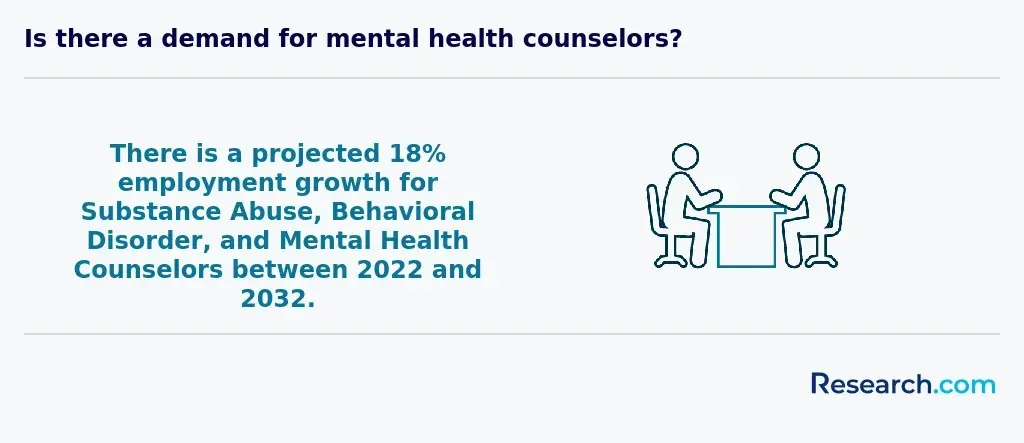
National demand for counselors is strong. Employment for substance abuse, behavioral disorder, and mental health counselors across the US is projected to grow by 18% between 2022 and 2032 (US BLS, 2024). Delaware also shows signs of unmet behavioral health need.
In February 2021, 32.8% of Delaware adults reported symptoms of anxiety or depression, and 16.9% were unable to receive needed treatment (National Alliance on Mental Illness, 2023). As of April 1, 2024, only 13.8% of Delaware’s need for mental health professionals had been met (Bureau of Health Workforce, 2024).
These figures suggest meaningful need for qualified professionals, particularly in community-based, substance use, and integrated behavioral health settings. Still, demand does not guarantee a specific salary, schedule, caseload, or employer quality. Candidates should evaluate job offers carefully and ask direct questions about supervision, productivity expectations, benefits, crisis coverage, and administrative support.
Can mental health counselors become school psychologists in Delaware?
Clinical mental health counselors may be interested in school psychology if they want to support students through assessment, intervention planning, learning-related concerns, behavioral challenges, and school-based mental health needs. However, school psychology is a distinct professional path and typically requires additional education focused on psychological assessment, educational systems, school law, consultation, and student support services.
Counselors considering this transition should compare the required coursework, field experience, credentialing rules, and job duties before changing direction. Research.com’s guide, How long does it take to become a school psychologist in Delaware?, can help readers understand the education timeline and professional expectations.
How does counseling differ from social work?
Mental health counseling and social work can overlap in client support, but they are not identical. Counseling is primarily centered on therapeutic treatment for emotional, behavioral, and mental health concerns. Social work may include therapy, but it also often involves case management, resource coordination, advocacy, community systems, and policy-related work.
| Field | Main emphasis | Good fit for students who want to... |
| Mental health counseling | Therapy, assessment, treatment planning, and clinical counseling skills | Spend most of their career providing counseling or psychotherapy |
| Social work | Client support within broader social, economic, family, and community systems | Combine direct service with advocacy, resource navigation, or systems-level work |
Students comparing both options can review social worker education requirements in Delaware to understand how that path differs from professional counseling.
Can advanced study improve counseling career options?
Advanced academic work can strengthen a counseling career when it supports a clear goal: specialization, research, teaching, supervision, leadership, or doctoral study. Counselors may pursue advanced coursework, post-master’s training, research collaborations, or university-based mentorship to deepen evidence-informed practice.
Those interested in academic pathways or psychology-related graduate options can explore Research.com’s overview of the best psychology schools in Delaware. Before enrolling in further study, counselors should ask whether the program improves licensure eligibility, clinical competence, promotion potential, or long-term return on investment.
Can the Delaware counseling path be accelerated?
The path to independent counseling practice cannot be shortened by skipping state requirements. However, students may reduce delays by choosing the right program early, confirming licensure alignment, arranging clinical placements promptly, preparing for exams before the last minute, and tracking supervised hours accurately.
Accelerated or structured master’s options may help some students move through coursework efficiently, but they must still meet Delaware’s clinical training and licensure standards. Research.com explains planning strategies in its guide to the quickest path to becoming a counselor in Delaware.
Can clinical counselors move into school counseling?
School counseling is different from clinical mental health counseling. It focuses on student development, academic planning, social-emotional support, family-school collaboration, and school systems. A clinical counselor who wants to work as a school counselor may need additional education, fieldwork, or certification depending on Delaware’s requirements for the role.
This transition is most realistic for counselors who enjoy working with youth, collaborating with educators, and supporting prevention and early intervention rather than only providing ongoing clinical therapy. Research.com’s guide on how to become a school counselor in Delaware explains the school-based pathway in more detail.
How do counselors renew and maintain credentials?
After licensure, Delaware counselors must maintain their professional standing through renewal, continuing education, ethical practice, and timely documentation. Because requirements can change, counselors should rely on the state licensing board for current deadlines, acceptable continuing education categories, forms, and fees.
- Track continuing education throughout the renewal period instead of waiting until the deadline.
- Keep certificates, transcripts, or proof of attendance organized in case of audit or verification.
- Monitor updates from the Delaware licensing board and relevant professional associations.
- Choose continuing education that supports your actual client population and risk areas.
- Review ethics, confidentiality, telehealth, documentation, and mandated reporting requirements regularly.
For a more detailed overview, Research.com covers LPC license requirements in Delaware, including credential maintenance considerations.
What specialized counseling careers are available?
Licensed counselors can build careers around specific populations or treatment models. One option is marriage and family therapy, which focuses on relational patterns, communication, family roles, conflict, and systemic influences on mental health.
Counselors considering this specialty should study the training and licensure expectations carefully because marriage and family therapy has its own professional identity and requirements. Research.com explains how to become a marriage and family therapist in Delaware for readers evaluating that path.
What jobs can mental health counseling graduates pursue?
A master’s degree in clinical mental health counseling can prepare graduates for several counseling-related careers, although specific job eligibility depends on licensure status, employer requirements, supervision, and specialization. Graduates should not assume that every counseling job is available immediately after graduation; many clinical roles require supervised practice or full licensure.
Common counselor careers include the following:
- Mental health counselor: Provides therapy and support for individuals, groups, or families dealing with anxiety, depression, grief, trauma, relationship concerns, or life stress.
- Substance abuse counselor: Works with clients affected by addiction, recovery challenges, relapse risk, and co-occurring mental health concerns.
- School counselor: Supports students’ academic, social, emotional, and career development, usually within an education system and often under separate credentialing rules.
- Geriatric counselor: Helps older adults cope with grief, isolation, health changes, caregiving stress, retirement transitions, or end-of-life concerns.
- Behavioral health counselor: Supports clients whose mental health concerns intersect with behavior change, substance use, chronic illness, or community-based support needs.
| Career option | Typical work environment | Key preparation issue |
| Mental health counselor | Clinics, agencies, hospitals, private practice | LPCMH licensure and supervised experience |
| Substance abuse counselor | Rehabilitation centers, community agencies, recovery programs | Addiction-specific training and relevant supervision |
| School counselor | K-12 schools or education systems | School counseling certification or education-specific requirements |
| Geriatric counselor | Community centers, medical settings, long-term care programs | Training in aging, grief, caregiving, and health-related transitions |
| Marriage and family therapist | Private practice, family agencies, community clinics | Family-systems education and role-specific licensure planning |
What are behavioral health counselor requirements?
Behavioral health counseling can involve mental health treatment, behavior change support, substance use concerns, crisis care, and integrated services. Requirements vary by role, but advanced clinical positions typically require a master’s degree, supervised practice, licensure eligibility or licensure, and continuing professional development.
Professionals who want to understand this related path can review Research.com’s guide to behavioral health counselor career requirements. The guide can help readers compare behavioral health roles with traditional mental health counseling positions.
What challenges should Delaware counselors expect?
Delaware’s need for mental health services creates opportunity, but the work can be demanding. Future counselors should understand the challenges before investing years in education and licensure preparation.
- Access barriers: Many residents struggle to find affordable or nearby mental health care, especially when provider shortages, transportation issues, insurance limitations, or long waitlists are involved.
- Licensure complexity: Graduate coursework, supervised hours, exam requirements, documentation, and board review can be difficult to navigate without careful planning.
- Financial pressure: Delaware’s median wage for substance abuse, behavioral disorder, and mental health counselors may not automatically cover all living expenses, especially for professionals with student debt or family obligations.
- Economic conditions: Delaware ranked 22nd among all 50 US states for economic performance in 2024 and 33rd for economic outlook (American Legislative Exchange Council, 2024). Funding limits can affect community programs, staffing, and client access.
- Complex client needs: Counselors may work with clients facing trauma, poverty, unemployment, substance use, family instability, or chronic health concerns alongside mental health symptoms.
- Burnout risk: High caseloads, crisis work, administrative demands, and emotional intensity can contribute to compassion fatigue if counselors lack supervision and boundaries.
- Program selection risk: Choosing a counseling program without checking licensure alignment can delay or complicate the path to practice.
Students seeking a faith-based or specialized counseling education route should evaluate accreditation, licensure fit, clinical placement support, and cost carefully. Research.com’s guide to budget online Christian counseling degrees may be useful for readers comparing affordability, but any program should be checked against Delaware licensure requirements before enrollment.
Common Mistakes to Avoid
| Mistake | Why it can hurt your career | Better approach |
| Choosing a school before checking licensure requirements | You may graduate without the coursework or clinical preparation needed for Delaware licensure | Compare the curriculum with board requirements before applying |
| Looking only at tuition | Fees, commuting, unpaid internships, lost work hours, and exam costs can change the real price | Build a full cost estimate before enrolling |
| Assuming online programs automatically qualify | Online programs may not arrange Delaware placements or meet state-specific expectations | Ask written questions about Delaware licensure alignment and clinical site support |
| Ignoring supervision quality | Poor supervision can slow skill development and create documentation problems | Evaluate supervisor credentials, availability, and feedback style |
| Waiting to prepare for the licensing exam | Delays can postpone licensure and job advancement | Create an exam plan while completing supervised experience |
| Assuming demand guarantees a high salary | Job growth does not ensure a specific wage, schedule, or workload | Compare salary, benefits, caseload, supervision, and advancement potential |
Career Realities: What Delaware Counselors Often Value About the Work
Many counselors are drawn to Delaware because the state’s size can make professional networks feel accessible. Community agencies, schools, hospitals, and nonprofits often intersect, which can help counselors build referral relationships and collaborate across systems. For clinicians who value community connection, that can be a meaningful advantage.
The work can also be emotionally demanding. Counselors may support clients dealing with trauma, addiction, financial stress, isolation, or family conflict while also managing documentation, ethical obligations, and productivity expectations. Strong supervision, peer consultation, and personal boundaries are not optional extras; they are part of sustainable practice.
Before entering the field, ask yourself whether you are prepared for graduate-level training, years of supervised practice, licensing requirements, and the emotional weight of clinical work. If the answer is yes, Delaware can offer several ways to build a career that supports both individual clients and broader community mental health.
Related Articles for Nearby States
- 2027 How to Become a Mental Health Counselor in Maryland
- 2027 How to Become a Mental Health Counselor in New Jersey
- 2027 How to Become a Mental Health Counselor in Pennsylvania
- 2027 How to Become a Mental Health Counselor in Virginia
- 2027 How to Become a Mental Health Counselor in West Virginia
- 2027 How to Become a Mental Health Counselor in New York
- 2027 How to Become a Mental Health Counselor in Connecticut
- 2027 How to Become a Mental Health Counselor in Rhode Island
- 2027 How to Become a Mental Health Counselor in North Carolina
- 2027 How to Become a Mental Health Counselor in Ohio
Key Insights
- Delaware’s LPCMH path requires graduate education, 3,200 hours of supervised practice over a minimum of 2 years, and a passing score on the NCE or NCMHCE.
- Demand is meaningful: national employment for substance abuse, behavioral disorder, and mental health counselors is projected to grow by 18% between 2022 and 2032, and Delaware has documented unmet mental health workforce needs.
- Salary planning matters. Delaware counselors in this occupational group earned a median hourly wage of $22.03 in May 2023, equal to an estimated $42,297.6 annually, while a single adult without children needs $47,064 to live comfortably in the state.
- Program choice is one of the most important early decisions. Confirm accreditation, licensure alignment, clinical placement support, and total cost before enrolling.
- Supervised experience is not just a requirement. It shapes clinical judgment, ethical decision-making, specialization, and future job opportunities.
- Delaware counselors can work in community agencies, hospitals, schools, rehabilitation centers, nonprofits, government programs, and private practice, but each setting has different workload and compensation trade-offs.
- Specialization can improve career focus, especially in addiction counseling, child and adolescent counseling, trauma care, marriage and family therapy, or geriatric counseling.
- The best next step is to verify Delaware Board requirements, compare qualifying master’s programs, estimate total education costs, and speak with current counselors or supervisors before committing to a program.
References:
- American Legislative Exchange Council. (2024). Delaware. Rich States, Poor States. https://www.richstatespoorstates.org/states/DE
- bouve.northeastern.edu. (2023, May 28). What do Mental Health Counselors Do? Role & Responsibilities. https://bouve.northeastern.edu/news/what-do-mental-health-counselors-do-role-responsibilities
- Bureau of Health Workforce. (2024). Health Workforce Shortage Areas. https://data.hrsa.gov/topics/health-workforce/shortage-areas
- careervillage.org. (2024, May 22). How can I best prepare myself for working in the world of counseling? https://www.careervillage.org/questions/913920/how-can-i-best-prepare-myself-for-working-in-the-world-of-counseling
- The Chicago School. (2019, March 26). Careers You Can Pursue with a Master’s Degree in Clinical Mental Health Counseling. https://www.thechicagoschool.edu/insight/career-development/careers-with-masters-degree-clinical-mental-health-counseling
- counseling.education.wm.edu. (2023, October 24). The Different Types of Counseling Careers and Their Challenges. https://counseling.education.wm.edu/blog/opportunities-and-challenges-in-the-counseling-field
- dhss.delaware.gov. (2020, March 14). Delaware Department of Health and Social Services i Division of Public Health, Bureau of Health Planning and Resources Management. https://dhss.delaware.gov/dhss/dph/hsm/files/mhpinde2019.pdf
- dsps.wi.gov. (2024, January 17). Department of Safety and Professional Services. https://dsps.wi.gov/Pages/Professions/RN/Default.aspx
- Glasmeier, A. K. & Massachusetts Institute of Technology. (2024). Living Wage Calculation for Delaware. https://livingwage.mit.edu/states/10
- Kaiser Family Foundation. (2024). Mental Health in Delaware. https://www.kff.org/statedata/mental-health-and-substance-use-state-fact-sheets/delaware
- National Alliance on Mental Illness. (2023). Mental Health in Delaware. https://www.nami.org/wp-content/uploads/2023/07/DelawareStateFactSheet.pdf
- online.walsh.edu. (2022, January 25). How to Become a Clinical Mental Health Counselor in Ohio. https://online.walsh.edu/news/how-to-become-a-clinical-health-counselor-in-ohio
- socialworklicensemap.com. (2022, May 13). What Are the Requirements to Become a Mental Health Counselor? https://socialworklicensemap.com/social-work-resources/become-mental-health-counselor
- shp.rutgers.edu. (2023, October 14). Masters in Rehabilitation Counseling – Clinical Mental Health Counseling Track. https://shp.rutgers.edu/psychiatric-rehabilitation/masters-in-rehab-counseling
- US Bureau of Labor Statistics. (2024, April 3). May 2023 State Occupational Employment and Wage Estimates: Delaware. Occupational Employment and Wage Statistics. https://www.bls.gov/oes/2023/may/oes_de.htm
- US Bureau of Labor Statistics. (2024, April 17). Substance Abuse, Behavioral Disorder, and Mental Health Counselors. Occupational Outlook Handbook. https://www.bls.gov/ooh/community-and-social-service/substance-abuse-behavioral-disorder-and-mental-health-counselors.htm
Other Things You Should Know about Mental Health Counseling in Delaware
To become a licensed mental health counselor in Delaware in 2027, you must complete a master's degree in counseling, accumulate at least 3,200 hours of supervised experience, and pass the National Counselor Examination (NCE) to fulfill all licensure requirements.
In Delaware, mental health counselors must be licensed to practice legally. The Delaware Board of Mental Health and Chemical Dependency Professionals oversees the licensing process, ensuring counselors meet specific educational and professional criteria to maintain standard practices.
In 2027, becoming a licensed mental health counselor in Delaware typically requires a minimum of six years. This includes four years for a bachelor's degree, two years for a master's degree in counseling, and additional time for supervised clinical experience and examinations required by the state.