2027 Medical Social Work: How to Become a Hospital Social Worker

Co-Founder and Chief Data Scientist
Hospital social workers help patients and families handle the nonmedical problems that often come with illness: discharge planning, insurance barriers, grief, family conflict, transportation, housing instability, long-term care decisions, and access to community support. The role matters because healthcare is not only clinical. According to The Commonwealth Fund, Americans see a physician an average of four times each year (The Commonwealth Fund, n.d.), and many of those visits lead to financial, emotional, and logistical decisions that patients may not be prepared to manage alone.
This guide explains how to become a hospital social worker, what degree and license requirements commonly apply, what the job pays, where demand is strongest, and how to choose the right education path. It is written for students considering social work, healthcare professionals thinking about a career change, and current social workers who want to move into medical settings.
You will also find comparisons of entry-level, master’s-level, and leadership roles; skills employers look for; certifications that can strengthen your resume; practical steps for career advancement; and common mistakes to avoid before investing in a degree or certificate. If you are comparing helping professions, you may also want to review related salary and career paths such as criminology careers.
Key Insights
- Hospital social work is healthcare navigation plus advocacy: The role helps patients and families handle discharge planning, resource access, emotional stress, insurance issues, and care coordination.
- A social work degree is the most direct route: Many professionals start with a bachelor’s degree, but advanced hospital, clinical, and supervisory roles commonly require an MSW and state licensure.
- Demand is steady: BLS projects 6% growth for social workers from 2024 to 2034, and related counseling, community health, and service management fields show additional opportunities.
- Salary depends on responsibility level: Medical social workers have median earnings of $60,280, while roles in health services management and social service program direction can exceed $100,000 annually.
- Skills matter as much as credentials: Case management, crisis intervention, patient advocacy, cultural competence, documentation, and interdisciplinary communication are central to success.
- Licensure and accreditation should be checked early: Before enrolling, confirm that the program supports the license and practice setting you want.
- Online and accelerated programs can help, but only if they fit your goals: Flexibility is valuable, but students should prioritize accreditation, field placement quality, licensure alignment, and workload realism.
- The work can be emotionally demanding: Long-term success requires supervision, peer support, clear boundaries, resilience strategies, and continuing professional development.
- Medical social work is flexible: Experience can lead to hospital roles, hospice, rehabilitation, behavioral health, patient advocacy, community services, healthcare administration, or further clinical training.
- Adjacent fields may also fit your goals: Students comparing helping professions can explore healthcare social work alongside counseling, public health, human services, or forensic psychology degree careers.
Quick Answer: How do you become a hospital social worker?
To become a hospital social worker, most candidates earn a bachelor’s degree in social work or a related field, gain supervised experience in healthcare or human services, and often complete a Master’s in Social Work for clinical, advanced, or supervisory roles. Many hospital positions prefer or require state licensure, especially when the job includes clinical assessment, counseling, or independent practice. Certifications in healthcare social work, case management, hospice, palliative care, or clinical practice can improve competitiveness but do not replace state licensure requirements.
The role can be emotionally demanding, but it offers a clear service mission, multiple healthcare work settings, and advancement paths into supervision, program management, healthcare administration, counseling, and community service leadership.
Medical Social Work Table of Contents
- Why choose medical social work?
- Medical social worker salary and job outlook
- Skills medical social workers need
- How to start a medical social work career
- How to advance in medical social work
- Challenges in hospital and healthcare social work
- Education pathways for advancement
- Academic programs that can improve career prospects
- Affordable education options
- Work-life balance for medical social workers
- Building resilience in high-pressure healthcare settings
- Accelerated online MSW programs and career growth
- Affordable continuing education options
- Online MSW programs for career acceleration
- Alternative careers for medical social workers
- Ethical dilemmas in medical social work
- Value of a social work degree
- Emerging trends in medical social work
Why choose medical social work?
Medical social work is a good fit for people who want a healthcare career centered on advocacy, coordination, counseling, and problem-solving rather than direct medical treatment. Hospital social workers often meet patients during stressful moments: a new diagnosis, an unexpected injury, a discharge that requires home care, or a family decision about long-term support. Their work can determine whether a patient leaves the hospital with a realistic care plan or falls through the cracks after treatment.
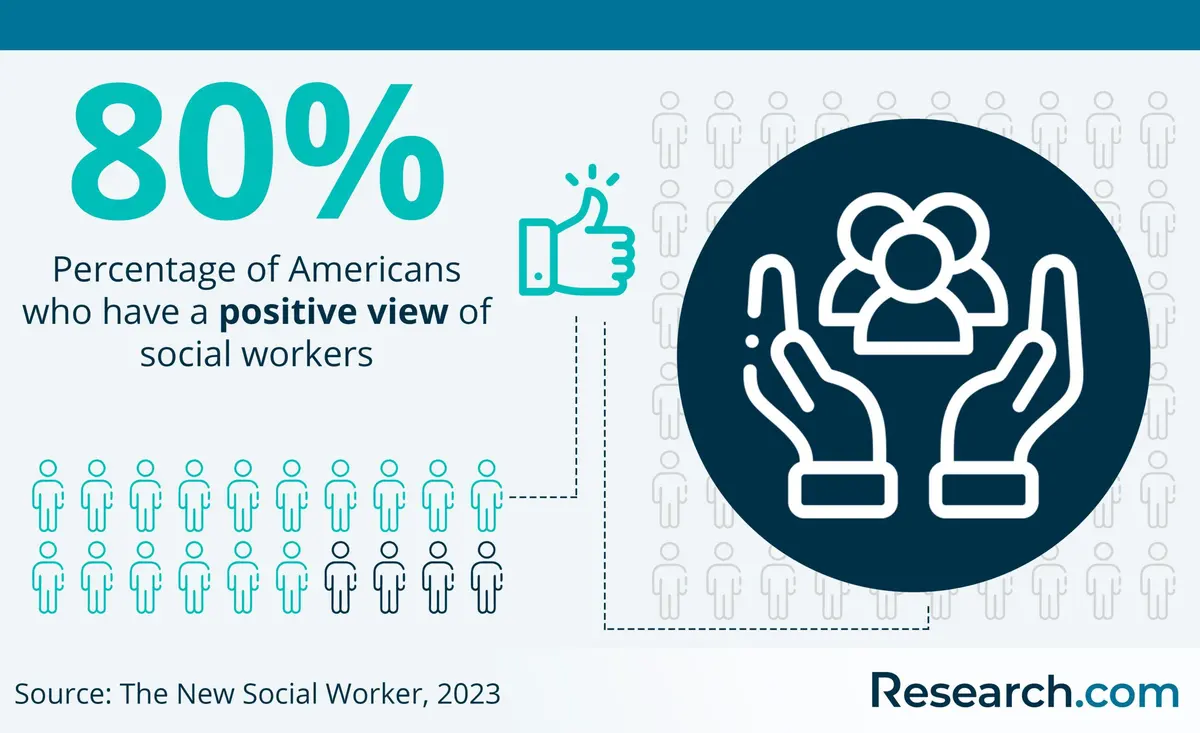
The career can be personally meaningful. Social workers help patients understand options, connect families to resources, and advocate for care that respects a patient’s circumstances and preferences. Public trust in the profession is also strong: 80% of Americans have a favorable view of social workers, and one out of six Americans reports that a social worker helped a close family member. Students interested in older adults, long-term care, and end-of-life planning may also consider the related path of becoming a geriatric social worker.
Medical social workers are employed in hospitals, hospices, outpatient clinics, rehabilitation centers, home health agencies, public health organizations, and community-based programs. Some professionals eventually move into program development, healthcare administration, private practice, or specialized services for communities with limited access to care.
The field is also supported by steady demand. As the population ages and healthcare needs expand, social workers who understand care coordination, discharge planning, behavioral health, insurance systems, and community resources remain important members of interdisciplinary care teams.
However, this career is not ideal for everyone. Hospital social work can involve crisis situations, heavy documentation, emotionally intense family meetings, and pressure to resolve complex problems quickly. Before committing to this path, prospective students should speak with practicing social workers, review state licensure requirements, and compare medical social work with broader social work careers through resources such as Research.com’s guide on how to become a social worker.
Medical Social Worker Salary and Job Outlook
According to the United States Bureau of Labor Statistics (BLS), employment for social workers, including medical social workers, is projected to grow by 6% from 2024 to 2034, faster than the collective average for all U.S. occupations (BLS, 2025). Demand is tied to ongoing needs in healthcare access, aging-related services, behavioral health, chronic disease support, and care coordination.
Medical social work also overlaps with several related occupations that show strong projected growth. BLS data lists employment outlooks above 10% for substance abuse counselors, social and community service managers, health education specialists, social service assistants, and rehabilitation counselors. This matters because medical social workers often build transferable skills in assessment, counseling, community referral, case management, and program coordination.
| Role | Median Salary | Projected Job Growth (2024-2034) |
| Psychologist | $81,040 | 6% |
| Social and Community Service Manager | $74,000 | 6% |
| School and Career Counselors | $60,510 | 4% |
| Medical Social Worker | $60,280 | 6% |
| Correctional Treatment Specialist | $60,250 | 3% |
| Social Worker | $50,390 | 6% |
| Marriage and Family Therapist | $49,880 | 13% |
| Community Health Worker | $48,860 | 11% |
| Mental Health Counselor | $48,520 | 17% |
| Rehabilitation Counselor | $38,560 | 1% |
Source: BLS, 2025
Salary outcomes vary by employer, location, degree level, licensure, clinical responsibilities, years of experience, and whether the role is frontline, supervisory, or administrative. The figures above should be used as planning benchmarks, not guarantees.
Skills Medical Social Workers Need
Medical social workers need more than compassion. They must document accurately, coordinate with clinicians, communicate under pressure, understand community resources, support patients in crisis, and advocate without disrupting care team relationships. According to Zippia (2025), common skills listed on medical social worker resumes include social work (24.02%), patients (19.06%), home health (10.64%), MSW (6.52%), patient care (5.73%), crisis intervention (3.4%), and social services (3.3%). Students comparing graduate training options can explore master’s programs in social work.
Teamwork is especially important in healthcare environments. A study published in the Journal of Advanced Nursing found that support from colleagues was a stronger predictor of positive affect at work and job satisfaction among midwives than support from supervisors. The study concluded that workplace support contributes to job satisfaction by increasing positive emotions and work engagement (Jasinski & Derbis, 2022). While the study focused on midwives, the broader point is relevant for hospital social workers: interdisciplinary support can affect both service quality and professional sustainability.
Core Practice Skills
- Case management: Hospital social workers coordinate services, organize referrals, help patients meet discharge requirements, and monitor whether support plans are realistic after a patient leaves care.
- Crisis intervention: Medical settings often involve emergencies, trauma, grief, family conflict, sudden loss of independence, or major treatment decisions. Social workers help stabilize the situation and connect patients to immediate support.
- Patient advocacy: Social workers help patients understand rights, communicate needs, access benefits, and navigate systems that may be confusing, expensive, or difficult to enter.
- Treatment and discharge planning: Social workers contribute to care plans by addressing practical barriers such as transportation, housing, family support, home health services, financial strain, and follow-up care.
- Outcome evaluation: Effective social workers assess whether interventions are working and adjust plans when patients or families need additional support.
Professional Skills Employers Look For
- Active listening: Patients may be frightened, frustrated, or overwhelmed. Careful listening helps social workers identify what the patient actually needs rather than assuming the problem is only medical.
- Clear communication: The role requires communication with patients, families, physicians, nurses, insurers, community agencies, and administrators.
- Cultural competence: Social workers must consider how language, culture, disability, religion, family structure, immigration status, income, and prior healthcare experiences affect patient decisions.
- Problem-solving: A discharge plan may fail if a patient cannot afford medication, has no transportation, or lacks a safe home environment. Social workers must identify barriers early.
- Collaboration: Medical social workers rarely work alone. They coordinate with clinical teams, public agencies, nonprofits, and family caregivers.
How to Start Your Career in Medical Social Work
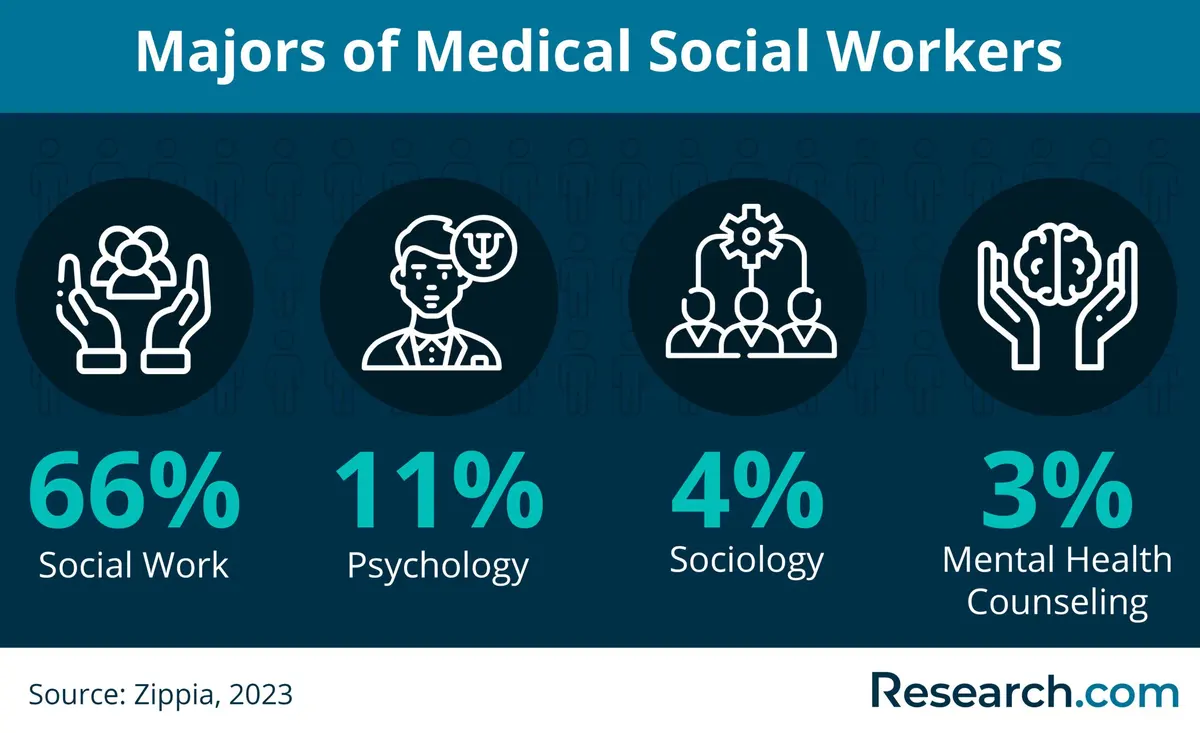
Students often ask, “What degree do you need to be a hospital social worker?” The most direct route is a social work degree, followed by supervised experience and any required state licensure. However, people also enter the field with backgrounds in psychology, sociology, mental health counseling, human services, or related healthcare fields. According to Zippia (2025), 66% of medical social workers majored in social work, 11% in psychology, 4% in sociology, and 3% in mental health counseling.
For many students, the best first step is earning a bachelor’s degree in social work or a closely related field. Certificate programs and associate degrees may qualify candidates for support roles, but independent or advanced hospital social work usually requires more education. Because requirements vary by employer and state, students should compare programs carefully and review broader healthcare career requirements before enrolling. Those comparing adjacent fields can also review forensic psychology career paths.
| Career Stage | Medical Social Work Path | Health Services Path | Community Service Path |
| Primary Focus | Supporting patients and families with social, emotional, financial, and practical needs in healthcare settings | Helping deliver, manage, and improve services related to diagnosis, treatment, prevention, and health management | Supporting community well-being through social, educational, environmental, or public service programs |
| Entry Level Jobs | Social Work Assistant ($38,250/year) | Community Health Worker ($48,860/year) | Caseworker Assistant ($39,334/year) |
| Junior Management Jobs | Medical Social Worker ($60,280/year) | Patient Advocate ($67,257/year) | Behavioral Disorder Counselor ($48,250/year) |
| Middle Management Jobs | Medical Social Worker Supervisor ($62,939/year) | Health Services Manager ($101,340/year) | Social and Community Service Manager ($74,000/year) |
| Senior Management Jobs | Medical Social Worker Director ($81,590/year) | Healthcare Executive ($97,295/year) | Social Service Program Director ($103,811/year) |
Entry-Level Options With an Associate Degree or Early College Training
Social Work Assistant: Social work assistants help licensed professionals with intake, documentation, scheduling, client communication, basic resource coordination, and administrative support. Median Salary: $38,520.
Community Health Worker: Community health workers connect individuals and families with health education, preventive care, outreach services, and local healthcare resources, especially in underserved communities. Median Salary: $48,860.
Caseworker Assistant: Caseworker assistants support caseworkers with records, intake forms, appointment coordination, referrals, and basic crisis-response support under supervision. Average Salary: $39,334.
Roles Commonly Connected to a Bachelor’s Degree
Medical Social Worker: Medical social workers provide emotional support, resource referrals, care coordination, discharge planning, benefits navigation, and patient-family communication in healthcare settings. Median Salary: $60,280.
Patient Advocate: Patient advocates help patients understand healthcare options, rights, responsibilities, bills, insurance issues, and communication with providers. Average Salary: $67,257.
Behavioral Disorder Counselor: Behavioral disorder counselors assess clients, create treatment plans, and provide counseling and support for emotional and behavioral concerns in hospitals, schools, community agencies, and treatment programs. Median Salary: $48,250.
Can you get a medical social worker job with only a certificate?
A certificate can help candidates enter healthcare support, human services, case management support, or community health roles, but it is usually not enough for independent hospital social work. Zippia (2025) reports that 5% of hospital social workers have only a high school diploma and another 5% hold other diplomas, including certificates. These credentials may help with entry-level roles, but advancement typically requires a degree, supervised experience, and often licensure.
Certificate holders may qualify for positions such as social work assistant, case management assistant, behavioral health technician, or community health worker. Candidates who want greater responsibility, higher-level casework, clinical practice, or leadership should plan for additional education.
How to Advance in Medical Social Work
Career advancement in medical social work usually depends on four factors: graduate education, licensure, specialized experience, and leadership ability. A Master’s in Social Work is a common next step because it can prepare professionals for clinical roles, supervisory positions, and specialized healthcare practice. Zippia (2025) reports that 48% of medical social workers hold a master’s degree, compared with 46% with a bachelor’s degree, 4% with an associate degree, and 1% with a doctorate degree.
Graduate education does not automatically guarantee a higher salary, but it can make candidates eligible for roles with more responsibility, especially when paired with state licensure and relevant healthcare experience.
Roles Often Connected to a Master’s Degree
Health Services Manager: Health services managers oversee healthcare operations, budgets, policies, staffing, service delivery, and organizational efficiency. They coordinate with providers and administrators to improve patient care and outcomes. Median Salary: $101,340.
Social and Community Service Manager: These managers plan and supervise community programs, oversee staff and volunteers, develop policies, and collaborate with organizations to address community needs. Median Salary: $74,000.
Medical Social Worker Supervisor: Supervisors guide social work teams in healthcare settings, review service quality, mentor staff, coordinate with clinical teams, and ensure that patients receive support for social, emotional, and economic barriers to care. Median Salary: $62,939.
Roles Often Connected to Doctoral-Level Study or Extensive Leadership Experience
Healthcare Executive: Healthcare executives oversee hospitals, clinics, nursing homes, or related institutions. They manage strategy, finance, policy implementation, compliance, and organizational performance. Median Salary: $97,295.
Medical Social Worker Director: Directors manage medical social work departments, supervise staff, allocate resources, set policies, ensure regulatory compliance, and coordinate social work services with broader healthcare operations. Median Salary: $81,590.
Social Service Program Director: Program directors lead social service initiatives, manage teams and budgets, create procedures, evaluate program outcomes, and coordinate with community organizations. Average Salary: $103,811.
Which certification is best for medical social work?
The best certification depends on the type of medical social work you want to practice. A hospital discharge planner may benefit from case management credentials, while a hospice social worker may gain more from palliative care certification. Certifications can strengthen expertise and demonstrate professional focus, but candidates should confirm whether an employer requires a specific license or credential.
- Certified Social Work Case Manager (C-SWCM): Useful for professionals who coordinate services, manage care plans, and help patients navigate complex systems.
- Certified Hospice and Palliative Social Worker (CHP-SW): Designed for social workers focused on serious illness, end-of-life care, family support, and palliative planning.
- Certified Advanced Social Work Case Manager (C-ASWCM): Appropriate for experienced professionals who want to demonstrate advanced case management competence.
- Certified Social Worker in Health Care (C-SWHC): A relevant credential for social workers practicing in hospitals, clinics, and other healthcare settings.
Other credentials may also be valuable depending on specialization, including Certified Clinical Trauma Professional (CCTP), Certified Addiction Counselor (CAC), Licensed Clinical Social Worker (LCSW), and Certified Rehabilitation Counselor (CRC).
Challenges in Hospital and Healthcare Social Work
Medical social workers operate inside healthcare systems that are often fast-moving, expensive, regulated, and emotionally charged. Understanding these challenges before entering the field helps students make a realistic career decision.
- Emotional strain: Social workers routinely support patients and families during loss, trauma, terminal illness, disability, abuse concerns, and major life changes. Without support, this work can contribute to burnout.
- Resource limitations: Patients may need services that are difficult to access because of cost, insurance restrictions, geography, language barriers, transportation problems, or provider shortages.
- Administrative workload: Documentation, compliance, insurance communication, discharge paperwork, and reporting requirements can reduce time available for direct patient support.
- Ethical pressure: Social workers may need to balance patient autonomy, family wishes, provider recommendations, institutional policies, and legal requirements.
- Changing healthcare systems: Professionals must keep up with telehealth, integrated behavioral health, regulatory changes, reimbursement rules, and evolving employer expectations.
Advanced education can help professionals understand these systems more strategically. Reviewing master’s in social work salary trends can also help workers evaluate whether graduate study aligns with their career and compensation goals.
Education Pathways for Advancement in Medical Social Work
Medical social workers can advance through several education routes. A bachelor’s degree in social work is often the clearest foundation, but psychology, sociology, mental health counseling, and human services can also support entry into related roles. A Master’s in Social Work is commonly pursued by professionals who want clinical, healthcare, supervisory, or leadership responsibilities. Online options, including online master’s in social work programs, may help working adults continue their education without leaving employment.
| Education Path | Best For | Key Limitation |
| Certificate or short training | Entry-level support roles, career exploration, skill-building | Usually not enough for independent hospital social work |
| Associate degree | Human services support, community health, casework assistance | May limit advancement without a bachelor’s degree |
| Bachelor’s degree | Foundational social work and healthcare support roles | Some clinical and advanced roles require graduate study |
| Master’s in Social Work | Clinical practice, supervision, specialized medical social work, leadership | Requires more time, tuition, and supervised experience |
| Doctoral study | Policy, research, executive leadership, advanced teaching, program direction | Not necessary for most frontline hospital social work jobs |
How Additional Academic Programs Can Improve Career Prospects
Some medical social workers strengthen their careers by adding training outside traditional social work. Healthcare administration, public health, counseling, case management, health policy, data-informed program evaluation, and nonprofit leadership can all be useful depending on career goals. For example, professionals interested in operations, budgeting, and executive leadership may compare online master’s in healthcare administration programs.
The best academic add-on is the one that solves a specific career gap. A social worker aiming for hospital leadership may need management training. A professional moving into behavioral health may need clinical supervision and licensure preparation. A case manager may benefit from certification-oriented coursework. Avoid enrolling in an additional program only because it sounds impressive; make sure it connects to a target role.
Affordable Education Options for Aspiring Medical Social Workers
Cost should be part of every education decision. Tuition is only one expense; students should also consider fees, field placement requirements, commute costs, books, technology, lost work hours, and licensure-related expenses. Online programs can reduce some costs, but students must confirm accreditation, field placement support, and state licensure alignment before enrolling.
Prospective graduate students who need lower-cost pathways can begin by comparing affordable online MSW programs. When evaluating affordability, ask whether the program accepts transfer credits, offers scholarships, supports part-time study, provides employer partnership discounts, and places students in healthcare practicum settings.
How Medical Social Workers Can Maintain Work-Life Balance
Work-life balance in medical social work requires deliberate boundaries. The job can involve grief, crisis, family distress, ethical pressure, and urgent discharge timelines. Social workers who do not manage workload and recovery time may be at higher risk of burnout.
- Set realistic boundaries: Know what can be completed within a shift and what must be handed off through proper documentation.
- Use supervision well: Clinical supervision, peer consultation, and team debriefing can help process difficult cases.
- Track emotional warning signs: Compassion fatigue, irritability, sleep disruption, and detachment should not be ignored.
- Build recovery routines: Exercise, counseling, mindfulness, hobbies, family time, and rest can support long-term professional sustainability.
- Develop leadership skills: Professionals pursuing advancement may benefit from understanding what you can do with a master’s in social work, including roles that offer different workload structures.
How Medical Social Workers Can Build Resilience in High-Pressure Environments
Resilience is not simply “being tough.” In healthcare, it means having systems that protect professional judgment and personal well-being under pressure. Medical social workers can build resilience through supervision, peer support, trauma-informed training, manageable caseload practices, professional counseling when needed, and continuing education in crisis response and leadership.
Experienced professionals who want to move into advanced practice, teaching, research, or high-level leadership may compare doctoral options, including the most affordable DSW online programs. A doctorate is not required for most hospital social work positions, but it may support long-term goals in administration, education, or program development.
Can Accelerated Online MSW Programs Boost a Medical Social Work Career?
Accelerated online MSW programs may help some students earn a graduate credential more quickly while continuing to work. They can be useful for disciplined learners who already understand the demands of social work and can manage compressed coursework, field hours, and employment responsibilities at the same time. Students considering accelerated online MSW programs should check accreditation, field placement support, state licensure alignment, workload expectations, and whether the schedule is realistic.
These programs are not automatically better than traditional MSW programs. They make the most sense when the student has the time, support, academic preparation, and career clarity needed to succeed at a faster pace.
How to Further Your Education Affordably
Medical social workers can reduce education costs by comparing public and private tuition, applying for scholarships, asking employers about tuition assistance, choosing part-time options, transferring eligible credits, and selecting programs with strong field placement support near their location. Targeted certificates may also be more cost-effective than an additional degree when the goal is a specific skill.
Professionals who want broader human services training may also compare an affordable online human services program. This can be especially relevant for students still deciding between social work, case management, nonprofit services, community outreach, and healthcare support roles.
Can an Online MSW Accelerate a Medical Social Work Career?
An online MSW can support career growth if it is properly accredited, aligned with state licensure rules, and includes field experiences relevant to healthcare. Online learning may be a strong option for working adults, parents, rural students, and professionals who cannot relocate. However, easier admission does not always mean easier completion, and students should evaluate academic rigor, placement quality, graduation support, and licensing outcomes.
Applicants seeking accessible admission pathways can review the easiest online social work master’s degree options, but they should still prioritize quality, accreditation, and career fit over convenience alone.
Alternative Careers for Medical Social Workers
A medical social work background can transfer to counseling, case management, public health, nonprofit leadership, rehabilitation, community services, patient advocacy, and healthcare administration. Some professionals also pursue therapy-related paths with additional graduate training, supervised experience, and state licensure. If that route interests you, review how to become a therapist without a psychology degree.
Students exploring social work careers with children, families, and schools can also compare timelines through Research.com’s guide on how long it takes to become a social worker.
Related Roles to Consider
Psychologist: Psychologists study behavior, emotions, cognition, and mental health. They assess and treat mental health conditions, use therapeutic interventions, and may conduct research. Median Salary: $81,040.
School and Career Counselor: School counselors support students with academic, emotional, and social concerns, while career counselors help individuals plan education and employment paths. They may assist with applications, job searches, interviewing, and resume preparation. Median Salary: $60,510.
Family Therapist: Family therapists help couples and families improve communication, resolve conflict, and strengthen coping strategies through therapeutic approaches. Median Salary: $49,880.
How Medical Social Workers Manage Ethical Dilemmas
Ethical issues are common in medical social work because the role sits at the intersection of patient rights, family concerns, medical recommendations, institutional policies, legal obligations, and limited resources. A social worker may need to support a patient’s autonomy while also considering safety, capacity, discharge feasibility, or mandated reporting responsibilities.
- Follow professional ethical standards: Medical social workers use professional guidance from organizations such as the National Association of Social Workers, especially around confidentiality, informed consent, boundaries, and dignity.
- Respect patient autonomy: Patients have the right to participate in decisions about their care, even when the decision is difficult for family members or providers.
- Address conflicts of interest: When institutional priorities and patient needs do not align, social workers advocate for the patient while working constructively with the care team.
- Practice cultural humility: Ethical decision-making should account for cultural values, religion, language, family expectations, and lived experiences.
- Consult ethics resources: Complex cases may require consultation with supervisors, legal teams, ethics committees, or interdisciplinary colleagues.
The Value of a Social Work Degree in Medical Social Work Careers
A social work degree provides structured training in human behavior, policy, ethics, case management, crisis response, community resources, social justice, and supervised practice. These areas directly apply to medical social work because patients often need help with both healthcare decisions and the social conditions surrounding those decisions.
For students asking whether a social work degree is worth it, the answer depends on career goals, cost, licensing plans, and desired work setting. The degree can be valuable for people who want a service-oriented healthcare career with room to move into clinical work, supervision, program management, or community leadership. Medical social workers report median annual earnings of $60,280, while leadership roles such as Health Services Manager or Social Service Program Director can exceed $100,000 annually.
Questions to Ask Before Choosing a Program
- Is the program accredited and accepted for licensure in the state where I plan to work?
- Does the curriculum include healthcare, behavioral health, case management, or clinical practice electives?
- Will the school help me secure field placements in hospitals, clinics, hospice, rehabilitation, or community health settings?
- What are the total costs, including fees, books, technology, transportation, and field placement expenses?
- Can I study part time, online, or in an accelerated format without overloading my schedule?
- What licensure exams, supervised hours, or post-graduate requirements will I need after graduation?
Common Mistakes to Avoid
- Choosing a program before checking licensure rules: State requirements vary. Confirm that the degree supports your intended license and practice location.
- Looking only at tuition: Field placement quality, graduation support, fees, commute costs, and licensure preparation also affect value.
- Assuming online means easier: Online MSW programs can be rigorous and still require supervised fieldwork.
- Ignoring accreditation: Accreditation can affect financial aid, transfer credits, licensure eligibility, and employer recognition.
- Relying only on salary figures: Pay varies by region, employer, licensure, schedule, experience, and responsibility level.
- Skipping healthcare experience: Volunteering, internships, or entry-level roles in hospitals, clinics, hospice, or community health can make a candidate more competitive.
Emerging Trends in Medical Social Work
Medical social work continues to evolve as healthcare organizations expand telehealth, integrate behavioral health into medical care, and respond to chronic illness, aging-related needs, and health access barriers. Telehealth and digital communication tools have made remote support more common, particularly for patients in rural or underserved areas. The COVID-19 pandemic accelerated the use of virtual meetings and digital health platforms in many healthcare settings.
Mental health integration is another important shift. Hospitals, nursing homes, outpatient clinics, and community programs increasingly recognize that physical health, behavioral health, family systems, and social conditions are connected. Medical social workers are well positioned to support this whole-person approach because they understand both individual counseling needs and community-level barriers.
Cultural competence is also becoming more central. As the U.S. population becomes more diverse, social workers must understand how cultural background, socioeconomic status, language, disability, and healthcare access affect treatment decisions and outcomes. Professionals who want advanced clinical preparation can compare an online clinical MSW program.
Practical Steps to Become a Hospital Social Worker
- Research the role: Speak with hospital social workers, review job postings, and learn how discharge planning, case management, crisis intervention, and patient advocacy differ from other social work settings.
- Choose the right undergraduate path: A social work major is the most direct option, but psychology, sociology, mental health counseling, and human services can also be relevant.
- Gain healthcare-related experience: Look for volunteer work, internships, or entry-level jobs in hospitals, clinics, hospice, rehabilitation, community health, or behavioral health.
- Review state licensure rules early: Do not wait until graduation to learn what supervised hours, exams, or degree requirements apply.
- Consider an MSW for advancement: Many clinical, supervisory, and specialized hospital roles prefer or require graduate-level preparation.
- Select field placements strategically: Prioritize placements that expose you to interdisciplinary healthcare teams, discharge planning, crisis work, and community referrals.
- Build specialized skills: Strengthen competence in case management, trauma-informed care, insurance navigation, end-of-life planning, cultural humility, and documentation.
- Pursue relevant credentials: Certifications in healthcare social work, case management, hospice, palliative care, or clinical practice may support advancement.
- Plan for sustainability: Develop supervision, peer support, self-care, and continuing education habits early in your career.
References
- BLS (2025). Health Education Specialists and Community Health Workers. BLS
- BLS (2025). Rehabilitation Counselors. BLS
- BLS (2025). Social and Community Service Managers. BLS
- BLS (2025). Social and Human Service Assistants. BLS
- BLS (2025). Social Workers. BLS
- BLS (2025). Substance Abuse, Behavioral Disorder, and Mental Health Counselors. BLS
- Jasinski, A. & Derbis, R. (2022, October 18). Social support at work and job satisfaction among midwives: The mediating role of positive affect and work engagement. Journal of Advanced Nursing, 79(1), 149-160. DOI
- The Commonwealth Fund (n.d.). U.S. Health Care from a Global Perspective. The Commonwealth Fund
- Zippia. (2025). Medical social worker jobs. Zippia.
Other Things You Should Know About Medical Social Work
Certification is important for career advancement and specialization. Certifications such as Certified Social Work Case Manager (C-SWCM) and Certified Advanced Social Work Case Manager (C-ASWCM) validate a professional's expertise and open up higher-paying roles.
Medical social workers in 2027 need strong interpersonal skills for effective communication, empathy, and advocacy. Critical thinking and problem-solving are crucial for assessing patient needs and creating care plans. Cultural competency is vital, as is knowledge of healthcare systems and policy.
Most hospital social workers who provide clinical services must pass the ASWB clinical exam after earning a CSWE-accredited MSW. Licensing is issued by the state board, and many states also require supervised post-master’s hours before full clinical licensure.
To become a hospital social worker in 2027, a Master of Social Work (MSW) degree from a CSWE-accredited program is required. Additionally, candidates must complete supervised clinical hours and obtain state licensure to practice professional social work in a hospital setting.
Medical social workers provide counseling and emotional support to patients and their families, help them navigate the healthcare system, assist with discharge planning, and connect them with community resources and financial aid programs.
To start a career in hospital social work in 2027, earn a Bachelor’s degree in Social Work (BSW), followed by a Master of Social Work (MSW) from an accredited program. Obtain licensure based on your state’s requirements and consider gaining certification for advanced opportunities.