2027 How Long Does It Take to Become a Social Worker

Co-Founder and Chief Data Scientist
If you are planning a social work career, the real question is not only whether the profession fits your values. It is how much education, fieldwork, licensing, and supervised experience you will need before you can qualify for the role you want. The timeline can be as short as a four-year bachelor’s degree for some entry-level social service positions, or it can stretch beyond eight years for clinical practice, leadership, research, or teaching roles.
This guide explains how long it takes to become a social worker in 2026, including the timelines for BSW, MSW, and doctoral pathways; field education requirements; licensing and certification steps; online program options; financial aid considerations; and the career paths available after graduation. It is designed for students comparing degree options, career changers exploring social work, and current professionals deciding whether an advanced degree is worth the time and cost.
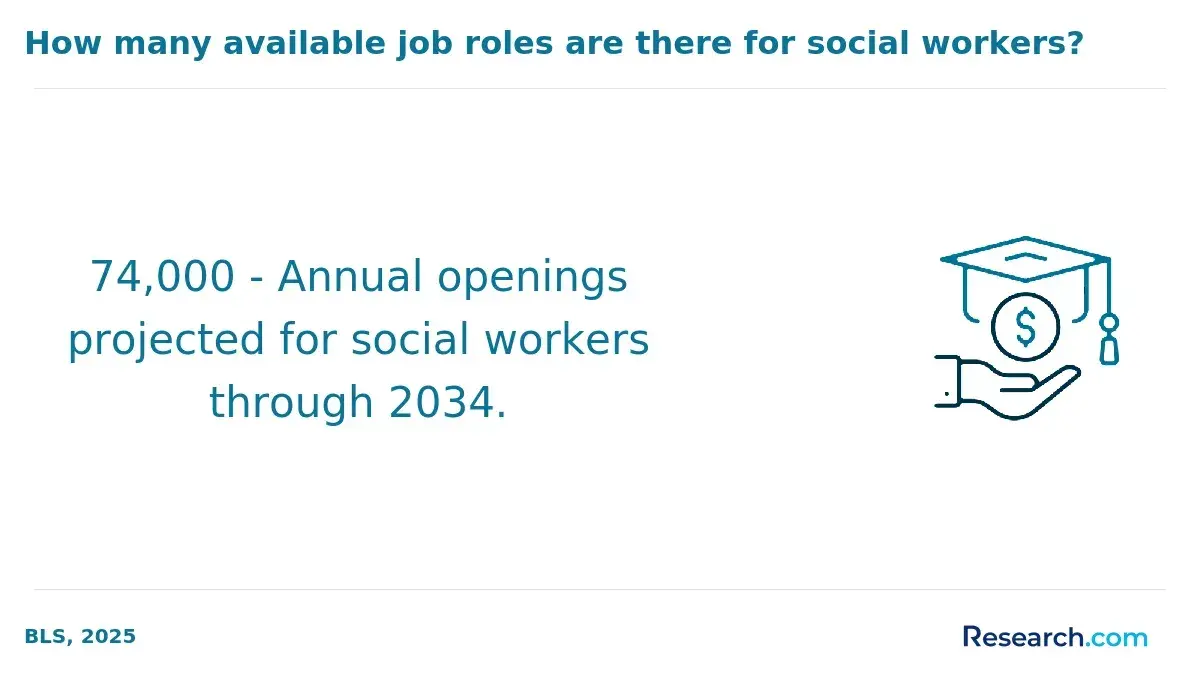
The demand for social workers remains a major reason many students consider this path. The field of social work is projected to grow by 12% through 2031, with an average of around 78,000 job openings each year as workers retire or move into different careers. Healthcare, mental health, child welfare, schools, community agencies, and public service organizations continue to rely on trained social workers to help people navigate complex personal, family, and social challenges.
If you are still exploring the profession broadly, start with this guide on how to become a social worker. If cost is one of your biggest concerns, it is also worth comparing affordable online MSW programs before committing to a graduate pathway.
How Long Does it Take to Become a Social Worker Table of Contents
- Timeline for a Bachelor’s Degree in Social Work
- Timeline for a Master’s Degree in Social Work
- Timeline for a Doctoral Degree in Social Work
- Timeframe for Certification and Licensing
- Emerging Trends in Social Work Education and Practice
- What are the financial aid options for social work students?
- What is the difference between an LCSW and an MSW?
- Why Is Accreditation Important for Social Work Programs?
- What Essential Skills Are Critical for Success in Social Work?
- How can experienced social workers advance their careers?
- Is an Advanced Standing MSW the Smart Choice for Career Advancement?
- Social Work Career Paths
- What Are the Post-Graduation Certification and Licensing Options?
- What are the benefits of online social work programs?
- How to choose the right social work program?
- What are the easiest social work programs to get into?
- Can a Social Work Degree Expand Your Career Opportunities?
Quick Answer: How Long Does It Take to Become a Social Worker?
Most students need at least four years to earn a bachelor’s degree in social work and qualify for entry-level social service roles. Students who want advanced practice, clinical roles, or independent practice commonly complete a master’s degree in social work, which typically adds two years of full-time study. Doctoral pathways, such as a DSW or PhD in social work, generally take three to seven years and are usually pursued by professionals interested in leadership, advanced practice, research, policy, or academia.
Licensing can add several months to a few years, depending on the state, the license level, supervised clinical hour requirements, exam timing, and whether the student studies full time or part time.
| Goal | Typical education route | Estimated time commitment | Best fit |
| Entry-level social service work | Bachelor’s degree in social work | About four years full time | Students who want case management, community agency, nonprofit, or public service roles |
| Advanced or clinical social work preparation | Master’s degree in social work | About two years after a bachelor’s degree | Students who want more responsibility, specialization, or a path toward clinical licensure |
| Faster graduate route for BSW graduates | Advanced standing MSW | Shorter than a traditional MSW, depending on the program | Students with a qualifying BSW who want to reduce time and cost |
| Leadership, teaching, research, or high-level practice | DSW or PhD in social work | Three to seven years | Experienced professionals seeking senior, academic, research, or policy roles |
| Independent clinical practice | MSW plus supervised clinical experience and state licensure | Varies by state and license level | Professionals pursuing psychotherapy, diagnosis, or independent clinical work where permitted |
COVID-19 changed how many social work programs deliver instruction and field education. Schools that once relied heavily on campus-based learning expanded online, hybrid, and remote fieldwork supports. According to a report by the Council on Social Work Education (2025), 62.4% of traditionally in-person programs have returned to fully in-person delivery for the spring of 2025, while only 8.2% of these programs remain entirely online. The “hyflex” model has also become a durable option for institutional flexibility, with 29.4% of all programs choosing this approach to increase student accessibility.
For students, this means the pathway is more flexible than it used to be, but not necessarily easier. Social work still requires supervised practice, ethical training, documentation skills, and preparation for emotionally demanding work. The right program should match your state’s requirements, your career goal, your budget, and your preferred learning format.
Timeline for a Bachelor’s Degree in Social Work
A bachelor’s degree in social work, often called a BSW, is the common undergraduate route for students who want to enter the profession. According to the Council on Social Work Education's 2025 Annual Survey, the most recent comprehensive data on baccalaureate social work programs was collected for the 2025 academic year, with submission data deployment announced in March 2025. The survey tracks enrollment patterns across accredited baccalaureate programs and supports planning, reporting, and advocacy in the field.
A BSW gives students a foundation in human behavior, social welfare systems, ethics, diversity, social justice, research, and generalist practice. Students learn how to assess client needs, connect people with services, document cases, work with families and groups, and understand how policy affects vulnerable communities.
After completing a BSW, graduates may qualify for entry-level roles in social service agencies, hospitals, schools, community organizations, mental health settings, government agencies, and nonprofit programs. Some students enter the workforce immediately. Others continue into graduate study, including advanced standing online MSW programs, or move into related fields such as counseling, psychology, public health, or human services.
BSW coursework
BSW courses are designed to build broad professional readiness rather than narrow clinical specialization. Common courses include:
- Foundations of social work. Students examine the history, values, ethical commitments, and major practice settings of the profession.
- Human behavior and the social environment. This course looks at how individuals and families are shaped by relationships, communities, institutions, culture, and broader social systems.
- Social welfare policy and services. Students study how policies and programs develop, whom they serve, and how social workers advocate for fairer systems.
- Research methods for social work. Students learn how evidence is gathered, interpreted, and applied to improve social work practice and evaluate programs.
BSW fieldwork
Field education is one of the main reasons a social work degree cannot be treated like a purely classroom-based credential. Most BSW programs require at least 400 to 500 hours of supervised fieldwork in an approved agency or organization.
During field placement, students usually work under a field instructor who observes performance, provides feedback, and helps connect classroom concepts to real client and community needs. Students may also participate in field seminars where they reflect on cases, ethics, professional boundaries, and practice challenges.
Placements can include schools, hospitals, child welfare agencies, community centers, mental health clinics, housing organizations, advocacy programs, and public service agencies. The strongest placements align with the student’s long-term interests while still building broad generalist skills.
BSW duration
A bachelor’s degree in social work typically takes four years for a full-time student. Part-time students may need more time, especially if they balance school with employment, caregiving, or other responsibilities. Transfer credits can shorten the timeline, but students should confirm how a program evaluates previous coursework before enrolling.
Timeline for a Master’s Degree in Social Work
A master’s degree in social work, or MSW, is the graduate credential most often associated with advanced social work practice. Many MSW programs accept applicants with a BSW or a related bachelor’s degree, including students with a psychology degree. Students who already hold a qualifying BSW may be eligible for advanced standing, while students seeking a shorter graduate path may compare the fastest online MSW programs.
An MSW builds on undergraduate social work knowledge and usually goes deeper into assessment, intervention, policy, advocacy, research, leadership, and specialized practice. Depending on the program, students may choose concentrations such as clinical social work, healthcare social work, children and families, school social work, community practice, policy, or administration.
Online MSW programs have become especially important for working adults, students in rural areas, and learners who cannot relocate. However, online does not mean fieldwork-free. Reputable MSW programs still require supervised placements, and students should ask how the school helps arrange placements in their local area.
MSW coursework
Course titles differ by institution, but MSW curricula commonly include:
- Advanced social work practice. Students study practice models, assessment methods, intervention planning, and evidence-based approaches for work with individuals, families, groups, and communities.
- Human behavior in social systems. This area explores how social, cultural, economic, developmental, and environmental factors influence behavior and well-being.
- Social policy and advocacy. Students analyze social welfare systems, structural inequities, and strategies for advancing client rights and community needs.
- Research and program evaluation. Students learn how to interpret research, evaluate services, use data responsibly, and improve practice outcomes.
MSW fieldwork
Field education is central to MSW training because it prepares students to handle complex practice situations under supervision. MSW programs typically require a minimum of 900 to 1,000 hours of supervised fieldwork in approved settings.
Full-time MSW students often complete fieldwork across two years, sometimes through two or three placements. These experiences may be generalist at first and then more specialized later. A student interested in clinical practice might complete placements in mental health or healthcare settings, while a student focused on policy might work with advocacy groups, public agencies, or community organizations.
MSW duration
A traditional MSW usually takes two years of full-time study. Part-time formats can extend the timeline. Advanced standing options may shorten the path for students who already completed a qualifying BSW, but eligibility rules vary by school.
| MSW option | Who it is usually designed for | Decision point |
| Traditional MSW | Students with a bachelor’s degree in social work or another field | Best if you need the full graduate foundation before specialization |
| Advanced standing MSW | Students with a qualifying BSW | Best if you want to save time and tuition and meet the admission standards |
| Online MSW | Students who need location flexibility | Best if the program is accredited and can support field placement where you live |
| Part-time MSW | Working adults or students with major outside responsibilities | Best if a slower timeline is necessary to avoid burnout |
Timeline for a Doctoral Degree in Social Work
Some professionals asking how long it takes to become a social worker are really asking how far the field can take them. A doctoral degree in social work, such as a DSW or PhD, is usually pursued after a person has already developed graduate-level preparation and professional experience.
A DSW is commonly practice-oriented. It often emphasizes advanced intervention, leadership, management, innovation, and applied problem-solving. A PhD in social work is typically research-oriented and prepares graduates for scholarship, university teaching, research leadership, and theory development.
Doctoral students may focus on areas such as mental health, aging, child welfare, social policy, community development, disability, healthcare, or organizational leadership. Programs usually include advanced coursework in theory, research methods, statistics, policy, and specialized practice. Students also complete a dissertation, capstone, or major research project.
Graduates may work in universities, research organizations, government agencies, policy institutes, healthcare systems, nonprofit leadership, consulting, or senior administrative roles. Doctoral preparation may also support tenure-track academic work and contributions to social work knowledge and practice.
Interest in doctoral study has increased in parts of the field. A recent report reveals a 10.2% increase in enrollment in practice doctorate programs and 5.5% in research doctorate programs in social work.
Doctoral coursework
Doctoral coursework depends heavily on whether the program is a DSW or PhD and on the student’s area of concentration. Common areas include:
- Advanced social work theory. Students examine major theoretical traditions, including critical, feminist, postmodern, systems, and social justice perspectives.
- Advanced research methods. Doctoral learners strengthen their skills in quantitative and qualitative design, data analysis, program evaluation, and scholarly inquiry.
- Social policy analysis. Students study how policies affect vulnerable groups and how research can support advocacy and policy reform.
- Advanced practice and leadership. Courses may address clinical innovation, community intervention, executive leadership, teaching, supervision, or organizational change.
- Dissertation or capstone. Most doctoral programs require an original project that contributes to social work practice, research, education, or policy.
Doctoral fieldwork and research expectations
Doctoral fieldwork is not always structured like BSW or MSW agency placement. Instead, students may conduct applied research, implement a practice innovation, evaluate a program, gather and analyze data, collaborate with agencies, or complete a dissertation study in partnership with a community organization.
This work can take several years because it may involve literature review, research design, ethics approval, data collection, analysis, writing, conference presentations, and publication preparation. Students often work closely with a faculty advisor or dissertation committee throughout the process.
Doctoral duration
A doctoral degree in social work generally takes three to seven years, depending on the program structure, enrollment status, dissertation or capstone requirements, and the student’s pace. Online and part-time formats may make doctoral study more accessible, but they can also extend the timeline.
Timeframe for Certification and Licensing
Certification and licensing can significantly affect the total time required to become a social worker. The exact rules depend on the state, the type of role, the license level, and whether the professional intends to provide clinical services. With more than 810,900 social work jobs, it is one of the fastest-growing careers in the United States (U.S. Bureau of Labor Statistics, 2025).
Certification is generally a voluntary credential that signals specialized competence in a practice area, such as clinical social work, school social work, case management, or child welfare. Certifications are often offered by professional organizations and may require a specific degree, work experience, continuing education, and an exam.
Licensing is different because it is a legal requirement for certain types of practice. Social workers who want to practice independently, provide psychotherapy, diagnose conditions where permitted, or bill for clinical services typically need a state license. Licensing requirements often include an MSW, supervised clinical experience, and a passing score on a licensing exam.
States may use titles such as licensed social worker (LSW), licensed clinical social worker (LCSW), or licensed independent clinical social worker (LICSW). Because titles and scopes of practice vary, students should review the licensing board rules in the state where they plan to work before choosing a program.
Licensing duration
The licensing process may take several months to a few years after graduation, depending on supervised hour requirements, exam scheduling, application review, and state-specific rules. Students pursuing clinical licensure should plan for this timeline early rather than assuming that graduation alone is enough.
| Credential type | Purpose | Common requirement | Why it affects your timeline |
| Certification | Shows specialized knowledge or skill | Education, experience, continuing education, or exam requirements | May add preparation time but can strengthen credibility in a specialty |
| Nonclinical social work license | Authorizes certain professional social work roles | Varies by state and education level | May be needed soon after graduation for specific positions |
| Clinical social work license | Supports independent or advanced clinical practice where allowed | MSW, supervised clinical hours, licensing exam, state approval | Usually adds post-graduate supervised experience before full independent practice |
Emerging Trends in Social Work Education and Practice
Social work education is changing because client needs, service delivery models, technology, and workforce expectations are changing. Students choosing a program in 2026 should look beyond course lists and ask whether the curriculum prepares them for how the field is actually evolving.
Technology, telehealth, and digital documentation
Telehealth, virtual counseling, online case management platforms, electronic records, and digital referral systems are now part of many practice settings. Social work programs increasingly need to teach students how to use technology ethically, protect privacy, document accurately, and maintain professional boundaries in virtual environments.
Diversity, equity, and inclusion in practice
Social workers frequently serve communities affected by poverty, discrimination, trauma, disability, immigration barriers, and unequal access to care. Programs now place stronger emphasis on cultural humility, anti-racist practice, implicit bias, accessibility, and advocacy for equitable systems.
Interdisciplinary teamwork
Social workers rarely work alone. They collaborate with physicians, nurses, teachers, counselors, case managers, attorneys, probation officers, nonprofit leaders, and public administrators. Strong programs help students learn how to communicate across professions, coordinate services, and advocate for clients in complex systems.
Mental health and trauma-informed care
Demand for mental health support has made trauma-informed practice especially important. Students should look for programs that address crisis response, client safety, ethical referral, evidence-informed interventions, and the impact of trauma on individuals, families, and communities.
Environmental justice and community resilience
Environmental instability, housing insecurity, disaster response, and public health crises affect vulnerable communities disproportionately. Social workers are increasingly involved in advocacy and community planning related to sustainability, emergency response, and environmental justice.
Flexible learning models
Online, hybrid, hyflex, part-time, and competency-based formats can make social work education more accessible. The key question is whether flexibility is paired with quality field education, strong faculty support, and accreditation. Students should also consider how program format may influence cost, time to completion, and licensure preparation.
Career planning should include compensation research, too. Reviewing social worker salary trends can help students compare states, specialties, and role types before choosing a pathway.
What are the financial aid options for social work students?
Social work education can require a major financial commitment, especially for students who continue from a BSW into an MSW or doctoral program. Before enrolling, compare the full cost of attendance, not just tuition. Fees, books, transportation, technology, lost work hours, field placement travel, and exam costs can all affect affordability.
- Federal Student Aid (FAFSA). Completing the Free Application for Federal Student Aid is usually the first step toward federal grants, loans, and work-study options.
- Social work scholarships. Professional organizations, schools, foundations, and community groups may offer scholarships for students preparing for social work careers. The NASW Foundation is one example of an organization associated with scholarship opportunities.
- State-funded grants. Some states offer grants or scholarship programs for students who plan to work in underserved communities, public agencies, schools, or high-need practice areas.
- Loan forgiveness programs. Public Service Loan Forgiveness (PSLF) may apply to qualifying social workers employed by eligible public service employers. Some states also offer repayment assistance for professionals working in shortage areas or high-need settings.
A smart affordability strategy is to combine aid sources rather than relying on one option. Ask each school for a written estimate of total program cost, field placement expectations, institutional scholarships, assistantships, and graduate loan options before deciding.
What is the difference between an LCSW and an MSW?
An MSW is a graduate degree. An LCSW is a clinical license. That distinction matters because earning the degree does not automatically authorize independent clinical practice.
An MSW provides advanced academic and field training in social work theory, assessment, intervention, policy, research, ethics, and specialized practice. An LCSW is granted by a state licensing board after a professional meets additional requirements, which commonly include supervised clinical experience, licensing exams, and continuing education. For a more detailed comparison, see this guide to LCSW vs MSW.
| Comparison point | MSW | LCSW |
| What it is | A graduate academic degree | A state-issued clinical license |
| Primary purpose | Prepares students for advanced social work roles | Authorizes clinical practice within state-defined limits |
| When it happens | Completed through a college or university | Pursued after meeting state licensing requirements |
| Why it matters | Often required for advanced roles and clinical licensure eligibility | Often required for independent clinical work, psychotherapy, or diagnosis where allowed |
Why Is Accreditation Important for Social Work Programs?
Accreditation is one of the most important checks students can make before enrolling in a social work program. It indicates that the program has been reviewed against recognized educational and professional standards. For social work students, accreditation can affect field placement quality, transferability, licensure eligibility, employer acceptance, and graduate school options.
Students considering an online social work degree should be especially careful. A flexible format is useful only if the program can support required field education and meet the academic expectations needed for the student’s career goal. Before enrolling, verify accreditation directly with the accrediting body and ask the school how its program aligns with licensing requirements in your state.
What Essential Skills Are Critical for Success in Social Work?
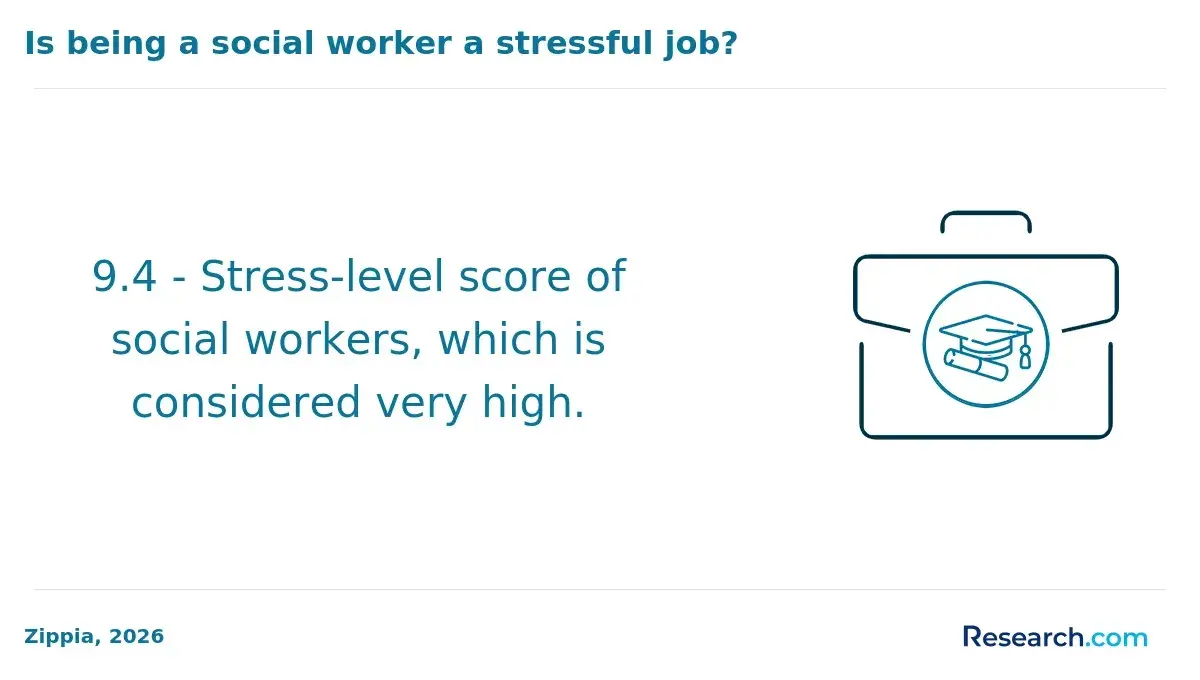
Social work requires more than compassion. Effective professionals combine ethical judgment, communication, documentation, cultural humility, crisis response, assessment, advocacy, and collaboration. They must listen carefully, set boundaries, manage confidential information, work under pressure, and make decisions when client needs are urgent or complex.
Technical skills matter as well. Social workers increasingly use electronic records, telehealth tools, data-informed assessments, program evaluation methods, and interdisciplinary care plans. Those pursuing advanced roles should also build supervision, leadership, policy analysis, and clinical reasoning skills. To compare specialized pathways, review these MSW career options.
How can experienced social workers advance their careers?
Experienced social workers can advance by becoming more specialized, moving into leadership, earning advanced credentials, teaching, conducting research, supervising other professionals, or shifting into policy and administration. The best path depends on whether the professional wants deeper client-facing expertise, broader organizational responsibility, or a transition into academic or research work.
Options may include clinical specialization, supervisory licensure, post-graduate certificates, leadership training, doctoral study, grant writing, program evaluation, or policy work. Professionals considering doctoral education should compare cost and format carefully; this overview of the cheapest DSW programs can help with early research.
Is an Advanced Standing MSW the Smart Choice for Career Advancement?
An advanced standing MSW can be a strong option for students who already hold a qualifying Bachelor of Social Work. Because these programs recognize prior social work education, they may reduce duplication, shorten the graduate timeline, and lower total tuition compared with a traditional MSW route.
However, advanced standing is not automatic. Programs usually review accreditation status, grades, fieldwork history, recommendation letters, and the age of the BSW degree. Students should confirm whether the curriculum still provides enough preparation for their intended specialization and state licensing pathway. If you are comparing options, start with top advanced standing MSW online programs and then verify admissions and licensure details with each school.
Social Work Career Paths
Social work is not one single job. It is a broad profession with roles in clinical care, schools, hospitals, child welfare, aging services, public policy, housing, substance use treatment, community development, and nonprofit leadership. Degree holders in social work usually find employment as social workers, social and community service managers, and elementary and middle school teachers, with an average salary of $60,063.
The right path depends on your preferred population, work setting, tolerance for crisis work, interest in clinical practice, and willingness to pursue graduate education or licensure.
- Clinical social work. Clinical social workers provide counseling, psychotherapy, assessment, and treatment support to individuals, families, and groups in settings such as mental health clinics, hospitals, agencies, and private practice. The average psychotherapist salary is $56,766 per year.
- Healthcare social work. Healthcare social workers help patients and families manage illness, disability, care transitions, end-of-life concerns, insurance barriers, and access to community resources.
- Child welfare. Child welfare social workers support children and families affected by neglect, abuse, family instability, trauma, placement needs, and court-involved services.
- School social work. School social workers help students and families address attendance, behavior, mental health, crisis situations, academic barriers, and family needs. The average social work and psychology jobs salary is at $81,040.
- Community development. Community social workers address housing, poverty, neighborhood resources, food insecurity, outreach, advocacy, and local program development.
- Policy analysis and advocacy. Social workers in policy roles research problems, analyze legislation, advocate for system change, and work with public agencies or nonprofit organizations.
- Gerontology. Gerontology social workers support older adults and families with healthcare, housing, independence, caregiving, benefits, and quality-of-life planning.
| Career interest | Likely degree level | What to ask before choosing this path |
| Case management or community services | Often BSW or MSW, depending on employer | Do you want direct service work without necessarily becoming a clinician? |
| Therapy or clinical practice | Usually MSW plus clinical licensure | Are you prepared for supervised clinical hours and state licensing requirements? |
| School support services | Varies by state and role | Does your state require a school-specific credential or license? |
| Healthcare systems | Often BSW or MSW | Are you comfortable working with illness, discharge planning, crisis, and interdisciplinary teams? |
| Policy or administration | Often MSW or doctoral preparation for senior roles | Do you prefer systems-level work over one-on-one client services? |
| Research or university teaching | Usually PhD or other doctoral preparation | Are you interested in scholarship, publications, and academic work? |
What Are the Post-Graduation Certification and Licensing Options?
After graduation, social workers may pursue licenses, specialty credentials, or related certifications that expand their practice options. The right choice depends on career goals. A clinical social worker may need a state clinical license, while a professional working in child welfare, school systems, case management, or healthcare may benefit from a targeted certification.
Additional credentials can require coursework, supervised practice, exams, continuing education, and fees. They may improve credibility, but they should be chosen strategically rather than collected without a career purpose. Students interested in counseling-adjacent roles can review certification requirements for counselors to understand how requirements may compare or complement social work training.
What are the benefits of online social work programs?
Online social work programs can make the field more accessible, especially for working adults, rural students, parents, military-affiliated learners, and students who cannot move for school. The main advantage is flexibility, but students should evaluate online programs carefully because field education and licensure alignment remain essential.
- Flexible scheduling. Many online programs allow students to complete coursework around work or family responsibilities, especially when classes are asynchronous.
- Geographic access. Students who live far from campus-based programs may be able to enroll without relocating.
- Potential cost savings. Online students may reduce commuting, housing, or relocation costs. Students focused on affordability can compare the cheapest online BSW programs.
- More program choices. Online learning can make it easier to compare specializations, pacing options, and schools outside the student’s immediate region.
- Adaptability during life changes. Some online formats make it easier to continue during job changes, caregiving responsibilities, or other disruptions.
The main caution is field placement. Ask whether the program finds placements for students, expects students to identify agencies independently, or has placement restrictions by state. Also confirm whether the program’s curriculum meets requirements where you plan to seek licensure.
How to choose the right social work program?
The best social work program is not simply the one with the lowest tuition, the fastest timeline, or the most convenient format. It is the one that fits your career goal, licensing state, financial situation, field placement needs, and learning style.
- Check accreditation first. Confirm that the program holds appropriate social work accreditation. This can affect licensure, graduate admissions, field education, and employer recognition.
- Match the program to your career goal. Students interested in clinical practice should choose programs that prepare them for the relevant licensing pathway. Students interested in policy, community work, healthcare, or school settings should look for aligned coursework and placements.
- Evaluate field placement support. Ask where students complete placements, how agencies are approved, who finds the placement, and what happens if a placement falls through.
- Compare program format honestly. Full-time programs may finish faster but leave less room for work. Part-time and online programs may be easier to manage but can extend the timeline. Students seeking clinical preparation should compare accredited online LCSW programs carefully.
- Review faculty expertise. Look for faculty whose practice, research, or leadership experience aligns with your interests.
- Calculate total cost. Include tuition, fees, books, technology, travel to field sites, exam fees, and lost wages if you reduce work hours.
- Ask about outcomes. Request information on graduation rates, licensing exam support, field placement satisfaction, career services, and alumni roles.
Questions to ask before enrolling
- Is the program accredited, and by whom?
- Does the program meet educational requirements for the state where I plan to work?
- How are field placements arranged for online or out-of-state students?
- Can I attend part time, and how does that change my graduation timeline?
- What scholarships, assistantships, or loan repayment pathways are available?
- What support does the school offer for licensing exams and career placement?
- Will my transfer credits, prior BSW, or work experience reduce the time to completion?
What are the easiest social work programs to get into?
Some students look for accessible social work programs because they are changing careers, returning to school after a long break, or concerned about grades, test requirements, or competitive admissions. A less selective program can be a practical option if it is accredited, provides strong student support, and aligns with your licensing and career goals.
However, “easy to get into” should not mean weak preparation. Social work involves ethical responsibility, fieldwork, documentation, crisis response, and service to vulnerable populations. Students should compare admission flexibility alongside accreditation, faculty support, field placement quality, and graduation requirements. To begin that comparison, review this guide to the easiest social work degree options.
Can a Social Work Degree Expand Your Career Opportunities?
A social work degree can support more than traditional agency roles. The training develops transferable skills in assessment, communication, crisis management, advocacy, documentation, program coordination, policy interpretation, and systems navigation. These skills can apply in healthcare, education, community development, public administration, nonprofit management, workforce services, corrections, housing, and behavioral health.
Students who want broad human services careers may also compare social work with related degrees. This overview of a human services degree explains adjacent career options and can help clarify which path better fits your goals.
Factors Affecting the Time Required to Become a Social Worker in 2026
The time required to become a social worker depends on several connected factors: degree level, transfer credits, full-time or part-time enrollment, fieldwork scheduling, advanced standing eligibility, state licensing rules, supervised clinical hours, and the specific role you want.
Career goals matter most. A student who wants an entry-level community services role may be able to start after a BSW. A student who wants clinical social work generally needs an MSW and additional licensing steps. A professional who wants university teaching, research leadership, or senior practice leadership may pursue a DSW or PhD. Timelines also differ for students moving toward related goals, such as becoming a licensed therapist.
The fastest route is not always the best route. A shorter program can save time and money, but only if it meets accreditation standards, provides adequate fieldwork, and supports the license or job you want. Students interested in mental health settings can also explore related paths such as psychiatric social work.
Common Mistakes to Avoid
- Choosing a program without verifying accreditation. Accreditation can affect licensure eligibility, graduate admissions, and employer recognition.
- Looking only at tuition. Fees, field placement travel, books, technology, exam costs, and reduced work hours can change the real cost.
- Assuming online programs are automatically easier. Online students still complete readings, assignments, group work, field hours, and professional assessments.
- Ignoring state licensing rules. A program that works for one state may not satisfy another state’s requirements.
- Waiting too long to plan fieldwork. Placement availability can affect your schedule, especially in rural areas or specialized practice settings.
- Assuming salary outcomes are guaranteed. Pay varies by state, employer, degree level, license, setting, and experience.
- Choosing speed over fit. Accelerated programs can be useful, but they may be difficult for students balancing work, caregiving, and field placements.
Key Insights
- The shortest common route is a BSW. A bachelor’s degree in social work typically takes four years full time and can lead to entry-level social service roles.
- Clinical and advanced roles usually take longer. An MSW commonly adds two years of full-time study, and clinical licensure can add more time through supervised experience and exams.
- Doctoral study is optional, not required for most social work jobs. DSW and PhD programs generally take three to seven years and are best suited for advanced practice, leadership, research, teaching, or policy roles.
- Fieldwork is a major timeline factor. BSW programs often require at least 400 to 500 field hours, while MSW programs typically require 900 to 1,000 hours.
- Licensing rules are state-specific. Always check the licensing board in the state where you plan to practice before choosing a program.
- Online programs can improve access but still require careful vetting. Accreditation, field placement support, and state authorization matter more than convenience alone.
- Advanced standing can save time for eligible BSW graduates. It can reduce duplication and cost, but admission standards and licensing alignment should be confirmed.
- The best pathway depends on your end goal. Case management, clinical therapy, policy work, school social work, healthcare, and academia each require different levels of education and preparation.
References:
- AccreditedSchoolsOnline.org. (2025). Social work career guide & job prospects. https://www.accreditedschoolsonline.org/resources/careers-in-social-work/
- Bureau of Labor Statistics. (2025). Social workers: Occupational outlook handbook. U.S. Department of Labor. https://www.bls.gov/ooh/community-and-social-service/social-workers.htm
- Bureau of Labor Statistics. (2025). Community and social service occupations. U.S. Department of Labor. https://www.bls.gov/ooh/community-and-social-service/
- CareersinPsychology.org. (2025). Salary and job outlook for social workers. https://careersinpsychology.org/starting-a-career-as-a-social-worker/
- Council on Social Work Education. (2025). Statistics on Social Work Education in the United States. https://www.cswe.org/research-statistics/at-a-glance-reports/
- Department of Labor (ODEP). (2025). Disability employment statistics. https://www.dol.gov/agencies/odep/research-evaluation/statistics
- Psychology.org. (2025). How to become a social worker: Education & timeline. https://www.psychology.org/careers/social-worker
- Psychology.org. (2025). Fastest way to become a social worker. https://www.psychology.org/social-work/careers/fastest-way-to-become-social-worker/
- SocialWorkDegrees.org. (2025). How to become a social worker in 2026. https://www.socialworkdegrees.org/how-to-become-a-social-worker
Other Things You Should Know About How Long It Takes to Become a Social Worker
Yes, becoming a social worker with an online degree is possible. Many accredited universities offer online Bachelor of Social Work (BSW) and Master of Social Work (MSW) programs. However, ensure the program includes required fieldwork components and meets licensure requirements in your state.
To become a social worker, you generally need a Bachelor of Social Work (BSW) for entry-level positions. Advanced positions typically require a Master of Social Work (MSW). Some positions, particularly in academia or high-level research, may require a Doctor of Social Work (DSW) or PhD in Social Work.
Licensure requirements vary by state but generally include having a master’s degree in social work, completing a specified number of supervised clinical hours, and passing a licensing exam. Some states also require additional coursework or continuing education.
Fieldwork in social work programs involves completing supervised hours in a social service agency or organization. BSW programs typically require 400-500 hours, while MSW programs require around 900-1,000 hours. Doctoral programs also include substantial research-based fieldwork.
After graduation, to become a licensed social worker in 2027, you must pass the ASWB exam and complete the required supervised experience hours as mandated by your state's social work board, which typically involves 2,000-4,000 hours of fieldwork.
After graduation, many states require candidates to apply for an initial license such as the LMSW or LSW before supervised practice. Clinical licensure often requires an MSW from a CSWE-accredited program, 2,000 to 4,000 supervised hours, and passage of the ASWB exam.