2027 What is Social Work?

Co-Founder and Chief Data Scientist
Choosing social work means deciding whether you want a career built around helping people navigate crisis, inequality, trauma, poverty, illness, family conflict, and complex systems that often fail the people who need support most. Social work is not only “helping others.” It is a regulated profession with ethical duties, evidence-informed practice models, licensing rules, field education requirements, and career paths that range from child welfare and school support to clinical therapy, healthcare coordination, policy advocacy, and community organizing.
This guide explains what social work is, how the profession developed, what social workers actually do, which degrees and licenses matter, how salaries and job outlook compare, and what challenges new professionals should understand before entering the field. It is designed for students considering a social work degree, career changers comparing helping professions, and current human services workers deciding whether a BSW, MSW, LCSW path, or doctorate is worth pursuing.
Social work remains a major profession in the United States, with more than 800,000 practitioners according to the U.S. Bureau of Labor Statistics, 2025. Its roots are much older than modern licensure systems: the field formalized a human tendency toward mutual aid, fairness, and collective responsibility into a professional practice guided by social justice, human rights, and public accountability.
What is Social Work Table of Contents
- What social work means in practice
- How social work became a profession
- Major social work theories and practice levels
- Ethics and professional responsibilities in social work
- How social work affects individuals, families, and communities
- Social work careers, education, licensing, and salaries
- How technology is changing social work
- Current challenges facing social workers
- How a doctorate can expand a social work career
- Whether online clinical social work programs can support licensure preparation
- Why social work is becoming more interdisciplinary
- Education pathways and career advancement options
- How social work differs from other human services fields
- How interdisciplinary study can strengthen social work practice
- How to judge the accessibility of online MSW programs
- Why advocacy expands social work’s public impact
- Why accreditation matters in social work education
- How social work compares with psychology
- Career options an MSW can help unlock
- How to decide whether social work is right for you
Quick Answer: What Is Social Work?
Social work is a professional field focused on helping individuals, families, groups, and communities improve well-being, access resources, solve problems, and address social conditions that create harm. Social workers may provide direct services, case management, crisis intervention, counseling, advocacy, policy work, community development, or clinical mental health treatment, depending on their education, license, and role.
The profession is grounded in social justice, human rights, service, dignity, human relationships, and ethical accountability. Entry-level roles may be available with a bachelor’s degree, but many advanced and clinical positions require a Master of Social Work, supervised field experience, and state licensure.
What is social work?
Social work is the organized professional practice of helping people manage life challenges while also addressing the social, economic, legal, health, educational, and policy conditions that shape those challenges. A social worker may help one person find housing, support a family through child welfare proceedings, coordinate care for a patient leaving the hospital, provide therapy to a client with depression, or advocate for a policy that expands access to public benefits.
The field is broad because human needs are broad. Social work touches child welfare, aging services, school support, healthcare, behavioral health, disability services, criminal justice, housing, poverty reduction, racial inequality, substance use treatment, and community development. Some social workers work one-on-one with clients. Others work with organizations, neighborhoods, courts, schools, hospitals, or governments.
The International Federation of Social Workers, 2026, describes social work as a profession committed to social justice and human rights. That commitment matters because social workers do not only ask, “What is wrong with this person?” They also ask, “What conditions are affecting this person, and what systems need to change?”
| Social work focus | What it can look like in practice | Typical level of intervention |
| Individual support | Crisis intervention, care planning, counseling, referrals, benefits navigation | Micro |
| Family and group support | Family services, support groups, school-based services, neighborhood programs | Mezzo |
| Community and policy change | Program evaluation, advocacy, public policy, community organizing, research | Macro |
For readers exploring the field for the first time, the most important point is this: social work is both practical and systemic. It helps people meet immediate needs while also challenging the conditions that create those needs.
History of Social Work
Modern social work developed in Europe and North America during the late 19th century as industrialization created a sharp contradiction: economies were becoming more productive, but poverty, unsafe housing, child labor, poor health, and social instability persisted. Stuart, 2013, described the profession as emerging from volunteer responses to this “social question.” By 1900, social betterment work had become an occupation, and by 1930, social work had gained professional status.
In the United States, one of the first major steps toward professional education was the first social work class in 1898 at Columbia University, according to the National Association of Social Workers, 2025. That development helped shift charitable work from informal volunteerism toward trained practice, organized methods, and eventually licensure.
The origins of organized social welfare work
Before social work became a formal profession, charitable and civic organizations were already responding to poverty, unsafe living conditions, and child welfare problems. The Association for the Improvement of the Condition of the Poor was founded in 1843, and the Children’s Society was established in 1853. These groups focused on concerns such as tenement housing and child protection at a time when public systems were often inadequate.
During the Civil War, relief organizations expanded the idea that organized civilian aid could support large-scale human need. The United States Sanitary Commission became the only civilian-led relief agency recognized by the government. It supported soldiers’ physical and mental health, helped establish military hospitals, distributed medicine and clothing, transported injured soldiers, and operated through donations rather than additional government funding.
In 1877, the American Charity Organization Society introduced the idea of “scientific charity” in response to problems associated with industrialization. Volunteers borrowed administrative ideas from business and tried to bring order to public relief distribution, particularly as immigrant communities became an increasingly significant part of the labor force. The effort reflected the belief that vulnerable people needed tools, skills, and access to escape economic and social poverty. In 1881, the American Red Cross was inspired by the Swiss global Red Cross network created in 1863.
How social work professionalized
Social work education expanded in the late 19th century. Columbia University, working with The New York College of Science, developed and delivered the first social work class, according to Columbia School of Social Work, 2025. Simmons College and Harvard University collaborated to establish the Boston School of Social Workers, and Simmons became the first to offer training in clinical social work.
Between 1900 to 1910, charity work gained clearer occupational identity, according to Stuart, 2013. Schools of philanthropy or charity opened in five cities, and trained social workers moved into public schools, juvenile courts, psychiatric clinics, general hospitals, settlement houses, and child welfare settings. Although the field was still building its theories and methods, practitioners were already applying new techniques to varied populations.
The Russell Sage Foundation, founded in 1907, became one of the most important early supporters of professional social work and social science research. By 2025, it had spent over 117 years supporting that mission. In 1917, the foundation published Mary Richmond’s Social Diagnosis, which became a landmark text and helped establish casework as a more systematic practice.
The field continued to evolve through the First World War, the Great Depression, the New Deal, and World War II. These periods forced social workers to respond to unemployment, displacement, family stress, trauma, public relief needs, and healthcare demands. The work also brought social workers into closer collaboration with physicians, courts, educators, public administrators, and mental health professionals.
Licensure later became central to defining professional competence. In 1979, the American Association of Social Work Boards was incorporated to “develop an effective examination to measure minimum competency of entry-level social work practitioners,” according to the Association of Social Work Boards, 2024. In 1983, it administered its first social worker license exam to 464 social workers in Virginia, New York, and Oklahoma. On its 20th anniversary, the organization became the Association of Social Work Boards, and it now administers over 47,000 exams annually across credential levels.
Social Work Theoretical Models and Practices
Social work practice draws from psychology, sociology, public health, law, economics, education, anthropology, management, and community development. Because clients’ problems rarely fit one discipline, social workers use multiple frameworks to understand behavior, relationships, institutions, trauma, inequality, and change. The theories used in social work practice are not abstract academic exercises; they shape assessment, intervention planning, case documentation, advocacy, and ethical decision-making.
Common theories that inform social work practice
| Theory | Core idea | How a social worker may use it |
| Psychosocial development theory | Erik Erikson’s framework describes eight stages of development across the life cycle: hope, will, purpose, competence, fidelity, love, care, and wisdom. | Understanding age-related developmental tasks, identity formation, and life-stage challenges. |
| Psychodynamic theory | Freud’s model emphasizes conscious and unconscious forces, including the id, ego, and superego. | Exploring motivation, conflict, defense patterns, and early relational experiences while recognizing the theory’s criticisms. |
| Transpersonal theory | This approach looks beyond ego development and considers meaning, creativity, wisdom, altruism, and spiritual growth. | Supporting clients whose goals involve identity, purpose, grief, meaning, or growth beyond symptom reduction. |
| Rational choice theory | People often weigh risks, rewards, and likely consequences before acting. | Designing interventions that account for incentives, barriers, perceived benefits, and decision-making constraints. |
| Cognitive behavioral theory | Thoughts, emotions, and behaviors influence each other and can be changed through structured strategies. | Helping clients identify harmful thinking patterns, test assumptions, and build healthier coping behaviors. |
| Social learning theory | Albert Bandura argued that people learn by observing, imitating, and receiving reinforcement. | Using modeling, skill-building, coaching, and positive reinforcement in individual, family, or group settings. |
| Systems theory | People function within interconnected systems such as families, schools, workplaces, neighborhoods, and institutions. | Looking beyond the individual to identify environmental pressures, relationship patterns, and institutional barriers. |
The three levels of social work practice
Social workers often describe practice at three connected levels: micro, mezzo, and macro. These are not rigid categories. A school social worker, for example, may counsel one student, coordinate a family meeting, and advocate for district-wide mental health services in the same week.
- Micro social work: This level focuses on individuals and families. Examples include mental health support, case management, substance use intervention, crisis response, domestic violence services, and care coordination.
- Mezzo social work: This level involves small and medium-sized groups, such as schools, neighborhoods, support groups, agencies, or community organizations. Social workers may lead group counseling, build community programs, mediate conflicts, or coordinate local services.
- Macro social work: This level addresses systems, laws, institutions, public programs, and social movements. Macro social workers may conduct research, evaluate programs, influence policy, lead agencies, organize communities, or advocate for social change.
How to choose a practice area
If you are considering social work, think less about a generic “helping career” and more about the population, setting, and type of change that motivates you. Clinical practice requires comfort with assessment, treatment planning, documentation, and long-term therapeutic work. Child welfare requires resilience, legal awareness, crisis judgment, and strong boundaries. Macro practice requires policy literacy, coalition-building, research, and patience with slow institutional change.
Social Work Code of Ethics
Social work is guided by a formal ethical framework. The National Association of Social Workers Code of Ethics defines core values, practice principles, professional standards, and accountability expectations. It also helps practitioners make decisions when duties conflict, such as when client confidentiality, safety, mandated reporting, agency policy, and client self-determination point in different directions.
The code reflects the profession’s mission to meet basic human needs and improve well-being, with particular attention to people who are oppressed, vulnerable, or marginalized. It also emphasizes cultural competence, professional development, and self-care, recognizing that ethical practice depends on both skill and sustainability.
What the NASW Code of Ethics is designed to do
- Define the core values that support the profession’s mission.
- Translate those values into broad ethical principles and specific standards for professional conduct.
- Help social workers think through difficult situations when professional duties, laws, agency policies, or client needs conflict.
- Give the public standards by which social workers can be held accountable.
- Introduce new practitioners to the profession’s mission, values, standards, expectations for continuing education, and need for self-care.
- Provide a basis for reviewing and adjudicating ethical complaints against members, including cooperation with NASW procedures and compliance with sanctions or disciplinary decisions.
Core social work values and ethical principles
| Value | Ethical principle | What it means in practice |
| Service | Social workers help people in need and address social problems. | They use professional knowledge to support clients and communities, including through pro bono or reduced-cost service when appropriate. |
| Social justice | Social workers challenge injustice. | They work against poverty, unemployment, discrimination, exclusion, and unequal access to resources and decision-making. |
| Dignity and worth of the person | Social workers respect each person’s inherent value. | They support client self-determination while considering cultural context, personal capacity, and responsibilities to others. |
| Importance of human relationships | Social workers recognize relationships as central to change. | They collaborate with clients, families, groups, organizations, and communities rather than treating people as passive recipients of services. |
Ethics are especially important because social workers often operate in high-stakes settings: child protection investigations, psychiatric crises, domestic violence cases, end-of-life care, foster care, addiction treatment, homelessness services, and courts. Good intentions are not enough. Ethical social work requires judgment, documentation, supervision, cultural humility, and knowledge of the law.
The Impact of Social Work
Social work has influenced public life for more than 100 years by connecting individual care with broader reform. The profession’s impact is visible in civil rights advocacy, labor protections, poverty programs, child welfare systems, substance use treatment, and mental healthcare reform. Because the field is broad, people often ask, “What do social workers do?” The better question is often, “At what level are they working, and what problem are they trying to solve?”
| Area of impact | How social workers contribute |
| Civil rights | Social workers supported civil rights work in the 1960s and continue to advocate for equal rights regardless of race, gender, religion, or sexual orientation. They recognize discrimination as a direct threat to individual and family well-being. |
| Workers’ rights | The profession has supported labor reforms and programs connected to unemployment insurance, disability pay, worker’s compensation, and Social Security. |
| Poverty reduction | Social workers helped develop and implement programs during the New Deal and Great Society periods, including Medicaid and Medicare, to reduce the harms associated with poverty and healthcare costs. |
| Child abuse and neglect | Social workers remain central to child protective services across U.S. states, including investigation, safety planning, family support, and child welfare policy development. |
| Substance abuse | Social workers support treatment programs, recovery services, public health approaches, and interventions connected to addiction’s effects on families, education, crime, and community safety. |
| Mental illness | The profession has helped shift mental health care away from inhumane institutional treatment and toward more humane, community-oriented, recovery-focused services. |
Social work’s public value comes from its dual function. It helps people survive immediate hardship while also pushing institutions to become more fair, accessible, and humane.
The Social Work Profession
A social worker is a trained professional who helps people solve practical problems, access services, cope with crisis, improve relationships, protect safety, and, in clinical roles, address mental and emotional disorders. The exact job depends on the worker’s degree, license, employer, and specialization.
Direct service social workers vs. clinical social workers
| Type of social worker | Main responsibilities | Common settings | Typical education path |
| Direct service social workers | Assess client needs, create service plans, connect clients with resources such as food stamps or healthcare, manage cases, determine eligibility, make referrals, mediate, and provide support. | Government agencies, schools, residential programs, behavioral health centers, juvenile correctional facilities, hospice programs, and military family services. | Many roles require a Bachelor’s in Social Work. Students who need flexibility can compare quality yet affordable online bachelors degree in social work programs. |
| Clinical social workers | Assess, diagnose, treat, and help prevent mental, emotional, and behavioral disorders using individual, group, and family therapy. | Private practice, hospitals, addiction recovery centers, social service agencies, and behavioral health settings. | Clinical licensure typically requires a Master’s in Social Work, supervised field experience, and state approval. Students can review social work online degrees, including MSW and doctoral options. |
How to become a social worker
The usual path begins with education, field experience, and licensure. Many students start by earning a social work degree; others enter from psychology, sociology, criminal justice, education, public health, or human services and then complete a BSW or MSW depending on career goals. A helpful first step is to review what it means to earn your social work degree and compare degree levels against the role you want.
- Clarify your target role. Case management, school services, child welfare, clinical therapy, policy work, and healthcare coordination may require different credentials.
- Check your state’s licensing board. Licensing requirements vary. In New York, for example, applicants need an MSW with at least 900 internship hours to apply for a license, while other states may allow some practice with a bachelor’s degree.
- Complete the required degree and field education. Field placements are essential because social work is practice-based, not just classroom-based.
- Pass the ASWB exam required for your license level. Different licenses correspond to different scopes of practice.
- Complete supervised experience if pursuing clinical practice. LCSW requirements differ by state, so students should verify rules before choosing a program.
Common social work licenses
- Licensed Baccalaureate of Social Work (LBSW): Often the first license for BSW graduates seeking non-clinical practice roles.
- Licensed Master of Social Work (LMSW): Allows MSW graduates to practice non-clinical social work and may serve as a step toward clinical licensure.
- Licensed Master Social Worker Advanced Generalist (LMSW-AG): Supports advanced non-clinical practice for MSW graduates.
- Licensed Clinical Social Worker (LCSW): Authorizes clinical social work, including assessment, diagnosis, treatment, and prevention of mental illness and emotional or behavioral disturbances.
How social workers keep a license active
Licenses generally must be renewed every two years. Requirements vary by state and license type, but renewal often includes around 30 continuing education credit hours and a fee. Alaska, for example, requires social workers to complete 45 continuing education hours for renewal.
Social work jobs and salary examples
Salaries in social work vary by state, setting, specialization, license, employer, and years of experience. The figures below reflect the salary estimates stated in the source article, including a related discussion of LCSW private practice salary.
| Role | What the role does | Minimum degree stated | Average salary stated |
| Social work assistant | Supports clients under licensed social workers by helping with resources, emotional support, paperwork, and service access. | Associate’s in Social Work or a related field | $44,728 |
| Addiction counselor | Assesses clients, develops treatment plans, and provides individual or group support for substance abuse and addiction. Readers comparing counseling paths may also ask how much do counselors make. | Bachelor’s in Social Work (BSW) | $53,382 |
| Health educator | Teaches individuals and communities about health behaviors, develops educational materials, leads workshops, and provides referrals. | Bachelor’s in Social Work (BSW) | $51,832 |
| Child welfare specialist | Works to protect children from abuse and neglect by investigating home or childcare conditions and supporting child safety. | Master’s in Social Work (MSW) | $49,320 |
| Mental health counselor | Provides counseling to people experiencing mental health concerns. | Master’s in Social Work (MSW) | $62,660 |
| Clinical social worker | Assesses clients, creates treatment plans, monitors progress, and coordinates care with other healthcare professionals. | Master’s in Social Work (MSW) | $59,488 |
| School social worker | Supports students, families, teachers, and school staff; coordinates services; assists with crisis planning; and helps students build coping skills. | Master’s in Social Work (MSW) | $67,622 |
| Forensic social worker | Applies social work knowledge to criminal and civil legal matters, including child custody, juvenile detention, child abuse, elder abuse, divorce, civil disputes, criminal behavior, and incarceration. Students comparing related legal-behavioral paths may review forensic social worker roles or ask what to do with a forensic psychology degree. | Master’s in Social Work (MSW) | $59,488 |
Social work career outlook
The U.S. social work labor market remains sizable. There were 708,100 jobs in this field. Through 2031, job growth is projected to be 9%, with about 74,700 new job openings each year. Most of those openings are expected to result from retirements and workers moving to other occupations or industries, producing a net increase of 64,000 jobs during the period.
The median annual salary for social workers was $61,330, or $29.48 per hour. That was $4,630 more than the median annual wage for all occupations. Local governments, excluding hospitals and educational institutions, reported the highest median annual salary at $61,190, followed by ambulatory healthcare services at $58,700, state government, excluding educational institutions and hospitals, at $48,900, and individual and family services at $46,490. Healthcare social workers had the highest median annual wage among social work specialists at $60,940. Mental health and substance abuse social workers reported a median annual income of $49,130.
Questions to ask before choosing a social work degree
- Is the program accredited in a way that supports licensure in the state where I plan to work?
- Does the curriculum match my goal: direct service, clinical practice, school social work, healthcare, policy, or administration?
- How are field placements arranged, and are placements available near me?
- What are the total costs beyond tuition, including fees, travel, technology, books, and lost work hours?
- What exam preparation, advising, supervision guidance, and career services are available?
- If the program is online, does it meet my state’s requirements for licensure and field education?
The Role of Technology in Shaping Social Work's Future
Technology is changing how social workers communicate with clients, document services, monitor outcomes, complete continuing education, and coordinate care. These tools can improve access, but they also raise ethical questions about privacy, informed consent, digital equity, data bias, and professional boundaries.
- Teletherapy and virtual counseling: Remote service delivery can help clients in rural areas, clients with transportation barriers, and clients with mobility limitations. It also requires careful attention to confidentiality, emergency planning, and state practice rules.
- Digital records and analytics: Electronic records help agencies track progress, document interventions, identify community patterns, and evaluate outcomes. Poorly designed systems, however, can increase paperwork burden.
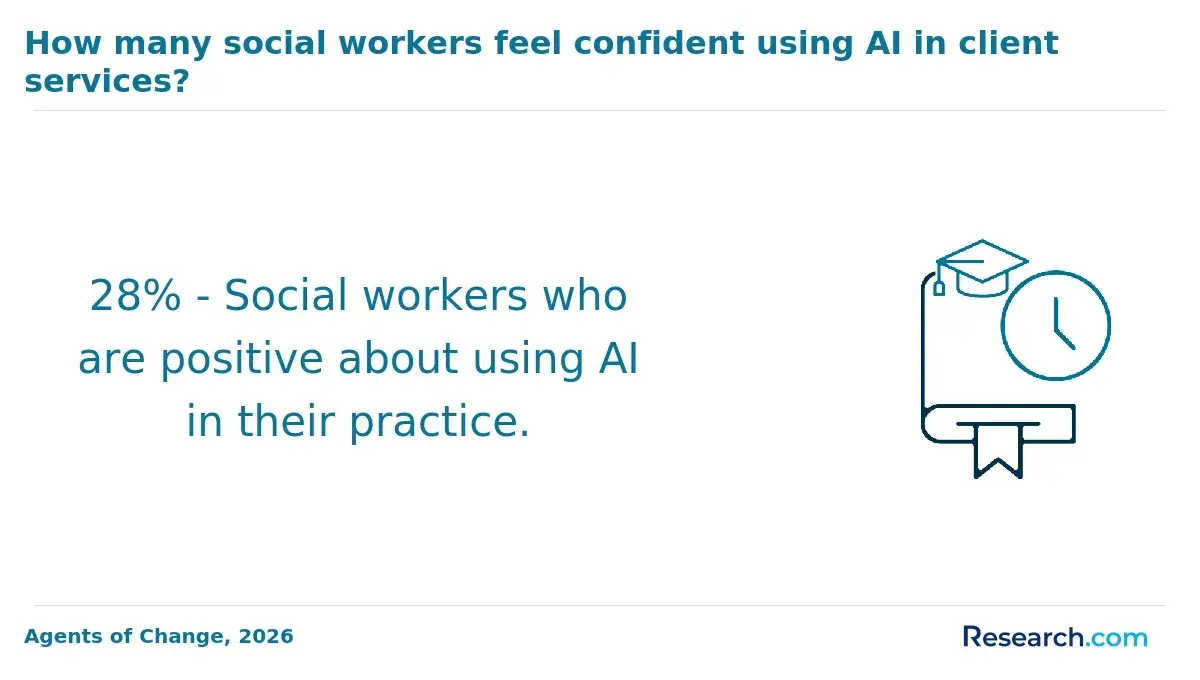
- AI and predictive tools: Emerging tools may help identify risk patterns and allocate resources, but social workers must watch for bias, overreliance on automated recommendations, and lack of transparency in decision-making.
- Online professional development: E-learning platforms allow social workers to complete continuing education more flexibly and stay current on ethics, trauma-informed care, telehealth, policy, and evidence-informed interventions.
The future of technology in social work will depend on whether agencies use digital tools to support professional judgment rather than replace it. Social work depends on context, trust, ethics, and human relationships; technology should strengthen those elements, not reduce clients to data points.
Social Work Challenges
Social work is meaningful, but it is not easy work. Practitioners often serve people during crisis, trauma, poverty, family separation, illness, violence, legal conflict, or institutional failure. The field also faces broader challenges involving professional identity, theory development, caseloads, documentation, staffing, compensation, and burnout.
Building stronger social-work-specific knowledge
Social work has long used theories from psychology, sociology, economics, education, public health, anthropology, management, psychiatry, nursing, and ecology. Many scholars argue that the field also needs more social-work-specific theory and research that reflects its distinctive person-in-environment perspective, ethical commitments, and intervention methods.
The shift matters because social work is not simply applied psychology or public administration. Its practice combines individual support, systems analysis, advocacy, ethics, and social change. A stronger research base can help practitioners evaluate interventions, justify funding, improve training, and communicate the profession’s value more clearly.
Restoring the “social” in social work
A recurring critique is that Western social work has often emphasized individual empowerment while giving less attention to collective responsibility and social cohesion. Individual support is still essential, but many problems clients face are not created by individual choices alone. Housing shortages, labor instability, discrimination, lack of healthcare access, school inequity, and community violence require collective strategies.
As social work incorporates more global, Indigenous, collectivist, and community-based perspectives, the field is giving renewed attention to shared responsibility, mutual aid, cooperative solutions, and collective action.
Burnout, workload, and retention
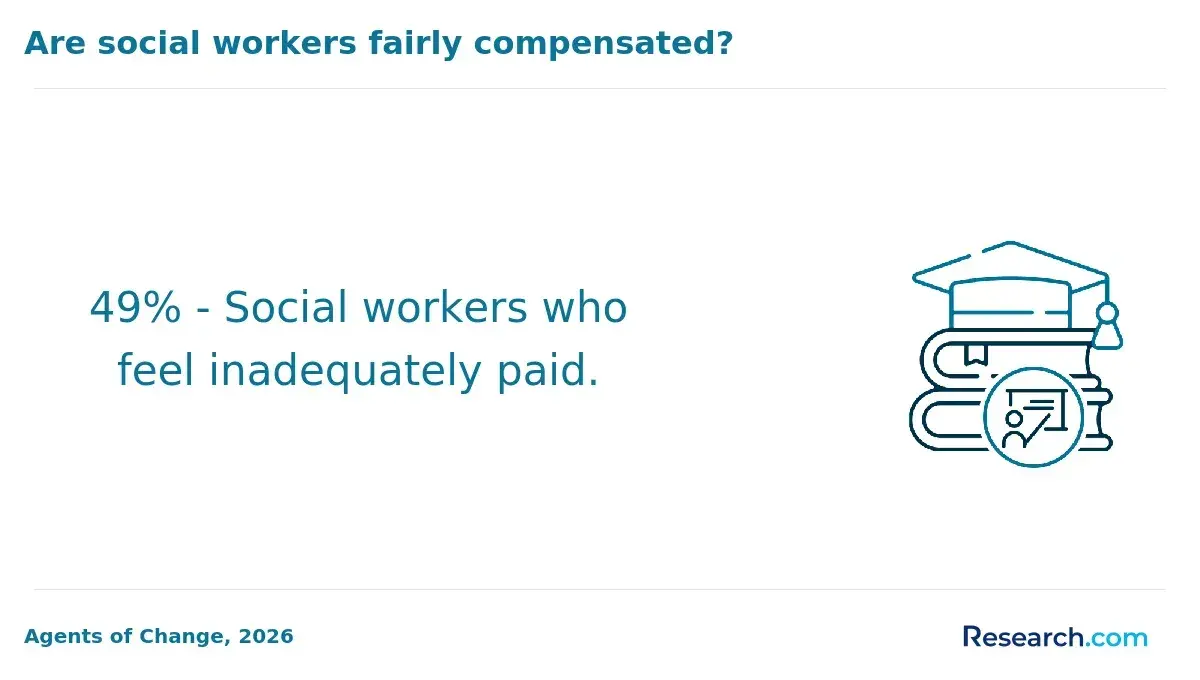
Social workers frequently manage emotionally demanding cases, heavy documentation, bureaucratic constraints, staff shortages, high caseloads, and crisis exposure. Professionalization also raises the cost and time required to enter and advance in the field through degrees, field hours, exams, and licensure. Flexible online programs can help some students, but balancing school, work, field placement, and family responsibilities can still be difficult.
| Common mistake | Why it creates problems | Better approach |
| Choosing a program before checking licensure rules | A degree may not automatically meet requirements in every state. | Review the state licensing board before enrolling. |
| Looking only at tuition | Fees, field placement travel, unpaid internship time, technology, and exam costs can change affordability. | Calculate total cost and compare financial aid, transfer credit, and part-time options. |
| Assuming online means easier | Online MSW programs can still require rigorous coursework, field hours, synchronous sessions, and local placements. | Ask about weekly time demands, field placement support, and technology requirements. |
| Ignoring burnout risk | High emotional demand can lead to turnover or compassion fatigue. | Seek supervision, boundaries, peer support, realistic caseload expectations, and self-care practices. |
| Assuming salary outcomes are guaranteed | Pay varies by state, license, setting, employer, and specialization. | Compare local job postings and salary data before taking on debt. |
How Can a Doctorate Elevate Your Social Work Career?
A doctorate in social work can be useful for experienced professionals who want to move beyond frontline or mid-level practice into leadership, advanced clinical specialization, program design, research-informed administration, consulting, or teaching. A DSW often emphasizes applied leadership and advanced practice, while doctoral study more broadly can strengthen policy analysis, evaluation methods, interdisciplinary collaboration, and the ability to design interventions for complex social problems.
A doctorate is not necessary for every social work career. It makes the most sense when the credential clearly supports a specific goal, such as executive leadership, academia, systems reform, specialized consultation, or advanced program evaluation. If that path fits your goals, reviewing the best DSW programs online can help you compare flexible options and understand how doctoral training may expand your influence.
The Future Interdisciplinarity of Social Work
Social work is becoming more interdisciplinary because the problems it addresses are interconnected. The COVID-19 pandemic made this especially clear: health, employment, schooling, housing, public benefits, family caregiving, mental health, and community safety can all be disrupted at once. No single profession can solve these problems alone.
Future-ready social workers will need to collaborate with healthcare providers, educators, lawyers, data analysts, public administrators, housing advocates, mental health clinicians, community organizers, researchers, and policymakers. They will also need to understand how social determinants of health, technology, climate-related displacement, demographic change, and economic inequality affect clients.
Students considering social work should expect lifelong learning. The profession changes as laws, funding systems, technologies, community needs, and social movements change. If you want to study state-specific paths, you can explore how social work in Florida works or compare options for an MSW in Florida.
Can online clinical social work programs effectively prepare you for licensure?
Online clinical social work programs can prepare students for licensure when they meet academic standards, include appropriate supervised field placements, align with state licensing rules, and provide strong advising. The format itself is not the deciding factor. Accreditation, curriculum quality, field education, faculty support, state authorization, and licensure alignment matter more than whether courses are online or campus-based.
Prospective students should ask direct questions: Does the program support field placement in my state? Does it meet my state’s education requirements for clinical licensure? What are the supervised practice expectations after graduation? What support is available for exam preparation? Students comparing flexible routes can examine an LCSW degree online and verify whether it fits their state and career goals.
Educational Pathways and Career Advancement in Social Work
Most social work career planning begins with the degree level. A BSW can prepare graduates for many direct service and case management roles. An MSW opens more advanced practice areas and is commonly required for clinical licensure, school social work, healthcare roles, supervision, and specialized practice. Doctoral study may support leadership, scholarship, teaching, consulting, or systems-level change.
| Pathway | Who it may fit | Common outcome |
| BSW | Students seeking entry into professional social work or direct service roles. | Case management, community services, child welfare support, benefits navigation, or preparation for advanced standing MSW programs. |
| MSW | Students who want clinical, school, healthcare, leadership, or advanced generalist roles. | Eligibility for advanced licensure pathways, specialization, and broader career mobility. |
| Doctorate | Experienced social workers pursuing leadership, academia, consulting, advanced practice design, or research-informed systems change. | Executive roles, teaching, policy leadership, program evaluation, or specialized consulting. |
Cost matters because social work salaries vary widely. Students seeking flexibility and lower debt may compare inexpensive online MSW programs, but affordability should be evaluated alongside accreditation, field placement quality, licensure alignment, student support, and completion requirements.
Career advancement usually combines education, experience, supervision, continuing education, and specialization. Certifications in areas such as substance abuse, trauma, family therapy, or school practice may strengthen expertise, but they should be chosen based on employer demand and licensing relevance rather than resume padding.
What sets social work apart from other human services professions?
Social work differs from many human services fields because it integrates direct support, ethical accountability, social justice, and systems-level advocacy. A social worker may help a client stabilize housing while also documenting service gaps, coordinating with agencies, and advocating for policy changes that reduce homelessness. That combination of individual practice and structural analysis is central to the field.
Other helping professions may focus more narrowly on counseling, psychological testing, education, healthcare, or case coordination. Social work can include some of those functions, but it is distinguished by its person-in-environment perspective and commitment to addressing systemic barriers. Macro practice is one example; readers can review macro-level interventions and compare the field with counseling or therapy through this guide to social worker vs. therapist.
Can interdisciplinary studies enhance social work practice?
Interdisciplinary study can make social workers more effective because client problems rarely belong to one discipline. Sociology can strengthen understanding of inequality and institutions. Public health can clarify population-level risk and prevention. Political science can improve policy advocacy. Education can help school-based practice. Law can support child welfare, immigration, housing, and forensic work.
Students who want a stronger social science foundation may explore adjacent programs such as the cheapest online sociology degree programs. The best choice depends on whether the additional study supports a clear practice goal, such as community research, policy advocacy, program evaluation, or work with a specific population.
How Do You Evaluate the Accessibility of Online MSW Programs?
An accessible online MSW program is not only one that admits students easily. True accessibility includes flexible scheduling, reliable technology, field placement support, clear advising, manageable course loads, transparent costs, disability accommodations, licensure guidance, and student services that work for distance learners.
Prospective students should compare synchronous and asynchronous requirements, evening or weekend options, part-time tracks, field placement processes, admission criteria, tuition, fees, transfer credit policies, and support for state licensure. Those looking for programs with streamlined entry can review an easy social work master's degree online option, but admissions convenience should never replace accreditation and licensure fit.
The Role of Advocacy in Expanding Social Work's Impact
Advocacy is not an optional extra in social work. It is one of the ways the profession connects personal hardship to public responsibility. Social workers advocate for clients inside agencies, for families navigating schools or courts, for patients facing healthcare barriers, and for communities affected by underfunded services, discrimination, housing instability, or unsafe conditions.
In healthcare, social workers may advocate for expanded mental health services, affordable care, discharge planning, and fair treatment for older adults, children, people with disabilities, and other vulnerable groups. They often work with interdisciplinary teams to reduce socioeconomic barriers to care.
In education, social workers advocate for supports related to bullying, mental health, attendance, family instability, crisis intervention, and overcrowded classrooms. Their work often emphasizes early intervention because unresolved social and emotional stress can affect academic outcomes.
In housing and homelessness, social workers may support tenant rights, affordable housing initiatives, prevention programs, and public education about structural drivers such as income inequality and gentrification. Long-term solutions require more than emergency shelter; they require policies that reduce displacement and expand stability.
Advocacy is also part of career planning. Understanding compensation, debt, and advancement helps professionals stay in the field sustainably. A resource such as a master's level social worker salary guide can help students compare earning potential while planning a service-oriented career.
How Does Accreditation Elevate Social Work Education?
Accreditation gives students, employers, licensing boards, and the public a way to judge whether a social work program meets recognized academic and professional standards. It supports curriculum quality, faculty qualifications, field education expectations, ethical preparation, and readiness for professional practice.
For students, accreditation is especially important because licensure pathways often depend on it. Before enrolling, confirm whether the program’s accreditation status supports the license you want in the state where you plan to work. Students seeking a faster route should still verify quality and licensure fit when considering an accelerated MSW program.
How does social work differ from psychology?
Social work and psychology can overlap in mental health settings, but they are not the same profession. Social work emphasizes people in their social environments, including family systems, community resources, institutions, policy barriers, and social justice. Psychology focuses more heavily on understanding, assessing, and treating mental, emotional, cognitive, and behavioral processes.
A clinical social worker may provide therapy, but social work training also includes resource coordination, advocacy, systems analysis, and community-based intervention. Psychologists may provide therapy as well, but their education often includes deeper training in psychological assessment, research methods, and diagnosis. For a fuller comparison, review the guide to the difference between psychology and social work.
What promising career opportunities can an MSW unlock?
An MSW can expand access to advanced practice, clinical training, leadership, school social work, healthcare roles, policy work, forensic services, community program management, research support, and consulting. The degree is especially important for students who want to pursue clinical licensure or move beyond entry-level direct service.
MSW graduates may work in hospitals, schools, mental health clinics, social service agencies, child welfare systems, correctional settings, veterans services, community organizations, universities, or private practice after meeting licensure requirements. To compare options, review the guide to jobs you can get with masters in social work.
Can a career in social work be right for you?
Social work may be a strong fit if you want a career that combines direct human support with advocacy, ethical responsibility, cultural humility, and systems thinking. It may also fit if you can tolerate ambiguity, documentation, emotional intensity, slow institutional change, and the need for continuous learning.
It may not be the best fit if you want predictable hours in every role, quick results, high earnings immediately after graduation, or work that avoids conflict and crisis. Some social work jobs are highly demanding, and students should make an informed decision about cost, licensure, salary, supervision, and personal resilience before enrolling.
If you are drawn to the field but still comparing entry points, researching the cheapest online BSW programs can help you explore lower-cost pathways into professional social work education.
References:
- Clara Barton and her acquaintances founded the National Association of Social Workers. (2025). Social work history: Pioneering social change. https://www.socialworkers.org/About/History
- International Federation of Social Workers. (2026). Global definition of social work. https://www.ifsw.org/what-is-social-work/global-definition-of-social-work/
- National Association of Social Workers. (2025). Social work history. https://www.socialworkers.org/News/Facts/Social-Work-History
- National Association of Social Workers. (2025). Social work salaries. https://www.socialworkers.org/careers/career-center/kickstart-your-job-hunt/social-work-salaries
- Columbia School of Social Work. (2025). Our history. https://socialwork.columbia.edu/about/history/
- Russell Sage Foundation. (2025). About the Russell Sage Foundation. https://www.russellsage.org/about
- U.S. Bureau of Labor Statistics. (2025). *Social workers: Occupational outlook handbook*. https://www.bls.gov/ooh/community-and-social-service/social-workers.htm
- U.S. Bureau of Labor Statistics. (2025). Social workers: Occupational Outlook Handbook. https://www.bls.gov/ooh/community-and-social-service/social-workers.htm
- U.S. Bureau of Labor Statistics. (2025). Social and human service assistants. https://www.bls.gov/ooh/community-and-social-service/social-and-human-service-assistants.htm
Key Insights
- Social work is both direct service and systems change. The profession helps individuals and families while also addressing the policies, institutions, and inequalities that shape their problems.
- Licensure rules should drive education choices. Before choosing a BSW, MSW, online program, clinical track, or accelerated option, confirm accreditation, field placement support, and state licensing requirements.
- Clinical social work requires more than an MSW. Students pursuing LCSW roles should expect supervised experience, state-specific rules, and an exam process in addition to graduate education.
- Salary and job outlook are positive but not uniform. The field had 708,100 jobs, projected 9% growth through 2031, and about 74,700 openings each year, but pay varies by setting, license, location, and specialization.
- Ethics are central to competent practice. Social workers often make decisions involving confidentiality, safety, self-determination, mandated reporting, cultural context, and institutional constraints.
- Technology is changing service delivery, not replacing professional judgment. Teletherapy, digital records, analytics, AI tools, and online training can improve access, but they require careful attention to privacy, bias, and ethics.
- Burnout is a real career risk. Heavy caseloads, crisis exposure, paperwork, staff shortages, and emotional labor make supervision, boundaries, self-care, and realistic job selection essential.
- The best social work path depends on the change you want to make. Choose micro practice if you want direct client work, mezzo practice if you want group or community programming, and macro practice if policy, research, advocacy, or systems reform motivates you.
Other Things You Should Know About Social Work
By 2026, social work is anticipated to integrate more technological tools like AI for better client data management and case tracking. There will likely be increased emphasis on diversity, equity, and inclusion, as well as a push towards more community-based intervention models to address systemic issues.
The main goals of social work are to promote social change, development, social cohesion, and the empowerment and liberation of people. It aims to address life challenges and enhance well-being through principles of social justice, human rights, collective responsibility, and respect for diversities.
The NASW Code of Ethics, last updated in 2021, establishes a set of principles guiding social workers in ethical practice. It emphasizes core values such as service, social justice, and integrity, providing a framework for decision-making and reinforcing the commitment to respecting the dignity and worth of all individuals.
Social work practice operates on three levels: micro (individuals and families), mezzo (small to medium-sized groups like neighborhoods and schools), and macro (larger systems such as governments and social movements).
Social workers have significantly contributed to advancing civil rights, workers' rights, combating poverty, addressing child abuse and neglect, substance abuse, and mental illness. They play a crucial role in improving the well-being of individuals, families, and communities.
Social workers face challenges such as burnout, heavy workloads, and the need for ongoing professional development. They also deal with the stress of working in demanding environments and the need for further theoretical and interdisciplinary integration in their practice.
To become a social worker, one typically needs to earn a social work degree (BSW or MSW) and obtain the necessary state licenses. Different types of licenses are available depending on the level of practice and state requirements, such as LBSW, LMSW, LMSW-AG, and LCSW.