2027 How to Become a Disability Social Worker

Co-Founder and Chief Data Scientist
Choosing disability social work means deciding whether you want a career centered on access, advocacy, case coordination, and long-term support for people with disabilities and their families. The work can be deeply meaningful, but it also requires clear expectations about education, licensure, salary, emotional demands, and where jobs are strongest.
This guide explains what disability social workers do, how to enter the field, which credentials matter, what programs may cost, how online degrees are viewed, and how career paths compare. It is designed for students considering a social work degree, current human services professionals planning to specialize, and career changers who want a practical view of the field before committing time and money.
Quick answer: Is disability social work a good career path?
Disability social work can be a strong career choice for people who want direct client impact, steady demand in health and social services, and room to specialize. Reported salaries in related roles range from $37,343 to $78,912 annually, while projected career growth across listed specialties ranges from 9-28%. The best fit is someone who is patient, organized, trauma-informed, comfortable with documentation, and willing to meet state licensing rules.
What are the main benefits of becoming a disability social worker?
- Meaningful client impact: Disability social workers help clients access services, protect their rights, coordinate care, and improve independence.
- Multiple career settings: Jobs exist in schools, hospitals, nonprofit agencies, government programs, community organizations, and care management teams.
- Career mobility: Professionals can move from entry-level case support into clinical practice, program leadership, consulting, or policy-focused work.
- Specialization can improve earning potential: Compensation can rise with advanced education, licensure, clinical responsibilities, and leadership experience, with listed earnings ranging from $37,343 to $78,912 annually.
- Demand remains broad: Growth estimates across related roles are listed at 9-28%, reflecting continuing need for healthcare, mental health, family services, and disability support professionals.
- What does a disability social worker do?
- How can you become a disability social worker?
- What licenses and certifications matter?
- How much does a disability social work education cost?
- Are online disability social work degrees accepted by employers?
- Career paths for disability social workers for 2027
- How much can disability social workers earn?
- How should you choose an MSW program for disability social work?
- How can a DSW support advancement?
- What trends are changing disability social work?
- Where do disability social workers work?
- What is the job outlook?
- How do compensation and benefits compare with related fields?
- Review job outlook details
- Is disability social work worth it?
- How can networking and mentorship help?
- Can online MSW programs speed up career progress?
- Which additional certifications can help?
- Should you pursue an MSW or LCSW?
- What skills are most important?
- Can a doctoral degree expand your options?
- Review core skills again
- Compare MSW and LCSW again
- Questions to ask before choosing this path
- Revisit career value
- Key insights
What is a disability social worker?
A disability social worker is a trained helping professional who supports people with physical, intellectual, developmental, sensory, psychiatric, or learning-related disabilities. The role is not limited to one task. It often combines assessment, care planning, benefits navigation, family education, crisis response, accessibility advocacy, discharge planning, and coordination with schools, healthcare providers, housing agencies, insurers, and community programs.
In practice, disability social workers help clients answer practical questions: Which services am I eligible for? How do I apply for support? What accommodations can I request? How can my family manage caregiving responsibilities? What happens after hospitalization, school transition, job loss, or a change in benefits?
The work is highly interdisciplinary. Some professionals focus on medical care coordination, while others work in education, child welfare, behavioral health, aging services, vocational support, or policy advocacy. Related educational knowledge can also be useful; for example, a professional working with students who have learning needs may benefit from understanding literacy interventions, which is one reason some readers compare social work training with a master’s in reading online. Those interested in healthcare-facing support roles may also review best medical assistant trade schools to understand adjacent clinical support pathways.
| Core responsibility | What it looks like in disability social work |
| Assessment | Evaluating client needs, strengths, risks, supports, housing, benefits, care access, and barriers to independence. |
| Case management | Coordinating services across agencies, providers, schools, family members, and community resources. |
| Advocacy | Helping clients request accommodations, understand rights, and navigate systems that may be difficult to access alone. |
| Family and caregiver support | Educating families, reducing caregiver strain, and connecting households with practical assistance. |
| Clinical or behavioral support | For licensed clinicians, providing therapy, crisis intervention, and treatment planning when within scope of practice. |
How do I become a disability social worker?
The most common route into disability social work is a social work degree, supervised field experience, and state licensure when required. Some entry-level roles accept a bachelor’s degree in social work or a related human services field, while clinical roles generally require a Master of Social Work and licensure.
- Earn a relevant bachelor’s degree. A Bachelor of Social Work from a Council on Social Work Education-accredited program is a direct starting point for entry-level roles. Degrees in psychology, human services, child development, public health, or related fields may also qualify candidates for some nonclinical positions.
- Build disability-focused experience early. Internships, practicum placements, volunteer roles, respite programs, school support services, disability advocacy groups, and healthcare navigation roles can help you confirm whether this population and work setting fit you.
- Consider an MSW if you want clinical, supervisory, or specialized work. A Master of Social Work can open doors to advanced practice, clinical licensure preparation, program leadership, and higher-responsibility case management.
- Choose field placements strategically. Look for placements in hospitals, rehabilitation centers, developmental disability agencies, special education settings, mental health clinics, independent living centers, or community-based disability organizations.
- Add complementary training when it fits your clients. If you expect to work with people who have communication disabilities, comparing SLP online programs can help you understand related communication-support expertise, even if you remain on the social work track.
- Meet your state’s licensing rules. Requirements vary, but clinical roles commonly involve an accredited degree, supervised practice hours, an exam, and state-specific application steps.
| Career goal | Typical education path | Best next step |
| Entry-level disability services role | BSW or related bachelor’s degree | Seek internships or case aide roles with disability-serving agencies. |
| Advanced case management | BSW plus experience or MSW | Choose fieldwork in healthcare, schools, or developmental disability services. |
| Clinical disability social work | MSW with clinical preparation | Review state licensure requirements before enrolling. |
| Program leadership or policy work | MSW, DSW, or related graduate training | Build experience in program evaluation, supervision, grant-funded services, or advocacy. |
What licensing or certifications do disability social workers need?
Licensing rules are set by states, not by a single national agency. That means the exact title, exam, supervision requirement, and scope of practice can differ depending on where you plan to work. With more than 700,000 social workers in the U.S., licensure helps employers and clients identify professionals who have met recognized education, ethics, examination, and practice standards.
Common licensing requirements
- Education: A BSW is commonly used for entry-level social work roles, while an MSW is usually required for clinical practice.
- Examination: Many states use an Association of Social Work Boards exam as part of the licensing process.
- Supervised experience: Clinical licenses typically require supervised post-degree practice hours, although the number and rules depend on the state.
- State-specific steps: Background checks, jurisprudence exams, continuing education, and title rules may apply.
Certifications that may strengthen a disability-focused career
- Certified Social Work Case Manager (C-SWCM): Useful for professionals who coordinate complex services and benefits across multiple systems.
- Certified Advanced Social Work Case Manager (C-ASWCM): Relevant for experienced practitioners handling high-need cases that require advanced service coordination.
- Certified Clinical Alcohol, Tobacco, and Other Drugs Social Worker (C-CATODSW): Helpful when serving clients with co-occurring disability and substance use concerns.
Licensure is usually more important than optional certification if your role involves clinical services, diagnosis, therapy, or independent practice. Certifications can still be valuable when they match your job duties, client population, or promotion goals.
How much does it cost to complete a disability social work program?
The cost of becoming a disability social worker depends on the degree level, school type, residency status, transfer credits, living expenses, and whether you study online or on campus. Tuition is only one part of the budget; students should also plan for books, technology, transportation, practicum-related costs, fees, exam costs, licensing fees, and lost income if they reduce work hours.
In 2024, average tuition for social work programs in the United States is $10,008 for in-state undergraduate students and $26,954 for out-of-state undergraduate students. Graduate tuition averages around $11,118 for in-state students and $22,741 for out-of-state students.
Most students enter the field through a BSW and may later pursue an MSW for clinical practice, specialization, or leadership roles. This investment should be compared with your likely job setting, local wages, loan burden, and whether the program meets licensure requirements where you intend to work. Readers comparing helping professions may also want to review the cost to become a psychologist, since psychology and social work both involve graduate education for many advanced roles.
| Cost factor | Why it matters | Question to ask before enrolling |
| Tuition and fees | Advertised tuition may not include program fees, field placement fees, or technology charges. | What is the total program cost, not just cost per credit? |
| Accreditation | Licensure and employer recognition may depend on attending an appropriate accredited program. | Is the social work program accredited by the required accreditor for my career goal? |
| Field placement logistics | Practicum requirements can affect transportation, work schedules, and childcare costs. | Will the school help secure placements near me? |
| Transfer credits | Accepted credits can reduce total time and cost. | How many credits can I transfer, and will they apply to major requirements? |
| Licensure preparation | A cheaper program may cost more later if it does not meet state requirements. | Does this program meet the education requirements in the state where I plan to practice? |
The chart below summarizes tuition fees for social work degrees commonly used to prepare for disability social work roles.
Will employers recognize an online disability social worker degree?
Employers can recognize an online social work degree when the program is properly accredited and meets the same academic and field education standards expected of campus-based programs. The delivery format matters less than program quality, accreditation, practicum experience, licensure alignment, and the reputation of the institution.
Online study may be especially practical for working adults, caregivers, and students who do not live near a campus. However, social work is not fully theoretical training. Even online students usually complete supervised fieldwork in approved agencies, which means you should ask how placements are arranged before enrolling.
If cost is a major concern, comparing options such as the cheapest online masters degree can be useful, but affordability should never be the only filter. A low-cost program is only a good value if it supports your licensing, field placement, and career goals.
| Online degree factor | Good sign | Warning sign |
| Accreditation | The institution and social work program meet recognized accreditation standards. | The school is vague about accreditation or does not clearly address licensure eligibility. |
| Field education | The program explains how placements are approved and supervised. | Students are left to find placements with little guidance. |
| State licensure fit | The school discloses whether the program meets requirements in specific states. | The program makes broad promises about licensure without state-specific detail. |
| Student support | Advising, career support, writing help, and practicum coordination are available online. | Support services are designed mainly for campus students. |

Career Path for Disability Social Workers for 2027
Disability social work is not one job title. It includes direct client support, case management, behavioral health, healthcare coordination, school and family services, program administration, advocacy, and consulting. A human services degree can lead to some adjacent roles, but social work licensure and an MSW may be necessary for clinical or advanced practice positions.
| Role | Average salary | Minimum education requirement | Career growth | Best fit |
| Family Support Specialist | $37,343 | Bachelor’s degree in social work, psychology, or a related field. | 9% | People who want to work closely with families, caregivers, and children. |
| Mental Health Worker | $41,081 | Bachelor's degree in psychology, social work, or related field. | 9% | Those interested in behavioral health, crisis support, and treatment teams. |
| Case Manager | $43,118 | Bachelor's degree in Social Work or related field. | 9% | Organized professionals who enjoy service coordination and problem-solving. |
| Program Coordinator | $45,068 | Bachelor’s degree in business administration, social work, or related field. | 12% | Professionals who want to manage programs, reporting, outreach, and operations. |
| Child Welfare Specialist | $50,377 | Bachelor's degree in social work, psychology, or child development. | 9% | Those prepared for high-stakes work with children, families, courts, and agencies. |
| Senior Social Worker | $55,254 | Master's degree in Social Work. | 9% | Experienced practitioners ready to supervise, lead complex cases, or guide programs. |
| Specialist | $58,013 | Master’s degree in Social Work or related field. | 10% | Professionals who want deeper expertise in advocacy, interventions, or program design. |
| Clinical Social Worker | $63,056 | Master’s degree in Social Work with clinical focus. | 9% | MSW-trained professionals seeking therapy, diagnosis-related, or clinical care roles. |
| Patient Care Manager | $65,369 | Bachelor's or Master's degree in Nursing, Healthcare Administration. | 28% | Those drawn to healthcare operations, care quality, and patient coordination. |
| Consultant | $78,912 | Master’s degree in Business Administration, Public Health, or related field. | 11% | Experienced professionals who advise organizations, design systems, or improve service delivery. |
Family Support Specialist
Family Support Specialists help households manage challenges such as financial stress, caregiving strain, behavioral concerns, substance use, domestic instability, or child safety issues. In disability services, they may connect families with respite care, benefits, school supports, housing resources, and community programs.
- Average Salary: $37,343
- Minimum Education Requirement: Bachelor’s degree in social work, psychology, or a related field.
- Career Growth: 9%
Mental Health Worker
Mental Health Workers support people experiencing emotional, psychiatric, or behavioral health concerns. Their duties may include monitoring clients, supporting therapeutic activities, documenting status changes, and working with licensed clinicians in hospitals, outpatient clinics, residential programs, or community mental health settings.
- Average Salary: $41,081
- Minimum Education Requirement: Bachelor's degree in psychology, social work, or related field.
- Career Growth: 9%
Case Manager
Case Managers coordinate services for clients who need medical, social, behavioral health, housing, legal, or benefits-related support. In disability work, this role often requires strong follow-through, documentation, eligibility knowledge, and communication with multiple providers.
- Average Salary: $43,118
- Minimum Education Requirement: Bachelor's degree in Social Work or related field.
- Career Growth: 9%
Program Coordinator
Program Coordinators organize the daily operation of service programs. They may track outcomes, schedule services, support compliance, manage budgets, coordinate staff, and help ensure disability programs meet funder, agency, and client needs.
- Average Salary: $45,068
- Minimum Education Requirement: Bachelor’s degree in business administration, social work, or related field.
- Career Growth: 12%
Senior Social Worker
Senior Social Workers handle complex cases, mentor newer staff, support program development, and contribute to policy or procedural improvements. In disability services, they may address systemic barriers, high-risk care transitions, or specialized client needs.
- Average Salary: $55,254
- Minimum Education Requirement: Master's degree in Social Work.
- Career Growth: 9%
Specialist
Disability-focused Specialists may work in advocacy, service design, compliance, benefits navigation, transition planning, community inclusion, or direct intervention. The title varies by employer, so candidates should read job descriptions carefully.
- Average Salary: $58,013
- Minimum Education Requirement: Master’s degree in Social Work or related field.
- Career Growth: 10%
Child Welfare Specialist
Child Welfare Specialists work with children and families affected by neglect, abuse, abandonment, instability, or safety concerns. When disability is involved, they may coordinate with schools, courts, foster care providers, healthcare teams, and family support agencies.
- Average Salary: $50,377
- Minimum Education Requirement: Bachelor's degree in social work, psychology, or child development.
- Career Growth: 9%
Clinical Social Worker
Clinical Social Workers provide mental health assessment, therapy, treatment planning, and counseling services within the scope allowed by state licensure. Disability-related clinical work may involve trauma, adjustment, family systems, grief, anxiety, depression, substance use, or major life transitions.
- Average Salary: $63,056
- Minimum Education Requirement: Master’s degree in Social Work with clinical focus.
- Career Growth: 9%
Patient Care Manager
Patient Care Managers coordinate care quality, discharge planning, service delivery, and communication among healthcare teams. This role can be especially relevant for clients with disabilities who need long-term services, multiple specialists, or post-acute support.
- Average Salary: $65,369
- Minimum Education Requirement: Bachelor's or Master's degree in Nursing, Healthcare Administration.
- Career Growth: 28%
Consultant
Consultants apply specialized knowledge to help agencies, healthcare systems, schools, nonprofits, or government programs improve disability services. Their work may include training, program evaluation, policy review, accessibility planning, and systems improvement.
- Average Salary: $78,912
- Minimum Education Requirement: Master’s degree in Business Administration, Public Health, or related field.
- Career Growth: 11%
How much can I make as a disability social worker?
Disability social worker earnings depend on title, state, employer, license level, clinical responsibility, funding source, and years of experience. The Bureau of Labor Statistics reports an average annual salary for social workers of $61,330 as of 2025. That figure is a broad benchmark; actual pay can differ significantly by specialty and location.
Among the roles listed in this guide, Family Support Specialists have an average salary of $37,343, while Consultants have an average salary of $78,912. Clinical Social Workers average $63,056, and Patient Care Managers average $65,369. These differences reflect variations in responsibility, credentials, industry, and leadership expectations.
If you want a role-by-role breakdown of training, responsibilities, and advancement options, review the disability social worker career path. If you are also considering broader healthcare, policy, and community prevention work, comparing high paying jobs in public health can help you see where social work skills overlap with public health careers.
The chart below illustrates salary variation across disability-related social work and support roles.
How do I choose the best MSW program for specializing in disability social work?
The best MSW program for disability social work is one that is accredited, fits your state’s licensure requirements, offers relevant field placements, and gives you access to disability-related coursework or electives. Do not choose only by tuition or ranking. Your practicum experience, supervision quality, and licensure preparation often matter more for employability.
- Check accreditation first. Make sure the program meets the educational standard expected for social work licensure and employer recognition.
- Review field placement options. Ask whether students can complete practicums in hospitals, schools, rehabilitation centers, developmental disability agencies, or disability advocacy organizations.
- Look for relevant coursework. Useful topics may include disability policy, clinical practice, trauma-informed care, behavioral health, healthcare social work, aging, child welfare, community practice, and program evaluation.
- Compare schedule flexibility. Working students may need part-time, evening, hybrid, or online formats.
- Calculate net cost. Compare tuition, fees, scholarships, employer tuition benefits, transfer credits, and expected borrowing. A list of cheapest online MSW programs can be a helpful starting point for cost comparisons.
What advantages do DSW programs offer for career advancement?
A Doctor of Social Work can be useful for experienced professionals who want to move beyond direct practice into executive leadership, advanced clinical education, policy development, program innovation, research-informed practice, or higher education. A DSW is not necessary for every disability social work role, but it may strengthen credibility for senior-level positions.
Professionals comparing doctoral options can review DSW programs to understand cost-conscious pathways. The key question is whether the doctorate supports a specific career goal, such as leading a disability services agency, teaching, designing programs, consulting, or influencing policy.
What future trends are shaping disability social work?
Disability social work is changing as service delivery becomes more technology-supported, interdisciplinary, and outcomes-focused. Telehealth can improve access for some clients, but it also raises questions about digital access, privacy, accessibility, and whether remote services are appropriate for every situation. Data systems are also becoming more important for case tracking, reporting, quality improvement, and program funding.
Employers increasingly value professionals who can collaborate across healthcare, education, behavioral health, housing, benefits, and community-based services. Policy changes, disability rights advocacy, and inclusive practice expectations also require social workers to stay current through continuing education. Students looking for a lower-cost starting point can compare the cheapest online social work degree, but they should still confirm accreditation and field placement quality.
Where can I work as disability social worker?
Disability social workers work wherever people need help navigating services, rights, care transitions, benefits, and community support. Common settings include hospitals, rehabilitation centers, schools, local government agencies, nonprofit disability organizations, mental health clinics, child welfare agencies, long-term care programs, independent living centers, and community health organizations.
According to Bureau of Labor Statistics data cited in the original article, social workers in individual and family services earn around $50,780 annually. Those in local government, excluding schools and hospitals, earn around $68,500. Social workers in elementary and secondary schools earn approximately $70,070, and these jobs may include benefits that affect total compensation.
School-based roles may require additional knowledge of education systems, special education processes, and state rules. If you plan to work in or around school systems, reviewing requirements for a teaching certificate by state can help you understand how education credentials differ from social work credentials.
Location also matters. In California, social workers earn an average annual wage of $69,340, while Texas is listed at $50,630. New York and the District of Columbia tend to show higher wages as well, influenced by demand, funding, and cost of living. If you are considering policy, community health, or population-level disability work, it may also be useful to compare what is a master of public health degree with an MSW.
| Work setting | Common disability social work focus | What to evaluate before applying |
| Hospitals and healthcare systems | Discharge planning, care coordination, benefits, family support, and long-term service referrals. | Clinical licensure expectations, caseload size, documentation load, and team structure. |
| Schools | Student support, accommodations, family communication, crisis support, and service coordination. | State requirements, school social work rules, and special education collaboration. |
| Government agencies | Eligibility, public benefits, protective services, compliance, and public programs. | Civil service rules, salary bands, caseload expectations, and advancement paths. |
| Nonprofit organizations | Advocacy, independent living support, community programs, family services, and outreach. | Grant funding stability, supervision, benefits, and mission fit. |
| Mental health and substance use programs | Therapy support, crisis care, care planning, recovery services, and co-occurring needs. | Licensure requirements, safety protocols, and clinical supervision quality. |
What is the job outlook for disability social workers?
The job outlook is positive across many areas connected to disability social work, but growth varies by specialty. The Bureau of Labor Statistics projects social work employment to grow by about 6% from 2024 to 2034, which is described as faster than the average for all occupations.
Within major social work categories, Child, Family, and School Social Workers are projected to grow by about 6%. Healthcare Social Workers are projected at 12%, while Mental Health and Substance Abuse Social Workers are projected at 14%. These areas overlap with disability services because many clients need support across healthcare, family systems, mental health, education, and community care.
Professionals who want to understand related community health demand may review what can you do with a master of public health. Those interested in developmental disabilities and behavioral interventions may also compare online ABA certification programs to see whether behavioral credentials align with their intended role.
Growth for Senior Social Workers, Program Coordinators, Consultants, and other specialized disability roles can depend on healthcare expansion, nonprofit funding, state budgets, local service needs, and employer requirements. Strong candidates usually combine practical experience, clear documentation skills, ethical judgment, and the ability to coordinate across systems.
The chart below compares job growth estimates for several disability social work career paths.
How do disability social worker compensation and benefits compare to other related professions?
Salary is only one part of career value. Disability social workers should also compare benefits, loan repayment options, supervision quality, schedule flexibility, burnout risk, union or government protections, retirement contributions, health insurance, and opportunities for promotion.
Compared with some clinical and healthcare professions, social work may require less schooling than doctoral-level psychology but can still require graduate education and licensure for clinical practice. Comparing social worker vs psychologist salary can help you see how training length, scope of practice, and compensation differ.
| Profession or path | How it compares with disability social work | Decision point |
| Disability social worker | Strong fit for advocacy, case management, client support, systems navigation, and community-based practice. | Choose this path if you want direct service and practical problem-solving across social systems. |
| Psychologist | Often more focused on assessment, diagnosis, psychotherapy, and psychological testing, depending on credential and license. | Consider this route if you want deeper clinical assessment training and are prepared for a longer education path. |
| Public health professional | Often works at the population, program, policy, or prevention level rather than primarily one-on-one case support. | Consider this path if you prefer systems-level change over direct casework. |
| School social worker | Works within education systems and supports students, families, attendance, mental health, and accommodations. | Choose this if you want a school calendar, student-centered work, and education-team collaboration. |
Is a disability social work worth it?
Disability social work is worth considering if the mission fits your strengths and you make an informed financial decision. The role can offer purpose, varied employment settings, and advancement opportunities, but it can also involve heavy caseloads, complex systems, documentation pressure, crisis situations, and emotional strain.
From a financial standpoint, listed salaries range from $37,343 for Family Support Specialists to $78,912 for Consultants. Education costs for social work programs range from $10,008 for in-state undergraduate tuition to $26,954 for out-of-state undergraduate tuition, with graduate tuition listed at $11,118 for in-state students and $22,741 for out-of-state students.
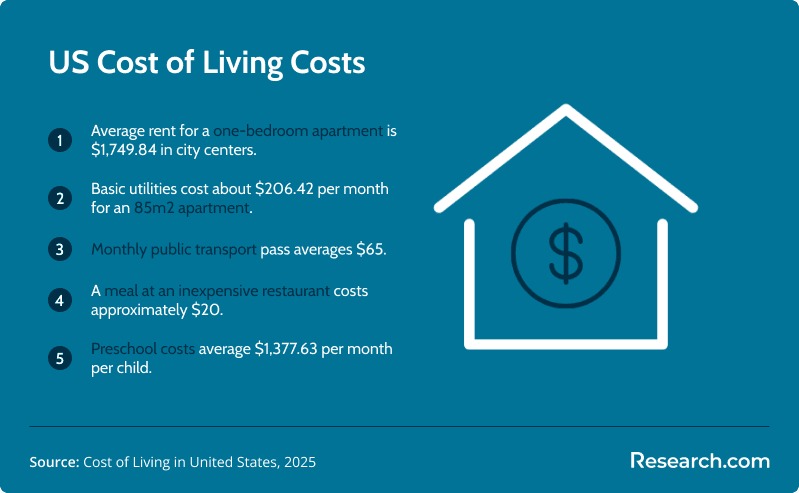
Cost of living should be part of the decision. The average monthly cost of living in the U.S. for a single person is approximately $1,167.5, not including rent. Because pay and living costs vary widely by location, a role that feels financially stable in one state may be tight in another.
Students comparing helping professions may also look at the benefits of a master of legal studies degree if they are drawn to advocacy, compliance, or policy work. Those interested in education systems may ask whether educational psychology is a good career, especially if they want to support learners through assessment, school systems, and research-informed interventions.
| Choose disability social work if... | Consider another path if... |
| You want a career built around advocacy, access, dignity, and practical support. | You prefer limited client contact or want work with minimal emotional intensity. |
| You can manage documentation, deadlines, and coordination across multiple systems. | You dislike administrative work and long-term follow-up. |
| You are willing to pursue licensure if clinical practice is your goal. | You want to provide therapy independently but do not want graduate study or supervised hours. |
| You value stable mission-driven work more than guaranteed high earnings. | Your top priority is maximizing salary as quickly as possible. |
How can strategic networking and mentorship amplify my disability social work career?
Networking matters in disability social work because many opportunities are shaped by agencies, field placements, supervisors, referral systems, and local service networks. A strong mentor can help you understand which employers provide good supervision, which credentials are worth pursuing, and how to move from direct service into leadership or specialized practice.
- Join social work and disability-focused professional associations.
- Stay connected with field instructors and agency supervisors after graduation.
- Attend local trainings on disability rights, benefits, trauma-informed care, accessibility, and behavioral health.
- Ask experienced professionals which roles have sustainable caseloads and strong supervision.
- Build relationships with professionals in healthcare, education, public health, housing, and legal aid.
Interdisciplinary training can also help if you want to supervise teams, improve organizations, or lead change. For example, an affordable online masters in organizational psychology may be relevant for professionals interested in workplace behavior, leadership, and organizational systems.
Here's What Graduates Have to Say About Their Disability Social Work Careers
- Choosing disability social work gave me a career where my daily tasks connect directly to someone’s independence, safety, and quality of life. The work is demanding, but the impact is visible. Angie
- Studying online helped me keep working while I built practical skills. Applying what I learned during fieldwork made the training feel immediately useful. Louis
- This career has taught me how much strength clients and families bring to difficult situations. Supporting them has shaped my professional judgment and personal growth. Justin
Can streamlined online MSW programs accelerate my disability social work career?
An online MSW can help working adults move toward advanced social work roles without relocating or leaving employment. Some programs offer flexible formats, accelerated schedules, or advanced standing for eligible BSW graduates. The important question is whether speed comes with enough field support, faculty access, and licensure preparation.
Programs described as easier to enter may still require strong commitment once enrolled. If admissions flexibility is important, compare options such as the easiest master social work programs online, but verify accreditation, practicum requirements, and graduate outcomes before applying.
How can additional certifications enhance my disability social work career?
Additional credentials can help when they align with a specific population, setting, or job function. Certifications may support roles in case management, school social work, behavioral services, substance use, aging, healthcare navigation, or program administration. They are most valuable when employers in your target setting recognize them.
If you want to work in schools, review school social worker requirements by state because state rules can affect whether you need a social work license, education credential, school-specific approval, or supervised experience.
Should I pursue an MSW or LCSW for disability social work?
An MSW is a graduate degree. An LCSW is a clinical license earned after meeting state requirements, which usually include an MSW, supervised clinical hours, and an exam. They are related, but they are not interchangeable.
| Credential | What it is | Best for |
| MSW | A graduate degree in social work. | Advanced practice, case leadership, clinical preparation, policy, program work, and supervisory pathways. |
| LCSW | A state clinical license earned after meeting post-degree requirements. | Clinical practice, therapy, diagnosis-related work where permitted, independent practice, and supervision roles. |
If you are unsure which path fits your goal, compare MSW or LCSW requirements before selecting a program. Students who want clinical disability practice should plan backward from the state where they intend to practice.
What skills are essential for success in disability social work?
Successful disability social workers combine empathy with structure. Clients may be navigating complicated systems, so professionals need strong communication, ethical judgment, documentation habits, cultural humility, and practical knowledge of benefits and services.
- Case management: Tracking needs, referrals, deadlines, records, and follow-up across agencies.
- Advocacy: Helping clients understand rights, accommodations, and service options.
- Communication: Explaining complex information clearly to clients, families, providers, and agencies.
- Cultural competence: Respecting disability identity, family context, language access, socioeconomic barriers, and lived experience.
- Ethical decision-making: Balancing autonomy, safety, confidentiality, mandated reporting, and professional boundaries.
- Technology use: Managing electronic records, telehealth tools, case tracking systems, and data reporting responsibly.
- Emotional resilience: Handling crisis work, grief, frustration, and systemic barriers without losing professional judgment.
Professionals interested in deeper mental health knowledge may compare an affordable online master's in clinical psychology with social work training, while remembering that scope of practice depends on degree, license, and state rules.
Can a doctoral degree expand my disability social work career?
A doctoral degree can expand options for professionals who want to teach, conduct applied research, lead organizations, evaluate programs, influence policy, or develop advanced clinical expertise. It is usually not required for entry-level disability social work, case management, or many agency roles.
A DSW is commonly practice- and leadership-oriented, while other doctoral pathways may emphasize research or clinical psychology. Professionals considering psychology-focused doctoral study can review best online PsyD programs as an alternative route, especially if their long-term goal is psychological practice rather than social work leadership.
Common mistakes to avoid before entering disability social work
| Mistake | Why it can hurt you | Better approach |
| Choosing a program without checking accreditation | You may limit licensure eligibility or employer recognition. | Confirm accreditation and state licensing alignment before applying. |
| Looking only at tuition | Fees, field placement costs, transportation, and lost work hours can change the real price. | Calculate total program cost and compare financial aid options. |
| Assuming every online program works for licensure | Licensure requirements vary by state. | Ask the program for state-specific licensure disclosures. |
| Ignoring field placement quality | Weak placements can reduce your readiness and professional network. | Ask where students complete disability-related practicums. |
| Expecting salary outcomes to be guaranteed | Pay varies by employer, license, location, funding, and experience. | Compare local job postings and public salary data before borrowing heavily. |
| Overlooking burnout risk | Heavy caseloads and crisis work can affect long-term sustainability. | Evaluate supervision, caseload expectations, benefits, and workplace culture. |
Questions to ask before choosing this career path
- Do I want direct client work, program leadership, clinical practice, or policy advocacy?
- What degree and license are required in the state where I want to work?
- Which populations do I want to serve: children, adults, older adults, families, students, patients, or people with developmental disabilities?
- Can I afford the degree based on realistic local salaries?
- Does the program offer field placements connected to disability services?
- How much documentation, crisis work, travel, or on-call work is typical in my target role?
- What supervision and mentorship will I receive early in my career?
- Do I need an MSW, LCSW, certification, or doctoral degree for my long-term goal?
Key Findings
- Average tuition costs for social work range from $10,008 to $26,954 for undergraduates, while graduate tuition is listed at $11,118 for in-state students and $22,741 for out-of-state students.
- Listed salaries vary widely by role, from $37,343 for Family Support Specialists to $78,912 for Consultants.
- Career growth across listed disability-related social work paths is generally around 9%, with some roles showing up to 28%.
- Online social work degrees can be accepted by employers when the program is properly accredited and meets fieldwork and licensure expectations.
- The average monthly cost of living in the U.S. for a single person is approximately $1,167.5, not including rent, so location should be part of any salary and ROI calculation.
References:
- Bureau of Labor Statistics. Occupational Employment and Wages, Social Workers (All Other).
- Bureau of Labor Statistics. Occupational Employment and Wages, Social Workers, Child, Family, and School.
- Bureau of Labor Statistics. Occupational Employment and Wages, Social Workers, Healthcare.
- Bureau of Labor Statistics. Occupational Employment and Wages, Social Workers, Mental Health and Substance Abuse.
- Bureau of Labor Statistics. Occupational Outlook Handbook: Social Workers.
- College Tuition Compare. Major in Psychology.
- College Tuition Compare. Major in Social Work.
- Drexel University Online. Online Degree vs. Traditional Degree.
- National Association of Social Workers. Developmental Disabilities Infographic.
- Numbeo. Cost of Living in United States.
- Social Work Guide. Social Work Licensure.
- Social Workers Job Link. Disability Specialist Job Descriptions.
- Zippia. Case Manager Jobs.
- Zippia. Child Welfare Specialist Jobs.
- Zippia. Clinical Social Worker Jobs.
- Zippia. Consultant Jobs.
- Zippia. Family Support Specialist Jobs.
- Zippia. Mental Health Worker Jobs.
- Zippia. Patient Care Manager Jobs.
- Zippia. Program Coordinator Jobs.
- Zippia. Senior Social Worker Jobs.
- Zippia. Specialist Jobs.
- Zippia. Social Worker Jobs Overview.
Key Insights
- Disability social work is best for people who want to combine direct support, advocacy, service coordination, and systems navigation.
- A BSW can support entry-level work, but an MSW and state licensure are usually necessary for clinical practice and many advanced roles.
- Accreditation, field placement quality, and state licensure fit matter more than whether a program is online or campus-based.
- Salary potential depends heavily on role, location, employer type, and credentials; students should compare local job postings before taking on major debt.
- The field offers meaningful work, but sustainability depends on supervision, manageable caseloads, ethical boundaries, and realistic expectations about emotional demands.
Other Things You Should Know About Becoming a Disability Social Worker
Yes. Most social work programs require at least 400 hours of supervised field placement for a bachelor’s degree and about 900 hours for a master’s degree, with placements approved by the school and tied to disability, healthcare, or community support settings.
To become a disability social worker in 2027, a bachelor's degree in social work is essential, though a master's degree in social work (MSW) is often preferred. Licensing requirements vary by state, typically requiring passing the ASWB exam and completing supervised field practice.