2027 Best Medical Assistant Trade Schools

Co-Founder and Chief Data Scientist
Choosing a medical assistant trade school is a practical career decision: you are comparing cost, completion time, accreditation, certification preparation, clinical training, and the type of healthcare job you want after graduation. The right program can help you move into an entry-level healthcare role faster than a traditional degree, but the wrong one can leave you with debt, limited employer recognition, or credentials that do not meet your state or certification requirements. This guide explains what medical assistant trade school programs include, how long they take, what they cost, which schools and program types to compare, and how to evaluate return on investment before enrolling.
Quick Answer: Are Medical Assistant Trade School Programs Worth It?
Medical assistant trade school programs can be worth it for students who want a shorter, career-focused path into healthcare and are comfortable working in hands-on, patient-facing or administrative roles. The strongest programs combine medical terminology, clinical procedures, administrative training, externship experience, and preparation for certification exams. Before enrolling, verify accreditation, total program cost, externship placement, certification eligibility, state requirements, and graduate job placement outcomes.
What are the benefits of medical assistant trade school programs?
Medical assistant trade school programs are built for students who want job-ready healthcare training without spending several years in college. The main advantages are speed, career focus, and flexible delivery options.
- Direct preparation for healthcare work: Programs concentrate on the skills employers expect in clinics, medical offices, labs, pharmacies, dental offices, and related healthcare settings.
- Flexible study options: Many schools offer online or hybrid coursework, which can help students balance training with work, caregiving, or transportation limits.
- Shorter completion timelines: Many trade school programs are designed to take months rather than years, helping students qualify for entry-level roles sooner than they would through longer degree pathways.
- Hands-on practice: Clinical labs, simulations, and externships help students apply classroom learning to real patient care and healthcare office tasks.
- Certification readiness: Strong programs align coursework with industry certification exams, which may improve employability in some markets.
What can I expect from medical assistant trade school programs?
A medical assistant trade school program usually combines classroom instruction, skills labs, administrative training, and supervised practical experience. While the exact curriculum depends on the specialty, most programs are structured around the daily responsibilities of entry-level healthcare workers.
| Program Component | What It Usually Covers | Why It Matters |
| Medical science foundation | Anatomy, physiology, pharmacology, medical terminology, and basic disease concepts | Helps students understand patient care, provider instructions, and medical documentation |
| Clinical skills | Vital signs, infection control, specimen handling, phlebotomy basics, EKG basics, and procedure support | Builds the hands-on abilities needed in clinics and outpatient care settings |
| Administrative training | Scheduling, patient records, insurance forms, billing basics, coding concepts, and office workflow | Prepares students for front-office and back-office healthcare tasks |
| Professional practice | Communication, teamwork, ethics, privacy rules, legal responsibilities, and patient interaction | Employers expect reliability, discretion, and strong communication in healthcare environments |
| Externship or clinical placement | Supervised practice in a healthcare facility when required by the program | Provides experience and may help students build employer connections |
| Certification preparation | Review of exam content, practice tests, and eligibility guidance | Can help graduates pursue nationally recognized credentials when applicable |
Where can I work after completing medical assistant trade school programs?
Graduates may work in many healthcare environments, depending on their program specialty, certification, state rules, and employer requirements. Medical assistant programs most often prepare students for outpatient care settings, while related trade programs can lead to roles in labs, pharmacies, dental offices, emergency care, or health information.
- Hospitals: Graduates may support departments such as patient care units, surgery, emergency services, or administrative offices.
- Physician offices and clinics: Many medical assistants work in outpatient care, urgent care, specialty practices, and primary care offices.
- Medical laboratories: Students with lab or phlebotomy training may assist with specimen collection, testing support, or diagnostic workflows.
- Pharmacies: Pharmacy technician training can lead to support roles in retail, hospital, or specialty pharmacy settings.
- Dental practices: Dental assistant graduates may help with chairside procedures, X-rays, sterilization, and patient education.
- Home healthcare agencies: Home health aide graduates may assist clients with daily living tasks and basic personal care.
- Rehabilitation centers: Some allied health graduates support physical, occupational, or rehabilitative care teams.
- Veterinary clinics: Veterinary assistant training may lead to animal care support roles in veterinary offices or hospitals.
How much can I make with a medical assistant trade school certificate or diploma?
Earnings depend on the role, employer, location, experience, certification, and whether the job is clinical, administrative, technical, or specialized. The ranges below reflect the general figures provided for common medical assistant trade careers.
| Career Path | General Annual Salary Range | Best Fit For Students Who Want |
| Medical Assistant | $30,000 - $45,000 per year | A mix of patient care and medical office responsibilities |
| Medical Biller and Coder | $35,000 - $55,000 per year | Administrative healthcare work with records, claims, and coding systems |
| Pharmacy Technician | $30,000 - $40,000 per year | Medication-related support work under pharmacist supervision |
| Phlebotomy Technician | $25,000 - $35,000 per year | Specimen collection and direct patient interaction |
| Surgical Technician | $40,000 - $60,000 per year | Operating room support and sterile procedure environments |
| Dental Assistant | $35,000 - $50,000 per year | Dental office care, chairside support, and patient education |
| Emergency Medical Technician (EMT) | $30,000 - $45,000 per year | Emergency response, transport, and fast-paced field care |
- Best Medical Assistant Trade Schools for 2027
- What are medical assistant trade school programs?
- How long does it take to complete a medical assistant trade school program?
- What is the average cost of a medical assistant trade school program?
- What are the financial aid options for students enrolling in a medical assistant trade school program?
- What are the prerequisites for enrolling in a medical assistant trade school program?
- What courses are typically in a medical assistant trade school program?
- What types of specializations are available in medical assistant trade school programs?
- What are the program accreditation and quality indicators?
- How do you choose the best medical assistant trade school program?
- What career paths are available for graduates of medical assistant trade school programs?
- What is the job market for graduates with a medical assistant trade school degree?
- Can integrating healthcare informatics elevate your career?
- What additional certifications and online courses can further boost your career?
- How can professional networking and mentorship influence career progression?
- What are the long-term career growth prospects for medical assistant trade school graduates?
- Can short-term online certifications accelerate career advancement?
- What is the return on investment for a medical assistant trade school program?
- How can complementary digital skills enhance a medical assistant’s career?
- Should medical assistant trade school graduates consider advanced online degrees?
- Can trade school credentials pave the way to healthcare leadership roles?
Best Medical Assistant Trade Schools for 2027
How do we rank schools?
Because healthcare training can be a major investment, Research.com evaluates programs with a transparent process designed to help students compare options carefully. Our ranking approach is explained in our methodology.
Program research uses established education data sources, including the IPEDS database, Peterson's database and its Distance Learning Licensed Data Set, the College Scorecard database, and the National Center for Education Statistics.
The schools below represent medical assistant, allied health, health information, and healthcare trade training options in the USA. Use this list as a starting point, then confirm current tuition, clinical requirements, accreditation, certification eligibility, and state-specific rules directly with each school.
| School | Relevant Programs or Tracks | Length | Cost | Accreditation |
| West Kentucky Community and Technical College (WKCTC) | Medical Information Technology | Approximately 1 year for diploma programs | Online-only courses (all students): $189/credit hour | Southern Association of Colleges and Schools Commission on Colleges |
| Cuyahoga Community College (Tri-C) | Medical Coding, Court Reporting, among many other certificate programs | Varies depending on the program. | $5,296 average annual cost | Higher Learning Commission (HLC) |
| Rio Salado College | Dental programs, among others | Varies depending on the program. | $9,226 average annual cost | Higher Learning Commission (HLC) |
| Valencia College | Cardiovascular Technology, Dental Hygiene, Diagnostic Medical Sonography, Health Information Technology, Nursing Program Tracks, and others | Varies depending on the program. | $14,742 average annual cost | Southern Association of Colleges and Schools Commission on Colleges (SACSCOC) |
| Concorde Career College | Medical Assistant, Medical Office Administration, Medical Office Professional, Pharmacy Technician, Phlebotomy Technician, Health Care Administration, Sterile Processing Technician Program, Nursing, etc. | 3-24 months | $32,469 | Accrediting Commission of Career Schools and Colleges |
| Pima Medical Institute | Computed Tomography, Healthcare Administration, Associate Radiography – Bridge (Non-Entry Level), B.S. in Health Care Administration, B.S. in Nursing (RN to BSN), B.S. Physical Therapist Assistant, B.S. Radiologic Sciences, B.S. Respiratory Therapy, M.S. Organizational Leadership | As little as 9 months. | Total cost approximately $48,565 | Accrediting Bureau of Health Education Schools (ABHES) |
| MedCerts | Many healthcare certifications | Self-paced. | $2,000 - $4,000. | N/A |
| Butte County Regional Occupational Program (ROP) | Veterinary Assistant, Medical Assistant, Phlebotomy, Dental Assistant | 3-24 months | $7,000 | Council on Occupational Education |
| U.S. Career Institute | Health Information Technology, Medical Assistant, Medical Specialties | As little as 4 months | Payment Plan: $79/month ($1,739 total) or Pay-in-Full: $1,439 | DEAC, U.S. Department of Education |
Several of these schools offer online coursework, but healthcare programs may still require labs, externships, clinical rotations, background checks, immunizations, or in-person skills assessments. Always ask whether “online” means fully online, hybrid, or online coursework with local clinical placement.
What are medical assistant trade school programs?
Medical assistant trade school programs are short-term, career-focused training programs that prepare students for entry-level healthcare roles. They are different from broad academic degrees because the curriculum is built around specific job tasks: patient intake, vital signs, basic clinical procedures, medical records, appointment scheduling, billing support, specimen collection, or other duties tied to a chosen specialty.
Not every “medical assistant trade school” program leads to the same job. Some focus on clinical medical assisting, while others prepare students for administrative, dental, laboratory, pharmacy, emergency care, or health information roles.
- Medical Assistant: Students learn patient intake, vital signs, basic procedure support, medical office workflow, and clinical documentation. Students interested in nursing mobility may compare this route with a medical assistant to LPN online pathway.
- Medical Billing and Coding: Training emphasizes diagnosis and procedure codes, claim submission, insurance reimbursement, and healthcare documentation. Students comparing lower-cost options can review cheapest medical billing and coding program choices.
- Pharmacy Technician: Students prepare to support pharmacists with medication dispensing, inventory, customer service, and pharmacy operations.
- Phlebotomy Technician: Training focuses on safe blood collection, specimen handling, patient identification, and infection control.
- Surgical Technician: Students learn operating room preparation, sterile technique, instrument handling, and support duties during procedures.
- Dental Assistant: Training includes chairside support, dental X-rays, sterilization, patient education, and office workflow.
- Emergency Medical Technician (EMT): EMT programs prepare students for prehospital emergency care, patient transport, trauma response, and urgent assessment.
- Home Health Aide: Students learn to support clients with daily living tasks, personal care, basic safety, and home-based assistance.
- Medical Laboratory Technician: Programs train students to perform or support testing on blood, tissue, and other specimens used in diagnosis and monitoring.
- Radiology Technician: Students learn diagnostic imaging procedures such as X-rays, CT scans, and MRIs, along with equipment safety and patient positioning.
How long does it take to complete a medical assistant trade school program?
Completion time varies by specialty, delivery format, clinical requirements, and whether the student attends full time or part time. Some programs are designed for completion in a few months, while others may take up to two years.
| Factor | How It Affects Completion Time |
| Program type | Phlebotomy, medical assisting, billing and coding, surgical technology, dental assisting, and EMT programs can have very different hour and course requirements. |
| Full-time vs. part-time enrollment | Full-time students usually finish faster, while part-time students may need a longer calendar timeline. |
| Accelerated format | Some schools compress coursework into shorter schedules, which can be useful but demanding. |
| Clock hours vs. credit hours | Programs measured in clock hours may have different pacing expectations than credit-based programs. |
| Externship requirements | Clinical placement, site availability, and required hours can extend the program schedule. |
| Transfer credit | Previously completed coursework may shorten the timeline if the school accepts it. |
| Online structure | Asynchronous courses may offer more scheduling freedom, while synchronous courses require attendance at set times. |
Students who want a clearer view of course sequencing can review a typical medical assistant course curriculum before comparing program lengths.
What is the average cost of a medical assistant trade school program?
Medical assistant trade school costs vary by institution type, program length, delivery format, location, and required supplies. Tuition is only one part of the total price. Students should also budget for fees, textbooks, scrubs or uniforms, lab supplies, background checks, immunizations, certification exam costs, technology, transportation, and possible clinical placement expenses.
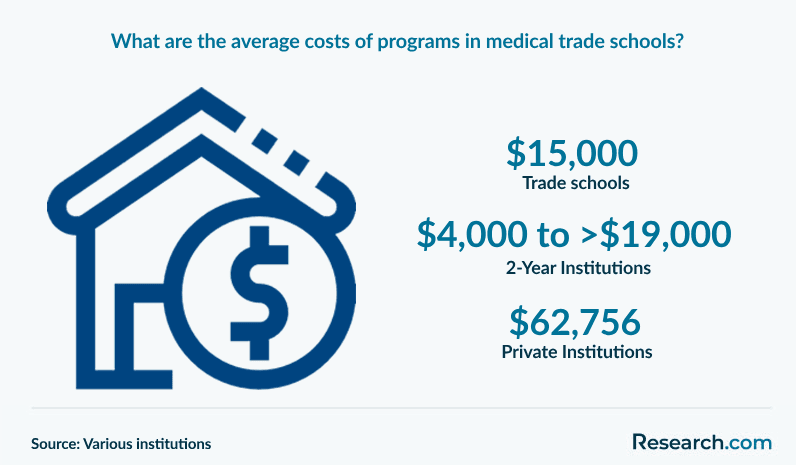
- Trade Schools: Average tuition and fees for trade schools cost around $15,000
- 2-Year Institutions: Average annual tuition and fees for two-year degree-granting institutions, including trade schools, range from $4,000 to over $19,000
- Public 4-Year Colleges: The average in-state tuition rate for online instruction at public schools was $341.05 per credit for the 2023-24 academic year
- Private Institutions: Private institutions charge an average of $62,756 for an online degree compared to $198,616 for an in-person degree
- Net Price of Online Colleges: The average net cost of attendance for full-time, first-year undergraduate students at distance-learning-only schools was about $17,140 in 2022-2023.
Online programs may reduce certain campus-related expenses, but they are not automatically cheaper. Students may still pay technology fees, proctoring fees, software costs, and clinical-related expenses. In-person students should also plan for transportation and food costs.
- Transportation: Students who attend in-person classes may pay a minimum of $1,290 per year in transportation costs
- Meals: Students in on-campus programs utilizing campus meal plans may pay $2,670 more for meals per year compared to making them at home
- Licensing/Certification: Some graduates may need to obtain a state license or certification, incurring additional costs
To estimate a realistic budget, ask each school for a full cost sheet and compare it with other vocational healthcare pathways, such as the cost of LPN programs.
What are the financial aid options for students enrolling in a medical assistant trade school program?
Financial aid depends on the school’s accreditation, program eligibility, student status, and funding rules. Not every certificate program qualifies for federal student aid, so students should confirm aid eligibility before enrolling.
- Federal student loans: Eligible students may borrow through government loan programs that often include borrower protections and structured repayment options.
- Grants and scholarships: These funds may be awarded based on financial need, merit, field of study, location, or professional goals and generally do not need to be repaid.
- Institutional aid: Some schools offer tuition discounts, scholarships, or school-funded grants.
- Payment plans: Monthly installment plans can spread tuition payments over time, but students should check fees and payment deadlines.
- Private loans: Private lenders may fill funding gaps, but interest rates, fees, and repayment terms can vary widely.
- Work-study programs: Eligible students may earn wages through approved part-time employment while enrolled.
- Employer tuition reimbursement: Some healthcare employers help pay for approved training, often with work or service conditions.
- FAFSA: Completing the Free Application for Federal Student Aid (FAFSA) is the standard first step for federal and some state aid programs.
- Professional organizations: Healthcare associations may sponsor scholarships for students entering specific allied health fields.
- State-specific programs: Workforce development grants, state aid, and regional healthcare training funds may be available in some areas.
Program choice affects cost and financial aid needs. For example, students comparing medical assisting, practical nursing, and nursing assistant roles may want to understand the difference between LPN and CNA before committing to a training path.
According to the Bureau of Labor Statistics (BLS), hospitals are the largest employer of healthcare professionals, accounting for 33% of the workforce. Ambulatory healthcare services account for 29%, nursing and residential care facilities employ 20%, government represents 7%, educational services account for 6%, social assistance organizations employ 5%, and insurance carriers and related activities account for 2%. This distribution shows why many allied health graduates target patient care and outpatient service settings first.
What are the prerequisites for enrolling in a medical assistant trade school program?
Admissions requirements vary by school and healthcare specialty. Most programs expect applicants to show academic readiness, meet health and safety requirements, and qualify for clinical placement if the curriculum includes patient contact.
- High School Diploma/GED: Most programs require proof of high school completion or an equivalent credential.
- Course Prerequisites: Some programs expect prior coursework in math, biology, chemistry, or other foundational subjects.
- Entrance Exams/Interviews: Schools may use assessments or interviews to evaluate readiness and fit.
- Background Checks: Programs with clinical placement commonly require background screening before students work with patients.
- Age Requirements: Certain healthcare roles may have minimum age rules because of legal, safety, or clinical site requirements.
- Immunization Records: Students may need proof of required vaccinations to protect patients, staff, and themselves.
- Healthcare Experience: Some programs prefer applicants with volunteer, caregiving, or healthcare exposure, although it is not always required.
- Minimum GPA: Schools may set a minimum academic standard for admission or progression.
- Prerequisite Course Grades: Certain programs require minimum grades in required science, math, or healthcare courses.
- International Student Requirements: International applicants may need visa documentation, English language proficiency, and transcript evaluation.
If you are choosing between clinical assisting and nursing pathways, compare the difference between LPN and medical assistant so you understand scope of practice, training expectations, and advancement options.
What courses are typically in a medical assistant trade school program?
Coursework depends on the specialty, but most medical assistant trade school programs include a mix of medical science, clinical technique, office administration, legal and ethical training, and professional development.
Core Courses
- Anatomy and Physiology: Introduces body systems, structure, function, and how they relate to patient care.
- Medical Terminology: Builds the vocabulary needed to understand charts, provider instructions, procedures, and diagnoses.
- Basic Life Support (BLS): Covers CPR and essential emergency response techniques.
- Ethics and Legal Issues in Healthcare: Explains privacy, professionalism, patient rights, and healthcare responsibilities.
- Pharmacology: Introduces medication classes, uses, safety, and common terminology.
- Microbiology: Covers microorganisms, infection, disease transmission, and prevention.
- Patient Communication: Teaches respectful, clear, and accurate communication with patients and care teams.
- Medical Law and Ethics: Reinforces legal duties, confidentiality, consent, and professional boundaries.
- Healthcare Systems: Explains how hospitals, clinics, insurance systems, and healthcare teams operate.
- Health and Wellness: Covers prevention, lifestyle, patient education, and basic health promotion.
Major Courses
- Phlebotomy Techniques: Teaches blood collection, specimen handling, safety, and patient identification for phlebotomy technician programs.
- Medical Coding and Billing: Covers diagnosis codes, procedure codes, insurance claims, reimbursement, and documentation for billing and coding programs.
- Surgical Procedures: Introduces operating room workflow, sterile fields, instruments, and surgical support for surgical technician programs.
- Pharmacology: Provides more detailed medication training for pharmacy technician programs.
- Dental Assisting Techniques: Covers chairside support, dental tools, X-rays, sterilization, and patient education for dental assisting programs.
- Medical Transcription: Trains students to convert dictated medical information into accurate written reports.
- Health Information Management: Focuses on organizing, protecting, and maintaining patient health information.
- Emergency Medical Procedures: Prepares EMT students for emergency assessment, stabilization, and transport.
- Rehabilitation Techniques: Introduces support tasks used by occupational or physical therapy assistant programs.
- Diagnostic Imaging: Covers imaging procedures, safety, and equipment basics for radiology technician programs.
Electives
- Healthcare Management: Introduces supervision, workflow, and administrative functions in healthcare organizations.
- Patient Communication: Strengthens communication with patients from different backgrounds and health literacy levels.
- Medical Law: Provides additional focus on legal risks, documentation, privacy, and compliance.
- Public Health: Covers community health, prevention, and population-level health concerns.
- Geriatric Care: Focuses on the needs of older adults in clinical and home-based settings.
- Pediatric Care: Addresses communication, safety, and care considerations for children and adolescents.
- Mental Health: Introduces behavioral health conditions, patient interaction, and support approaches.
- Alternative Medicine: Reviews complementary practices and how they may intersect with patient care.
- Medical Research: Explains how research informs evidence-based healthcare practice.
- Health Informatics: Covers technology, data, and electronic systems used in healthcare.
Other Courses
- Computer Skills: Builds comfort with software, electronic records, and digital communication.
- Professional Development: Covers resumes, interviewing, workplace conduct, and career readiness.
- Mathematics for Healthcare: Reviews calculations used in dosage, measurements, and health data.
- Communication Skills: Improves written and verbal communication for clinical and administrative settings.
- Psychology: Introduces behavior, development, and patient interaction concepts.
- Sociology: Examines social factors that affect health and access to care.
- Cultural Competency: Helps students provide respectful care to diverse patient populations.
- Critical Thinking: Develops problem-solving skills used in fast-changing healthcare environments.
- Leadership Skills: Introduces team coordination, responsibility, and workplace initiative.
- Teamwork and Collaboration: Prepares students to work effectively with providers, nurses, technicians, office staff, and patients.
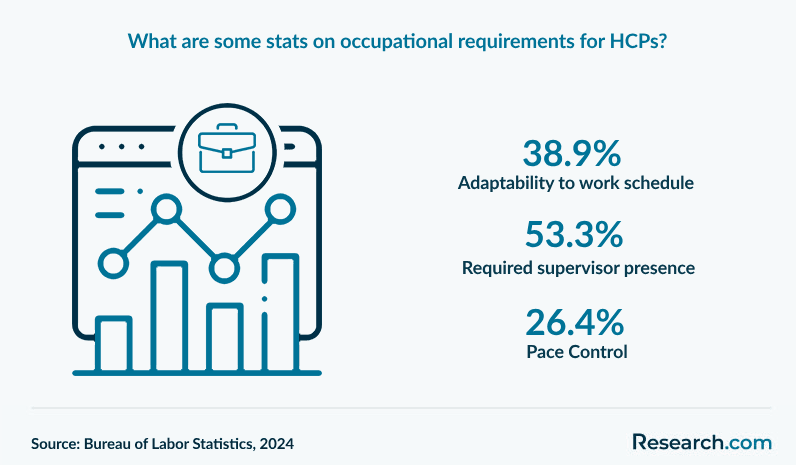
In 2024, the U.S. Bureau of Labor Statistics Occupational Requirements Survey found that adaptability was important for healthcare practitioners and technical workers, with 38.9% needing to adjust to variability in work schedules. The same survey found that 53.3% required the presence of a supervisor for work review, 34.2% supervised others, 26.4% had jobs with pace control, 3.2% had telework available, and 0.8% worked around crowds. These findings highlight why dependable attendance, communication, flexibility, and on-site professionalism matter in many allied health careers.
What types of specializations are available in medical assistant trade school programs?
“Medical assistant trade school” is often used broadly, but students can choose from many allied health and healthcare support specialties. The best choice depends on whether you prefer patient care, emergency response, administrative work, technology, laboratory work, dental care, or rehabilitation support.
| Specialization | Typical Focus | Best Fit |
| Behavioral Health Technician | Support for patients with mental health or substance use challenges | Students interested in behavioral care and patient support |
| Cardiovascular Technician | EKGs, stress tests, and heart-related diagnostic support | Students interested in cardiac care and diagnostic testing |
| Dental Assisting | Chairside support, X-rays, sterilization, and patient education | Students who want to work in dental offices |
| EKG Technician | Recording the heart’s electrical activity through electrocardiograms | Students who want a focused diagnostic support role |
| Emergency Medical Technician (EMT) | Prehospital emergency assessment, treatment, and transport | Students comfortable with urgent, unpredictable settings |
| Health Information Technology | Patient records, data accuracy, confidentiality, and health information systems | Students who prefer healthcare data and documentation work |
| Home Health Aide | Personal care and daily living support in home settings | Students interested in direct support and community-based care |
| Massage Therapist | Manual therapy for relaxation, pain relief, and wellness | Students interested in therapeutic bodywork |
| Medical Assistant | Clinical and administrative support in clinics and physician offices | Students who want a versatile entry-level healthcare role; some may compare accelerated medical assistant programs |
| Medical Biller | Claims submission, billing workflows, and reimbursement support | Students who prefer administrative healthcare finance tasks |
| Medical Coding and Billing | Codes, claims, records, compliance, and insurance documentation | Students seeking administrative healthcare roles; compare affordable medical billing and coding certification options |
| Medical Insurance Specialist | Eligibility checks, claim review, billing questions, and reimbursement follow-up | Students interested in insurance operations |
| Medical Laboratory Technician | Testing blood, tissue, and other samples | Students interested in laboratory science and diagnostic support |
| Medical Secretary | Scheduling, records, correspondence, and office organization | Students who want administrative work in medical offices |
| Medical Transcription | Converting provider dictation into written reports | Students with strong listening and terminology skills |
| Nutrition and Dietetics Technician | Nutrition education and support under dietitian guidance | Students interested in diet, wellness, and patient education |
| Occupational Therapy Assistant | Helping patients improve daily living skills under therapist supervision | Students interested in rehabilitation and functional independence |
| Ophthalmic Technician | Eye exams, vision testing, drops, and procedure support | Students interested in eye care |
| Pharmacy Technician | Medication dispensing support, inventory, and customer service | Students interested in pharmacy operations |
| Phlebotomy Technician | Blood draws, specimen collection, and lab safety | Students comfortable with direct patient procedures |
| Physical Therapy Assistant | Rehabilitation support under physical therapist supervision | Students interested in movement, recovery, and patient coaching |
| Podiatric Medical Assistant | Support for foot and ankle care | Students interested in specialty clinical assisting |
| Radiology Technician | X-rays, CT scans, MRIs, and diagnostic imaging support | Students interested in imaging technology |
| Respiratory Therapy Technician | Oxygen therapy, ventilator support, and pulmonary testing assistance | Students interested in respiratory care |
| Sterile Processing Technician | Cleaning, sterilizing, and preparing medical instruments | Students interested in infection control and behind-the-scenes hospital work |
| Surgical Technician | Operating room setup, sterile instruments, and surgical team support | Students interested in procedural environments |
| Veterinary Technician | Animal care, medication support, vital signs, and procedure assistance | Students who want healthcare-related work with animals |
What are the program accreditation and quality indicators?
Accreditation and outcomes are among the most important checks before enrollment. A school may advertise flexible classes or fast completion, but students should confirm that employers, certification bodies, licensing boards, and transfer institutions recognize the credential.
- Institutional accreditation: Confirms that the school meets recognized academic and operational standards.
- Programmatic accreditation: May be required or preferred for certain healthcare specialties and certification pathways.
- Certification exam eligibility: Ask which exams graduates can sit for and whether the program’s curriculum aligns with those requirements.
- Externship quality: Strong programs have clear clinical placement support, reputable healthcare partners, and transparent site expectations.
- Student outcomes: Request graduation rates, certification pass rates, job placement figures, and employer partnerships.
- Student services: Look for tutoring, career coaching, technical support, resume help, and certification exam guidance.
- Financial transparency: Confirm tuition, fees, supplies, exam costs, and refund policies before signing an enrollment agreement.
Students interested in administrative healthcare training can also compare schools that offer financial aid for medical billing and coding.
How do you choose the best medical assistant trade school program?
The best program is not automatically the fastest or cheapest. It is the one that prepares you for your target role, fits your schedule, meets credential requirements, and has a total cost you can reasonably manage.
| Question to Ask | Why It Matters |
| Is the school accredited by a recognized agency? | Accreditation can affect aid eligibility, employer recognition, transfer options, and certification pathways. |
| Does the program prepare graduates for the certification exam I need? | Some employers prefer or require certification, and requirements can vary by state and role. |
| Is the program fully online, hybrid, or campus-based? | Healthcare programs may require labs, externships, or in-person skills checks even when coursework is online. |
| What is the total cost, not just tuition? | Books, uniforms, supplies, technology fees, exams, transportation, and clinical costs can change affordability. |
| Who arranges externships? | Some schools place students, while others expect students to find their own approved sites. |
| What are the graduation, certification, and job placement outcomes? | Outcome data helps you judge whether students complete the program and move into relevant work. |
| Are instructors experienced in the field? | Faculty with healthcare experience can connect lessons to real workplace expectations. |
| What support is available? | Career services, tutoring, advising, and technical support can affect completion and job readiness. |
Common mistakes to avoid
- Choosing only by speed: A very short program may be convenient, but it still needs adequate clinical practice and certification preparation.
- Ignoring accreditation: Unaccredited or poorly recognized programs may limit aid, transfer, certification, or employment options.
- Comparing tuition without fees: A low tuition price can become less affordable after adding supplies, exams, labs, and technology costs.
- Assuming online means no in-person requirements: Many healthcare programs require clinical hours, skills labs, background checks, or externships.
- Not checking state requirements: Licensure and certification rules differ by occupation and location.
- Relying only on rankings: Rankings can help narrow options, but your best fit depends on location, cost, schedule, clinical access, and career goals.
What career paths are available for graduates of medical assistant trade school programs?
Graduates can pursue clinical, administrative, technical, emergency, dental, rehabilitation, and support roles. Actual eligibility depends on the program completed, certification, licensure rules, and employer requirements.
- Behavioral Health Technician: Supports patients with mental health or substance use conditions. Students who later want higher-level preparation may explore behavioral therapist degree online programs.
- Cardiovascular Technician: Assists with EKGs, stress tests, and other cardiac diagnostic procedures.
- Chiropractic Assistant: Helps chiropractors with patient preparation, X-rays, treatment areas, and office support.
- Dental Assistant: Supports dentists during procedures, manages X-rays, sterilizes tools, and educates patients.
- EKG Technician: Performs electrocardiograms and helps collect cardiac data for clinical review.
- Emergency Medical Technician (EMT): Provides urgent prehospital care and patient transport.
- Health Information Technician: Maintains accurate, secure, and organized patient records.
- Home Health Aide: Assists clients with bathing, dressing, meals, mobility, reminders, and home-based support.
- Massage Therapist: Provides bodywork intended to reduce pain, stress, and muscle tension.
- Medical Assistant: Performs patient intake, vital signs, procedure support, scheduling, and documentation in medical offices. Students seeking faster training may compare a medical assistant accelerated program.
- Medical Biller: Prepares claims and billing documentation for insurers and patients.
- Medical Coder: Assigns codes to diagnoses and procedures for records and reimbursement.
- Medical Insurance Specialist: Verifies coverage, processes claims, and responds to billing questions.
- Medical Laboratory Technician: Performs tests on specimens used in diagnosis and monitoring.
- Medical Secretary: Handles scheduling, communication, documents, and administrative workflow.
- Medical Transcriptionist: Converts provider dictation into written medical reports.
- Nutrition and Dietetics Technician: Assists dietitians with nutrition education, counseling, and food service tasks.
- Occupational Therapy Assistant: Helps patients improve daily living skills under occupational therapist supervision.
- Ophthalmic Technician: Assists eye care providers with exams, testing, eye drops, and procedures.
- Pharmacy Technician: Supports pharmacists with medication dispensing, inventory, and customer service.
- Phlebotomist: Collects blood samples using proper identification, safety, and infection control procedures.
- Physical Therapy Assistant: Helps patients improve mobility, function, and strength under physical therapist supervision.
- Podiatric Medical Assistant: Supports podiatrists with foot and ankle care.
- Radiology Technician: Performs diagnostic imaging procedures such as X-rays, CT scans, and MRIs.
- Respiratory Therapist: Provides respiratory care, oxygen therapy, ventilator support, and pulmonary testing.
- Sterile Processing Technician: Sterilizes and prepares instruments and equipment for healthcare facilities.
- Surgical Technician: Prepares operating rooms, manages sterile instruments, and assists surgical teams.
- Veterinary Technician: Supports veterinarians with animal care, vital signs, medications, and procedures.
Salary.com data shows substantial earnings differences across related medical assistant trade occupations. Medical Coders earn an average of $62,269 per year, Medical Billers earn $47,098, Ophthalmic Technicians average $57,703, Phlebotomists average $41,504, Occupational Therapy Assistants average $68,353, and Home Health Aides earn an average of $32,504 annually. These figures show why students should compare role requirements and earning potential before choosing a specialty.
What is the job market for graduates with a medical assistant trade school degree?
The job market for medical assistant trade school graduates is tied to healthcare demand, outpatient care growth, aging populations, insurance and documentation needs, and the continued use of technology in healthcare workplaces.
Industry Growth
Healthcare continues to require trained workers in clinical support, records, pharmacy, dental care, emergency response, laboratory support, and rehabilitation. Demand is not identical across every specialty, so students should research the occupation they plan to enter rather than assuming all healthcare jobs have the same outlook.
Employment
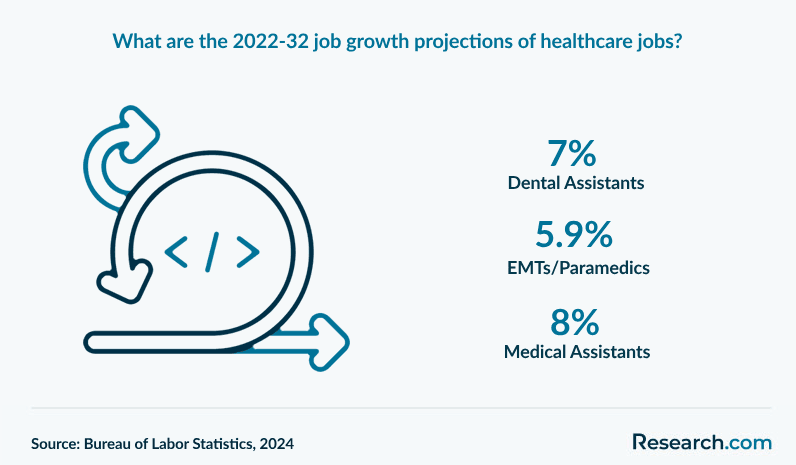
The U.S. Bureau of Labor Statistics (BLS) projects steady growth in healthcare occupations between 2022 and 2032. Medical Assistants are projected to grow by 14%, Pharmacy Technicians by 7.2%, Dental Assistants by 7%, Respiratory Therapists by 9.7%, Emergency Medical Technicians (EMTs) and Paramedics by 5.9%, and Surgical Technologists by 5.8%.
Salaries
Pay varies by state, metro area, employer, shift, certification, years of experience, and specialty. Students should check current wage data for their target occupation and local job market on the BLS website at www.bls.gov before enrolling.
Industry Trends
Electronic health records, telehealth workflows, patient portals, digital scheduling, coding software, compliance tools, and healthcare analytics are changing entry-level healthcare work. These technologies do not eliminate the need for patient-centered skills, but they do increase the value of digital literacy, accurate documentation, privacy awareness, and comfort with healthcare software.
Can integrating healthcare informatics elevate your career?
Healthcare informatics can help allied health workers move beyond basic clinical or administrative tasks into roles that use data, systems, and workflow improvement. Medical assistants, coders, health information technicians, and office administrators who understand electronic records, reporting, and data quality may be better prepared for healthcare operations roles. Students interested in advanced analytics can review the best bioinformatics graduate programs as a longer-term pathway.
What additional certifications and online courses can further boost your career?
Additional credentials can help graduates specialize, refresh skills, or qualify for roles that require specific technical knowledge. Useful options may include certification preparation in medical assisting, phlebotomy, EKG, billing and coding, pharmacy technology, electronic health records, or sterile processing. Students focused on health information careers can compare the best medical billing and coding online courses to find programs aligned with current coding and compliance expectations.
How can professional networking and mentorship influence career progression?
Networking can help trade school graduates learn which employers hire entry-level workers, which certifications are valued locally, and which skills are needed for advancement. Students can build connections through externships, instructors, clinical supervisors, alumni groups, local healthcare associations, job fairs, and online professional communities. Those interested in technology-heavy healthcare environments may eventually combine healthcare experience with technical training, such as an affordable software engineering degree, to work toward health technology or systems roles.
What are the long-term career growth prospects for medical assistant trade school graduates?
Trade school credentials can be a first step, not the end of the path. Graduates may advance by earning certifications, gaining specialty experience, moving into lead roles, cross-training in billing or coding, or continuing into nursing, health information, healthcare administration, informatics, or therapy-related education. Students considering coding as an advancement option can learn how much do medical coders make and what training is typically expected.
Can short-term online certifications accelerate career advancement?
Short-term online certifications can be useful when they address a specific skills gap and are recognized by employers or certification bodies. They are less useful when they promise quick results without clear outcomes. Students considering fast coding or billing training can compare 4-week medical certificate programs online, but should confirm what credential is earned, whether certification exam preparation is included, and whether employers in their area recognize the training.
What is the return on investment for a medical assistant trade school program?
Return on investment depends on total cost, time to completion, certification success, employment outcomes, starting pay, and advancement potential. A lower-cost program with strong externship support and certification preparation may produce a better ROI than a more expensive program with weak job placement results. Students should compare tuition, fees, expected salary, local hiring demand, and whether the credential can stack toward higher education. Those interested in data-driven healthcare roles may later consider an online MS in bioinformatics after building the necessary academic foundation.
How can complementary digital skills enhance a medical assistant’s career?
Digital skills are increasingly useful in healthcare offices, clinics, and administrative departments. Medical assistants who can work confidently with electronic health records, spreadsheets, scheduling platforms, patient portals, coding tools, privacy workflows, and basic data reporting may have more flexibility in their roles. For students who want to move deeply into technology, an accelerated bachelor's in computer science can support a longer-term transition toward healthcare technology work.
Should medical assistant trade school graduates consider advanced online degrees?
Advanced online degrees can make sense for graduates who want to move from entry-level healthcare support into supervision, health information, informatics, administration, analytics, or leadership. They may not be necessary for students who want to remain in hands-on assisting roles. For professionals interested in healthcare data, systems, and technology-supported patient care, a fast online health informatics masters degree may be a relevant future option after completing prerequisite education and experience.
Can trade school credentials pave the way to healthcare leadership roles?
A trade school credential can support long-term advancement when paired with experience, strong performance, additional certifications, and further education. Many leadership paths require broader knowledge of budgeting, compliance, staffing, quality improvement, and healthcare operations. Graduates who want to move into management can compare an accelerated healthcare administration degree online after gaining workplace experience.
Key Insights
- Best fit: Medical assistant trade school programs are strongest for students seeking practical, shorter-term healthcare training tied to a specific entry-level job.
- Costs vary widely: Trade schools have an average tuition cost of around $15,000, while two-year institutions, including trade schools, can range from $4,000 to over $19,000. Public four-year colleges charge an average of $341.05 per credit for online instruction, and private institutions average $62,756 for an online degree, compared to $198,616 for an in-person degree.
- Online is not always fully online: Many healthcare programs still require labs, externships, background checks, immunizations, or in-person skills validation.
- Accreditation matters: Before enrolling, verify institutional accreditation, programmatic accreditation when relevant, certification exam eligibility, and state requirements.
- Employment settings are concentrated in patient care: Hospitals employ 33% of healthcare professionals, ambulatory healthcare services employ 29%, and nursing and residential care facilities employ 20%.
- Workplace flexibility is important: BLS Occupational Requirements Survey data found that 38.9% of healthcare practitioners and technical workers needed to adjust to work schedule variability, while telework was available for only 3.2%.
- Salary depends heavily on specialty: Medical Coders earn an average of $62,269 per year, Medical Billers earn $47,098, Ophthalmic Technicians average $57,703, Phlebotomists average $41,504, Occupational Therapy Assistants average $68,353, and Home Health Aides average $32,504 annually.
- Job growth differs by occupation: Between 2022 and 2032, Medical Assistants are projected to grow by 14%, Pharmacy Technicians by 7.2%, Dental Assistants by 7%, Respiratory Therapists by 9.7%, EMTs and Paramedics by 5.9%, and Surgical Technologists by 5.8%.
- Decision rule: Choose the program that aligns with your target job, has transparent costs, prepares you for recognized credentials, provides real clinical or practical experience, and fits your schedule without creating unmanageable debt.
References:
- Altarum. (2024). Health care employment growth projected to moderate but remain higher than other industries. Altarum.
- Bureau of Labor Statistics, U.S. Department of Labor. (2023). Industries at a Glance: Healthcare and Social Assistance. Bureau of Labor Statistics.
- Bureau of Labor Statistics. (2025, February 7). The Employment Situation - January 2025. Bureau of Labor Statistics.
- Bureau of Labor Statistics, U.S. Department of Labor. (2023). Occupational Outlook Handbook: Dental Assistants. Bureau of Labor Statistics.
- Bureau of Labor Statistics, U.S. Department of Labor. (2023). Occupational Outlook Handbook: Emergency Medical Technicians and Paramedics. Bureau of Labor Statistics.
- Bureau of Labor Statistics, U.S. Department of Labor. (2023). Occupational Outlook Handbook: Medical Assistants. Bureau of Labor Statistics.
- Bureau of Labor Statistics, U.S. Department of Labor. (2023). Occupational Outlook Handbook: Pharmacy Technicians. Bureau of Labor Statistics.
- Bureau of Labor Statistics, U.S. Department of Labor. (2023). Occupational Outlook Handbook: Respiratory Therapists. Bureau of Labor Statistics.
- Bureau of Labor Statistics, U.S. Department of Labor. (2023). Occupational Outlook Handbook: Surgical Technologists. Bureau of Labor Statistics.
- CNBC. (2025, January 14). Health care jobs are in demand in 2025; one can pay $385,000. CNBC.
- Medical Economics. (2025). Health care a leading sector for adding jobs in January 2025 unemployment report. Medical Economics.
- OpenMedScience. (2025). Why 2025 is the year to pursue a healthcare career. OpenMedScience.
- SHRM. (2025). U.S. Job Growth Slowed in January, Despite Some Industries Thriving. SHRM.
- Salary.com. (2025). Behavioral Health Technician Salary. Salary.com.
- Salary.com. (2025). Emergency Medical Technician Salary. Salary.com.
- Salary.com. (2025). Medical Device Lab Technician Salary. Salary.com.
- Salary.com. (2025). Medical Equipment Technician Salary. Salary.com.
- Salary.com. (2025). Medical Laboratory Technologist Salary. Salary.com.
- Salary.com. (2025). Medical Technologist Salary. Salary.com.
- Salary.com. (2025). Medical Technologist (ASCP) Salary. Salary.com.
- Salary.com. (2025). Patient Care Technician (PCT) Salary. Salary.com.
- Salary.com. (2025). Patient Care Technician Salary. Salary.com.
- U.S. Bureau of Labor Statistics. (2023). Healthcare practitioners and technical occupations (Occupational Requirements Survey Fact Sheet). U.S. Bureau of Labor Statistics.
- U.S. Bureau of Labor Statistics (BLS). (2025). Occupational Outlook Handbook. U.S. Bureau of Labor Statistics.
Other Things You Should Know About Medical Assistant Trade School Programs
Top medical assistant trade schools in 2027 prepare students for certifications like the Certified Medical Assistant (CMA) by the AAMA and the Registered Medical Assistant (RMA) by AMT. These certifications are essential for career advancement and are recognized by employers nationwide.
To enroll in a top medical assistant trade school in 2027, candidates typically need a high school diploma or GED, prerequisite courses in biology and chemistry, and sometimes CPR certification. Each school may have additional requirements, so checking specific admission criteria is essential.
Yes. Many accredited medical assistant trade school programs require a supervised externship of about 160 to 200 hours, completed in a clinic or physician’s office before graduation. The placement is usually arranged by the school and helps students meet employer expectations for hands-on clinical training.