2027 Cheapest Medical Assistant Programs

Co-Founder and Chief Data Scientist
Feeling overwhelmed by the thought of becoming a medical assistant but unsure where to start? You're not alone. With 764,400 medical assistant jobs available in 2022 and typical entry-level education being a postsecondary nondegree award, the path to a fulfilling career in this field might seem daunting. Should you focus solely on salary, or are growth opportunities and job satisfaction equally important?
With over ten years of expertise in career planning, I’ve thoroughly researched data from credible sources to create this guide. By reading this article, you'll gain a clear understanding of the most affordable medical assistant programs, helping you make an informed decision and start your journey with confidence.
What are the benefits of getting a cheap medical assistant program?
- Type of jobs in various industries: Medical assistants can work in diverse settings, including hospitals, private practices, and outpatient care centers.
- Top employers: According to recent data, the top industries employing medical assistants include healthcare services (30%), hospitals (20%), and outpatient care centers (15%).
- Benefits of getting a degree online: Online programs provide flexibility, allowing you to balance your studies with work or personal commitments, often cheaper than traditional programs.
What can I expect from a cheap medical assistant program?
A cheap medical assistant program can still provide a comprehensive education. You can expect a core curriculum that includes courses in anatomy, medical terminology, clinical procedures, and administrative tasks. These courses ensure you have the essential skills needed for the job.
Online classes are typically delivered through a mix of video lectures, interactive assignments, and virtual labs. You’ll have access to online resources, discussion forums, and support from instructors. The flexibility of online learning allows you to study at your own pace, making it easier to balance with other commitments.
By completing this program, you’ll be well-prepared for entry-level positions in various healthcare settings.
Where can I work with a medical assistant program?
With a medical assistant program, you can work in various settings within the healthcare industry. Here are the primary workplaces and job roles, according to the Bureau of Labor Statistics:
- Offices of physicians (56%): Perform administrative and clinical tasks, such as patient check-ins and assisting with exams.
- Hospitals (15%): Support hospital staff by managing patient records and helping with procedures.
- Outpatient care centers (9%): Assist in patient care and office management in specialized outpatient facilities.
- Offices of other health practitioners (8%): Work with chiropractors, podiatrists, and other specialists, handling both administrative and clinical duties.
Medical assistants held about 764,400 jobs in 2022, reflecting the demand for this versatile role in the healthcare sector.
How much can I make with a medical assistant program?
With a medical assistant program, you can expect a rewarding career with a competitive salary. According to the Bureau of Labor Statistics, the median annual salary for medical assistants is around $42,000, or $20.19 per hour.
This income level reflects the essential role medical assistants play in healthcare, supporting both clinical and administrative functions. Salaries can vary based on location, experience, and the specific healthcare setting. For instance, those working in hospitals or outpatient care centers may earn higher wages than those in smaller private practices.
Overall, a career as a medical assistant offers a stable income and the opportunity for professional growth and advancement in the healthcare field.
- Cheapest Medical Assistant Programs for 2025 Best Programs
- How long does it take to complete a medical assistant program? Completion Time
- How does an online medical assistant program compare to an on-campus program? How does an online medical assistant program compare to an on-campus program?
- What is the average cost of a cheap medical assistant program? Average Cost
- What are the financial aid options for students enrolling in a cheap medical assistant program? Financial Aid
- What are the prerequisites for enrolling in a medical assistant program? Requirements
- What courses are typically in a medical assistant program? What courses are typically in a medical assistant program?
- What types of specializations are available in a medical assistant program? What types of specializations are available in a medical assistant program?
- How to choose the cheapest medical assistant program? How to choose the cheapest medical assistant program?
- What career paths are available for graduates of medical assistant programs? What career paths are available for graduates of medical assistant programs?
- How can I become a certified medical assistant? How can I become a certified medical assistant?
- What is the job market for graduates with a medical assistant program degree? Job Market
- How do medical assistant programs compare to other healthcare career pathways? How do medical assistant programs compare to other healthcare career pathways?
- Can additional certifications or advanced studies boost a medical assistant’s career? Can additional certifications or advanced studies boost a medical assistant’s career?
- What is the return on investment of a medical assistant program? What is the return on investment of a medical assistant program?
- What types of practical skills are gained through a medical assistant program? What types of practical skills are gained through a medical assistant program?
- What long-term career opportunities are available for medical assistants? What long-term career opportunities are available for medical assistants?
- How does location affect the medical assistant associate degree salary? How does location affect the medical assistant associate degree salary?
- The Future of Medical Assistant Careers: Trends and Opportunities The Future of Medical Assistant Careers: Trends and Opportunities
- What are the fastest ways to complete a medical assistant program? What are the fastest ways to complete a medical assistant program?
- Should I Combine My Medical Assistant Training with Healthcare Administration? Should I Combine My Medical Assistant Training with Healthcare Administration?
- Can fast-track PharmD programs complement a medical assistant career? Can fast-track PharmD programs complement a medical assistant career?
Cheapest Medical Assistant Programs for 2027
Choosing a medical assistant program is often a cost-versus-credential decision: you need training that is affordable, fast enough to fit your timeline, and credible enough to qualify you for certification exams, externships, and entry-level healthcare jobs. The cheapest program is not always the best value if it lacks hands-on practice, employer recognition, or eligibility for a certification such as CMA or CCMA.
This guide is for students who want to enter healthcare without taking on unnecessary debt. It explains low-cost medical assistant program options, how long training takes, what online and campus formats involve, what to check before enrolling, and how to evaluate career outcomes before paying tuition.
Quick Answer: What Is the Cheapest Path to Becoming a Medical Assistant?
The lowest-cost medical assistant programs are usually community college certificates, short online certificate programs, and noncredit workforce training programs. Based on the programs listed below, published costs range from $1,216 for in-state students to $8,383 for out-of-state students, depending on school type, residency status, format, and credential level.
| Best low-cost option if you... | Program type to compare first | Why it may be cheaper |
| Live near a community college | In-state certificate or diploma | Public community colleges often charge lower tuition for local residents. |
| Need maximum scheduling flexibility | Online certificate with externship support | You may save on commuting and can often study around work or caregiving. |
| Want a broader academic credential | Associate degree | It usually takes longer but may include general education credits that transfer later. |
| Want the fastest route | Accelerated certificate | Shorter programs can reduce time out of the workforce, but you must verify certification eligibility and clinical requirements. |
How We Evaluate Affordable Medical Assistant Programs
Affordability matters, but it is not the only factor. A program should be judged by total cost, credential preparation, hands-on training, accreditation or institutional approval, externship access, completion timeline, and employment support. Research.com’s ranking process uses information from sources such as the IPEDS database, Peterson's database, the College Scorecard database, and The National Center for Education Statistics. You can read more about how Research.com evaluates education options on the methodology page.
Affordable Medical Assistant Programs to Compare
The following programs are examples of lower-cost medical assistant training options. Costs, schedules, and eligibility rules can change, so verify tuition, fees, exam eligibility, externship requirements, and state-specific expectations directly with the school before enrolling.
| Program | Published cost | Program length | Credential or exam pathway listed | Best fit |
| Davidson Community College | $1,216 (in-state), $5,813 (out-of-state) | 2 years | Certified Medical Assistant (CMA) | Students who want in-person clinical and administrative training at a public college. |
| Stanly Community College | $1,368 (in-state), $4,824 (out-of-state) | 6 months (certificate) to 2 years (associate degree) | Certified Medical Assistant (CMA) | Students comparing certificate and associate degree options, including high school pathways. |
| Stepful | $1,500 (after $2,500 scholarship) | 4 months | Certified Clinical Medical Assistant (CCMA) | Learners seeking a short online certificate with an in-person externship component. |
| MedCerts | $4,000 to $4,800 | 7 months | Certified Medical Assistant (CMA) or Certified Clinical Medical Assistant (CCMA) | Students who prefer online lessons, interactive modules, and certification preparation. |
| Pima Community College | $2,403 (in-state), $8,383 (out-of-state) | 12 months | Certified Medical Assistant (CMA) | Students who want a certificate with a final-semester internship. |
| Community College of Philadelphia | $2,599 | Up to 6 months | Certified Clinical Medical Assistant (CCMA) | Students looking for flexible online study and an optional externship. |
| San Francisco State University | $2,599 | 3 to 6 months | Certified Clinical Medical Assistant (CCMA) | Learners who want online or hybrid clinical medical assistant training with phlebotomy, EKG, and 160 hours of externship opportunities. |
| Penn Foster | $4,800 | 2 years | CMA, CCMA, RMA, or CMAA | Students who want an online associate degree with externship opportunities. |
| Craven Community College | $2,741 (in-state), $5,813 (out-of-state) | 18 months to 2 years | Certified Medical Assistant (CMA) | Students who prefer diploma or associate degree pathways beginning in the fall. |
| US Career Institute | $1,239 to $1,568 | 4-10 months | Certified Clinical Medical Assistant (CCMA) or Certified Medical Administrative Assistant (CMAA) | Self-paced learners who need a flexible online course and career coaching. |
Davidson Community College
Davidson Community College offers campus-based medical assisting training through diploma and certificate pathways. Its program combines front-office healthcare skills with clinical preparation, which can help students qualify for patient-facing and administrative roles after graduation.
- Cost: $1,216 (in-state), $5,813 (out-of-state)
- Program Length: 2 years
- Credential pathway listed: Certified Medical Assistant (CMA)
Stanly Community College
Stanly Community College provides certificate and associate degree routes in medical assisting, including options for high school students. The school is accredited by the Southern Association of Colleges and Schools Commission on Colleges. If speed is a priority, ask whether the associate pathway can align with accelerated associate degree programs.
- Cost: $1,368 (in-state), $4,824 (out-of-state)
- Program Length: 6 months (certificate) to 2 years (associate degree)
- Credential pathway listed: Certified Medical Assistant (CMA)
Stepful’s Medical Assistant Program
Stepful offers an online medical assistant certificate designed for completion in four months. The curriculum is built around preparation for the Certified Clinical Medical Assistant (CCMA) exam and includes job placement assistance plus an in-person externship for applied experience.
- Cost: $1,500 (after $2,500 scholarship)
- Program Length: 4 months
- Credential pathway listed: Certified Clinical Medical Assistant (CCMA)
MedCerts Medical Assistant Program
MedCerts provides online medical assistant training using video lessons and interactive learning tools. The program is structured for completion in seven months and lists certification options tied to CMA or CCMA preparation.
- Cost: $4,000 to $4,800
- Program Length: 7 months
- Credential pathway listed: Certified Medical Assistant (CMA) or Certified Clinical Medical Assistant (CCMA)
Pima Community College
Pima Community College offers a medical assistant certificate focused on both clinical procedures and healthcare office tasks. Students complete an internship during the final semester, which can be important for building confidence with patient care before applying for jobs.
- Cost: $2,403 (in-state), $8,383 (out-of-state)
- Program Length: 12 months
- Credential pathway listed: Certified Medical Assistant (CMA)
Community College of Philadelphia
The Community College of Philadelphia offers an online clinical medical assisting program that uses video instruction and quizzes. Students must finish within six months, and the optional externship may help learners add hands-on experience to their training.
- Cost: $2,599
- Program Length: Up to 6 months
- Credential pathway listed: Certified Clinical Medical Assistant (CCMA)
San Francisco State University
San Francisco State University offers clinical medical assistant training in online and hybrid formats. The program includes topics such as phlebotomy and EKG, along with 160 hours of externship opportunities.
- Cost: $2,599
- Program Length: 3 to 6 months
- Credential pathway listed: Certified Clinical Medical Assistant (CCMA)
Penn Foster Medical Assistant Associate Degree
Penn Foster’s online associate degree includes coursework in medical terminology, anatomy, pharmacology, and clinical procedures. The program also lists externship opportunities and employer partnerships that may support career entry.
- Cost: $4,800
- Program Length: 2 years
- Credential pathway listed: CMA, CCMA, RMA, or CMAA
Craven Community College
Craven Community College offers medical assisting through diploma and associate degree options that begin each fall. The program may be especially relevant for students who need support services such as childcare while completing healthcare training.
- Cost: $2,741 (in-state), $5,813 (out-of-state)
- Program Length: 18 months to 2 years
- Credential pathway listed: Certified Medical Assistant (CMA)
US Career Institute
US Career Institute offers a self-paced online medical assistant course that commonly takes 4 to 10 months. The curriculum includes topics such as pharmacology and front-office procedures, and the school lists post-graduation career coaching.
- Cost: $1,239 to $1,568
- Program Length: 4-10 months
- Credential pathway listed: Certified Clinical Medical Assistant (CCMA) or Certified Medical Administrative Assistant (CMAA)
If you are comparing affordability across fields, remember that healthcare certificates, associate degrees, and unrelated online degrees have very different costs and outcomes. For example, students evaluating other low-cost academic routes may also compare options such as the cheapest online bachelor's in journalism, but the job preparation and credential requirements are not the same as medical assisting.
How Long Does It Take to Complete a Medical Assistant Program?
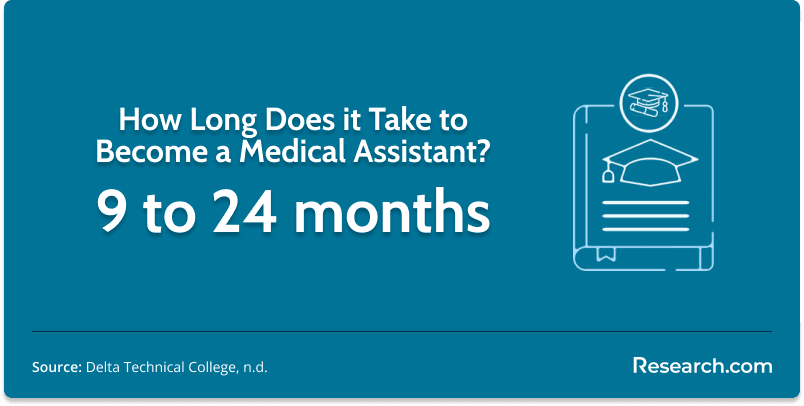
Most medical assistant programs take about one year, but the actual timeline depends on whether you choose a certificate, diploma, or associate degree. Accelerated programs may finish faster, while part-time, evening, or online formats may take longer if you reduce your course load.
| Program type | Typical time to complete | What it usually includes | When it makes sense |
| Certificate | About 9 to 12 months | Core clinical and administrative medical assisting skills | You want the shortest standard path into entry-level work. |
| Diploma | Typically 10 to 12 months | Medical assisting coursework, often with slightly broader training than a short certificate | You want career-focused training without committing to a full associate degree. |
| Associate degree | About 18 to 24 months | Medical assisting coursework plus general education classes | You may want credits that support future education or advancement. |
Before enrolling, ask whether the stated timeline includes prerequisites, clinical placement, certification exam preparation, and externship hours. A “four-month” or “six-month” program may still require additional time for background checks, immunizations, CPR certification, or externship scheduling.
Online vs. On-Campus Medical Assistant Programs: Which Is Better?
Online and campus-based medical assistant programs can both prepare students for healthcare support roles, but the right choice depends on how you learn, whether you need hands-on lab access, and how the program arranges clinical practice. Online coursework may be more flexible, but medical assisting is not fully theoretical; you still need a plan for externships, labs, or supervised practice.
| Factor | Online program | On-campus program | Decision tip |
| Schedule flexibility | Often easier to fit around work, parenting, or irregular hours | Usually follows set class and lab times | Choose online if schedule control is your top constraint. |
| Hands-on practice | May use simulations and local externships | Often includes in-person labs and direct instructor feedback | Choose campus if you learn best by practicing skills in person. |
| Commuting and access | Coursework can be completed from home | Requires travel to class, labs, and possibly clinical sites | Online can reduce travel costs, but confirm externship locations. |
| Peer and instructor interaction | Usually through discussion boards, video sessions, and messaging | More face-to-face contact | Campus may be stronger if you need structured support. |
| Employer perception | Depends on accreditation, externship quality, and certification eligibility | Depends on the same factors, plus local employer relationships | Do not assume format alone determines quality. |
In Fall 2021, 30% of college students (5,741,380) were enrolled in online study, showing that flexible learning has become a mainstream option. For medical assisting, however, online convenience should be weighed against clinical readiness. Ask every online school how it verifies skills, places students in externships, and supports certification exam preparation.
What Is the Average Cost of a Cheap Medical Assistant Program?
A cheap medical assistant program commonly costs between $1,200 and $4,200, though individual programs may fall below or above that range depending on residency, institution type, fees, and whether the credential is a certificate, diploma, or associate degree. Compared with longer healthcare or counseling pathways, including the cheapest online LPC programs, medical assisting can be a lower-cost entry point into healthcare. Students comparing shorter allied health options may also review cheap online medical billing and coding courses.
| Cost category | Typical range listed | What to verify before paying |
| Certificate programs | $1,200 and $3,000 | Whether tuition includes books, scrubs, exam fees, background checks, and externship support |
| Diploma programs | $2,000 to $4,000 | Whether additional lab, clinical, or technology fees apply |
| Associate degree programs | $3,000 and $4,200 | Whether general education courses increase the total cost or qualify for transfer later |
Cost control matters because U.S. student loan debt reached $1.73 trillion by the third quarter of 2023, with 85% from federal loans and 15% from private loans. A lower-priced medical assistant program can reduce borrowing, but only if it still meets your certification, externship, and employment goals.
Financial Aid Options for Affordable Medical Assistant Programs
Financial aid may be available for medical assistant students, but eligibility varies by school, program type, credit status, and accreditation. Some noncredit workforce programs are not eligible for the same aid as credit-bearing college programs, so confirm funding options before you enroll.
- Federal grants: Need-based aid such as the Pell Grant may be available for eligible programs and does not have to be repaid.
- Scholarships: Schools, healthcare organizations, employers, and community groups may offer awards based on need, merit, location, or career goals.
- Federal student loans: Government loans can help cover eligible education expenses, but they must be repaid.
- Work-study programs: Some eligible students can earn wages through part-time work while enrolled.
- State grants and scholarships: State education agencies may fund workforce or community college healthcare training.
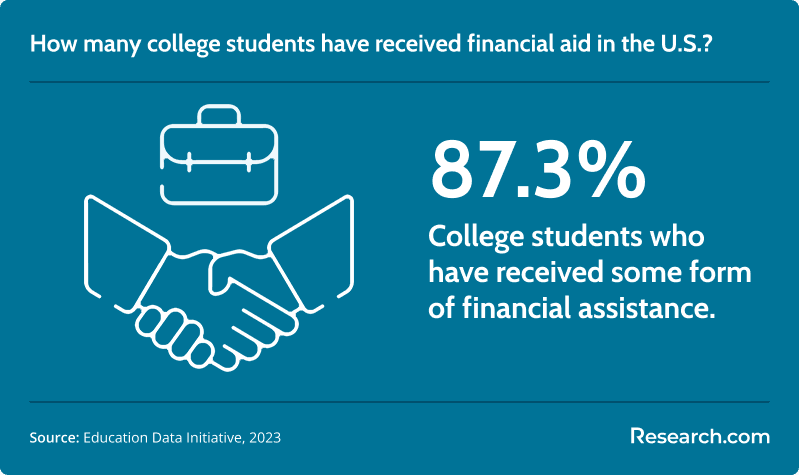
Since 87.3% of college students receive some form of financial aid, it is worth checking your eligibility early. Start with the Free Application for Federal Student Aid (FAFSA) when the program qualifies, then contact the school’s financial aid office to ask about payment plans, scholarships, workforce grants, and whether certification exam costs are covered.
Medical Assistant Program Prerequisites
Medical assistant programs usually have accessible admissions requirements, but healthcare training often adds compliance steps before students can begin clinical practice. Requirements vary by school and externship site.
- High school diploma or GED: Most programs require proof that you completed high school or an equivalent credential.
- Basic math and English readiness: Schools may review transcripts or use placement tests to confirm that you can handle medical calculations, documentation, and terminology.
- Background check: Because students train in healthcare environments, criminal background screening is commonly required.
- Immunizations: Programs and clinical sites may require current vaccinations to protect students, patients, and staff.
- CPR certification: Some schools require CPR before clinical courses or externship placement.
Also ask whether drug screening, health insurance, liability insurance, uniforms, physical exams, or technology requirements are part of the enrollment process. These items can add to the real cost of attendance.
Common Courses in a Medical Assistant Program
Medical assistant coursework is designed to prepare students for both patient care and medical office operations. The best programs connect classroom learning with hands-on practice so graduates can support physicians, nurses, patients, and administrative teams.
| Course area | What you learn | Why it matters on the job |
| Anatomy and Physiology | Major body systems and how they function | Helps you understand symptoms, procedures, and provider instructions. |
| Medical Terminology | Healthcare language, abbreviations, prefixes, and suffixes | Supports accurate communication and documentation. |
| Clinical Procedures | Vital signs, exam room preparation, injections, specimen handling, and assisting with exams | Prepares you for direct patient-care tasks. |
| Administrative Procedures | Scheduling, patient records, billing basics, insurance processes, and front-office workflow | Builds the office skills many clinics expect from medical assistants. |
| Pharmacology | Medication basics, dosage concepts, safety, and patient education | Helps you support providers and avoid medication-related errors. |
| Medical Law and Ethics | Confidentiality, patient rights, professional conduct, and healthcare regulations | Prepares you to work responsibly with sensitive patient information. |
| CPR and First Aid | Basic emergency response skills | May be required before externship or employment. |
Medical Assistant Specializations
Some students begin with general medical assisting and later focus on a patient population, clinical setting, or technical skill. Specialization can make sense if you already know the type of clinic or department where you want to work.
- Clinical Medical Assistant: Emphasizes patient-facing duties such as vital signs, blood draws, specimen collection, injections, and exam support.
- Administrative Medical Assistant: Focuses on records, scheduling, insurance, billing support, referrals, and patient communication.
- Pediatric Medical Assistant: Prepares assistants to work with children and families in pediatric offices or clinics.
- Geriatric Medical Assistant: Centers on older adult care, chronic conditions, mobility issues, and communication needs.
- OB/GYN Medical Assistant: Supports women’s health, prenatal care, postnatal care, and related clinical workflows.
- Cardiology Medical Assistant: Works in heart-care settings and may assist with EKG-related tasks and patient preparation.
How to Choose the Cheapest Medical Assistant Program Without Choosing the Wrong One
The cheapest medical assistant program is a good choice only if it leads to the credential, clinical experience, and job readiness you need. Use the checklist below to compare real value rather than tuition alone.
| What to check | Why it matters | Question to ask the school |
| Total cost | Tuition may not include books, uniforms, exam fees, lab supplies, background checks, or externship expenses. | What is the full cost from enrollment through certification exam registration? |
| Accreditation and approval | Accreditation can affect certification exam eligibility, financial aid, and employer trust. | Is the program accredited by CAAHEP or ABHES, or otherwise eligible for the certification exam I plan to take? |
| Externship placement | Hands-on training is critical for clinical confidence and employment readiness. | Does the school place students in externships, or must I find my own site? |
| Certification alignment | Employers may prefer CMA, CCMA, RMA, CMAA, or another recognized credential. | Which certification exams do graduates qualify for? |
| Completion and job outcomes | Low tuition is less valuable if students do not finish or cannot find jobs. | What are the program’s completion, exam pass, externship, and placement outcomes? |
| Schedule and support | Working adults often need tutoring, evening access, flexible deadlines, or advising. | What support is available if I fall behind or need help with clinical skills? |
ABHES has focused on evaluating and promoting excellence in health education programs for careers such as medical assisting since 1968. If a school uses the word “accredited,” ask exactly which organization accredits the institution or program and whether that accreditation applies to medical assisting specifically.
Common Mistakes to Avoid When Choosing a Low-Cost Medical Assistant Program
- Choosing based only on tuition: A low advertised price can become expensive if exam fees, supplies, uniforms, books, and externship costs are separate.
- Assuming online means no in-person training: Medical assisting often requires clinical practice, even when lectures are online.
- Ignoring certification eligibility: Before paying, verify that the program prepares you for the credential employers in your area request.
- Overlooking accreditation: Lack of recognized accreditation or approval may limit financial aid, exam eligibility, or employer acceptance.
- Not checking externship placement: A program that leaves you to find your own clinical site can delay graduation.
- Relying only on rankings: Rankings can help create a shortlist, but your location, schedule, budget, and certification goals should drive the final decision.
Career Paths for Medical Assistant Program Graduates
Medical assistant graduates commonly work in outpatient clinics, physician offices, hospitals, and other healthcare settings. Pay varies by setting, experience, location, credential, and responsibilities. The following median annual wages are listed as of May 2023.
| Work setting | Median annual wage as of May 2023 | Typical responsibilities |
| Outpatient care centers | $46,090 | Support clinical visits, patient intake, procedures, documentation, and specialty care workflows. |
| Hospitals (state, local, and private) | $44,350 | Assist care teams with patient support, records, and department-specific tasks. |
| Offices of physicians | $40,670 | Room patients, take vital signs, manage records, schedule visits, and assist providers. |
| Offices of other health practitioners | $36,480 | Perform administrative and clinical support in practices such as chiropractic or podiatry offices. |
Medical assisting can also be a stepping stone. Some graduates later pursue nursing, office management, medical billing, coding, phlebotomy, or healthcare administration. When comparing adjacent entry-level healthcare roles, it may help to review CNA salary by state, listed at $38,200 annually, and then compare longer-term options such as a medical assistant to LPN bridge program online. Licensed practical nurses (LPNs) earn an average annual wage of $77,870.
Administrative skill can also help medical assistants who want to move into office coordination or practice support. For example, a best bookkeeper certification may be useful for workers interested in billing, accounts, or front-office responsibilities. If you are comparing career pivots beyond healthcare, programs such as a 2-year computer science degree online or accredited bookkeeping courses serve different goals and should be evaluated against time, cost, and job market fit.
How Can I Become a Certified Medical Assistant?
To become certified, first choose a program that qualifies you for the certification exam you want to take. Then complete the required coursework, clinical training, and externship hours. After graduation, register for the appropriate national exam, prepare with practice materials, and maintain the credential through continuing education or renewal requirements.
- Identify which credential local employers prefer, such as CMA, CCMA, RMA, or CMAA.
- Confirm that your program meets that exam’s eligibility requirements.
- Complete coursework in clinical and administrative medical assisting.
- Finish required lab work, externship hours, CPR training, and compliance steps.
- Apply for the certification exam and schedule your test.
- Keep records of continuing education and renewal deadlines after passing.
For a deeper step-by-step overview, see Research.com’s guide on how to become a medical assistant.
Medical Assistant Job Market and Outlook
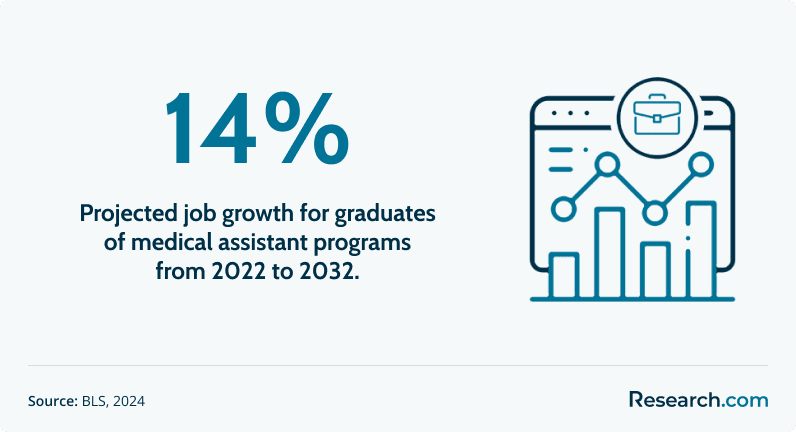
The Bureau of Labor Statistics reported a strong outlook for medical assistants. From 2022 to 2032, the job outlook is projected to grow by 14%, much faster than the average for all occupations, with an expected employment change of 105,900 new jobs.
- Demand is tied to healthcare access: Medical assistants are needed in clinics, outpatient centers, physicians’ offices, and hospitals that handle patient intake and routine care.
- Work settings are varied: Graduates may find opportunities in primary care, specialty practices, urgent care, hospital departments, and outpatient facilities.
- Advancement usually requires added training: Moving into nursing, office management, or specialized clinical roles often requires more education, certification, or experience.
The job market can differ substantially by state and metro area. Before enrolling, review local job postings to see which credentials employers request, whether they require phlebotomy or EKG skills, and whether entry-level roles are full time, part time, or variable shift.
How Medical Assistant Programs Compare With Other Healthcare Career Pathways
Medical assistant programs are usually shorter and more career-focused than many advanced healthcare degrees. They are designed for quick entry into clinical and administrative support roles, while pathways such as nursing, pharmacy, or healthcare administration generally require more time and broader academic preparation.
| Pathway | Training focus | Time and cost profile | Best for students who... |
| Medical assistant certificate or diploma | Entry-level clinical and administrative support | Typically shorter and lower cost than advanced degrees | Want to enter healthcare quickly and keep education costs manageable. |
| Associate degree in medical assisting | Medical assisting plus general education | Longer than a certificate but may support future academic plans | Want a broader credential and possible transfer value. |
| LPN or nursing pathway | Direct nursing care and licensure preparation | Usually more demanding and regulated than medical assisting | Want a licensed nursing role and are ready for additional schooling. |
| Pharmacy pathway | Medication management, pharmacy practice, and advanced clinical knowledge | Much longer and more academically intensive | Are considering a long-term professional pharmacy career, including options such as online PharmD programs for non pharmacists. |
Can Additional Certifications or Advanced Study Improve a Medical Assistant Career?
Additional credentials can help medical assistants move toward specialized clinical work, administrative leadership, or a different healthcare profession. Common add-ons include phlebotomy, EKG, medical billing and coding, medical office management, and healthcare administration coursework.
Advanced study is not necessary for every medical assistant, so compare the cost against your intended role. If you are considering a major professional shift, reviewing long-term outcomes such as Pharm D degree salary can help you understand how advanced clinical pathways differ from medical assisting.
What Is the Return on Investment of a Medical Assistant Program?
The return on investment of a medical assistant program depends on three practical factors: how much you pay, how quickly you finish, and whether the program helps you qualify for jobs and certification. A low-cost certificate may offer faster entry into the workforce, while an associate degree may provide broader education but requires a longer commitment.
Programs that combine affordable tuition, externship access, certification preparation, and employer support may offer stronger value than programs that are cheap but disconnected from local hiring expectations. Students trying to shorten the timeline can compare an accelerated medical assistant certification, but they should verify that fast completion does not come at the expense of clinical practice or exam eligibility.
Practical Skills You Gain in a Medical Assistant Program
- Clinical procedures and patient interaction: Students practice taking vital signs, preparing patients for exams, drawing blood, administering injections, and supporting providers during routine care.
- Medical records and documentation: Training includes accurate charting, electronic health records, confidentiality, and HIPAA-compliant documentation.
- Medical office administration: Students learn appointment scheduling, check-in procedures, insurance basics, billing support, referrals, and patient communication.
- Phlebotomy and laboratory techniques: Many programs introduce blood draws, specimen labeling, lab safety, and sample handling.
- Medication administration and pharmacology basics: Coursework may cover dosage concepts, medication safety, storage, and patient education.
- Communication and professionalism: Medical assistants often serve as the first person patients meet, so programs emphasize empathy, clarity, problem-solving, and teamwork.
Long-Term Career Opportunities for Medical Assistants
Medical assisting can be an entry point into healthcare rather than a final destination. Your next step will depend on whether you prefer clinical care, administration, technology, or leadership.
- Earn specialized certifications: Credentials in phlebotomy, EKG, coding, billing, or medical office administration can make you more competitive for specific roles.
- Move into supervisory work: Experienced medical assistants may become lead medical assistants, clinical coordinators, office managers, or practice support supervisors.
- Transition into related healthcare careers: Some medical assistants pursue nursing, healthcare administration, or other allied health roles after gaining workplace experience.
- Build administrative expertise: Medical office manager roles may appeal to assistants who prefer scheduling, staff coordination, records, billing, and operations.
- Keep skills current: Healthcare technology, telehealth workflows, documentation standards, and patient communication expectations continue to evolve.
Some professionals also compare short credentials outside medical assisting. Research.com’s guide to easy certifications to get online that pay well can help you compare flexible credential options, though you should evaluate each one against your healthcare career goals.
How Location Affects Medical Assistant Salary
Medical assistant pay differs by state and local labor market. Cost of living, employer concentration, outpatient clinic growth, hospital systems, and regional competition can all affect wages. A program that is inexpensive in one area may not be the best ROI if local job openings are limited or wages are lower than nearby regions.
Before choosing a school, compare tuition with local job postings and wage data. Research.com’s medical assistant associate degree salary resource can help you review location-based salary differences and decide where training may offer better long-term value.
Current Trends Affecting Medical Assistant Careers
Medical assistant work is changing as healthcare organizations rely more heavily on outpatient care, digital records, telemedicine tools, and specialized clinics. According to the U.S. Bureau of Labor Statistics, employment in this field is projected to grow by 16% from 2022 to 2032—much faster than the average for all occupations.
- More digital workflow: Employers increasingly expect comfort with electronic health records, patient portals, scheduling software, and telehealth support.
- More specialized outpatient care: Clinics in cardiology, pediatrics, geriatrics, women’s health, and other specialties may prefer assistants with targeted skills.
- Greater emphasis on certification: Certification can help employers verify that graduates have met a recognized standard of preparation.
- Flexible education demand: Students continue to look for affordable online and hybrid healthcare training, including cheap online medical assistant programs.
Fastest Ways to Complete a Medical Assistant Program
Fast-track medical assistant programs can shorten the path into entry-level healthcare work. Some accelerated programs condense training into as little as 6 to 9 months, compared with the typical 12 to 24 months for standard pathways. The trade-off is intensity: shorter programs may require more weekly study time and faster completion of clinical requirements.
To finish faster, look for programs that offer rolling admissions, online coursework, pre-arranged externships, transfer credit review, and clear certification exam timelines. Students considering accelerated options can also compare broader fast track degree programs.
What Graduates Say About Affordable Medical Assistant Training
- Emily: "The affordable program gave me the clinical foundation I needed without taking on a large loan. I was able to start working with patients soon after finishing."
- John: "Online coursework made the schedule manageable. I studied around work, completed the program on time, and found a clinic role shortly afterward."
- Sarah: "The combination of classroom instruction and hands-on practice helped me feel prepared for the pace of a hospital setting."
Should You Combine Medical Assistant Training With Healthcare Administration?
Combining medical assistant training with healthcare administration can make sense if you want to move toward office management, operations, budgeting, scheduling, or practice leadership. It is less necessary if your immediate goal is direct clinical work and you want the lowest-cost route into employment.
If management is part of your long-term plan, compare short administrative certificates with degree options such as the quickest online healthcare administration degrees. Choose the option that matches your timeline, budget, and desired level of responsibility.
Can Fast-Track PharmD Programs Complement a Medical Assistant Career?
A PharmD pathway is a major academic commitment and is not a routine add-on for medical assistants. It may be relevant only for students who want to move far beyond medical assisting into pharmacy practice, medication management, patient counseling, and advanced clinical responsibilities.
If pharmacy is your long-term goal, compare admissions requirements, cost, time, and career outcomes carefully. Options such as the fastest PharmD programs online should be evaluated as a separate professional pathway, not simply as a quick upgrade to a medical assistant credential.
References
- EducationDynamics. (2023). Online College Students Report. Education Dynamics
- Hanson, M. (2024, May 25). Financial Aid Statistics [2023]: Average aid per student. Education Data Initiative
- U.S. Bureau of Labor Statistics. (2024). Occupational Outlook Handbook - Medical Assistants. U.S. BLS
- Bright. (n.d.). Physician Assistant IQ scores. BRGHT
- Safier, R. (2024, May 5). Average Student Debt Statistics [2024]. Credible.com
- Additional source pages reviewed include Credible.com student debt data and the BRGHT occupational IQ listing.
Key Insights
- The cheapest medical assistant programs listed here range from $1,216 for in-state students to $8,383 for out-of-state students, but the real cost can include books, uniforms, background checks, CPR, exam fees, and externship expenses.
- Certificates are usually the fastest and lowest-cost route, while associate degrees take longer but may offer broader coursework and future transfer value.
- Online programs can be convenient, but medical assisting still requires clinical readiness. Always confirm how hands-on skills and externships are handled.
- Accreditation, certification eligibility, and employer recognition matter as much as tuition. A cheap program that does not qualify you for the right exam may not be a good value.
- Medical assistants can work in physician offices, outpatient care centers, hospitals, and other healthcare practices, with median annual wages varying by setting as of May 2023.
- Before enrolling, ask each school for total cost, certification exam eligibility, externship placement details, completion outcomes, and job placement support.
Other Things You Should Know About the Cheapest Medical Assistant Programs
The cheapest medical assistant program should hold programmatic accreditation from the Commission on Accreditation of Allied Health Education Programs (CAAHEP) or ABHES. These accrediting bodies are recognized by employers and often required for eligibility to sit for the CMA exam through AAMA.
Graduates of affordable 2027 medical assistant programs typically need to pass the Certified Medical Assistant (CMA) exam by the American Association of Medical Assistants (AAMA). Exam eligibility requires graduation from an accredited program and passing a background check.
Prerequisites for 2027 affordable medical assistant programs typically include a high school diploma or GED. Some programs may require basic proficiency in math and English. Check individual program requirements as specific prerequisites can vary by institution.