2027 Best Fast-Track Accelerated Degree Programs in America

Co-Founder and Chief Data Scientist
In today's fast-paced world, many students find traditional degree programs too time-consuming and financially burdensome. According to recent data, 58% of students choose online colleges for their shorter completion times. This trend highlights the growing need for accelerated degree programs that provide a faster, more affordable path to a degree without sacrificing quality.
In this article, I'll guide you through the best fast-track accelerated degree programs in America, helping you make an informed decision for your future.
Key Benefits of Fast-Track Accelerated Programs
- Accelerated degree programs offer the flexibility of completing coursework entirely online, accommodating students' busy schedules and allowing them to study from anywhere.
- On average, accelerated degree programs can be completed in 1 to 2 years, significantly shorter than traditional programs, aligning with the preference of 58% of students for quicker completion times.
- Online degrees tend to be more affordable than their on-campus counterparts, with the average tuition cost at public universities being $54,183 for an online degree compared to $85,348 for in-person attendance.
- Employers increasingly view accelerated degrees favorably, recognizing the rigor and efficiency of these programs in preparing students for the workforce.
- Graduates of accelerated degree programs have access to a wide range of career opportunities, particularly in fast-growing fields such as wind turbine service technology (projected 45% growth) and home health and personal care (projected 22% growth) aligning with the demand for skilled trade jobs.
- What are fast-track accelerated degree programs? What are fast-track accelerated degree programs?
- Can you complete an accelerated degree entirely online? Can you complete an accelerated degree entirely online?
- How long do accelerated degree programs typically take? Completion Time
- What are the benefits of enrolling in a fast-track degree program? What are the benefits of enrolling in a fast-track degree program?
- What are the most popular fields of study for accelerated degree programs? What are the most popular fields of study for accelerated degree programs?
- What are the best schools for online accelerated degree programs for 2027? Best Schools
- How much do accelerated degree programs cost compared to traditional programs? Cost
- Are there scholarships available for accelerated degree students? Scholarships
- How can fast-track programs help advance your career? How can fast-track programs help advance your career?
- How do accelerated degree programs ensure academic quality and accreditation? How do accelerated degree programs ensure academic quality and accreditation?
- How do employers view accelerated degrees compared to traditional ones? How do employers view accelerated degrees compared to traditional ones?
- What challenges might you face in an accelerated degree program? What challenges might you face in an accelerated degree program?
- What factors should you consider before enrolling in an accelerated degree program? What factors should you consider before enrolling in an accelerated degree program?
- What are the alternatives to fast-track accelerated degree programs in America? What are the alternatives to fast-track accelerated degree programs in America?
- What are the key factors to consider when choosing between traditional and accelerated degree programs? What are the key factors to consider when choosing between traditional and accelerated degree programs?
- What is the return on investment (ROI) of accelerated degree programs? What is the return on investment (ROI) of accelerated degree programs?
- How do accelerated programs foster professional networking and career advancement? How do accelerated programs foster professional networking and career advancement?
- How do accelerated programs handle internships and practical experience? How do accelerated programs handle internships and practical experience?
Affordable Fast-Track Accelerated Degree Programs With High Acceptance Rates for 2027
Choosing an accelerated degree is usually a trade-off: you want to finish sooner and control costs, but you also need a program that employers, graduate schools, licensing boards, and financial aid offices will recognize. This guide explains how fast-track accelerated degree programs work, which fields commonly offer flexible and affordable options, what to check before enrolling, and how to compare online programs without relying only on marketing claims.
It is written for working adults, transfer students, career changers, military learners, parents, and anyone trying to reduce the time between enrollment and a usable credential. You will learn which accelerated fields may fit different career goals, how online formats affect timelines, what costs to expect, how accreditation protects you, and which questions to ask before committing.
Quick answer: What is the best affordable accelerated degree to choose?
The best affordable accelerated degree is the one that matches your career goal, accepts as many of your prior credits as possible, is offered by an accredited institution, and fits your weekly schedule. Business administration, psychology, counseling, computer science, nursing, social work, management, accounting, paralegal studies, criminal justice, management information systems, marketing, special education, economics, and healthcare administration are common fast-track options because many schools offer them online, in shorter terms, or with transfer-friendly degree plans.
Before choosing, verify accreditation, total program cost, transfer credit policy, graduation requirements, internship or clinical requirements, and whether the degree meets licensing or certification rules in your state or profession.
How to use this list
The fields below are not ranked by salary or guaranteed career outcome. Instead, they represent areas where students often find online, accelerated, or transfer-friendly programs. Use each description to narrow your options, then compare individual schools based on cost, accreditation, support services, flexibility, and career requirements.
1. Business Administration
Business administration is a practical accelerated option for students who want broad preparation in leadership, finance, operations, marketing, and strategy. It can work well for transfer students with prior general education credits, working professionals seeking promotion, or aspiring entrepreneurs who need a flexible business foundation rather than a highly specialized credential.
2. Psychology
An accelerated online psychology degree introduces students to behavior, cognition, research methods, development, and mental health concepts. It can support entry-level roles in social services, human resources, research support, and community programs, but students interested in becoming licensed counselors, psychologists, or therapists should plan for graduate education and state-specific licensing requirements.
3. Counseling
Counseling programs build skills in communication, helping relationships, ethics, assessment, and mental health support. A fast-track counseling-related degree may be useful for students pursuing social services, case management, human services, or human resources roles. However, professional counseling licensure typically requires a graduate degree, supervised experience, and state approval, so students should confirm whether a program aligns with their long-term licensing path.
4. Computer Science
Computer science can be a strong accelerated choice for students who want technical training in programming, software development, data structures, systems, and problem-solving. Because technology hiring often emphasizes demonstrable skills, students should look for programs with project-based coursework, portfolio opportunities, career support, and current instruction in software tools rather than simply choosing the shortest option.
5. Nursing
Accelerated nursing pathways can help qualified students move into healthcare faster, especially when they already hold credits or a previous degree. Online coursework may cover theory and general requirements, but nursing programs normally include clinical or in-person components. Before enrolling, students should confirm state board approval, clinical placement support, NCLEX preparation, and whether the program meets licensure rules where they plan to work.
6. Social Work
Online social work programs focus on human behavior, advocacy, social systems, ethics, community resources, and support for vulnerable populations. A fast-track format may appeal to students who want to enter social services or prepare for graduate study. Students seeking licensed social work roles should verify whether the program has the appropriate accreditation and whether field placement requirements can be completed in their location.
7. Management
A management degree is designed for students who want to supervise teams, improve operations, manage projects, and understand organizational decision-making. It may be especially useful for adults who already have work experience but need a bachelor’s or graduate credential to qualify for advancement. Compare programs by leadership coursework, applied projects, employer partnerships, and how well the curriculum fits your industry.
8. Accounting
Accounting programs cover financial reporting, auditing, taxation, business law, and data-driven decision-making. Students considering this path should check whether the degree helps them meet requirements for accounting certifications or CPA eligibility in their state. A low-cost accelerated accounting program can be valuable, but only if the credit hours, course titles, and institutional accreditation satisfy the rules tied to your intended credential.
9. Paralegal Studies
Paralegal studies programs prepare students for legal research, writing, case preparation, litigation support, legal technology, and procedural work. This can be a practical accelerated route for students who want to enter law-related support roles without attending law school. Look for programs with writing-heavy assignments, legal database training, internship options, and clear alignment with local employer expectations.
10. Criminal Justice
Criminal justice programs examine law enforcement, courts, corrections, criminology, ethics, and justice administration. An accelerated degree may support roles in public safety, corrections, advocacy, security, or government support. Students should check whether target employers require additional academy training, background checks, physical standards, civil service exams, or specialized credentials beyond the degree.
11. Management Information Systems (MIS)
Management information systems combines business knowledge with technology, analytics, systems planning, and IT management. It can be a good fit for students who want to bridge communication between technical teams and business leaders. When comparing fast-track MIS programs, prioritize coursework in databases, systems analysis, cybersecurity fundamentals, project management, and business intelligence tools.
12. Marketing
Marketing programs teach market research, consumer behavior, branding, digital campaigns, analytics, and communication strategy. Accelerated online formats can help students build a credential quickly, but career readiness often depends on a portfolio. Strong programs include campaign projects, analytics practice, content strategy, and exposure to current digital marketing platforms.
13. Special Education
Special education programs prepare students to support learners with diverse academic, behavioral, developmental, and accessibility needs. Because teaching roles are tied to state licensure, students should confirm whether an accelerated online program includes student teaching, required assessments, and state-approved educator preparation. This field is not one to choose based on speed alone.
14. Economics
Economics programs develop analytical skills in microeconomics, macroeconomics, policy, markets, statistics, and decision-making. A fast-track economics degree may fit students interested in finance, consulting support, policy analysis, government, or graduate study. Students who want quantitative roles should look for programs with strong coursework in statistics, data analysis, and applied research.
15. Healthcare Administration
Healthcare administration focuses on healthcare systems, leadership, policy, finance, operations, quality improvement, and compliance. This accelerated path may suit students who want management or administrative roles in healthcare rather than direct clinical practice. Compare programs by healthcare-specific curriculum, internship or capstone options, faculty experience, and relevance to the type of healthcare setting where you want to work.
What Graduates Say About Fast-Track Accelerated Degree Programs in America
- Hannah: "Moving into healthcare felt intimidating at first, but the accelerated nursing format helped me stay focused and progress quickly. Online theory courses gave me flexibility, while the in-person intensives helped me practice the skills I needed before entering clinical settings. I now use that preparation every day with patients."
- Victor: "I wanted a career connected to social justice, and the accelerated Social Work pathway gave me a structured way to turn that goal into professional training. The online environment helped me keep up with coursework while learning from faculty and classmates who cared about community impact."
- Craig: "I needed stronger credentials to move into leadership, and the accelerated healthcare administration program fit around my full-time job. The schedule was demanding, but it helped me strengthen my management skills without stepping away from work."
What Are Fast-Track Accelerated Degree Programs?
Fast-track accelerated degree programs are college programs structured to help students complete degree requirements in less time than a standard schedule. Schools may use shorter terms, year-round enrollment, heavier course loads, competency-based progress, transfer-friendly degree plans, or combined undergraduate-to-graduate pathways.
The goal is speed and efficiency, not a lower academic standard. Like some easy master degree programs, accelerated pathways can feel more manageable when they are clearly structured, but students should still expect regular deadlines, intensive reading, frequent assignments, and limited breaks between courses.
These programs are usually best for students who are organized, have reliable weekly study time, and already know why they need the credential. They are less suitable for students who need a slower pace, extensive campus life, or extra time to explore majors before choosing a path.
Traditional vs. accelerated degree programs
| Factor | Accelerated degree program | Traditional degree program |
| Typical pace | Condensed terms, heavier workload, fewer long breaks | Standard semester or quarter schedule with more time between major milestones |
| Best for | Motivated students with clear goals, prior credits, or work experience | Students who want a broader campus experience or more time to explore options |
| Main advantage | Can shorten time to completion and help students move toward career goals sooner | Often allows more time for internships, networking, electives, and academic adjustment |
| Main risk | Burnout, missed deadlines, or limited time to absorb difficult material | Longer time in school and potentially higher total cost of attendance |
| What to verify | Accreditation, workload, transfer credits, practicum rules, and support services | Cost, graduation timeline, scheduling flexibility, and career outcomes |
Can You Complete an Accelerated Degree Entirely Online?
Yes, some accelerated degrees can be completed fully online, especially in fields such as business, psychology, management, accounting, marketing, economics, information systems, and some criminal justice programs. Online programs typically use learning management systems, recorded or live lectures, discussion boards, digital assignments, virtual collaboration tools, and remote advising.
However, “online” does not always mean “no in-person requirements.” Nursing, education, counseling, social work, and some healthcare programs may require clinical placements, student teaching, fieldwork, intensives, labs, or supervised practice. Students should ask where those experiences happen, who arranges them, and whether local placement is available.
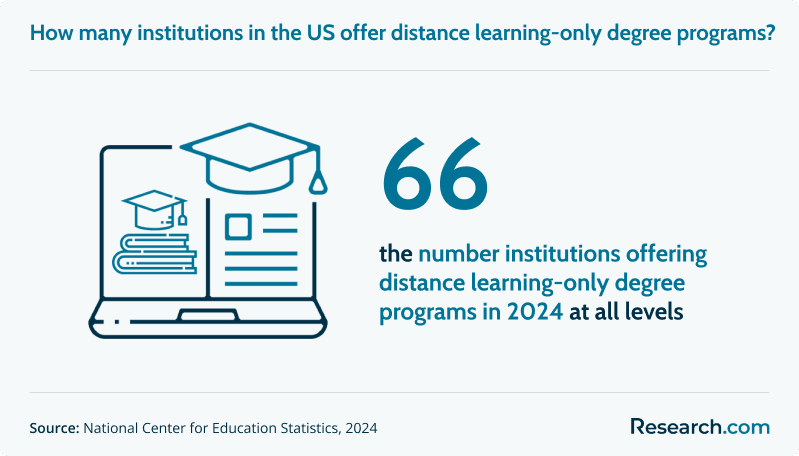
In 2024, as of writing, there are 66 institutions in the US that offer distance-learning only degree options, including programs that range from affordable MBA programs to practical nursing offerings. Many of these options may use accelerated calendars or flexible online formats.
How Long Do Accelerated Degree Programs Typically Take?
Program length depends on degree level, transfer credits, enrollment intensity, and field requirements. Undergraduate accelerated programs may be completed in as little as one to two years, compared to the standard four-year timeframe, especially when students transfer prior college credits or enroll year-round.
Graduate accelerated programs, including many master’s degrees, often take 12 to 18 months instead of the traditional two-year duration. Timelines can be longer in fields with clinical, practicum, or placement requirements. For example, healthcare-related degrees such as nursing or healthcare administration may require additional coordination, while online elementary education programs, business, or computer science programs may move faster when the curriculum is more compact and fewer in-person requirements apply.
The faster route is only worthwhile if the school is properly accredited and the schedule is realistic. In 2023, time to completion was the fourth top reason for choosing an online college or university in the United States. The chart below provides more context.
What Are the Benefits of Enrolling in a Fast-Track Degree Program?
Accelerated programs can be valuable when the shorter timeline aligns with your learning style, finances, and career goals. The biggest advantages are practical: less time before graduation, more flexible course delivery, and a clearer route for adults who cannot pause life for a traditional campus schedule.
- Shorter completion timeline: Students may finish sooner than they would in a standard program, which can help them apply for jobs, promotions, or graduate programs earlier.
- Flexible scheduling: Many fast-track programs use online, evening, or asynchronous formats, making them more manageable for working adults and caregivers.
- Potential cost savings: Finishing faster can reduce the number of terms in school and may lower indirect costs such as commuting, housing, or time away from work.
- Career momentum: Students pursuing advancement may use an accelerated credential to qualify for roles that require a degree, similar to how cheap online teaching degree options can support education-focused career goals.
- Focused learning: Condensed coursework can help motivated students stay engaged because courses are sequenced tightly and progress is easier to track.
The drawbacks are real. Accelerated programs can leave little room for missed assignments, schedule disruptions, illness, or family emergencies. Students should be honest about time, energy, and support before enrolling.
What Are the Most Popular Fields of Study for Accelerated Degree Programs?
The most common accelerated fields tend to be those with strong online course availability, broad employer demand, clear degree plans, and transfer-friendly requirements. Popular options include business administration, nursing, computer science, education, and psychology.
- Business administration: Programs often include finance, management, marketing, operations, and entrepreneurship. Students comparing an accelerated business administration degree online should review concentration options and total cost. If business school cost is a major factor, compare program pricing through resources such as affordable online MBA programs.
- Nursing: Accelerated nursing programs are designed for students who can handle rigorous coursework and clinical expectations. Always verify licensure alignment before enrolling.
- Computer science: This field rewards practical skill development, so students should look for coding projects, portfolio work, and current technical content.
- Education: Accelerated education programs may appeal to future teachers, curriculum specialists, and school leaders, but licensure requirements must be checked carefully.
- Psychology: Psychology can lead to human services, research support, and graduate study, but licensed clinical roles require additional education and supervised training.
This list is not exhaustive. Students with more specialized goals can also find targeted options, including accelerated construction management degree programs online.
What Are the Best Schools for Online Accelerated Degree Programs for 2027?
The best school depends on your major, transfer credits, cost, schedule, location, support needs, and whether the program satisfies professional requirements. A school that is excellent for a competency-based business degree may not be the best choice for nursing, teaching, social work, or counseling licensure.
How schools are evaluated
Research.com rankings and school lists are developed through research and data analysis guided by a defined methodology. Sources may include the IPEDS database from the National Center for Education Statistics, Peterson's database with the Distance Learning Licensed Data Set, and the College Scorecard. These sources help compare institutional characteristics, program availability, affordability, and student-centered outcomes.
| School | Selected accelerated program areas | Estimated undergraduate tuition | Estimated graduate tuition | Accreditation |
| Arizona State University (ASU) | Business Administration, Communication, Healthcare Leadership, Social Work | $49,222 (in-state) | $59,112 (in-state) | Higher Learning Commission (HLC) |
| Southern New Hampshire University (SNHU) | Business Administration, Healthcare Administration, Information Technology, Liberal Arts | $32,590 (in-state) | $38,890 (in-state) | New England Commission of Higher Education (NECHE) |
| Purdue University Global | Business Administration, Healthcare Administration, Information Technology, Nursing | $40,860 (in-state) | $46,650 (in-state) | Higher Learning Commission (HLC) |
| Western Governors University (WGU) | Business Administration, IT, Teachers College | $6,300 per term (flat rate) | $6,300 per term (flat rate) | Northwest Commission on Colleges and Universities (NWCCU) |
| Northeastern University | Business Administration, Computer Science, Project Management | $50,000 - $70,000 | $60,000 - $80,000 | New England Commission of Higher Education (NECHE) |
When comparing these and other schools, look beyond brand name. For example, a student interested in finance may want to compare curriculum depth against options such as an accelerated finance degree online, while a nursing or education student should prioritize licensure alignment and placement support.
How Much Do Accelerated Degree Programs Cost Compared to Traditional Programs?
Accelerated programs can cost less overall when students complete fewer terms, reduce living expenses, or keep working while enrolled. However, the total bill depends on tuition structure, fees, transfer credits, books, technology costs, practicum expenses, and whether tuition is charged by credit, term, or program.
Traditional undergraduate programs can cost anywhere from $20,000 to $50,000 per year for tuition alone, while accelerated programs may range from $10,000 to $30,000 per year. Graduate programs typically cost between $30,000 to $60,000 for the entire program, whereas accelerated options may range from $20,000 to $40,000.
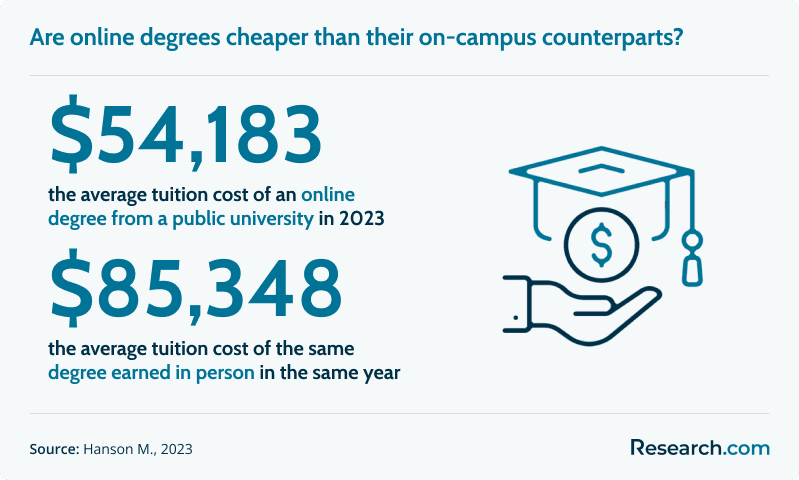
Online degrees, including online masters in communications programs, are often less expensive than campus-based options. On average, the tuition cost of an online degree from a public university is approximately $54,183, compared to $85,348 for the same degree earned in person.
Cost factors students often overlook
| Cost factor | Why it matters in an accelerated program | Question to ask |
| Transfer credit policy | Accepted credits can shorten the program and reduce tuition. | How many of my credits will apply to the major, not just electives? |
| Term-based tuition | A flat-rate term can save money for fast learners but cost more if you slow down. | What happens financially if I take fewer courses in a term? |
| Clinical or field placement fees | Healthcare, education, social work, and counseling may require extra placement-related costs. | Are placement costs included in tuition? |
| Technology and materials | Online programs may require software, proctoring, equipment, or subscriptions. | What additional fees should I budget for each term? |
| Time away from work | A compressed schedule may reduce hours available for employment. | Can students realistically work full-time while enrolled? |
Are Scholarships Available for Accelerated Degree Students?
Yes. Scholarships may be available for accelerated degree students, although options can vary by school, major, student background, and enrollment status. Start with the school’s financial aid office because institutional scholarships, transfer awards, employer partnerships, and department-level funding are often easier to identify there than through broad scholarship searches.
Students should also check external organizations, professional associations, foundations, corporations, and workforce-focused programs, particularly in healthcare, technology, education, and business. Ask whether accelerated enrollment affects eligibility, whether awards require full-time status, and whether funding can be used during shorter terms.
How Can Fast-Track Programs Help Advance Your Career?
Fast-track programs can support career advancement by reducing the time needed to earn a credential required for hiring, promotion, licensure preparation, or graduate admission. This is especially helpful for adults who already have work experience but need a degree to move into management, technical roles, healthcare administration, teaching preparation, or other structured career pathways.
The value of the program depends on fit. A compressed curriculum helps only if it teaches relevant skills, carries recognized accreditation, and allows you to continue building experience. Many accredited online universities offer flexible schedules that can help working professionals keep earning income while finishing their education.
How Do Accelerated Degree Programs Ensure Academic Quality and Accreditation?
Quality starts with accreditation. Students should confirm that the institution is accredited by a recognized accrediting agency and that the specific program has any required programmatic approval for fields such as nursing, education, social work, counseling, or accounting-related certification pathways.
Do not assume that “accelerated” automatically means weaker, and do not assume that “online” automatically means flexible enough for your life. Review curriculum requirements, faculty qualifications, assessment methods, student outcomes, support services, and employer or licensing recognition. Comparing these factors alongside cost-focused options such as affordable online bachelor degree programs can help you find a program that is both efficient and credible.
How Do Employers View Accelerated Degrees Compared to Traditional Ones?
Employers typically care most about whether the institution is legitimate, whether the program is relevant, and whether the graduate can do the work. An accelerated degree from an accredited school is generally easier to explain than a credential from an unrecognized provider, even if the unrecognized option looks faster or cheaper.
Some hiring managers may ask questions if a degree appears unusually short, especially in technical or regulated fields. That is why students should be prepared to discuss projects, internships, certifications, clinical training, portfolios, and measurable skills. This is particularly important in applied fields such as those connected to cyber security schools online, where proof of competence can matter as much as the degree title.
What Challenges Might You Face in an Accelerated Degree Program?
The main challenge is the pace. Students often move from one assignment, exam, or project to the next with little recovery time. This can make it harder to revisit difficult concepts, build relationships with classmates, or participate in optional networking activities.
Other challenges include limited scheduling flexibility, compressed group projects, reduced time for internships, and stress from balancing school with work or family. Before enrolling, review whether the school offers tutoring, advising, mental health resources, technical support, and career guidance. Students comparing efficient options may also want to explore the quickest degree to get online while still checking quality and fit.
What Factors Should You Consider Before Enrolling in an Accelerated Degree Program?
Use the checklist below before applying. A fast program is only a good decision if it helps you finish a recognized credential without creating unnecessary financial, academic, or career risk.
- Accreditation: Confirm institutional accreditation and any required programmatic accreditation or state approval. Check whether the accrediting body is recognized by the U.S. Department of Education or the Council for Higher Education Accreditation.
- Learning format: Determine whether the program is fully online, hybrid, or campus-based. Online pathways, including options such as the cheapest 1 year online MBA programs, may reduce commuting and housing costs, but they still require consistent study time.
- Transfer credits: Ask for a written transfer evaluation before enrolling so you know exactly how many credits apply to your degree plan.
- Curriculum relevance: Review whether courses build skills that match your career goal, such as leadership, analytics, communication, programming, teaching methods, or clinical preparation.
- Prerequisites: Some programs require prior coursework, professional experience, test scores, or a previous degree. Missing prerequisites can extend your timeline.
- Workload: Ask how many hours per week successful students typically study and whether full-time work is realistic.
- Financial aid: Confirm tuition, fees, aid eligibility, scholarship options, employer reimbursement rules, and refund policies.
- Career outcomes: Review career services, alumni feedback, internship access, licensure exam support, and employer connections.
- Support services: Look for advising, tutoring, technical help, library access, accessibility services, writing support, and career coaching.
Common mistakes to avoid
| Mistake | Why it can hurt you | Better approach |
| Choosing the shortest program without checking accreditation | The degree may not be recognized by employers, graduate schools, or licensing boards. | Verify institutional and programmatic accreditation before applying. |
| Comparing only tuition | Fees, books, technology, placements, and lost work hours can change the real cost. | Calculate total cost of attendance and expected time to completion. |
| Assuming online means self-paced | Many online courses still have weekly deadlines and fixed term schedules. | Ask whether courses are asynchronous, synchronous, competency-based, or cohort-based. |
| Ignoring licensure rules | Degrees in nursing, teaching, counseling, and social work may not meet every state’s requirements. | Contact the school and the relevant state board before enrolling. |
| Overestimating available study time | Accelerated coursework can become unmanageable alongside full-time work and family obligations. | Create a weekly schedule before committing to the program load. |
| Relying only on rankings | A highly ranked school may not be the best fit for your budget, credits, or career goal. | Use rankings as one input, then compare program-level details. |
What Are the Alternatives to Fast-Track Accelerated Degree Programs in America?
An accelerated degree is not the only way to move into a better career path. Depending on your goals, vocational programs, certificates, apprenticeships, employer training, bootcamps, military education benefits, or professional certifications may be more direct and less expensive.
For students interested in project-based business roles, accelerated project management degree programs may be one option. For others, skilled trade pathways may offer strong opportunities without a traditional academic degree. According to data on the fastest-growing skilled trade jobs from 2022 to 2032, wind turbine service technicians, home health and personal care aides, personal care and service workers, and veterinary assistants and laboratory animal caretakers are among the top contenders. The chart below shows job growth details.
What Are the Key Factors to Consider When Choosing Between Traditional and Accelerated Degree Programs?
The right choice depends on your timeline, budget, learning style, career target, and personal responsibilities. Accelerated programs are appealing when speed matters and you can handle the intensity. Traditional programs may be better when you need more time for exploration, networking, internships, research, campus involvement, or academic support.
Students seeking the fastest possible path should compare options such as the fastest bachelor degree online, but speed should not be the only criterion. A slightly longer program may be a better investment if it accepts more transfer credits, offers stronger career support, meets licensure rules, or fits your work schedule more realistically.
Which path makes more sense?
| Choose an accelerated program if... | Consider a traditional program if... |
| You already know your career direction. | You are still deciding on a major or career field. |
| You have transfer credits or prior learning that can shorten the degree. | You need foundational coursework before committing to advanced classes. |
| You can study consistently every week without long breaks. | You need a lighter course load because of work, caregiving, or health responsibilities. |
| Your target role values quick credential completion and applied skills. | Your target field depends heavily on internships, research, studio work, labs, or campus networking. |
| You have confirmed accreditation, cost, and licensure alignment. | You are not yet sure whether the program will be recognized for your goal. |
What Is the Return on Investment (ROI) of Accelerated Degree Programs?
ROI depends on more than tuition. Students should compare total cost, time saved, financial aid, lost wages, transfer credits, expected career requirements, and the likelihood that the degree will help them qualify for better opportunities. A faster program can improve ROI when it reduces time in school and leads to a credential that employers or licensing bodies value.
Do not assume that every accelerated degree produces a salary increase. Review program outcomes, local labor market conditions, internship access, employer partnerships, and alumni feedback. For graduate-level comparisons, resources such as the best one year masters programs can help students evaluate shorter master’s pathways with career goals in mind.
How Do Accelerated Programs Foster Professional Networking and Career Advancement?
Because accelerated programs are shorter, students must be intentional about networking. Strong programs build career development into the experience through virtual networking events, alumni panels, mentorship, employer projects, career coaching, and industry-informed coursework.
Ask whether the program offers career services to online students, not just campus learners. Students planning for graduate study or senior-level advancement may also want to understand how the accelerated degree could connect to a high paying master's degree or other advanced credential later.
How Do Accelerated Programs Handle Internships and Practical Experience?
Fast-track programs can still include hands-on learning, but the format varies by field. Practical experience is especially important in healthcare, education, social work, counseling, business, technology, and legal support programs.
- Course-integrated experience: Some programs embed internships, practicums, simulations, or capstone projects directly into the degree plan.
- Remote internships: Fully online programs, including those offered through cheapest nationally accredited online colleges, may support virtual placements or remote project work when appropriate for the field.
- Employer partnerships: Schools may work with businesses, agencies, nonprofits, or healthcare organizations to connect students with applied experience.
- Clinical and fieldwork placements: Nursing, education, counseling, and social work programs often require supervised in-person hours, even when classes are online.
- Project-based learning: Business, technology, marketing, and management programs may use real-world projects instead of or alongside traditional internships.
- Flexible scheduling: Accelerated programs may offer structured options for completing field hours while keeping students on track, but availability varies by school and location.
How Do Accelerated Programs Use Digital Tools to Support Academic Outcomes?
Many accelerated programs rely on digital tools to keep students organized and help instructors identify problems early. Learning management systems, virtual classrooms, discussion platforms, online libraries, recorded lectures, digital simulations, analytics dashboards, and tutoring tools can make condensed coursework easier to manage.
Technology is helpful only when it is paired with good course design and responsive support. Ask whether technical support is available during the hours you study, whether online students can access tutoring and library services, and whether the platform works well for mobile or low-bandwidth access. Students comparing advanced online options may also find useful cost context in resources on the cheapest online PhD programs.
How Do Accelerated Programs Deliver Dedicated Academic Advising and Support?
Academic support is especially important in a fast-track program because students have less time to recover from a missed deadline, failed assignment, or registration mistake. Strong programs provide proactive advising, degree planning, tutoring, writing support, technology assistance, accessibility services, and career coaching.
Ask whether each student has a dedicated advisor, how often progress is reviewed, and what happens if you need to pause or reduce your course load. Students building from an entry-level credential may also compare pathways such as the easiest associate degrees before moving into a bachelor’s program.
Questions to Ask Before You Enroll
- Is the institution accredited, and is the specific program approved for my career goal?
- Will this degree meet licensure, certification, or graduate school requirements in my state?
- How many of my transfer credits will apply directly to the program?
- What is the total cost, including fees, books, technology, placements, and exams?
- How many hours per week do successful students study?
- Are courses self-paced, asynchronous, synchronous, or cohort-based?
- What happens if I fail a course, need to stop out, or reduce my enrollment?
- Are internships, clinicals, practicums, or student teaching required?
- Does the school help online students find placements?
- What career services are available before and after graduation?
Key Insights
- Accelerated degree programs can save time, but they are not automatically cheaper, easier, or better than traditional programs.
- Business, psychology, counseling, computer science, nursing, social work, management, accounting, paralegal studies, criminal justice, MIS, marketing, special education, economics, and healthcare administration are common fast-track fields, but each has different career and licensing implications.
- Online accelerated degrees can be fully remote in some majors, while nursing, education, counseling, and social work often require in-person clinical, fieldwork, or practicum experiences.
- Accreditation is the first filter. If a program is not properly accredited or approved for your intended career, a shorter timeline may not help you.
- ROI depends on total cost, transfer credits, financial aid, time to completion, employer recognition, and whether the credential moves you toward a specific career outcome.
- The best accelerated program is not simply the fastest one. It is the program that fits your schedule, budget, learning style, state requirements, and long-term goals.
References:
- Hanson, M. (2023, August 23). Cost of online education vs. traditional education [2023]: Comparison. Retrieved May 27, 2024, from Education Data Initiative.
- National Center for Education Statistics. (2024). College navigator. Retrieved May 27, 2024, from NCES.
- Statista. (2023, September 8). Leading reasons for online college selection among students in the United States in 2023. Statista.
- U.S. Bureau of Labor Statistics. (2024). Fastest growing occupations. Retrieved May 27, 2024, from BLS.
Other Things You Should Know About the Best Fast-Track Accelerated Degree Programs in America
Eligibility requirements for 2027 fast-track programs often include a high school diploma or GED, minimum GPA, and standardized test scores. Some programs require prior college credits or professional experience. Each university may also have unique prerequisites specific to their accelerated offerings.
Yes. Programs that are Title IV eligible can offer federal aid, including Pell Grants, Direct Subsidized and Unsubsidized Loans, and PLUS Loans. Students must complete the FAFSA, and the school’s accreditor and U.S. Department of Education eligibility status determine access to aid.