
2027 Best One-Year Online MPA Programs

Co-Founder and Chief Data Scientist
Nearly half of all professionals in public service hold an advanced degree. That statistic explains the frustrating career ceiling you’ve hit. You have years of valuable experience, but the leadership roles you're aiming for require a master's degree. A traditional two-year program just isn't realistic when you're balancing a demanding career and personal life.
This guide is designed for you. While other guides might focus on waiving application requirements, our career planning experts—with over 10 years of experience—know your most valuable asset is time. We’ll help you navigate accredited one year online MPA programs, showing you how to find a high-quality, supportive program that fits your professional life and accelerates your path to promotion.
What are the benefits of getting a one-year online MPA program?
- Accelerate your path into senior leadership roles in government, nonprofit, and private sectors.
- Unlock higher earning potential, with experienced public administration leaders often earning between $105,500 and $121,500.
- Gain a flexible, accredited education designed for working professionals without having to pause your career.
What can I expect from a one-year online MPA program?
You can expect a fast-paced and demanding academic year. Let's be clear about that. You're covering a full master's curriculum in just 12 months.
You won't be on your own. Most use a cohort model, meaning you'll go through the entire program with a small group of experienced peers. This creates an immediate, built-in support system and a powerful professional network.
You’ll also have dedicated academic advisors who specialize in the accelerated format. They understand the unique pressures you face. While many guides focus on waiving application requirements, the defining feature of top one year online MPA programs is how they deliver a full, rigorous curriculum in a compressed timeline. They make it manageable through this focused, supportive structure.
Where can I work with a one-year online MPA program?
A one-year online MPA prepares you for leadership and analytical roles across every sector. Your specific career path will often align with your chosen specialization, from nonprofit management to public finance. Data on where professionals with MPA skill sets work shows high demand in several key areas:
- Government: This is the traditional and largest sector, with 17% of management analysts working in federal, state, and local government agencies in roles like policy advisor, city manager, or program director.
- Professional and Technical Services: A significant 34% of analysts work in this sector, often as government consultants who help public agencies improve efficiency and effectiveness.
- Finance and Insurance: About 13% of analysts are employed here, working in roles that require strong skills in public finance, compliance, and economic policy.
How much can I make with a one-year online MPA program?
An MPA is a direct path to a higher salary bracket, though your specific earnings will depend on your years of experience, chosen specialization, and geographic location. The degree qualifies you for senior roles, but your professional background determines your starting point within the pay scale for those positions.
As of May 2024, the following roles show strong earning potential for MPA graduates:
- Political Scientists (Federal Government): $151,630 per year
- Management Analysts (Professional and Technical Services): $107,790 per year
- Public Administration Managers (75th Percentile): $105,500 per year
- Management Analysts (Government): $94,080 per year
- List of the Best One-Year Online MPA Programs for 2027 List of Programs
- How long does it take to complete a one-year online MPA program? Completion Time
- How does a one-year online MPA program compare to an on-campus program? How does a one-year online MPA program compare to an on-campus program?
- What is the average cost of a one-year online MPA program? Program Cost
- What are the financial aid options for students enrolling in a one-year online MPA program? Financial Aid
- What are the prerequisites for enrolling in a one-year online MPA program? What are the prerequisites for enrolling in a one-year online MPA program?
- What courses are typically in a one-year online MPA program? What courses are typically in a one-year online MPA program?
- What types of specializations are available in a one-year online MPA program? Specializations
- How to Choose the Best One-Year Online MPA Program How to Choose the Best One-Year Online MPA Program
- What career paths are available for graduates of a one-year online MPA program? Career Paths
- What is the job market for graduates of a one-year online MPA program? Job Market
- How does a one-year online MPA program compare to a cheap online MBA program? How does a one-year online MPA program compare to a cheap online MBA program?
One-Year Online MPA Programs: What to Know Before You Apply
An accelerated online Master of Public Administration can help experienced professionals move into leadership roles without pausing their careers for a traditional two-year graduate program. The decision is not only about speed, however. You also need to compare accreditation, workload, cost, public-service career fit, specialization options, and whether the program’s format is realistic for your schedule.
This guide is for working adults considering a faster path to an MPA, including government employees, nonprofit professionals, policy analysts, public safety leaders, healthcare administrators, and private-sector professionals who work with public agencies. You will learn which programs stand out, how accelerated online MPAs work, how much they cost, what admissions teams usually expect, and how to choose a program that supports your long-term career goals.
Quick Answer: Is a One-Year Online MPA Worth Considering?
A one-year online MPA can be worth it if you already have professional experience, want to keep working while earning a graduate credential, and are targeting leadership, policy, budgeting, program management, or nonprofit management roles. The best fit is usually a self-directed student who can handle an intensive pace and wants a public-service degree rather than a general business degree.
Before enrolling, verify accreditation, compare total tuition rather than only cost per credit, confirm the weekly workload, review capstone or practicum requirements, and ask whether the program’s concentrations match your target sector.
| Choose a one-year online MPA if... | Consider another option if... |
| You want to lead in government, nonprofit, civic technology, public safety, healthcare administration, or policy-focused organizations. | You want a broader corporate management credential focused mainly on private-sector finance, marketing, or entrepreneurship. |
| You can study year-round and manage a compressed graduate schedule. | You need long breaks between terms or cannot commit consistent weekly study time. |
| You value policy analysis, public budgeting, ethics, program evaluation, and community impact. | You primarily want a degree centered on business strategy, corporate operations, and market competition. |
| You already have relevant work experience and want to move into higher-responsibility roles. | You are still exploring career direction and need a slower, more exploratory graduate experience. |
List of the Best One-Year Online MPA Programs for 2027
How Research.com Evaluates Online MPA Programs
Because a graduate degree is a major financial and professional commitment, program comparisons should be based on transparent information rather than marketing claims alone. Research.com reviews available data from sources such as the IPEDS database, Peterson's database, College Scorecard, and The National Center for Education Statistics.
These sources help support comparisons of institutional quality, affordability, completion-related data, and student outcomes where available. To learn more about how Research.com builds rankings, review the Research.com methodology page.
| Rank | School and Program | Program Length | Credits | Cost | Accreditation |
| 1 | Franklin University - Master of Public Administration (MPA) | 14 months | 36 Semester Hours | $670 per credit | Higher Learning Commission (HLC) |
| 2 | University of Phoenix - Online Master's in Public Administration | As little as 17 months | 36 | $698 per credit | Higher Learning Commission (HLC) |
| 3 | Claremont Lincoln University - Online Master in Public Administration (MPA) | 13 months | 36 | $550 per credit | WASC Senior College and University Commission (WSCUC) |
| 4 | University of New Hampshire - Online Master of Public Administration (M.P.A.) | As little as 12 months | 36 | In-state: $800; Out-of-state: $880 per credit | New England Commission of Higher Education (NECHE) |
| 5 | Northeastern University - Master of Public Administration | 1.5 years | 40 | $1,056 per credit | Network of Schools of Public Policy, Affairs and Administration (NASPAA) |
| 6 | Purdue University Global - Online Master of Public Administration Degree | 1 year | 45 quarter credits | $420 per quarter credit | Higher Learning Commission (HLC) |
| 7 | Arkansas State University - Online Master of Public Administration Programs | As few as 18 months | 36 | $12,600 total tuition | Network of Schools of Public Policy, Affairs and Administration (NASPAA) |
| 8 | Aurora University - Online MPA | 1-2 years | 36 | $600 per credit | Higher Learning Commission (HLC) |
1. Franklin University - Master of Public Administration (MPA)
The online MPA from Franklin University is structured for students who want to build public-sector leadership skills in 14 months. The program emphasizes applied learning through interactive projects and exposure to current government leadership perspectives.
- Program Length: 14 months
- Specializations: Criminal Justice; Healthcare; Human Resources; and Organizational Leadership
- Required Credits to Graduate: 36 Semester Hours
- Cost per Credit: $670
- Accreditation: Higher Learning Commission (HLC)
2. University of Phoenix - Online Master's in Public Administration
The University of Phoenix offers an online MPA with six-week courses and a completion timeline of as little as 17 months. The curriculum is designed for working adults who need practical training in leadership, policy, communication, and public administration decision-making.
- Program Length: As little as 17 months
- Required Credits to Graduate: 36
- Cost per Credit: $698
- Accreditation: Higher Learning Commission (HLC)
3. Claremont Lincoln University - Online Master in Public Administration (MPA)
The online MPA at Claremont Lincoln University uses the Claremont Core® curriculum to develop leadership capabilities for public agencies, nonprofits, and cross-sector organizations. Students focus on equitable problem-solving, collaboration, and systems-level public service challenges.
- Program Length: 13 months
- Concentrations: Advanced Management and Leadership in Complex Systems; Advanced Practices in Public Finance; Sustainable Communities through Public Service; and Strategic Innovation for Collective Impact
- Required Credits to Graduate: 36
- Cost per Credit: $550
- Accreditation: WASC Senior College and University Commission (WSCUC)
4. University of New Hampshire - Online Master of Public Administration (M.P.A.)
The fully online MPA from the University of New Hampshire can be completed in as little as 12 months. Students may choose between focused tracks and capstone options, while experienced professionals can consider the accelerated Executive MPA path.
- Program Length: As little as 12 months
- Tracks: Management and Leadership; and Program Planning and Development
- Required Credits to Graduate: 36
- Cost per Credit: In-state: $800; Out-of-state: $880
- Accreditation: New England Commission of Higher Education (NECHE)
5. Northeastern University - Master of Public Administration
The MPA at Northeastern University is described as the longest-running NASPAA-accredited program in New England. Its public service curriculum emphasizes research, experiential learning, community partnerships, and applied projects designed to prepare students for leadership and policy-related impact.
- Program Length: 1.5 years
- Required Credits to Graduate: 40
- Cost per Credit: $1,056
- Accreditation: Network of Schools of Public Policy, Affairs and Administration (NASPAA)
6. Purdue University Global - Online Master of Public Administration Degree
Purdue University Global offers an online MPA that can be completed in 1 year. The program focuses on policy implementation, ethical decision-making, public service leadership, and fields such as emergency management and public safety.
- Program Length: 1 year
- Required Quarter Credits to Graduate: 45
- Cost per Quarter Credit: $420
- Accreditation: Higher Learning Commission (HLC)
7. Arkansas State University - Online Master of Public Administration Programs
The online MPA at Arkansas State University can be completed in as few as 18 months and carries NASPAA accreditation. Students choose either a public management or nonprofit management track and finish with a practical capstone project.
- Program Length: As few as 18 months
- Tracks: Public Management; and Nonprofit Management
- Required Credits to Graduate: 36
- Total Tuition: $12,600
- Accreditation: Network of Schools of Public Policy, Affairs and Administration (NASPAA)
8. Aurora University - Online MPA
The online MPA from Aurora University was developed with input from community leaders and can be completed in 1-2 years. The program uses open educational resources and is taught by public service professionals with field experience.
- Program Length: 1-2 years
- Required Credits to Graduate: 36
- Cost per Credit: $600
- Accreditation: Higher Learning Commission (HLC)
How Long Does It Take to Complete a One-Year Online MPA Program?
Accelerated online MPA programs are built for students who want to finish faster than a traditional two-year schedule. Some programs on this list can be completed in as little as 12 months or 1 year, while others use accelerated formats that take 13 months, 14 months, as little as 17 months, as few as 18 months, 1.5 years, or 1-2 years.
The shorter timeline usually means studying year-round, taking heavier course loads, and moving quickly from one term to the next. The degree is not automatically less rigorous because it is faster; in a well-designed program, students cover the same graduate-level public administration competencies on a compressed calendar.
| Timeline | What It Usually Means for Students | Best Fit |
| As little as 12 months or 1 year | Fastest pace, fewer breaks, and a strong need for disciplined weekly study time. | Experienced professionals with predictable schedules and strong time-management skills. |
| 13 months to 14 months | Still accelerated, but with slightly more room than a strict 12-month plan. | Working adults who want speed but may need modest flexibility. |
| As little as 17 months, as few as 18 months, or 1.5 years | Accelerated compared with many traditional programs, but less compressed than a one-year plan. | Students balancing demanding jobs, family responsibilities, or unpredictable workloads. |
| 1-2 years | More flexible pacing depending on enrollment intensity and course sequencing. | Students who want an online format but may not want the most aggressive timeline. |
Accelerated Degree Programs Are Different From Short Individual Courses
A one-year MPA is a complete graduate degree, not simply a collection of brief classes. It differs from enrolling at colleges offering 6-week online courses because the MPA curriculum is sequenced around public administration competencies, often ending with a capstone, practicum, or applied project.
How Does an Online MPA Program Compare to an On-Campus Program?
The most important quality question is not whether the program is online or on campus. It is whether the institution and program meet credible academic standards. A properly accredited online MPA can offer the same credential value as an on-campus MPA, but the learning experience is different.
| Factor | Online MPA | On-Campus MPA |
| Flexibility | Allows students to study from another city or state and often continue full-time employment. | Requires attendance at a physical location and may be harder to combine with relocation-sensitive jobs. |
| Networking | May connect students with classmates across regions, agencies, and sectors through virtual collaboration. | Offers more in-person relationship-building with local classmates, faculty, and employers. |
| Learning style | Works best for organized students who can manage deadlines independently. | Works well for students who prefer face-to-face discussion and campus structure. |
| Career fit | Strong option for mid-career professionals who cannot leave their current role. | Strong option for students who want local internships, campus activities, or in-person faculty access. |
Why Accreditation Matters More Than Delivery Format
Accreditation is one of the clearest ways to evaluate whether an MPA program has met recognized standards. The Network of Schools of Public Policy, Affairs, and Administration is widely associated with public service education quality.
A program listed with NASPAA accreditation has gone through a specialized review process focused on public policy, public affairs, and administration standards. Regional institutional accreditation, such as HLC, WSCUC, or NECHE, is also important because it affects degree recognition, transferability, and access to federal financial aid.
Students who plan to continue into doctoral study after an MPA should also understand how to apply for a PhD, especially if they are considering research, teaching, advanced policy analysis, or senior public administration scholarship.
What Is the Average Cost of a One-Year Online MPA Program?
The total tuition for one year online MPA programs typically range from about $12,600 to over $42,000. On average, you can expect the cost to be around $24,500.
Cost comparisons should go beyond tuition alone. Students should also check technology fees, books or digital resources, graduation fees, residency requirements, travel costs, payment plans, and whether tuition differs for in-state and out-of-state online students.
| Cost Factor | Why It Matters | Question to Ask |
| Cost per credit or quarter credit | Programs may use semester credits or quarter credits, making side-by-side comparisons less obvious. | What is the full tuition cost for the entire degree? |
| Total tuition | A low per-credit rate can still add up if the program requires more credits. | Are all required courses included in the published tuition estimate? |
| Fees and course materials | Technology, student services, and resource fees can change the real cost of attendance. | What mandatory fees are not included in tuition? |
| Work interruption | Online programs may help students keep earning while enrolled. | Can I realistically continue working during the accelerated schedule? |
| Employer support | Some students reduce out-of-pocket costs through tuition assistance. | Does my employer reimburse graduate coursework related to public service leadership? |
Public Service Leadership and Workforce Representation
An MPA can also support broader representation in public leadership pipelines. Current data cited for management analysis shows the field is about 69% white, while Asian professionals account for around 11.5% and Black professionals about 9% of the workforce.
Graduate public administration education can help professionals from varied backgrounds build credentials for policy, management, and analytical roles that influence public programs and institutions. For professionals considering executive-level graduate education across sectors, learning how to get into an Ivy League MBA program may also be useful for comparing public administration and business leadership pathways.
The following visual provides more detail on the racial distribution of management analysts.
What Financial Aid Options Are Available for One-Year Online MPA Students?
Many students use more than one funding source to pay for an online MPA. Common options include federal aid, institutional scholarships, employer tuition assistance, military or public-service benefits where applicable, and payment plans offered by the university.
Start With the FAFSA
The first step for most U.S. students is completing the Free Application for Federal Student Aid (FAFSA). Graduate students may qualify for federal loan options, including Direct Unsubsidized Loans, depending on eligibility and enrollment status.
Ask Schools About MPA-Specific Scholarships
Do not assume scholarships are limited to undergraduate students. Ask each university whether it offers public administration scholarships, graduate merit aid, public service awards, alumni discounts, or tuition partnerships for government and nonprofit employees.
Use Employer Assistance Strategically
If your current role connects to budgeting, policy implementation, compliance, community programs, nonprofit operations, public safety, healthcare administration, or organizational leadership, you may be able to make a strong case for employer tuition support. Frame the MPA as a way to bring practical leadership, finance, evaluation, and management skills back to the organization.
| Funding Source | Best For | Important Caution |
| Federal aid | Students who need structured loan options for graduate study. | Borrow only what you need and understand repayment obligations before accepting loans. |
| Institutional scholarships | Applicants with strong academic, professional, or public service backgrounds. | Deadlines may come before admission deadlines, so ask early. |
| Employer tuition assistance | Working professionals whose degree supports current or future organizational needs. | Some employers require service commitments or minimum grades. |
| Payment plans | Students trying to spread costs across terms. | Payment plans reduce timing pressure but do not reduce total cost. |
What Are the Prerequisites for Enrolling in a One-Year Online MPA Program?
Admissions requirements vary by university, but accelerated online MPA programs usually look for evidence that applicants can handle graduate-level work and contribute professional experience to class discussions. Common requirements include:
- An accredited Bachelor's Degree
- A minimum of 3-5 years of relevant professional experience
- Letters of Recommendation
- A Personal Statement or Essay
Professional background can be especially important in an accelerated MPA. More than 57% of MPA students are mid-career or experienced professionals, which helps explain why many programs emphasize practical readiness and may not require the GRE.
Students who are still planning their undergraduate route may also want to compare graduate preparation options by reviewing the best bachelor degree for MBA, especially if they are deciding between business, public administration, policy, or interdisciplinary pathways.
Do You Need a Specific Undergraduate Major?
Usually, no. Many MPA students come from fields such as political science, business, criminal justice, social work, education, communications, healthcare, environmental studies, and public safety. If you are wondering, Can you go to grad school for a different major, an MPA is one of the graduate pathways where professional experience and public-service motivation can matter as much as undergraduate field of study.
| Application Component | What Admissions Teams May Look For | How to Strengthen It |
| Bachelor's degree | Proof that you completed an accredited undergraduate program. | Submit transcripts early and explain any academic weaknesses in context. |
| Work experience | Leadership, public service, management, analysis, or sector-relevant responsibility. | Use your resume to show measurable responsibilities, not only job titles. |
| Recommendations | Evidence of professional judgment, communication skills, and leadership potential. | Choose supervisors or colleagues who can speak to your real work, not just your character. |
| Personal statement | A clear reason for pursuing public administration now. | Connect the program to specific career goals and public-service problems you want to address. |
What Courses Are Typically Included in a One-Year Online MPA Program?
A strong online MPA should build skills in public management, policy, ethics, budgeting, analysis, and organizational leadership. Course names differ by school, but accelerated programs commonly include:
- Public Financial Management and Budgeting
- Policy Analysis and Program Evaluation
- Leadership and Ethics in Public Service
- Quantitative Methods for Public Administration
- Capstone Project or Practicum
The capstone or practicum is especially important because it shows whether the program requires students to apply concepts to a real organizational, policy, or community problem. For working professionals, this can become a portfolio piece that demonstrates graduate-level problem-solving.
Why Analytical and Management Skills Matter More Now
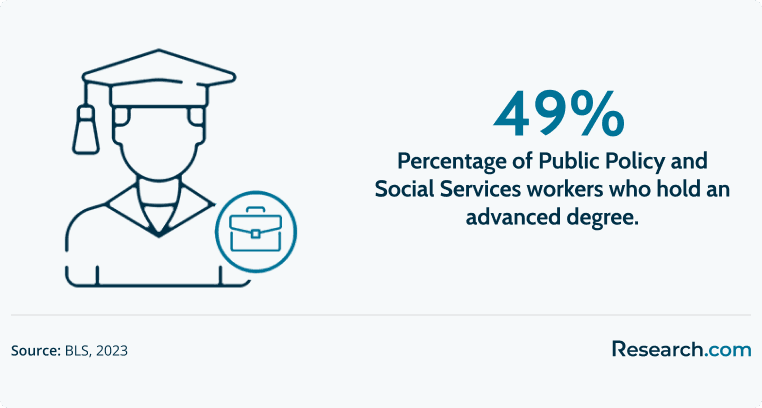
Public agencies and nonprofit organizations increasingly need leaders who can interpret data, justify budgets, evaluate programs, communicate with stakeholders, and make ethical decisions under resource constraints. In public policy and social services, 49% of all professionals now hold an advanced degree, which shows how common graduate education has become in the field.
The chart below illustrates how widely advanced education appears among professionals in public policy and social services.
What Types of Specializations Are Available in a One-Year Online MPA Program?
Specializations help turn a broad public administration degree into a more targeted career credential. The right concentration depends on the organizations you want to serve, the problems you want to solve, and the responsibilities you want to take on after graduation.
| Specialization Area | Best For Students Interested In | Potential Career Direction |
| Nonprofit Management | Fundraising, grant management, program operations, board relations, and mission-driven leadership. | Program manager, development leader, nonprofit executive director, community organization administrator. |
| Public Management | Government operations, agency leadership, budgeting, public personnel management, and service delivery. | Department administrator, city or county management roles, public program manager. |
| Healthcare | Public health systems, healthcare policy, patient services, and administrative leadership. | Healthcare administrator, public health program leader, health policy analyst. |
| Criminal Justice or Public Safety | Justice systems, emergency response, corrections, law enforcement administration, and public safety policy. | Public safety manager, criminal justice administrator, emergency management leader. |
| Human Resources or Organizational Leadership | Workforce planning, employee development, organizational change, and leadership in complex systems. | HR manager in public agencies, organizational development specialist, public-sector leadership roles. |
| Public Finance | Budget analysis, fiscal accountability, revenue planning, and financial oversight. | Budget analyst, finance manager, compliance-focused public administration roles. |
Match the Concentration to the Job Market You Want
Management analyst salaries can vary by location, and cities such as Berkeley, CA, and Aspen, CO, are identified among high-paying locations for management analysts. If you want to work in local government, consulting, or public finance, your specialization should support the type of employers and regional markets you are targeting.
Stacking a Specialization With a Professional Credential
Some students strengthen their MPA by pairing a concentration with a field-specific certification. For example, a student focused on public financial management might review certified fraud examiner certification requirements to understand how fraud prevention, compliance, and public funds oversight could complement an MPA background.
The following chart shows selected high-paying cities for management analysts and highlights why location can influence earning potential.
How to Choose the Best One-Year Online MPA Program
The best accelerated online MPA is not necessarily the fastest or cheapest option. It is the program that matches your career goals, schedule, budget, learning style, and sector focus while meeting credible quality standards.
- Verify accreditation first. Confirm institutional accreditation and, when relevant, specialized NASPAA accreditation. Do this before comparing tuition or course titles.
- Compare the full cost of attendance. Look at total tuition, fees, books or digital materials, travel requirements, and whether online students pay different rates.
- Review the curriculum against your target roles. A nonprofit leader, city manager, policy analyst, and public safety administrator may need different electives or concentrations.
- Check the capstone, practicum, or applied project. These experiences can help you demonstrate practical skills to employers.
- Ask about support for accelerated learners. Advising, writing support, library access, career services, and predictable course rotations matter more when the timeline is compressed.
- Research alumni outcomes. Look for graduates working in the agencies, nonprofits, consulting firms, or regions you are targeting.
After building a shortlist, use professional networking tools to contact recent alumni and ask specific questions about workload, faculty responsiveness, group projects, and whether the program helped them move toward their intended roles. Students worried about GPA requirements may also compare graduate options such as low GPA MBA programs, especially if they are considering adjacent business or administration degrees.
| Common Mistake | Why It Can Hurt You | Better Approach |
| Choosing only by program length | The fastest program may not match your work schedule or career needs. | Compare pace, support services, and course sequencing. |
| Looking only at cost per credit | Credit systems and required credits vary by program. | Ask for total tuition and mandatory fees for the full degree. |
| Ignoring accreditation | Accreditation affects credibility, aid eligibility, and employer confidence. | Verify institutional accreditation and check whether specialized accreditation applies. |
| Assuming all online programs feel the same | Some use live classes, while others are more asynchronous and self-paced. | Ask how courses are delivered and how often you must attend scheduled sessions. |
| Choosing a concentration without a career goal | A poorly matched specialization may not support your target role. | Map each specialization to job postings and alumni career paths. |
| Relying only on rankings | Rankings cannot capture every personal factor, such as workload fit or employer network. | Use rankings as a starting point, then compare your own priorities. |
What Career Paths Are Available for Graduates of a One-Year Online MPA Program?
Graduates of one year online MPA programs can apply their training in government, nonprofit, consulting, healthcare, public safety, education, and mission-driven private-sector roles. The degree is especially relevant for jobs involving public budgeting, policy implementation, program evaluation, organizational leadership, stakeholder communication, and service delivery.
Government and Public Agency Roles
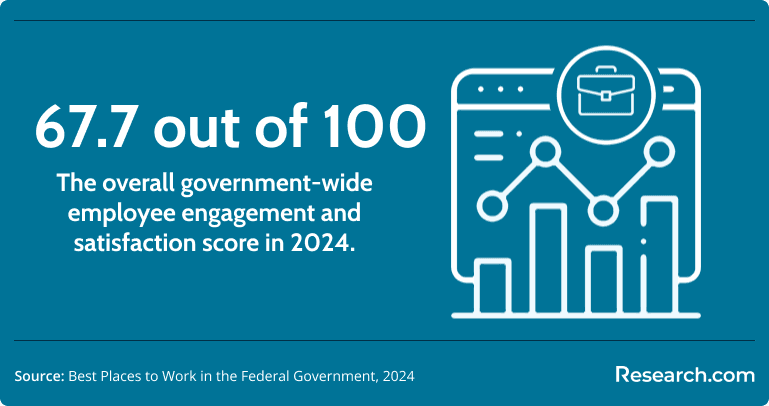
Traditional MPA pathways include local, state, and federal public administration roles such as city management, agency leadership, policy coordination, budgeting, and program management. The government-wide employee engagement score is 67.7 out of 100, which underscores the need for capable leaders who can improve organizational effectiveness and employee experience.
Nonprofit and Social Sector Leadership
MPA graduates may also pursue roles as nonprofit program directors, operations leaders, development officers, executive directors, or community initiative managers. These jobs often require a mix of mission focus, budgeting discipline, evaluation skills, and the ability to manage partnerships.
Private-Sector and Consulting Opportunities
Public administration skills can also transfer to consulting firms, government contractors, civic technology organizations, corporate social responsibility teams, and organizations that partner with public agencies. Some skills overlap with roles outside traditional public administration; for example, understanding systems, public needs, and service delivery can be relevant when evaluating a customer experience manager salary path.
| Career Area | How an MPA Helps | Examples of Relevant Skills |
| Government administration | Prepares students to manage programs, budgets, teams, and public services. | Policy implementation, budgeting, ethics, stakeholder communication. |
| Nonprofit management | Builds leadership skills for mission-driven organizations with limited resources. | Program evaluation, grant strategy, operations, community partnerships. |
| Policy analysis | Supports evidence-based decision-making and program improvement. | Research, quantitative methods, writing, regulatory analysis. |
| Public safety and emergency management | Provides management training for complex public service systems. | Risk assessment, interagency coordination, crisis leadership. |
| Government consulting | Applies public-sector knowledge to organizational improvement and strategic projects. | Process improvement, financial analysis, performance measurement. |
The visual below shows the most recent government-wide employee engagement score.
What Is the Job Market for Graduates of a One-Year Online MPA Program?
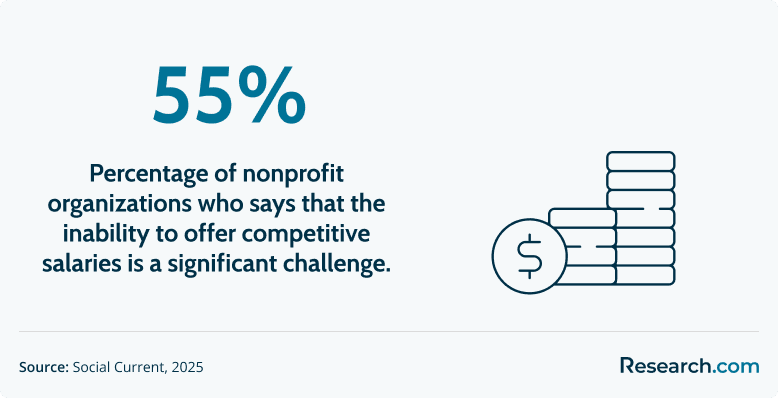
The job market for MPA graduates is shaped by public-sector workforce needs, nonprofit funding pressures, demand for evidence-based policy, and the need for leaders who can manage complex organizations. Nonprofits report notable compensation challenges: 55% say their inability to offer competitive salaries is a major hurdle.
That challenge does not mean the field lacks opportunity. It means organizations need leaders who can manage constrained budgets, evaluate programs, improve operations, and sustain services. An MPA can be useful for professionals who want to become those leaders.
Outlook for Analytical and Management Roles
The U.S. Bureau of Labor Statistics projects employment of management analysts to grow 9% over the next decade, which is much faster than the average for all occupations. This is relevant for MPA graduates because management analyst work often overlaps with program evaluation, organizational improvement, budgeting, and policy implementation.
Students interested in adjacent human services careers may also compare MPA outcomes with an online social work degree, especially if their goals involve direct services, clinical pathways, community advocacy, or social-sector leadership.
Current Trends Affecting Public Administration Careers
- Data-driven decision-making is becoming standard. Public agencies and nonprofits increasingly need leaders who can interpret performance metrics and defend funding decisions.
- Technology is changing service delivery. Civic technology, digital government services, and automation require administrators who understand both public values and operational systems.
- Workforce constraints remain a serious issue. Compensation pressure, turnover, and staffing shortages make management, retention, and organizational culture more important.
- Cross-sector collaboration is expanding. Many public problems now involve partnerships among government agencies, nonprofits, contractors, foundations, and private firms.
- Accountability expectations are rising. Funders, taxpayers, boards, and community members expect clearer evidence that programs work.
The following visual summarizes salary-related challenges reported by nonprofit organizations.
How Does a One-Year Online MPA Program Compare to a Cheap Online MBA Program?
A one-year online MPA and a lower-cost online MBA can both support leadership careers, but they are built for different professional goals. An MPA focuses on public administration, policy, ethics, budgeting, program evaluation, nonprofit management, and government operations. A cheap online MBA program usually emphasizes business strategy, corporate finance, marketing, operations, and private-sector management.
| Comparison Point | One-Year Online MPA | Cheap Online MBA |
| Primary focus | Public service, policy implementation, nonprofit leadership, and government management. | Business management, corporate strategy, finance, marketing, and operations. |
| Best fit | Professionals who want to lead agencies, nonprofits, public programs, or civic organizations. | Professionals who want broad business training for corporate, entrepreneurial, or management roles. |
| Typical coursework | Public budgeting, ethics, policy analysis, program evaluation, public leadership. | Accounting, finance, marketing, economics, strategy, organizational behavior. |
| Career network | Government, nonprofit, policy, public affairs, and social-sector contacts. | Corporate, entrepreneurial, consulting, finance, and general management contacts. |
| Decision rule | Choose this if your long-term work is tied to public value, policy, public funds, or mission-driven service. | Choose this if you want a broader business credential with stronger private-sector orientation. |
What Graduates Say About Completing a One-Year Online MPA
- David: "I had spent six years as a deputy director and could not move into the senior roles I wanted without a master's degree. Leaving my job was not an option, so the one-year online format made graduate school possible. Within nine months of finishing, I moved into a department director role, and the credential was a major reason that door opened."
- Jax: "My background was in civic technology, so I understood the software side, but I struggled to explain the policy consequences to decision-makers. The MPA gave me the public administration language and context I needed. Now I can explain both how the technology works and why it matters for more equitable public services."
- Leona: "I was leading a small environmental nonprofit and cared deeply about the mission, but the administrative demands were overwhelming. The nonprofit management track helped me learn grant writing, evaluation, and operations in a format I could manage while working. It gave me tools I could use immediately."
Questions to Ask Before Enrolling
- Is the institution regionally accredited, and does the MPA have specialized public administration accreditation where relevant?
- What is the exact total tuition, including fees and required materials?
- How many hours per week should students expect to study during the accelerated terms?
- Are classes asynchronous, synchronous, or a mix of both?
- Does the program require a capstone, practicum, internship, or applied project?
- Can working professionals extend the timeline if needed?
- Which concentrations are available, and how do they connect to your target roles?
- What career services are available to online graduate students?
- Where do recent graduates work?
- What happens if you need to stop out for a term because of work or family obligations?
Key Insights
- A one-year online MPA is best for experienced professionals who want public-service leadership training without stepping away from work.
- Program length varies across accelerated options, with listed timelines ranging from as little as 12 months or 1 year to 1-2 years.
- Total tuition for one year online MPA programs typically range from about $12,600 to over $42,000, with an expected average of around $24,500.
- Accreditation should be checked before cost, speed, or rankings; NASPAA accreditation is especially relevant for public administration programs.
- The strongest programs include practical coursework in budgeting, policy analysis, ethics, quantitative methods, leadership, and a capstone or practicum.
- Specializations matter. Choose nonprofit management, public finance, healthcare, criminal justice, human resources, or organizational leadership based on your target sector.
- An MPA is not the same as an MBA. Choose the MPA for public service, policy, and mission-driven leadership; choose an MBA for broader private-sector business training.
- Common mistakes include comparing only cost per credit, ignoring fees, assuming online programs are all equivalent, and choosing a concentration without mapping it to career goals.
References:
- Council on Foundations. (2024). 2024 Grantmaker Salary and Benefits Report shows turnover down, salary increases in wake of pandemic. Retrieved September 22, 2025, from https://cof.org/news/2024-grantmaker-salary-and-benefits-report-shows-turnover-down-salary-increases-wake-pandemic
- Data USA. (n.d.-a). Management analysts. Retrieved September 22, 2025, from https://datausa.io/profile/soc/management-analysts
- Data USA. (n.d.-b). Public administration. Retrieved September 22, 2025, from https://datausa.io/profile/naics/public-administration
- National Center for O*NET Development. (n.d.-a). 13-1111.00 - Management analysts. O*NET OnLine. Retrieved September 22, 2025, from https://www.onetonline.org/link/summary/13-1111.00
- National Center for O*NET Development. (n.d.-b). 19-3094.00 - Political scientists. O*NET OnLine. Retrieved September 22, 2025, from https://www.onetonline.org/link/summary/19-3094.00
- Organisation for Economic Co-operation and Development. (2025). OECD regulatory policy outlook 2025. Retrieved September 22, 2025, from https://www.oecd.org/content/dam/oecd/en/publications/reports/2025/04/oecd-regulatory-policy-outlook-2025_a754bf4c/56b60e39-en.pdf
- Partnership for Public Service. (n.d.). Government-wide findings. Best Places to Work in the Federal Government. Retrieved September 22, 2025, from https://bestplacestowork.org/analysis/government-wide-findings-overall/
- PayScale. (n.d.-a). Average management analyst salary. Retrieved September 22, 2025, from https://www.payscale.com/research/US/Job=Management_Analyst/Salary
- PayScale. (n.d.-b). Master of Public Administration (MPA) degree. Retrieved September 22, 2025, from https://www.payscale.com/research/US/Degree=Master_of_Public_Administration_(MPA)/Salary
- Social Current. (2025, February). Navigating workforce challenges: 2025 trends and solutions for the social sector. Retrieved September 22, 2025, from https://www.social-current.org/2025/02/navigating-workforce-challenges-2025-trends-and-solutions-for-the-social-sector
- U.S. Bureau of Labor Statistics. (2024, May). Occupational Employment and Wages, May 2023: 19-3094 Political Scientists. Occupational Employment Statistics. Retrieved September 22, 2025, from https://www.bls.gov/oes/2023/may/oes193094.htm
- U.S. Bureau of Labor Statistics. (n.d.-a). Field of degree: Public policy and social services. Occupational Outlook Handbook. Retrieved September 22, 2025, from https://www.bls.gov/ooh/field-of-degree/public-policy-and-social-services/public-policy-and-social-services-field-of-degree.htm
- U.S. Bureau of Labor Statistics. (n.d.-b). Management analysts. Occupational Outlook Handbook. Retrieved September 22, 2025, from https://www.bls.gov/ooh/business-and-financial/management-analysts.htm
- U.S. Bureau of Labor Statistics. (n.d.-c). Political scientists. Occupational Outlook Handbook. Retrieved September 22, 2025, from https://www.bls.gov/ooh/life-physical-and-social-science/political-scientists.htm
- Zippia. (n.d.). Management analyst demographics and statistics in the US. Retrieved September 22, 2025, from https://www.zippia.com/management-analyst-jobs/demographics/
- ZipRecruiter. (n.d.-a). Management analyst salary. Retrieved September 22, 2025, from https://www.ziprecruiter.com/Salaries/Management-Analyst-Salary
- ZipRecruiter. (n.d.-b). Political scientists salary. Retrieved September 22, 2025, from https://www.ziprecruiter.com/Salaries/Political-Scientists-Salary
- ZipRecruiter. (n.d.-c). Public administration salary. Retrieved September 22, 2025, from https://www.ziprecruiter.com/Salaries/Public-Administration-Salary
Other Things You Should Know About One-Year Online MPA Programs
The minimum admission requirements typically include a bachelor's degree from an accredited institution, a letter of recommendation, and a statement of purpose. Some programs may also require a GRE score or relevant work experience, specific to the admissions policies of 2027 offerings.
The best one-year online MPA programs in 2027 offer diverse curricula tailored to different professional goals. Some programs focus on public policy analysis, while others emphasize nonprofit management or global leadership. Specializations may include areas like health policy, urban planning, and environmental management, varying by institution.
No, many one-year online MPA programs do not require internships or practicum hours. Instead, they often use capstone projects, policy memos, or applied research papers to meet the program’s experiential requirement. Some programs let students choose a field placement, but it is usually optional.


