
2027 Best Online Cybercrime Degree Programs

Co-Founder and Chief Data Scientist
Choosing an online cybercrime degree is a practical decision about cost, credibility, flexibility, and career fit. Cybercrime programs prepare students to investigate digital attacks, secure systems, analyze evidence, and understand the legal and ethical rules that apply to cyber investigations. This guide is for students, working adults, military learners, and career changers comparing online cybercrime and cybersecurity degree options for 2027. You will learn what these programs teach, how long they take, what they cost, how employers view online credentials, and which factors matter most before enrolling.
Quick answer: Is an online cybercrime degree a good choice?
An online cybercrime degree can be a strong option if you want a flexible path into cybersecurity, digital forensics, cyber investigation, network defense, or information security analysis. The best programs combine technical labs, legal and ethical training, career support, and recognized accreditation. Graduates may qualify for cybersecurity roles with a median salary of $120,360, although pay depends on experience, location, employer, certifications, and specialization.
What are the main benefits of earning an online cybercrime degree?
- Career access: A cybercrime degree can help students prepare for roles in cybersecurity operations, digital forensics, cyber investigation, compliance, and information security.
- Strong salary potential: Information security analysts have a median annual salary of $120,360, with higher earnings possible for experienced professionals and specialized roles.
- Flexible learning: Online programs can make it easier to study while working, parenting, serving in the military, or managing other responsibilities.
- Practical skill development: Quality programs include virtual labs, security tools, simulations, and applied projects rather than relying only on lectures.
- Potential cost control: Online students may reduce relocation, commuting, and housing costs, although tuition and fees still vary widely by school.
What can I expect from an online cybercrime degree program?
An online cybercrime degree teaches students how cyberattacks happen, how digital evidence is collected, how networks are defended, and how organizations respond after an incident. Although program names vary, many cybercrime degrees overlap with cybersecurity, information assurance, digital forensics, and cyber operations programs.
Students typically study network security, digital forensics, ethical hacking, cyber law, risk management, operating systems, scripting, and incident response. Strong programs also use virtual lab environments where students practice identifying vulnerabilities, analyzing logs, documenting evidence, and responding to simulated attacks. This matters because cybersecurity hiring often depends on what applicants can demonstrate, not only what courses they completed.
Prospective students often ask whether an online cybercrime program is manageable, especially if they are new to technology. The honest answer is that the work is technical and requires persistence. If you are wondering, is a cybersecurity degree easy, it is better to think in terms of preparation: students who build basic networking, computer systems, and time-management skills before enrolling usually adjust more smoothly.
Where can I work with an online cybercrime degree?
Graduates of online cybercrime programs can work wherever organizations need to protect data, investigate threats, or meet security requirements. Common employers include financial institutions, healthcare organizations, technology companies, cybersecurity consulting firms, insurance companies, government agencies, defense contractors, and law enforcement organizations.
Some graduates focus on prevention, such as monitoring networks or strengthening system defenses. Others focus on investigation, such as tracing digital evidence, supporting legal cases, or analyzing malware and intrusion activity. The right workplace depends on whether you prefer technical operations, compliance, investigations, policy, or client-facing consulting.
How much can I make with an online cybercrime degree?
Cybercrime-related earnings vary by job title, region, employer, clearance requirements, technical depth, and professional experience. A common benchmark is the information security analyst occupation. As of May 2023, these professionals earned a median annual salary of $120,360. The lowest 10% earned under $69,210, while the highest 10% earned more than $182,370.
Students should treat salary data as a guide, not a guarantee. Entry-level salaries may be lower, especially for graduates without internships, certifications, security clearances, or prior IT experience. Salary growth is often tied to hands-on skills, specialization, and the ability to handle higher-risk systems or leadership responsibilities.
- Best online cybercrime degree programs for 2027
- Program length and completion timeline
- Online versus campus-based cybercrime programs
- Average cost of an online cybercrime degree
- Financial aid options for online cybercrime students
- Admission requirements and prerequisites
- Common courses in cybercrime degree programs
- Cybercrime degree specializations
- How to choose the right online cybercrime program
- Career paths after graduation
- Cybercrime job market and outlook
- Data science skills for cybercrime careers
- Computer science training and cybercrime expertise
- How employers evaluate online cybercrime degrees
- Ethics in cybercrime workJob outlook summary
- Accelerated online cybercrime degree options
- Student support in online cybercrime programs
- Common challenges in online study
- How online programs connect academics and industry
- Interdisciplinary skills that can support cybercrime workIndustry connection overview
- Current trends in cybercrime education and careers
- Simulation and game-design methods in cybercrime educationEmerging trendsAccelerated optionsCareer outlook
- Is an online cybercrime degree worth it?
- Health information management and cybersecurity strategy
- How industry certifications support a cybercrime degree
- Data science and cybercrime career prospects
- Artificial intelligence and cybercrime defense
- Internships and real-world cybercrime experienceCertification planningAdditional planning
- Next steps after earning an online cybercrime degree
- Additional IT expertise for cybercrime careersCareer planningIT skill developmentPost-graduation stepsAdditional planning
Best Online Cybercrime Degree Programs for 2027
How Research.com ranks schools
Selecting a degree program affects your finances, schedule, and career options, so rankings should be used as a starting point rather than the only deciding factor. Research.com’s ranking process is designed to give prospective students transparent, data-informed comparisons. Our ranking methodology draws on established data sources, including:
- IPEDS database
- Peterson’s Distance Learning Licensed Data Set
- College Scorecard database
- National Center for Education Statistics
The programs below were selected using indicators such as program quality, affordability, and job placement rates. Before applying, confirm current tuition, fees, curriculum, transfer policies, and accreditation directly with each institution.
| Rank | School | Program | Cost per Credit | Credits | Accreditation |
| 1 | Colorado State University Global | Bachelor’s in Cybersecurity | $375 | 120 | Higher Learning Commission (HLC) |
| 2 | Regent University | BS in Cybersecurity | $395 | 120 | Computing Accreditation Commission of ABET |
| 3 | George Mason University | Bachelor of Applied Science in Cybersecurity | $546.50 (in-state), $1,523.50 (out-of-state) | 120 | Southern Association of Colleges and Schools Commission on Colleges (SACSCOC) |
| 4 | Excelsior College | BS in Cybersecurity | $510 | 120 | Middle States Commission on Higher Education (MSCHE) |
| 5 | Drexel University | BS in Computing and Security Technology | $530 | 120 | MSCHE |
| 6 | Bellevue University | Cybersecurity Bachelor’s | $449 | 127 | HLC |
| 7 | Hallmark University | BS in Cybersecurity | $550 | 120 | Accrediting Commission of Career Schools and Colleges |
| 8 | Old Dominion University | Bachelor’s in Cybersecurity | $408 (in-state), $439 (out-of-state) | 120 | SACSCOC |
| 9 | University of Maryland Global Campus | BS in Cybersecurity Technology | $324 (in-state), $499 (out-of-state) | 120 | MSCHE |
| 10 | City University of Seattle | BS in Cybersecurity | $525 | 180 (quarter credits) | Northwest Commission on Colleges and Universities |
1. Colorado State University (CSU) Global
CSU Global offers an online Bachelor’s in Cybersecurity built for students who want a flexible route into technical security work. The curriculum covers core cyber concepts, network protection, and digital forensics while supporting learners who may be balancing school with employment.
- Program length: Four years
- Tracks/concentrations: Cybersecurity, Information Technology
- Cost per credit: $375
- Required credits to graduate: 120
- Accreditation: Higher Learning Commission (HLC)
2. Regent University
Regent University delivers an online Bachelor of Science in Cybersecurity that combines cyber operations, data protection, and cyber ethics with instruction shaped by a Christian worldview. Students study topics such as network security, digital forensics, and ethical decision-making in cyber environments.
- Program length: Four years
- Tracks/concentrations: Cybersecurity Policy, Technical Cyber Operations
- Cost per credit: $395
- Required credits to graduate: 120
- Accreditation: Computing Accreditation Commission of ABET
3. George Mason University
George Mason University offers an online Bachelor of Applied Science in Cybersecurity designed for students interested in applied technical training and public-sector cybersecurity. The program’s relationship with the NSA (National Security Agency) and DHS (Department of Homeland Security) supports a curriculum aligned with government-oriented expectations.
- Program length: Four years
- Tracks/concentrations: Government Cybersecurity, Cyber Policy
- Cost per credit: $546.50 (in-state), $1,523.50 (out-of-state)
- Required credits to graduate: 120
- Accreditation: Southern Association of Colleges and Schools Commission on Colleges (SACSCOC)
4. Excelsior College
Excelsior College provides a Bachelor of Science in Cybersecurity with coursework in network defense, cryptography, and incident response. Its asynchronous format can be useful for working adults who need to complete assignments outside a traditional class schedule.
- Program length: Four years
- Tracks/concentrations: Network Security, Cyber Operations
- Cost per credit: $510
- Required credits to graduate: 120
- Accreditation: Middle States Commission on Higher Education (MSCHE)
5. Drexel University
Drexel University offers an online Bachelor of Science in Computing and Security Technology with an emphasis on cybersecurity management, systems administration, and applied technical problem-solving. The school’s co-op model can help students connect classroom learning to workplace experience.
- Program length: Four to five years
- Tracks/concentrations: Computing Technology, Security Technology
- Cost per credit: $530
- Required credits to graduate: 120
- Accreditation: MSCHE
6. Bellevue University
Bellevue University offers an online cybersecurity bachelor’s program that uses labs and industry-oriented tools to teach defensive security. Students work through simulated cyberattack scenarios and practical exercises that connect theory with workplace tasks.
- Program length: Four years
- Tracks/concentrations: Cybersecurity, Cyber Investigation
- Cost per credit: $449
- Required credits to graduate: 127
- Accreditation: HLC
7. Hallmark University
Hallmark University provides an online Bachelor of Science in Cybersecurity focused on identifying threats, protecting systems, and responding to security events. The program emphasizes hands-on work in ethical hacking, network defense, and cyber analysis.
- Program length: Four years
- Tracks/concentrations: Network Defense, Cyber Analysis
- Cost per credit: $550
- Required credits to graduate: 120
- Accreditation: Accrediting Commission of Career Schools and Colleges
8. Old Dominion University
Old Dominion University offers an online Bachelor’s in Cybersecurity for students preparing for public- and private-sector roles. Coursework includes practical work in risk assessment, ethical hacking, forensics, and cyber operations.
- Program length: Four years
- Tracks/concentrations: Cyber Operations, Cyber Policy
- Cost per credit: $408 (in-state), $439 (out-of-state)
- Required credits to graduate: 120
- Accreditation: SACSCOC
9. University of Maryland Global Campus (UMGC)
UMGC offers a Bachelor of Science in Cybersecurity Technology that blends networking, cybersecurity, and digital forensics. The program also includes opportunities to work toward certifications alongside degree requirements, which may strengthen job readiness.
- Program length: Three to four years
- Tracks/concentrations: Cybersecurity Technology, Network Security
- Cost per credit: $324 (in-state), $499 (out-of-state)
- Required credits to graduate: 120
- Accreditation: MSCHE
10. City University of Seattle
City University of Seattle offers a Bachelor of Science in Cybersecurity with flexible full-time and part-time study options. The curriculum covers risk management, cryptography, digital forensics, and cyber operations for students who need an adaptable schedule.
- Program length: Four years
- Tracks/concentrations: Information Security, Cyber Operations
- Cost per credit: $525
- Required credits to graduate: 180 (quarter credits)
- Accreditation: Northwest Commission on Colleges and Universities
How long does it take to complete an online cybercrime degree program?
Most online cybercrime bachelor’s degrees require about 120 credit hours. Full-time students commonly finish in three to five years, while part-time students may need a little over six years. Your timeline will depend on transfer credits, course load, term structure, prior learning credit, military credit, and whether the school offers accelerated pacing.
Some students shorten their path by choosing accelerated online bachelor’s degree programs or by transferring completed college coursework. Before enrolling, ask the admissions office for an official transfer evaluation so you know how many credits you still need and what your actual graduation timeline may be.
How does an online cybercrime degree compare to an on-campus program?
Online and campus-based cybercrime programs can cover the same academic content, including network defense, cyber law, digital forensics, risk management, and incident response. The main difference is delivery. Online programs use learning platforms, virtual labs, remote collaboration tools, and digital simulations, while campus programs may offer in-person labs, local networking, and face-to-face class meetings.
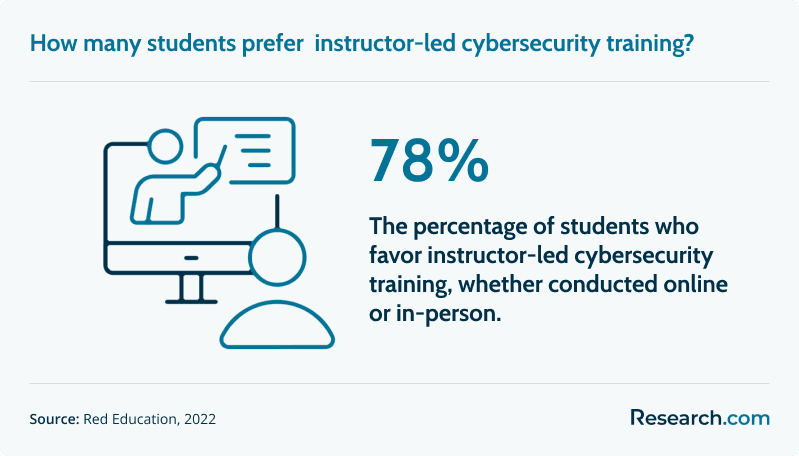
Mode of study does not automatically determine program quality. Accreditation, curriculum depth, faculty experience, lab access, career services, and employer partnerships matter more. A Red Education survey found that 78% of students prefer instructor-led training, whether virtual or in-person, over self-paced online models. That finding is useful when comparing programs: online does not have to mean unsupported or entirely self-directed.
Students who want a shorter skills-focused option may also compare degree programs with cybersecurity certification courses. Certificates can support targeted skill building, while degrees usually provide broader academic preparation and may be preferred for roles requiring a bachelor’s credential.
| Factor | Online cybercrime degree | On-campus cybercrime degree | Best fit |
| Schedule | Often asynchronous or partly flexible | Usually follows set class times | Online may suit working adults; campus may suit students who want routine |
| Labs | Uses virtual labs, simulations, and remote tools | May use physical labs and campus equipment | Either can work if labs are current and hands-on |
| Networking | Relies on virtual events, forums, and online career services | Offers in-person clubs, employer visits, and campus events | Choose based on how you prefer to build professional contacts |
| Cost considerations | May reduce commuting or relocation expenses | May include housing, travel, and campus fees | Compare total cost, not tuition alone |
| Employer perception | Strong if accredited and skill-based | Strong if accredited and skill-based | Employers generally care about ability, experience, and credential quality |
What is the average cost of an online cybercrime degree program?
The average cost of an online cybercrime degree can vary substantially, with examples ranging from $38,000 to $66,000. Public universities may charge lower tuition for in-state students, while some online schools use flat tuition regardless of residency. Tuition is only one part of the cost; students should also check fees, books, software, lab requirements, exam fees, and whether credits transfer.
| Institution | Credits Required | Cost per Credit | Estimated Total Cost |
| CSU Global | 120 | $375 | $38,880 |
| Bellevue University | 127 | $449 | $57,023 |
| Hallmark University | 120 | $550 | $66,000 |
When comparing costs, calculate the net price after grants, scholarships, employer reimbursement, military benefits, and transfer credits. A program with a higher sticker price may cost less if it accepts more credits or offers better aid, while a cheaper program may become expensive if many credits do not transfer.
What financial aid options are available for online cybercrime students?
Online cybercrime students may qualify for federal student aid, grants, scholarships, employer tuition assistance, military education benefits, payment plans, and school-based awards. Eligibility depends on the school, enrollment status, accreditation, financial need, academic record, and program structure.
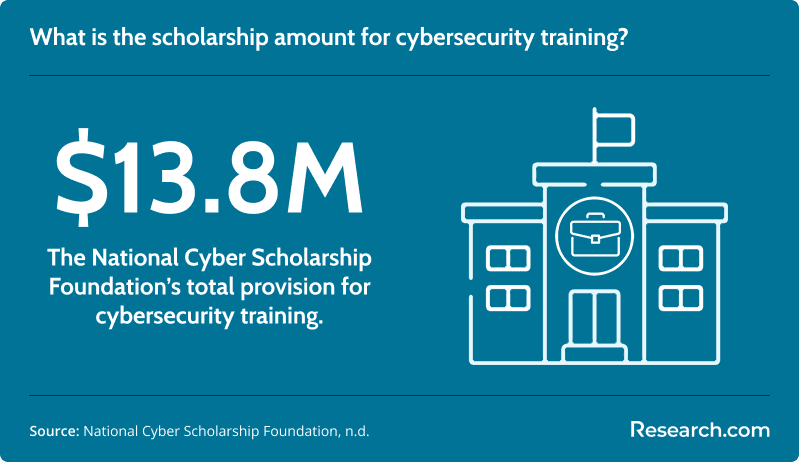
Cybersecurity students should also search for STEM-related scholarships and cyber-focused funding. For example, the National Cyber Scholarship Foundation works to address the cyber skills shortage by offering college scholarships totaling $2 million and providing $13.8 million in cybersecurity training.
- Start with the FAFSA: Federal aid usually begins with the Free Application for Federal Student Aid if the school participates in federal aid programs.
- Ask about cyber-specific awards: Some institutions set aside funding for cybersecurity, computer science, or STEM students.
- Check employer benefits: Working adults should ask whether their employer reimburses tuition for security, IT, or compliance-related degrees.
- Confirm online eligibility: Some scholarships or benefits have enrollment, residency, or program-format rules.
- Compare total debt: Estimate your monthly loan payment before borrowing, especially if you are entering the field without prior IT experience.
What are the prerequisites for enrolling in an online cybercrime degree program?
Most bachelor’s-level cybercrime programs require a high school diploma or equivalent. Schools may also recommend preparation in mathematics, computer literacy, basic programming, and introductory networking. Competitive or accelerated programs may consider standardized test scores, prior college credit, military training, relevant work experience, or industry certifications.
If your long-term goal is consulting, investigation, or security leadership, reviewing how to become a cybersecurity consultant can help you plan beyond admission requirements. A degree can be one step, but employers may also expect hands-on experience, communication skills, certifications, and a record of solving real security problems.
Some schools, including Regent University, may consider applicants with IT certifications or professional experience. Specialized tracks may require prerequisite coursework in statistics, coding, or basic networking. Ask each program whether prerequisites can be completed after admission or must be finished before starting major courses.
What courses are typically included in an online cybercrime degree?
Cybercrime programs usually combine technical defense, investigation, legal, and management coursework. The exact curriculum differs by school, but students commonly encounter these subjects:
- Network security: Students learn how networks are built, monitored, attacked, and protected.
- Digital forensics: Courses cover methods for finding, preserving, analyzing, and reporting digital evidence.
- Ethical hacking: Students study penetration testing methods used to identify vulnerabilities before attackers exploit them.
- Cyber law: Coursework explains legal rules, privacy obligations, evidence handling, and cybercrime statutes.
- Risk management: Students learn how organizations identify, prioritize, and reduce security risks.
- Incident response: Courses teach how to prepare for, detect, contain, investigate, and recover from cyber incidents.
- Security operations: Students may work with logs, alerts, monitoring tools, and response workflows.
CyberSeek identifies information assurance and security operations among the top in-demand skills by CyberSeek, which is why students should look for programs with applied labs in these areas.
What types of specializations are available in online cybercrime degree programs?
Specializations help students focus their degree on a specific career direction. Cybercrime and cybersecurity are also among fields that may support remote-friendly work, which is why some students compare them with the best associate degrees for remote work and other flexible education options.
| Specialization | What it emphasizes | Good fit for students who want to... |
| Digital Forensics | Evidence collection, preservation, analysis, and reporting | Investigate breaches, support legal cases, or work in cybercrime units |
| Cyber Intelligence | Threat research, adversary behavior, risk indicators, and proactive defense | Analyze emerging threats and help organizations prepare before attacks occur |
| Network Security | Network architecture, monitoring, hardening, and intrusion prevention | Protect enterprise systems and work in security operations or infrastructure roles |
| Cybercrime Investigation | Technical investigation, legal process, evidence handling, and criminal patterns | Blend cybersecurity skills with investigative or law enforcement interests |
How do you choose the best online cybercrime degree program?
The best online cybercrime program is not always the cheapest, fastest, or highest ranked. It is the program that fits your goals, budget, learning style, and career requirements while offering credible academic quality. Use the factors below to compare schools carefully.
Accreditation
Accreditation affects financial aid eligibility, transfer credit, graduate school options, and employer confidence. Students should verify institutional accreditation and, where relevant, program-level recognition. If you are comparing nationally accredited universities with regionally accredited options, ask how credits transfer and how employers in your target field view the credential.
Faculty expertise
Cybercrime changes quickly, so faculty experience matters. Look for instructors with professional cybersecurity backgrounds, digital forensics experience, security certifications, research activity, or current industry involvement. Faculty who understand real incidents can help students connect theory to practice.
Flexibility
Online programs differ in structure. Some are asynchronous, some require live sessions, and others use accelerated terms. Choose a format you can sustain. A flexible program is only helpful if you can keep pace with labs, exams, group projects, and deadlines.
Cost and financial fit
Compare tuition, fees, transfer credit policies, required equipment, software costs, and certification exam expenses. Students focused on affordability may want to review the most affordable online cybersecurity degree programs while still checking accreditation and curriculum quality.
Program reputation and outcomes
Look for transparent information about completion, career services, internship access, alumni outcomes, employer partnerships, and graduate feedback. Rankings can narrow your search, but they should not replace direct questions to admissions, faculty, and career services.
Questions to ask before enrolling
- Is the institution accredited, and is the program recognized by any cybersecurity-related accreditor or partner?
- How many transfer credits will the school accept, and which major requirements will still remain?
- Are labs virtual, instructor-guided, self-paced, or tied to specific software platforms?
- Does the program prepare students for certifications, and are exam costs included?
- What career services are available to online students?
- Are internships, co-ops, or project-based experiences available remotely?
- What is the total estimated cost after fees and required materials?
- Can the program support your preferred specialization, such as forensics, policy, or network defense?
What career paths are available for graduates of online cybercrime degree programs?
Cybercrime graduates can move into technical, investigative, compliance, and advisory roles. Students interested in legal systems, evidence handling, and investigation may benefit from understanding how cybersecurity overlaps with criminal justice degree programs. That combination can be useful for cybercrime investigation, fraud analysis, digital evidence work, and public-sector roles.
Cybercrime is also often discussed among top degree programs to pursue because cybersecurity skills are needed across industries. Graduates may work alongside network administrators, computer systems analysts, compliance officers, software teams, and executive leadership.
According to the U.S. Bureau of Labor Statistics (BLS), information security analysts held approximately 180,700 positions in 2023. Most were employed in computer systems design and finance.
| Career path | Typical focus | Useful preparation |
| Information security analyst | Monitor systems, analyze threats, and improve defenses | Network security, incident response, risk management, security operations |
| Digital forensics analyst | Collect and analyze digital evidence after incidents | Forensics tools, evidence handling, documentation, cyber law |
| Cybercrime investigator | Investigate online fraud, intrusions, identity theft, or related offenses | Cybercrime law, investigative procedure, digital evidence, reporting |
| Security consultant | Assess risks and recommend improvements for clients or employers | Technical breadth, communication, auditing, certifications, client management |
| Incident response specialist | Contain, investigate, and recover from cyberattacks | Malware basics, log analysis, response playbooks, communication under pressure |
| Compliance or risk analyst | Help organizations meet security, privacy, and regulatory requirements | Risk frameworks, policy writing, privacy rules, business communication |
What is the job market for graduates with an online cybercrime degree?
The job market for cybercrime and cybersecurity graduates is strong, especially in industries that manage sensitive data or critical systems. BLS projects 33% growth in cybersecurity roles from 2023 to 2033, which is much faster than many occupations.
Cybersecurity can also be financially attractive compared with many bachelor’s-level career paths, which is why students often compare it with highest-paying bachelor’s degree programs. Still, job outcomes depend on more than the degree. Employers commonly look for hands-on labs, internships, certifications, communication skills, and the ability to troubleshoot real systems.
As of May 2023, information security analysts had a median annual salary of $120,360. The lowest 10% earned under $69,210, and the highest 10% earned more than $182,370.
Fast-track your education with accelerated online cybercrime degrees
Accelerated online cybercrime degrees can help motivated students finish more quickly, especially if they already have transfer credits, military training, IT certifications, or professional experience. These programs may use shorter terms, heavier course loads, prior learning assessment, or year-round enrollment.
Acceleration is not automatically better. A faster program can be valuable if you have time for intensive study and already understand basic IT concepts. It can be risky if you are new to computing, need more instructor support, or plan to work full time. Students comparing time-saving options can also review fastest bachelor's degree programs to understand how accelerated schedules are structured.
Can integrating data science enhance my cybercrime career?
Data science skills can strengthen cybercrime work because many security decisions depend on pattern recognition, anomaly detection, log analysis, and risk modeling. Cyber professionals who can interpret large datasets may be better prepared to identify unusual behavior, support threat intelligence, and improve incident response decisions. Students who want deeper analytics training may compare cybercrime coursework with options such as the cheapest online data science master's, especially if they plan to move into security analytics or threat intelligence.
Can an accelerated computer science degree boost my cybercrime expertise?
Computer science training can complement cybercrime education by building stronger foundations in programming, algorithms, systems, databases, and software architecture. These skills are useful for malware analysis, secure coding, vulnerability research, and automation. Students who want a broader computing background may compare cybercrime programs with the fastest computer science degree pathways, particularly if they want to move into technical engineering roles.
How do employers evaluate an online cybercrime degree?
Employers usually assess an online cybercrime degree by looking at the school’s accreditation, the relevance of the curriculum, the candidate’s technical ability, and proof of applied experience. The diploma format matters less when applicants can show labs, projects, internships, certifications, and clear communication skills.
Hiring managers may compare cybercrime graduates with candidates from broader computing backgrounds, including applicants pursuing jobs with computer science degree pathways. To compete well, online students should build a portfolio that includes incident reports, lab writeups, scripts, security assessments, or forensics documentation they can discuss professionally.
Why does ethics matter in cybercrime?
Cybercrime professionals work with sensitive systems, personal data, surveillance tools, evidence, and sometimes law enforcement processes. Ethical judgment is essential because technical power can be misused. Students must learn how to protect organizations while respecting privacy, legal boundaries, civil liberties, and evidence-handling standards.
Students who need a lower-cost path into the field may begin by comparing the cheapest online cyber security degree options, but affordability should not come at the expense of ethics, legal training, or hands-on practice.
Key ethical issues in cybercrime work
- Data privacy: Security professionals may handle personal, financial, medical, or confidential business information and must understand privacy obligations such as GDPR, HIPAA, and related rules.
- Digital surveillance: Monitoring can help detect threats, but excessive or unauthorized surveillance can violate trust and legal protections.
- Cybersecurity and human rights: Actions such as “hacking back” can be illegal or harmful, especially if they affect innocent third parties.
- Law enforcement investigations: Cybercrime investigations require proper authorization, documentation, chain of custody, and respect for legal limits.
How ethics should appear in the curriculum
- Ethical hacking rules and authorization requirements
- Cybercrime laws, privacy law, and regulatory responsibilities
- Evidence handling and documentation standards in digital forensics
- Conflicts between organizational security and individual rights
- Professional conduct when using powerful security tools
What support systems can improve your online cybercrime education?
Support services can make a major difference in online cybercrime programs because technical coursework can be demanding. Strong programs offer virtual tutoring, technical help desks, instructor office hours, writing support, career coaching, cybersecurity clubs, mentorship, and access to discussion forums or lab support.
Students comparing broader technology options may also review the cheapest computer science degree programs, but cybercrime students should prioritize support that directly helps with labs, projects, internships, and job preparation.
What are the challenges and solutions in pursuing an online cybercrime degree?
Online cybercrime students often face time pressure, isolation, technical lab problems, and difficulty staying disciplined without a campus routine. The solution is not simply “work harder.” Students need a realistic schedule, reliable equipment, strong communication with instructors, and a plan for completing labs before deadlines.
Some students also add specialized graduate or technical training later, such as a masters in AI online, but it is usually better to master core cyber fundamentals first before layering on advanced interdisciplinary skills.
| Common mistake | Why it can hurt you | Better approach |
| Choosing a school without checking accreditation | It may affect aid, transfer credit, graduate admission, or employer confidence | Verify accreditation through official school and accreditor sources |
| Looking only at tuition | Fees, software, books, and lost transfer credits can change the real cost | Calculate total program cost after aid and transfer evaluation |
| Assuming online means easy | Cyber labs, programming, and forensics work require consistent effort | Build a weekly study routine and ask about tutoring or lab support |
| Ignoring hands-on experience | Employers may expect projects, internships, or lab evidence | Create a portfolio of labs, reports, and applied work |
| Relying only on rankings | A ranked program may not fit your budget, schedule, or specialization | Use rankings as one input alongside accreditation, cost, curriculum, and support |
| Assuming salary outcomes are guaranteed | Pay depends on experience, location, role, and skill level | Compare job postings in your target region and build marketable skills early |
How do online cybercrime programs bridge the gap between academics and industry?
Good online cybercrime programs connect coursework to workplace expectations through applied labs, capstone projects, guest speakers, cyber ranges, virtual career fairs, employer partnerships, and internship coordination. These features help students understand how security teams operate outside the classroom.
Industry connection is especially important for students without prior IT experience. A degree can provide theory, but employers also want evidence that you can troubleshoot, document findings, work with tools, and communicate risk. Students building a broader technical foundation may compare cybercrime with affordable online IT degrees, particularly if they want a stronger systems administration or infrastructure background before specializing.
How can interdisciplinary skills enrich an online cybercrime degree?
Cybercrime does not exist in isolation. Professionals often work with legal teams, compliance officers, business leaders, software developers, data analysts, healthcare administrators, and law enforcement. Skills in writing, statistics, legal reasoning, business communication, and data analysis can make a cybersecurity graduate more useful in real organizations.
Not every interdisciplinary option is equally relevant to every student. For example, an online biotechnology pathway such as the best online biotechnology master's degree may be useful only for learners interested in biotech data security, research systems, or regulated scientific environments. The key is to choose complementary skills that support your target industry rather than adding credentials without a clear purpose.
Emerging trends in cybercrime education and careers
Cybercrime education is changing because attackers, tools, and employer expectations continue to evolve. Students should look for programs that update course content, incorporate current tools, and teach adaptable problem-solving rather than focusing only on fixed procedures.
AI and machine learning in security work
Artificial intelligence and machine learning are increasingly relevant to threat detection, anomaly analysis, alert triage, and security automation. Students do not need to become AI researchers to work in cybercrime, but they should understand how automated tools can help and where human judgment is still required.
Certifications as career signals
Degrees provide academic breadth, while certifications can validate specific job-ready skills. Many cybersecurity professionals use certifications in areas such as penetration testing, cloud security, incident response, and security management to support advancement.
Remote and flexible career options
Cybersecurity work may offer remote or hybrid possibilities, especially in monitoring, analysis, consulting, compliance, and security operations roles. Students exploring the field broadly can review what can you do with a cyber security degree to compare roles, industries, and skill expectations.
Communication and business fluency
Technical skill alone is not enough. Cybercrime professionals must explain risk, write clear reports, document evidence, justify controls, and communicate with nontechnical stakeholders. Programs that include writing, presentations, teamwork, and policy analysis can better prepare students for advancement.
How can game design principles enhance cybercrime education?
Cybercrime training often benefits from simulation. Gamified labs, capture-the-flag exercises, branching incident scenarios, and interactive cyber ranges can help students practice decision-making in a low-risk environment. These methods can make complex topics more engaging while still teaching serious skills such as triage, investigation, and response.
Instructional design ideas from online schools for game design can be useful when cybercrime programs want to build realistic, interactive learning experiences. The goal is not entertainment for its own sake; it is better practice, stronger feedback, and more realistic preparation for cyber incidents.
Is an online cybercrime degree worth the investment?
An online cybercrime degree may be worth it if the program is accredited, affordable for your situation, aligned with your career goal, and strong in hands-on learning. It may not be worth it if the total cost creates unmanageable debt, the curriculum is outdated, the school lacks credible accreditation, or the program does not provide enough technical practice.
Students should compare expected cost with realistic career outcomes. Accelerated pathways, including options such as the shortest masters degree, can reduce time in school for some learners, but speed should not replace depth when technical competence is essential.
Who should consider an online cybercrime degree?
- Working adults who need flexibility but want a bachelor’s credential
- Students interested in digital forensics, cyber investigation, or security operations
- IT professionals who want to move into cybersecurity roles
- Career changers willing to build technical foundations and complete hands-on labs
- Students who want a structured academic path rather than only self-study
Who may want a different path?
- Students who need immediate job entry and cannot commit to a multi-year degree
- Learners who only need one narrow skill, such as a specific certification or tool
- Students who dislike technical troubleshooting, systems thinking, or continuous learning
- Applicants whose target role requires a different major, clearance path, or specialized training
Could health information management strengthen cybercrime strategies?
Healthcare organizations manage highly sensitive data and operate under strict privacy and compliance requirements. Cybercrime students interested in healthcare security may benefit from understanding health information management, medical data workflows, and privacy rules. An option such as an affordable HIM bachelor's degree may be relevant for students who want to specialize in protecting healthcare information systems, though it is not necessary for every cybersecurity career.
How can industry certifications complement an online cybercrime degree?
A cybercrime degree can provide broad academic preparation, while certifications can show employers specific technical competencies. Credentials such as Certified Information Systems Security Professional (CISSP), Certified Ethical Hacker (CEH), and CompTIA Security+ may help validate knowledge in security principles, ethical hacking, and professional practice.
Certifications should be selected based on your target job, not collected randomly. Entry-level students may begin with foundational credentials, while experienced professionals may pursue advanced or specialized certifications. Learners interested in data-heavy security problems may also explore adjacent fields such as masters in bioinformatics online when their work involves complex scientific or biomedical datasets.
Can integrating data science with cybercrime education enhance career prospects?
Combining cybercrime education with data science can be valuable for students interested in security analytics, fraud detection, threat intelligence, or risk modeling. Data-literate cyber professionals can analyze large logs, identify unusual patterns, and communicate evidence-based findings. Students considering analytics-heavy paths can compare cybersecurity roles with broader data science careers to decide whether they want to specialize in security or move toward analytics more generally.
How can artificial intelligence transform cybercrime strategies?
Artificial intelligence can support cybercrime defense by helping security teams process large volumes of alerts, identify anomalies, prioritize risks, and automate parts of incident response. However, AI does not remove the need for human review, ethical judgment, or technical understanding. Students who want formal AI training may compare cybercrime coursework with the cheapest artificial intelligence degree online, especially if they plan to work in security automation or AI-enabled threat detection.
How can real-world internships enhance your cybercrime education?
Internships, co-ops, apprenticeships, and project-based work help students move from classroom knowledge to job-ready experience. A good internship may expose students to ticketing systems, vulnerability reports, security monitoring, documentation standards, compliance tasks, or digital evidence workflows.
Hands-on experience is especially important for students without a prior IT background. Some learners begin with associate-level preparation and entry roles before advancing; comparing associate degree cyber security jobs can help students understand shorter pathways and early-career options.
What are the next steps after earning an online cybercrime degree?
After graduation, focus on converting your degree into evidence of job readiness. Update your resume, build a portfolio, prepare for interviews, pursue relevant certifications, and apply for roles that match your current skill level. If you want further specialization, compare advanced certificates, graduate programs, and additional cyber security degree online options before committing to more tuition.
- Build a portfolio: Include lab reports, incident response exercises, forensics writeups, scripts, or capstone projects that do not expose confidential data.
- Target realistic entry roles: Look for security analyst, SOC analyst, compliance analyst, junior forensics, IT support with security duties, or risk analyst openings.
- Earn role-aligned certifications: Choose credentials that match job postings in your target market.
- Network intentionally: Attend virtual events, alumni sessions, local security groups, and employer webinars.
- Keep learning: Cybersecurity changes quickly, so continuing education is part of the profession.
Can supplementary IT expertise further boost your cybercrime career?
Additional IT skills can make cybercrime graduates more competitive because security work depends on understanding systems, networks, cloud environments, identity management, and enterprise operations. Skills in cloud computing, scripting, Linux, Windows administration, databases, and IT project management can help graduates troubleshoot more effectively and communicate with technical teams.
Students who want broader technology career options can compare cybercrime roles with top paying information technology jobs. This comparison can clarify whether your best path is cyber investigation, security operations, cloud security, IT leadership, or another technology specialization.
What do graduates often value in an online cybercrime degree?
Online cybercrime graduates commonly value flexibility, practical labs, access to instructors, and the ability to keep working while studying. For many learners, the strongest programs are not simply convenient; they provide enough structure, feedback, and applied experience to build confidence for cybersecurity work.
Students should be cautious with anecdotal testimonials. Individual outcomes vary based on prior experience, location, networking, internships, certifications, and job-search strategy. Use graduate stories as one perspective, but make your decision based on verifiable program quality and fit.
Key Insights
- An online cybercrime degree is most valuable when it is accredited, hands-on, affordable for your budget, and aligned with a specific career goal.
- Most programs require about 120 credits and commonly take three to five years full time, while part-time students may need a little over six years.
- Salary potential is strong, but not automatic: information security analysts earned a median annual salary of $120,360 as of May 2023, with earnings ranging from under $69,210 to more than $182,370 for the lowest and highest 10%.
- BLS projects 33% growth in cybersecurity roles from 2023 to 2033, but students still need practical experience, technical proof, and job-ready communication skills.
- Online and on-campus programs can both be credible; accreditation, labs, faculty expertise, and career support matter more than delivery format alone.
- Before enrolling, calculate total cost after transfer credits and aid, verify accreditation, review lab quality, and ask how online students access internships and career services.
- Certifications, internships, data analysis, AI literacy, and broader IT skills can strengthen a cybercrime degree when they support a clear career direction.
References:
- BLS. (2024). Occupational Outlook Handbook: Information Security Analysts. BLS.
- Coursera. (2024). How Long Does It Take To Get a Bachelor’s Degree?. coursera.org.
- Red Education. (2024). The Red Education Cybersecurity Training Survey December 2022. Red Education.
Other Things You Should Know About Online Cybercrime Degree Programs
Most online cybercrime bachelor’s degrees require 120 semester credits, while master’s programs usually need 30 to 36 credits. Programs often include courses in digital forensics, network security, malware analysis, and cyber law, plus a capstone or practicum before graduation.
Admission requirements typically include a high school diploma or equivalent, minimum GPA of 2.5, and SAT/ACT scores. Some programs might request prior coursework in computer science. Check individual program websites for any additional prerequisites or supporting documents needed.


