
2027 Easiest Cybersecurity Degree Programs

Co-Founder and Chief Data Scientist
Choosing an “easy” cybersecurity degree does not mean choosing a weak program. For most students, it means finding a legitimate, accredited, flexible program that teaches job-ready security fundamentals without unnecessary barriers, excessive prerequisites, or an unrealistic schedule. That distinction matters because cybersecurity is technical, fast-changing, and increasingly important across business, healthcare, finance, government, and education.
This guide is for students who want a manageable path into cybersecurity, especially working adults, career changers, first-generation college students, and learners who prefer online or accelerated formats. You will learn what an accessible cybersecurity degree includes, how to compare programs, what costs and timelines to expect, which schools are listed for 2027, and how to decide whether this path fits your career goals.
Quick Answer: What Is the Easiest Cybersecurity Degree?
The easiest cybersecurity degree for many students is an online associate degree in cybersecurity, cybersecurity and networking, or information technology with a cybersecurity focus. These programs usually require fewer credits than a bachelor’s degree, often take two years for full-time students, and focus on practical topics such as networking, information systems security, ethical hacking basics, and risk management.
An accessible program should still be rigorous enough to build real skills. Look for institutional accreditation, hands-on labs, career support, certification preparation, flexible scheduling, and clear transfer options if you plan to pursue a bachelor’s degree later.
What are the main benefits of an accessible cybersecurity degree?
- It can prepare graduates for entry-level technology and security roles such as information security analyst, cybersecurity consultant, network security specialist, IT security specialist, and help desk or network support positions with a security focus.
- The field can offer strong earning potential. The existing salary data cited in this article places cybersecurity professionals around $100,000 annually, while some entry-level information security analyst roles start at $80,000 annually.
- Online programs can make the degree more manageable for students who work, care for family, live far from campus, or need to study outside traditional class hours.
- Associate-level programs can be a practical starting point because they introduce cybersecurity concepts without requiring the same time commitment as a four-year degree.
What can I expect from an easy cybersecurity degree program?
An easy cybersecurity degree program is best understood as accessible, not effortless. You should expect structured coursework that starts with fundamentals before moving into applied security skills. Common topics include computer networking, operating systems, information systems security, risk management, ethical hacking basics, and digital defense practices.
The strongest programs use hands-on learning rather than relying only on lectures. Virtual labs, simulated cyber incidents, basic scripting or coding exercises, troubleshooting assignments, and capstone projects help students practice what security professionals do on the job. This matters because employers often value practical ability alongside academic credentials.
Many accessible programs reduce barriers through online delivery, shorter terms, asynchronous coursework, generous transfer policies, minimal prerequisites, and built-in preparation for industry-recognized certifications. However, students should still be ready to study technical material consistently. Cybersecurity is manageable with the right support, but it is not a passive degree.
Where can I work with an easy cybersecurity degree?
Cybersecurity graduates can work anywhere organizations store, process, or transmit sensitive data. That includes finance, healthcare, government, technology, retail, education, insurance, manufacturing, and nonprofit organizations. Small businesses also need security support, though the role may be combined with broader IT responsibilities.
Some graduates work directly for one employer as security analysts, network security technicians, or IT security specialists. Others join cybersecurity consulting firms or managed security providers that serve multiple clients. Government agencies such as the Department of Homeland Security and large technology companies such as Google and Microsoft also hire cybersecurity talent, although more competitive roles may require additional experience, certifications, or a bachelor’s degree.
How much can I make with an easy cybersecurity degree?
Cybersecurity compensation depends on role, location, experience, degree level, certifications, employer, and technical depth. The existing data in this article notes that entry-level information security analyst roles often start at $80,000 annually, while experienced cybersecurity professionals can earn upwards of $100,000 per year.
Students should avoid treating salary figures as guarantees. An associate degree can help open doors, but higher-paying roles often require a combination of experience, certifications, project work, and continued training in areas such as cloud security, incident response, penetration testing, governance, risk, and compliance.
- Easiest Cybersecurity Degree Programs for 2027
- How long does an easy cybersecurity degree take?
- Online vs. campus cybersecurity degrees
- Average cost of an easy cybersecurity degree
- Financial aid options
- Admissions requirements and prerequisites
- Common cybersecurity courses
- Cybersecurity specializations
- How to stay competitive after graduation
- Advanced studies that complement cybersecurity
- Computer science and cybersecurity
- Student support services to look for
- Is an easy cybersecurity degree worth it?
- How programs keep up with new cyber threats
- Interdisciplinary tech courses for cybersecurity students
- Curriculum updates and emerging security topics
- Complementary technical fields
- How to choose the right easy cybersecurity degree
- AI in cybersecurity education and careers
- Interdisciplinary career opportunities
- Career paths for graduates
- Cybersecurity job market outlook
- Potential drawbacks of easy cybersecurity degrees
- References and source notes
Easiest Cybersecurity Degree Programs for 2027
The programs below are associate-level or accessible online cybersecurity-related options that may suit students looking for a manageable entry point into the field. Use this list as a starting point, not as the only factor in your decision. Before enrolling, confirm current tuition, transfer rules, accreditation status, curriculum, certification support, and whether the program aligns with your career goals.
How do we rank schools?
A cybersecurity degree can affect your budget, schedule, and employment options, so Research.com uses a transparent, data-informed approach to help students compare programs. Our ranking methodology draws on institutional and education data sources, including:
1. DeVry University
DeVry University offers an online Associate Degree in Cybersecurity and Networking for students who want a direct path into foundational technology and security skills. Coursework covers areas such as information systems security and networking basics. The program also supports preparation for credentials such as CompTIA A+ and EC-Council Certified Ethical Hacker, and students may receive up to $300 in reimbursement toward certification exam attempts.
- Program Length: Two years
- Tracks/Concentrations: Cybersecurity and Networking
- Cost per Credit: $514
- Required Credits to Graduate: 60
- Accreditation: Higher Learning Commission (HLC)
2. Southern New Hampshire University
Southern New Hampshire University provides an online Associate of Science in Cybersecurity built around security principles, computer networking, and cyber defense. The program is designed for students seeking career-oriented training for roles such as cybersecurity analyst or cybersecurity specialist.
- Program Length: Two years
- Tracks/Concentrations: General Cybersecurity
- Cost per Credit: $320
- Required Credits to Graduate: 60
- Accreditation: New England Commission of Higher Education
3. ECPI University
ECPI University offers an Associate Degree in Cybersecurity that can be finished in as little as 16 months through an accelerated online format. The curriculum emphasizes practical abilities such as troubleshooting, network monitoring, and data protection, which may appeal to students who want to enter the workforce quickly.
- Program Length: 16 months (accelerated)
- Tracks/Concentrations: Cyber Defense and Information Security
- Cost per Credit: $705
- Required Credits to Graduate: 67
- Accreditation: Accrediting Council for Independent Colleges and Schools
4. Mid-America Christian University
Mid-America Christian University offers an online Associate of Science in Network Management and Security that combines technical preparation with a Christian educational perspective. Students study networking, IT infrastructure security, and introductory programming concepts with faculty support.
- Program Length: Two years
- Tracks/Concentrations: Network Management and Security
- Cost per Credit: $399
- Required Credits to Graduate: 60
- Accreditation: HLC
5. University of Phoenix
University of Phoenix offers an online Associate of Science in Cybersecurity with a career-focused curriculum. Students study risk assessment, network defense, ethical hacking, critical thinking, and quantitative reasoning as part of their technical foundation.
- Program Length: Two years
- Tracks/Concentrations: Computer Network Defense, Ethical Hacking
- Cost per Credit: $398
- Required Credits to Graduate: 60
- Accreditation: HLC
Program comparison at a glance
| School | Best fit | Program length | Cost per credit | Credits |
| DeVry University | Students who want cybersecurity plus networking and certification preparation | Two years | $514 | 60 |
| Southern New Hampshire University | Students seeking a lower listed cost per credit and general cybersecurity foundation | Two years | $320 | 60 |
| ECPI University | Students who want an accelerated path | 16 months (accelerated) | $705 | 67 |
| Mid-America Christian University | Students seeking network management and security with a Christian perspective | Two years | $399 | 60 |
| University of Phoenix | Students interested in network defense and ethical hacking fundamentals | Two years | $398 | 60 |
How long does it take to complete an easy cybersecurity degree?
Most full-time students can complete an associate-level cybersecurity degree in two years. Accelerated formats can shorten that timeline; for example, one listed program can be completed in as little as 16 months. Students comparing cybersecurity with broader computing options may also look at a fast track computer science degree if they want a wider software and systems foundation.
| Enrollment path | Typical timeline from this article | Who it may suit |
| Traditional full-time associate degree | Two years | Students who can carry a steady course load and want a predictable schedule |
| Accelerated online associate degree | As little as 16 months | Motivated learners who can handle compressed terms and frequent deadlines |
| Part-time online study | Varies by program and course load | Working adults, parents, military students, and learners balancing multiple obligations |
Before choosing the fastest option, ask whether you can realistically complete labs, readings, projects, and exam preparation within the compressed schedule. A shorter program is only helpful if you can finish it successfully and retain the skills.
How does an easy online cybersecurity degree compare to an on-campus program?
Online cybersecurity and online cybercrime degree programs are often the most practical option for students who need flexibility. Many use virtual labs, discussion platforms, and simulated security environments so students can practice technical skills remotely. Some students also compare degree programs with the best online cyber security certificate programs when they want shorter, skills-focused training.
Campus-based programs may be better for students who value face-to-face instruction, structured class times, in-person labs, direct access to faculty offices, and local networking. The right format depends on your schedule, learning style, access to technology, and need for accountability.
| Factor | Online cybersecurity degree | On-campus cybersecurity degree |
| Flexibility | Usually stronger for working students and remote learners | Often tied to fixed class times and campus attendance |
| Hands-on practice | May use virtual labs and simulations | May include physical labs and supervised in-person activities |
| Networking | Can include online communities, virtual events, and remote career services | Often easier to build in-person relationships with peers and faculty |
| Best for | Independent learners who need schedule control | Students who prefer classroom structure and campus resources |
The chart below shows the top educational levels achieved by cybersecurity professionals, specifically information security analysts.
What is the average cost of an easy cybersecurity degree program?
The average cost per credit for cybersecurity degree programs cited in this article ranges from $300 to $500. With most programs requiring 120 credits, total tuition costs typically fall between $36,000 and $60,000. Associate-level options, including an associate in information technology or associate degree in cybersecurity, usually require fewer credits and therefore may cost less in total tuition.
Students trying to limit debt should compare tuition, fees, technology costs, books, certification exam costs, transfer credits, and time to completion. Research.com also maintains resources on the cheapest cyber security degree online programs for readers who want to focus first on affordability.
Cost factors to compare before enrolling
| Cost factor | Why it matters | Question to ask |
| Cost per credit | It drives the largest part of tuition expense | Is the listed rate the same for online, transfer, and out-of-state students? |
| Required credits | More credits can increase total tuition | How many credits must I complete at this institution? |
| Fees and materials | Technology fees, lab fees, and books can add up | What is the full cost of attendance, not just tuition? |
| Certification exams | Some programs prepare students for exams but do not always cover exam costs | Are certification vouchers or reimbursements included? |
| Transfer credits | Accepted credits can reduce time and cost | Will my prior college, military, or professional training count? |
What are the financial aid options for students enrolling in an easy cybersecurity degree program?
Cybersecurity students may be able to use federal grants, scholarships, work-study, institutional aid, employer tuition assistance, military education benefits, and payment plans. Aid eligibility varies by student, school, enrollment status, and program type.
A practical first step is to fill out the FAFSA to see whether you qualify for federal student aid. After that, ask the school’s financial aid office for a written aid package that separates grants and scholarships from loans, because loans must be repaid.
Financial aid checklist
- Submit the FAFSA before priority deadlines.
- Ask whether the program is eligible for federal financial aid.
- Search for cybersecurity, technology, military, adult learner, and transfer student scholarships.
- Check whether your employer offers tuition assistance or reimbursement.
- Ask whether certification exam reimbursement is available.
- Compare the net price after grants and scholarships, not only the advertised tuition.
What are the prerequisites for enrolling in an easy cybersecurity degree program?
Most accessible associate-level cybersecurity programs require a high school diploma or GED. Some schools may expect basic math readiness, computer literacy, or introductory IT coursework, but many programs are designed for beginners.
Common admissions requirements
- High school diploma or GED
- Basic math proficiency
- Comfort using computers, software, email, and online learning platforms
Helpful background before starting
Students do not always need prior cybersecurity experience, but they benefit from curiosity, persistence, and problem-solving ability. If you are exploring the field, review the cyber security analyst required skills to understand the abilities employers often expect.
- Introductory familiarity with IT or computer science, depending on the program
- Analytical thinking and patience with troubleshooting
- Interest in security news, technology systems, and risk prevention
- Willingness to practice outside class through labs, home projects, or certification study
Some students with prior credits or substantial completed requirements may investigate whether they can get a degree in 6 months, although actual completion time depends on transfer policies and program structure.
If your long-term goal is broader technology work rather than security alone, you may also compare cybersecurity with the easiest data science masters programs or other analytics-focused pathways. Data science and cybersecurity overlap in areas such as anomaly detection, risk modeling, and large-scale log analysis, but they lead to different academic and career priorities.
What courses are typically in an easy cybersecurity degree program?
Accessible cybersecurity degrees usually combine general education, computing fundamentals, networking, and introductory security courses. The goal is to help students understand how systems operate, how attackers exploit weaknesses, and how organizations reduce risk.
Common core courses include:
- Introduction to Cybersecurity: Basic security concepts, threat types, defensive practices, and professional responsibilities.
- Fundamentals of Networking: Network design, protocols, device communication, and troubleshooting basics.
- Ethical Hacking Basics: Introductory penetration testing concepts, tools, boundaries, and legal considerations.
- Cybersecurity Risk Management: Methods for identifying, evaluating, reducing, and documenting security risks.
- Information Systems Security: Strategies for protecting enterprise systems, accounts, data, and infrastructure.
Electives may introduce cloud security, digital forensics, cyber policy, governance, compliance, or incident response. The best programs connect these courses to realistic scenarios rather than treating cybersecurity as theory only.
What types of specializations are available in easy cybersecurity degree programs?
Specializations help students focus their electives and projects around a career direction. At the associate level, concentrations may be broad, but even a few targeted courses can help you decide what to study next or which certifications to pursue.
| Specialization | What it focuses on | Good fit for students interested in |
| Network Security | Protecting wired, wireless, and cloud-connected networks | Network defense, firewalls, monitoring, and infrastructure support |
| Digital Forensics | Investigating cyber incidents and recovering or analyzing digital evidence | Incident investigation, law enforcement support, and forensic analysis |
| Cloud Security | Securing cloud platforms, identities, data, and configurations | Modern infrastructure, cloud administration, and security operations |
| Cyber Policy and Governance | Security rules, risk frameworks, compliance, and organizational policy | Governance, risk, compliance, audits, and security management |
| Ethical Hacking | Testing systems legally to identify weaknesses before attackers do | Penetration testing, vulnerability assessment, and offensive security basics |
Choose a specialization based on the work you want to do, not only on what sounds exciting. For example, ethical hacking may be appealing, but many entry-level students first need strong networking, Linux, scripting, and systems administration skills.
How can you stay competitive in the evolving cybersecurity landscape?
A degree can start your cybersecurity career, but it rarely completes your training. Cyber threats, tools, compliance expectations, and employer needs change constantly, so graduates should plan for ongoing learning through certifications, labs, conferences, professional communities, and mentoring.
It is also useful to monitor compensation and hiring patterns by location. Research.com’s guide to cyber security salary by state can help you understand how pay may vary across regions and support more informed job search or negotiation decisions.
Practical ways to keep building skills
- Maintain a home lab or use cloud-based practice environments.
- Earn entry-level certifications that match your target role.
- Practice documenting security findings clearly and professionally.
- Follow reputable cybersecurity advisories and threat reports.
- Build a portfolio of labs, projects, writeups, or supervised work samples.
- Join professional groups, school communities, or local security meetups.
What advanced studies can complement your easy cybersecurity degree?
After an associate degree, some students move into a bachelor’s program, while others combine work experience with certifications. Students who enjoy data-heavy security work may eventually study analytics, data science, machine learning, or digital forensics. For example, an affordable graduate analytics pathway such as the cheapest online data science master's may appeal to professionals who want to analyze large datasets, detect suspicious patterns, or work with security automation.
Advanced study makes the most sense when it supports a clear goal. Do not enroll in another degree simply because cybersecurity feels competitive. First identify the roles you want, then compare whether a degree, certification, portfolio, or work experience is the strongest next step.
Could an online computer science degree further boost your cybersecurity career?
An online computer science degree can strengthen a cybersecurity career by deepening knowledge of programming, algorithms, operating systems, software design, and system architecture. This can be especially valuable for students interested in application security, malware analysis, secure software engineering, or advanced technical security roles.
Cybersecurity and computer science are related but not identical. Cybersecurity focuses on protecting systems and reducing risk. Computer science provides a broader foundation in how software and computing systems are built. Students who want deeper technical mobility may benefit from combining both over time.
What support services bolster student success in these programs?
Support services can make the difference between enrolling and graduating. This is especially true in online cybersecurity programs, where students may be learning technical material while managing work or family obligations. If you are starting at the associate level, Research.com’s guide to associate of science degree online options can help you understand how online associate programs are structured.
Student support services to ask about
- Academic advising that helps with course sequencing and transfer planning
- Technical support for labs, software, and online learning platforms
- Tutoring for networking, math, programming, and security concepts
- Career services with resume help, interview preparation, and internship leads
- Faculty access through office hours, email, or live sessions
- Certification guidance and exam preparation resources
Is an easy cybersecurity degree worth the investment?
An easy cybersecurity degree can be worth it when it is accredited, affordable for your situation, aligned with entry-level job requirements, and strong enough to build practical skills. It may be especially worthwhile for students who need a structured introduction to IT and security, want a credential for career entry, or plan to transfer into a bachelor’s program later.
It may not be worth it if the program is not properly accredited, lacks hands-on labs, has poor student support, costs more than comparable options, or does not prepare you for the roles you want. Before committing, compare total cost with expected career outcomes, but avoid assuming any salary is guaranteed. Research.com’s broader resource on where and how to study cyber security in USA can help you compare degree levels and pathways.
| Choose this path if... | Consider another option if... |
| You want a structured, beginner-friendly entry into cybersecurity. | You already have strong IT experience and only need targeted certification. |
| You need online flexibility because of work or family responsibilities. | You learn best through in-person labs and fixed classroom schedules. |
| You plan to transfer credits toward a bachelor’s degree later. | The school has unclear transfer agreements or limited credit acceptance. |
| You want foundational security, networking, and risk management skills. | You want advanced research, cryptography, or highly specialized technical training immediately. |
How do easy cybersecurity degree programs adapt to evolving cybersecurity challenges?
Relevant cybersecurity programs update coursework as threats and technologies change. Strong programs introduce current topics such as cloud security, Internet of Things protection, defensive frameworks, cyber incident scenarios, and practical tool use. They may also consult industry professionals, revise labs, and encourage students to pursue certifications that match employer expectations.
Some students broaden their technical base through information technology programs. If cost is a major factor, you may compare cybersecurity programs with a cheap IT degree online, especially if you want a wider foundation in support, systems, networking, and infrastructure before specializing in security.
Can interdisciplinary tech courses enhance cybersecurity expertise?
Cybersecurity work benefits from creative problem-solving, systems thinking, and comfort with unfamiliar technology. Interdisciplinary courses can help when they build relevant technical skills. For example, simulation, interactive systems, and software design concepts from game development classes online may support students interested in secure coding, virtual training environments, or user behavior in digital systems.
The key is focus. Complementary coursework should support your cybersecurity goal rather than distract from core skills such as networking, operating systems, scripting, cloud fundamentals, and risk management.
Can complementary technical fields boost my cybersecurity career?
Adjacent technical fields can strengthen cybersecurity expertise when they deepen your understanding of how systems are built and maintained. Hardware, systems analysis, networking, programming, and infrastructure knowledge can all make security work more effective.
For some students, an electrical engineering degree online may provide useful exposure to system architecture, signal processing, embedded systems, or hardware-level thinking. This is most relevant for learners interested in industrial control systems, device security, infrastructure, or highly technical environments.
How do you choose the best easy cybersecurity degree program?
Start with accreditation, because it affects financial aid eligibility, transfer credit, graduate school options, and employer recognition. The U.S. Department of Education explains how college accreditation in the United States meets quality standards through recognized accrediting agencies.
Next, compare cost, curriculum, labs, faculty support, transfer pathways, student outcomes, and certification preparation. If you are comparing cybersecurity with broader computing degrees, Research.com’s guide to computer science major salary can help you understand how computer science career outcomes may differ from cybersecurity roles.
Questions to ask before enrolling
- Is the institution accredited by a recognized accreditor?
- Does the program include hands-on labs or only theory-based coursework?
- Which certifications does the curriculum help prepare for?
- Are certification exam fees included, reimbursed, or separate?
- How many transfer credits will the school accept?
- Can credits transfer into a bachelor’s degree?
- What career services are available to online students?
- What is the total cost after fees, materials, and technology expenses?
- Are courses asynchronous, synchronous, or a mix of both?
- How quickly do students receive help when labs or technical tools do not work?
Common mistakes to avoid
| Mistake | Why it can hurt you | Better approach |
| Choosing the cheapest program without checking accreditation | It can limit aid, transfer, and employer recognition | Verify accreditation first, then compare net cost |
| Assuming “online” means easier | Online cybersecurity still requires labs, deadlines, and self-discipline | Ask for sample course expectations and weekly workload estimates |
| Ignoring hands-on practice | Security employers value applied ability | Prioritize programs with labs, simulations, and projects |
| Looking only at salary claims | Pay varies by location, role, experience, and credentials | Compare local job postings and entry-level requirements |
| Skipping transfer planning | You may lose credits if you continue to a bachelor’s degree | Ask for written transfer agreements before enrolling |
Can integrating AI enhance cybersecurity education and career prospects?
Artificial intelligence is increasingly relevant to cybersecurity because security teams use automation, anomaly detection, log analysis, and predictive models to manage large volumes of activity. Students who want to work at the intersection of AI and security may consider an online artificial intelligence degree after building a strong foundation in computing and cybersecurity.
AI knowledge can be useful, but it should not replace core security fundamentals. Employers still need professionals who understand networks, systems, access control, incident response, governance, and risk.
Can an easy cybersecurity degree unlock interdisciplinary career opportunities?
Yes, cybersecurity can connect with many fields because nearly every industry manages digital risk. Healthcare is a strong example: organizations must protect sensitive patient data, clinical systems, connected devices, and regulatory processes. Students interested in this direction may explore an online health informatics bachelor's degree as a way to combine security awareness with healthcare data and systems knowledge.
Other interdisciplinary paths may involve finance, legal compliance, education technology, cloud platforms, industrial systems, or software development. The best pairing depends on the industry you want to protect.
What career paths are available for graduates of easy cybersecurity degree programs?
Graduates of accessible cybersecurity programs may qualify for entry-level or early-career roles in IT, networking, security operations, and technical support. Some positions require additional certifications or experience, so students should read job descriptions carefully and build skills while enrolled.
Cybersecurity can also lead toward some of the highest paying computer jobs, but advancement usually requires continuous learning, stronger technical depth, and a track record of solving real security problems.
| Career path | Typical focus | How an associate degree may help |
| Information security analyst | Monitoring threats, reviewing alerts, supporting incident response, and improving defenses | Provides a foundation in security concepts, networking, and risk management |
| Network security specialist | Protecting network infrastructure, configuring defenses, and monitoring traffic | Builds networking and security fundamentals |
| IT security specialist | Supporting user access, endpoint protection, policies, and security tools | Connects general IT support with security responsibilities |
| Cybersecurity consultant | Advising organizations on risk, controls, compliance, and security improvements | May support entry into consulting after experience and additional credentials |
| Security operations center support | Reviewing alerts, escalating incidents, and documenting suspicious activity | Helps students understand threats, logs, and response workflows |
What is the job market for graduates with an easy cybersecurity degree?
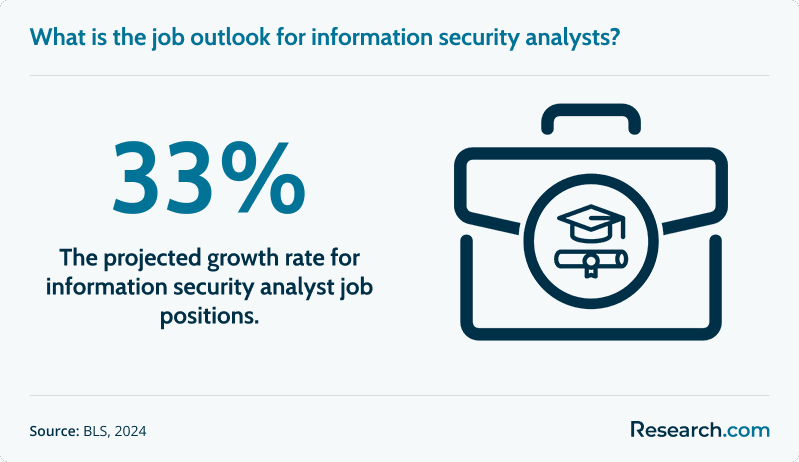
The job market for cybersecurity remains strong in the data cited here. According to the U.S. Bureau of Labor Statistics, demand for information security analysts is projected to grow by 33% from 2023 to 2033. This growth is tied to the expanding use of digital systems and the need to protect sensitive information across industries.
Graduates may find opportunities in finance, healthcare, government, technology, and other sectors. However, competition can still be intense for desirable entry-level roles. Students improve their chances by completing hands-on projects, earning relevant certifications, pursuing internships, building a portfolio, and applying to broader IT roles that can lead into security.
Are there potential drawbacks to an easy cybersecurity degree?
Yes. A highly accessible cybersecurity degree may not go as deep into theory, programming, advanced mathematics, or complex security engineering as a more intensive bachelor’s or graduate program. Some programs may also offer limited lab time, limited career support, or fewer advanced electives.
Students should be honest about their goals. If you want an entry point into IT security, an associate degree can be practical. If you want advanced roles in security architecture, cryptography, malware analysis, or research, you will likely need additional education, certifications, and experience. Students wanting a broader technical pathway may also compare cybersecurity with low cost engineering online colleges, depending on their long-term interests.
Here’s What Graduates Have to Say About Their Easy Cybersecurity Degree
-
: "
Completing cybersecurity coursework online helped me keep working while I studied. The virtual labs made topics like ethical hacking and network defense easier to understand, even though I did not begin with a technical background. The degree helped me move toward a career in IT security. Amanda
"
-
: "
The flexibility was the biggest advantage for me. I could move through lessons at a pace that fit my schedule, and the projects helped me connect concepts like network security and risk management to real workplace problems. By the end, I felt prepared to apply for my first technology role. Carlos
"
-
: "
As a working adult, I needed a program that was organized and realistic. Online classes let me study when I had time, and supportive instructors helped me stay on track. Finishing the degree gave me confidence and a clearer direction for my career change. Mia
"
Key Insights
- An “easy” cybersecurity degree should mean accessible, flexible, and well-supported, not low-quality or lacking technical rigor.
- Associate-level cybersecurity programs are often the most manageable starting point because full-time students can typically finish in two years, while accelerated online options may take as little as 16 months.
- Online cybersecurity programs can work well for busy students, but they still require discipline, lab work, troubleshooting, and consistent practice.
- The average cost per credit cited here ranges from $300 to $500, so students should compare total program cost, fees, transfer credits, and aid before enrolling.
- Core courses usually include networking, information systems security, ethical hacking basics, cybersecurity risk management, and hands-on technical practice.
- Information security analyst employment is projected to grow by 33% from 2023 to 2033, but students should still build certifications, projects, and experience to compete for entry-level roles.
- The best program is the one that matches your schedule, budget, learning style, career goal, and future transfer plans while maintaining recognized accreditation and practical training.
References
- BLS. (2024). Occupational Outlook Handbook: Information Security Analysts. BLS.
- Data USA. (2023). Information Security Analysts. datausa.io.
- Indeed. (2024). Cybersecurity consultant salary in United States. indeed.com.
- Indeed. (2024). Information security analyst salary in United States. indeed.com.
- Indeed. (2024). IT security specialist salary in United States. indeed.com.
Other Things You Should Know About the Easiest Cybersecurity Degree Programs
In 2027, the easiest cybersecurity degree programs typically include practical experience such as virtual labs, simulations, and hands-on projects. These help students apply theoretical knowledge in real-world scenarios, which is crucial for developing skills needed in the cybersecurity field.
No, internships are usually not required. Most programs make a practicum or internship optional, while the core degree still includes about 60 to 120 credits of coursework. Schools with ABET-aligned cybersecurity programs often list work experience as a recommendation, not a graduation rule.


