2027 What Requirements Do You Need for an Online Neuroscience Bachelor's Degree? Admission Rules, Credits & Eligibility

Co-Founder and Chief Data Scientist
Applying to an online neuroscience bachelor’s degree is not just a matter of filling out a form. You need to confirm that you meet the school’s baseline eligibility rules, understand whether your science and math background is strong enough, and find out how many credits you may still need before graduation.
This matters because neuroscience is a STEM-heavy major with coursework in biology, chemistry, psychology, statistics, and research methods. Online delivery can make the degree more flexible, but it does not remove academic expectations. With 35% of neuroscience undergraduates in the U.S. now enrolling online, applicants need clear guidance on admission requirements, transfer credits, testing policies, and documentation before they commit time and money to an application.
This guide explains what online neuroscience bachelor’s programs commonly require, how GPA and test scores are evaluated, which high school courses help most, how transfer and prior learning credits work, and what international or out-of-state students should check before enrolling.
Key Benefits of Preparing for Online Neuroscience Bachelor's Degree Requirements
- Choosing the right online neuroscience program ensures alignment with your career goals, offering specialized courses and accredited degrees recognized by industry employers.
- Maximizing transfer credits from previous coursework can shorten time-to-degree, saving both tuition costs and enabling faster entry into professional fields.
- Completing an accredited online neuroscience bachelor's degree opens doors to diverse job markets, including research, healthcare, and biotechnology sectors experiencing steady growth.
What Are the Basic Eligibility Requirements to Apply for an Online Neuroscience Bachelor's Degree?
Basic eligibility means you meet the minimum conditions to apply. It is not the same as being admitted. A school may let you submit an application because you meet its baseline requirements, then review your grades, coursework, essays, and other materials before deciding whether to accept you.
For most accredited online neuroscience bachelor’s programs, eligibility starts with proof that you completed secondary education. Applicants usually need a high school diploma or GED equivalent. Schools may also verify age, identity, residency, citizenship or legal status, and English proficiency when relevant. These factors can affect admission processing, tuition classification, and federal financial aid eligibility.
Because neuroscience programs vary in selectivity, do not assume that meeting the basic requirements guarantees admission. Some schools use open or broad-access admissions, while others expect stronger preparation in science and math. Before applying, compare the official admissions page, degree catalog, transfer policy, and tuition rules for each school on your list.
If you want a flexible healthcare-related pathway while preparing for or comparing degree options, you may also review accelerated medical assistant programs, especially if you are exploring entry-level healthcare experience alongside college study.
- High school diploma or GED: This confirms that you have completed secondary education and are eligible for college-level undergraduate study.
- Minimum age requirement: Many programs expect applicants to be at least 18 years old, particularly for enrollment agreements, financial aid processing, and institutional policy reasons.
- Residency and citizenship documentation: Schools may ask for legal status or residency information because it can affect tuition rates, aid eligibility, and enrollment authorization.
- English language proficiency: Non-native English speakers may need TOEFL, IELTS, or another approved exam unless they qualify for a waiver.
- Academic benchmarks: Some programs set minimum GPA, course, or test-score expectations. Others may waive certain requirements for applicants with prior college credits or relevant experience.
What Is the Minimum GPA Required for Admission to an Online Neuroscience Bachelor's Degree Program?
The minimum GPA for online neuroscience bachelor’s admission depends on the school. Some programs accept applicants with a cumulative high school GPA as low as 2.0, while more selective programs commonly expect a 2.5 or higher. A stronger GPA is especially helpful if the program has limited seats, research-focused coursework, or competitive scholarship review.
GPA rarely stands alone. Admissions offices may also consider course rigor, class rank, standardized test scores when submitted, recommendation letters, personal statements, prior college performance, and evidence of motivation. This matters for neuroscience because a student’s readiness is often tied not only to grades but also to preparation in biology, chemistry, math, writing, and analytical thinking.
Applicants should also check whether the school evaluates weighted or unweighted GPA. A weighted GPA gives extra value to advanced coursework, while an unweighted GPA usually uses the same scale for all courses. If your transcript includes both, report the version requested by the school and avoid estimating unless the application instructions allow it.
If your GPA is slightly below the stated threshold, ask about conditional or probationary admission. Some schools allow students to begin with limited course enrollment and continue if they meet early academic performance standards. This can be useful, but it may come with restrictions on course load, financial aid progress, or academic standing.
Students comparing neuroscience with adjacent health fields may also want to review online healthcare degrees to understand broader academic and career options before committing to a STEM-intensive major.
- Typical range: Minimum GPA cutoffs often range from 2.0 to 2.5 or above, depending on the institution’s selectivity.
- Holistic review: Admissions committees may weigh GPA alongside course rigor, test scores, essays, recommendations, and previous college work.
- Weighted vs. unweighted GPA: Confirm which scale the program uses so your application matches the school’s instructions.
- Conditional admission: Applicants below the cutoff may still have options, but they should understand the academic conditions before enrolling.
- Accurate reporting: Use official transcripts or the school’s GPA instructions to avoid delays caused by incorrect self-reported information.
Do Online Neuroscience Bachelor's Degree Programs Require SAT or ACT Test Scores?
Many online neuroscience bachelor’s programs do not require SAT or ACT scores, especially programs designed for adult learners, transfer students, or applicants who have been out of high school for several years. Test-optional policies can make online programs more accessible, but they do not mean the admissions review is automatic or less serious.
Some selective neuroscience tracks, honors pathways, or merit scholarship reviews may still request or consider test scores. When scores are required or recommended, typical accepted ranges at accredited institutions often fall between 1200 and 1400 on the SAT or between 25 and 30 on the ACT. These figures are not universal cutoffs; each school sets its own policy.
As of 2024, over 1,800 U.S. colleges had adopted test-optional admissions, a trend that has affected online neuroscience degree pathways as well. Still, applicants should verify current requirements directly with each school because testing rules have continued to change since 2020.
- Test-optional programs: Many schools let applicants apply without SAT or ACT scores and place more weight on transcripts, essays, prior credits, and experience.
- Selective pathways: Honors programs, competitive scholarships, or research-intensive tracks may still ask for scores.
- Scholarship strategy: If you have strong scores, submitting them may help in merit aid review when the school allows optional score submission.
- Common score ranges: Some institutions look for SAT scores between 1200 and 1400 or ACT scores between 25 and 30, depending on competitiveness.
- Policy verification: Check whether scores are required, optional, recommended, or used only for placement or scholarships.
One career-changing applicant said the flexible testing policy reduced stress during the process: “Not having to stress over SAT scores made it easier to focus on my experience and goals.” He also found that regular communication with admissions advisors helped him confirm which documents mattered most. Although he initially worried about applying without test scores, he said his work experience and personal statement helped make his application stronger.
How Many Total Credit Hours Are Needed to Complete an Online Neuroscience Bachelor's Degree?
Most accredited online neuroscience bachelor’s programs require around 120 total credit hours. Some programs require between 128 and 130 credits because of additional science labs, research methods, advanced electives, or capstone requirements. Before enrolling, confirm the exact number because even a small credit difference can affect tuition cost and time to graduation.
Credits are usually divided among general education courses, major requirements, electives, and a culminating experience such as a capstone, practicum, or research project. Neuroscience majors often include coursework in biology, chemistry, psychology, statistics, cognition, neuroanatomy, and research design. Online programs may deliver lectures remotely while using simulations, local lab arrangements, intensive campus sessions, or alternative lab formats when required.
Most colleges use semester credit hours (SCH), which are based on coursework across a 15-week term. Some schools use quarter credit hours, which are tied to shorter terms of about 10 to 11 weeks. This distinction matters when transferring credits because quarter credits and semester credits do not convert one-for-one.
Students with AP, CLEP, IB, prior college coursework, or approved transfer credits may reduce the number of credits they need to complete at the new institution. However, schools often require a minimum number of credits to be completed in residence through the degree-granting institution, so transferring many credits does not always mean you are close to graduation.
- Total credits: Most programs require 120 credits, while some neuroscience pathways require up to 130 credits.
- Credit categories: Expect general education, neuroscience core courses, electives, and a capstone or research-focused requirement.
- Semester vs. quarter systems: Semester credit hours are usually tied to about 15 weeks, while quarter credits follow terms of about 10 to 11 weeks.
- Prior learning and transfer credits: AP, CLEP, IB, and previous college credits may shorten the path if the school accepts them.
- Planning step: Request a degree audit or transfer evaluation before committing so you know which credits apply to the major, not just to electives.
Students comparing accelerated healthcare-related pathways may also review shortest LPN program options to see how credit requirements differ across fields.
What High School Courses or Prerequisites Are Required Before Enrolling in an Online Neuroscience Bachelor's Degree?
Online neuroscience bachelor’s programs usually expect applicants to have a solid foundation in science, math, and academic writing. Biology and chemistry are the most important high school courses because they prepare students for cellular biology, neurobiology, anatomy, and lab-based concepts. Physics is often recommended because it supports topics related to neural signaling, imaging, and systems-level thinking.
Math preparation also matters. Algebra and geometry are commonly expected, while calculus may be required or strongly recommended by some programs. Students who are not ready for college-level math may need placement testing or remedial coursework, which can add time and cost.
English composition or literature courses are also important. Neuroscience students must read research, write lab reports, explain evidence, and communicate clearly. Psychology and social studies are not always required, but they can strengthen readiness for behavioral neuroscience, cognitive science, and human development topics.
If you lack a prerequisite, check whether the program accepts dual enrollment, community college coursework, or bridge classes. These options can help you qualify, but bridge or remedial courses may not always count toward major requirements and may extend your timeline.
- Biology and chemistry: These are the most common science prerequisites and are central to later neuroscience coursework.
- Physics: Often recommended, especially for students interested in computational, systems, or biomedical aspects of neuroscience.
- Algebra, geometry, and calculus: Algebra and geometry are standard foundations; calculus is sometimes required or advised.
- English composition: Strong writing skills support research papers, lab reports, and evidence-based analysis.
- Psychology and social studies: These may not be mandatory, but they can make the transition into neuroscience smoother.
- Alternative ways to qualify: Dual enrollment, community college courses, and bridge courses can fill gaps, though they may affect total time to completion.
One graduate said prerequisite planning was one of the most important parts of her application process: “I wasn’t sure if my high school background was sufficient, but taking dual enrollment classes really helped me get ahead.” She added that bridge courses were reassuring, but she encouraged future students to complete as many prerequisites as possible before starting upper-level neuroscience coursework. In her words, “Securing the right foundation early made my transition into advanced neuroscience coursework much smoother, which was crucial for my later career growth.”
Can Transfer Credits Count Toward an Online Neuroscience Bachelor's Degree, and How Many Are Accepted?
Yes. Most accredited colleges allow transfer credits to count toward an online neuroscience bachelor’s degree, but the number accepted depends on the institution, the source of the credits, course equivalency, grades earned, and how well previous coursework matches the degree plan. Many schools accept between 60 and 90 transfer credits toward a bachelor’s degree.
The key issue is not only how many credits transfer, but how they apply. A course may transfer as elective credit but not satisfy a neuroscience major requirement. For example, a general biology course may count toward a science elective at one school but fulfill a specific prerequisite at another. This is why a formal transfer evaluation is essential before enrollment.
Schools with 2+2 articulation agreements, often between community colleges and universities, may provide a clearer pathway from an associate degree into the bachelor’s program. Schools without such agreements may review every course individually, which can result in fewer credits applying directly to the major.
- Transfer credit caps: Many institutions accept 60 to 90 transfer credits, but they may still require a set number of credits to be completed through the degree-granting school.
- Transfer-friendly policies: Articulation agreements can make it easier to predict which credits will count before you apply.
- Course-by-course review: Admissions or registrar staff compare course descriptions, credit hours, grades, and accreditation status to determine equivalency.
- Major vs. elective credit: Credits that do not match neuroscience requirements may count only as electives, which can still leave you with required science or lab courses to complete.
- Formal evaluation: Request an official transfer credit evaluation early so you can estimate cost, remaining credits, and graduation timeline accurately.
Data indicates nearly 60% of students transferring into online bachelor’s programs successfully apply some credits to their degrees. That makes early credit review one of the best ways to avoid paying for courses you may not need.
Does Accreditation Status Affect Admission Requirements for an Online Neuroscience Bachelor's Degree?
Accreditation affects both the value of the degree and, in some cases, the admissions process. For online neuroscience bachelor’s programs, institutional accreditation is the first thing to verify. Regional accreditation from agencies recognized by the Council for Higher Education Accreditation (CHEA) or the U.S. Department of Education signals that the institution meets accepted academic and administrative standards.
Accreditation matters because it can affect federal financial aid eligibility, credit transfer, graduate school admission, and employer recognition. If you plan to pursue graduate study, research roles, or healthcare-adjacent work after earning the degree, attending an accredited institution is especially important. A bachelor’s degree in neuroscience by itself does not grant clinical licensure, but accreditation can still influence whether later educational or professional pathways remain open.
Programmatic accreditation is less common for neuroscience bachelor’s degrees than for some healthcare or licensure-based fields. However, related programs may have specialized standards or additional admissions expectations when they connect to laboratory science, health science, or pre-professional tracks.
- Institutional accreditation: This evaluates the college or university as a whole and affects aid eligibility, transferability, and degree recognition.
- Programmatic accreditation: Some related fields use discipline-specific accreditation, which may add academic or professional prerequisites.
- Graduate school impact: Many graduate programs prefer or require undergraduate degrees from accredited institutions.
- Credit transfer: Credits from unaccredited schools may be difficult or impossible to transfer into an accredited neuroscience program.
- Employer perception: Recent data show that over 85% of employers favor candidates holding degrees from accredited institutions.
Before applying, confirm accreditation through the school’s website and an official accreditor or government-recognized database. Do not rely only on marketing language such as “approved,” “recognized,” or “authorized,” because those terms do not always mean the same thing as accreditation.
What Documents Do You Need to Apply for an Online Neuroscience Bachelor's Degree Program?
Most online neuroscience bachelor’s applications require documents that verify your identity, academic history, readiness for college-level study, and eligibility for tuition or aid. Gathering these materials early can prevent missed deadlines and incomplete applications.
- Official transcripts: You will usually need official high school transcripts or GED documentation. If you attended college previously, you will likely need official college transcripts as well. Official documents are typically sent directly from the school or issuing agency, while unofficial copies are often used only for preliminary review.
- Government-issued ID: A valid passport, driver’s license, or national ID may be required to confirm identity, residency, and enrollment information.
- Application essays: Many programs ask for a personal statement or short responses about your interest in neuroscience, academic preparation, career goals, or reasons for choosing online study.
- Letters of recommendation: Selective programs may request two or three letters from teachers, professors, mentors, supervisors, or others who can speak to your academic ability and reliability.
- Résumé or portfolio: Research-oriented or transfer-friendly programs may ask for a résumé showing work experience, lab exposure, volunteer service, certifications, or relevant projects.
- Official vs. unofficial documents: Official documents are certified and sent by the issuing institution. Unofficial documents are student-provided copies and may not be enough for final admission or transfer credit evaluation.
- International documents: Applicants with non-English records may need certified English translations and, in some cases, credential evaluation.
- Timing: Start gathering materials at least 3 to 4 months before your intended start date so you have time to request transcripts, ask for recommendations, write essays, and correct missing information.
A complete application file also helps the school evaluate transfer credits and financial aid eligibility earlier. If you are comparing neuroscience with other healthcare-related options, reviewing information such as medical coding salary data can help you think more clearly about career outcomes and educational return on investment.
Are There English Language Proficiency Requirements for Non-Native Speakers Applying to an Online Neuroscience Bachelor's Degree?
Most accredited U.S. online neuroscience bachelor’s programs require non-native English speakers to prove English proficiency. This is because coursework, exams, research readings, lab reports, and advising are usually conducted in English. Commonly accepted exams include the TOEFL iBT, IELTS Academic, and Duolingo English Test.
Undergraduate programs frequently require TOEFL iBT scores between 61 and 80. IELTS Academic band scores typically range from 6.0 to 6.5, while Duolingo English Test thresholds usually fall between 90 and 105. These are common ranges, not universal rules, so applicants should verify the exact requirement for each school.
- Accepted tests: TOEFL iBT, IELTS Academic, and Duolingo English Test are commonly used, though schools may approve other assessments.
- Common score ranges: TOEFL iBT scores often fall between 61 and 80, IELTS Academic between 6.0 and 6.5, and Duolingo English Test between 90 and 105.
- Possible exemptions: Applicants from English-speaking countries such as the United States, United Kingdom, Canada, Australia, and New Zealand are often exempt.
- English-medium education waivers: Students who completed several years of full-time study at English-medium institutions may qualify for a waiver if they provide documentation.
- Conditional admission: Some programs offer conditional admission with ESL bridge coursework for applicants who do not initially meet proficiency standards.
- Score validity: Check whether your test scores are still valid under the school’s policy before submitting an application.
Non-native English speakers should prepare proficiency documentation early because delayed scores can postpone admission decisions. Applicants comparing related online health programs may also explore affordable options such as a dietitian degree online while reviewing English language and transfer requirements.
Do Online Neuroscience Bachelor's Degree Programs Accept CLEP Exams or Prior Learning Credits?
Many online bachelor’s programs accept CLEP exams or other prior learning credits, but neuroscience students should check how those credits apply to the degree. CLEP, or the College-Level Examination Program, allows students to earn college credit by passing exams with a score of 50 or higher, a threshold recommended by the American Council on Education (ACE). More than 2,900 institutions accept CLEP credits.
The main limitation is that schools control their own policies. Some programs apply CLEP credits to general education requirements, while others may allow them for electives or selected lower-division courses. Neuroscience major requirements, especially lab sciences and upper-level courses, are often less flexible because programs need to confirm that students have the right academic foundation.
- CLEP exam credit: A score of 50 or higher may earn undergraduate credit, depending on the institution’s policy.
- General education use: CLEP is often most useful for completing writing, humanities, social science, math, or other general education requirements.
- Major course limits: Neuroscience programs may restrict CLEP use for core science courses, labs, or upper-level major requirements.
- Other prior learning options: Schools may also consider DANTES/DSST exams, portfolio assessment, professional certifications, military training, or relevant work experience.
- Policy review: Contact admissions, the registrar, or an academic advisor before taking exams so you know which credits will count.
- Cost and time savings: Prior learning credit can reduce tuition and shorten the timeline, but only if it applies to required parts of the degree plan.
Are There Residency or In-State Tuition Requirements That Affect Enrollment in an Online Neuroscience Bachelor's Degree?
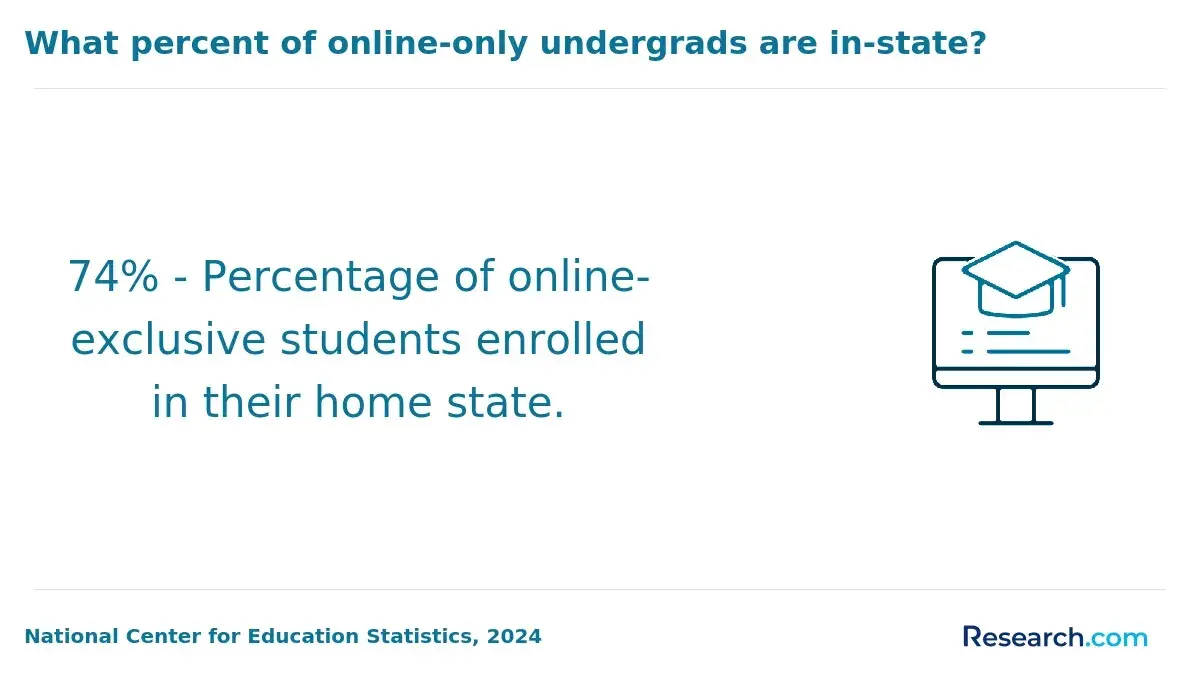
Residency can affect tuition, financial aid, and whether a school is authorized to enroll you in an online program. Some public universities offer the same online tuition rate to all students, while others still charge different rates for in-state and out-of-state students. You should confirm tuition classification before applying, not after admission.
Many institutions participate in the State Authorization Reciprocity Agreement (SARA), a framework that helps schools in member states offer online programs to students in other states without seeking separate approvals in every state. SARA can improve access to online programs, but it does not automatically guarantee in-state tuition.
- State Authorization Reciprocity Agreement (SARA): SARA helps participating schools enroll online students across state lines without separate state-by-state authorization.
- Tuition still varies: Some universities charge the same online rate for all students, while others maintain higher out-of-state tuition.
- Residency documentation: Schools may ask for proof such as a driver’s license, voter registration, utility bills, or other documents to determine in-state status.
- Financial aid planning: Tuition classification affects the total cost of attendance, which can influence borrowing, grants, scholarships, and payment plans.
- Enrollment restrictions: A school may not be able to enroll students from every state in every online program, so verify authorization for your location.
The safest approach is to ask the admissions or bursar’s office for the exact tuition rate that applies to your state of residence and program format. Save written confirmation when possible so you can compare schools accurately.
What Graduates Say About Preparing for the Online Neuroscience Bachelor's Degree Requirements
- : "Choosing to pursue my online neuroscience bachelor’s degree was a game-changer, especially because I took the time to understand the exact admission requirements beforehand. Knowing what was expected helped me prepare the right documents and focus on the courses that mattered most. This made the entire process smoother and ultimately helped me land a job in research much faster than I anticipated. — May"
- : "Reflecting on my online neuroscience degree journey, I realize how crucial it was to have a solid grasp of credit policies and eligibility criteria. Being able to transfer previous credits saved me both time and money, letting me complete my studies without unnecessary hurdles. This clarity gave me confidence and kept my career transition on track. — Caterina"
- : "Professionally, earning my online neuroscience bachelor’s degree opened doors I hadn’t expected. But the key, in my experience, was getting a full understanding of the admission requirements and how to leverage credit transfers. Having this knowledge upfront ensured I stayed eligible and on schedule, turning my academic efforts into meaningful career opportunities. — Sharmila"
Other Things You Should Know About Neuroscience Degrees
Most schools require standardized tests such as the SAT or ACT for admission into an online neuroscience bachelor's degree program. Specific score thresholds may vary by institution, with some schools offering test-optional policies or additional consideration for alternate assessments like the GRE.
In 2027, most online neuroscience bachelor's degree programs require a minimum GPA of 2.5 to 3.0 for admission. However, competitive programs might have higher requirements, and specific GPA criteria can vary by institution. Always check the specific admissions page of your chosen university for precise details. **Question** Do you need any prerequisite courses before enrolling in an online neuroscience bachelor's degree program? **Answer** Yes, many programs in 2027 require prerequisite courses such as introductory biology, chemistry, or psychology. These prerequisites ensure that students have a foundational understanding essential for more advanced neuroscience coursework. **Question** What prior educational qualifications are necessary for admission to an online neuroscience bachelor's degree? **Answer** Applicants in 2027 generally need a high school diploma or GED equivalent to qualify for admission into an online neuroscience bachelor's degree program. Some institutions may also require test scores from standardized exams like the SAT or ACT, though this varies. **Question** Are there any specific software requirements for students enrolling in an online neuroscience program? **Answer** In 2027, students are often required to have access to statistical software and neuroscience simulation tools. These may include programs like SPSS or MATLAB to assist with data analysis and research projects within their coursework.
Most programs require a high school diploma or GED plus at least 3 years of science and math, including biology, chemistry, and algebra II. Some schools also expect one year of laboratory science and a minimum 2.5 GPA before admission.
References
- Neuroscience https://lpsonline.sas.upenn.edu/academics/bachelors-degree/baas-course-blocks/neuroscience
- CLEP Equivalencies - Credit for Prior Learning | Ozarks Technical Community College https://ozarkstech.edu/admissions/starting-with-credits/getting-credit-for-what-you-know/clep-equivalencies/
- Admission Requirements https://catalog.colorado.edu/undergraduate/admissions/admission-requirements/
- Bachelor of Science in Neuroscience Bowling Green State University https://www.hotcoursesabroad.com/india/course/us-usa/bachelor-of-science-neuroscience/595108/program
- Can an online degree through an accredited institution affect admissions into masters programs abroad? https://academia.stackexchange.com/questions/25667/can-an-online-degree-through-an-accredited-institution-affect-admissions-into-ma
- Language requirements - SWPS University https://english.swps.pl/programs/apply/language-requirements
- CLEP Program List https://www.fscj.edu/assessment-and-certification/available-assessments/college-level-examination-program-(clep)/clep-program-list
- English language proficiency https://www.uva.nl/en/about-the-uva/organisation/faculties/faculty-of-social-and-behavioural-sciences/education/social-sciences/english-language-proficiency.html
- Bachelors In Neuroscience https://www.gotouniversity.com/programs/bachelors/united-states-of-america/medical-and-allied-health-care/neurology/pomona-college/bachelors-in-neuroscience