
2027 Most Affordable Online Master’s in Data Science Programs

Co-Founder and Chief Data Scientist
Choosing an online master’s in data science is not just a question of finding the lowest tuition. The bigger decision is whether a program will help you build the technical, statistical, business, and project experience employers expect from data professionals in 2026. The right program can help working adults move into roles such as data scientist, machine learning engineer, business intelligence analyst, data analyst, or analytics manager without leaving their jobs.
This guide explains what you can do with an online master’s in data science, where graduates work, what salaries may look like, how online programs compare with campus programs, what admissions requirements to expect, and how to judge whether a program is worth the cost. It also highlights affordable program options and practical questions to ask before enrolling. If you are also comparing data science with an accelerated computer science degree, use this article to clarify which path better fits your career goals.
Quick Answer: Is an Online Master’s in Data Science Worth It?
An online master’s in data science can be worth it for students who want advanced training in analytics, machine learning, statistics, programming, and data-driven decision-making while continuing to work. It is most valuable when the program is accredited, affordable, project-based, and aligned with the jobs you want. According to the U.S. Bureau of Labor Statistics, data scientist jobs are projected to grow by 34% between 2024 and 2034, and approximately 23,400 job openings for data scientists are projected each year from 2024 to 2034.
The degree is not automatically worth the investment for everyone. Students should compare total cost, employer recognition, curriculum depth, portfolio opportunities, faculty support, career services, and financial aid before enrolling. A low-cost program with strong applied learning may provide better ROI than a prestigious but expensive option that does not fit your schedule or career plan.
Key Benefits of an Online Master’s in Data Science
- Career flexibility: Graduates can pursue analytics, data science, machine learning, business intelligence, data engineering, and applied AI roles across technology, finance, healthcare, retail, consulting, and government.
- Competitive earning potential: Data science roles can pay well, with median annual incomes ranging from $112,590 to $151,000 according to the U.S. Bureau of Labor Statistics (2025). Actual pay depends on experience, location, role, employer, and industry.
- Work-compatible format: Online programs can make graduate study more realistic for professionals who need asynchronous coursework, part-time pacing, or the ability to keep earning while studying.
- Practical technical training: Strong programs help students build portfolios through projects in Python, R, SQL, machine learning, statistics, visualization, data engineering, and business analytics.
- What can I do with an online master's in data science?
- Where can I work with an online master’s in data science?
- How much can I make with an online master’s in data science?
- Online vs. traditional master’s degree in data science
- How much does an online master’s degree in data science cost?
- What are the requirements for an online master’s degree in data science?
- Courses to expect in an online master’s degree in data science
- Skills to develop during an online master’s in data science
- How do employers evaluate online master’s in data science graduates?
- Things to look for in an online master’s degree in data science
- 2027 best online master’s in data science programs
- Future trends in data science and how to stay competitive
- What is the ROI of pursuing an online master’s in data science?
- How do industry partnerships enhance practical learning in online master’s in data science?
- How important are institutional resources and faculty support in an online master’s in data science?
- How can I finance my online master’s in data science?
- What are the common challenges of pursuing an online master’s in data science?
- How do accreditation and rankings influence the quality of an online master’s in data science?
- How can networking opportunities and mentorship enhance career advancement in online data science programs?
- Pursuing an online master’s in data science
What can I do with an online master’s in data science?
An online master’s in data science prepares students to turn raw information into models, forecasts, dashboards, experiments, and recommendations that organizations can use. Like students in affordable cyber security degree online programs, data science students usually combine technical coursework with applied problem-solving. Over the last 6 years, approximately 880,250 students received a master’s degree in the United States. Projections indicate that by the academic year 2031/32, this number will rise to an estimated 1,000,460 students earning a master’s degree National Center for Education Statistics. (n.d.).
Graduates of the best data science masters programs commonly build skills in statistics, machine learning, programming, data visualization, data management, and applied analytics. Those skills overlap with what students may study in a traditional or online data analytics degree, but a data science master’s often goes deeper into modeling, algorithms, and computational methods.
| Career path | What the role usually does | When this path may fit you |
| Data scientist | Builds statistical and machine learning models, explores complex datasets, tests hypotheses, and translates findings into business or operational recommendations. | You enjoy coding, statistics, experimentation, and solving ambiguous problems with data. |
| Data analyst | Creates reports, analyzes trends, prepares dashboards, and explains patterns in business, customer, financial, or operational data. | You want a more accessible entry point into analytics or prefer insight generation over advanced model development. |
| Machine learning engineer | Designs, trains, deploys, and monitors machine learning systems used for prediction, recommendation, classification, language processing, or image recognition. | You have strong programming skills and want to work closer to software engineering and AI deployment. |
| Business intelligence analyst | Turns organizational data into dashboards, metrics, and decision tools for leaders and teams. | You like connecting analytics with business strategy, reporting, performance tracking, and stakeholder communication. |
Some professionals also pair analytics training with business education. For example, aspiring business intelligence leaders may compare analytics-focused graduate programs with tech-oriented options such as the cheapest online executive MBA programs.
Where can I work with an online master’s in data science?
Data science is used wherever organizations collect data and need better decisions. Graduates can work in software companies, banks, hospitals, insurers, public agencies, retailers, manufacturers, consulting firms, research groups, and startups. The degree can also support adjacent careers in information systems, cybersecurity analytics, product analytics, and business intelligence.
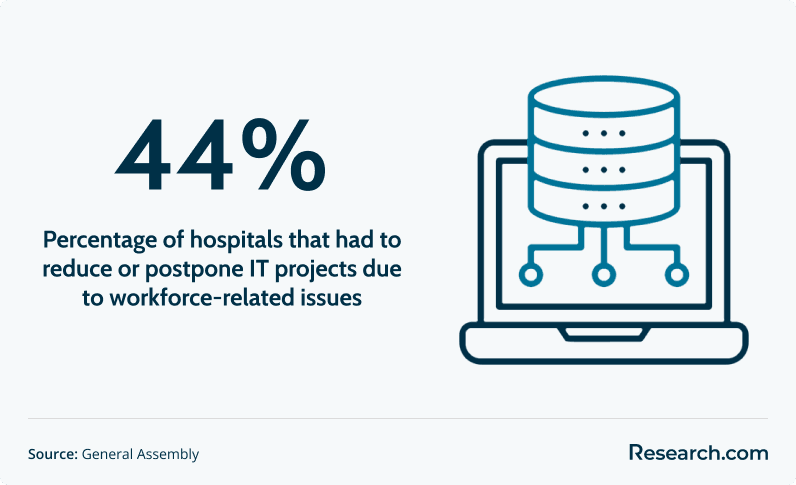
Healthcare is one example of a sector where analytics needs are growing. Based on a recent report, healthcare CIOs highlighted data science and analytics as their top priority. However, the scarcity of qualified candidates poses a significant challenge. A striking 85% of healthcare facilities are facing shortages of allied healthcare professionals (Healthcare Workforce Coalition, 2024).
| Industry | Common data science applications | Examples of employers or settings |
| Technology | AI products, recommendation systems, search, cybersecurity analytics, software usage analytics, automation | Software firms, AI companies, cloud providers, IT services firms |
| Finance | Risk modeling, fraud detection, credit scoring, trading analytics, customer segmentation | Banks, fintech companies, investment firms, insurers |
| Healthcare | Patient outcomes analysis, clinical research, hospital operations, drug development, population health | Hospitals, health systems, pharmaceutical firms, research institutions |
| E-commerce | Personalization, demand forecasting, pricing analysis, customer behavior modeling | Online retailers, marketplaces, subscription businesses |
| Marketing and advertising | Campaign performance, attribution modeling, audience segmentation, customer lifetime value analysis | Agencies, media companies, consumer brands, analytics vendors |
How much can I make with an online master’s in data science?
An online master’s in data science can support access to higher-paying technical and analytics roles, but salary outcomes are not guaranteed. Pay depends on your prior experience, technical depth, portfolio, location, industry, and whether you move into an individual contributor, engineering, or leadership role. Students comparing data science with the best and cheapest masters in computer science in USA schools should examine role-specific outcomes rather than relying only on degree titles.
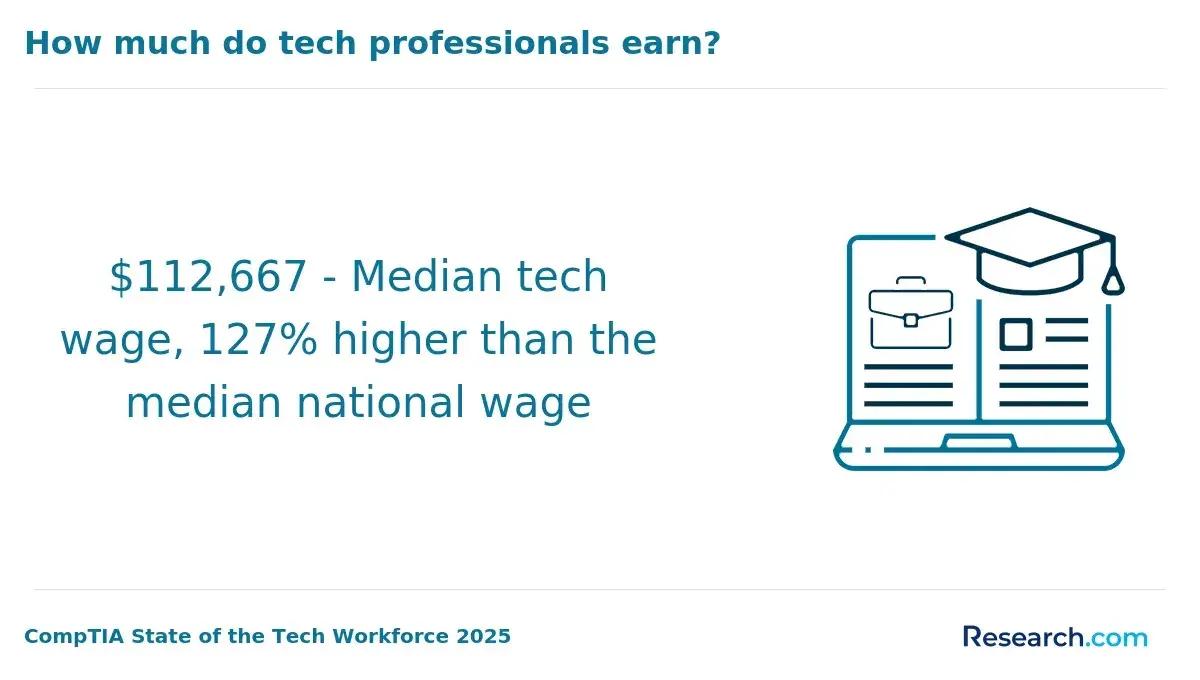
Data science graduates, including those comparing the field with the highest paying master’s degrees in business, may qualify for roles where analytical and technical skills command strong compensation. The earning potential for individuals holding low-cost data science master’s programs is substantial, similar to an affordable online master's degree in project management. Data scientists earn comparatively substantial salaries on average, with median annual incomes ranging from $112,590 to $151,000 (U.S. Bureau of Labor Statistics, 2025). Experienced professionals or those in leadership roles often surpass these figures, with the potential for salaries exceeding $200,000 annually in some cases.
| Factor | How it affects earning potential |
| Experience level | Professionals with prior coding, analytics, engineering, or domain experience often qualify for stronger roles faster than students starting from scratch. |
| Technical portfolio | Employers often value visible projects using real datasets, machine learning workflows, SQL, visualization, and cloud or deployment tools. |
| Industry | Technology, finance, healthcare, consulting, and AI-focused employers may use different compensation structures and expectations. |
| Location and work model | Salary can vary widely by region, remote-work policy, employer size, and cost of living. |
| Specialization | Machine learning, data engineering, natural language processing, business analytics, and AI governance can lead to different career tracks. |
Online vs. traditional master’s degree in data science
Online and campus-based data science master’s programs can both be academically rigorous. The better option depends on your schedule, learning style, location, networking needs, and budget. During the 202021 academic year, out of the 866,900 master’s degrees granted by postsecondary institutions, 17 percent (equivalent to 146,600 degrees) belonged to the science, technology, engineering, and mathematics (STEM) field.
Online programs usually emphasize flexibility. Students may watch lectures asynchronously, complete projects remotely, collaborate through digital tools, and continue working while enrolled. This format works well for disciplined learners who can manage deadlines without regular in-person structure.
Traditional programs often provide more face-to-face interaction, easier access to campus labs, spontaneous peer collaboration, and in-person recruiting events. They may be a better fit for students who want a full-time immersive graduate experience or who learn best through live classroom engagement.
| Comparison point | Online master’s in data science | Campus master’s in data science |
| Best for | Working adults, remote learners, career changers who need schedule flexibility | Students who want an immersive campus experience and in-person networking |
| Schedule | Often asynchronous or part-time, though formats vary | Usually more fixed, with scheduled classes and campus activities |
| Networking | Depends heavily on virtual events, cohort design, alumni access, and employer partnerships | Often easier through campus events, labs, clubs, and local recruiting |
| Learning experience | Requires self-direction, time management, and comfort with online tools | Provides more physical structure and direct classroom interaction |
| Cost considerations | May reduce relocation and commuting expenses, but tuition varies widely | May include relocation, campus fees, commuting, and opportunity costs |
How much does an online master’s degree in data science cost?
The price of an online master’s in data science varies widely. Tuition is only one part of the cost; students should also account for fees, software, books, required residencies, time away from work, and financing costs.
According to OnlineU.com (2026), the cost of affordable master’s degree starts from $5,346. In contrast, some programs offered by prestigious universities or those with extensive resources and specialized coursework might cost $50,000 or even higher.
Cost factors to compare before applying
- Tuition: Compare total program tuition, not just cost per credit. Some programs require more credits than others.
- Program length: A shorter program may reduce time costs, while a part-time program may allow you to keep working.
- Additional fees: Technology fees, course materials, analytics platforms, software licenses, graduation fees, and proctoring charges can add up.
- Residency requirements: Some online degrees include short campus visits that may require travel, lodging, and time off work.
- Financial aid: Scholarships, grants, employer tuition reimbursement, assistantships, and federal aid can change the real cost substantially.
| Question to ask | Why it matters |
| What is the total estimated cost to graduate? | This reveals the real price better than a per-credit figure. |
| Are online students charged different fees? | Some schools add technology, platform, or distance-learning fees. |
| Can I complete the degree part-time? | Part-time enrollment may help you keep income while studying. |
| Are software tools included? | Data science coursework may require access to analytics, database, visualization, or cloud platforms. |
| Does the school offer scholarships for online learners? | Funding policies often differ by program and student status. |
What are the requirements for an online master’s degree in data science?
Admissions standards differ by school, but most programs look for evidence that applicants can handle graduate-level quantitative and technical coursework. During the academic year 202021 alone, there were 54,200 master’s degrees awarded in the field of computer and information sciences and support services.
Applicants often come from computer science, mathematics, statistics, engineering, economics, business analytics, or other quantitative fields. Some programs also accept career changers if they complete prerequisites before or during the first terms. Students with a computer science major may already meet many technical prerequisites, while nontechnical applicants may need extra preparation.
| Common requirement | What schools may look for | How to prepare |
| Bachelor’s degree | A degree from an accredited institution, often in a quantitative or technical field | Review whether your major satisfies program expectations before applying. |
| Minimum GPA | Some programs require a GPA in the range of 3.0 to 3.5 on a 4.0 scale | If your GPA is lower, strengthen your application with work experience, projects, or prerequisite grades. |
| Prerequisite coursework | Programming, statistics, calculus, linear algebra, and data analysis are common expectations | Take bridge courses or certificates before applying if needed. |
| Work or research experience | Relevant analytics, programming, research, technical, or industry experience may help | Use your resume and statement of purpose to connect your experience to data science goals. |
| Application materials | Schools may request transcripts, recommendations, resumes, essays, or test scores depending on policy | Confirm each school’s exact requirements and deadlines. |
Courses to expect in an online master’s degree in data science
Data science curricula usually combine statistics, computing, machine learning, data management, visualization, ethics, and applied projects. Since 2000, the number of individuals aged 25 and above holding a master’s degree as their highest level of education has doubled, reaching a total of 24.1 million.
Course titles vary by school, but most credible programs should help students move from foundational analysis to advanced modeling and communication. A strong curriculum should not only teach tools; it should teach students how to frame problems, evaluate assumptions, validate models, and explain findings to decision-makers.
| Course area | What students typically learn |
| Foundations of data science | Data cleaning, exploratory analysis, data wrangling, workflow design, and basic statistical reasoning |
| Machine learning | Regression, classification, clustering, ensemble methods, neural networks, model evaluation, and predictive modeling |
| Statistical analysis | Probability, hypothesis testing, inference, regression, experimental design, and quantitative interpretation |
| Big data analytics | Distributed computing, large-scale processing, Hadoop, Spark, storage systems, and scalable analytics methods |
| Data visualization | Charts, dashboards, storytelling, visual design principles, Tableau, Matplotlib, D3.js, or similar tools |
| Database management and SQL | Relational databases, querying, data modeling, database design, and data retrieval for analytics workflows |
Skills to develop during an online master’s in data science
A strong data science graduate is not defined by one software tool. Employers typically look for a mix of coding ability, statistical judgment, modeling experience, business communication, and problem-solving discipline. Students researching how to become a data scientist should use graduate school to build both technical depth and a portfolio that proves they can apply it.
- Programming: Python, R, and SQL are core tools for data collection, cleaning, analysis, modeling, and reporting.
- Data preparation: Students should know how to clean messy data, handle missing values, transform variables, document assumptions, and prepare datasets for analysis.
- Machine learning and AI: Graduates should understand supervised learning, unsupervised learning, model selection, validation, bias, performance metrics, and deployment considerations.
- Statistics and quantitative reasoning: Data scientists need enough statistical fluency to avoid false conclusions, weak experiments, and misleading model outputs.
- Visualization and storytelling: Technical work has limited value if stakeholders cannot understand the result. Tools such as Tableau, PowerBI, and Matplotlib can help communicate findings clearly.
- Domain knowledge: Industry context matters. A model used in healthcare, finance, retail, or logistics must reflect the realities and constraints of that field.
- Ethical judgment: Students should understand data privacy, fairness, bias, transparency, and responsible AI practices.
How do employers evaluate online master’s in data science graduates?
Most employers do not judge an online data science degree by format alone. They look at the institution’s credibility, accreditation, curriculum, technical rigor, faculty background, and evidence of applied work. A graduate with strong capstone projects, internships, GitHub repositories, dashboards, research experience, or deployed models may stand out more than a candidate who only lists coursework.
Employers may also value complementary knowledge. For example, candidates who understand cybersecurity concepts may be stronger for roles involving secure data pipelines, fraud analytics, or risk modeling. Students who want that interdisciplinary profile may compare a data science master’s with credentials such as an associate of science in cybersecurity online.
| Employer signal | Why it matters |
| Accredited institution | Shows the school meets recognized academic standards. |
| Portfolio projects | Demonstrates the ability to work with real or realistic datasets. |
| Technical assessments | Many hiring processes test SQL, Python, statistics, machine learning, or case analysis. |
| Business communication | Data professionals must explain technical findings to nontechnical teams. |
| Relevant experience | Internships, employment, research, or capstone work can reduce perceived hiring risk. |
Things to look for in an online master’s degree in data science
The best online master’s in data science for you is the one that matches your goals, budget, schedule, and current skill level. According to the most recent data by the Bureau of Labor Statistics (2025), approximately 23,400 job openings for data scientists are projected each year from 2024 to 2034.
- Accreditation: Confirm that the institution is accredited by a recognized accrediting body. Accreditation can affect credit transfer, employer recognition, and financial aid eligibility.
- Curriculum fit: Look for coursework in machine learning, statistics, data engineering, visualization, databases, ethics, and applied projects.
- Specializations: Choose electives that match your target role, such as business analytics, machine learning, AI, big data, healthcare analytics, or data engineering.
- Faculty and industry experience: Faculty with research, consulting, or applied industry backgrounds can strengthen mentorship and project quality.
- Flexible format: Check whether classes are synchronous, asynchronous, part-time, full-time, cohort-based, or self-paced.
- Technology access: Strong programs should provide or support access to programming environments, cloud tools, databases, visualization platforms, and research resources.
- Student support: Academic advising, tutoring, technical help, career coaching, and networking opportunities can make a major difference in online learning.
Common mistakes when choosing a program
| Mistake | Better approach |
| Choosing only by lowest tuition | Compare total cost, curriculum depth, support services, outcomes, and employer reputation. |
| Ignoring accreditation | Verify institutional accreditation before applying. |
| Assuming online means easier | Expect rigorous programming, statistics, and project deadlines. |
| Overlooking prerequisites | Confirm whether you need programming, calculus, statistics, or linear algebra before admission. |
| Relying only on rankings | Use rankings as one input, not as a substitute for program-by-program evaluation. |
| Skipping career services questions | Ask about employer connections, portfolio support, alumni outcomes, internships, and recruiting events. |
2027 Best Online Master’s in Data Science Programs
The programs below are well-known online or analytics-focused options in data science and related fields. They are not the only programs to consider, and the best choice depends on your goals, budget, prerequisites, schedule, and desired specialization.
1. University of California, Berkeley Master of Information and Data Science (MIDS)
The UC Berkeley Master of Information and Data Science is offered through the School of Information and is designed for students who want graduate-level training in data science through an online format. The program emphasizes core data science concepts, applied projects, and preparation for data-centered decision-making roles.
- Program length: 12 to 20 months
- Tracks/concentrations: General MIDS, Data Science for Business Analytics, Data Science for Health
- Cost per credit: $2,576.50 for California residents, $3,935.50 for non-residents
- Required credits to graduate: 48 credits (standard format), 40 credits (accelerated format)
- Accreditation: Western Association of Schools and Colleges (WASC), Accrediting Commission for Senior Colleges and Universities (ACSCU)
2. Massachusetts Institute of Technology (MIT) Master of Business Analytics
The MIT Master of Business Analytics is a one-year program housed within MIT Sloan School of Management. It focuses on the use of analytics, statistics, machine learning, data management, and business strategy to solve complex organizational problems.
- Program length: 12 months (full-time)
- Tracks/concentrations: N/A
- Cost per credit: $2,664
- Required credits to graduate: 48 credits
- Accreditation: Association to Advance Collegiate Schools of Business (AACSB International)
3. Georgia Institute of Technology Online Master of Science in Analytics (OMS Analytics)
The Georgia Institute of Technology Online Master of Science in Analytics is known for combining analytics, machine learning, statistical analysis, big data technologies, and visualization in a fully online format. It can be a strong option for working professionals who want a technical analytics curriculum with multiple tracks.
- Program length: 12 to 24 months (part-time)
- Tracks/concentrations: Analytical Tools, Business Analytics, Computational Data Analytics
- Cost per credit: $719
- Required credits to graduate: 45 credits
- Accreditation: Southern Association of Colleges and Schools Commission on Colleges (SACSCOC)
4. Johns Hopkins University Online Master of Science in Data Science
The Johns Hopkins University Online Master of Science in Data Science is built for students with quantitative or technical backgrounds who want advanced preparation in data analysis, machine learning, statistical modeling, and data engineering.
- Program length: 30 to 36 months (part-time)
- Tracks/concentrations: N/A
- Cost per credit: $1,838
- Required credits to graduate: 36 credits
- Accreditation: Middle States Commission on Higher Education (MSCHE).
5. Carnegie Mellon University Master of Science in Information Technology Business Intelligence and Data Analytics (MSIT-BIDA)
The Carnegie Mellon University MSIT-BIDA program focuses on business intelligence and data analytics. Students study areas such as data mining, machine learning, visualization, business intelligence tools, and predictive analytics while developing both technical and business-oriented analytical skills.
- Program length: 12 to 24 months (part-time)
- Tracks/concentrations: N/A
- Cost per credit: $1,873
- Required credits to graduate: 36 credits
- Accreditation: Middle States Commission on Higher Education (MSCHE)
Future trends in data science and how to stay competitive
Data science is changing quickly because organizations are adopting AI systems, automating analytics workflows, managing larger datasets, and facing stronger expectations around privacy and responsible use of data. Students choosing a graduate program should look for coursework and projects that reflect these realities rather than focusing only on traditional analytics tools.
Trends affecting data science careers
- AI integration and automation: AI tools are increasingly used for coding assistance, data preparation, model experimentation, documentation, and decision support. Data scientists still need judgment to validate outputs and prevent poor decisions.
- Real-time and edge analytics: IoT devices and operational systems are increasing demand for fast, distributed, and real-time analysis in areas such as healthcare, transportation, logistics, and manufacturing.
- Responsible AI and ethics: Employers need professionals who understand bias, fairness, transparency, explainability, and accountability in data-driven systems.
- Data privacy and security: Regulations and cyber risks make data governance, secure data handling, and privacy-aware modeling more important.
- Industry specialization: Data science work is more valuable when professionals understand the sector they serve, whether that is finance, medicine, retail, education, energy, or public policy.
How to remain competitive
- Choose a focused specialization: Machine learning, natural language processing, business intelligence, healthcare analytics, or big data can help you target specific roles. Students comparing broad graduate options may also review the cheapest masters degree online.
- Build real projects: A portfolio with clear problem statements, clean code, model evaluation, visualizations, and business interpretation can strengthen job applications.
- Learn modern tools carefully: TensorFlow, PyTorch, cloud platforms, distributed computing tools, and visualization software can be useful, but tools should support sound analysis rather than replace it.
- Stay connected to the field: Conferences, webinars, hackathons, alumni networks, and professional groups can help you track employer expectations and emerging practices.
- Use certifications strategically: Tool-specific credentials in areas such as Tableau, AWS, Hadoop, or ethical AI may complement a degree when they match your target role.
What is the ROI of pursuing an online master’s in data science?
Return on investment depends on the total cost of the degree, the income you may earn during and after the program, the roles you can realistically pursue, and whether the credential helps you move faster than self-study alone. The strongest ROI usually comes from programs that combine reasonable cost, credible accreditation, hands-on projects, employer-relevant tools, and career support.
- Salary potential: Data science roles may offer strong compensation, but the degree alone does not determine pay. Skills, portfolio strength, prior experience, and industry matter.
- Labor market demand: The U.S. Bureau of Labor Statistics estimates that data scientist jobs will grow by 34% between 2024 and 2034, much faster than the average for all occupations.
- Career advancement: A master’s degree may help professionals move from analyst, software, engineering, research, or business roles into more advanced data science or analytics leadership positions.
- Networking value: Online programs with strong virtual communities, alumni engagement, mentorship, and employer projects can create opportunities beyond coursework.
- Cost control: Lower tuition, employer reimbursement, scholarships, part-time study, and continued employment can improve ROI. Students comparing affordability should review the cheapest master’s degree online options carefully.
- Flexibility: Online study can let students apply new skills at work immediately, which may strengthen both learning and career momentum.
How do industry partnerships enhance practical learning in online master’s in data science?
Industry partnerships can make an online program more practical by connecting coursework to real datasets, current business problems, mentorship, internships, guest speakers, and capstone projects. These experiences help students show employers that they can apply theory in realistic environments.
Partnerships are especially valuable when they expose students to interdisciplinary work. For example, analytics projects may involve cybersecurity, privacy, risk, or compliance issues. Students weighing related fields can compare the value of data science with considerations discussed in this cyber security degree worth it review.
How important are institutional resources and faculty support in an online master’s in data science?
Faculty access and institutional support can determine whether an online program feels like a rigorous graduate experience or a collection of disconnected courses. Strong programs provide clear advising, responsive instructors, technical support, research access, career coaching, project feedback, alumni communities, and opportunities to interact with classmates.
Students should ask whether faculty have active research, applied industry experience, or expertise in areas that match their goals. Programs that connect data science with adjacent areas, such as an online AI degree, may be useful for learners who want broader preparation in analytics and artificial intelligence.
How can I finance my online master’s in data science?
Students can reduce the cost of an online master’s in data science by combining several funding strategies. Options may include institutional scholarships, federal and state aid, employer tuition reimbursement, veterans benefits, payment plans, and student loans. Funding varies by school, program, enrollment status, and student eligibility, so applicants should verify details directly with each institution.
It can also help to compare data science tuition with related fields, including computer degrees online, to understand whether a specialized data science program or a broader computer science path offers better value for your goals.
Steps to reduce your total cost
- Ask for the full cost of attendance, including tuition, fees, software, materials, and residency expenses.
- Complete financial aid forms early and check whether online students qualify for the same aid as campus students.
- Ask your employer about tuition reimbursement, promotion pathways, and approved school lists.
- Compare part-time and full-time pacing to understand how each affects income, debt, and completion time.
- Look for programs that accept transfer credits or allow prerequisite completion at a lower cost.
What are the common challenges of pursuing an online master’s in data science?
Online data science programs can be demanding. Students must manage graduate-level technical coursework while often balancing full-time work, family responsibilities, and remote collaboration. The format can be convenient, but it also requires discipline and planning.
| Challenge | How to manage it |
| Time management | Block weekly study time before the term starts and treat project deadlines like work deadlines. |
| Limited in-person networking | Choose programs with live sessions, virtual career fairs, alumni groups, mentorship, and team projects. |
| Technical gaps | Complete prerequisites in Python, SQL, statistics, calculus, or linear algebra before advanced coursework begins. |
| Remote project collaboration | Learn version control, documentation habits, shared notebooks, and communication tools. |
| Unclear program quality | Check accreditation, faculty credentials, curriculum rigor, student support, and career services before enrolling. |
Students interested in emerging technical areas may also compare data science with a masters degree in artificial intelligence, especially if their goal is AI model development, automation, or machine learning engineering.
How do accreditation and rankings influence the quality of an online master’s in data science?
Accreditation is more important than rankings because it confirms that an institution meets recognized academic standards. Students should verify institutional accreditation before applying, especially if they plan to use financial aid, transfer credits, or present the degree to employers that screen for accredited education.
Rankings can still be useful, but they should not drive the entire decision. Ranking methodologies may emphasize selectivity, reputation, research output, affordability, or outcomes differently. The same logic applies when comparing other technical fields, such as the cheapest electrical engineering degree: affordability matters, but it should be weighed alongside academic quality and career fit.
How can networking opportunities and mentorship enhance career advancement in online data science programs?
Networking and mentorship can help online students access referrals, project ideas, interview preparation, industry context, and career guidance. Good online programs create structured ways to interact through cohort discussions, live workshops, alumni communities, virtual office hours, capstone teams, employer events, and mentorship programs.
These opportunities are especially important for students targeting high-paying technical roles. Learners comparing degree-to-career pathways may also review guidance on what kind of majors can make 100k or more to better understand how education, skills, and labor market demand intersect.
Pursuing an online master’s in data science
An online master’s in data science can be a practical path for working professionals who want advanced analytics training without relocating or pausing their careers. It can also help career changers build a structured foundation in programming, statistics, machine learning, databases, and data visualization. Students without a technical undergraduate background may want to compare data science programs with a masters in computer science for non CS majors.
The best decision starts with clarity. Define the role you want, identify the skills required, compare programs by total cost and curriculum, verify accreditation, ask about career support, and review whether the schedule is realistic. A strong program should help you graduate with more than a credential; it should help you build a portfolio, technical confidence, and a professional network.
Key Insights
- An online master’s in data science is most valuable when it is accredited, affordable, technically rigorous, and project-based.
- Data science career outcomes vary. Salary depends on experience, skills, location, industry, portfolio quality, and role level.
- Online programs work best for disciplined students who need flexibility and can manage independent study.
- Before enrolling, compare total program cost, prerequisites, faculty support, software access, capstone quality, career services, and employer connections.
- Do not choose a program only because it is cheap or highly ranked. The strongest choice is the one that fits your career goal and gives you evidence of job-ready skills.
References:
- Code.org. (2025). 2025 State of AI + CS Education. Retrieved from https://advocacy.code.org/stateofcs
- CompTIA. (2026, January). IT Industry Outlook 2026. https://www.comptia.org/en-us/resources/research/it-industry-outlook-2026
- George, K. (2025, October). CERP Pulse Survey: A Snapshot of 2025 Undergraduate Computing Enrollment Patterns. Center for Evaluating the Research Pipeline, Computing Research Association. https://cra.org/crn/2025/10/cerp-pulse-survey-a-snapshot-of-2025-undergraduate-computing-enrollment-patterns
- National Student Clearinghouse Research Center. (2026, January 15). Final Fall Enrollment Trends. https://nscresearchcenter.org/final-fall-enrollment-trends
- U.S. Bureau of Labor Statistics. (2025, August 28). Occupational projections, 2024–2034, and worker characteristics. Retrieved February 2026, from https://www.bls.gov/emp/tables/occupational-projections-and-characteristics.htm
Other Things You Should Know About Most Affordable Online Master’s in Data Science Programs
Most affordable online master’s in data science programs require 30 to 36 semester credits. Programs with a 30-credit plan usually finish faster and cost less overall, while 36-credit options often include more electives or a capstone. Check whether the total includes required prerequisite coursework.
The typical duration for many of the 2027 most affordable online Master's in Data Science programs ranges from 18 to 24 months, depending on the institution and program structure. Some offer accelerated options, reducing the time to complete.


