
2027 Best Online Data Analytics Degree Programs

Co-Founder and Chief Data Scientist
As someone actively involved in career planning for over a decade, I've observed a notable uptick in interest surrounding online data analytics degree programs as a means to propel one's career forward. Drawing upon my extensive experience, I aim to offer practical guidance to individuals considering enrollment in online data analytics degree programs.
By addressing concerns about program credibility and its alignment with employer expectations, my goal is to equip readers with the insights needed to navigate the evolving landscape of online education and seize opportunities for professional growth in the realm of data analytics.
What are the benefits of getting an online data analytics degree?
- A data analytics degree opens doors to diverse job opportunities such as data analyst, business intelligence developer, and market research analyst.
- The median annual income for operations research analysts with a data analytics degree was $91,290 in 2024, reflecting strong earning potential in the field.
- Pursuing a data analytics degree online offers flexibility for working professionals to balance their education with other commitments, facilitating accessibility and convenience in acquiring valuable skills and knowledge.
What can I expect from an online data analytics degree program?
An online data analytics degree program typically offers a comprehensive curriculum designed to equip students with the knowledge and skills needed for a career in data analytics. Students can expect to learn foundational concepts in mathematics, statistics, and programming languages like Python and R. The program may also cover advanced topics such as data mining, machine learning, data visualization, and database management.
Through interactive online lectures, assignments, and hands-on projects, students gain practical experience in analyzing and interpreting data sets to extract meaningful insights. Additionally, online data analytics degree programs often offer flexibility in scheduling, allowing students to balance their studies with work or other commitments. Overall, students can expect a rigorous and engaging learning experience that prepares them for diverse roles in the rapidly growing field of data analytics.
Where can I work with an online data analytics degree?
With an online data analytics degree, you can pursue career opportunities across various industries and sectors that rely on data-driven decision-making processes. Potential workplaces include large corporations, government agencies, healthcare organizations, financial institutions, consulting firms, and tech companies.
As a data analyst, you might work in marketing departments analyzing consumer trends, in healthcare organizations interpreting patient data, or in financial institutions assessing investment strategies. Business intelligence developers find roles in organizations of all sizes, creating dashboards and reports to facilitate data-driven decision-making.
Additionally, opportunities abound in research institutions, academic settings, and startups seeking to harness the power of data analytics. The versatility of an online data analytics degree allows graduates to explore diverse career paths and contribute meaningfully to addressing contemporary challenges through data-driven insights and solutions.
How much can I make with an online data analytics degree?
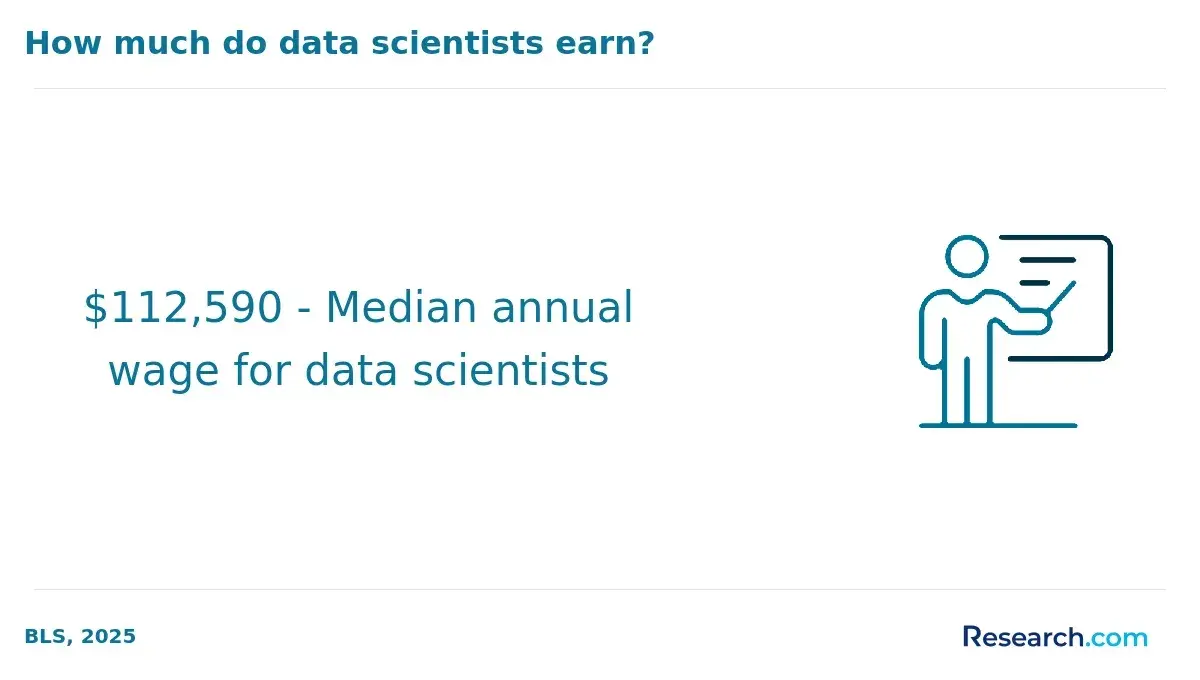
With an online data analytics degree, you can anticipate competitive salaries across various roles in the field. For common analyst positions, the median annual income in 2024 was $91,290 for operations research analysts, $101,910 for financial analysts, and $101,190 for management analysts. Data scientists, who typically possess advanced skills in data analytics, commanded a median annual income of $112,590 in 2024.
Moreover, data science positions are projected to experience a significant 34% job growth from 2024 to 2034, indicating robust demand and further potential for higher earnings in the field. These figures highlight the advantageous earning potential and career prospects of an online data analytics degree, rendering it appealing for those pursuing opportunities in the dynamic realm of data-driven decision-making.
- 2027 Best Online Data Analytics Degree Programs Best Programs
- How long does it take to complete an online online data analytics degree program? Completion Time
- How does an online data analytics degree program compare to an on-campus program? Online vs. On-Campus
- What is the average cost of an online data analytics degree program? Program Cost
- What are the financial aid options for students enrolling in an online data analytics degree program? Financial Aid
- What are the prerequisites for enrolling in an online data analytics degree program? Program Prerequisites
- What courses are typically in an online data analytics degree program? Program Courses
- How does a data analytics degree prepare you for advanced roles in AI and machine learning? How does a data analytics degree prepare you for advanced roles in AI and machine learning?
- What types of specializations are available in an online data analytics degree program? What types of specializations are available in an online data analytics degree program?
- How do you choose the best online data analytics degree program? How do you choose the best online data analytics degree program?
- What career paths are available for graduates of online data analytics degree programs? What career paths are available for graduates of online data analytics degree programs?
- What is the job market for graduates with an online data analytics degree? What is the job market for graduates with an online data analytics degree?
- How to choose the right data analytics tools for your career? How to choose the right data analytics tools for your career?
- How Does Accreditation Influence the Value and Career Impact of Your Online Data Analytics Degree? How Does Accreditation Influence the Value and Career Impact of Your Online Data Analytics Degree?
- Does an Online Data Analytics Degree Deliver a High Return on Investment? Does an Online Data Analytics Degree Deliver a High Return on Investment?
- Do Online Data Analytics Programs Offer Comprehensive Career Support? Do Online Data Analytics Programs Offer Comprehensive Career Support?
2027 Best Online Data Analytics Degree Programs
If you are trying to choose an online data analytics degree, the real question is not just “Which school is best?” It is “Which program gives me the skills, flexibility, and credential value I need for my career goal?” That matters now because employers are hiring for data-driven roles across business, finance, healthcare, and technology, while students are also trying to manage cost, accreditation, transferability, and online learning quality.
This guide breaks down what online data analytics degrees are, how they compare with on-campus study, what they cost, what courses they usually include, and how to choose the right option for your situation. It also highlights which programs may fit different goals, from entry-level preparation to advancement into analytics leadership or graduate study.
Quick answer: Which online data analytics degree is best?
The strongest online data analytics degree is the one that matches your career target, budget, and schedule while coming from an accredited institution with a relevant curriculum. For many students, a bachelor’s degree works best for entry-level roles, while a master’s degree is a better fit for career changers or professionals seeking advancement. If you want a faster, competency-based path, an accelerated or self-paced program may be a better match than a traditional semester schedule.
How do we rank schools?
Using our distinct methodology, our research team evaluated each program using a mix of academic quality, affordability, flexibility, and outcome-related factors. To keep the list grounded in reliable information, we used data from the IPEDS database, the Peterson's database, and the College Scorecard. These sources help compare tuition, credentials, delivery format, and institutional characteristics in a consistent way.
We focused on what matters most to prospective students: whether the program is credible, how much it costs, how long it takes, and how well it supports real career outcomes. Rankings should be a starting point, not the final decision. A top-ranked program is not always the best fit if it is too expensive, too rigid, or misaligned with your goals.
Top online data analytics degree programs
1. Georgia Institute of Technology
Georgia Institute of Technology offers an online Master of Science in Analytics (OMS Analytics) that is widely recognized for its strength in computing, engineering, and business analytics. The program blends machine learning, statistical modeling, data storage, visualization, optimization, and business analytics, making it a strong option for students who want advanced technical depth with applied business relevance. A practicum course gives students an opportunity to use analytics concepts on a real project.
- Program Length: 24-36 months
- Tracks/concentrations: Analytical Tools (Data Analytics); Business Analytics; and Computational Data (Data Science)
- Cost per Credit: $1,217 (in-state); $1,689 (out-of-state)
- Required Credits to Graduate: 38
- Accreditation: Southern Association of Colleges and Schools Commission on Colleges (SACSCOC)
2. Purdue University
Purdue University offers an online BS in Data Analytics designed to build both foundational and advanced skills in working with data. Students learn how to apply technical and statistical tools, identify trends, evaluate solutions, and prepare for industry-recognized certifications. This is a practical option for learners who want a broad undergraduate path with room to build job-ready analytics knowledge.
- Program Length: 24-36 months
- Tracks/concentrations: Analytical Tools (Data Analytics); Business Analytics; and Computational Data (Data Science)
- Cost per Credit: $371
- Required Credits to Graduate: 180
- Accreditation: Higher Learning Commission (HLC)
3. Northeastern University
Northeastern University's online BS in Analytics is built for students who want a career-oriented curriculum with strong applied learning. The program emphasizes data management, programming, reasoning, and communication, which are all important in analytics roles where technical skill must be paired with clear decision-making. It is a sensible option for students interested in marketing, finance, management, or healthcare analytics.
- Program Length: 4 years
- Cost per Credit: $541
- Required Credits to Graduate: 120
- Accreditation: Higher Learning Commission (HLC)
4. Oregon State University
Oregon State University's BS in Analytics emphasizes technical, organizational, and management skills. The curriculum is designed for students who want to understand not only how to analyze data, but also how to use that analysis to support business decisions. With several concentration options, it can work well for students seeking a business-facing analytics path.
- Program Length: 4 years
- Tracks/concentrations: Digital Marketing Analytics; Human Resource Analytics; Market Research and Consumer Analytics; and Sports Business
- Cost per Credit: $375
- Required Credits to Graduate: 180
- Accreditation: Association to Advance Collegiate Schools of Business (AACSB)
5. Washington State University
Washington State University offers a Bachelor of Science in Data Analytics that focuses on gathering, organizing, analyzing, and interpreting datasets. Students work with real industry data and study programming, database management, statistics, and economics in the business concentration. This program is useful for students who want a business-oriented analytics degree with practical application.
- Program Length: 4 years
- Tracks/concentrations: Business
- Cost per Credit: $567.45 (in-state); $632.60 (out-of-state)
- Required Credits to Graduate: 120
- Accreditation: Northwest Commission on Colleges and Universities (NWCCU)
6. Southern New Hampshire University
Southern New Hampshire University offers a Bachelor of Science in Data Analytics that combines technical training with the communication and problem-solving skills employers often expect. Students use tools such as Python, SQL, and SAS while learning quantitative and qualitative methods. The flexible online format, with no fixed lecture times, may appeal to working adults who need schedule freedom.
- Program Length: 4 years
- Tracks/concentrations: Project Management for STEM
- Cost per Credit: $330
- Required Credits to Graduate: 120
- Accreditation: New England Commission of Higher Education (NECHE)
7. Arizona State University
Arizona State University's BS in Data Science offers a broad foundation in statistical analysis, machine learning, data visualization, and database management. Students can choose from several concentrations, which makes the degree more customizable for learners interested in applying analytics in different disciplines. This is a strong choice for students who want a more data-science-oriented undergraduate path with analytics applications.
- Program Length: 4 years
- Tracks/concentrations:Behavioral Science; Bioscience; Business Analytics; Computer Science; Mathematics; Social Science; and Spatial Science
- Cost per Credit: $653
- Required Credits to Graduate: 120
- Accreditation: Association to Advance Collegiate Schools of Business
8. Western Governors University
Western Governors University's Bachelor of Science in Online Data Analytics and Data Management Degree uses a competency-based model. Students move through machine learning, Python, R, scripting, programming, and data analysis by demonstrating mastery rather than following a standard classroom calendar. Because the format is flexible and certifications are embedded in the curriculum, it can be a good fit for self-directed learners who want to move efficiently.
- Program Length: 42 months
- Cost per Six-month Term: $3,735
- Required Courses to Graduate: 42 courses
- Accreditation: Northwest Commission on Colleges and Universities (NWCCU)
9. University of North Carolina Wilmington – MS in Business Analytics
The University of North Carolina Wilmington's online MS in Business Analytics is aimed at students who want advanced analytical training for business decision-making. The program uses case studies, simulations, and data-intensive projects to connect theory with practical application. It is well suited to professionals who already have a degree and want to strengthen their analytics credentials.
- Program Length: ~12 months
- Cost per Credit: $593
- Required Credits to Graduate: 30
- Accreditation: Association to Advance Collegiate Schools of Business (AACSB)
10. Ohio Christian University
Ohio Christian University offers a BS in Data Analytics centered on acquiring, managing, and interpreting data to solve organizational problems. The program also emphasizes communicating insights to both technical and non-technical audiences, which is a useful skill in many entry-level analytics roles. Its self-paced structure may appeal to students who need more scheduling control.
- Program Length: Self-paced program with five-week courses
- Semester Tuition: $11,175
- Required Credits to Graduate: 120
- Accreditation: Higher Learning Commission (HLC)
Key findings
The best online data analytics programs are not all the same. Some are built for working adults who need flexibility, some prioritize technical depth, and others focus on business applications. That means the best choice depends on whether you want a bachelor’s degree, a master’s degree, or a competency-based program that may let you move faster.
Affordability also varies widely. Tuition is only one piece of the cost equation, so students should compare per-credit pricing, total credits, term structure, and any added fees before deciding. A lower per-credit price can still lead to a higher total cost if the program requires more credits.
Finally, accreditation, curriculum relevance, and delivery format matter just as much as cost. A program that aligns with your career goal and fits your schedule will usually be more valuable than one that simply looks good in a ranking list.
Here's what graduates have to say about their online data analytics degree
- Erica: "I needed a program that would not strain my budget, and the online format helped me avoid relocation and commuting costs while still getting a solid education."
- Richard: "As someone changing careers, I chose online study because I needed flexibility. It let me keep my job while building the skills I needed to move into analytics with more confidence."
- Mark: "I wanted to move up in my current company, so I needed stronger analytics skills without stepping away from work. Online learning made that possible and manageable."
How long does it take to complete an online data analytics degree program?
Completion time depends on the degree level, your enrollment pace, and whether you transfer prior credits. Online delivery does not automatically make a program faster, but it can make it easier to fit school around work or family responsibilities.
- Bachelor's Degree. An online bachelor's degree in data analytics usually takes about three to four years for full-time students.
- Master's Degree. A full-time online master's degree in data analytics often takes one and a half to two years. Part-time enrollment can extend that to two and a half to three years.
- Doctorate Degree. An online doctorate in data analytics may take three to five years, depending on research requirements, dissertation progress, and the student’s pace.
Program format matters. Some schools use term-based schedules, while others use self-paced or competency-based models. Transfer credits, prior learning, and how many courses you take each term can shorten or lengthen the timeline.
Interest in data analytics degrees continues to grow, especially among students seeking career changes or promotion potential. The number of degrees awarded in the US rose from 344 in 2020 to 4,600 in 2024, showing how much more mainstream this field has become.
How does an online data analytics degree compare to an on-campus program?
Online and on-campus data analytics programs can both lead to strong outcomes, but they serve different students. Online programs usually offer more scheduling freedom, while campus-based programs may provide more direct in-person interaction and a more traditional academic experience.
| Factor | Online program | On-campus program |
| Schedule | Often more flexible for working adults and caregivers | Usually tied to fixed class times and campus attendance |
| Location | Can be completed from almost anywhere with internet access | Requires commuting or relocating |
| Learning format | May include asynchronous learning, synchronous sessions, or both | Built around face-to-face classroom instruction |
| Technology use | Usually heavily integrated with LMS platforms and digital tools | May use the same tools, but often with more in-person support |
| Best for | Students who need flexibility, are working full time, or live far from campus | Students who want a traditional campus experience and direct in-person access |
Neither format is automatically better. If you need structure and face-to-face interaction, campus may be the right choice. If your priority is convenience and schedule control, online study is often the better fit. Students should also review whether the program uses synchronous interactive online instruction or asynchronous coursework, because that can affect weekly time demands.
What is the average cost of an online data analytics degree program?
Costs vary widely, and the most accurate way to compare programs is by looking at both the per-credit price and the total number of credits required. A program with a lower price per credit may still cost more overall if it requires more coursework.
For in-state students, the average total tuition ranges from $11,100 to $78,300. The average cost per credit ranges from $590 to $3,730.
For out-of-state students, the average total tuition ranges from $11,100 to $78,300. The average cost per credit ranges from $590 to $3,730.
Overall, the average cost of an online data analytics degree program for both in-state and out-of-state students falls between $11,100 to $78,300, depending on the institution and residency status.
When comparing affordability, do not stop at tuition. Include fees, books, software, exam costs, and any requirements for residencies or proctored assessments. Those added expenses can change the real price of the degree.
What are the financial aid options for students enrolling in an online data analytics degree program?
Students enrolling in an online data analytics degree program can often use several types of financial aid. The best combination depends on eligibility, degree level, and whether you are studying full time or part time.
- Scholarships. Universities and outside organizations may offer merit-based, need-based, or field-specific scholarships for data analytics students.
- Grants. Federal and state grants can help students with demonstrated financial need, including the Pell Grant and the Federal Supplemental Educational Opportunity Grant (FSEOG).
- Loans. Federal Direct Loans, including subsidized and unsubsidized loans, are common options. Graduate students may also consider Federal PLUS Loans, depending on eligibility.
- Employer tuition reimbursement. Some employers help pay for degree programs that support employee development, especially when the coursework aligns with current or future job responsibilities.
Before borrowing, compare expected program cost with your likely career return. Financial aid can make a degree accessible, but loans should be weighed carefully against income expectations and repayment obligations.
What are the prerequisites for enrolling in an online data analytics degree program?
Admission requirements depend on the degree level and the school. Some programs are open-access or broadly inclusive, while others are more selective and expect stronger quantitative preparation.
Bachelor's degree
- High school diploma or equivalent. Most undergraduate programs require completion of high school or a GED.
- Basic math and computer readiness. Schools may look for comfort with algebra, statistics, spreadsheets, or introductory computing.
- Prerequisite coursework. Some programs expect calculus, programming, statistics, or database-related background.
Master's degree
- Bachelor's degree. Applicants generally need a bachelor’s degree from an accredited school, often in a related field.
- Relevant experience. Some programs prefer applicants with analytics, business, programming, or quantitative work experience.
- Prerequisite courses. Statistics, programming, and data analysis methods may be required or recommended.
Doctorate degree
- Master's degree. Doctoral applicants usually need a master’s degree in a related discipline.
- Research background. Experience with research methods, scholarly writing, or applied research can strengthen an application.
- Letters of recommendation. These help schools assess academic and professional readiness.
- Statement of purpose. Applicants are often asked to explain research interests, professional goals, and reasons for pursuing the degree.
Always check the exact requirements of each program. Two schools may offer similar degrees but require very different preparation.
What courses are typically in an online data analytics degree program?
Most online data analytics programs include a mix of technical, statistical, and applied business courses. The exact names differ by school, but the learning outcomes tend to overlap.
- Data mining and warehousing. Students learn how to collect, clean, structure, and store large data sets, along with core data management concepts and systems. This often includes exposure to data management systems.
- Statistical analysis. Coursework typically covers descriptive and inferential statistics, regression, hypothesis testing, and methods for interpreting patterns in data.
- Machine learning. Students are introduced to predictive modeling, supervised and unsupervised learning, and the basics of automated pattern recognition.
- Data visualization. This area focuses on turning analysis into charts, dashboards, and visuals that decision-makers can understand quickly.
- Big data analytics. Students study how to work with large or complex data sources using distributed systems and tools for processing structured and unstructured information.
Some students confuse data analytics with data science. The two fields overlap, but they are not identical. Data analytics usually emphasizes turning existing data into business insight, while data science often goes deeper into modeling, programming, and advanced statistical methods. If you want broader technical depth, a data science degree may be the better fit.
How does a data analytics degree prepare you for advanced roles in AI and machine learning?
A data analytics degree can be a strong stepping stone into AI and machine learning, but it is usually an entry point rather than the final step. The value comes from building a foundation in statistics, programming, pattern recognition, and data interpretation.
Students who study data mining, statistical modeling, and machine learning gain exposure to the core logic behind predictive systems. That makes it easier to move into roles that rely on data pipelines, model support, business analytics, or applied machine learning.
For learners who want a more targeted path, a data analytics degree can be paired with additional coursework, certifications, or projects in Python, SQL, cloud platforms, or machine learning libraries. That combination is often more useful to employers than the degree title alone.
What types of specializations are available in an online data analytics degree program?
Specializations help students align the degree with a specific industry or job function. The best specialization is the one that matches the problems you want to solve after graduation.
- Business analytics. Focuses on using data to improve strategy, operations, customer insights, and forecasting.
- Healthcare analytics. Centers on patient outcomes, service improvement, cost control, and healthcare operations.
- Financial analytics. Covers risk analysis, portfolio modeling, fraud detection, and other finance-related decision tools.
- Marketing analytics. Looks at customer behavior, campaign performance, attribution, and audience segmentation.
- Social media analytics. Examines engagement, sentiment, network behavior, and content performance across digital platforms.
If your goal is general employability, a broad business analytics concentration may be the safest choice. If you already know your industry, a narrower specialization can make your application and résumé more targeted.
How do you choose the best online data analytics degree program?
Choosing the right program requires more than checking tuition and rankings. A strong decision should weigh accreditation, curriculum, flexibility, support services, and how well the degree aligns with your goals.
| What to compare | Why it matters | What to ask |
| Accreditation | Supports credit transfer, financial aid, and employer recognition | Is the institution and program properly accredited? |
| Curriculum | Shows whether the program covers the tools and methods employers expect | Does it include statistics, programming, visualization, and applied analytics? |
| Format | Affects how easily you can balance school with work or family life | Is the program asynchronous, synchronous, or hybrid? |
| Cost | Determines affordability and long-term financial pressure | What is the total tuition after fees, books, and other costs? |
| Student support | Can influence persistence and graduation success | Are there advising, tutoring, technical help, and career services? |
| Career alignment | Helps determine whether the program supports your target role | Do alumni work in the jobs you want? |
Useful questions to ask before enrolling:
- Will the program accept my transfer credits?
- Do graduates move into analytics roles, or mainly unrelated jobs?
- Does the school offer hands-on projects or a capstone?
- Is the schedule realistic for a full-time worker?
- Are industry tools such as Python, SQL, R, Tableau, or SAS included?
Can a Computer Science Background Enhance My Data Analytics Career?
Yes. A computer science background can strengthen a data analytics career by improving your understanding of programming, logic, algorithms, and data structures. Those skills are especially useful when analytics work moves into automation, software integration, or more advanced modeling.
If you want to build complementary technical strength, reading our article Is computer science a good major? may help you decide whether additional coursework or a second credential would support your long-term plans.
What career paths are available for graduates of online data analytics degree programs?
Graduates can work in many roles, especially in organizations that depend on data to guide operations, forecasting, and strategy. The exact job title may differ by employer, but the work usually centers on collecting, cleaning, interpreting, and presenting data.
- Data scientist. Uses statistical and computational methods to turn large datasets into predictive or strategic insights.
- Business analyst. Studies workflows, performance metrics, and business data to improve decisions and operations.
- Financial analyst. Works with financial data to support budgeting, forecasting, investment analysis, and risk evaluation.
- Healthcare analyst. Helps hospitals, insurers, and healthcare organizations improve outcomes and efficiency through data.
- Marketing analyst. Measures campaign performance, customer behavior, and audience trends to improve marketing decisions.
- Operations research analyst. Uses mathematical and analytical methods to solve problems in logistics, production, scheduling, and resource use.
These roles can be well paid, but salary varies by experience, employer, location, and industry. The median annual income of select analyst occupations ranged from $94,080 to over $107,790.
Does an Online Data Analytics Degree Enhance Opportunities in Niche Industries?
Yes, especially if you combine analytics with domain knowledge. In niche industries, employers often want professionals who understand both the numbers and the context behind them. That combination can create stronger job opportunities than analytics training alone.
Biotechnology is one example. Analysts who understand both data and the industry’s workflows may be able to support research, operations, or product decisions. For readers interested in this path, biotechnology jobs salary can help frame the potential value of that niche.
Can integrating data analytics with video game development expand my career opportunities?
It can. Game companies and interactive media teams increasingly use analytics to study player behavior, retention, monetization, and engagement. If you understand both data and game design, you may be able to contribute to product improvement and user experience strategy.
Students interested in that crossover may also want to explore top video game development degrees online, especially if they want a broader skill set that includes both technical and creative work.
What is the job market for graduates with an online data analytics degree?
The job outlook is generally strong for analytics-related occupations, but competition can still be real. Employers increasingly want candidates who can do more than run reports. They want people who can interpret findings, communicate clearly, and use modern tools responsibly.
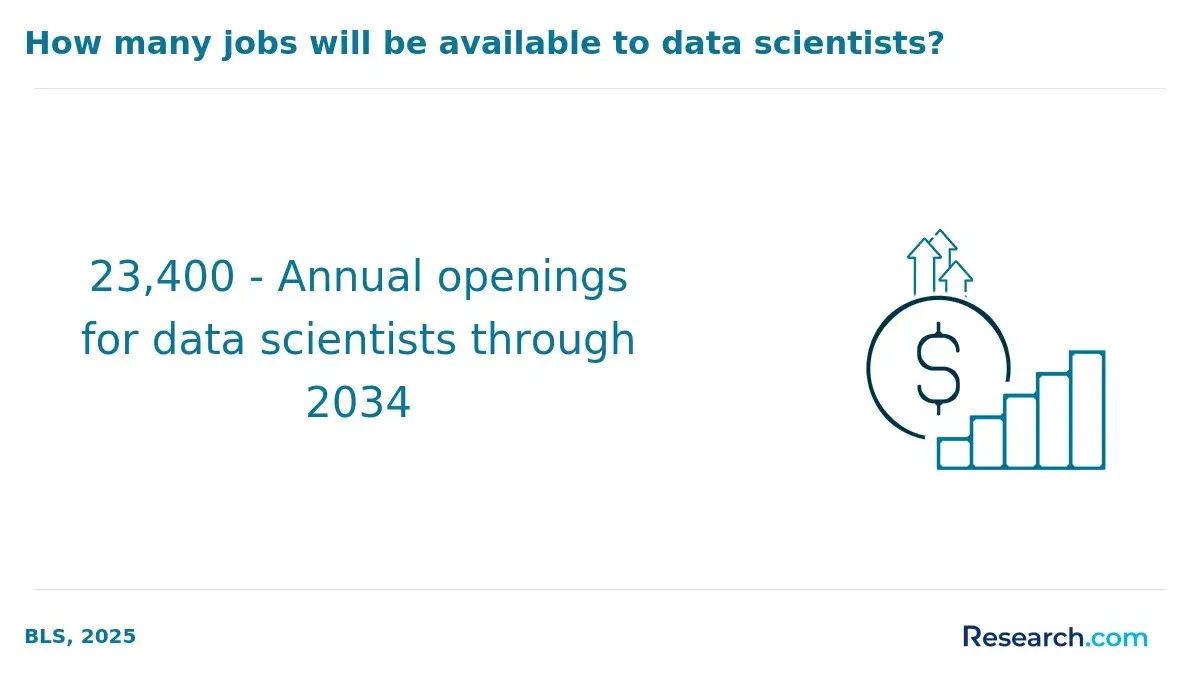
- Data scientists. The projected growth rate is 34% from 2024 to 2034.
- Operations research analysts. The projected growth rate is 23%.
- Management analysts. The projected growth rate is 10%.
- Financial analysts. The projected growth rate is 8%.
The broader category of mathematical science occupations has a projected growth rate of 29%, underscoring the long-term demand for analytical thinking across industries. Still, job outcomes depend on your portfolio, internship experience, technical skills, and the strength of the program you choose.
What are the options for further education after completing an online data analytics degree?
After earning a data analytics degree, some graduates continue with a master’s degree, MBA, or specialized certificate to move into leadership, strategy, or more advanced technical roles. The right next step depends on whether you want to manage teams, deepen technical expertise, or pivot into a related field.
One possible option is an affordable online MBA in data analytics. If you want to compare programs, the affordable online MBA in data analytics page can help you assess cost and fit. For other students, a specialized graduate degree may be more valuable than a broader business credential.
How to choose the right data analytics tools for your career?
Knowing the theory behind analytics is important, but employers also expect you to use the right tools for the job. Your tool stack should match the kind of data you work with, the role you want, and the systems used in your industry.
Key factors for choosing tools
- Data type and project goals. Structured business data often points to SQL and relational tools, while large or messy datasets may require distributed computing platforms.
- Ease of use versus depth. Beginners may start with Excel or Tableau, while more advanced users may need Python, R, or machine-learning tools.
- Integration. Choose tools that connect well with your employer’s databases, CRM systems, marketing platforms, or reporting software.
- Learning curve. Some tools are easy to start but limited later; others take more effort but offer more flexibility.
- Industry relevance. Some sectors prefer specific tools, so it helps to learn what employers in your target field actually use.
- Cost. Open-source tools such as Python and R are widely used and can be especially useful for students building skills on a budget.
If you want to deepen your technical toolkit, some students look at the cheapest online data science masters programs for additional exposure to analytics software and advanced methods. That path may make sense if you want stronger technical preparation after your first degree.
Can supplementary online technology programs expand my data analytics expertise?
Yes. Adding computer science, software, or technology-focused study can make you more versatile, especially if you want to work in automation, data engineering, or technically demanding analytics roles. These programs can strengthen your programming ability and help you work more effectively with modern data systems.
For example, a self paced computer science degree may complement analytics study for students who want stronger development skills and broader technical range. That can be useful if your career path may eventually cross into engineering or advanced analytics infrastructure.
The importance of data ethics in a data analytics curriculum
Data ethics is no longer optional. Analysts often work with sensitive information, including health records, consumer data, financial information, and employee data. That means they need more than technical skill; they need judgment.
A strong curriculum should address privacy, bias, transparency, security, and responsible interpretation. Without that foundation, even technically correct analysis can lead to harmful decisions or weak trust from employers and the public. Ethics training helps students understand when to question a dataset, how to present limitations, and how to reduce the risk of misuse.
For a broader look at how advanced analytical work affects research and decision-making, reading about data science in research may be useful.
How does accreditation influence the value and career impact of your online data analytics degree?
Accreditation is one of the most important filters when comparing programs. It helps indicate that a school meets recognized standards, which can affect financial aid eligibility, credit transfer, graduate school admission, and employer confidence.
For online students, accreditation also matters because it can shape how practical and respected the degree is after graduation. Before enrolling, verify both institutional accreditation and, when relevant, programmatic accreditation. You should also look at employer partnerships, capstone projects, and internship connections, because those can improve career preparation in ways that rankings alone cannot.
If you are also exploring adjacent technology fields, an online degree AI program may help you compare how accreditation and curriculum alignment work in more specialized tech credentials.
Does an online data analytics degree deliver a high return on investment?
It can, but only if the cost of the program matches the career value it helps you access. A strong return on investment usually comes from a combination of reasonable tuition, good accreditation, relevant skills, and a career path with demand in your target market.
Online study can improve ROI by reducing commuting and relocation costs and making it easier to keep working while enrolled. However, ROI depends on the full picture: total tuition, time to completion, aid availability, and whether the degree actually helps you qualify for better roles.
Some students choose to pair analytics with a specialized graduate field to increase their options. For instance, exploring the cheapest online bioinformatics master's degree may make sense for learners who want to move into health, life sciences, or research-driven careers.
Do online data analytics programs offer comprehensive career support?
Many strong online programs do, but the quality of support varies widely. Career services can include advising, résumé help, interview preparation, internship guidance, alumni connections, and employer networking. For online students, those services matter because they can help offset the lack of day-to-day campus interaction.
Before enrolling, ask whether the school offers dedicated support for online learners or only general university resources. Also ask how often students from the program land internships or analytics-related roles after graduation.
In some cases, students also expand their career plan by adding a specialized credential such as the fastest degree in artificial intelligence online if they want to broaden their technical profile without repeating the same content.
Common mistakes to avoid when choosing an online data analytics degree
- Choosing a school without checking accreditation.
- Comparing tuition without adding fees, books, and software costs.
- Assuming every online program fits licensure or graduate-school needs.
- Ignoring whether the curriculum includes hands-on projects and current tools.
- Relying only on rankings instead of fit, flexibility, and career alignment.
- Assuming salary outcomes are guaranteed after graduation.
Who should consider an online data analytics degree?
- Working adults who need flexible scheduling.
- Career changers who want a more direct route into analytics.
- Students who want a business, healthcare, finance, or technology pathway with data skills.
- Learners who want to build a stronger résumé with technical, statistical, and communication skills.
Who may want a different path?
- Students who want the deepest possible math and machine-learning focus may prefer data science.
- Learners who need heavy lab work or face-to-face mentorship may prefer campus study.
- Applicants who need a licensure-based field should verify whether analytics is the right credential for their goal.
Key insights
- The best online data analytics degree is the one that matches your goal, budget, and schedule—not just the highest ranking school.
- Bachelor’s programs are usually best for entry-level preparation, while master’s programs are often better for advancement or career change.
- Accreditation, curriculum quality, and delivery format matter as much as cost.
- Online learning can improve flexibility and reduce some expenses, but you still need to compare the full price and total time to completion.
- Employers value analytics graduates who can work with data tools, communicate findings clearly, and apply ethics and judgment.
- If you want stronger technical depth, a complementary path in computer science, AI, or data science may improve your long-term options.
References:
- American Statistical Association. (2024). Master’s Degrees in Data Science, Data Analytics, and Related Fields, total and # of universities awarding such degrees. ASA.
- CompTIA. (2025). State of Cybersecurity 2025. https://www.comptia.org/en-us/resources/research/state-of-cybersecurity
- U.S. Bureau of Labor Statistics. (2025). Management analysts. BLS.
- U.S. Bureau of Labor Statistics. (2025). Financial analysts. BLS.
- U.S. Bureau of Labor Statistics. (2025). Operations research analysts. BLS.
- U.S. Bureau of Labor Statistics. (2025). 15-2031 Operations research analysts. BLS.
- U.S. Bureau of Labor Statistics. (2025). Data scientists. BLS.
- U.S. Bureau of Labor Statistics. (2025). 15-2051 Data scientists. BLS.
Other Things You Should Know About Online Data Analytics Degree Programs
Leading programs often utilize tools like Python, R, and SQL for data manipulation, while platforms such as Tableau and Power BI are employed for data visualization. Additionally, cloud-based services like AWS or Google Cloud are used for scalable data processing, offering students practical experience with industry-standard technologies.
The best online data analytics degree programs in 2027 offer cutting-edge curriculum incorporating AI-driven analytics tools, personalized learning platforms, and industry collaboration. They emphasize real-world applications by integrating live projects with businesses, ensuring students gain relevant, hands-on experience essential for their careers.
Schools like Georgia Tech and Penn State provide industry-recognized certifications such as those from SAS or Microsoft alongside their online data analytics degrees in 2027. Such certifications enhance employability by validating specialized skills in data analytics tools and technologies.
Most online data analytics bachelor’s degree programs require about 120 semester credits. Students usually complete core math, statistics, programming, database, and analytics courses, plus general education requirements. Many programs also include a capstone project, internship, or practicum before graduation.


