2027 Online Digital Photography Degrees With Product Photography Focus

Co-Founder and Chief Data Scientist
Choosing an online digital photography degree is harder when your goal is product work, because employers care about both formal training and a polished commercial portfolio. U.S. retail e-commerce sales reached about $1.19 trillion in 2024, according to the U.S. Census Bureau, making strong product imagery central to online selling.
This guide is for students, career changers, freelancers, and creative professionals comparing degree options. You will learn how programs work, what they cost, which schools to consider, and how to choose a path that supports real product photography careers.
Key Things You Should Know
- Product photography is usually not a standalone degree concentration; most accredited online programs offer digital photography, commercial photography, or photography degrees where students build a product-focused portfolio through electives, assignments, and capstone work.
- College Board's 2024 pricing data shows average published tuition and fees of $11,610 for in-state public four-year colleges and $43,350 for private nonprofit four-year colleges, so total cost depends heavily on transfer credits, institution type, and required equipment.
- The U.S. Bureau of Labor Statistics reported a May 2024 median annual wage of $42,520 for photographers, but product photographers' earnings vary widely by market, client type, portfolio quality, business skills, and whether they work freelance or in-house.
What is an online digital photography degree with a product photography focus?
An online digital photography degree teaches students how to plan, shoot, edit, manage, and present professional photographic work using digital tools. A product photography focus means the student uses that broader photography training to specialize in images of physical goods, such as apparel, jewelry, cosmetics, electronics, furniture, food packaging, and e-commerce catalog items.
In practice, this focus may appear in several forms. Some schools offer commercial photography courses, still life assignments, studio lighting projects, advertising photography modules, or portfolio reviews that allow students to build product work. Fewer schools label the track specifically as "product photography," so applicants should look beyond the program title and review the curriculum, faculty work, student portfolios, and capstone requirements.
Product photography differs from general digital photography because the goal is usually commercial clarity and conversion. A portrait photographer may prioritize expression and personality, while a product photographer must show shape, texture, color accuracy, scale, material quality, and brand positioning. A watch, for example, may need reflective-surface control; a cosmetics bottle may need clean highlights; and a clothing item may require consistent color across a full product line.
This type of degree can make sense for students who want structured training, feedback, a credential, and a portfolio that can support employment or freelance work. It may be less necessary for someone who already has strong studio experience, a client base, and a targeted short-term need that could be met through a certificate, workshop, or mentorship.
| Program type | Typical fit | Product photography value | Trade-off |
| Associate degree | Students seeking entry-level skills or a lower-cost starting point | Builds foundations in camera work, editing, lighting, and portfolio preparation | May offer fewer advanced commercial or business courses |
| Bachelor's degree | Students who want broader creative, technical, and professional preparation | Usually provides more portfolio development, critiques, visual communication, and electives | Costs more and takes longer than a certificate or associate program |
| Certificate or nondegree training | Working photographers who need specific skills quickly | Useful for lighting, retouching, e-commerce workflow, or software refreshers | May not provide the same credential, general education, or degree-based transfer value |
| Self-directed learning | Highly motivated learners with access to gear, clients, and critique | Can be inexpensive and flexible for building a niche portfolio | Quality control, accountability, and employer recognition can be inconsistent |
How do online digital photography programs compare to campus-based options for product work?
Online photography programs can work well for product photography because much of the discipline depends on repeatable studio setup, lighting control, file management, editing, and portfolio development. Students can practice at home with a camera, tripod, lights, reflectors, backdrops, color targets, and tethering software, then submit images for critique through a learning platform.
Campus-based programs may be stronger for students who need access to professional studios, high-end lighting, medium-format systems, print labs, or frequent in-person critique. The best format depends less on prestige and more on whether the program gives you enough hands-on practice, feedback, and product-specific portfolio direction.
The table below summarizes the major decision points. Use it to match the learning format to your constraints, especially if you are balancing school with work, family, military service, or freelance clients.
| Factor | Online digital photography degree | Campus-based photography degree | Best choice when |
| Studio access | Students often build a small home studio | Students may use school studios and shared equipment | Campus is better if you need expensive gear before buying your own |
| Schedule | Often asynchronous or flexible | Usually fixed class, lab, and critique times | Online is better for working adults and freelancers |
| Critique | Delivered through uploads, video feedback, discussion boards, and live sessions | Delivered in studio, lab, and classroom settings | Either works if critique is detailed, frequent, and faculty-led |
| Product workflow | Strong fit for e-commerce-style shooting, tethering, retouching, and file delivery | Strong fit for collaborative studio shoots and advanced lighting labs | Online works if assignments require controlled lighting and professional deliverables |
| Networking | Depends on virtual communities, portfolio reviews, and internships | May offer stronger local networking and peer collaboration | Campus can help students who want a local creative network |
A current trend shaping both formats is the rise of AI-assisted editing and automated e-commerce imaging workflows. Students should still learn manual lighting, color correction, masking, compositing, and retouching because employers and clients expect photographers to know when automation is useful and when it creates inaccurate product representation.
Which U.S. schools offer accredited online digital photography degrees specializing in product photography?
Very few accredited U.S. colleges advertise a fully online degree with a named "product photography" specialization. A more realistic search strategy is to compare accredited online photography degrees and identify programs that include commercial photography, studio lighting, advertising imagery, digital workflow, portfolio development, and faculty feedback that can be directed toward product work.
The schools below are examples of accredited U.S. institutions that have offered online or substantially online photography-related degrees. Program names, delivery formats, tuition, and course availability can change, so applicants should confirm details directly with the school and verify institutional accreditation through recognized accreditation databases before enrolling.
| School | Example online photography-related program | Institutional accreditation | How it can support product photography | What to verify |
| Southern New Hampshire University | BA in Digital Photography | New England Commission of Higher Education | Digital imaging, lighting, media communication, and portfolio work can be shaped toward commercial products | Current course sequence, portfolio expectations, transfer credit policy, and required equipment |
| Academy of Art University | Online photography degree options at undergraduate and graduate levels | WASC Senior College and University Commission | Commercial, studio, lighting, and advertising-oriented assignments may align with product imagery | Program cost, online studio requirements, faculty specialization, and graduation outcomes |
| Savannah College of Art and Design | Online photography study through SCADnow offerings, depending on program availability | Southern Association of Colleges and Schools Commission on Colleges | Commercial art, branding, visual communication, and portfolio culture can help students pursue product-oriented work | Whether the specific degree and courses are available fully online for the intended start term |
| Rocky Mountain College of Art + Design | Online BFA-level photography study, depending on current offerings | Higher Learning Commission | Studio practice, digital workflow, critique, and portfolio development may support commercial still-life work | Current online availability, equipment expectations, critique structure, and internship options |
When a school does not list product photography as a concentration, ask admissions or the department whether product shoots can be used for major assignments, senior projects, and portfolio reviews. A program that lets you repeatedly photograph real products under critique may be more useful than a program with a promising title but little commercial studio practice.
What courses and technical skills are typically included in a product-focused digital photography curriculum?
A strong product-focused digital photography curriculum combines photography fundamentals with commercial production skills. The goal is not only to take attractive images but to create accurate, repeatable, brand-ready files that can be used in e-commerce listings, advertisements, packaging, social media, catalogs, and marketplace platforms.
Students should look for courses and assignments that build both creative judgment and production discipline. The following areas are especially important because product clients often judge photographers on consistency, speed, color accuracy, and ability to solve lighting problems.
- Camera and exposure control, including aperture, shutter speed, ISO, focal length, depth of field, and lens distortion management.
- Studio lighting for reflective, transparent, matte, textured, and small products using strobes, continuous lights, modifiers, flags, scrims, reflectors, and diffusion.
- Digital workflow, including tethered capture, file naming, backup practices, RAW processing, color profiles, metadata, and delivery formats.
- Retouching and compositing in tools such as Adobe Photoshop, Lightroom, and Capture One, with attention to dust removal, masking, shadow control, color correction, and non-destructive editing.
- Commercial visual communication, including brand guidelines, art direction, shot lists, mood boards, client briefs, usage rights, and production planning.
- E-commerce standards, including white-background images, lifestyle product scenes, scale shots, 360-degree imagery, marketplace specifications, and consistent batch production.
- Portfolio and professional practice, including pricing basics, estimates, invoices, licensing language, client communication, revisions, and presentation of case studies.
The table below connects common courses to the practical product photography skills they should produce. This can help you evaluate whether a curriculum is truly commercial or mainly fine-art oriented.
| Course area | Skill students should gain | Why it matters for product work |
| Studio lighting | Control highlights, shadows, reflections, and texture | Product images often fail when surfaces look flat, distorted, or inaccurate |
| Digital post-production | Retouch cleanly while preserving product truth | Over-editing can misrepresent color, material, or product condition |
| Color management | Use calibrated monitors, color targets, and consistent output profiles | Brands need product colors to remain consistent across campaigns and platforms |
| Commercial photography | Interpret a brief and deliver usable client assets | Product photographers must meet business goals, not just artistic preferences |
| Portfolio development | Create a coherent body of work for a target market | Employers and clients usually judge capability through finished images and project context |
AI tools are becoming part of the editing workflow, especially for background cleanup, masking, image expansion, and asset variation. However, students should be cautious: product photography often requires truthful representation, so AI-generated changes should be disclosed when appropriate and should not alter the product in a misleading way.
What are the admission requirements and application steps for online digital photography degrees?
Admission requirements vary by school and degree level, but online undergraduate photography programs are often accessible to first-time college students, transfer students, and working adults. Some programs require a portfolio; others admit students first and use early coursework to develop technical and creative skills.
Applicants should expect the requirements below, especially for bachelor's and BFA programs. Selective art schools may place more weight on visual samples, while broader online universities may focus more on transcripts and readiness for college-level study.
- High school diploma, GED, or equivalent for undergraduate admission.
- Official transcripts from high school and any previously attended colleges.
- Portfolio or creative samples, if required by the program.
- Personal statement or short essay explaining creative interests and career goals.
- Application form and any required application fee.
- Proof of English proficiency for applicants whose prior education was not in English, when required.
- FAFSA submission if the student wants to be considered for federal financial aid at an eligible institution.
Military-affiliated students should also ask about transfer credit for training, Joint Services Transcript review, Yellow Ribbon participation, and dedicated veteran advising. The same type of benefits review matters in technical programs such as an electrical engineering degree online for veterans, and it can also reduce time and cost in creative degree pathways.
A practical application process usually follows these steps. Completing them in order can help you avoid applying to a program that does not match your budget, equipment access, or product photography goals.
- Confirm institutional accreditation and federal financial aid eligibility before discussing enrollment.
- Review the curriculum for commercial photography, studio lighting, digital workflow, business practice, and portfolio courses.
- Ask whether product photography can be used for assignments, critiques, and capstone projects.
- Request a written estimate of tuition, fees, software, equipment, and expected transfer credits.
- Prepare transcripts, portfolio samples, and a short goal statement tailored to commercial photography.
- Compare admissions deadlines, course start dates, withdrawal policies, and refund rules.
- Apply only after you understand the total cost, academic expectations, and support available for online learners.
How long do online digital photography programs take, and what do they cost?
Program length depends on degree level, transfer credits, course load, and whether the school uses traditional semesters or accelerated terms. An associate degree commonly takes about two years of full-time study, while a bachelor's degree commonly takes about four years for first-time students. Transfer students may finish faster if prior credits apply to general education, electives, or lower-division studio courses.
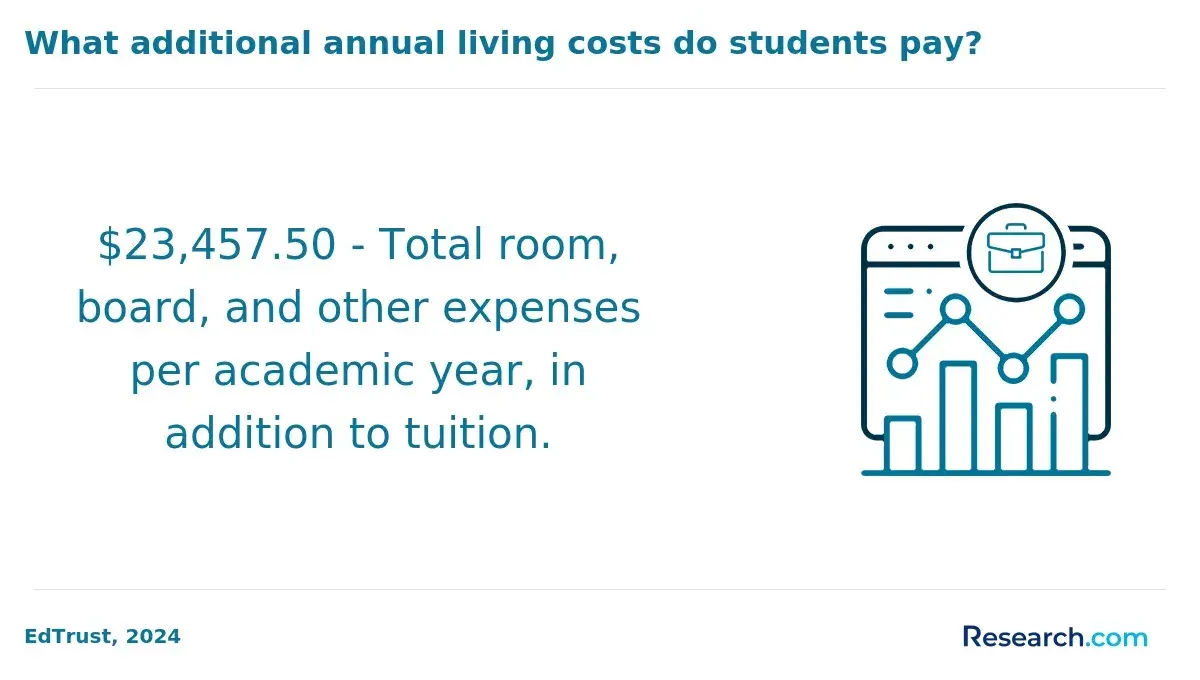
Cost varies widely because online photography programs may be housed in public universities, private nonprofit colleges, private art schools, or private for-profit institutions. College Board's 2024 data listed average published tuition and fees of $11,610 for in-state students at public four-year institutions and $43,350 for private nonprofit four-year institutions for the 2024-25 academic year. Those figures are not photography-specific, but they show why applicants should compare net price rather than assuming all online degrees are inexpensive.
For planning purposes, students should separate tuition from the equipment and software needed to complete product photography assignments. Common cost categories include the following.
- Tuition and mandatory fees charged by the school.
- Camera body, lenses, tripod, memory cards, storage drives, and backup tools.
- Lighting equipment such as strobes or continuous lights, stands, modifiers, reflectors, diffusion, clamps, and backdrops.
- Computer, calibrated monitor, editing tablet, and color management tools.
- Software subscriptions for photo editing, tethering, file delivery, and portfolio presentation.
- Printing, shipping, props, product samples, insurance, and optional portfolio website costs.
Students comparing creative business careers may also look at marketing programs because product photographers often work closely with e-commerce, brand, and advertising teams. If you are weighing photography against marketing graduate study, reviewing MS in digital marketing degree cost USA comparisons can help you think about tuition, duration, and earnings trade-offs across adjacent fields.
| Path | Typical completion time | Cost considerations | Best fit |
| Certificate or focused coursework | A few months to one year | Lower tuition, but limited degree value and possible noncredit status | Photographers who need a specific skill upgrade |
| Associate degree | About two years full time | Often lower total cost, especially at community colleges, but online product-specific options may be limited | Students seeking an entry point or transfer pathway |
| Bachelor's degree | About four years full time, less with transfer credits | Higher total cost but more time for portfolio development and broader career preparation | Students seeking structured training and a stronger credential |
| Art school degree | Varies by level and transfer status | May include intensive critique and creative resources but can carry higher tuition | Students who want an immersive commercial art environment |
To reduce cost, prioritize accredited schools that accept transfer credits, publish equipment requirements clearly, offer portfolio-based placement when available, and provide realistic advising before enrollment. A lower tuition rate is helpful, but a program can become expensive if it requires gear you cannot access or credits that do not transfer later.
What product photography careers can graduates pursue with an online digital photography degree?
Graduates can pursue product photography careers in e-commerce, advertising, retail, fashion, consumer goods, food and beverage, technology, publishing, and creative agencies. Some work as salaried in-house photographers, while others operate freelance studios serving brands, online sellers, manufacturers, or marketing teams.
The degree itself is usually not the only hiring factor. Employers and clients often place equal or greater weight on portfolio quality, lighting control, retouching skill, production speed, reliability, and ability to follow a brief. A degree can still help by providing structure, critique, career services, and a broader understanding of visual communication.
The table below outlines common product photography career directions. It focuses on responsibilities rather than promised job titles, because employers use different titles for similar work.
| Career path | Typical responsibilities | Portfolio evidence employers or clients look for |
| E-commerce product photographer | Create consistent product images for websites, marketplaces, and catalogs | Clean white-background images, batch consistency, accurate color, and efficient workflow |
| Commercial studio photographer | Produce advertising, brand, packaging, and campaign images | Controlled lighting, creative art direction, polished retouching, and client-ready case studies |
| Photo retoucher or digital imaging specialist | Edit, composite, color-correct, and prepare commercial files | Before-and-after samples, non-destructive workflow, masking quality, and color accuracy |
| Content production specialist | Create product images, short-form video, social assets, and campaign visuals | Multi-format product content, brand consistency, and ability to meet deadlines |
| Freelance product photographer | Manage clients, estimates, shoots, editing, licensing, delivery, and revisions | Specialized portfolio, clear service packages, testimonials, and business professionalism |
| Creative production coordinator | Coordinate shot lists, products, props, models, studio schedules, and deliverables | Organized campaigns, production documents, and understanding of photography workflows |
Some students also combine photography with design, marketing, or entrepreneurship. Product photographers who understand search merchandising, paid social advertising, conversion-focused imagery, and brand storytelling may be more competitive for hybrid creative roles. For readers still comparing creative online education broadly, adjacent guides such as an online architecture degree overview can also show how portfolio-based fields differ in timeline, accreditation, and professional expectations.
This career path is a strong fit for detail-oriented people who enjoy lighting puzzles, visual problem-solving, editing precision, and repeatable production systems. It may be a weaker fit for students who want only spontaneous shooting, dislike post-production, or do not want to manage equipment, clients, deadlines, and revisions.
What salary ranges and earning potential exist for professional product photographers in the U.S.?
Product photography pay in the U.S. varies by employment model, city, niche, client budget, and business experience. The U.S. Bureau of Labor Statistics groups product photographers within the broader photographer occupation, reporting a May 2024 median annual wage of $42,520 for photographers. That figure is useful as a national benchmark, but it does not isolate commercial product specialists, high-end advertising photographers, or freelancers with variable business income.
Because product photographers may be salaried, hourly, project-based, or licensing-based, earning potential should be evaluated through role type rather than a single number. The table below explains how compensation tends to differ by work arrangement.
| Work arrangement | How pay is usually structured | Earning potential factors | Main limitation |
| In-house photographer | Salary or hourly wage | Employer size, product volume, location, benefits, and production responsibility | Less upside than owning a studio, but more income stability |
| Studio assistant or junior photographer | Hourly wage or entry-level salary | Technical reliability, speed, lighting support, and editing ability | Lower early pay while building experience and portfolio depth |
| Freelance product photographer | Project fees, day rates, image rates, retainers, or licensing fees | Niche, client base, marketing, repeat contracts, usage rights, and operational efficiency | Income can be uneven and must cover taxes, insurance, equipment, and downtime |
| Commercial advertising photographer | Creative fees, production fees, licensing, and agency contracts | Brand reputation, representation, complex production skill, and high-end portfolio | Highly competitive and dependent on network, demand, and proven campaign work |
| Retoucher or digital imaging specialist | Hourly, salary, or project-based editing fees | Technical precision, color management, speed, and specialization | May involve less shooting and more screen-based production work |
Students should avoid treating salary data as a promise. A degree can support skill development, but product photography earnings depend heavily on portfolio quality, market positioning, client communication, production speed, and business discipline. Before enrolling, compare the program's total net cost with the kinds of roles you are realistically targeting in your local or remote market.
What certifications, portfolios, or professional standards matter most in product photography careers?
Product photography usually does not require a state license, and employers rarely require one universal certification. Instead, the strongest proof of readiness is a focused portfolio showing that you can photograph products accurately, attractively, and consistently under commercial constraints.
Certifications can still help when they validate software, workflow, or business knowledge. They are most useful when paired with portfolio evidence, not used as a substitute for finished work. Examples include software credentials, workshops from recognized professional organizations, color management training, and vendor-specific training for capture or editing tools.
A product photography portfolio should be narrow enough to show a specialty but broad enough to prove adaptability. Students should build samples that demonstrate the following professional standards.
- Clean e-commerce images with consistent angle, crop, background, exposure, and shadow treatment.
- Reflective or transparent product shots that show control over highlights, glare, and edge definition.
- Color-accurate images using calibration, color targets, and repeatable editing practices.
- Lifestyle or brand-oriented product images that show art direction, styling, and customer context.
- Before-and-after retouching samples that prove technical skill without misleading product representation.
- Case studies explaining the client brief, lighting approach, production constraints, and delivered assets.
- Usage-aware presentation that distinguishes portfolio display from commercial licensing rights.
Professional standards also include business conduct. Product photographers should understand estimates, contracts, usage rights, revision limits, delivery timelines, file naming, backups, model or property releases when relevant, and basic insurance. These details can matter as much as image quality when clients decide whether to hire someone again.
How can prospective students evaluate and choose a reputable online product photography program?
The best online product photography program is not always the cheapest, fastest, or most visually impressive. It is the program that combines recognized accreditation, relevant coursework, strong critique, transparent costs, adequate technical support, and enough portfolio flexibility to support your specific commercial goals.
Start with accreditation and consumer protection. Confirm that the institution is accredited by an agency recognized by the U.S. Department of Education or Council for Higher Education Accreditation, and check whether the program is eligible for federal financial aid if you plan to use it. Then look at outcomes and curriculum quality, not just marketing language.
Use the following questions when speaking with admissions, faculty, or program advisors. They are designed to reveal whether the online format can actually support product-focused work.
- Can students use product photography for major assignments, portfolio reviews, and capstone projects?
- Which courses teach studio lighting, commercial photography, color management, retouching, and client workflow?
- How often do students receive individual critique from faculty with commercial photography experience?
- What camera, lighting, computer, and software are required before the first studio course?
- Are sample student portfolios available, and do any show product, advertising, or e-commerce work?
- How many transfer credits can be accepted, and which prior courses are likely to apply?
- What career services are available for online students, including internships, portfolio reviews, and employer connections?
- What is the total estimated net cost after grants, scholarships, transfer credits, and required equipment?
Be alert for red flags. Avoid programs that pressure you to enroll quickly, provide vague equipment lists, hide fees, overpromise job outcomes, lack meaningful critique, or cannot explain how online students complete studio assignments. Also be cautious if the curriculum focuses heavily on general visual appreciation but offers little hands-on lighting, editing, or portfolio production.
| Common mistake | Why it creates risk | Better approach |
| Choosing based only on tuition | Low tuition may be offset by poor transfer value, weak critique, or expensive equipment requirements | Compare total net cost, equipment, support, and portfolio outcomes |
| Assuming "online" means no studio work | Product photography requires hands-on practice with lighting and physical products | Confirm exactly how shoots, critiques, and technical demonstrations are handled remotely |
| Ignoring accreditation | Credits, aid eligibility, and employer recognition may be affected | Verify institutional accreditation before applying |
| Building a portfolio that is too broad | Clients may not see proof that you can solve product-specific problems | Create a targeted commercial portfolio with e-commerce, reflective, textured, and lifestyle product samples |
| Relying only on the degree | Photography hiring is highly portfolio-driven | Use the degree to produce finished case studies, not just completed coursework |
As a final decision test, imagine showing your graduating portfolio to an e-commerce manager, brand owner, or studio producer. If the program can help you create work that answers their practical needs-accurate color, clean lighting, consistent files, reliable workflow, and clear communication-it is more likely to be worth your time and investment.
Other Things You Should Know About Digital Photography
Product photography and portrait photography present different challenges. In 2027, online digital photography degrees focusing on product photography will delve into the precise lighting, composition, and detail requirements that make it distinct. While product photography demands technical precision, portrait photography requires strong interpersonal skills and the ability to capture emotions and expressions.
Some can, especially freelancers with home studios who receive products by mail and deliver digital files. However, remote work depends on product size, shipping logistics, client expectations, confidentiality, and the need for stylists, models, or art directors. Large products, food, and high-budget advertising shoots may still require on-site production.
Most programs expect students to have a DSLR or mirrorless camera, a tripod, a light meter, and at least one continuous light or strobe kit. Some courses also require a backdrop system and a macro lens for close-up product work.
References
- Product Photography: What Makes a Pro a Pro - Zenfolio https://zenfolio.com/product-photography/how-to-become-a-pro/
- Product photography courses and guide https://www.clippingpathassociate.com/blog/10-best-product-photography-classes-and-trainings
- How Much Do Photographers Make | Full Frame Insurance https://www.fullframeinsurance.com/blog/how-much-do-photographers-make
- Top 10 Career Options After a Photography Course | SSVAP Pne https://www.ssvap.edu.in/blog/top-10-career-options-after-completing-a-photography-course
- Professional Photography Careers - Photographer Jobs | NYIP https://stg.nyip.edu/photo-articles/career-guides/professional-photography
- How to Choose a Photography School? Spéos https://speos-photo.com/en/how-to-choose-a-photography-school/
- Best Online Photography Degrees https://www.onlineu.com/degrees/photography
- Should you Study Photography at College or are There Better Options Now? https://digital-photography-school.com/should-you-study-photography-at-college-or-are-there-better-options-now/
- Product Photography Courses https://visualeducation.com/product-photography-courses/