2027 What Can You Do With a Digital Photography Degree

Co-Founder and Chief Data Scientist
Choosing a digital photography degree is really a career-planning decision: will the program build a portfolio, technical fluency, and business skills that employers or clients will pay for? The U. S. Bureau of Labor Statistics reports that photographers earned a median annual wage of $42,520 in May 2024, but outcomes vary widely by niche, location, and self-employment success. This guide is for students comparing photography programs, certificates, and creative career paths. You will learn what the degree covers, what jobs it can support, what it may cost, and how to judge whether it fits your goals.
Key Things You Should Know
- A digital photography degree can prepare you for photography, photo editing, studio production, visual content, ecommerce, media, and freelance business roles, but your portfolio often matters as much as the credential.
- BLS data places the median annual wage for photographers at $42,520 in May 2024, while related creative roles such as art director or special effects artist may require broader design, leadership, or post-production skills.
- Before enrolling, compare accreditation, portfolio outcomes, equipment costs, internship access, transfer credits, and whether a certificate, associate degree, bachelor's degree, or MFA best matches your target career.
What is a digital photography degree and what can it prepare you to do?
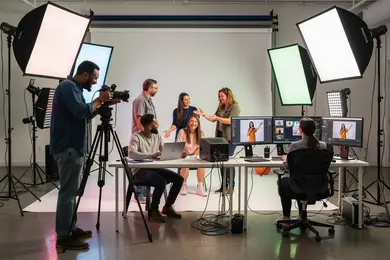
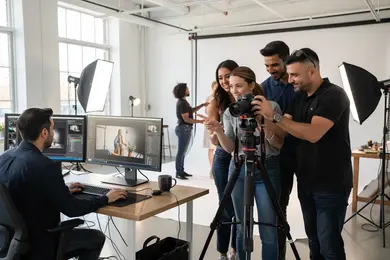
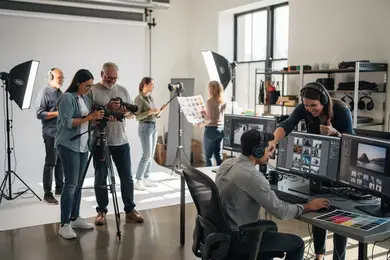
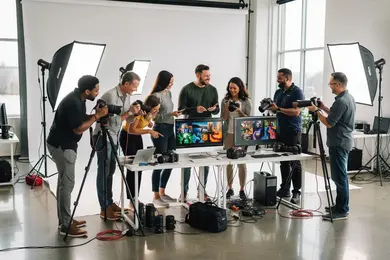
A digital photography degree is a college program focused on making, editing, managing, presenting, and selling photographic images in digital formats. Unlike a short camera workshop, a degree usually combines visual theory, lighting, editing software, studio practice, portfolio development, and professional communication.
The strongest programs do more than teach exposure settings. They help students understand how images work in journalism, advertising, ecommerce, social media, fine art, events, real estate, sports, fashion, product marketing, and nonprofit storytelling. That matters because many photography jobs now overlap with content production, video, retouching, asset management, and brand strategy.
A digital photography degree may prepare you to do the following, depending on the program level and your portfolio strength:
- Create technically polished images using professional camera systems, lighting setups, color workflows, and digital editing tools.
- Build a portfolio tailored to a niche such as commercial photography, portraiture, product photography, documentary work, editorial imagery, or fine art.
- Manage client projects, licensing, contracts, image delivery, and basic business operations for freelance or studio work.
- Collaborate with creative directors, designers, marketers, editors, stylists, videographers, and web teams.
- Use post-production software to retouch, color-correct, composite, archive, and prepare images for print and digital publishing.
This degree fits students who enjoy visual problem-solving, can accept critique, and are willing to build a body of work over time. It may not be the best investment for someone who only wants a casual photography hobby, does not want to freelance or market themselves, or is unwilling to learn editing, business, and digital workflow skills.
Students comparing creative majors should also look at adjacent options. For example, a game design degree may be a better fit for someone who wants interactive media, 3D environments, or entertainment technology rather than still-image production.
What jobs and career paths can you pursue with a digital photography degree?
A digital photography degree can lead to traditional photography jobs, but it can also support broader visual content roles. Employers and clients typically evaluate your portfolio, reliability, software skills, and niche experience more than your transcript alone.
The table below compares common career paths connected to digital photography. Use it to identify whether each role is image-production focused, business-heavy, or part of a larger creative team.
| Career path | Typical work | Where the degree helps most |
| Portrait or wedding photographer | Photographs individuals, families, couples, events, and ceremonies | Lighting, posing, client communication, editing workflow, pricing, and portfolio development |
| Commercial or product photographer | Creates images for brands, catalogs, ecommerce, restaurants, packaging, and advertising | Studio lighting, color accuracy, retouching, art direction, and production planning |
| Photojournalist or documentary photographer | Covers news, communities, events, public issues, and human-interest stories | Ethics, visual storytelling, captioning, media law basics, and deadline editing |
| Photo editor or digital imaging specialist | Selects, edits, retouches, organizes, and prepares images for publication or campaigns | Software fluency, color correction, metadata, asset management, and visual consistency |
| Studio assistant or production assistant | Supports shoots by setting up lighting, gear, backgrounds, files, and client deliverables | Hands-on equipment practice, troubleshooting, workflow discipline, and collaboration |
| Content creator or visual media specialist | Produces images and short-form visual assets for brands, institutions, or social channels | Photography, basic video, editing, brand alignment, and digital publishing formats |
| Fine art photographer | Develops gallery, grant, installation, book, or exhibition-based photographic work | Concept development, critique, printing, artist statements, and exhibition preparation |
Entry-level graduates often begin as assistants, second shooters, retouchers, content coordinators, or junior studio staff. From there, advancement usually depends on portfolio specialization, client relationships, production reliability, and the ability to manage increasingly complex assignments.
A practical career path often looks like this:
- Build a focused portfolio in one or two niches instead of trying to show every possible style.
- Gain hands-on experience through internships, campus media, local clients, assistant work, or collaborative shoots.
- Develop a repeatable editing and delivery workflow so clients and employers can trust your turnaround time.
- Track usage rights, pricing, contracts, and licensing so your creative work is also financially sustainable.
- Keep updating your portfolio as your strongest work improves and older student projects become less representative.
How much can you earn with a digital photography degree and what affects salary?
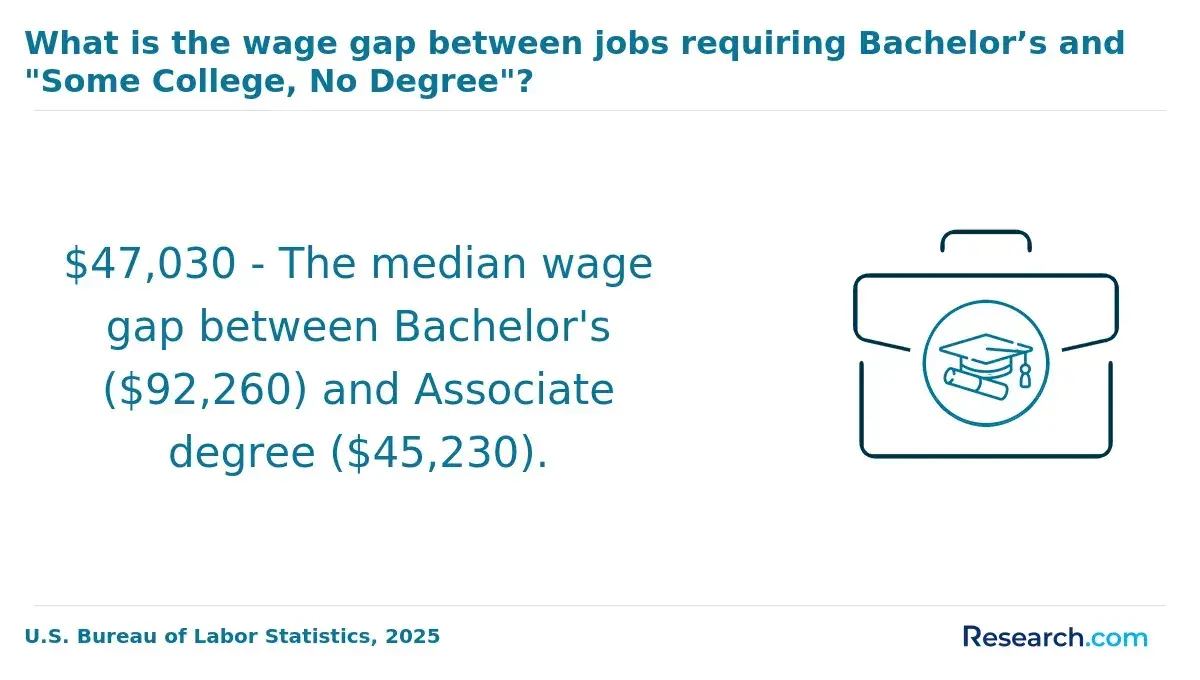
Photography pay varies more than many degree-based fields because many photographers are self-employed, work project-to-project, or combine photography with editing, video, marketing, or design work. BLS data shows the median annual wage for photographers was $42,520 in May 2024, which is a useful baseline but not a promise of what a graduate will earn.
The table below summarizes salary context for photography and nearby creative roles. The comparison matters because some students use a photography degree as a foundation for broader visual media work rather than staying in one job title.
| Role | Recent U.S. salary indicator | How to interpret it |
| Photographer | Median annual wage of $42,520 in May 2024 | Relevant for studio, portrait, event, news, and commercial photography; self-employment can create wide income swings |
| Graphic designer | Median annual wage of $61,300 in May 2024 | Relevant if you combine photography with layout, branding, typography, and digital design |
| Art director | Median annual wage of $111,040 in May 2024 | Usually requires substantial experience, leadership ability, and a strong creative portfolio beyond entry-level photography |
| Special effects artist or animator | Median annual wage of $99,060 in May 2024 | Relevant for students who add compositing, motion, 3D, animation, or advanced post-production skills |
Your salary potential is shaped by several factors that a school cannot fully control. These are the areas to evaluate before assuming a degree will pay off:
- Niche: Commercial, product, corporate, and specialized technical photography can pay differently from portraits, events, journalism, or fine art.
- Location: Large metro markets may offer more clients and agencies, but they also bring higher competition and operating costs.
- Portfolio quality: A targeted, polished portfolio often carries more weight than a broad portfolio with inconsistent work.
- Business model: Freelancers need pricing, contracts, lead generation, bookkeeping, and licensing skills, while employees need collaboration and production workflow skills.
- Technical range: Skills in video, retouching, color management, lighting, asset management, and content strategy can widen job options.
The safest way to evaluate return on investment is to compare total program cost with realistic entry-level roles in your target market. Avoid any school or advisor that implies a photography degree automatically leads to a high-paying creative career.
What types of digital photography degrees are available and how do they differ?
Digital photography education ranges from short certificates to graduate degrees. The right option depends on whether you need foundational skills, a transferable college credential, a full bachelor's experience, or advanced artistic and teaching preparation.
The table below compares common academic pathways. It can help you decide whether you need a full degree or a shorter, lower-cost credential.
| Program type | Typical length | Best fit | Main trade-off |
| Certificate in photography or digital imaging | A few months to about 1 year | Beginners, working adults, hobbyists turning professional, or students testing the field | Lower cost and faster completion, but usually less general education, fewer transfer options, and less depth |
| Associate degree | About 2 years full time | Students seeking entry-level studio, assistant, editing, or transfer pathways | More structured than a certificate, but may not carry the same weight as a bachelor's for some creative or management roles |
| Bachelor's degree | About 4 years full time | Students who want deeper portfolio development, internships, liberal arts context, and broader career flexibility | More time and cost, so the program should provide strong facilities, faculty feedback, and career outcomes |
| Master of Fine Arts or related graduate degree | About 2 to 3 years | Artists, educators, advanced practitioners, and students seeking exhibition or college-level teaching preparation | Usually not necessary for most commercial photography jobs and may be difficult to justify without a clear goal |
A certificate can make sense if you already have a degree or need specific technical skills quickly. An associate degree may be practical if you want a lower-cost start or plan to transfer. A bachelor's degree is usually stronger if you want more critique, internships, electives, and time to build a competitive portfolio. Graduate study is most useful when your goals involve advanced studio practice, academic teaching, research, or fine art exhibition.
Common mistakes include choosing the longest program by default, assuming a prestigious art school is automatically the best value, or selecting the cheapest option without checking equipment access, portfolio support, and transfer policies.
What courses and technical skills are typically taught in digital photography programs?
Digital photography programs usually mix art, technology, critique, and professional practice. The best curriculum should help you produce stronger images while also teaching the workflow needed to deliver work consistently for clients, employers, or exhibitions.
Common courses often include the following areas:
- Digital camera fundamentals: Exposure, aperture, shutter speed, ISO, lenses, autofocus, file formats, and image capture workflow.
- Lighting: Natural light, studio strobes, continuous light, modifiers, location lighting, product lighting, and portrait lighting.
- Digital editing: RAW processing, retouching, color correction, masking, compositing, output sharpening, and non-destructive workflow.
- Visual storytelling: Sequencing, narrative structure, documentary methods, editorial choices, and image context.
- History and theory: Photographic movements, ethics, representation, visual culture, and critique vocabulary.
- Professional practice: Contracts, estimates, licensing, copyright basics, client communication, branding, and portfolio presentation.
- Printing and output: Color management, paper selection, print preparation, exhibition installation, and digital delivery standards.
Technical skill requirements have expanded as employers and clients expect photographers to work across digital platforms. A student who can shoot, edit, organize files, and understand where images will be used is more adaptable than someone who only knows camera operation.
Before enrolling, ask whether the program teaches current tools and workflows in these areas:
- RAW image processing and professional retouching software
- Color-managed workflows for print, web, and client delivery
- Studio and location lighting systems
- Digital asset management, metadata, backup, and archiving
- Basic video capture, audio awareness, and short-form content production
- Portfolio websites, online galleries, image licensing, and client proofing systems
- Ethical use of generative AI, image manipulation disclosure, and copyright-aware workflows
AI-assisted editing and generative image tools are changing the field, but they do not remove the need for visual judgment. Students should look for programs that teach when automation is useful, when it creates ethical problems, and how to preserve authenticity in journalistic, documentary, commercial, or fine art contexts.
How do online digital photography degrees compare with campus-based programs?
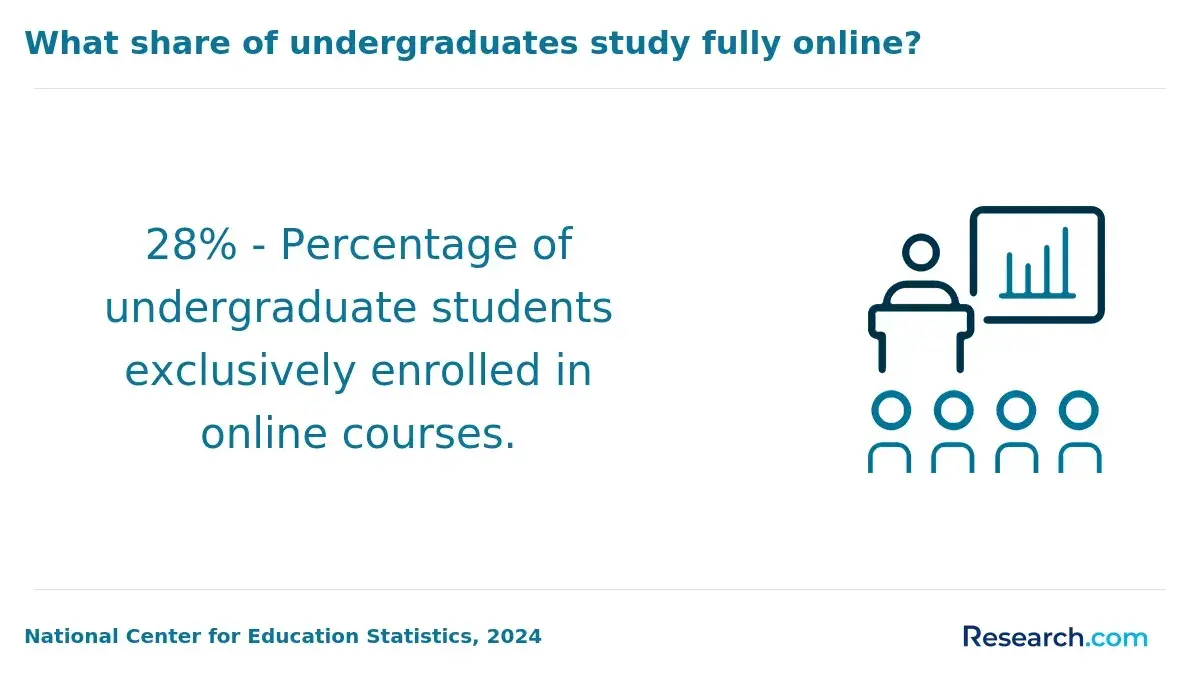
Online digital photography degrees can work well for motivated students who have access to a camera, a reliable computer, editing software, and places to shoot. Campus-based programs may be stronger for students who need studio facilities, lighting labs, in-person critique, darkroom access, and local production networks.
The table below compares the main differences. Use it to decide which format supports your learning style and career goals instead of assuming one format is automatically better.
| Factor | Online program | Campus-based program |
| Flexibility | Often better for working adults, caregivers, military students, or students outside major metro areas | Usually follows scheduled classes, labs, critiques, and studio access times |
| Equipment access | Student may need to buy or rent more gear independently | May provide studios, lighting kits, printers, scanners, and checkout equipment |
| Critique experience | Can be effective through video meetings, discussion boards, and digital submissions | Often stronger for live demonstrations, peer feedback, and in-person print review |
| Networking | Depends heavily on internships, local projects, online community, and faculty engagement | May offer easier access to campus media, galleries, local studios, and visiting artists |
| Best fit | Self-directed students with discipline and access to shooting environments | Students who learn best through hands-on labs, immediate feedback, and shared facilities |
Online learning can be a smart choice if the school provides strong faculty critique, clear assignment rubrics, software access, portfolio reviews, and career support. Students who need schedule flexibility may also want to compare online schools with multiple start dates, especially if they do not want to wait for a traditional fall or spring intake.
To choose between formats, take these steps:
- Confirm what equipment you must own, what the school provides, and what hidden costs you should expect.
- Review student portfolios from recent graduates to see whether the format produces work at the level you want.
- Ask how critiques happen, how often faculty respond, and whether feedback is individualized.
- Check internship, exhibition, and job placement support for online students, not just campus students.
- Compare total cost, including software, camera gear, lighting, printing, travel, and lost work time.
What admission requirements and portfolios do schools expect for photography majors?
Admission requirements vary by school and degree level. Community colleges may have open or less selective admissions, while art schools and bachelor's programs often require a portfolio, statement of purpose, transcripts, and sometimes an interview.
Most applicants should be prepared for these common requirements:
- High school diploma, GED, or prior college transcripts
- Minimum GPA or placement requirements, depending on the institution
- Portfolio of photographic or visual work
- Personal statement explaining creative interests and goals
- Letters of recommendation for more selective programs
- Proof of English proficiency for applicants whose prior education was not in English
- Graduate applicants may need an artist statement, resume, exhibition record, or advanced portfolio
A portfolio does not need to prove that you are already a professional. It should show visual curiosity, commitment, technical growth, and the ability to make intentional choices. Admissions teams often prefer a focused, thoughtful set of images over a large folder of unrelated snapshots.
Use the following process to prepare a stronger photography portfolio:
- Read each school's portfolio instructions carefully, including image count, file size, format, and deadline rules.
- Select your strongest work rather than trying to show every subject you have photographed.
- Organize images so reviewers can see consistency, development, or a clear visual theme.
- Include a short description when requested, explaining your intent, process, or technical choices.
- Ask a teacher, photographer, or mentor for critique before submitting.
- Check that files are correctly named, properly sized, color-consistent, and free of avoidable editing errors.
Common red flags include submitting heavily filtered images without intention, relying only on travel photos, ignoring the required format, or using AI-generated work without disclosure. If a school does not require a portfolio, ask how it evaluates creative progress once students are enrolled.
How long does it take to earn a digital photography degree and what does it cost?
Time and cost depend on degree level, enrollment status, transfer credits, institution type, and equipment requirements. College Board data for 2024-25 lists average published tuition and fees at $4,050 for public two-year in-district colleges, $11,610 for public four-year in-state colleges, and $43,350 for private nonprofit four-year institutions, before grants, scholarships, living costs, and supplies.
The table below gives a practical planning view of time and cost factors. It is not a price quote; actual costs depend on the school and your financial aid package.
| Path | Common completion time | Cost considerations | Best value when |
| Certificate | A few months to about 1 year | Tuition, software, camera, lenses, storage, and printing may still add up | You need targeted skills quickly or want to test the field before a degree |
| Associate degree | About 2 years full time | Often lower tuition, especially at public community colleges; transfer planning is important | You want a cost-conscious start and may transfer into a bachelor's program later |
| Bachelor's degree | About 4 years full time | Higher total cost, but more time for portfolio, internships, electives, and critique | You want broader career flexibility and can justify the cost through outcomes and aid |
| Graduate degree | About 2 to 3 years | Can be expensive and may reduce working time; assistantships can change the equation | You need advanced artistic development, teaching preparation, or a specific professional network |
Photography students should budget beyond tuition. Depending on program requirements, costs may include a mirrorless or DSLR camera body, lenses, lighting, tripod, memory cards, external storage, backup drives, calibrated monitor, software subscriptions, printing, mounting, exhibition fees, and travel to shoots.
To reduce costs without weakening your education, consider these steps:
- Start at a community college if credits transfer cleanly to a bachelor's program.
- Ask whether the school offers equipment checkout, studio access, printing labs, or software licenses.
- Compare net price after grants and scholarships, not just published tuition.
- Use federal aid first when eligible, and understand that the maximum Pell Grant for the 2024-25 award year is $7,395.
- Avoid buying every piece of gear at once; prioritize equipment required for coursework and portfolio goals.
- Check whether internships, assistantships, work-study, or campus media jobs can provide experience while offsetting costs.
Cost comparisons are especially important across creative fields with studio, software, and equipment expenses. Students weighing multiple design-oriented pathways may also compare photography programs with options such as a best online architecture degree to understand how program format and tool requirements affect total investment.
Are digital photography programs accredited and how can you verify school quality?
Digital photography programs are usually housed within colleges, universities, community colleges, art schools, or design departments. The most important quality check is institutional accreditation from an agency recognized by the U.S. Department of Education or the Council for Higher Education Accreditation. Accreditation can affect federal financial aid eligibility, credit transfer, graduate admissions, and employer confidence.
Programmatic accreditation may also exist for some art and design schools, but it is not always required for photography employment. Because photography is generally not a state-licensed profession, accreditation is more about educational quality, credit portability, and financial aid access than licensure.
Before applying, verify quality through these steps:
- Search the institution in the U.S. Department of Education's Database of Accredited Postsecondary Institutions and Programs.
- Confirm that the school itself is accredited, not only a department, certificate, or continuing education unit.
- Ask whether credits transfer to public universities or bachelor's completion programs if you may continue your education.
- Review faculty work, student portfolios, internship sites, alumni outcomes, and exhibition opportunities.
- Check whether online students receive the same academic support, critique access, library resources, and career services as campus students.
- Read the refund policy, equipment requirements, and program completion expectations before paying deposits.
Quality red flags include vague accreditation claims, pressure to enroll immediately, unclear total costs, no recent student work, limited faculty information, weak critique structures, or promises of guaranteed freelance income. A credible program should be transparent about outcomes and honest about the competitive nature of creative careers.
How is the job outlook for digital photographers and related creative roles?
The job outlook for photographers is steady but competitive. The BLS projects employment of photographers to grow 4% from 2024 to 2034, about as fast as the average for all occupations. That suggests opportunities will exist, but students should not rely on degree completion alone; portfolio strength, niche strategy, and business skills are critical.
Several trends are shaping photography careers. Brands need constant visual content for websites, ecommerce, social media, and campaigns, but clients also expect faster delivery and broader skills. AI-assisted editing can speed up routine tasks, while also raising questions about authenticity, copyright, and disclosure. Short-form video, hybrid photo-video roles, and digital asset management are also expanding the expectations placed on visual professionals.
Students should prepare for a market where the strongest candidates can connect image-making to a business or communication goal. That may mean developing skills in product styling, content strategy, retouching, video, lighting, metadata, or client management. In some cases, combining photography with analytics, marketing, or design can open broader opportunities; students exploring data-oriented career comparisons may find sports analytics salary information useful as a contrast to creative labor-market patterns.
To improve your odds after graduation, focus on practical career preparation while still in school:
- Choose a niche early enough to build a portfolio that looks intentional.
- Assist working photographers to learn pricing, lighting setups, client communication, and production etiquette.
- Build a simple professional website with clear contact information, image categories, and usage examples.
- Learn basic contracts, releases, licensing, copyright registration, and invoicing.
- Track where alumni work and ask programs for examples of recent graduate outcomes.
- Develop adjacent skills such as short-form video, retouching, ecommerce workflow, or social media production.
A digital photography degree is most likely to be worth it when it gives you structured critique, professional workflow training, access to equipment, internships, and a portfolio you could not have built as effectively on your own. It is less likely to be worth the cost if the program is expensive, light on feedback, unclear about outcomes, or disconnected from the type of photography you want to pursue.
Other Things You Should Know About Digital Photography
In 2027, a digital photography degree can lead to careers such as commercial photographer, photojournalist, or digital marketing specialist. Graduates might also work in roles like portrait photographer, architectural photographer, or visual content creator for various media platforms.
Yes. Many photographers build careers through self-study, assisting, workshops, certificates, and strong portfolios. A degree may still help if you want structured critique, access to facilities, internships, transfer credits, or a broader college credential.
Freelance digital photographers usually need a local business license or tax registration, plus a sales tax permit in states that tax photo services. In 2027, many cities also require a home-occupation permit if you run the business from home.
Include a focused selection of your strongest images, organized by niche or project. Add a short bio, contact information, client or project context when appropriate, and clear image categories. Avoid overcrowding the site with old assignments or unrelated work that weakens your overall presentation.
References
- Beginners Guide to Different Types of Digital Cameras https://digital-photography-school.com/beginners-guide-different-types-digital-cameras/
- How to make a perfect photography portfolio for university | University for the Creative Arts https://www.uca.ac.uk/blogs/creating-a-photography-portfolio-for-university/
- ASU debuts first online photography degree - The Arizona State Press https://www.statepress.com/article/2018/08/spartcult-asu-now-offering-digital-photography-degree-online
- Digital Photographer Career Guide - Sessions College https://www.sessions.edu/career-center/photographer/
- What Is Digital Accreditation? A Complete 2025–2026 Guide https://iacde.org/uncategorized/what-is-digital-accreditation-a-complete-2025-2026-guide/
- Professional Photography - College for Arts and Technology https://collegeforartsandtech.com/programs/professional-photography/
- Digital Photography Classes in South FL | Learn Photography https://www.mcfattertechnicalcollege.edu/digital-photography-technology/
- What Can You Do With a Photography Degree? https://pnca.willamette.edu/academics/bfa/photography/career-options
- The Importance of Photography Education in Today’s Digital World https://ziipfoundation.org/the-importance-of-photography-education-in-todays-digital-world/
- How to Choose a Photography School? Spéos https://speos-photo.com/en/how-to-choose-a-photography-school/