2027 Online MBA vs Executive MBA: Which Should You Choose?

Co-Founder and Chief Data Scientist
The choice between an Online MBA and an Executive MBA is really a choice about career stage, schedule, peer group, and return on investment. Both can lead to an MBA credential, but they are built for different types of professionals. An Online MBA is usually the better fit for people who need flexibility, want to move into management, or plan to change industries. An Executive MBA is designed for experienced managers and leaders who want to strengthen strategic decision-making while remaining employed.
This guide compares the two options across format, admissions, curriculum, cost, financial aid, learning experience, and career outcomes. Use it to decide which program matches your current responsibilities, long-term goals, available time, and budget.
Key Benefits of Knowing How To Choose Between Online MBA vs Executive MBA
- Helps you identify which MBA program aligns with your career stage—whether you’re aiming for mid-level management through an Online MBA or executive leadership through an Executive MBA.
- Lets you compare career outcomes and salaries, as Executive MBA graduates often move into C-suite roles with higher earning potential, while Online MBA graduates advance into strategic management positions.
- Ensures you choose the program that best matches your learning style and flexibility needs, especially if you prefer studying online while working full-time.
- Maximizes your return on investment, since understanding program costs, career growth, and networking opportunities helps you make a decision that delivers lasting professional benefits.
What is the main difference between an Online MBA and an Executive MBA?
The main difference between an Online MBA and an Executive MBA is the type of student each program is built to serve. An Online MBA is usually designed for early- to mid-career professionals who want a flexible path to business training. An Executive MBA is designed for experienced professionals who are already managing teams, business units, or major projects and want to develop executive-level judgment.
An Online MBA usually mirrors the core curriculum of a traditional MBA, but delivers it through online coursework. Students may be working full time, changing careers, building management skills, or seeking a credential that can help them qualify for broader business roles. Flexibility is the central advantage.
An Executive MBA, often called an EMBA, is more specialized in audience and structure. These programs typically serve professionals with 8 to 15 years of experience and place heavier emphasis on leadership, strategy, organizational change, and executive decision-making. Many EMBA programs use a hybrid model with weekend meetings, residencies, or short campus sessions so students can keep working while studying.
| Factor | Online MBA | Executive MBA |
| Best fit | Early- to mid-career professionals | Experienced managers and senior professionals |
| Main priority | Flexibility, broad business training, career mobility | Executive leadership, strategy, and peer learning |
| Typical format | Fully online or mostly online | Hybrid, cohort-based, often with in-person sessions |
| Career use | Promotion, career change, management preparation | Senior leadership advancement and executive development |
How do the learning formats of Online MBA and Executive MBA programs differ?
Online MBA and Executive MBA programs differ most in how structured the learning experience is. Online MBAs are built around access and flexibility. EMBAs are built around cohort interaction, scheduled participation, and high-level professional exchange.
An affordable online MBA program may be fully online, asynchronous, or a mix of recorded coursework and live virtual sessions. Students often complete video lectures, case analyses, discussion boards, exams, and team projects through a learning platform. This format works well for people with variable schedules, family responsibilities, frequent travel, or limited access to a campus.
An Executive MBA usually uses a hybrid or residency-based structure. Students may meet on weekends, during monthly sessions, or in short intensive periods, with online work between meetings. Because students move through the program as a cohort, the schedule is usually less flexible than an Online MBA, but the networking and peer interaction are often stronger.
The practical trade-off is simple: choose an Online MBA if you need control over when and where you study. Choose an EMBA if you can commit to scheduled meetings and want a more immersive leadership network.
- Online MBA advantage: greater scheduling flexibility and remote access.
- Online MBA limitation: networking may require more individual effort.
- Executive MBA advantage: stronger cohort identity, in-person discussion, and executive peer learning.
- Executive MBA limitation: less schedule flexibility and possible travel requirements.
What are the admission requirements for an Online MBA vs an Executive MBA?
Online MBA and Executive MBA admissions both evaluate whether applicants can succeed in graduate business coursework, but they weigh experience differently. Online MBA admissions often focus on academic readiness, professional potential, and career goals. EMBA admissions focus more heavily on leadership record, managerial responsibility, and executive growth potential.
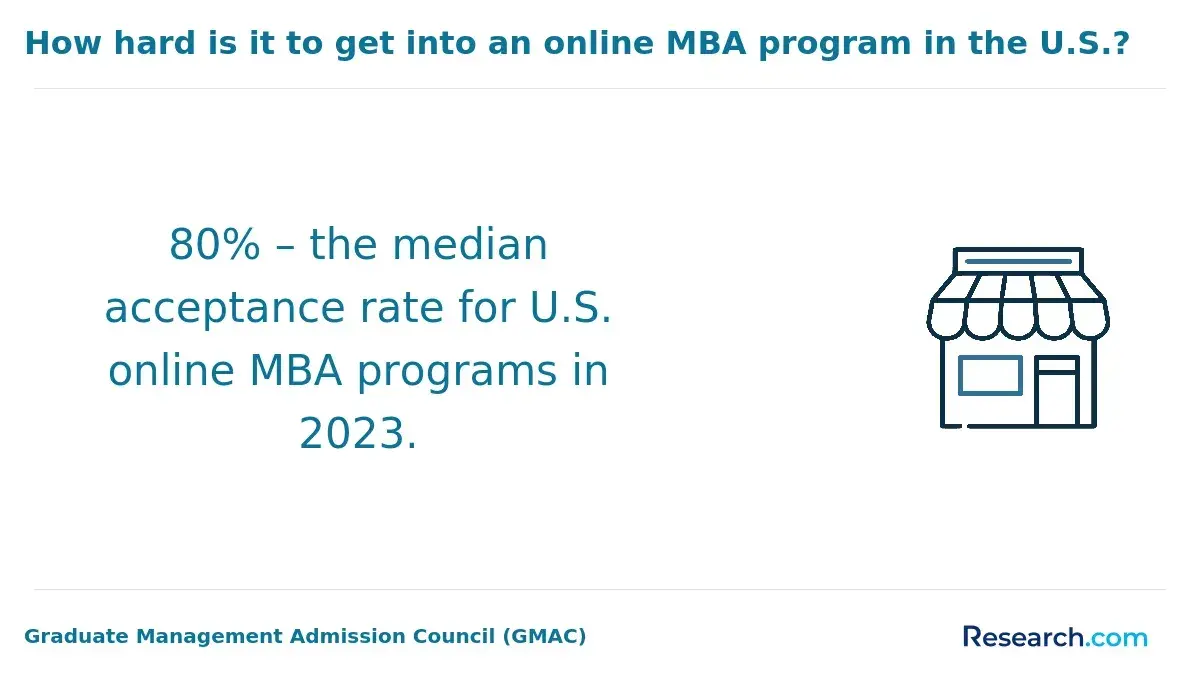
Most best online MBA without GMAT programs require a bachelor’s degree from an accredited institution, a competitive GPA, a résumé, letters of recommendation, and a statement of purpose or admissions essay. Many programs expect 2 to 5 years of work experience. Some schools request GMAT or GRE scores, while others waive testing for applicants with strong academic records, professional experience, or prior graduate study.
Executive MBA programs usually require a bachelor’s degree as well, but they expect a more substantial work history. Applicants typically have 8 to 15 years of full-time work experience, often including leadership, budget authority, team management, or strategic responsibility. Standardized tests such as the GMAT are often waived because admissions committees can evaluate applicants through their career progression and leadership achievements.
| Requirement | Online MBA | Executive MBA |
| Bachelor’s degree | Usually required | Usually required |
| Work experience | Commonly 2 to 5 years | Typically 8 to 15 years |
| Standardized tests | May be required or waived | Often waived |
| Most important evidence | Academic readiness, goals, résumé, recommendations | Leadership record, career progression, executive potential |
| Employer support | Helpful but not always central | Often important, especially if classes require time away from work |
Yes. Executive MBA programs generally require more work experience than Online MBA programs because the classroom discussion, assignments, and group projects depend on students bringing substantial leadership experience into the program.
Most affordable MBA programs expect applicants to have around two to five years of professional experience. That background helps students connect business concepts to real workplace situations, but these programs are still accessible to professionals who are building toward management or preparing to change roles.
Executive MBA programs are intended for mid- to senior-level managers and typically require 8 to 15 years of full-time work experience, often including several years in supervisory, managerial, or strategic roles. This matters because EMBA courses commonly ask students to analyze complex organizational problems, compare leadership approaches, and apply frameworks to decisions they are already making at work.
If you are still building your management foundation, an Online MBA may be a better fit. If you already lead people, budgets, operations, or strategy, an EMBA is more likely to match your experience level.
Both Online MBA and Executive MBA programs cover major business disciplines, but they usually apply them at different levels. Online MBA curricula tend to build broad business competence. Executive MBA curricula tend to apply business concepts to senior leadership problems.
An affordable EMBA program curriculum may include finance, marketing, accounting, economics, business analytics, and operations management, along with electives or specializations such as data analytics, entrepreneurship, or healthcare management. In an Online MBA, these subjects are often designed to help students understand how organizations function across departments and how managers make evidence-based decisions.
An Executive MBA curriculum usually moves faster through fundamentals and spends more time on strategic leadership, global business, innovation, organizational transformation, negotiation, executive finance, and corporate strategy. Many programs also include leadership development, executive coaching, simulations, consulting projects, or global immersions.
| Subject area | Online MBA focus | Executive MBA focus |
| Finance | Financial analysis, budgeting, managerial finance | Executive finance, capital allocation, strategic financial decisions |
| Marketing | Customer analysis, branding, digital strategy, market planning | Market leadership, competitive positioning, growth strategy |
| Operations | Process improvement, supply chains, project execution | Enterprise operations, transformation, scalability |
| Leadership | Team management and organizational behavior | Executive presence, change leadership, negotiation, influence |
| Strategy | Business planning and competitive analysis | Corporate strategy, innovation, global decision-making |
The Online MBA is usually better for building a complete business foundation. The Executive MBA is usually better for professionals who already understand business basics and want to refine senior-level leadership decisions.
The learning experience differs in pace, peer expectations, faculty interaction, and how much students learn from one another. Online MBA students often work more independently. Executive MBA students usually learn in a more structured cohort with peers who have significant management experience.
In an Online MBA, students may complete coursework through recorded lectures, readings, quizzes, online discussions, and virtual team projects. The student body can be broad, including professionals from different industries, locations, and career stages. This variety can be valuable, especially for students seeking career mobility, but it also means networking depends heavily on participation in live sessions, group assignments, alumni events, and student organizations.
In an Executive MBA, the classroom is often part of the value proposition. Students typically meet in person or through scheduled hybrid sessions, discuss cases from an executive perspective, and apply lessons to current workplace challenges. Because classmates are often managers, directors, founders, or senior specialists, peer discussion can be more advanced and immediately practical.
Consider how you prefer to learn before choosing. If you are disciplined, comfortable with technology, and need maximum flexibility, the Online MBA format can work well. If you want intensive discussion, a consistent peer group, and leadership feedback from experienced classmates and faculty, the EMBA experience may be stronger.
- Online MBA learning style: flexible, self-directed, technology-mediated, often suited to independent learners.
- Executive MBA learning style: cohort-based, discussion-heavy, experiential, and leadership-focused.
- Online MBA peer group: broader mix of career stages and industries.
- Executive MBA peer group: more concentrated group of experienced managers and executives.
An Online MBA generally costs less than an Executive MBA, although prices vary widely by school, reputation, accreditation, format, and included services. The cost difference is not only tuition. It also reflects how much in-person programming, coaching, travel, lodging, and executive networking are built into the program.
An Online MBA typically ranges from $20,000 to $70,000, depending on the university’s reputation, accreditation, and delivery model. Public universities and regional schools often provide lower-cost options, while highly recognized business schools may charge more. Because students usually study remotely, they can often avoid relocation, commuting, housing, and many campus-related expenses.
An Executive MBA can cost anywhere from $80,000 to over $200,000. The higher cost often reflects a more intensive program design, smaller cohorts, global immersions, leadership coaching, residencies, premium networking events, and closer access to senior faculty or industry speakers. Some EMBA fees also include lodging for residencies, international study trips, and leadership training.
| Cost factor | Online MBA | Executive MBA |
| Typical tuition range | $20,000 to $70,000 | $80,000 to over $200,000 |
| Travel and lodging | Usually limited unless optional residencies are required | May be significant, though some program fees include lodging for residencies |
| Included services | Online coursework, career services, virtual support | Leadership coaching, residencies, networking events, global immersions in some programs |
| Best value for | Professionals seeking flexibility and lower total cost | Senior professionals seeking executive development and high-level networks |
When comparing programs, look beyond sticker price. Ask what is included, whether travel is required, whether employer support is available, and how the degree fits your expected career path. A lower-cost Online MBA may offer better value for career changers or rising managers, while an EMBA may be worth the premium for professionals positioned for senior leadership advancement.
Yes. Executive MBA students may have access to scholarships, employer sponsorship, tuition reimbursement, federal or private loans, and targeted fellowships. Funding can be more complex than for a standard graduate program because many EMBA students are working professionals and some receive partial support from employers.
Merit-based scholarships at the school
Some business schools offer merit awards for Executive MBA applicants, especially when employer sponsorship is limited. These awards are often competitive and may consider leadership record, professional achievement, industry background, and contribution to cohort diversity.
- NYU Stern School of Business offers merit scholarships for EMBA applicants with limited employer sponsorship; awards often range $5,000–$15,000.
- Emory University (Goizueta) provides EMBA scholarships for under-represented industries / nonprofits, etc.
- SMU Cox School of Business lists EMBA scholarships up to $15,000, including examples for women through the Forté Foundation partnership.
Employer sponsorship or tuition reimbursement
Employer support is one of the most common EMBA funding paths because the degree is often tied to leadership development. Sponsorship may cover part or all of tuition, but it can come with conditions such as continued employment for a set period after graduation.
- Many EMBA candidates receive partial or full sponsorship by their employer because the program is aimed at more senior professionals and the employer often sees value in the leadership development.
- Rotterdam School of Management notes that company support is common and that recipients may be ineligible for certain scholarships.
- Before accepting support, ask whether the arrangement requires repayment if you leave the company, change roles, or do not complete the program.
Loans (Federal, Private, or International)
Loans may help cover tuition and required program costs, but borrowing should be evaluated carefully against your current income, expected career benefit, employer support, and repayment timeline.
- For U.S. citizens and permanent residents, federal graduate student loans, such as Unsubsidized Direct and Graduate PLUS loans, are sometimes available.
- SMU’s EMBA financial-aid guide references typical graduate loan options.
- Private student loans or specialized education-financing programs are also often used, especially by international students.
Special-purpose fellowships or scholarships
Some EMBA programs offer awards for applicants from specific backgrounds, industries, or leadership missions. These can be useful for candidates from nonprofits, public service, sustainability-focused organizations, or groups underrepresented in executive leadership.
- Some schools offer scholarships targeted at particular groups, such as those working in nonprofits or the public sector, women in leadership, or students driving sustainability initiatives.
- Examples include NYU Stern’s “Advancing Diversity in Business” and “Social Impact Scholarship”.
- Some institutions refer to “fellowships” within the EMBA program context, such as UC Berkeley Haas School of Business EMBA scholarships including Dean’s Fellowship and Diversity Scholarship.
Before applying, request a full cost breakdown from each program and ask whether scholarships, employer funding, and loan eligibility can be combined. Also confirm application deadlines, because scholarship consideration may require earlier submission than the standard admissions deadline.
Career paths after an Online MBA and an Executive MBA differ mainly because students enter the programs at different career stages. Online MBA graduates often use the degree to qualify for management roles, change functions, or move into more strategic work. EMBA graduates often use the degree to move from management into senior leadership or from senior leadership into broader enterprise responsibility.
An Online MBA can support roles such as marketing manager, financial analyst, operations manager, project manager, business consultant, or other managerial and strategic positions. It can also help professionals move across industries, strengthen business credibility, or prepare for entrepreneurship. The strongest outcomes usually come when students choose a program that matches their target industry, build a portfolio of relevant projects, and use career services actively.
An Executive MBA is more often connected to advancement into roles such as chief financial officer, chief operating officer, senior vice president, director, or general manager. EMBA graduates may also use the degree to lead business transformation, expand into board service, start or scale a company, or move into independent consulting.
| Career goal | Better-aligned option | Why |
| Move into management for the first time | Online MBA | Builds broad business and leadership foundations |
| Switch industries or functions | Online MBA | Offers flexible preparation for new business roles |
| Advance from manager to senior leader | Executive MBA | Focuses on strategy, enterprise leadership, and executive peer learning |
| Prepare for C-suite responsibilities | Executive MBA | Designed for experienced professionals with leadership responsibilities |
| Launch or scale a business | Either, depending on experience level | Online MBA may build fundamentals; EMBA may support strategic growth and networks |
The credential alone does not guarantee a promotion. Outcomes depend on your prior experience, industry, school reputation, network, performance, and how clearly the program supports your next career move.
Do Executive MBA graduates earn higher salaries than Online MBA graduates?
Yes, Executive MBA graduates generally earn higher salaries than Online MBA graduates, but the reason is important: EMBA students usually enter with more work experience and are often already in management or senior leadership roles. The salary difference is not caused by the program format alone.
On average, EMBA students enter programs with 8 to 15 years of professional experience, often already in management roles. That experience positions them for executive or senior-level promotions, which tend to carry higher compensation. Online MBA graduates usually have 2 to 5 years of experience and often use the degree to move into management, shift industries, or accelerate earlier career growth, so their post-graduation earnings often start from a lower base.
According to Executive MBA Council (2024) data, the average EMBA graduate sees a 15–25% salary increase after completing the program, with total compensation often exceeding $200,000 annually in top-tier roles. Online MBA graduates report average salaries between $90,000 and $130,000, depending on school reputation, industry, and prior experience.
When comparing salary outcomes, focus on your likely return rather than headline numbers. Ask each program for employment reports, salary data by industry, promotion rates, employer sponsorship patterns, and outcomes for students with backgrounds similar to yours. An EMBA may offer stronger salary upside for experienced leaders, while an Online MBA may deliver a more affordable path to advancement for professionals earlier in their careers.
Other Things You Should Know About Choosing Between Online MBA vs Executive MBA
Online MBA programs often require a bachelor's degree and possibly GMAT scores, whereas Executive MBA programs typically expect significant work experience, with minimums around five years, and leadership roles. Both may require essays, recommendations, and interviews in 2027.
No. Most schools do not allow a direct switch between these formats after enrollment. Executive MBA programs usually require 8 to 15 years of work experience and a separate admissions cycle, while Online MBA credits are rarely transferable into an Executive MBA cohort.
- Executive MBA Council. (2019). EMBA exit survey 2019 press release.
- BusinessBecause. (n.d.). Is an online MBA worth the money?
- Fuqua School of Business, Duke University. (n.d.). GEMBA class of 2027 instructions: Cost of attendance.
- Goizueta Business School, Emory University. (n.d.). Executive MBA tuition and financial aid.
- Haas School of Business, University of California, Berkeley. (n.d.). Executive MBA scholarships.
- Indeed. (n.d.). How much does an Executive MBA make?
- NYU Stern School of Business. (n.d.). Executive MBA financial aid and scholarships.
- Poets & Quants for Executives. (2023). Total cost at PQ’s 2023–2024 top-ranked executive MBAs.
- Seattle University. (n.d.). Executive MBA vs MBA: Salary comparison and outcomes.
- SMU Cox School of Business. (n.d.). EMBA scholarships and financial aid information.
- University of San Francisco. (n.d.). Executive MBA tuition and aid.