2027 Most Affordable Online Mechanical Engineering Degree Programs

Co-Founder and Chief Data Scientist
Choosing an online mechanical engineering degree is often a cost-and-credibility decision. You may want the flexibility of distance learning, but you still need a program that employers respect, teaches advanced engineering skills, provides adequate technical support, and does not create unnecessary debt. With average tuition for online mechanical engineering programs reported at $33,141 for undergraduate students and $28,506 for graduate students, comparing affordable options carefully matters.
This guide explains what online mechanical engineering programs include, how affordable programs compare, what costs to expect, how to evaluate accreditation and outcomes, and which career paths may follow. It is written for working engineers considering a master’s degree, students comparing online and campus options, and cost-conscious learners who want a practical way to judge value rather than relying only on tuition.
Quick Answer: Is an Online Mechanical Engineering Degree Worth It?
An online mechanical engineering degree can be worth it when the program is properly accredited, fits your career goals, provides access to engineering software and lab or simulation experiences, and costs less than the salary gains or career mobility it may support. Mechanical engineers earned a median annual salary of $99,510, and the top 10% earned more than $157,470, according to the Bureau of Labor Statistics. However, outcomes depend on your experience, location, industry, specialization, and whether the program is respected by employers.
What are the main benefits of an online mechanical engineering degree?
- It can prepare graduates for roles in high-demand technical areas such as aerospace, automotive systems, energy, robotics, manufacturing, and research.
- The degree can support strong earning potential, with mechanical engineers earning a median annual wage of $99,510 and top professionals earning more than $157,470.
- Online study can reduce relocation, commuting, and campus housing costs, especially for working professionals who want to keep earning while enrolled.
- Many online master’s programs use the same faculty, curriculum standards, and degree title as the on-campus version, which can help protect credential value.
What can I expect from an online mechanical engineering degree?
An online mechanical engineering degree usually combines advanced math, engineering science, computer-based design, modeling, analysis, and systems problem-solving. At the bachelor’s level, students build foundational knowledge in mechanics, thermodynamics, materials, fluids, design, and controls. At the master’s level, the focus often shifts to advanced engineering analysis, specialization, research methods, and applied technical projects.
Because mechanical engineering is a hands-on field, online programs should not be judged only by convenience. Strong programs explain how they deliver lab work, design projects, simulations, software access, faculty interaction, and technical support. Some programs are fully online, while others use hybrid formats, optional campus sessions, remote labs, or project-based alternatives.
Who is a good fit for this degree?
- Working engineers who want a master’s degree without leaving their job.
- Students who are comfortable with math-intensive, self-directed coursework.
- Professionals aiming for roles in design, manufacturing, aerospace, robotics, thermal systems, or research and development.
- Learners who have reliable technology access and can manage demanding projects without frequent in-person supervision.
Who should be cautious?
- Students who need extensive in-person lab coaching and prefer face-to-face instruction.
- Applicants seeking professional engineering licensure who have not confirmed whether the program meets relevant education expectations.
- Learners choosing a school only because it is cheap, without checking accreditation, faculty, outcomes, software access, and employer reputation.
Where can I work with an online mechanical engineering degree?
Mechanical engineers work across industries that design, build, test, improve, or maintain physical systems. Graduates may find opportunities in aerospace, automotive, energy, machinery, manufacturing, government, consulting, robotics, computer-aided engineering, and scientific research. The degree format matters less than the quality of the program, the student’s technical portfolio, and the relevance of coursework to the target role.
Top-paying industries for mechanical engineers
| Industry | Salary or career note | Why it may appeal to graduates |
| Scientific Research and Development Services | Average salary of $126,220 | Best suited for engineers interested in experimentation, modeling, advanced systems, and technical innovation. |
| Aerospace Product and Parts Manufacturing | Average salary of $117,170 | Relevant for students focused on aircraft, spacecraft, propulsion, materials, controls, and high-performance design. |
| Federal, State, and Local Government | Average salary of $113,430 | May involve infrastructure, defense, energy, transportation, facilities, testing, regulation, or public-sector engineering projects. |
| Computer Systems Design and Related Services | Involves innovative technology development. | Useful for engineers combining mechanical systems with simulation, software, automation, digital twins, or data-driven product design. |
States with strong employment or salary opportunities
| State | Salary information | Common industry strengths |
| California | Average salary of $126,600 | Technology, aerospace, advanced manufacturing, energy, and product development. |
| Texas | Salaries around $112,310 | Energy, manufacturing, transportation, defense, and industrial systems. |
| Michigan | Average salary of $99,690 | Automotive engineering, mobility systems, manufacturing, and supplier networks. |
How much can I make with an online mechanical engineering degree?
Salary depends on role, experience, industry, region, technical specialization, and whether the graduate moves into leadership or highly specialized engineering work. The Bureau of Labor Statistics reported that mechanical engineers earned a median annual wage of $99,510 in May 2023. The top 10% earned more than $157,470, which shows the upside for experienced engineers in advanced or high-paying sectors.
Salary estimates from multiple sources
| Source | Reported annual salary |
| Zippia | $75,352 annually |
| Glassdoor | $103,802 annually |
| Indeed | $92,550 annually |
| Salary.com | $71,600 annually |
| ZipRecruiter | $106,000 annually |
| Payscale | $78,360 annually |
| SalaryExpert | $113,871 annually |
| CareerExplorer | $95,300 annually |
These salary sources do not report identical figures because they use different job samples, locations, experience levels, and data collection methods. Use them as directional benchmarks, then compare salaries for your target job title, industry, state, and years of experience.
Guide Navigation
- Most Affordable Online Mechanical Engineering Degree Programs for 2027
- Program length and completion timeline
- Online versus on-campus mechanical engineering programs
- Average cost and total price considerations
- Financial aid options for online engineering students
- Admission requirements and prerequisites
- Common courses and specializations
- Long-term return on investment
- Challenges online mechanical engineering students should expect
- Career advancement support in online programs
- Trends shaping online mechanical engineering education
- Common misconceptions about online mechanical engineering degrees
- Technical resources and student support
- Whether an online doctoral degree is a useful next step
- How mechanical engineering differs from other online degrees
- Credibility and student success measures
- Advanced academic options after graduation
- How to choose the most affordable program
- Career paths for graduates
- Job market outlook
- Common mistakes and better choices
Most Affordable Online Mechanical Engineering Degree Programs for 2027
How do we rank schools?
Our rankings are built to help students compare online mechanical engineering programs by affordability, credibility, and student value. Research.com uses a detailed ranking methodology supported by institutional data, program information, and outcome indicators.
To strengthen accuracy, we draw on several established data sources. The IPEDS database from the National Center for Education Statistics provides institutional information on U.S. colleges and universities. Peterson's database, including its Distance Learning Licensed Data Set, adds program-level insight for online education. We also review the College Scorecard database to consider cost and outcome information associated with higher education institutions.
Affordable online mechanical engineering programs at a glance
| School | Program | Cost listed | Credits | Accreditation listed |
| University of Central Florida | MS in Mechanical Engineering | Masters - $9,819.60 (in-state) | Masters - 30 hours | Engineering Accreditation Commission of ABET |
| Florida Atlantic University | MS Mechanical Engineer | $11,155 (In-State) | 30 hours | Engineering Accreditation Commission of ABET |
| Kennesaw State University | MS in Mechanical Engineering | $11,710 (All Students) | 30 hours | Engineering Accreditation Commission of ABET |
| The University of Alabama | MS in Mechanical Engineering | $13,200 (All Students) | Masters - 30 hours | Engineering Accreditation Commission of ABET |
| Tarleton State University | MS in Mechanical Engineering | $13,752 (In-State) | Masters - 30 hours | Engineering Accreditation Commission of ABET |
| New Mexico Institute of Mining and Technology | MS in Mechanical Engineering | $14,817 (In-State) | Masters - 30 hours | Engineering Accreditation Commission of ABET |
| North Carolina State University at Raleigh | MS in Mechanical Engineering | $15,921 (In-State) | 30 hours | Engineering Accreditation Commission of ABET |
| Mississippi State University | MS in Mechanical Engineering | $16,860 (All Students) | Masters - 30 hours | Engineering Accreditation Commission of ABET |
| University of Missouri-Columbia | Master's in Mechanical and Aerospace Engineering | $17,678 (In-State) | Masters - 30 hours | Engineering Accreditation Commission of ABET |
| University of Houston | MS in Mechanical Engineering | $22,350.00 (All Students) | 30 hours | Engineering Accreditation Commission of ABET |
University of Central Florida—MS in Mechanical Engineering
University of Central Florida Online offers a master’s program for students with preparation in mechanical or aerospace engineering. The curriculum includes tracks in Mechanical Systems and Thermofluids, making it a practical option for engineers who want advanced study while maintaining professional or personal commitments.
- Tuition: Masters - $9,819.60 (in-state)
- Credits to graduate: Masters - 30 hours
- Accreditation: Engineering Accreditation Commission of ABET
Florida Atlantic University—MS Mechanical Engineer
Florida Atlantic University offers an online Master of Science in Mechanical Engineering that supports advanced work in areas connected to aerospace and automotive engineering. Students should compare its curriculum, faculty expertise, software expectations, and project requirements against their intended career path.
- Cost: $11,155 (In-State)
- Credits to graduate: 30 hours
- Accreditation: Engineering Accreditation Commission of ABET
Kennesaw State University—MS in Mechanical Engineering
Kennesaw State University delivers its online MS in Mechanical Engineering through the Southern Polytechnic College of Engineering and Engineering Technology. Its hybrid structure, which includes online learning with optional in-person classes, may fit students who want flexibility but still value access to campus-based experiences when available.
- Cost: $11,710 (All Students)
- Credits to graduate: 30 hours
- Accreditation: Engineering Accreditation Commission of ABET
The University of Alabama—MS in Mechanical Engineering
The University of Alabama offers an online Master of Science in Mechanical Engineering designed to reflect the academic expectations of the campus program. The format may be especially useful for full-time professionals interested in areas such as biomechanics and fluid mechanics without relocating.
- Cost: $13,200 (All Students)
- Credits to graduate: Masters - 30 hours
- Accreditation: Engineering Accreditation Commission of ABET
Tarleton State University—MS in Mechanical Engineering
Tarleton State University offers its Master of Science in Mechanical Engineering online and on campus. The program is intended for engineering graduates seeking deeper technical preparation in areas such as robotics, renewable energy, and aerospace, as well as students considering future doctoral study.
- Cost: $13,752 (In-State)
- Credits to graduate: Masters - 30 hours
- Accreditation: Engineering Accreditation Commission of ABET
New Mexico Institute of Mining and Technology—MS in Mechanical Engineering
New Mexico Tech offers an MS in Mechanical Engineering with options such as Explosives Engineering, Fluid and Thermal Sciences, Mechatronics Systems Engineering, and Solid Mechanics. Students comparing this program should look closely at specialization availability, remote course scheduling, and research or project expectations.
- Cost: $14,817 (In-State)
- Credits to graduate: Masters - 30 hours
- Accreditation: Engineering Accreditation Commission of ABET
North Carolina State University at Raleigh—MS in Mechanical Engineering
North Carolina State University at Raleigh offers an online Master of Science in Mechanical Engineering through its College of Engineering. Its non-thesis structure may suit professionals who want career-focused advanced coursework rather than a research-heavy graduate path.
- Cost: $15,921 (In-State)
- Credits to graduate: 30 hours
- Accreditation: Engineering Accreditation Commission of ABET
Mississippi State University—MS in Mechanical Engineering
Mississippi State University provides an online Master of Science in Mechanical Engineering that balances applied engineering knowledge with technical theory. Students interested in fluid mechanics, solid mechanics, or energy systems should review elective availability and course sequencing before enrolling.
- Cost: $16,860 (All Students)
- Credits to graduate: Masters - 30 hours
- Accreditation: Engineering Accreditation Commission of ABET
University of Missouri-Columbia—MS in Mechanical Engineering
University of Missouri-Columbia offers an online master’s in Mechanical and Aerospace Engineering using a curriculum aligned with its campus-based academic standards. The program may appeal to professionals who want to apply mechanical engineering concepts across industrial, aerospace, and technical design settings.
- Cost: $17,678 (In-State)
- Credits to graduate: Masters - 30 hours
- Accreditation: Engineering Accreditation Commission of ABET
University of Houston—MS in Mechanical Engineering
The University of Houston offers a fully online Master of Science in Mechanical Engineering through the Cullen College of Engineering. Its coursework supports advanced study in thermo-fluids, mechanics, materials, and controls for engineers who want a rigorous distance-learning option.
- Cost: $22,350.00 (All Students)
- Credits to graduate: 30 hours
- Accreditation: Engineering Accreditation Commission of ABET
How long does it take to complete an online mechanical engineering degree program?
Program length depends on degree level, transfer credits, enrollment intensity, prerequisites, and whether a thesis or research component is required. An online master’s in mechanical engineering commonly takes about two to three years for full-time students. For example, the University of Alabama’s master’s program can be completed in approximately two years when pursued full time.
An online bachelor’s degree in mechanical engineering generally takes around four years of full-time study. A PhD can extend beyond four years because timelines depend heavily on dissertation progress, research design, faculty supervision, and publication or defense requirements.
| Degree level | Typical full-time timeline | Best fit |
| Bachelor’s degree | Around four years | Students seeking entry-level engineering preparation and foundational technical training. |
| Master’s degree | About two to three years | Engineers who already have a related bachelor’s degree and want advanced technical or leadership preparation. |
| Doctoral degree | May extend beyond four years | Professionals pursuing research, academic, or highly specialized engineering roles. |
If you are comparing engineering fields broadly, this timeline is similar to many paths described in guides on engineering majors and engineering school length. Mechanical, industrial, and software engineering programs vary in content, but each requires sustained technical preparation.
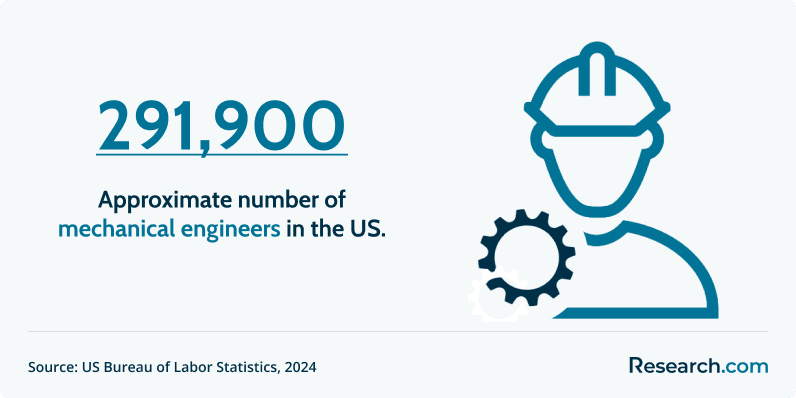
Mechanical engineering remains a large profession. The U.S. Bureau of Labor Statistics reported approximately 291,900 mechanical engineers employed in the United States in 2023.
How does an online mechanical engineering degree compare to an on-campus program?
An online mechanical engineering degree can be treated similarly to a campus degree when it comes from a recognized institution, meets appropriate accreditation standards, and provides the same level of academic rigor. Employers are usually less concerned with the delivery format than with the school’s credibility, the student’s skills, and the relevance of coursework to the position.
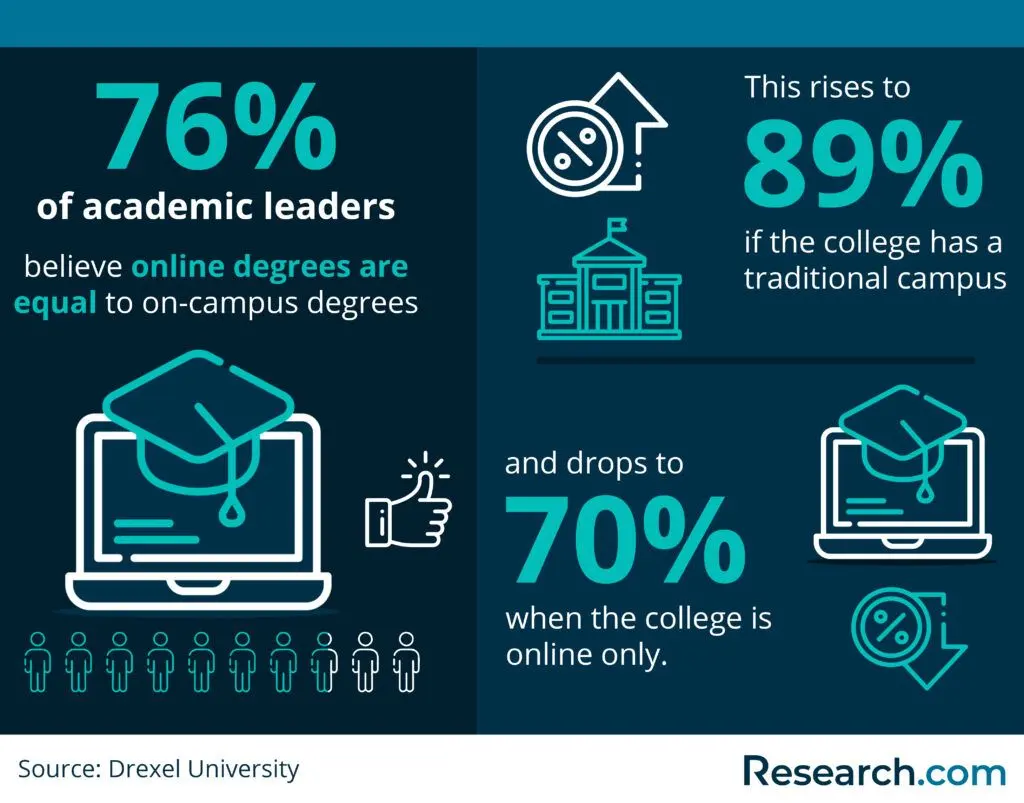
Students searching for the most affordable online engineering degrees should not choose based on price alone. Look for regional accreditation, engineering accreditation where applicable, strong faculty credentials, clear lab or simulation requirements, and an institution with an established reputation. According to a Drexel University survey, 76% of academic leaders believe online degrees are on par with traditional, on-campus degrees. That figure rises to 89% when the online program is connected to a traditional campus.
| Factor | Online mechanical engineering | On-campus mechanical engineering |
| Flexibility | Often better for working professionals and students who cannot relocate. | Requires scheduled in-person attendance and may be harder to balance with full-time work. |
| Hands-on learning | May use simulations, remote labs, project kits, hybrid sessions, or software-based design work. | Typically offers direct access to physical labs, equipment, and campus workshops. |
| Networking | Depends on virtual events, group projects, faculty access, and career services. | Often easier through labs, student organizations, campus events, and local recruiters. |
| Cost structure | Can reduce commuting, housing, and relocation expenses. | May involve higher living costs, depending on location and housing needs. |
| Employer perception | Stronger when the institution is accredited and has a recognized campus or engineering reputation. | Generally familiar to employers, especially for established engineering schools. |
What is the average cost of an online mechanical engineering degree program?
For the 2023-2024 academic year, average tuition for online Mechanical Engineering programs is $33,141 at the undergraduate level and $28,506 at the graduate level. These figures give students a benchmark for deciding whether a specific program is affordable or simply marketed as affordable.
For comparison, the estimated tuition for an online master’s in software engineering is around $30,000. That does not automatically make one field the better financial choice; students should compare tuition, fees, salary expectations, career fit, and employer demand in their chosen location.
How listed programs compare with the graduate average
- University of Central Florida lists $9,819.60 for its master’s program, which is well below the $28,506 graduate average.
- Florida Atlantic University lists $11,155, also substantially below the average graduate tuition benchmark.
- The University of Houston lists $22,350.00, which remains below the average while still requiring careful comparison of total fees and student support.
Tuition is only one part of cost. Students should also ask about engineering software licenses, technology fees, proctoring fees, textbooks, travel for any required campus sessions, graduation fees, and whether tuition differs for in-state, out-of-state, military, or international students.
Mechanical engineering can provide strong earning potential, with the median annual wage for mechanical engineers reported at $99,510. Employment is projected to grow by 11% from 2023 to 2033. Still, ROI is not guaranteed; it depends on your career path, prior experience, job market, and how much you borrow.
The chart below compares mechanical engineering earnings with other engineering professions and the overall workforce.
What are the financial aid options for students enrolling in an online mechanical engineering degree program?
Online mechanical engineering students may qualify for several forms of financial aid, but eligibility depends on the school, enrollment status, degree level, citizenship or residency status, academic progress, and whether the institution participates in aid programs. Before enrolling, confirm that the program is eligible for the aid you plan to use.
| Aid option | How it works | What to verify |
| Federal Student Aid | Students submit the FAFSA to be considered for federal grants, loans, and work-study programs. | Confirm that the school and program are eligible and that your enrollment level meets aid requirements. |
| Scholarships | Schools, engineering departments, professional associations, and outside organizations may fund qualified students. | Check deadlines, GPA rules, residency requirements, and whether awards are renewable. |
| State Grants | Some states provide grant funding that does not need to be repaid. | Review residency rules and whether online enrollment affects eligibility. |
| Private Loans | Private lenders may cover remaining costs after grants, scholarships, and federal aid. | Compare interest rates, repayment terms, cosigner rules, and borrower protections. |
| Employer Assistance | Some employers reimburse tuition for job-relevant education. | Ask whether you must stay with the employer after graduation or maintain a minimum grade. |
NCES data shows that in 2020-21, 87% of first-time, full-time undergraduate students at 4-year degree-granting postsecondary institutions in the U.S. received some form of financial aid. At 2-year degree-granting postsecondary institutions, about 82% received aid. These figures show that aid is common, but the exact package varies by student and institution.
The chart below shows trends in financial aid distribution across different types of postsecondary institutions.
What are the prerequisites for enrolling in an online mechanical engineering degree program?
Admissions requirements vary by degree level. Mechanical engineering is mathematically rigorous, so programs look for evidence that students can handle calculus, physics, engineering analysis, and technical problem-solving. Graduate programs usually expect prior engineering coursework or professional preparation.
Bachelor’s degree prerequisites
- High school diploma or GED, which is the basic academic requirement for undergraduate admission.
- Strong preparation in mathematics, especially calculus, and often physics.
- SAT or ACT scores when required, although some schools use test-optional admissions policies.
- Letters of recommendation, a personal statement, or other materials used to assess readiness and motivation.
Master’s degree prerequisites
- A bachelor’s degree in engineering, preferably mechanical engineering or a closely related discipline.
- A minimum GPA, often around 3.0, depending on the school and applicant pool.
- GRE scores for programs that still require them, though some waive the exam for applicants with strong academic records or professional experience.
- Relevant work experience, which can strengthen applications to applied or professionally oriented programs.
These expectations are similar to many other engineering fields, including an industrial engineering degree. The common thread is preparation in mathematics, science, systems thinking, and engineering fundamentals.
What courses are typically in an online mechanical engineering degree program?
Mechanical engineering curricula are designed to teach students how physical systems behave, how products are designed, how energy and materials interact, and how engineering decisions affect performance, reliability, cost, and safety. Online programs may rely heavily on CAD platforms, simulations, numerical methods, and design projects to translate theory into application.
Typical bachelor’s-level courses
- Statics and Dynamics: force systems, equilibrium, motion, and mechanical behavior.
- Thermodynamics: heat, energy conversion, work, and system efficiency.
- Fluid Mechanics: fluid behavior, pressure, flow, and related engineering applications.
- Material Science: material properties, selection, failure, and engineering use cases.
- Mechanical Design: product and system design using tools such as CAD.
Typical master’s-level courses
- Advanced Dynamics: vibration, complex motion, and advanced mechanical systems.
- Computational Fluid Dynamics: simulation-based analysis of fluid movement.
- Robotics: automation, control, machine design, and robotic systems.
- Heat Transfer: thermal system design, conduction, convection, and radiation.
- System Optimization: methods for improving engineering performance and efficiency.
What types of specializations are available in online mechanical engineering degree programs?
Specializations help students align the degree with a specific industry or technical function. This matters because mechanical engineering is broad: a student interested in renewable energy may need different electives than one targeting aerospace structures, automation, or automotive design.
| Specialization | What it focuses on | Potential career direction |
| Robotics | Robotic system design, automation, controls, and machine integration. | Automation engineer, robotics engineer, controls-focused mechanical engineer. |
| Automotive Engineering | Vehicle design, performance, manufacturing, and mechanical systems. | Automotive design, testing, manufacturing, or mobility engineering. |
| Aerospace Engineering | Aircraft, spacecraft, propulsion, structures, and high-performance systems. | Aerospace product design, testing, analysis, or systems engineering. |
| Thermal Sciences | Thermodynamics, heat transfer, energy systems, and fluid-related analysis. | Energy systems, HVAC, thermal design, propulsion, or research roles. |
| Mechatronics | Mechanical design integrated with electronics, controls, and software. | Smart systems, automation, product development, and advanced manufacturing. |
| Materials Science | Material behavior, selection, testing, and performance in engineering systems. | Materials engineering, product reliability, manufacturing, or failure analysis. |
| Sustainable Energy | Renewable energy, efficiency, and environmentally responsible engineering solutions. | Energy engineering, sustainability consulting, renewable systems, or thermal analysis. |
The chart below highlights industries with the highest salaries for mechanical engineers and shows how different specializations can lead to different earning opportunities.
What is the long-term return on investment for an online mechanical engineering degree?
ROI should be evaluated beyond the advertised tuition price. A lower-cost program is not always the better choice if it lacks accreditation, weakens licensure eligibility, provides limited faculty access, or does not support your target specialization. A higher-cost program may be worthwhile if it improves technical depth, career mobility, employer recognition, or access to industry projects.
Students should compare tuition against expected career value, but they should also review scholarships, employer reimbursement, transfer credits, part-time options, career services, and the cost of delaying graduation. Military students may also want to compare support policies and tuition benefits through resources on affordable online colleges for military students.
ROI questions to ask before enrolling
- Will this program help me qualify for the roles I actually want?
- Does the school publish graduate outcomes, placement information, or alumni career examples?
- Will my employer recognize this degree for promotion, reimbursement, or salary advancement?
- How much will I pay after scholarships, employer aid, grants, and transfer credit?
- How many years will repayment take if I use loans?
What challenges do online mechanical engineering students face?
Online mechanical engineering students must manage demanding technical coursework without the same immediate access to campus labs, classmates, and faculty that on-campus students may have. The biggest challenges are usually time management, software setup, limited hands-on access, complex math, group project coordination, and staying motivated across long technical assignments.
Students can reduce these risks by choosing programs with clear technical requirements, reliable IT support, scheduled faculty access, structured project work, and meaningful peer interaction. Service members and veterans should also review support services at online colleges serving military students, especially when deployments, relocation, or irregular schedules could affect enrollment.
Common challenge and better strategy
| Challenge | Why it matters | Better strategy |
| Falling behind in math-heavy courses | Engineering concepts build quickly, and gaps become expensive later. | Use tutoring early, review prerequisites before term starts, and schedule weekly problem-solving time. |
| Underestimating software needs | CAD, simulation, and analysis tools may require strong hardware or licenses. | Ask for the full software and hardware list before enrolling. |
| Limited hands-on exposure | Mechanical engineering depends on design, testing, and physical system understanding. | Choose programs with remote labs, simulations, design projects, or optional campus access. |
| Weak networking | Engineering jobs often come through projects, internships, referrals, and professional contacts. | Join virtual events, professional organizations, faculty research groups, and team-based projects. |
How do online mechanical engineering programs enhance career advancement opportunities?
Strong online mechanical engineering programs connect coursework to professional outcomes. Career-focused features may include resume support, technical portfolio guidance, mentorship, employer webinars, virtual career fairs, engineering project partnerships, and faculty connections to industry. These supports are especially valuable for students seeking a promotion, industry change, or transition from general engineering work into a specialization.
Students who need targeted skill-building alongside a degree can also explore lower-cost supplemental learning, including affordable online classes. Short courses should not replace an accredited degree when a degree is required, but they may help students strengthen software, coding, project management, or analytics skills.
What future trends are shaping online mechanical engineering education?
Online mechanical engineering education is being shaped by improved simulation tools, virtual collaboration platforms, remote lab models, data-driven learning systems, and greater use of digital design environments. These developments are important because mechanical engineers increasingly work with software, automation, modeling, sensors, and connected systems.
Programs at accredited nonprofit online colleges and traditional universities are also refining student support, remote learning design, and career services. Students should look for programs that teach current tools while preserving core engineering fundamentals such as mechanics, thermodynamics, materials, design, and analysis.
What are the common misconceptions about online mechanical engineering degrees?
One common misconception is that all online mechanical engineering degrees are less rigorous than campus programs. In reality, rigor depends on the institution, accreditation, faculty, curriculum, lab model, and assessment standards. Another misconception is that online study is easier. Mechanical engineering remains technically demanding regardless of format.
Students should also avoid assuming that every online program qualifies for financial aid or meets professional expectations. Before enrolling, confirm accreditation status and aid eligibility through school documentation and resources on online accredited colleges that accept FAFSA.
What technical resources and support do online mechanical engineering programs provide?
Online mechanical engineering students usually need a dependable computer, high-speed internet, a secure learning platform, and access to engineering software. Programs should clearly list hardware requirements, operating system expectations, CAD or simulation tools, virtual lab platforms, remote proctoring rules, and support availability.
Good technical support can prevent a minor software issue from becoming a missed deadline. Ask whether IT help is available during evenings or weekends, whether software licenses are included in tuition, and whether students can access virtual machines or cloud-based engineering tools. Flexible online education models, including programs discussed in guides on online degrees for seniors, show how important accessible technical support has become for different learner groups.
Is pursuing an online doctoral degree a valuable next step?
An online doctoral degree may be valuable for mechanical engineers who want research leadership, university teaching, specialized technical authority, or advanced roles in innovation-driven industries. It is not necessary for every engineering career. Many mechanical engineers advance with a bachelor’s or master’s degree plus strong experience, licensure where relevant, and technical specialization.
Before choosing a doctorate, compare research expectations, faculty expertise, residency requirements, dissertation support, funding, and time commitment. Students comparing long-term academic options may find it useful to review affordable online doctorate programs to understand how doctoral cost structures vary.
How do online mechanical engineering degree programs stand apart from online degrees in other fields?
Mechanical engineering is more constrained by lab work, design validation, technical software, and physical system analysis than many online degrees. Compared with other college majors, students must pay closer attention to accreditation, laboratory substitutes, project quality, and whether coursework builds measurable engineering competencies.
This does not make online mechanical engineering a poor choice. It means the program must be evaluated more carefully. A strong online engineering program should demonstrate how it teaches applied design, analysis, experimentation, and problem-solving rather than simply delivering recorded lectures.
What are the key student success metrics for online mechanical engineering programs?
Students should ask schools for measurable outcomes before enrolling. Useful indicators include graduation rates, retention rates, average time to completion, job placement data, internship or co-op access, licensure-related support, student satisfaction, and alumni career paths. These metrics help distinguish a low-cost program with strong value from one that is inexpensive but under-supported.
Cost comparisons can also be viewed alongside other affordable online pathways, such as the most affordable online associate degree options, but engineering students should remember that mechanical engineering has different technical and accreditation requirements than many associate-level programs.
What measures verify the credibility of online mechanical engineering programs?
Credibility starts with accreditation. Students should confirm institutional accreditation and, where relevant, engineering accreditation from recognized bodies such as ABET. They should also review faculty qualifications, curriculum currency, lab and simulation methods, employer relationships, student support, and career services.
Rankings and reviews can provide context, but they should not replace direct verification. Comparing a mechanical engineering program with broader resources such as online master’s degree options can be useful for perspective, but engineering students should prioritize rigor, technical depth, and recognized standards over convenience alone.
What advanced academic opportunities can online mechanical engineering graduates pursue?
Graduates of online mechanical engineering programs may continue into doctoral study, specialized graduate certificates, professional engineering preparation, research roles, or interdisciplinary study in areas such as robotics, materials, aerospace, energy, controls, or computational engineering. The right next step depends on whether the student wants technical specialization, management advancement, research leadership, or a career change.
Students interested in faster advanced pathways may compare formats such as short online doctoral programs, but they should verify research quality, accreditation, and workload expectations before assuming a shorter timeline is the best option.
How do you choose the most affordable mechanical engineering degree program?
The most affordable program is not always the one with the lowest listed tuition. A better approach is to calculate total cost, verify credibility, compare career fit, and estimate how the degree supports your next professional step. Mechanical engineering is too technical to risk choosing a weak program because it appears inexpensive.
Step-by-step checklist for choosing a program
- Confirm accreditation. Verify institutional accreditation and engineering accreditation where applicable, including ABET recognition when it matters for your goals.
- Calculate total cost. Include tuition, fees, software, equipment, books, required travel, and the cost of extending your time to graduation.
- Check financial aid. Ask about FAFSA eligibility, scholarships, assistantships, employer reimbursement, military benefits, and payment plans.
- Review course delivery. Confirm whether classes are asynchronous, synchronous, hybrid, or tied to required campus visits.
- Evaluate technical resources. Ask how labs, simulations, CAD, design projects, and faculty feedback are delivered online.
- Compare outcomes. Request graduation rates, job placement data, alumni examples, employer partners, and career services information.
- Match the curriculum to your goal. Choose electives and specializations that align with the industry or role you want.
Questions to ask admissions before you apply
- Is the degree title identical to the on-campus version?
- Are online students taught by the same faculty as campus students?
- What engineering software is required, and who pays for it?
- Are there any required campus visits, intensives, exams, or labs?
- How are team design projects handled online?
- What career services are available to online students?
- Can I speak with a current student or recent graduate?
What career paths are available for graduates of online mechanical engineering degree programs?
Mechanical engineering graduates can move into roles that involve product design, manufacturing, testing, project coordination, systems improvement, energy analysis, automation, and technical leadership. The best path depends on experience level, specialization, software skills, and industry exposure.
| Career path | Typical focus | Who it fits best |
| Design Engineer | Creates specifications, models, drawings, and product designs. | Students who enjoy CAD, product development, and technical problem-solving. |
| Manufacturing Engineer | Improves production systems, quality, efficiency, and workflow. | Graduates interested in factories, processes, automation, and lean operations. |
| Process Engineer | Develops and optimizes industrial processes from design through implementation. | Engineers who like system improvement, troubleshooting, and performance measurement. |
| Project Engineer | Coordinates technical teams, schedules, requirements, and deliverables. | Professionals who combine engineering knowledge with communication and organization. |
| Senior Mechanical Engineer | Leads technical design, reviews engineering work, and mentors junior staff. | Experienced engineers seeking greater responsibility and technical ownership. |
| Project Manager | Manages engineering projects from planning through completion. | Engineers moving toward leadership, budgeting, scheduling, and stakeholder management. |
Mechanical engineering careers often focus on physical systems, machines, materials, and energy. By contrast, computer science careers typically emphasize software, data, algorithms, and computing systems. The fields increasingly overlap in robotics, simulation, controls, and automation, so students with both mechanical and computational skills may have broader options.
What is the job market for graduates with an online mechanical engineering degree?
The job market for mechanical engineers is supported by demand across manufacturing, energy, transportation, aerospace, automation, product design, and research. Employment for mechanical engineers is projected to grow by 11% from 2023 to 2033, which is faster than the average for all occupations. Other engineering disciplines together have a projected growth rate of 9%.
Mechanical engineering may also appeal to people comparing physical engineering systems with software-focused roles. For example, students reviewing software engineering career alternatives may find mechanical engineering attractive if they want to work with robotics, vehicles, aerospace systems, energy equipment, manufacturing technology, or mechatronic products.
Common mistakes to avoid when choosing an online mechanical engineering degree
| Mistake | Why it can hurt you | Better decision |
| Choosing only by lowest tuition | A cheap program may lack the lab support, software access, accreditation, or career services you need. | Compare total value, not just price. |
| Ignoring accreditation | Accreditation can affect employer trust, transfer options, graduate study, and licensure-related pathways. | Verify institutional and engineering accreditation before applying. |
| Assuming online means easier | Mechanical engineering remains math-heavy and project-intensive in any format. | Plan weekly study time and refresh calculus, physics, and engineering fundamentals. |
| Not checking technical requirements | Software or hardware problems can delay projects and exams. | Ask for required CAD, simulation, operating system, and hardware specifications in writing. |
| Overlooking career outcomes | A degree should support a specific professional goal. | Request placement data, alumni examples, internship options, and employer connections. |
| Assuming salary outcomes are guaranteed | Pay depends on experience, location, industry, specialization, and performance. | Use salary data as a planning tool, not a promise. |
What graduates say about online mechanical engineering study
-
: "
Online mechanical engineering study helped me keep working while applying new concepts immediately. The virtual simulations and design projects made the coursework feel connected to automation work rather than isolated theory. Angie
"
-
: "
The online format gave me access to advanced materials and faculty without requiring a move. The professional network I built through group projects and virtual events supported my growth in aerospace engineering. Lionel
"
-
: "
The workload was demanding, but the flexibility made it possible to progress at a manageable pace. The combination of theory, projects, and energy-focused coursework prepared me to solve practical engineering problems. Ester
"
Key Insights
- Online mechanical engineering degrees can be valuable when the program is accredited, technically rigorous, and aligned with your target role.
- Average online mechanical engineering tuition is $33,141 for undergraduate programs and $28,506 for graduate programs, so the listed affordable master’s programs fall below the graduate benchmark.
- Mechanical engineers earned a median annual wage of $99,510, while the top 10% earned more than $157,470, but salary depends heavily on industry, location, experience, and specialization.
- High-paying industries include Scientific Research and Development Services with an average salary of $126,220 and Aerospace Product and Parts Manufacturing with an average salary of $117,170.
- Employment for mechanical engineers is projected to grow by 11% from 2023 to 2033, supporting a strong long-term outlook for graduates with relevant technical skills.
- Online and on-campus degrees can carry similar value when the online program is tied to a reputable institution, offers strong student support, and meets recognized standards.
- The biggest enrollment mistake is focusing only on tuition. Students should also compare accreditation, total fees, software access, lab delivery, faculty support, career outcomes, and ROI.
References
- Bureau of Labor Statistics. Occupational Outlook Handbook: Mechanical Engineers.
- Bureau of Labor Statistics. Occupational Employment and Wages, May 2023: 17-2141 Mechanical Engineers.
- College Tuition Compare. Mechanical Engineering Major.
- Drexel University Online. Online Degree vs. Traditional Degree.
- National Center for Education Statistics. Financial Aid Sources.
- Zippia. Mechanical Engineer Jobs.
Other Things You Should Know About Online Mechanical Engineering Degree Programs
Transfer credit policies can cut tuition by reducing the number of courses you must complete. Many accredited programs accept up to 90 transfer credits toward a 120-credit bachelor’s degree, but engineering majors usually limit how many major-specific courses can transfer. Approval comes from the registrar or department.
In 2027, students seeking affordable online mechanical engineering degrees can access federal and state grants, scholarships specifically for engineering, and student loans. Additionally, some programs may offer in-house scholarships or work-study options to help manage costs.
Applicants typically need a high school diploma or equivalent, completion of advanced math and science courses, and standardized test scores like the SAT or ACT for considering online mechanical engineering degrees in 2027. Ensure your transcripts reflect relevant coursework in physics or calculus.