2027 Best Online Geography Degree Programs

Co-Founder and Chief Data Scientist
A fascination with flags and capital cities is every geography buff's entry point. But true geographic study goes far beyond trivia. It explores the forces that shape our planet, societies, and futures. Geography connects natural systems with human impact, making it essential to global understanding.
Offering a flexible path to mastering this dynamic field are online geography degree programs. Students gain a foundation in physical and human geography, spatial analysis, and Geographic Information System (GIS) tools. These programs are ideal for learners balancing education with work or family.
In this guide, I have compiled the best online geography degree programs available today. I considered curriculum quality, flexibility, and overall value. Use this list to find a program that fits your academic and professional goals.
What are the benefits of getting an online geography degree?
- Geographers earn an average annual salary of $75,198, making it a financially rewarding field for those with strong spatial and analytical skills (ZipRecruiter, n.d.).
- Employment for geographers is projected to grow 3% from 2023 to 2033, keeping pace with national trends and offering stable long-term prospects (BLS, 2025).
- A geography degree opens doors to diverse careers in urban planning, environmental consulting, disaster response, and even tech-driven roles like geospatial analysis.
What can I expect from an online geography degree?
Studying geography online offers the same academic depth as on-campus programs but with the luxury of flexibility. Students explore both physical and human geography courses that are delivered through interactive platforms.
Here's a closer look at what you can expect:
- Core Geography Courses: Foundational classes cover physical geography, human geography, and geographic theory.
- GIS and Remote Sensing: Students learn to use geographic information systems and remote sensing tools to analyze spatial data.
- Research and Fieldwork: Many programs include virtual labs or local field assignments to build hands-on skills.
- Capstone Projects: Final projects allow students to apply their knowledge to real-world problems or geographic case studies.
- Flexible Scheduling: Courses are designed for working adults, with asynchronous lectures and customizable pacing.
Where can I work with an online geography degree?
An online geography degree opens doors to careers across a variety of industries and sectors. Graduates are valued in fields that rely on location data, environmental insight, and spatial thinking. The degree offers flexibility to work in research, public policy, or technology.
Here are some of the most common work settings for geography graduates:
- Government Agencies: Federal, state, and local agencies hire geography graduates for roles in urban planning, environmental regulation, and transportation.
- Environmental and Conservation Organizations: Nonprofits and consultancies use geographic expertise to address climate change, land use, and natural resource management.
- Technology and Data Firms: Tech companies apply geographic data to mapping services, location-based apps, and analytics tools.
- Education and Research Institutions: Universities, think tanks, and research centers rely on geographic methods for teaching, fieldwork, and data analysis.
- Disaster Management and Humanitarian Organizations: NGOs and international agencies use spatial data to plan for and respond to natural disasters and crises.
- Business and Real Estate: Corporations and real estate firms use geographic insights to guide market analysis, site selection, and logistics planning.
How much can I make with an online geography degree?
Online geography degree graduates can earn competitive salaries across a range of industries. Income depends on factors like location, job title, and years of experience. As you build skills in data analysis, GIS, and environmental planning, your earning potential increases.
Here’s a breakdown of typical salary levels:
- Top Earners: Around $107,000 annually for those in senior or specialized roles.
- 75th Percentile: About $91,000 per year, often for professionals with several years of experience.
- Average Salary: $75,198 across the geography field, reflecting steady demand and career growth.
- 25th Percentile: Around $48,500 for entry-level roles or those just starting in the profession.
- List of the Best Universities for Online Geography Degree Programs for 2027 List of Programs
- How long does it take to complete an online geography degree program? Completion Time
- How does an online geography degree compare to an on-campus program? How does an online geography degree compare to an on-campus program?
- What is the average cost of an online geography degree program? Average Cost
- What are the financial aid options for students enrolling in an online geography degree program? Financial Aid
- What are the prerequisites for enrolling in an online geography degree program? Prerequisites
- What courses are typically in an online geography degree program? What courses are typically in an online geography degree program?
- What types of specializations are available in online geography degree programs? What types of specializations are available in online geography degree programs?
- How to choose the best online geography degree program? How to choose the best online geography degree program?
- What career paths are available for graduates of online geography degree programs? Career Paths
- What is the job outlook for graduates with an online geography degree? Job Outlook
- Are online geography degree programs accredited and reputable? Are online geography degree programs accredited and reputable?
- Can additional certifications enhance my online geography degree? Can additional certifications enhance my online geography degree?
Online Geography Degrees: A Practical Guide for Choosing the Right Program
An online geography degree can be a strong fit if you want to study places, environments, population patterns, mapping, sustainability, or geospatial technology without relocating for college. The decision matters because geography is no longer limited to memorizing maps. Many programs now include GIS, remote sensing, spatial analysis, environmental systems, and data visualization—skills used in planning, logistics, public policy, conservation, emergency management, and business location strategy.
This guide is designed for prospective bachelor’s students, transfer students, working adults, and career changers comparing online geography programs. You will find a ranked program list, cost and timeline expectations, admissions requirements, common courses, specializations, career options, accreditation guidance, and practical questions to ask before enrolling.
Quick Answer: Is an Online Geography Degree Worth Considering?
An online geography degree can be worth considering if you want a flexible bachelor’s program that combines social science, environmental science, mapping, and data analysis. Most programs take 4 years, require 120 credits, and can prepare students for roles in GIS, urban planning support, cartography, environmental analysis, location intelligence, and related fields. The best choice is usually a regionally accredited program that includes GIS training, spatial analysis, research opportunities, and career support connected to geospatial or planning work.
Before enrolling, compare total tuition, transfer credit rules, software access, fieldwork expectations, faculty expertise, and whether the curriculum leans more toward human geography, physical geography, sustainability, or geospatial technology.
Best Universities for Online Geography Degree Programs for 2027
Research.com built this ranking to help students compare online geography programs using verifiable information rather than marketing claims. Our researchers reviewed institutional and federal education data sources, including the IPEDS database, Peterson’s database and its Distance Learning Licensed Data Set, the College Scorecard database, and the National Center for Education Statistics.
The ranking considers factors tied to program quality, affordability, flexibility, and student outcomes. Students should still verify tuition, fees, transfer policies, and program requirements directly with each university because online rates and residency rules can change. For additional details on our evaluation process, see the Research.com ranking methodology.
| Rank | University | Online Geography Program | Cost Information | Credits | Accreditation |
| 1 | Arizona State University | Bachelor of Science in Geography | $7,582 per academic year | 120 | Higher Learning Commission (HLC) |
| 2 | Liberty University | Bachelor of Science in Geography | $250 per credit | 120 | Southern Association of Colleges and Schools Commission on Colleges (SACSCOC) |
| 3 | Florida International University | Bachelor of Arts in Geography with Global Studies focus | $235.57 per credit | 120 | Southern Association of Colleges and Schools Commission on Colleges (SACSCOC) |
| 4 | University of Florida | Online BA in Geography | $129 in-state; $552 out-of-state | 120 | Southern Association of Colleges and Schools Commission on Colleges (SACSCOC) |
| 5 | Kennesaw State University | BA in Geography | $190 per credit | 120 | Southern Association of Colleges and Schools Commission on Colleges (SACSCOC) |
| 6 | Oregon State University | Bachelor’s Degree in Geography and Geospatial Science | $384 per credit | 120 | Northwest Commission on Colleges and Universities (NWCCU) |
| 7 | University of Texas at San Antonio | Bachelor’s Degree in Geography and Environmental Sustainability | $450 per credit | 120 | Southern Association of Colleges and Schools Commission on Colleges (SACSCOC) |
| 8 | University of Arizona | BS in Geographic Information Systems Technology | $525 per credit | 120 | WASC Senior College and University Commission (WSCUC) |
| 9 | Marshall University | BA or BS in Geography | $367 per credit | 120 | Higher Learning Commission (HLC) |
| 10 | George Mason University | BA or BS in Geography | $433 per credit | 120 | Southern Association of Colleges and Schools, Commission on Colleges (SACSCOC) |
1. Arizona State University
Arizona State University offers an online Bachelor of Science in Geography that studies the connection between human communities and the physical world. The curriculum examines settlement patterns, spatial relationships, culture, politics, and environmental systems. Students can use the degree as preparation for work in planning, research, consulting, and related geography-focused roles.
- Program Length: 4 years
- Estimated Cost: $7,582 per academic year
- Required Credits to Graduate: 120
- Accreditation: Higher Learning Commission (HLC)
2. Liberty University
Liberty University provides a fully online Bachelor of Science in Geography with flexible coursework and no required campus visits or set login times. Students study global and regional geography, cultural landscapes, and geographic information systems. The program may appeal to learners interested in applying geography to education, government, business, or public service settings.
- Program Length: 4 years
- Cost per Credit: $250
- Required Credits to Graduate: 120
- Accreditation: Southern Association of Colleges and Schools Commission on Colleges (SACSCOC)
3. Florida International University
Florida International University offers an online Bachelor of Arts in Geography with a Global Studies focus. The program looks at how people, places, political systems, environmental change, and cultural forces interact across regions. Graduates can apply the degree to international affairs, education, policy, environmental planning, or related fields.
- Program Length: 4 years
- Cost per Credit: $235.57
- Required Credits to Graduate: 120
- Accreditation: Southern Association of Colleges and Schools Commission on Colleges (SACSCOC)
4. University of Florida
The University of Florida delivers an online BA in Geography that covers natural processes, human-made systems, and the relationship between society and the environment. Students engage with research questions connected to environmental and social issues. The program can support career goals in urban planning, environmental work, business geography, and related areas.
- Program Length: 4 years
- Cost per Credit: $129 (in-state), $552 (out-of-state)
- Required Credits to Graduate: 120
- Accreditation: Southern Association of Colleges and Schools Commission on Colleges (SACSCOC)
5. Kennesaw State University
Kennesaw State University offers a fully online BA in Geography built around the discipline’s spatial way of analyzing problems. Students examine physical landscapes, climate, trade, culture, and human activity while using electives to shape the degree around their interests. Graduates may pursue work in business, government, education, nonprofits, research, or planning-related settings.
- Program Length: 4 years
- Cost per Credit: $190
- Required Credits to Graduate: 120
- Accreditation: Southern Association of Colleges and Schools Commission on Colleges (SACSCOC)
6. Oregon State University
Oregon State University offers an online Bachelor’s Degree in Geography and Geospatial Science focused on relationships between people, places, and environmental systems. Students study both human and physical geography while building practical experience with GIS, remote sensing, and geovisualization tools used to analyze complex global and regional problems.
- Program Length: 4 years
- Cost per Credit: $384
- Required Credits to Graduate: 120
- Accreditation: Northwest Commission on Colleges and Universities (NWCCU)
7. University of Texas at San Antonio
The University of Texas at San Antonio offers a fully online Bachelor’s Degree in Geography and Environmental Sustainability. The curriculum brings together GIS, programming, sustainability concepts, ethical technology use, spatial analysis, and sustainable landscape planning.
- Program Length: 4 years
- Cost per Credit: $450
- Required Credits to Graduate: 120
- Accreditation: Southern Association of Colleges and Schools Commission on Colleges (SACSCOC)
8. University of Arizona
The University of Arizona offers an online BS in Geographic Information Systems Technology aligned with the US Department of Labor’s Geospatial Technology Competency Model. Students receive applied training in cartography, geo-visualization, remote sensing, programming, and GIS applications for web and mobile environments.
- Program Length: 4 years
- Cost per Credit: $525
- Required Credits to Graduate: 120
- Accreditation: WASC Senior College and University Commission (WSCUC)
9. Marshall University
Marshall University provides fully online BA and BS options in Geography, with a structure that can work well for transfer students and degree-completion learners. The BS places more emphasis on physical geography and GIScience, while the BA focuses more heavily on human geography and includes a foreign language requirement.
- Program Length: 4 years
- Cost per Credit: $367
- Required Credits to Graduate: 120
- Accreditation: Higher Learning Commission (HLC)
10. George Mason University
George Mason University offers online BA and BS degrees in Geography that explore social, environmental, and spatial processes. The BS is more applied and technique-oriented, with stronger science and mathematics foundations. The BA offers broader flexibility for students who want to combine geography with another academic or professional interest.
- Program Length: 4 years
- Cost per Credit: $433
- Required Credits to Graduate: 120
- Accreditation: Southern Association of Colleges and Schools, Commission on Colleges (SACSCOC)
How Long Does It Take to Complete an Online Geography Degree Program?
Most online bachelor’s degrees in geography take 4 years for full-time students. These programs usually require 120 credit hours, which is similar to traditional campus-based bachelor’s degrees. Students typically complete general education courses, geography core classes, electives, and, in some programs, a capstone, research project, or applied GIS component.
Completion time can be shorter or longer depending on transfer credits, course load, summer enrollment, work obligations, and whether the school offers accelerated options. Some combined pathways, such as programs at Texas A&M and Arizona State University, allow qualified students to complete a bachelor’s and master’s in just 5 years.
| Student Situation | Likely Timeline | What to Check Before Enrolling |
| First-time full-time student | About 4 years | Course sequencing, general education requirements, and GIS lab expectations |
| Transfer student | Depends on accepted credits | Transfer credit limits, major course equivalencies, and residency requirements |
| Part-time working adult | Often longer than 4 years | Course availability each term and maximum time-to-degree rules |
| Accelerated bachelor’s-to-master’s student | Potentially 5 years for both degrees | GPA requirements, graduate course eligibility, and total cost |
If your main goal is employment in geospatial analysis, review the geospatial analyst career path early so you can choose electives and software training that align with job requirements.
How Does an Online Geography Degree Compare to an On-Campus Program?
Online and campus-based geography degrees often cover similar academic ground: human geography, physical geography, GIS, environmental systems, spatial analysis, and research methods. The major difference is how students access instruction, labs, field experiences, faculty support, and peer collaboration. A related program such as an online energy policy degree may also offer flexible delivery, but it focuses more on energy systems, regulation, sustainability policy, and resource decision-making than spatial analysis.
| Factor | Online Geography Degree | On-Campus Geography Degree |
| Schedule | Often includes asynchronous coursework, which can help working students and caregivers | Usually follows fixed class times and in-person attendance expectations |
| Location | Allows students to study without moving or commuting | Requires access to campus facilities and scheduled class meetings |
| GIS and mapping labs | Uses virtual platforms, remote datasets, and online software access when provided | May provide direct access to campus GIS labs, physical maps, and field equipment |
| Fieldwork | May include virtual labs, local field assignments, or optional field components | May offer more structured field trips, local studies, and faculty-led research activities |
| Networking | Relies on discussion boards, online group projects, virtual office hours, and remote events | Offers easier access to clubs, speaker events, campus research, and local agency connections |
| Best for | Self-directed learners who need flexibility | Students who prefer in-person support, labs, and campus engagement |
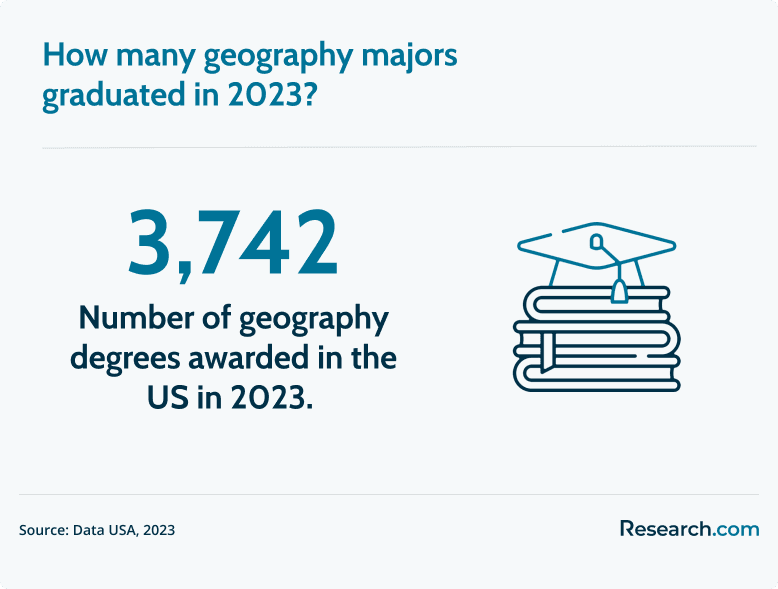
Both formats can lead to comparable academic credentials when the institution is properly accredited. The better option depends on your schedule, learning style, access to technology, and need for hands-on field experiences. With 3,742 geography majors graduating in 2023, geography continues to attract students interested in understanding how physical environments and human systems interact.
What Is the Average Cost of an Online Geography Degree Program?
The average cost per credit for online geography degree programs is approximately $333. Since many bachelor’s programs require 120 credits, tuition commonly falls between $15,000 and $63,000 before fees, books, software, technology costs, and other expenses. Comparable online bachelor’s programs, including online sociology bachelor's degree programs, may follow similar tuition structures, but total cost depends heavily on the school, residency status, and transfer credit policy.
Public universities may offer lower rates to in-state students. For example, the University of Florida is cited at approximately $133 per credit for residents, while the program listing above reports $129 for in-state students and $552 for out-of-state students. Tuition can be higher for out-of-state students and private institutions; examples include the University of Arizona at around $500 per credit and Liberty University at about $390 per credit, while the ranked program profile above lists Liberty’s cost per credit as $250. Because rates may vary by tuition category, academic year, fees, or enrollment status, always confirm the current net cost with the school.
| Cost Factor | Why It Matters | Question to Ask |
| Tuition per credit | This is the largest visible cost, but it may not include required fees | Is the online tuition rate fixed, or does it vary by residency? |
| Transfer credits | Accepted credits can reduce the number of courses you must pay for | How many prior credits will count toward the geography major? |
| GIS software and technology | Some courses may require mapping software, hardware, or data access | Does the program provide ArcGIS, QGIS support, or other tools? |
| Online fees | Distance learning, technology, and proctoring fees can increase total cost | What is the full cost of attendance, not just tuition? |
| Time to completion | Taking longer can increase total expenses and delay earnings | Can I take courses year-round or part-time without losing progress? |
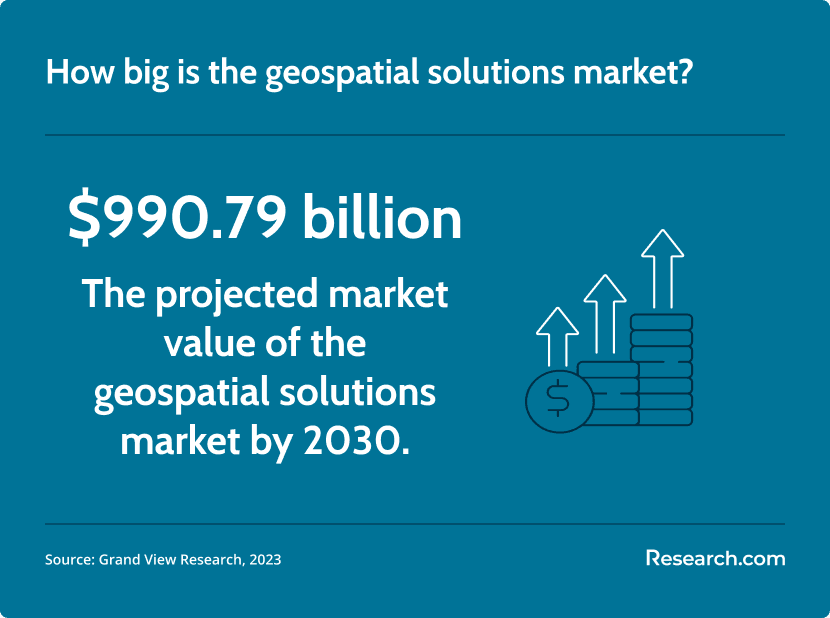
Cost should be weighed against career fit, skill development, and program quality. The geospatial solutions market value is projected to reach $990.79 billion by 2030, with a CAGR of 14.6%, which highlights the growing importance of location-based data and geospatial tools across industries. That market projection does not guarantee individual job placement or salary, but it does show why GIS and spatial analysis training can strengthen a geography degree.
What Financial Aid Options Are Available for Online Geography Students?
Students in accredited online geography programs may be eligible for many of the same aid sources available to campus students and learners in related online fields, such as an online applied psychology degree. Aid can help reduce tuition costs and may also support research, fieldwork, mapping projects, or other applied learning expenses.
- Federal Student Aid (FAFSA): Students enrolled in eligible accredited programs can complete the Free Application for Federal Student Aid to be considered for federal grants, loans, and work-study.
- Darrel Hess Community College Geography Scholarship: The American Association of Geographers funds two $1,500 awards for community college students transferring into 4-year institutions as geography majors.
- NACIS Student Scholarship in Cartography: This $1,000 scholarship supports undergraduate students with a focus on cartography or visualization design and recognizes strong work in geography coursework, research, or outreach.
- Explorers Club Rising Explorer Grant: High school students and undergraduates interested in exploration may receive grants of up to $5,000 for early scientific fieldwork and research projects.
- Michlovic Endowed Scholarship: Minnesota State University Moorhead offers this $500 annual award to students in anthropology or earth science who demonstrate academic strength and experiential learning.
How to Reduce the Cost of an Online Geography Degree
- Submit the FAFSA as early as possible and renew it each year.
- Ask whether online students qualify for the same institutional scholarships as campus students.
- Request a transfer credit evaluation before enrolling, especially if you have community college credits.
- Compare total program cost, not only advertised tuition.
- Ask whether GIS software, remote lab tools, and data access are included in tuition or billed separately.
- Consider employer tuition assistance if your current job relates to planning, environmental work, logistics, public safety, or data analysis.
What Are the Prerequisites for Enrolling in an Online Geography Degree Program?
Admission requirements vary by school, but online geography bachelor’s programs usually expect applicants to show college readiness, basic technical access, and interest in spatial or environmental questions. Similar to students considering an anthropology degree online, geography applicants should review both general admission requirements and major-specific expectations.
| Requirement | What It Usually Means | Why It Matters |
| High School Diploma or Equivalent | Most undergraduate programs require completion of high school or an equivalent credential, often with science, math, and social studies coursework and a minimum GPA of 2.5 | Shows readiness for lower-division college coursework |
| Transcripts | Schools review academic history, including performance in Earth science, geography, environmental studies, or related subjects | Helps admissions teams evaluate preparation |
| Prior Geography or Earth Science Coursework | Introductory geography, geology, or Earth science courses can strengthen an application | Gives students a foundation before major coursework begins |
| Map Interpretation Skills | Some programs expect comfort with scale, coordinates, direction, and map reading | Supports success in cartography and GIS courses |
| Interest in Spatial Thinking | Applicants may show interest through coursework, extracurricular activities, or a personal statement | Geography depends on analyzing relationships across places and systems |
| Computer and Internet Access | Students need reliable technology for lectures, assignments, GIS tools, and virtual labs | Online geography coursework can be software-intensive |
| Time Management Skills | Online learners must keep up with deadlines without daily in-person structure | Self-direction is essential for asynchronous courses |
Students who want extra preparation in digital mapping, drafting, or visualization may also compare the fastest online AutoCAD certificate programs. AutoCAD is not a replacement for geography coursework, but it can complement GIS, cartography, urban planning, and environmental mapping skills.
What Courses Are Typically Included in an Online Geography Degree Program?
Online geography programs usually combine physical science, social science, technology, and research methods. The strongest programs teach students how to interpret landscapes, analyze population and environmental data, create maps, and use spatial tools to answer real-world questions.
| Course Area | What Students Learn | How It Applies Professionally |
| Physical Geography | Climate, landforms, ecosystems, natural processes, and their effects on human activity | Environmental analysis, conservation, hazard assessment, and land-use work |
| Geographic Information Systems (GIS) | Spatial data collection, analysis, visualization, and digital mapping tools | Urban planning, logistics, environmental monitoring, emergency management, and business intelligence |
| Cartography | Map design, scale, projection, symbols, and visual communication | Map production, public communication, data visualization, and geospatial reporting |
| Remote Sensing | Use of satellite imagery and aerial photography to track environmental and urban change | Land-use monitoring, disaster assessment, vegetation analysis, and infrastructure planning |
| Spatial Analysis | Techniques for identifying patterns, relationships, and trends in location-based data | Public health analysis, transportation planning, market research, and policy support |
| Geopolitics | How geography affects power, territory, conflict, diplomacy, and international relations | Policy analysis, international affairs, security research, and global development work |
| AI in Geography | How artificial intelligence can support mapping automation, land-use prediction, and spatial modeling | Advanced GIS, predictive analytics, environmental modeling, and geospatial technology roles |
As geography becomes more data-driven, students benefit from combining core geographic theory with GIS, remote sensing, programming, and analytical skills. Learners interested in the technology side of spatial analysis may also explore fast-track artificial intelligence certification online options to understand how AI tools are being applied in mapping and data workflows.
What Specializations Are Available in Online Geography Degree Programs?
Many online geography programs allow students to focus electives around a career interest. A specialization can help you choose the right internships, software tools, research projects, and graduate school pathway. The best concentration depends on whether you are more interested in environmental systems, city planning, human populations, data visualization, or security-related analysis.
| Specialization | Best Fit For | Possible Career Direction |
| Environmental Geography | Students interested in climate systems, conservation, sustainability, and human impact on natural environments | Environmental planning, conservation support, climate policy, and nonprofit or government roles |
| Urban and Regional Planning | Students who want to study transportation, land use, zoning, housing, and sustainable city development | Planning assistant, transportation analyst, community development, and public agency work |
| Mapping and Visualization | Students who enjoy cartography, digital communication, and location-based data storytelling | Cartography, GIS visualization, digital mapping, and location-based services |
| Cultural and Human Geography | Students focused on migration, globalization, cultural landscapes, development, and social systems | Policy research, education, international development, and demographic analysis |
| Geospatial Intelligence (GEOINT) | Students interested in imagery analysis, mapping, emergency response, security, or defense-related applications | Emergency management, homeland security support, defense contracting, and spatial intelligence roles |
Students leaning toward environmental or sustainability work may also compare top environmental policy degree programs to decide whether they need a geography-heavy curriculum, a policy-focused program, or a combination of both.
How Should You Choose the Best Online Geography Degree Program?
The best online geography program is not simply the one with the lowest tuition or highest name recognition. A strong choice should match your career goals, learning style, budget, transfer credits, and preferred geography subfield. For example, a student interested in GIS analysis should prioritize software access and technical coursework, while a student focused on global studies may value human geography, geopolitics, language, and research opportunities.
Program Selection Checklist
- Accreditation: Choose a regionally accredited institution so your degree is more likely to be recognized by employers, graduate schools, and financial aid agencies.
- Core geography coverage: Look for human geography, physical geography, spatial analysis, GIS, and research methods rather than a narrow set of general electives.
- GIS and mapping software access: Ask whether the program provides hands-on training with tools such as ArcGIS or QGIS, and whether students pay extra for software access.
- Fieldwork and applied research: Even online programs may offer virtual labs, local field assignments, optional field experiences, or capstone projects based on real datasets.
- Faculty expertise: Review whether instructors have backgrounds in GIScience, climatology, political geography, environmental geography, planning, or geospatial data science.
- Sustainability and environmental options: Students interested in conservation, climate work, or environmental policy should look for courses in sustainability and environmental geography.
- Career support: Strong programs connect students to resume help, internships, alumni networks, GIS portfolios, and job search support in geospatial fields.
- Transfer policy: If you have prior credits, request a written transfer evaluation before committing.
- Total cost: Compare tuition, fees, software, books, residency rules, and the number of credits you still need to graduate.
Questions to Ask Before You Enroll
- Is the institution regionally accredited?
- How much of the program is asynchronous, and are any live sessions required?
- Which GIS, mapping, remote sensing, or data visualization tools will I learn?
- Are internships, capstones, fieldwork, or research projects available to online students?
- Will the degree title appear differently because I studied online?
- How many transfer credits will apply to the major, not just general electives?
- What career services are available for GIS, planning, environmental, or government roles?
- Can I build a portfolio of maps, spatial analysis projects, or research reports?
Students evaluating return on investment should research career outcomes carefully, especially if they are aiming for geospatial work. Reviewing GIS salary information can help you understand how skills, location, industry, and experience may affect earning potential.
What Career Paths Are Available for Online Geography Degree Graduates?
An online geography degree can lead to careers that use spatial reasoning, environmental knowledge, cultural analysis, and data interpretation. Graduates may work in public agencies, private companies, nonprofits, education-related settings, consulting firms, environmental organizations, transportation, logistics, real estate, and technology. Some roles may require additional experience, graduate education, certifications, or technical training.
| Career Path | What the Role Involves | Skills That Matter |
| Urban Planner | Supports land-use decisions, zoning, infrastructure planning, transportation, and community development | GIS, public policy, demographic analysis, communication, and planning concepts |
| Real Estate Market Analyst | Uses demographic, geographic, and market data to evaluate property trends and growth areas | Spatial analysis, market research, data visualization, and location intelligence |
| Cartographer | Creates maps and visual displays of spatial information for print, digital, or interactive use | Cartography, GIS, design judgment, data accuracy, and visualization tools |
| GIS Analyst | Analyzes location-based datasets and produces maps, models, reports, and insights for decision-makers | GIS software, database skills, spatial analysis, problem-solving, and technical reporting |
| Location Intelligence Analyst | Helps organizations evaluate customers, logistics, site selection, and regional trends through geographic data | Business analysis, mapping, demographics, statistics, and communication |
| Geopolitical Analyst | Studies how territory, resources, political boundaries, and cultural conditions affect international or regional issues | Research, writing, geopolitics, regional knowledge, and policy analysis |
| Geospatial Software Developer | Builds or improves software systems that process, analyze, or visualize geographic data | Programming, GIS, web mapping, databases, and software development |
Students interested in property markets and location-based investment analysis may also review accelerated real estate programs online. Geography can pair well with real estate when students develop skills in demographics, mapping, site selection, and market analysis.
What Is the Job Outlook for Graduates With an Online Geography Degree?
The job market for geographers is smaller than many other fields, but geography skills can be applied across multiple job titles beyond the formal “geographer” occupation. Graduates who combine geography with GIS, data analysis, remote sensing, programming, planning, or environmental knowledge may have more flexible career options than those relying only on broad geography coursework.
- Projected growth: Employment of geographers is projected to grow 3% from 2023 to 2033.
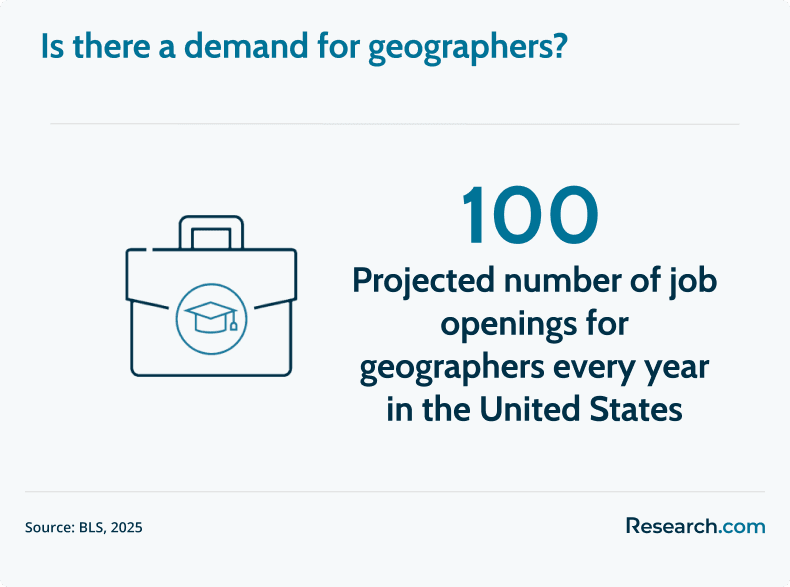
- Annual openings: About 100 openings for geographers are projected each year over the next decade.
- Projected employment size: Total employment in 2033 is estimated at around 1,700 geographers.
- Technology influence: GIS, spatial data visualization, remote sensing, predictive modeling, and AI-assisted analysis are shaping how geography skills are used.
- Employer demand areas: Government agencies and businesses use geography expertise for land use, environmental hazards, population patterns, planning, and location-based decisions.
These figures suggest that the traditional geographer occupation is modest in size, so students should prepare for a broader job search. Building a portfolio, learning GIS tools, gaining internship experience, and choosing technical electives can make the degree more marketable.
What Graduates Say About Studying Geography Online
- : "Earning my geography degree online let me work with climate datasets from around the world while staying in my mountain community. I could manage field observations in the morning and complete GIS assignments later in the day. The format was flexible, but the work still felt connected to real places. — Aria"
- : "I expected online geography to be mostly reading and lectures, but the mapping labs and remote sensing projects were highly applied. Virtual fieldwork exercises pushed me to think critically, and I was able to keep working in urban planning while finishing the degree. — Devon"
- : "The online format gave me time to study population mapping, demographic change, and spatial data at a pace that worked for me. Recorded lectures helped with flexibility, while live discussions made the program feel collaborative. I graduated with practical skills and a different way of interpreting the world. — Geoffrey"
Are Online Geography Degree Programs Accredited and Reputable?
Online geography degrees can be reputable when they are offered by properly accredited institutions and provide a curriculum comparable in quality to campus programs. Accreditation is one of the most important checks because it signals that the institution has been reviewed for academic standards, faculty qualifications, student support, and institutional resources.
Students should verify accreditation through official school pages and recognized accreditation databases rather than relying only on advertisements. Regional accreditation can affect federal financial aid eligibility, transfer credit acceptance, graduate school admission, and employer confidence. If affordability is a major concern, compare accredited options carefully and review resources on the cheapest online schools for working adults.
Can Additional Certifications Strengthen an Online Geography Degree?
Yes. Certifications and graduate certificates can help geography students document technical skills that may not be obvious from a degree title alone. Useful areas may include GIS, remote sensing, cartography, spatial data analysis, programming, data visualization, environmental policy, or planning-related tools.
A certificate is most valuable when it supports a specific career goal. For example, a student targeting GIS analyst roles may benefit more from advanced GIS and database coursework, while someone interested in environmental planning may choose sustainability or policy training. Students comparing post-bachelor’s options can review an affordable graduate certificate to evaluate cost-effective ways to add specialized credentials.
Common Mistakes to Avoid When Choosing an Online Geography Degree
| Mistake | Why It Can Hurt You | Better Approach |
| Choosing a program without checking accreditation | It can affect financial aid, transfer credits, graduate study, and employer recognition | Verify institutional accreditation before applying |
| Comparing only tuition per credit | Fees, software, books, and extra credits can change the true cost | Ask for the full estimated cost of attendance |
| Ignoring GIS depth | Many geography-related jobs require practical mapping and spatial data skills | Review required GIS, remote sensing, and spatial analysis courses |
| Assuming online means easier | Online courses require discipline, technology access, and independent work habits | Plan weekly study time and confirm technical requirements |
| Overlooking transfer credit rules | Credits may transfer as electives but not satisfy major requirements | Request a written degree plan before enrolling |
| Relying only on rankings | A highly ranked program may not match your career target or budget | Use rankings as a starting point, then compare curriculum, cost, and outcomes |
| Assuming salary outcomes are guaranteed | Earnings depend on location, role, industry, skills, and experience | Research job postings and build a portfolio of applied projects |
Key Insights
- Most online geography bachelor’s programs take 4 years and require 120 credits, but transfer credits and accelerated pathways can change the timeline.
- The strongest programs combine geography theory with applied GIS, remote sensing, cartography, spatial analysis, and research experience.
- Average online geography tuition is approximately $333 per credit, with total tuition commonly ranging from $15,000 to $63,000 before additional costs.
- Accreditation should be a non-negotiable requirement because it affects aid, transferability, graduate school options, and degree recognition.
- Career outcomes are strongest when students connect the degree to a practical skill set, such as GIS analysis, environmental planning, location intelligence, or geospatial visualization.
- The formal geographer occupation is relatively small, with 3% projected growth from 2023 to 2033 and about 100 projected openings per year, so students should prepare for related job titles as well.
- Before enrolling, ask about GIS software access, fieldwork options, transfer credit evaluation, career support, and the full cost of attendance.
References:
- American Association of Geographers. (n.d.). Darrel Hess Community College Geography Scholarship. Aag.org. Retrieved 6 August 2025.
- Arizona Online. (n.d.). Online Bachelor of Science in Geographic Information Systems Technology (BS). Online.arizona.edu. Retrieved 6 August 2025.
- ASU Online. (n.d.). Bachelor of Science in Geography. Asuonline.asu.edu. Retrieved 6 August 2025.
- Data USA. (n.d.). Geography. Datausa.io. Retrieved 6 August 2025.
- Explorers Club. (n.d.). Rising Explorer Grant. Explorers.org. Retrieved 6 August 2025.
- FIU Online. (n.d.). Bachelor of Arts in Geography. Fiuonline.fiu.edu. Retrieved 6 August 2025.
- Grand View Research. (n.d.). Geospatial Solutions Market Report. Grandviewresearch.com. Retrieved 6 August 2025.
- Kennesaw State University. (n.d.). Geography B.A. Kennesaw.edu. Retrieved 6 August 2025.
- Liberty University. (n.d.). Bachelor’s in Geography (B.S.) – Online. Liberty.edu. Retrieved 6 August 2025.
- Marshall University. (n.d.). Online Geography Degree. Marshall.edu. Retrieved 6 August 2025.
- Minnesota State University Moorhead. (n.d.). Anthropology & Earth Science Scholarships. Mnstate.edu. Retrieved 6 August 2025.
- North American Cartographic Information Society. (n.d.). Undergraduate Student Scholarship in Cartography. Nacis.org. Retrieved 6 August 2025.
- Ohio University. (n.d.). Geography Major (B.S.). Ohio.edu. Retrieved 6 August 2025.
- Oregon State University Ecampus. (n.d.). Geography and Geospatial Science – Online. Ecampus.oregonstate.edu. Retrieved 6 August 2025.
- University of Florida Online. (n.d.). Geography. Ufonline.ufl.edu. Retrieved 6 August 2025.
- University of Texas at San Antonio Online. (n.d.). Geography and Environmental Sustainability. Online.utsa.edu. Retrieved 6 August 2025.
- US Bureau of Labor Statistics. (n.d.). Geographers. Bls.gov. Retrieved 6 August 2025.
- US Bureau of Labor Statistics. (n.d.). Occupational Employment and Wages: Geographers. Bls.gov. Retrieved 6 August 2025.
- ZipRecruiter. (n.d.). Geographer Salary. Ziprecruiter.com. Retrieved 6 August 2025.
- Zippia. (n.d.). Geographer Skills. Zippia.com. Retrieved 6 August 2025.
Other Things You Need to Know About Online Geography Degree Programs
In 2027, several online geography programs stand out for interactive learning, including Pennsylvania State University and Arizona State University, both offering immersive online labs and virtual field experiences. These programs leverage technology to simulate real-world geographical analysis, enhancing student engagement and understanding.
In 2027, online geography programs are increasingly incorporating virtual fieldwork, GIS technology, and interactive simulations to provide hands-on learning. Schools like Arizona State University and Penn State World Campus offer such innovative experiences, enhancing practical skills despite the online format. Always verify specific offerings directly with institutions.