
2027 What Can You Do With a Health Information Management Degree

Co-Founder and Chief Data Scientist
In 2023, the US employed approximately 756,000 medical and health services managers, a workforce vital to efficient healthcare delivery. Many in these roles hold a Health Information Management (HIM) degree, which blends healthcare knowledge with expertise in data management, compliance, and technology. This educational foundation supports decision-making and ensures accurate, secure patient information, which are core functions in modern healthcare systems.
In this article, I will discuss the salary potential and job growth for those with a health information management degree. I will also explore advanced career pathways and strategies to maximize earning potential in this expanding field.
Key Things You Should Know About Health Information Management Degrees
- A health information management degree typically takes four years to complete at the bachelor’s level, though accelerated and associate-level options are also available.
- Graduates are prepared for roles in managing healthcare data, ensuring compliance with regulations, and leveraging technology to improve patient care.
- HIM programs provide a foundation for advanced certifications or graduate study in fields like health informatics or healthcare administration, expanding career and salary potential.
- What are the top specializations in health information management? Specializations
- What jobs can you get with a health information management degree? Job Options
- Are remote jobs available for health information management graduates? Are remote jobs available for health information management graduates?
- What is the average salary with a health information management degree? Average Salary
- How can I maximize my earning potential in health information management? How can I maximize my earning potential in health information management?
- How can I transition to health information management from another career? How can I transition to health information management from another career?
- Is a health information management degree worth it for career advancement? Is a health information management degree worth it for career advancement?
- What alternative career paths can I pursue with a health information management degree? Career Paths
- What are the best certifications for health information management professionals? Certifications
- How can project management skills enhance career growth in health information management? How can project management skills enhance career growth in health information management?
- What soft skills are important for health information management professionals? What soft skills are important for health information management professionals?
- How can an advanced business degree boost health information management careers? How can an advanced business degree boost health information management careers?
- What are the top emerging trends in health information management? Trends
Health information management careers: specializations, jobs, salary, and how to choose a path
Choosing a health information management degree is not just a choice about working with medical records. It is a decision about where you want to sit in the healthcare system: coding and reimbursement, data analytics, privacy, compliance, health IT, operations, or leadership. The right specialization can shape your first job, your certification plan, your salary ceiling, and whether you work on-site, remotely, or in a hybrid role.
This guide is for students comparing HIM degree options, healthcare workers planning a career move, IT professionals considering healthcare data roles, and graduates trying to choose a specialization. You will learn which HIM tracks are most useful, what jobs they connect to, what salary factors matter, which certifications employers recognize, and how to decide whether a health information management degree is worth the investment.
Quick answer: What can you do with a health information management degree?
A health information management degree can prepare graduates for roles in medical coding, clinical documentation, health data analysis, privacy and compliance, electronic health record support, healthcare administration, and health IT project work. The best path depends on whether you prefer detailed coding work, data-driven problem solving, regulatory compliance, technology implementation, or department leadership.
The field is also tied to a large and expanding digital health market. In 2024, the global healthcare information system market was valued at $522.01 billion. It is projected to reach $1,117.59 billion by 2030, with a CAGR of 13.59% from 2025 to 2030. North America represented over 52% of global revenue in 2024, which helps explain why HIM skills remain important in hospitals, physician groups, insurers, public agencies, and health technology companies.
Top health information management specializations
Health information management is broad. Some tracks are highly technical, while others focus on compliance, operations, or analytics. When comparing programs, look for coursework, internships, labs, and certification preparation that match the work you actually want to do after graduation.
| Specialization | Best fit for students who want to... | Common roles it supports |
| Medical Coding and Classification | Work with diagnoses, procedures, claims, coding rules, and reimbursement documentation | Medical coder, coding specialist, clinical documentation support roles |
| Health Data Analytics | Turn healthcare data into reports, dashboards, quality insights, and operational recommendations | Healthcare data analyst, quality analyst, reporting specialist |
| Information Governance and Compliance | Build policies for the proper use, retention, accuracy, and protection of health information | Compliance analyst, information governance specialist, records manager |
| Health Informatics | Connect clinical workflows with electronic health records, interoperability tools, and health IT systems | EHR analyst, informatics specialist, implementation support specialist |
| Privacy and Security Management | Help organizations protect patient information and reduce privacy, access, and breach risks | Privacy officer, security compliance specialist, risk management analyst |
| Healthcare Administration | Move toward supervision, budgeting, department management, and cross-functional healthcare operations | Health information manager, department supervisor, healthcare operations manager |
Students who want a faster route into the field may compare traditional programs with accelerated online health information management degree options. Speed matters, but it should not be the only filter. Accreditation, transfer credit rules, internship expectations, certification alignment, and employer recognition matter just as much.
What jobs can you get with a health information management degree?
HIM graduates work where healthcare, data, regulation, and technology overlap. Some roles are entry-level and task-focused, such as coding or records quality review. Others require experience, certifications, or graduate education, especially positions involving department leadership, compliance ownership, analytics strategy, or health IT implementation.
Common jobs for health information management graduates include:
- Health Information Technologist: Maintains patient information systems, supports data quality, and helps ensure records are accurate, complete, and accessible to authorized users.
- Medical Coder: Converts diagnoses, services, and procedures into standardized codes used for claims, reporting, and reimbursement. If this role interests you, review the steps for becoming a medical coder, including training, coding systems, and certification options.
- Healthcare Data Analyst: Reviews clinical, operational, or financial data to identify patterns, prepare reports, and support decisions about care quality, staffing, performance, or costs.
- Clinical Documentation Specialist: Works with providers and coding teams to improve the clarity, completeness, and compliance of medical documentation.
- Health Information Manager: Supervises HIM staff, manages records workflows, supports compliance, and coordinates health information operations across departments.
- Privacy Officer: Oversees privacy policies, investigates potential violations, trains staff, and helps ensure patient information is handled properly.
- EHR Implementation Specialist: Supports the rollout, configuration, testing, training, and improvement of electronic health record systems.
Employment settings vary. Hospitals are the largest employer of medical and health services managers, accounting for 30% of roles. Offices of physicians account for another 12%, while other opportunities exist in insurance organizations, government agencies, consulting firms, health technology vendors, and healthcare networks.
| Career direction | Better fit if you enjoy... | What to build next |
| Coding and revenue cycle | Detailed rules, documentation review, accuracy, and claim workflows | Coding practice, anatomy and terminology, CPC, CCS, or RHIT preparation |
| Analytics and reporting | Spreadsheets, dashboards, trends, data validation, and problem solving | SQL, data visualization, statistics, CHDA preparation |
| Privacy and compliance | Policies, regulations, audits, risk reduction, and ethical decision-making | HIPAA knowledge, audit experience, CHPS preparation |
| Health IT and informatics | Systems, workflow improvement, user support, and EHR optimization | EHR exposure, interoperability concepts, project coordination skills |
| Management | Supervising teams, planning, budgets, performance metrics, and operations | Leadership experience, RHIA, graduate study, project management skills |
The chart below uses US BLS data to show the largest employers of medical and health services managers.
Are remote jobs available for health information management graduates?
Yes. Many health information management roles can be performed remotely when the work is digital, measurable, and supported by secure access to health records. Remote HIM work is most common in coding, auditing, analytics, documentation review, compliance support, EHR consulting, and vendor-side implementation work.
Remote work is not automatic, however. Employers often require proven accuracy, privacy awareness, secure home-office practices, and experience with electronic health records or data systems. Entry-level graduates may start on-site or hybrid before moving into fully remote roles.
- Remote medical coding: Coders review clinical records, assign codes, and meet productivity and accuracy standards through secure platforms.
- Health data analyst: Analysts may build reports, clean datasets, prepare dashboards, and communicate findings to clinical or administrative teams from off-site locations.
- EHR consultant: Consultants can support configuration, testing, training, workflow review, and optimization through virtual meetings and remote-access tools.
- Compliance and privacy officer: Some privacy and compliance responsibilities can be handled remotely, especially policy review, training, audit documentation, and incident follow-up.
Students interested in remote HIM work should strengthen technical skills beyond basic records management. Cloud-based storage, access controls, secure data workflows, and system administration concepts are increasingly relevant. Professionals who like this side of the field may also compare HIM roles with a cloud computing career path, especially when they are drawn to infrastructure, security, and data access management.
What is the average salary with a health information management degree?
Salary outcomes in health information management depend on role, credential level, employer type, location, experience, and whether the job is technical, supervisory, or executive. Coding and technician roles usually pay differently from analytics, compliance, informatics, and management positions.
In the US, the average annual salary for a medical and health services manager is $95,625. That equals $45.97 per hour, $1,838 per week, or $7,968 per month. This occupation is a common advancement target for HIM graduates who move into leadership, compliance, operations, or department management.
Advanced education can change the salary conversation. Professionals comparing graduate study should review how a master’s in health informatics may affect salary potential, particularly for roles involving health IT strategy, analytics, data governance, and system leadership. Location also matters. Professionals in Two Rivers, Wisconsin, average $129,032 annually, while those in Nome, Alaska, earn around $118,623.
| Factor | Why it affects HIM pay |
| Job title | Medical coding, analytics, privacy, informatics, and management roles have different pay ranges and expectations. |
| Credentials | Certifications such as RHIA, RHIT, CCS, CHDA, CHPS, or CPC can signal job-ready skills to employers. |
| Experience | Supervisory, audit, system implementation, or compliance experience can support advancement into higher-responsibility roles. |
| Employer type | Hospitals, physician offices, insurers, vendors, consulting firms, and government agencies may value different HIM skill sets. |
| Location | Pay can vary by local demand, cost of living, employer concentration, and competition for experienced HIM professionals. |
| Technical depth | Skills in analytics, EHR optimization, privacy risk, interoperability, or data governance can broaden career options. |
The chart below from ZipRecruiter highlights the top states offering the highest salaries for medical and health services managers.
How can I maximize my earning potential in health information management?
The highest-paying HIM paths usually combine three things: specialized knowledge, measurable experience, and leadership readiness. A degree can help you enter the field, but long-term growth often depends on certifications, projects, analytics skills, compliance expertise, and the ability to communicate with clinicians, IT teams, finance leaders, and executives.
- Choose a specialization with advancement potential: Data analytics, privacy, EHR implementation, clinical documentation improvement, information governance, and management can all support higher-responsibility roles.
- Consider graduate education when it fits your goal: Zippia reports that 43.8% of medical and health services managers hold advanced degrees. A master’s in health informatics, healthcare administration, or a related field may be useful for leadership or specialized technical roles.
- Add targeted certifications: RHIA, RHIT, CHDA, CHPS, CCS, and CPC can strengthen your profile when they match your intended job path.
- Document measurable achievements: Track improvements in coding accuracy, audit findings, dashboard delivery, compliance training, EHR workflow fixes, or project timelines.
- Build leadership experience early: Volunteer for process improvement, training, quality review, or system implementation projects before applying for formal management roles.
- Stay current with technology and regulation: HIM professionals need ongoing knowledge of privacy expectations, documentation standards, coding updates, cybersecurity risks, analytics tools, and interoperability efforts.
- Use professional networks strategically: Associations, mentors, alumni groups, and HIM events can help you learn which credentials and skills employers in your region actually value.
If you are still exploring healthcare career options, it may help to compare HIM with broader health science pathways. A guide to careers with a health science bachelor’s degree can show how health education, public health, administration, and data-focused roles overlap with HIM.
| Goal | Smart next step | Mistake to avoid |
| Earn more as a coder | Develop specialty coding expertise and pursue relevant coding credentials | Assuming a degree alone will replace coding practice and accuracy benchmarks |
| Move into analytics | Learn reporting tools, data cleaning, dashboards, and healthcare metrics | Ignoring statistics, database basics, or data visualization skills |
| Enter management | Gain supervisory, budgeting, compliance, and project experience | Waiting until after promotion to learn leadership fundamentals |
| Work remotely | Build a track record of productivity, privacy discipline, and system proficiency | Applying only to remote jobs without relevant experience or certifications |
| Specialize in privacy | Study privacy rules, audit workflows, incident response, and risk management | Treating privacy as only a paperwork function rather than an operational risk area |
How can I transition to health information management from another career?
Health information management is a realistic career-change option for people coming from healthcare, administration, billing, IT, data, insurance, compliance, or customer-facing healthcare roles. The fastest transition usually happens when you identify what you already know and then fill the HIM-specific gaps: medical terminology, coding systems, healthcare privacy, EHR workflows, data quality, and certification requirements.
- Map your transferable skills: Clinical experience, billing knowledge, database work, spreadsheet skills, customer service, compliance exposure, and project coordination can all support a move into HIM.
- Choose the right education level: Some career changers need a certificate for coding or records work, while others may need an associate, bachelor’s, or graduate program for management, analytics, or informatics roles.
- Check program fit before enrolling: Look for accreditation, certification preparation, practicum requirements, transfer credit policies, and whether online coursework matches your schedule.
- Build technical confidence: If your goal is health IT or analytics, consider strengthening computer science, databases, cloud systems, or software fundamentals. Some students compare HIM with an accelerated online computer science degree when they want a more technical route.
- Earn a relevant credential: RHIT, RHIA, CPC, CCS, CHDA, or CHPS can help validate your readiness, depending on your target role.
- Get practical exposure: Internships, volunteer work, temporary roles, coding practice labs, EHR training, or quality improvement projects can make your resume more credible.
- Rewrite your resume for HIM: Translate past work into HIM language: data accuracy, compliance, documentation, reporting, workflow improvement, privacy, audits, and stakeholder communication.
Who may have the easiest transition?
| Previous background | Likely HIM advantage | Gap to close |
| Medical assistant, nurse, or clinical worker | Understanding of patient care, terminology, documentation, and clinical workflows | Coding rules, data governance, HIM systems, and compliance documentation |
| Billing or insurance professional | Familiarity with claims, reimbursement, payer rules, and documentation needs | Broader HIM operations, privacy, analytics, and credential requirements |
| IT or help desk professional | Comfort with systems, security, troubleshooting, and implementation support | Healthcare regulations, EHR workflows, medical terminology, and clinical context |
| Administrative professional | Organization, records handling, communication, scheduling, and process coordination | Healthcare data standards, coding, compliance, and technical HIM tools |
| Data or business analyst | Reporting, dashboards, trend analysis, and data quality skills | Healthcare metrics, privacy rules, clinical data structures, and HIM terminology |
Is a health information management degree worth it for career advancement?
A health information management degree can be worth it when it connects directly to your target role, prepares you for recognized credentials, and gives you practical exposure to healthcare data systems. It is especially useful for people who want a structured route into coding, compliance, analytics, informatics, or health information leadership.
It may be less worthwhile if you choose a program without checking accreditation, if it does not prepare you for the credential employers expect, or if your goal would be better served by a different degree such as data science, computer science, public health, healthcare administration, or business.
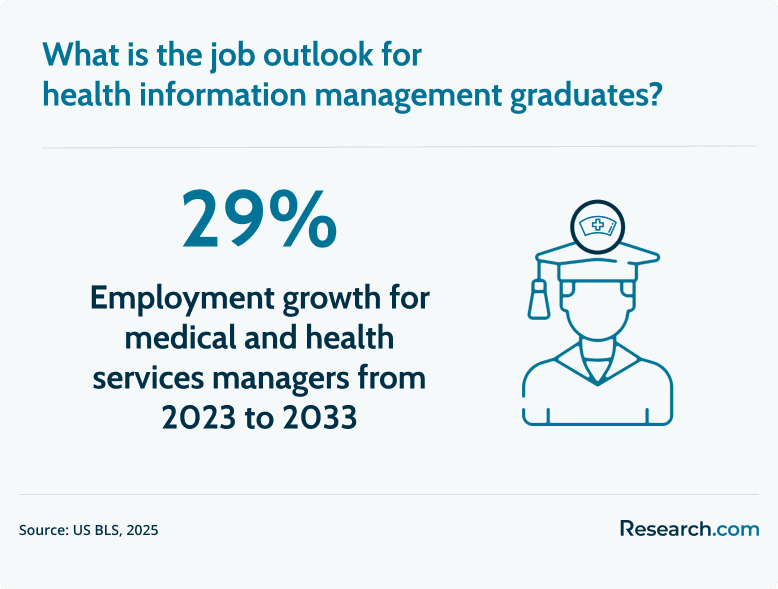
- Labor market strength: The US BLS projects HIM-related roles, including medical and health services managers, to grow 29% from 2023 to 2033, supported by healthcare expansion and continued digital recordkeeping needs.
- Leadership pathway: HIM education can support advancement into roles such as health information manager, compliance manager, health information director, or privacy leader.
- Graduate study foundation: Graduates can continue into health informatics, healthcare administration, public health, analytics, or related programs. These routes can lead to broader health informatics career options.
- Versatility: HIM skills are relevant in hospitals, physician groups, insurers, government health departments, research organizations, consulting firms, and health technology companies.
- Salary mobility: Some managerial roles earn over $120,000 annually, although actual earnings depend on role, location, experience, and credentials.
- Long-term relevance: Healthcare organizations need accurate records, secure data, compliant documentation, and reliable information systems.
When an HIM degree makes sense — and when it may not
| Choose HIM if... | Consider another path if... |
| You want to work with healthcare data, records, compliance, coding, EHRs, or clinical documentation. | You want direct patient care as your primary role and do not enjoy administrative or data-heavy work. |
| You prefer a healthcare career that can include remote, hybrid, technical, or management options. | You mainly want software engineering, cybersecurity engineering, or data science outside healthcare. |
| You are comfortable with accuracy, regulation, confidentiality, and detailed documentation. | You dislike rules-based work, auditing, documentation standards, or privacy responsibilities. |
| You plan to pursue certifications that align with your chosen HIM track. | You are choosing the degree only because it sounds stable, without researching actual job requirements. |
What alternative career paths can I pursue with a health information management degree?
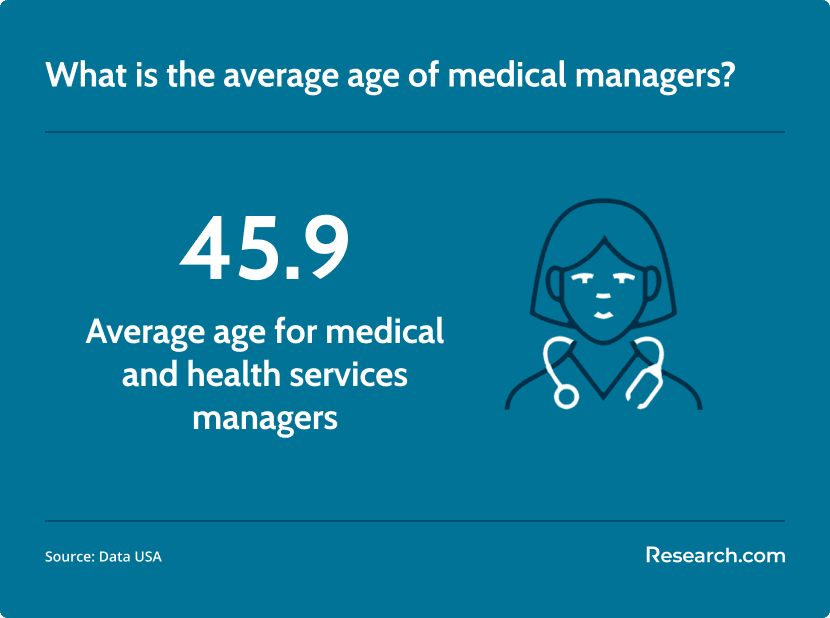
A health information management degree does not limit graduates to records departments. HIM training can also lead to work in analytics, compliance, consulting, education, technology implementation, project coordination, and operational improvement. This flexibility is valuable because medical and health services managers have an average age of 45.9, meaning many leadership roles are reached after professionals build experience across several healthcare functions.
- Health Data Scientist: Uses complex healthcare datasets to support decision-making, prediction, population health work, or operational improvement. Students who want deeper analytics training may compare HIM with the most affordable online master’s in data science programs.
- Health IT Specialist: Supports healthcare systems, user access, troubleshooting, implementation, upgrades, and system performance.
- Compliance Officer: Helps healthcare organizations follow regulations, internal policies, documentation standards, and privacy expectations.
- Clinical Documentation Improvement Specialist: Works with clinicians and coders to improve the usefulness, accuracy, and completeness of medical records.
- Healthcare Consultant: Advises organizations on workflows, information governance, coding performance, EHR use, or digital transformation.
- Project Manager: Coordinates timelines, staff, vendors, training, and deliverables for HIM, health IT, or process improvement projects.
- Educator or Trainer: Teaches HIM concepts to students, staff, coders, clinicians, or administrative teams.
| Alternative path | What makes HIM useful | Additional skill to add |
| Healthcare analytics | Understanding of clinical records, coding fields, and data quality issues | SQL, visualization tools, statistics, and dashboard design |
| Health IT | Knowledge of EHR workflows, user needs, privacy, and documentation processes | Systems analysis, interoperability, cybersecurity basics, and vendor platforms |
| Compliance | Familiarity with health records, privacy expectations, audits, and documentation standards | Policy writing, risk assessment, investigation methods, and training design |
| Consulting | Ability to understand health information workflows across departments | Client communication, project scoping, process mapping, and change management |
| Education and training | Practical knowledge of coding, records, privacy, and health data systems | Curriculum design, presentation skills, and assessment methods |
What are the best certifications for health information management professionals?
Certifications can help employers understand what you are prepared to do. The best credential depends on your education level, target role, and whether you are focusing on coding, health information administration, data analytics, privacy, or records operations.
Do not collect credentials randomly. A coding credential may not help much if your goal is data governance, and an analytics credential may be premature if you have not built data skills. Choose the certification that matches your job target and the requirements listed in real job postings.
| Certification | Best aligned with | Why it can matter |
| Registered Health Information Administrator (RHIA) | HIM leadership, department oversight, compliance, data governance, and management | Signals readiness for administrative and strategic HIM responsibilities. |
| Registered Health Information Technician (RHIT) | Technical HIM work, records quality, coding support, and data accuracy | Useful for roles that require practical health information operations knowledge. |
| Certified Coding Specialist (CCS) | Inpatient and outpatient coding expertise | Demonstrates advanced coding knowledge across healthcare settings. |
| Certified Health Data Analyst (CHDA) | Healthcare analytics, reporting, decision support, and data interpretation | Can support movement into analytics-focused HIM roles. |
| Certified in Healthcare Privacy and Security (CHPS) | Privacy, security, compliance, and information protection | Shows focused preparation for safeguarding patient information. |
| Certified Professional Coder (CPC) | Medical coding, billing, reimbursement, and physician-practice coding | Widely recognized for professionals pursuing coding-focused roles. |
Technology credentials can also complement HIM, especially for people interested in cybersecurity, cloud tools, databases, or systems administration. If you are weighing technical credentials, review what you can do with an IT certification and compare those outcomes with HIM-specific credentials.
How can project management skills enhance career growth in health information management?
Project management skills are valuable in HIM because many important assignments are cross-functional. EHR implementations, coding audits, documentation improvement initiatives, privacy remediation, data migration, system upgrades, and analytics launches all require planning, communication, risk management, timelines, and stakeholder coordination.
HIM professionals who can manage projects are often better positioned for leadership because they can translate technical requirements into operational action. They can also coordinate clinicians, coders, IT staff, vendors, compliance teams, and administrators without losing sight of deadlines or data integrity.
If you want a formal credential or degree-based route into project leadership, compare options such as the fastest online project management degree programs. The best choice depends on whether you need a full degree, a certificate, employer tuition support, or short-term skill development.
What soft skills are important for health information management professionals?
Technical knowledge matters in HIM, but soft skills often determine who succeeds in complex healthcare environments. HIM professionals work with sensitive information, tight deadlines, evolving regulations, and multiple departments that may not always share the same priorities.
- Attention to Detail: Essential for coding accuracy, record review, audits, data validation, and compliance documentation.
- Analytical Thinking: Helps professionals identify discrepancies, interpret trends, evaluate data quality, and solve workflow problems.
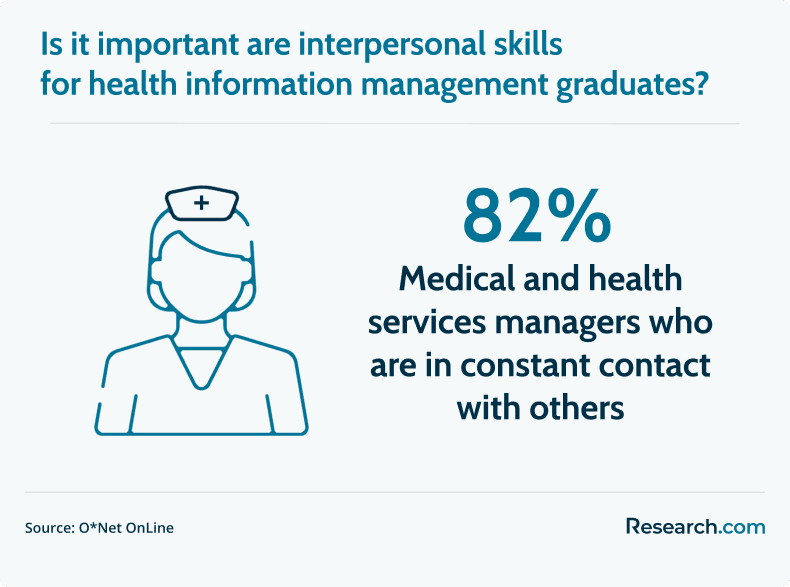
- Communication: HIM work often requires explaining documentation gaps, privacy expectations, system changes, or data findings to clinicians, administrators, coders, and IT teams. With 82% of managers in constant contact with others, communication is not optional.
- Adaptability: Coding systems, software tools, privacy expectations, and healthcare workflows can change, so HIM professionals need to learn continuously.
- Ethical Judgment: Patient information must be handled responsibly, even when workflows are busy or requests feel urgent.
- Leadership: Supervising staff, mentoring new employees, managing projects, and guiding process change all require leadership beyond technical competence.
- Time Management: HIM work often involves deadlines for coding, claims, audits, reporting, compliance reviews, and implementation milestones.
| Common mistake | Better approach |
| Choosing a program based only on tuition | Compare accreditation, outcomes, certification preparation, transfer credits, support services, and practicum requirements. |
| Assuming every online program fits every career goal | Ask whether the curriculum supports your target role, especially if you want coding, RHIA/RHIT preparation, analytics, or management. |
| Ignoring certification requirements | Review job postings before enrolling so you understand which credentials employers actually request. |
| Waiting too long to gain experience | Look for internships, projects, volunteer work, coding practice, EHR exposure, or entry-level healthcare data roles early. |
| Relying only on rankings | Use rankings as one input, but verify cost, accreditation, curriculum, faculty support, and career services. |
| Assuming salary outcomes are guaranteed | Evaluate salary by job title, location, experience, credentials, employer type, and technical skill level. |
How can an advanced business degree boost health information management careers?
An advanced business degree can help HIM professionals move from technical or departmental roles into broader operational leadership. Business training can strengthen budgeting, strategy, finance, staffing, process improvement, negotiation, and executive communication skills. These are useful when HIM leaders need to justify technology investments, manage teams, reduce risk, or align information services with organizational goals.
This path is most relevant for HIM professionals who want roles in healthcare administration, consulting, operations, revenue cycle leadership, compliance management, or executive-level planning. If cost is a major factor, compare affordable online MBA programs with healthcare administration, health informatics, and public health graduate options before choosing.
What are the top emerging trends in health information management?
Health information management continues to change as healthcare organizations rely more heavily on digital records, analytics, virtual care, interoperability, cybersecurity, and automation. These trends do not eliminate the need for HIM professionals; they change the skills employers expect.
- Big Data and Advanced Analytics: Healthcare organizations are using larger datasets to understand quality, utilization, outcomes, risk, and operational performance.
- Implementation of ICD-11: HIM professionals are monitoring how classification updates may affect coding consistency, reporting, training, and data comparison.
- Integration of Artificial Intelligence: AI is being used to support coding workflows, flag anomalies, summarize information, and assist decision-making, but human review remains important for accuracy, context, and compliance.
- Information Governance: Organizations need stronger rules for data quality, retention, access, privacy, secondary use, and accountability.
- Telehealth Data Management: Virtual care, remote monitoring, and digital intake tools create new documentation, privacy, and integration challenges.
- Interoperability Initiatives: Healthcare systems continue working toward better information exchange so records can support coordinated care.
- Growth of Remote HIM Roles: Secure platforms and cloud-based systems have expanded remote options in coding, analytics, auditing, consulting, and compliance support.
Artificial intelligence is especially important for HIM professionals who want to work in analytics, automation, clinical decision support, or predictive modeling. If you are considering a more technical graduate route, compare HIM-focused programs with careers connected to a master’s degree in artificial intelligence.
What health information management graduates say about their careers
- Maan: "My health information management program helped me understand how coding, privacy, records, and healthcare operations connect. The coursework required precision, but it also showed me how accurate information can support better care and stronger decision-making."
- Jazzy: "Studying HIM gave me a path into hospital leadership that I had not considered before. I use both technical knowledge and operational judgment every day, especially when working with clinical teams, compliance staff, and information systems."
- Aden: "The degree let me combine healthcare and technology in a practical way. I became more confident working with data, documentation standards, and high-pressure information workflows, which made the transition into my current role much smoother."
References
- Data USA (n.d.). Medical & Health Services Managers. Retrieved from Data USA medical and health services managers profile
- O*Net OnLine (n.d.). Medical and Health Services Managers 11-9111.00. Retrieved from O*Net OnLine occupational summary for medical and health services managers
- US BLS (2025). Medical and Health Services Managers. Retrieved from US BLS Occupational Outlook Handbook for medical and health services managers
- ZipRecruiter (2025). Medical Health Services Manager Salary. Retrieved from ZipRecruiter medical health services manager salary data
Key Insights
- HIM is not one career path. The degree can lead to coding, analytics, privacy, compliance, EHR support, consulting, administration, and leadership roles.
- Your specialization should match your work style. Coding rewards precision, analytics rewards data fluency, privacy rewards judgment, informatics rewards systems thinking, and administration rewards leadership.
- Salary depends on more than the degree. Role, location, employer type, experience, certifications, and technical depth all influence earning potential.
- Remote HIM jobs exist, but experience matters. Coding, auditing, analytics, compliance, and EHR support are among the more remote-friendly areas, especially for professionals with proven accuracy and privacy discipline.
- Certifications should be strategic. RHIA, RHIT, CCS, CHDA, CHPS, and CPC serve different goals, so choose based on target job postings rather than collecting credentials without a plan.
- A degree is most worthwhile when the program is aligned with outcomes. Before enrolling, verify accreditation, certification preparation, transfer policies, practicum expectations, cost, and career support.
- Technology is reshaping HIM. AI, analytics, interoperability, telehealth data, information governance, and remote systems are increasing the value of professionals who understand both healthcare context and digital information management.
Other Things You Should Know About Health Information Management Degrees
A health information management program should hold accreditation from CAHIIM, the Commission on Accreditation for Health Informatics and Information Management Education. Graduation from a CAHIIM-accredited bachelor’s program is the standard pathway to sit for the RHIA exam through AHIMA, which employers often prefer for HIM roles.
In 2027, a Health Information Management degree can lead to roles such as Medical Records Manager, Health Data Analyst, and Clinical Documentation Specialist. These positions are crucial in maintaining patient data accuracy and supporting healthcare operations, and are expected to be in demand due to ongoing advancements in healthcare technology.


