2027 Fastest Online Health Information Management Degree Programs

Co-Founder and Chief Data Scientist
An online health information management degree is designed for students who want a healthcare career centered on data, records, compliance, coding, privacy, and information systems rather than direct patient care. The “fastest” programs matter because many HIM students are working adults, transfer students, career changers, or healthcare employees who cannot spend four traditional years in school before qualifying for better roles.
This guide explains how accelerated online health information management programs work, which students benefit most from them, how long they usually take, what they may cost, and what career paths they can support. You will also learn how to compare accreditation, transfer policies, tuition structures, courses, certifications, and job outcomes before choosing a program.
Quick Answer: Is the Fastest Online Health Information Management Degree Worth It?
The fastest online health information management degree can be worth it if you want to enter or advance in healthcare data, coding, health informatics, compliance, or records management and you can handle a condensed academic schedule. The best value usually comes from CAHIIM-accredited programs that accept transfer credits, prepare students for RHIT or RHIA eligibility where applicable, and offer strong support for internships, certification preparation, and career placement.
What are the benefits of getting the fastest online health information management degree?
- An accelerated online HIM degree can prepare students for roles such as health information manager, medical coder, clinical data analyst, revenue cycle specialist, compliance officer, or EHR implementation specialist.
- According to the U.S. Bureau of Labor Statistics, professionals in health information roles earn a median salary of around $67,300, with higher-level positions exceeding $100,000 annually.
- Online study can reduce relocation barriers, make school more manageable for working adults, and shorten the time between enrollment and career advancement when students bring transfer credits or prior healthcare experience.
What can I expect from the fastest online health information management degree?
A health information management degree teaches students how healthcare organizations collect, protect, code, analyze, and use patient information. The field sits at the intersection of healthcare administration, data management, medical coding, privacy law, reimbursement, and health information technology.
Most accelerated online HIM programs cover electronic health records, medical terminology, ICD-10 and CPT coding, healthcare law, data quality, reimbursement systems, privacy regulations, analytics, and leadership. The pace is usually faster than a traditional semester-based program, so students should expect shorter terms, heavier weekly reading, frequent assignments, and less downtime between courses.
This degree is a strong fit for students who want a healthcare career but do not want a clinical role. HIM professionals help hospitals, clinics, insurers, vendors, government agencies, and long-term care facilities keep records accurate, secure, accessible, and compliant.
Where can I work with the fastest online health information management degree?
Graduates can work in many settings that depend on accurate health data, clean documentation, secure records, and compliant billing. Common employers include:
- Hospitals and health systems: HIM staff manage health records, coding operations, clinical documentation, audits, privacy workflows, and EHR data quality.
- Physician practices and outpatient clinics: Graduates may support coding, billing, patient record workflows, claims documentation, and release-of-information requests.
- Insurance companies: HIM training is useful for claims review, coding validation, reimbursement analysis, utilization review, and documentation accuracy.
- Government agencies: Public health departments and regulatory agencies such as the CDC or CMS rely on professionals who understand health records, reporting, and compliance.
- Health IT and EHR vendors: Graduates may help configure systems, train users, support implementation projects, or improve clinical data workflows.
- Long-term care and rehabilitation facilities: HIM professionals help maintain resident records, protect privacy, support billing, and meet documentation standards.
How much can I make with the fastest online health information management degree?
Salary depends on degree level, employer, location, experience, credentials, and whether the role is technical, analytical, coding-focused, or managerial. As of May 2024, the median annual wage for health information technologists and medical registrars—the core HIM role—was $67,310, with the lowest 10% earning around $39,120 and the highest 10% surpassing $112,130.
Pay also varies by industry. Professionals employed by management firms earned about $80,990, while hospital-based professionals earned around $64,320. Associate-level health information technicians earn slightly less—typically between $44,000 and $61,000 depending on location and employer.
Bachelor’s graduates and professionals who earn credentials such as RHIA may qualify for higher-level positions, including information manager, compliance leader, revenue cycle manager, or HIM director. In some markets and senior roles, salaries can exceed $100,000, particularly in metropolitan regions.
- Fastest Online Health Information Management Degree Programs for 2027
- How long does the fastest online health information management degree program take?
- Online vs. on-campus HIM programs: which format is better?
- How much does the fastest online HIM degree cost?
- What financial aid can online HIM students use?
- What are the admission requirements for accelerated online HIM programs?
- What courses are included in an online HIM degree?
- What HIM specializations are available?
- What is the ROI of an accelerated online HIM degree?
- What challenges should students consider before enrolling?
- How do you choose the best fast online HIM program?
- How does an accelerated HIM degree compare with other fast online degrees?
- What careers can graduates pursue?
- What is the job market for HIM graduates?
- Can an accelerated HIM degree support entrepreneurship?
List of the Fastest Online Health Information Management Degree Programs for 2027
How do we rank schools?
Choosing a fast online HIM degree is not only an academic decision. It affects your timeline, tuition, certification eligibility, transfer-credit strategy, and career options. Research.com evaluates programs to help students compare schools using consistent data instead of relying only on marketing claims.
This ranking is based on a transparent methodology using sources such as the Integrated Postsecondary Education Data System (IPEDS), Peterson's databases including the Distance Learning Licensed Data Set, and the College Scorecard from the National Center for Education Statistics.
The goal is to give students a practical basis for comparing program speed, affordability, online delivery, accreditation, and fit. Rankings should be used as a starting point, not a substitute for confirming accreditation, admissions rules, transfer credits, and certification eligibility directly with each school.
| School | Program format | Best for | Key caution |
| Western Governors University (WGU) | Competency-based online bachelor’s program | Self-directed students who can move quickly by proving mastery | Students need strong time management because progress depends heavily on independent pacing |
| University of Cincinnati | 100% online BS in HIM | Students with prior credits who want a structured accelerated pathway | Transfer-credit review is important because completion time depends on prior coursework |
| Ferris State University | Online degree-completion bachelor’s program | RHIT-certified students with an associate degree in Health Information Technology | Not intended for students starting from scratch |
| Granite State College | Online bachelor’s completion option | Adult learners with prior HIM coursework or credentials | Students should confirm CAHIIM-related details and transfer fit before enrolling |
| Capella University | FlexPath bachelor’s specialization model | Students seeking a self-paced health care administration route with HIM focus | Students should compare specialization structure with traditional HIM degree requirements |
| Clarkson College | Online HIM program with accelerated course formats | Students seeking RHIA preparation and healthcare-focused instruction | Completion time varies by transfer credits and enrollment intensity |
1. Western Governors University (WGU)
Western Governors University (WGU) offers a competency-based Bachelor of Science in Health Information Management. Instead of advancing only by seat time, students progress by demonstrating mastery of required competencies, which can shorten completion time for disciplined learners with prior knowledge or relevant experience.
The program is fully online and is designed for students who want to enter or move up in HIM while preparing for RHIA certification. WGU also offers frequent monthly start opportunities, which can help students avoid waiting for a traditional semester launch.
- Program Length: Competency-based, 2.5 to 3 years
- Tracks/Concentrations: BS in Health Information Management program.
- Cost per Credit: $4,085 per six-month term.
- Required Credits to Graduate: 36 courses or equivalent competencies.
- Accreditation: Commission on Accreditation for Health Informatics and Information Management Education (CAHIIM)
2. University of Cincinnati
The University of Cincinnati offers a 100% online Bachelor of Science in Health Information Management that can be completed in as little as two years. The format is especially relevant for students who already have college credits or an associate degree in a health-related field.
The school also offers an accelerated HIM + Master of Health Informatics (MHI) option for students who want a pathway into advanced informatics. Courses are commonly organized in shorter seven-week sessions, allowing students to focus on fewer subjects at a time while still maintaining a faster pace.
- Program Length: 2 years for full-time students.
- Tracks/Concentrations: Accelerated HIM + Master of Health Informatics (MHI)
- Cost per Credit: $461 to $481 per credit
- Required Credits to Graduate: 120 semester credit hours
- Accreditation: Commission on Accreditation for Health Informatics and Information Management Education (CAHIIM).
3. Ferris State University
Ferris State University offers an online Bachelor of Science in Health Information Management designed as a degree-completion pathway. It is built for students who already hold an Associate's Degree in Health Information Technology and are RHIT-certified.
Because the program builds on prior HIM education and certification, it can help qualified students move toward bachelor’s-level preparation and RHIA eligibility without repeating foundational coursework.
- Program Length: 2 to 3 years
- Tracks/Concentrations:
- Cost per Credit: $10,976 per year (in-state) or $16,464 per year (out-of-state)
- Required Credits to Graduate: 131 credits
- Accreditation: Commission on Accreditation for Health Informatics and Information Management Education (CAHIIM)
4. Granite State College
Granite State College offers an online Bachelor of Science in Health Information Management completion program for students who already have an Associate's Degree in Health Information. The structure is particularly relevant for adult learners who want to convert prior education into faster bachelor’s completion.
The program emphasizes flexibility and transfer credit, which are two of the most important factors for students trying to reduce both time and cost.
- Program Length: 2 years
- Tracks/Concentrations:
- Cost per Credit: $329 per credit hour
- Required Credits to Graduate: 120 credits
- Accreditation: New England Commission of Higher Education (NECHE). CAHIIM
5. Capella University
Capella University offers a Bachelor of Science in Health Care Administration with a Health Information Management specialization. Its FlexPath format allows students to progress through competencies at their own pace, which may support faster completion for students who can work independently and consistently.
This option is different from a traditional standalone HIM degree because HIM is offered as a specialization within a broader healthcare administration program. Students should compare the curriculum carefully with their target credential and career requirements.
- Program Length: 15 months
- Tracks/Concentrations: Health Information Management
- Cost per Credit: Flat tuition fee of $2,575 per 12-week billing session, plus a resource kit fee.
- Required Credits to Graduate: 90 program points in FlexPath
- Accreditation: Commission on Accreditation for Health Informatics and Information Management Education (CAHIIM)
6. Clarkson College
Clarkson College offers an online Health Information Management program with accelerated course formats. The program is intended for students preparing for HIM careers and may support RHIA exam preparation.
Because total completion time can vary, students should request an individual degree plan before enrolling, especially if they are transferring credits or studying part time.
- Program Length: Overall length can vary based on transfer credits and full-time/part-time status.
- Tracks/Concentrations: BS in Health Information Administration. They also offer a "Post-Baccalaureate Certificate in Health Information Administration" and can include an RHIA/RHIT exam review course.
- Cost per Credit:
- Required Credits to Graduate: 120 credits
- Accreditation: Commission on Accreditation for Health Informatics and Information Management Education (CAHIIM)
How long does it take to complete the fastest online health information management degree program?
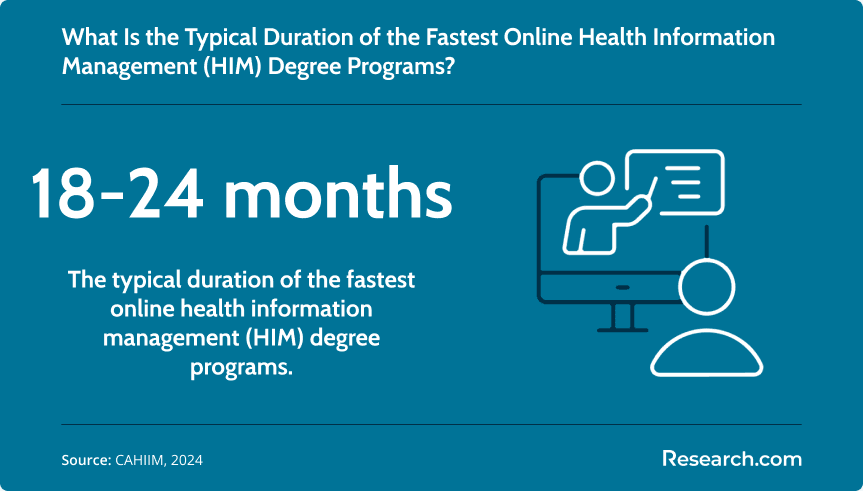
The fastest online HIM programs usually take 18 to 24 months for some accelerated associate degree routes and about two to three years for many accelerated bachelor’s programs. Students with a completed associate degree, RHIT certification, or substantial transfer credits may finish faster than students beginning with no college credit.
Program length depends on several factors: transfer credits, course load, whether classes run year-round, whether the program uses 5-week to 8-week terms, and whether the student studies full time or part time. Students in competency-based programs may also move faster if they can demonstrate mastery quickly.
Degree-completion programs are often the quickest bachelor’s-level option for students pursuing non clinical healthcare careers. These programs usually focus on upper-level HIM coursework and may be completed in as little as 12 to 18 months when the student transfers the right credits and can manage a full-time schedule.
| Student profile | Likely path | Estimated completion time | Best fit |
| No college credit | Accelerated associate or full bachelor’s pathway | 18 to 24 months for some associate routes; longer for a full bachelor’s | Students seeking entry-level coding, records, or technician roles first |
| Some college credit | Transfer-friendly online bachelor’s program | Often about two to three years | Students who want bachelor’s-level roles but need flexibility |
| Associate degree in HIM or related field | Degree-completion bachelor’s program | As little as 12 to 18 months in some cases | Students moving from technician-level work toward management or RHIA preparation |
| RHIT-certified professional | Advanced standing or bachelor’s completion track | Varies by accepted transfer credits | Working HIM professionals seeking promotion or broader responsibility |
How does the fastest online health information management degree program compare to an on-campus program?
Fast online HIM programs and campus-based HIM programs can cover similar academic content, but they differ in schedule, learning environment, support style, and pace. The right choice depends on whether you need flexibility or prefer a more structured classroom experience.
Many online HIM programs are built for accelerated completion, using shorter academic terms, year-round starts, and asynchronous coursework. Campus programs more often follow traditional semester calendars, which can be easier to plan but may extend the time to graduation.
| Factor | Fast online HIM degree | On-campus HIM degree |
| Schedule | Often asynchronous or partially self-paced | Usually scheduled classes at set times |
| Completion speed | May be faster through short terms, transfer credits, or competency-based progress | Often follows a standard semester sequence |
| Best for | Working adults, caregivers, transfer students, remote learners | Students who want face-to-face structure and campus resources |
| Support | Virtual advising, online tutoring, remote faculty communication | In-person advising, labs, study groups, and faculty access |
| Practicum or internship | May use local placements, remote projects, or virtual coordination | May be easier to coordinate through local healthcare partners |
Online programs can be a better fit if you need to keep working while studying. Campus programs may be better if you learn best through live discussion, direct accountability, and in-person support.
Healthcare education has increasingly moved toward flexible practicum models. For example, affordable online pediatric nurse practitioner graduate certificate programs often use hybrid or local placement structures to balance flexibility with required hands-on experiences.
What is the average cost of the fastest online health information management degree program?
The average cost of the fastest online health information management degree program typically ranges from $10,000 to $35,000 in total tuition, depending on degree level, institution type, transfer credits, fees, and whether the student qualifies for in-state or online tuition discounts.
Accelerated associate degree programs often cost between $10,000 and $20,000. These programs are commonly offered through community colleges or technical schools and may be completed in as little as 18 months. In-state public institutions may charge as low as $150–$300 per credit hour.
Fast-track bachelor’s programs and degree-completion options often range from $15,000 to $35,000. Private universities tend to cost more, while public institutions may be less expensive for in-state or online students. Transfer credits can make a major difference because each accepted credit reduces the number of courses you still need to pay for. This cost logic is similar to fast-track online economics degree programs, where accelerated formats can lower opportunity cost if students finish and return to the labor market sooner.
| Cost factor | Why it matters | Question to ask before enrolling |
| Tuition model | Per-credit tuition and flat-rate terms can produce very different total costs | Will I pay by credit, term, course, or subscription period? |
| Transfer credits | Accepted credits may reduce both tuition and time to completion | How many of my credits will apply directly to the HIM degree? |
| Fees | Technology, resource, graduation, and assessment fees can raise total cost | What is the full program cost beyond tuition? |
| Certification preparation | Some programs include exam review while others require extra materials | Does tuition include RHIT, RHIA, coding, or certification exam preparation? |
| Practicum requirements | Local placement or background checks may involve added costs | Are there site fees, travel costs, immunization requirements, or screening expenses? |
Additional expenses can include textbooks, online learning fees, software, coding manuals, background checks, professional association memberships, and certification exam preparation. The best way to compare programs is to request a full tuition-and-fee estimate based on your transfer-credit evaluation.
This chart provides valuable insight into the earning potential for medical and health services managers across various industries. It highlights how median annual wages can differ significantly depending on the specific healthcare setting where these vital professionals apply their expertise.
What are the financial aid options for students enrolling in the fastest online health information management degree program?
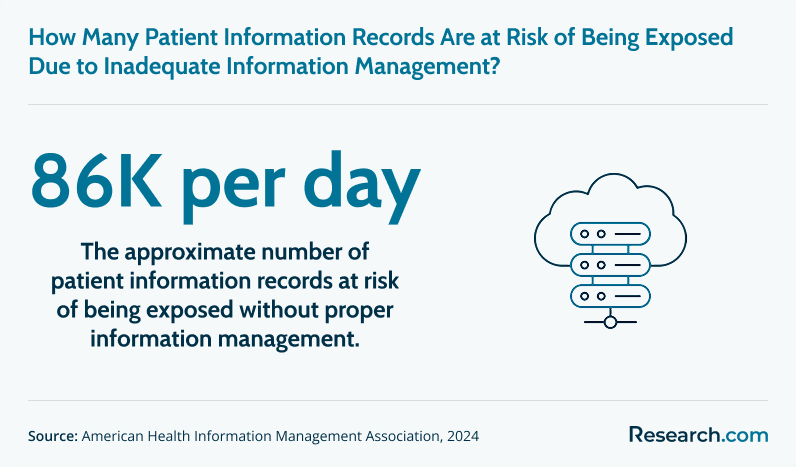
Healthcare organizations face growing pressure to protect patient data. The HHS Office for Civil Rights (OCR) has reported 5,558 incidents since 2009 that exposed nearly 438 million protected health information (PHI) records, an average of over 86,000 records daily. That risk reinforces the need for trained professionals who understand privacy, compliance, records governance, and data security.
Even when career demand is strong, cost can still be a barrier. Students in accredited online HIM programs may be able to reduce out-of-pocket costs through federal aid, state programs, scholarships, employer tuition support, and payment plans.
Students who later move into administrative leadership may also compare aid options for an accelerated MBA in healthcare management online, especially if their long-term goal is healthcare operations, executive leadership, or informatics management.
Federal Financial Aid
Students should complete the Free Application for Federal Student Aid (FAFSA) if the school participates in federal aid programs. Possible federal aid includes:
- Pell Grants: Need-based aid that does not need to be repaid.
- Federal Direct Loans: Subsidized and unsubsidized loans that must be repaid after school according to federal loan terms.
- Federal Work-Study: Part-time employment for eligible students, though availability may be more limited for fully online learners.
State Grants and Scholarships
Some states fund grants or scholarships for residents enrolled in approved online programs. Healthcare majors may qualify for targeted workforce awards, but eligibility rules vary by state and institution.
Institutional Scholarships and Discounts
Schools may offer aid directly to online HIM students, including:
- Merit-based scholarships for academic performance
- Transfer scholarships for students bringing prior college credit
- Military, veteran, first responder, or employer partnership discounts
Employer Tuition Assistance
Hospitals, insurers, clinics, and health systems may reimburse employees for job-related degrees. Before enrolling, ask your employer whether HIM, coding, informatics, compliance, or healthcare administration programs qualify.
Private Scholarships
Students can also search for scholarships from organizations such as:
- AHIMA Foundation (American Health Information Management Association)
- Healthcare associations and nonprofit organizations
- Community foundations, local hospitals, and private donors
Payment Plans
Many online programs allow students to split tuition into monthly installments. A payment plan does not reduce tuition, but it can make costs easier to manage without taking a larger loan upfront.
Students planning to combine healthcare knowledge with crisis response, public safety, or public administration may also explore funding routes for the fastest online master’s in emergency management programs.
What are the prerequisites for enrolling in the fastest online health information management degree program?
Admission requirements depend on whether the program is an associate degree, a full bachelor’s degree, or a bachelor’s degree-completion pathway. Accelerated does not always mean easier to enter; some of the fastest options are designed specifically for students who already have college credit or HIM credentials.
| Program type | Common prerequisites | Who it is best for |
| Accelerated associate degree | High school diploma or GED, transcripts, basic computer skills, reliable internet, possible placement tests | Students starting college or seeking entry-level HIM roles |
| Fast-track bachelor’s degree | High school diploma or GED, prior college coursework in some cases, minimum GPA, general education requirements, possible prerequisite courses | Students seeking broader HIM, informatics, compliance, or management opportunities |
| Degree-completion bachelor’s program | Associate degree in HIM or related field, transferable credits, minimum GPA, sometimes RHIT certification | Students who already have HIM foundations and want faster bachelor’s completion |
Associate Degree Programs
Accelerated online associate programs generally require:
- High school diploma or GED
- Minimum GPA requirement, often 2.0 or higher
- Official high school and prior college transcripts
- Basic computer skills and reliable internet access
- Possible math or English placement assessment
These programs are usually appropriate for students with limited college experience who want to qualify for entry-level health records, coding, or billing roles.
Bachelor’s Degree Programs
Fast-track bachelor’s programs may require:
- High school diploma or GED
- Prior college coursework or an associate degree, especially for completion programs
- Official transcripts showing completed general education courses such as English, math, and science
- Minimum GPA, usually 2.5 or higher
- Prerequisite coursework such as medical terminology, anatomy, or introductory health information systems in some programs
Students who want to combine HIM with broader management preparation may also review a fast-track organizational leadership bachelor's degree online, which focuses more directly on supervision, strategy, and team leadership.
Degree-Completion Programs
Completion programs usually require stronger prior preparation, such as:
- Completion of a CAHIIM-accredited associate degree
- A valid RHIT certification in some cases
- Transferable general education and foundational HIM credits
- Minimum GPA, typically 2.5 or above
What courses are typically in the fastest online health information management degree program?
Accelerated HIM degrees compress a practical healthcare data curriculum into a shorter format. While course titles differ by school, most programs include the following subjects:
- Health Information Management Principles: Introduces health records, data governance, documentation standards, and the role of HIM in healthcare organizations.
- Medical Terminology: Builds the vocabulary needed to interpret clinical documentation, diagnoses, procedures, and provider notes.
- Anatomy and Physiology: Gives students body-system knowledge that supports accurate coding and medical record interpretation.
- ICD and CPT Coding Systems: Covers ICD-10-CM, CPT, and HCPCS coding for diagnoses, procedures, billing, and reporting.
- Health Data Management: Focuses on organizing, maintaining, validating, and analyzing patient data for quality, compliance, and operational use.
- Healthcare Law and Ethics: Explains HIPAA, privacy rules, consent, confidentiality, legal health records, and ethical data handling.
- Electronic Health Records (EHR) Systems: Examines EHR design, use, implementation, security, workflow impact, and interoperability.
- Reimbursement and Revenue Cycle Management: Covers claims, payer rules, denials, documentation, insurance processes, and the financial path from patient encounter to reimbursement.
- Quality Management and Performance Improvement: Teaches students how to measure data quality, documentation accuracy, and process improvement in healthcare settings.
- Healthcare Statistics and Data Analytics: Introduces analysis methods used to support clinical, financial, and operational decisions. Students interested in deeper analytics training may also compare the shortest online bachelor's programs in analytics.
What types of specializations are available in the fastest online health information management degree programs?
Not every fast HIM program offers formal concentrations because accelerated curricula often leave limited room for electives. However, many bachelor’s programs let students focus through elective choices, projects, practicums, or embedded specialization courses.
Health Informatics
Health informatics focuses on using technology, systems, and data to improve healthcare delivery. Students interested in health informatics careers may study databases, clinical information systems, data visualization, interoperability, and decision support tools.
Medical Coding and Classification
This focus prepares students to assign standardized diagnosis and procedure codes for billing, reporting, and records management. It is useful for students who want coding roles or credentials such as CPC or CCS.
Data Analytics in Healthcare
This area emphasizes healthcare statistics, dashboards, predictive modeling, data interpretation, and quality measurement. It fits students who want to work as clinical data analysts, reporting analysts, or quality analysts.
Privacy and Security of Health Information
This specialization covers HIPAA compliance, privacy audits, breach prevention, cybersecurity basics, risk management, and legal standards for protected health information.
Revenue Cycle Management
Revenue cycle coursework focuses on insurance, billing workflows, claims management, payer policy, denials, and reimbursement strategy. It is useful for students who want roles in billing leadership or financial operations.
Project and Operations Management in Healthcare
This focus emphasizes leadership, process improvement, team coordination, strategic planning, and workflow redesign. Graduates who later want advanced leadership training may consider an accelerated online master's degree in organizational leadership.
What is the return on investment for an accelerated online HIM degree?
The ROI of an accelerated online HIM degree depends on how much you pay, how quickly you finish, whether you qualify for credentials, and how the degree affects your earnings. A shorter program can improve ROI if it helps you enter the workforce sooner, but speed alone is not enough. A low-cost program with weak accreditation or poor career support may be a poor investment.
To evaluate ROI, compare total tuition and fees against realistic entry-level salary expectations, transfer-credit savings, employer tuition assistance, certification eligibility, and long-term advancement potential. Students comparing healthcare data careers with broader business paths may also compare the degree against options such as the cheapest MBA programs, but the better choice depends on whether your career goal is HIM, health informatics, healthcare administration, or general management.
| ROI factor | Positive sign | Warning sign |
| Accreditation | Program clearly states relevant accreditation and credential pathways | School is vague about certification eligibility |
| Transfer credits | School provides a written transfer evaluation before enrollment | Admissions promises speed without reviewing transcripts |
| Total cost | Program discloses tuition, fees, books, and other expenses | Only per-credit tuition is advertised |
| Career support | Program offers practicum support, exam prep, resume help, and employer connections | Students must arrange everything independently |
| Credential preparation | Curriculum aligns with RHIT, RHIA, coding, privacy, or informatics goals | Program name sounds relevant but courses do not match career requirements |
What challenges should you consider before enrolling in an accelerated online HIM degree program?
Accelerated online HIM programs are convenient, but they can be demanding. Short terms mean assignments, readings, coding practice, exams, and projects arrive quickly. Students who fall behind may have less time to recover than they would in a traditional 16-week course.
The online format also requires self-direction. You may not have live lectures every week, and faculty feedback may not be immediate. Students need reliable technology, strong organization, comfort with learning platforms, and enough weekly study time to keep pace.
Before enrolling, compare the workload, support model, and learning style with other accelerated routes, such as the best value for money online EMBA programs, especially if your main goal is leadership rather than specialized healthcare data management.
Common mistakes to avoid
- Choosing only the fastest program: A short timeline is useful only if the degree meets your career and certification goals.
- Ignoring accreditation: Accreditation can affect credential eligibility, employer recognition, and transfer options.
- Comparing tuition without fees: Technology fees, resource kits, textbooks, coding manuals, and exam costs can change the real price.
- Assuming all credits transfer: General credits may transfer as electives but not reduce HIM major requirements.
- Underestimating weekly workload: Accelerated courses often require steady study several days per week.
- Skipping career outcome research: Ask about graduate placement, certification pass rates, practicum support, and employer relationships.
How do you choose the best among the fastest online health information management degree programs?
The best fast online HIM program is not always the shortest one. It is the program that gets you to your target role with the right accreditation, manageable cost, realistic schedule, and clear credential pathway.
1. Verify accreditation first
Confirm whether the program is CAHIIM-accredited when your goal involves RHIA or RHIT eligibility. Accreditation helps show that the curriculum meets recognized HIM education standards.
2. Match the format to your schedule
As you would when comparing the best online medical billing and coding schools, review the delivery model carefully. Look for:
- 5–8 week courses
- Year-round enrollment
- Degree-completion options
- Asynchronous, synchronous, hybrid, or competency-based formats
Students who want to move from HIM into information systems leadership can also review the shortest management information systems master's degree online as a possible next step after completing a bachelor’s degree.
3. Request a transfer-credit evaluation
If you have prior college credit, do not rely on general transfer estimates. Ask the school to show exactly which credits apply to general education, major requirements, electives, and remaining graduation requirements.
4. Compare total cost, not advertised tuition
Calculate tuition, fees, books, technology costs, exam preparation, background checks, and practicum-related expenses. Then compare your net cost after grants, scholarships, employer benefits, and transfer credits.
5. Review the curriculum against your career goal
A student aiming for medical coding needs different preparation than a student targeting informatics, privacy, data analytics, or management. Make sure the required courses and electives match your intended role.
6. Ask for career and certification outcomes
Request information about RHIA/RHIT exam support, internship placement, job placement, alumni roles, employer partners, and career services. Strong support can matter as much as program speed.
7. Read student feedback carefully
Look for comments about workload, faculty response time, online platform usability, advising quality, and whether accelerated pacing was manageable.
| Question to ask the school | Why it matters |
| Is the HIM program CAHIIM-accredited? | Accreditation may affect credential eligibility and employer confidence. |
| How many of my credits transfer into the major? | Major credits shorten completion more than elective credits. |
| What is the fastest realistic completion time for my transcript? | Advertised timelines may assume maximum transfer credits and full-time enrollment. |
| Are internships, practicums, or professional practice experiences required? | Placement requirements can affect scheduling and location flexibility. |
| What credentials does the curriculum prepare students for? | Certification alignment can affect job readiness. |
| What is the total program cost after fees? | Net cost is more useful than per-credit tuition. |
The following chart shows the primary sectors where medical and health services managers are employed. Understanding these top industries can guide aspiring professionals toward areas with the highest demand for their expertise.
How does an accelerated HIM degree compare to other accelerated online degree programs?
An accelerated HIM degree is more specialized than many fast online degrees because it combines healthcare data, coding, compliance, privacy, reimbursement, and information systems. That makes it different from broader programs in business, finance, analytics, or general administration.
For example, an accelerated online degree in finance may offer strong preparation for corporate finance, banking, budgeting, or financial analysis, while an HIM degree is built around healthcare documentation, regulatory requirements, coding systems, EHRs, and patient data governance.
| Program type | Main focus | Best for students who want |
| Accelerated HIM degree | Healthcare records, coding, privacy, compliance, data quality, EHR systems | Healthcare data, informatics, coding, compliance, or HIM management roles |
| Accelerated finance degree | Financial markets, accounting, investment, corporate finance, analysis | Business, banking, investment, or financial planning careers |
| Accelerated analytics degree | Data analysis, visualization, statistics, databases, decision support | Broader data roles across multiple industries |
| Accelerated healthcare management degree | Operations, leadership, policy, finance, and administration in healthcare | Healthcare administration roles that may not require deep HIM specialization |
What career paths are available for graduates of the fastest online health information management degree programs?
Graduates can pursue technical, administrative, analytical, compliance, and management roles. Entry-level opportunities are more common for associate degree graduates, while bachelor’s graduates may qualify for broader responsibilities, supervisory work, or credential pathways.
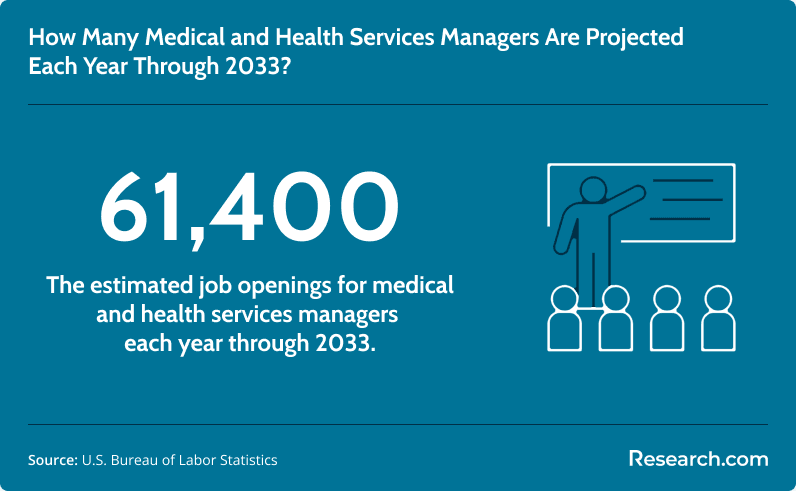
On average, approximately 61,400 job openings for medical and health services managers are anticipated each year over the next ten years. These openings are expected to come from both growth and replacement needs as workers retire or move into other occupations.
Health Information Manager
Health information managers supervise record systems, documentation workflows, data quality, privacy practices, and HIM staff. Some responsibilities overlap with risk and data protection work, although information security manager requirements are typically more focused on cybersecurity and IT leadership.
Medical Records Technician
Medical records technicians maintain electronic health records, organize documentation, support coding processes, and help ensure records are accurate and complete. This can be an entry-level path for associate degree graduates.
Medical Coder or Billing Specialist
Coders translate diagnoses, procedures, and services into standardized codes for billing, reporting, and reimbursement. Many pursue credentials such as CPC or CCS to strengthen employability.
Clinical Data Analyst
Clinical data analysts use healthcare data to identify trends, support reporting, measure quality, and inform operational or clinical decisions. These roles often require comfort with EHRs, spreadsheets, databases, and visualization tools.
Compliance Officer or HIPAA Privacy Officer
Compliance and privacy professionals help organizations follow HIPAA and other healthcare data requirements. This role can connect with broader public health careers when data privacy, reporting, and community health programs overlap.
Revenue Cycle Manager
Revenue cycle managers oversee claims, coding accuracy, billing workflows, denials, payer rules, and reimbursement processes to improve financial performance.
Health Informatics Specialist
Health informatics specialists help healthcare organizations improve EHR use, data workflows, reporting, interoperability, and clinical information systems.
Release of Information (ROI) Specialist
ROI specialists manage requests for patient records, verify authorization, protect privacy, and ensure health information is released legally and accurately.
Quality Improvement Analyst
Quality analysts use health data to measure outcomes, identify documentation problems, track performance indicators, and recommend process changes.
EHR Implementation Specialist
EHR implementation specialists help organizations configure systems, train staff, test workflows, and support transitions to new or upgraded health record platforms.
What is the job market like for graduates of the fastest online health information management degree program?
The job market for HIM graduates is supported by the continued use of electronic health records, growth in healthcare data, privacy and cybersecurity concerns, and the need for accurate coding and reimbursement. According to the U.S. Bureau of Labor Statistics (BLS), health information technologists and medical registrars are projected to grow around 16% from 2023 to 2033, faster than the national average of 4%.
Medical and health services managers are projected to grow by nearly 29% between 2023 and 2033, with roughly 61,000 job openings annually. These roles are broader than HIM, but HIM graduates with management experience, certifications, and strong data skills may be able to move toward administrative leadership over time.
Compensation also rises with responsibility. Entry-level health information technologists earn a median wage of around $67,310 annually. With experience, credentials, and leadership duties, graduates may pursue roles where health services manager salary ranges from $80,000 to $100,000 or more, depending on specialization and experience.
For director-level, managerial, or healthcare administration informatics roles, median salaries exceed $110,000, with top earners making well over $150,000 annually. These outcomes are not guaranteed, so students should treat salary data as a benchmark and research local employers before enrolling.
Here’s What Graduates of the Fastest Online Health Information Management Have to Say About Their Degree
- My accelerated online HIM program helped me keep working while finishing school. The asynchronous format made it possible to study around family responsibilities, and graduating in just under two years helped me move into a coding role sooner. Jessica
- I changed careers and needed a program that was practical, not theoretical. The coursework in coding, compliance, and health data systems gave me the foundation I needed to begin working in a hospital compliance department. Marcus
- Online learning allowed me to study from home while caring for my children. Instructor support and peer interaction made the program feel manageable, and finishing faster helped me qualify for a remote position with a major health insurer. Lena
Can an Accelerated HIM Degree Open Doors to Entrepreneurial Ventures?
An accelerated HIM degree can support entrepreneurial work for graduates who combine healthcare data knowledge with business, consulting, software, or compliance expertise. Possible paths include medical coding consulting, privacy audit services, documentation improvement consulting, EHR workflow support, revenue cycle advising, or health data management services.
Entrepreneurship usually requires more than a degree. Graduates need business planning, legal knowledge, client development, pricing strategy, professional liability protection, and a clear understanding of healthcare regulations. Students interested in independent ventures can compare HIM-based business opportunities with broader jobs with entrepreneurship degree to decide whether they need additional business training.
References
- Access. (n.d.). Access releases findings from its 2024 State of the Records and Information Management Industry research, revealing key opportunities and trends.
- AHIMA. (2024). AHIMA24 to address current and emerging cybersecurity threats in healthcare.
- Bureau of Labor Statistics, U.S. Department of Labor. (n.d.). Occupational Outlook Handbook: Medical and Health Services Managers.
- Centers for Medicare & Medicaid Services. (n.d.). E-Health: Records.
- HealthIT.gov. (n.d.). Data Briefs.
- HIMSS. (2023). HIMSS 2023 NI Workforce Survey Salary Resource Guide.
- HIMSS. (n.d.). Nursing Informatics Workforce Salary and Benefits Report.
- NACCHO. (2024). 2024 Public Health Informatics Profile Report.
- University of Washington, Center for Health Workforce Studies. (2023). Rapid Review & Rapid Response (RRR) on Health Informatics.
Key Insights
- The fastest online HIM degrees are best for students who want healthcare data, coding, informatics, compliance, or records management careers without direct patient care.
- Completion time depends heavily on transfer credits. Students with an associate HIM degree, RHIT certification, or prior college coursework usually have the strongest chance of finishing quickly.
- CAHIIM accreditation is one of the most important factors to verify because it can affect RHIT or RHIA eligibility and employer confidence.
- Program cost should be measured by total net cost, not only tuition per credit. Fees, books, coding resources, practicum expenses, and certification preparation can change the real price.
- Accelerated online study requires discipline. Short courses can be efficient, but they leave less room for missed deadlines or inconsistent study habits.
- The strongest programs combine speed with practical career support, including credential preparation, practicum guidance, transfer-credit planning, and transparent graduate outcomes.
- Salary and job growth data show strong opportunity in health information and healthcare management, but individual outcomes depend on location, credentials, experience, employer type, and role level.
Other Things You Should Know About the Fastest Online Health Information Management Degree Programs
Yes, prerequisites typically include a high school diploma or equivalent, and some programs may require foundational courses in medical terminology or healthcare basics. Always check the specific requirements of each 2027 program for the most accurate details.
The program should hold accreditation from the Commission on Accreditation for Health Informatics and Information Management Education, or CAHIIM. CAHIIM accreditation is the standard most employers and credentialing pathways expect for Health Information Management programs, especially if you plan to pursue RHIA eligibility after graduation.