
2027 Best Schools for Ultrasound Technician

Co-Founder and Chief Data Scientist
Choosing an ultrasound technician school is not just about finding a nearby program or the lowest tuition. The school you choose can affect your clinical training, certification eligibility, job options, and long-term earning potential. This matters because diagnostic medical sonography is a hands-on healthcare field: employers want graduates who can produce accurate images, work safely with patients, and meet credentialing expectations.
This guide is for students comparing ultrasound technician programs, career changers entering allied health, and current healthcare workers considering sonography as a specialization. You will learn what strong programs include, how online and campus formats differ, what costs to expect, which schools stand out, and how to avoid choosing a program that may not prepare you for certification or employment.
Quick answer: What should you look for in the best ultrasound technician schools?
The best schools for ultrasound technicians are accredited, provide supervised clinical training, prepare students for certification exams such as ARDMS, and offer instruction in sonography physics, anatomy, patient care, and imaging specialties. A strong program should also publish outcomes such as credentialing pass rates, job placement rates, and clinical placement support. According to the U.S. Bureau of Labor Statistics, diagnostic medical sonographers earn a median annual salary of around $78,210, and employment in this field is projected to grow 10% from 2022 to 2032.
What are the benefits of earning a degree from a strong ultrasound technician program?
- A reputable ultrasound technician program can prepare graduates for diagnostic imaging roles in hospitals, outpatient centers, physician offices, diagnostic laboratories, and specialty clinics.
- Graduates may pursue roles such as diagnostic medical sonographer, cardiovascular technologist, vascular sonographer, cardiac sonographer, or radiologic imaging professional, depending on their training and credentials.
- The median annual salary for diagnostic medical sonographers is around $78,210, according to the U.S. Bureau of Labor Statistics, with higher pay possible for experienced professionals and those in specialized areas such as cardiovascular or neurosonography.
- Online or hybrid study can help working adults complete classroom requirements with more flexibility, although accredited ultrasound programs still require in-person labs or supervised clinical experience.
What can I expect from the best schools for ultrasound technicians?
High-quality ultrasound technician programs combine classroom instruction, lab practice, and clinical rotations. Students learn how ultrasound equipment works, how to position patients, how to capture diagnostic images, and how to communicate findings appropriately within a healthcare team. Because sonography is highly practical, the clinical component is one of the most important parts of the program.
| Program feature | What it means for students | Why it matters |
| Core coursework | Human anatomy, ultrasound physics, pathology, patient care, medical imaging techniques, and sonographic procedures | Builds the technical and clinical foundation needed for safe imaging practice |
| Clinical training | Supervised practice in hospitals, diagnostic labs, or outpatient imaging centers | Helps students gain real-world scanning experience before entering the workforce |
| Program length | Most associate programs take 18 to 24 months; bachelor’s programs usually take around four years | Determines how quickly you can enter the field and how much education you complete before graduation |
| Typical cost range | Associate degrees may cost between $5,000 and $30,000 per year; bachelor’s degrees at private institutions may reach $40,000+ | Helps students compare tuition against financial aid, expected earnings, and credentialing outcomes |
| Certification preparation | Graduates often pursue credentials through organizations such as the American Registry for Diagnostic Medical Sonography | Certification can improve credibility and may be expected by many employers |
Where can I work with a degree from the best schools for ultrasound technicians?
Graduates of ultrasound technician programs commonly work in settings where diagnostic imaging supports medical decision-making. Hospitals, outpatient care centers, diagnostic laboratories, and physician offices are among the most common employers. Sonographers may also work in specialized practices focused on obstetrics, cardiology, vascular medicine, fertility, breast imaging, musculoskeletal care, or emergency medicine.
Career options are not limited to direct patient scanning. Experienced sonographers may move into education, clinical training, research, department supervision, equipment applications, medical device sales, or consulting. Teaching hospitals and universities may hire experienced professionals to train students, while medical equipment companies may employ sonographers who understand how imaging tools are used in clinical settings.
How much can I make with a degree from the best schools for ultrasound technicians?
According to the U.S. Bureau of Labor Statistics, the median annual salary for diagnostic medical sonographers is around $78,210. Entry-level roles may start closer to $60,000 per year, while experienced professionals and those with specialized credentials in areas such as cardiac, vascular, or musculoskeletal sonography can earn over $100,000 annually, particularly in high-demand locations.
Pay varies by employer type, region, experience, and specialization. Outpatient care centers tend to report higher average salaries, around $100,000 per year, while hospitals and physician offices may offer slightly lower wages. States such as California, Hawaii, and Washington often exceed $90,000 per year because of labor demand and cost-of-living differences. Advanced certifications, lead sonographer roles, and supervisory responsibilities can also increase earning potential.
- Best Schools for Ultrasound Technician for 2027
- How long does ultrasound technician training take?
- Online vs. on-campus ultrasound technician programs
- Average cost of ultrasound technician programs
- Financial aid options for ultrasound technician students
- Admission prerequisites for ultrasound technician programs
- Common ultrasound technician courses
- Can supplemental certifications enhance my ultrasound technician career?
- What is the return on investment for an ultrasound technician degree?
- Ultrasound technician specializations
- How to choose the best ultrasound technician school
- Healthcare administration training for advancement
- Common challenges in ultrasound technician programs
- Complementary degrees for sonography careers
- Career paths for ultrasound technician graduates
- Interdisciplinary study in ultrasound education
- Regulatory compliance in sonography programs
- Continuing education and career growth
- Emerging technologies in ultrasound training
- Accelerated ultrasound technician programs
- Pitfalls to avoid when choosing a program
- Job market for ultrasound technician graduates
Best Schools for Ultrasound Technician for 2027
How do we rank schools?
Research.com evaluates ultrasound technician schools by reviewing factors that matter to students making a real education investment. These include accreditation, program quality, affordability, graduation outcomes, job placement information, and the strength of clinical preparation. Rankings should be used as a starting point, not as the only basis for choosing a program.
Our research process draws on data from trusted education sources, including:
- The IPEDS database from the National Center for Education Statistics
- Peterson’s database, including distance learning data
- The U.S. Department of Education’s College Scorecard database
- The National Center for Education Statistics
You can review the broader ranking framework on our methodology page.
1. Oregon Institute of Technology – Bachelor of Science in Diagnostic Medical Sonography
Oregon Tech offers a Bachelor of Science in Diagnostic Medical Sonography with study options in abdominal, obstetric, and vascular sonography. Students complete academic coursework and hands-on preparation, including a for-credit senior-year externship. The program reports a 100% pass rate on American Registry for Diagnostic Medical Sonography exams over the past decade and 97% graduate employment shortly after completion.
- Program length: 4 years
- Tracks/concentrations: Abdominal, Obstetric, Vascular Sonography
- Cost per year: Approximately $14,132 (in-state); $35,177 (out-of-state)
- Required credits to graduate: Varies by specialization
- Accreditation: Commission on Accreditation of Allied Health Education Programs (CAAHEP)
2. Seattle University – Bachelor of Science in Diagnostic Ultrasound
Seattle University offers a Bachelor of Science in Diagnostic Ultrasound that integrates classroom learning with clinical experience. Students may focus on cardiac, general, or vascular sonography and complete internships through medical centers in the Seattle area. The program reports a 98% credential rate and an 86% job placement rate as of 2023.
- Program length: 4 years
- Tracks/concentrations: Cardiac, General, Vascular Sonography
- Cost per year: Approximately $55,620
- Required credits to graduate: Varies by track
- Accreditation: CAAHEP
3. Rochester Institute of Technology – Bachelor of Science in Diagnostic Medical Sonography
RIT provides a Bachelor of Science in Diagnostic Medical Sonography with training in an ultrasound scanning suite and clinical education through affiliated hospitals. Students complete a one-year clinical internship and may also access co-op opportunities. Graduates report a 100% job placement rate and a 96% pass rate on national exams.
- Program length: 4 years
- Tracks/concentrations: General Sonography
- Cost per year: Approximately $58,324
- Required credits to graduate: Varies
- Accreditation: CAAHEP
4. University of Oklahoma Health Sciences Center – Bachelor of Science in Medical Imaging and Radiation Sciences, Sonography Track
The University of Oklahoma Health Sciences Center offers a Bachelor of Science in Medical Imaging and Radiation Sciences with a Sonography track. The curriculum includes training in general, vascular, and cardiac ultrasound and uses clinical rotations to connect classroom study with patient-care practice.
- Program length: 4 years
- Tracks/concentrations: General, Vascular, Cardiac Sonography
- Cost per year: Approximately $159.60 per credit hour
- Required credits to graduate: Varies
- Accreditation: CAAHEP
5. University of Wisconsin-Milwaukee – Bachelor of Science in Biomedical Sciences: Diagnostic Medical Sonography
UW-Milwaukee offers a Bachelor of Science in Biomedical Sciences with a Diagnostic Medical Sonography sub-major. The program emphasizes academic preparation and clinical education, and it reports that 100% of graduates pass licensure exams and secure related employment within six months of graduation.
- Program length: 4 years
- Tracks/concentrations: General Sonography
- Cost per year: Approximately $728 per credit hour
- Required credits to graduate: Varies
- Accreditation: CAAHEP
6. Ohio State University – Bachelor of Science in Radiologic Sciences
Ohio State University offers a Bachelor of Science in Radiologic Sciences with a Sonography specialization. Students study sonographic principles, clinical patient care, and imaging practice while completing clinical rotations in healthcare environments. The program reports a 100% job placement rate for graduates since 2010.
- Program length: Approximately 2.5 years (five full-time semesters)
- Tracks/concentrations: General Sonography
- Cost per year: Approximately $12,859 (in-state); $38,365 (out-of-state)
- Required credits to graduate: Varies
- Accreditation: Commission on Accreditation of Allied Health Education Programs (CAAHEP)
7. University of Iowa – Bachelor of Science in Radiation Sciences
The University of Iowa offers a Bachelor of Science in Radiation Sciences with a Diagnostic Medical Sonography track. Students build knowledge in anatomy, sonographic imaging, and patient care and complete clinical rotations at affiliated medical centers. The program reports a 100% pass rate on national certification exams and a 100% job placement rate within six months of graduation.
- Program length: 3 years (after prerequisites)
- Tracks/concentrations: General and Cardiac Sonography
- Cost per year: Approximately $11,148 (in-state); $33,112 (out-of-state)
- Required credits to graduate: Varies
- Accreditation: CAAHEP
8. University of Missouri – Bachelor of Health Science in Clinical and Diagnostic Sciences
The University of Missouri offers a Bachelor of Health Science in Clinical and Diagnostic Sciences with an emphasis in Diagnostic Medical Ultrasound. Students study imaging, patient care, and medical ethics while completing clinical rotations across multiple healthcare facilities. The program reports a 96% pass rate on national certification exams and a 100% job placement rate for graduates.
- Program length: 4 years
- Tracks/concentrations: General, Vascular, and Cardiac Sonography
- Cost per year: Approximately $15,922 (in-state); $36,122 (out-of-state)
- Required credits to graduate: Varies
- Accreditation: CAAHEP
9. Fort Hays State University – Bachelor of Science in Medical Diagnostic Imaging
Fort Hays State University offers a Bachelor of Science in Medical Diagnostic Imaging with a concentration in Diagnostic Medical Sonography. This program is intended for professionals who already completed a radiologic technology degree and want advanced imaging education. Coursework includes computed tomography, bone densitometry, mammography, MRI, and sonography, and the program is delivered fully online for working professionals.
- Program length: Varies based on prior credits
- Tracks/concentrations: Diagnostic Medical Sonography
- Cost per year: Approximately $5,280
- Required credits to graduate: Varies
- Accreditation: CAAHEP
10. Washburn University – Bachelor of Health Science in Diagnostic Medical Sonography
Washburn University offers a Bachelor of Health Science in Diagnostic Medical Sonography with general, cardiac, and vascular sonography options. Coursework is online, while clinical requirements are completed at approved locations near the student when available. Graduates are eligible to sit for American Registry for Diagnostic Medical Sonography (ARDMS) or Cardiovascular Credentialing International (CCI) credential examinations.
- Program length: Varies based on prior credits
- Tracks/concentrations: General, Cardiac, Vascular Sonography
- Cost per year: Approximately $10,000
- Required credits to graduate: Varies
- Accreditation: CAAHEP
How long does it take to complete a degree from the best schools for ultrasound technicians?
The timeline depends on your prior education, program level, clinical requirements, and whether you attend full time or part time. Most students enter the profession through an associate degree, while bachelor’s and certificate pathways serve different goals.
| Pathway | Typical length | Best for | Key trade-off |
| Certificate program | 12-18 months | Applicants who already hold a healthcare-related degree or credential | Faster, but usually not designed for students with no healthcare background |
| Associate degree in diagnostic medical sonography | 18 to 24 months | Students seeking a common entry-level route into sonography | Shorter than a bachelor’s degree but may provide fewer general education and advancement options |
| Bachelor’s degree in diagnostic medical sonography | 4 years | Students who want broader training, specialization options, or future leadership potential | Longer and often more expensive, but may offer deeper preparation |
| Online or hybrid accelerated program | May be as little as 16 months for qualified students | Students with prerequisites completed or prior healthcare experience | Flexible coursework, but clinical training still requires in-person participation |
Associate degree in diagnostic medical sonography
An associate degree is the most common entry-level option and generally takes about 18 to 24 months. It includes classroom instruction and supervised clinical work. Students comparing faster pathways may also want to review accelerated associates degree online options, while confirming that any sonography program still includes approved hands-on clinical experience.
Bachelor’s degree in diagnostic medical sonography
A bachelor’s program usually takes four years and may include advanced imaging topics, research, leadership preparation, and specialization in areas such as vascular, cardiac, or musculoskeletal imaging. This route may appeal to students who want a broader academic foundation or plan to move into supervisory or educational roles later.
Certificate programs
Certificate programs typically serve people who already have healthcare training, such as radiologic technologists, nurses, or other allied health professionals. These programs can take one year to 18 months and focus directly on sonography knowledge and clinical skills.
How does an online degree from the best schools for ultrasound technicians compare to an on-campus program?
Online ultrasound technician programs can be useful for students who need flexible coursework, but sonography cannot be learned fully online. Every credible program must include hands-on scanning practice and clinical supervision. The main difference is how the didactic coursework, labs, clinical placement, and student support are delivered.
| Factor | Online or hybrid program | On-campus program |
| Course delivery | Lecture-based courses may be completed remotely | Courses are usually held in person on a fixed schedule |
| Clinical training | Completed at approved local or regional sites; some students may need to help secure placement | Often coordinated through school-affiliated hospitals, labs, or clinics |
| Lab access | May require scheduled campus visits or partner-site labs | Usually includes direct access to scanning labs and faculty supervision |
| Flexibility | Better for working adults or students with family responsibilities | Better for students who want structure and regular in-person instruction |
| Cost considerations | May reduce commuting, relocation, or housing costs | May include more campus-based fees but can provide immediate access to equipment and faculty |
Hands-on training and clinical experience
Clinical practice is nonnegotiable in sonography education. Online programs usually address this through local clinical placements, while campus programs may have established relationships with nearby hospitals and imaging centers. Before enrolling, ask who arranges clinical sites, how far students may need to travel, and what happens if a placement falls through.
Flexibility and schedule control
Online coursework can make it easier to balance school with work or family responsibilities. However, clinical hours are typically scheduled around healthcare facilities, not student preference. Students considering flexible healthcare degrees can also compare broader bachelor degree programs to understand how accelerated formats differ across fields.
Accreditation and certification preparation
Whether online or campus-based, the program should prepare students for recognized certification pathways and should clearly state its accreditation status. CAAHEP and JRC-DMS recognition can affect certification eligibility and employer confidence.
What is the average cost of a degree from the best schools for ultrasound technicians?
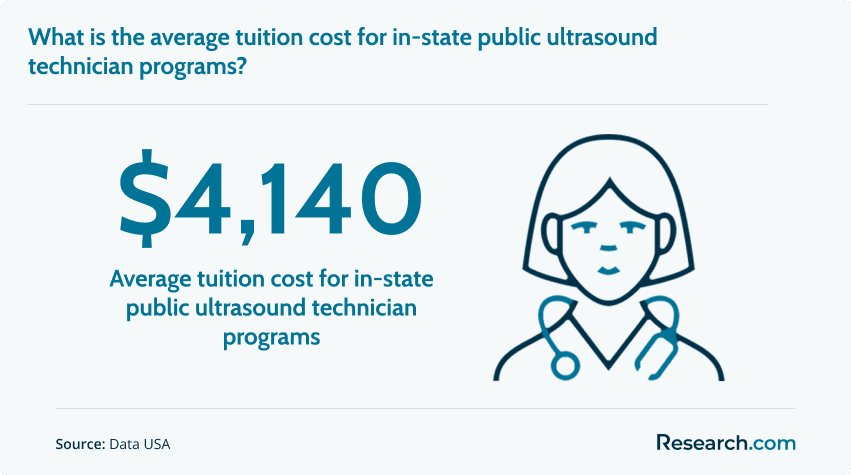
Ultrasound technician program costs vary widely by credential level, school type, residency status, and clinical expenses. Tuition is only part of the total price. Students should also budget for books, uniforms, background checks, immunizations, lab fees, travel to clinical sites, exam fees, and lost income if the program requires full-time attendance.
| Program type | Typical cost range | Example from the original data | Best-fit student |
| Certificate program | $5,000 to $25,000 | Mercy Medical Center in Canton, OH, offers a one-year certificate for $13,000 | Healthcare workers adding sonography training |
| Associate degree | $6,000 to $40,000 | Bunker Hill Community College in Boston offers a two-year associate’s degree for $6,800 for residents and $16,600 for non-residents | Students seeking a common entry-level route |
| Bachelor’s degree | $30,000 to over $48,000 | Rush University in Chicago offers a bachelor’s in vascular ultrasound for $44,640 over seven academic quarters | Students seeking broader education or advanced options |
Top-ranked programs may fall toward the higher end of these ranges, especially at private institutions or out-of-state public universities. Before choosing a school, request a full cost-of-attendance estimate and ask whether clinical placement, certification exam fees, and required supplies are included.
What are the financial aid options for students enrolling in a degree program from the best schools for ultrasound technicians?
Students can use several types of financial aid to reduce out-of-pocket costs, but eligibility depends on the school, program length, enrollment status, and accreditation. Always confirm that the program participates in federal aid if you plan to use FAFSA-based funding.
Federal financial aid
The Free Application for Federal Student Aid is usually the first step for students seeking federal support. Eligible students may qualify for:
- Pell Grants of up to $7,395 per year: Need-based aid that does not have to be repaid.
- Federal Work-Study: Part-time employment for students who demonstrate financial need.
- Subsidized and unsubsidized federal loans: Student loans with federal repayment protections and structured repayment options.
State and institutional aid
Some states provide grants or scholarships for healthcare workforce training, and colleges may offer merit-based or need-based awards. Students comparing allied health pathways may also look at related healthcare education options, such as the best online nutrition programs, to understand differences in cost, modality, and career outcomes.
Scholarships and employer support
Professional organizations and healthcare employers may offer targeted support for sonography students. Examples include:
- Society of Diagnostic Medical Sonography Foundation Scholarships
- American Society of Echocardiography Scholarships
- Ultrasound Schools Info Scholarship
Hospitals, imaging centers, and healthcare systems may also provide tuition reimbursement for employees pursuing ultrasound training. Military personnel and veterans may be able to use GI Bill benefits for eligible programs.
Private loans and payment plans
Private loans can fill funding gaps, but they may not offer the same borrower protections as federal loans. Some schools also provide tuition payment plans that spread costs across the term. Compare total repayment cost, interest, fees, and job placement outcomes before borrowing.
What are the prerequisites for enrolling in a degree program from the best schools for ultrasound technicians?
Admission requirements differ by school and program level. Competitive programs often require both academic preparation and evidence that the applicant understands the physical, technical, and patient-facing nature of sonography work.
Educational requirements
Most certificate, associate, and bachelor’s programs require a high school diploma or GED. Some bachelor’s or certificate programs may require prior college coursework, an associate degree, or healthcare training. Students comparing bridge-style healthcare pathways can review examples such as paramedic to RN bridge programs to understand how prior healthcare education may affect admissions in some fields.
Common prerequisite courses
- Biology and anatomy: Helps students understand the organs, tissues, and systems being imaged.
- Physics: Introduces concepts behind ultrasound waves, Doppler imaging, and equipment operation.
- Mathematics, usually algebra or higher: Supports measurement, dosage-related calculations, and technical problem-solving.
- Medical terminology: Builds the vocabulary needed to read orders, communicate with clinicians, and document studies.
GPA, testing, and application materials
Many programs require a minimum GPA, often in the 2.5–3.0 range. Some may request SAT or ACT scores, although many schools are test-optional. Applicants may also need recommendation letters, a personal statement, an interview, a background check, immunization records, and proof of physical ability to complete clinical duties.
Healthcare experience
Volunteer work, job shadowing, or prior healthcare employment may strengthen an application, especially for competitive programs. Schools may value applicants who understand patient care, confidentiality, infection control, and the demands of clinical environments.
Special requirements for online students
Online students should ask whether they must identify their own clinical site before enrolling. Some programs also require in-person labs, weekend intensives, or travel to campus.
The chart below shows the educational backgrounds commonly held by diagnostic medical sonographers and can help prospective students compare entry routes.
What courses are typically in a degree program from the best schools for ultrasound technicians?
Ultrasound technician programs usually combine general education, imaging science, specialty sonography, and clinical training. Course names vary, but the core skill areas are similar across accredited programs.
- Introduction to sonography: Covers the profession, patient interaction, ethics, safety, and basic imaging concepts.
- Ultrasound physics and instrumentation: Explains sound wave behavior, image optimization, Doppler techniques, and equipment controls.
- Abdominal sonography: Focuses on organs such as the liver, kidneys, pancreas, spleen, and gallbladder.
- Obstetric and gynecologic sonography: Covers fetal development, pregnancy imaging, and evaluation of the female reproductive system.
- Vascular sonography: Teaches blood vessel imaging, Doppler assessment, and circulatory evaluation.
- Cardiac sonography or echocardiography: Introduces heart imaging, valve assessment, and blood flow evaluation.
- Clinical practicum: Places students in supervised healthcare settings where they practice scanning, patient care, and professional documentation.
Can supplemental certifications enhance my ultrasound technician career?
Additional credentials can help sonographers broaden their professional value, especially when they support a clear career goal. A sonographer who wants to move toward department operations, billing workflows, or revenue-cycle coordination may benefit from administrative training. For example, a medical billing and coding certification online can complement clinical imaging experience by improving understanding of coding, documentation, and reimbursement processes.
What is the return on investment for an ultrasound technician degree?
ROI depends on tuition, time out of the workforce, financial aid, certification success, and local job opportunities. A lower-cost program is not automatically the best choice if it lacks strong clinical placement or credentialing preparation. Likewise, a higher-cost program should justify its price through accreditation, outcomes, facilities, faculty support, and employer connections.
Students should compare total program cost with expected earnings, graduation timeline, certification pass rates, and placement outcomes. Comparing sonography with adjacent healthcare options, such as medical assistant certification cost, can also clarify whether the extra time and tuition align with your career and income goals.
What types of specializations are available in a degree program from the best schools for ultrasound technicians?
Specialization allows students to focus on a particular type of imaging, patient population, or body system. The right specialty depends on your interests, local employer demand, and credentialing goals.
| Specialization | Primary focus | Common work settings |
| Abdominal sonography | Organs such as the liver, kidneys, pancreas, spleen, and gallbladder | Hospitals, imaging centers, outpatient clinics |
| Obstetric and gynecologic sonography | Female reproductive system and fetal development | OB/GYN clinics, maternity hospitals, fertility centers |
| Cardiac sonography | Heart structure, valve function, and blood flow | Hospitals, cardiology practices, cardiac labs |
| Vascular sonography | Blood vessels, circulation, and Doppler assessment | Vascular labs, hospitals, diagnostic centers |
| Musculoskeletal sonography | Muscles, tendons, ligaments, and joints | Orthopedic clinics, sports medicine, imaging centers |
| Breast sonography | Breast tissue imaging used in screening and diagnostic follow-up | Women’s health centers, breast imaging clinics, hospitals |
The chart below highlights where cardiovascular technologists and technicians are most commonly employed, which can help students evaluate specialty-related job settings.
How to choose the best schools for ultrasound technicians?
The best school for one student may not be the best school for another. Your decision should balance accreditation, clinical training, cost, schedule, location, specialization, certification preparation, and support services.
Use this checklist before applying
- Verify accreditation: Look for recognition by CAAHEP or JRC-DMS when applicable, and confirm how accreditation affects certification eligibility.
- Ask about clinical placement: Find out whether the school assigns clinical sites or expects students to locate their own.
- Review outcomes: Request credentialing pass rates, graduation rates, and job placement data.
- Compare total cost: Include tuition, fees, books, uniforms, lab requirements, background checks, travel, and certification exams.
- Match the format to your life: Online coursework may help with flexibility, but clinical hours may still be fixed and in person.
- Check specialty options: Choose a program that supports your interests in general, cardiac, vascular, OB/GYN, pediatric, or musculoskeletal sonography.
- Evaluate career support: Strong programs often offer resume support, interview preparation, employer connections, and clinical networking.
Questions to ask admissions advisors
- Is the program accredited, and by which organization?
- Which certification exams are graduates eligible to take?
- Who arranges clinical rotations, and where are they located?
- How many clinical hours are required?
- What are the most recent certification pass rates and job placement rates?
- What happens if a student fails a clinical competency or certification exam?
- Are there extra costs for labs, travel, uniforms, background checks, or exam fees?
Should ultrasound technicians invest in healthcare administration training for career advancement?
Healthcare administration training can be useful for sonographers who want to move beyond direct scanning into lead, supervisory, scheduling, compliance, or imaging department management roles. Sonography programs focus primarily on clinical competence, so they may not cover budgeting, staffing, operations, finance, or strategic planning in depth.
If your long-term goal includes department leadership, practice management, or healthcare operations, consider targeted coursework in administration. You can also explore related advancement paths through healthcare administration highest paying jobs to understand how management roles differ from clinical imaging roles.
What common challenges do ultrasound technician students face?
Ultrasound technician students often face a demanding mix of science coursework, technical imaging practice, patient care expectations, and clinical scheduling. The transition from classroom learning to scanning real patients can be stressful because students must learn image quality, anatomy recognition, equipment use, and professional communication at the same time.
Common challenges include heavy study loads, limited clinical site availability, physical strain from scanning, test anxiety before certification exams, and adjusting to fast-paced healthcare environments. Students should look for programs with strong faculty access, tutoring, lab practice time, clinical mentoring, and credentialing preparation. Comparing programs listed among the best colleges for ultrasound technician can help students identify schools with stronger support structures.
Can complementary degree programs enhance an ultrasound technician's career?
Complementary degrees can be helpful when they support a specific professional direction. For example, a sonographer interested in population health, prevention, research, or healthcare policy may benefit from public health education. A sonographer interested in leadership may choose healthcare administration instead. The key is to avoid adding degrees without a clear career purpose.
Professionals who want broader public health knowledge may compare flexible options such as the most affordable online MPH. This type of education may complement sonography for professionals aiming at roles that connect imaging, prevention, community health, and healthcare systems.
What career paths are available for graduates of the best schools for ultrasound technicians?
Graduates can work in several sonography and imaging-related roles. The exact path depends on clinical training, certification, specialty area, employer needs, and experience.
| Career path | What the role does | Typical settings |
| Diagnostic medical sonographer | Performs ultrasound exams to help evaluate organs, tissues, and medical conditions | Hospitals, imaging centers, clinics |
| Cardiac sonographer | Uses echocardiography to assess heart function, valves, and blood flow | Hospitals, cardiology clinics, private practices |
| Vascular sonographer | Images blood vessels to identify circulation issues, blockages, or vascular abnormalities | Vascular labs, hospitals, diagnostic centers |
| Obstetric and gynecologic sonographer | Images fetal development and the female reproductive system | OB/GYN clinics, maternity hospitals, fertility centers |
| Pediatric or neurosonographer | Performs specialized imaging for children, infants, or nervous system evaluation | Children’s hospitals, NICUs, neurology clinics |
| Breast sonographer | Images breast tissue for diagnostic follow-up and screening support | Women’s health clinics, breast imaging centers |
| Imaging supervisor or educator | Oversees department workflow or trains future sonographers | Hospitals, colleges, universities, health systems |
| Research or travel sonographer | Supports clinical studies or fills short-term staffing needs in different locations | Research facilities, hospitals, imaging centers |
The chart below shows states with the highest employment levels for diagnostic medical sonographers, which can help students compare regional opportunity.
How can interdisciplinary studies enrich ultrasound technician programs?
Interdisciplinary study can strengthen a sonographer’s ability to understand anatomy, physiology, disease processes, and research. Coursework in biology, anatomy, biomedical science, ethics, communication, and data interpretation can support better clinical reasoning and patient interaction.
Students who want deeper science preparation may consider related academic options such as an online degree biology. This can be useful for students who plan to pursue research, advanced healthcare education, or teaching, but it should not replace accredited sonography-specific clinical training.
How do best schools integrate regulatory compliance into ultrasound technician education?
Strong ultrasound technician programs teach students that imaging is governed by safety standards, patient privacy requirements, ethical expectations, documentation rules, and professional scope of practice. Compliance training may appear in courses on patient care, clinical procedures, medical law, ethics, and healthcare operations.
Students interested in the operational side of compliance may also compare programs such as a healthcare administration degree online. Administrative coursework can help future leaders understand quality improvement, regulatory oversight, and healthcare systems management.
How do the best schools support continuing education and career advancement?
Ultrasound technology, credentialing expectations, and clinical protocols can change over time, so continuing education is part of a sustainable sonography career. Strong schools support graduates through alumni resources, career advising, certification guidance, workshops, professional networking, and pathways into advanced specialties.
Students who need flexible training formats can explore an online ultrasound tech school, while confirming clinical placement requirements, accreditation, and certification eligibility before enrolling.
How do emerging technologies enhance ultrasound technician education?
Modern sonography education increasingly uses simulation labs, digital case libraries, interactive imaging platforms, and structured feedback tools. These resources let students practice image acquisition, patient positioning, and interpretation skills before working with patients in clinical settings.
Technology is helpful, but it does not remove the need for supervised clinical practice. Students should prioritize programs that combine updated equipment, simulation, faculty feedback, and real patient-care experience. Those interested in broader interdisciplinary healthcare education may also compare fields such as an online doctor of pharmacy program, especially if they are exploring how different healthcare professionals collaborate in integrated care teams.
Can accelerated programs enhance ultrasound technician training?
Accelerated ultrasound pathways can be valuable for students who already completed prerequisites or have prior healthcare experience. These programs may shorten the time to graduation by using condensed coursework and intensive clinical scheduling. However, speed should not come at the expense of accreditation, clinical quality, faculty access, or certification preparation.
Students comparing accelerated healthcare training models can review examples such as an accelerated CMA program, while remembering that sonography usually requires more extensive imaging-specific clinical training.
What pitfalls should prospective ultrasound technician students avoid?
Choosing the wrong program can delay certification, increase debt, or limit employment options. Prospective students should slow down and verify important details before submitting a deposit.
| Common mistake | Why it can hurt you | Better approach |
| Choosing a school without checking accreditation | It may affect certification eligibility and employer confidence | Confirm accreditation and credentialing pathways directly with the school and certifying body |
| Looking only at tuition | Low tuition may hide weak clinical placement, added fees, or poor outcomes | Compare total cost, pass rates, placement rates, and clinical support |
| Assuming online means fully remote | Sonography requires in-person scanning practice | Ask exactly where and when labs and clinical rotations occur |
| Ignoring specialization fit | A program may not support your desired area, such as cardiac or vascular sonography | Match program tracks to your career target |
| Relying only on rankings | A highly ranked school may still be too expensive, too far away, or poorly matched to your goals | Use rankings as a filter, then evaluate personal fit and outcomes |
| Adding unrelated credentials without a plan | Extra education can increase cost without improving career outcomes | Choose complementary education intentionally, such as a quickest online biology degree only if it supports your long-term goals |
What is the job market for graduates of the best schools for ultrasound technicians?
The job market for ultrasound technicians remains favorable across many healthcare settings. According to the U.S. Bureau of Labor Statistics, employment for diagnostic medical sonographers is projected to grow 10% from 2022 to 2032, much faster than the average for all occupations. Demand is tied to the aging population, expanded use of ultrasound technology, and continued reliance on non-invasive diagnostic procedures.
Where do ultrasound technicians work?
Graduates from strong ultrasound programs work in hospitals (60%), imaging centers, private clinics, physician offices (24%), and specialized diagnostic labs. Additional opportunities may exist in travel sonography, education, research, and medical equipment sales.
Salary expectations
While not identical to the highest paying medical jobs, sonography can offer strong allied health compensation. The median annual wage for ultrasound technicians is $78,210, and the top 10% earn over $100,000. Salary varies by specialization, experience, location, and employer.
- Cardiac and vascular sonographers: $85,000+
- OB/GYN and pediatric sonographers: $75,000–$90,000
- Hospital vs. outpatient clinics: Hospitals often provide broad case exposure, while outpatient clinics may offer different schedules and compensation structures.
Best job locations
Large urban hospitals, outpatient imaging centers, and healthcare hubs in states such as California, Texas, Florida, and New York may offer strong opportunities. Rural areas can also be attractive because shortages of qualified sonographers may create hiring demand.
Current trends affecting ultrasound technician careers
- More non-invasive diagnostics: Ultrasound remains important because it can support diagnosis without the same level of invasiveness as some other procedures.
- Specialty credentials matter: Employers may prefer candidates with focused preparation in cardiac, vascular, OB/GYN, or other specialty areas.
- Technology is changing training: Simulation, digital image review, and advanced equipment can improve practice opportunities before clinical rotations.
- Clinical placement is a bottleneck: Even online programs depend on approved clinical sites, so students should verify placement support early.
References:
- Bureau of Labor Statistics (BLS). (202). Diagnostic medical sonographers and cardiovascular technologists and technicians. U.S. Department of Labor.
- Bureau of Labor Statistics (BLS). (n.d.). Occupational employment and wages: Diagnostic medical sonographers (29-2032). U.S. Department of Labor.
- Data USA. (n.d.). Diagnostic medical sonography/ultrasound technician. Data USA.
- Zippia. (n.d.). Diagnostic medical sonographer demographics and statistics in the U.S. Zippia.
Key Insights
- The best ultrasound technician school is accredited, clinically strong, transparent about outcomes, and aligned with your desired specialty.
- Associate degrees are the most common entry route, while bachelor’s degrees may provide broader preparation and certificate programs often serve current healthcare professionals.
- Online ultrasound programs can offer flexible coursework, but credible programs still require in-person labs or supervised clinical rotations.
- Cost comparisons should include tuition, fees, clinical travel, supplies, exam costs, and time away from work—not just the advertised price.
- Certification preparation is a major decision factor because many employers value credentials such as ARDMS, CCI, or ARRT sonography credentials.
- A lower-cost program is not always a better investment if it lacks accreditation, clinical placement support, modern equipment, or strong certification outcomes.
- Before enrolling, ask direct questions about accreditation, clinical sites, pass rates, job placement, specialty tracks, and total cost.
Other Things You Should Know About The Best Schools for Ultrasound Technicians
Yes. The strongest sonography programs in 2027 are typically accredited by CAAHEP, often through review by JRC-DMS. Accreditation matters because many employers and credentialing pathways, including ARDMS exams, expect graduates from recognized programs with supervised clinical training.
Prerequisites often include a high school diploma or GED, completion of courses in anatomy and physics, and sometimes prior healthcare experience. Some schools may also require passing an entrance exam or background check before enrollment.
Top schools typically require certifications such as the American Registry for Diagnostic Medical Sonography (ARDMS) credential. This certification ensures that graduates have met professional standards and are ready to enter the workforce. Check individual school requirements for specific certification prerequisites.


