
2027 Best Paramedic-to-RN Bridge Programs

Co-Founder and Chief Data Scientist
Paramedic-to-RN Bridge Programs are designed to help experienced paramedics transition smoothly into nursing. These programs recognize the skills and knowledge that paramedics already possess, allowing them to build on their existing expertise and accelerate their path to becoming registered nurses (RNs).
For those who want to advance their careers as professionals in the healthcare and medical fields, finding the right paramedic-to-RN bridge program is important. In this article, we listed some of the best bridge programs you can enroll in, as well as the costs, requirements, specializations, and everything else you need to know about this career path.
What are the benefits of getting a paramedic-to-RN degree?
- Transitioning from paramedic to RN opens up a wider range of job opportunities and career pathways, often with higher salaries and better job stability.
- RNs earn an average annual salary of about $86,070, while paramedics earn an average of about $44,780.
- As an RN, you will be able to provide a broader scope of care, including managing patient care plans, administering medications, and performing advanced medical procedures.
What can I expect from a paramedic-to-RN bridge program?
Since paramedics already have a strong foundation in emergency care and patient management, the bridge program focuses on expanding their knowledge in medical-surgical nursing, pediatrics, obstetrics, and mental health nursing. You can expect comprehensive clinical training in these programs. Clinical rotations in various healthcare settings, such as hospitals and community health centers, are essential.
These experiences help bridge the gap between pre-hospital emergency care and inpatient nursing care, providing practical, supervised experience in diverse medical environments. The program also prepares students for the National Council Licensure Examination for Registered Nurses (NCLEX-RN). Passing this exam is necessary to obtain RN licensure and practice as a registered nurse.
Where can I work with a paramedic-to-RN degree?
With a paramedic-to-RN degree, you can work in a variety of healthcare settings, leveraging your combined emergency and nursing skills. Here are some potential workplaces:
- Hospitals
- Clinics and Outpatient Centers
- Nursing Homes and Rehabilitation Centers
- Community Health Centers
- Schools and Educational Institutions
- Home Healthcare
- Military and Government Agencies
How much can I make with a paramedic-to-RN degree?
The salary for someone with a paramedic-to-RN degree can vary based on factors such as geographic location, healthcare setting, level of experience, and specific roles. However, registered nurses (RNs) generally earn significantly more than paramedics.
In comparison, EMTs and paramedics earn an average annual salary of about $44,780, while registered nurses earn an average of $86,070. Additional certifications, specialized training, and years of experience can lead to higher salaries. Advanced practice roles such as nurse practitioners (NPs) or clinical nurse specialists (CNSs) require further education but offer higher earning potential.
- List of the Best Paramedic-to-RN Bridge Programs for 2027 List of Programs
- How long does it take to complete a paramedic-to-RN bridge program? Completion Time
- How does an online paramedic-to-RN bridge program compare to an on-campus program? How does an online paramedic-to-RN bridge program compare to an on-campus program?
- What is the average cost of a paramedic-to-RN bridge program? Degree Cost
- What are the financial aid options for students enrolling in a paramedic-to-RN bridge program? Financial Aid
- What are the prerequisites for enrolling in a paramedic-to-RN bridge program? Requirements
- What courses are typically in a paramedic-to-RN bridge program? Typical Courses
- What types of specializations are available in a paramedic-to-RN bridge program? What types of specializations are available in a paramedic-to-RN bridge program?
- How do I choose the best paramedic-to-RN bridge program? How do I choose the best paramedic-to-RN bridge program?
- What career paths are available for graduates of paramedic-to-RN programs? Career Paths
- What accreditation and quality standards should I consider in a paramedic-to-RN program? What accreditation and quality standards should I consider in a paramedic-to-RN program?
- Are online paramedic-to-RN bridge programs credible? Are online paramedic-to-RN bridge programs credible?
- What are the long-term success indicators of paramedic-to-RN bridge programs? What are the long-term success indicators of paramedic-to-RN bridge programs?
- How can I effectively prepare for the NCLEX-RN exam during my bridge program? How can I effectively prepare for the NCLEX-RN exam during my bridge program?
- What should I look for in an excellent online accelerated nursing program? What should I look for in an excellent online accelerated nursing program?
- What is the job market for graduates with a paramedic-to-RN degree? Job Market
- What are the potential challenges of transitioning from paramedic to RN? What are the potential challenges of transitioning from paramedic to RN?
- How can I advance my career after becoming an RN? How can I advance my career after becoming an RN?
- What trends are shaping the future of paramedic-to-RN bridge programs? What trends are shaping the future of paramedic-to-RN bridge programs?
- Exploring Advanced RN Bridge Pathways for Career Growth Exploring Advanced RN Bridge Pathways for Career Growth
- Do Employers Value Paramedic-to-RN Bridge Credentials? Do Employers Value Paramedic-to-RN Bridge Credentials?
- How can I transition into executive nursing roles after a paramedic-to-RN bridge program? How can I transition into executive nursing roles after a paramedic-to-RN bridge program?
- Can additional certifications accelerate the transition to advanced practice roles? Can additional certifications accelerate the transition to advanced practice roles?
Best Paramedic-to-RN Bridge Programs for 2026
Paramedics who want a broader nursing scope, more career mobility, and eligibility for registered nurse roles often look for a bridge program instead of starting a nursing degree from the beginning. A paramedic-to-RN bridge program recognizes prior emergency medical training while adding the nursing theory, clinical judgment, patient-care planning, and supervised clinical practice needed for RN licensure.
This guide is for certified paramedics comparing accredited bridge programs, costs, timelines, online and campus formats, NCLEX-RN preparation, and career outcomes. It explains how the programs work, what to verify before applying, where paramedic experience helps, and where the transition can be challenging.
Quick answer: What is a paramedic-to-RN bridge program?
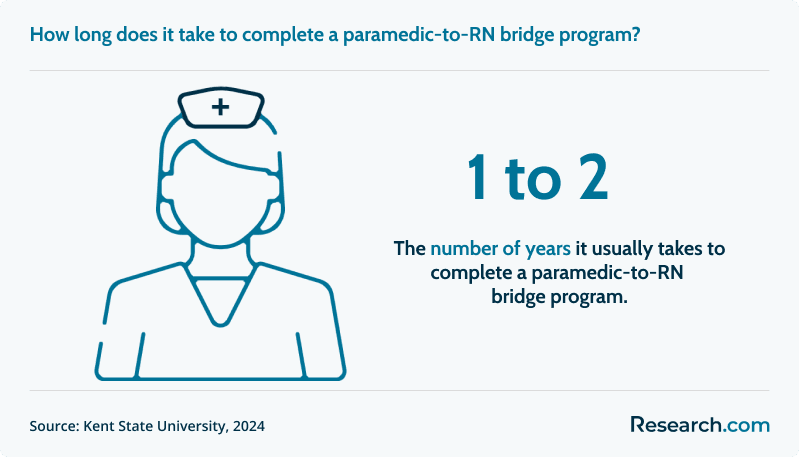
A paramedic-to-RN bridge program is an accelerated nursing pathway for licensed or certified paramedics who want to become registered nurses. Most programs lead to an associate degree in nursing or an associate of applied science in nursing, prepare graduates for the NCLEX-RN exam, and usually take about one to two years depending on transfer credits, prerequisites, enrollment pace, and clinical scheduling.
How we evaluated schools
Research.com uses our methodology to review school and program information using publicly available education data, institutional details, and program-level factors such as accreditation, curriculum structure, cost information, credit requirements, flexibility, and licensure preparation. For this ranking, we also referenced the following sources:
- IPEDS database
- Peterson's database, including the Distance Learning Licensed Data Set
- College Scorecard database
- National Center for Education Statistics
Program comparison at a glance
| Rank | School | Program length | Credits | Tuition or cost stated | Accreditation |
| 1 | Utah Tech University | Two Years | 64 | $227 in-state; $724 out-of-state | Accreditation Commission for Education in Nursing (ACEN) |
| 2 | Dalton State College | One and a half years | 70 | Around $3,300 per year | ACEN |
| 3 | Florida Gateway College | One Year | 72 | $104 in-state; $392 out-of-state; $231 online | ACEN |
| 4 | Kent State University | 17 months to two years | Not stated | $12,674 in-state per year; $22,144 out-of-state per year | ACEN |
| 5 | Southwest Baptist University | Two Years | 70 | Around $10,890 in total | ACEN |
| 6 | Arkansas Tech University | One to two years | 63 | $250 | ACEN |
| 7 | Pacific Union College | 18 months | at least 40 | $600 | ACEN |
| 8 | Stark State College | One and a half years | 54 | $200 | ACEN |
| 9 | Florida State College at Jacksonville | Two Years | 72 | $104 in-state; $401 out-of-state | ACEN |
| 10 | Mesa Community College | One Year | Not stated | $97 in-state; $372 out-of-state | ACEN |
1. Utah Tech University
Utah Tech University offers its paramedic-to-RN bridge through the College of Health Sciences. The curriculum includes nursing core work such as nursing pharmacology, health and illness concepts, and concept synthesis. Students also complete a dedicated paramedic-to-RN course and a paramedic-to-RN skills lab, where they translate prior emergency care experience into nursing-focused clinical decision-making. Utah Tech also offers an LPN-to-RN option for licensed practical nurses pursuing RN preparation.
- Program Length: Two Years
- Tracks/concentrations: N/A
- Cost per Credit/Tuition: $227 (in-state), $724 (out-of-state).
- Required Credits to Graduate: 64
- Accreditation: Accreditation Commission for Education in Nursing (ACEN)
2. Dalton State College
Dalton State College provides a bridge route for licensed practical nurses and paramedics seeking an associate of science in nursing. The program is designed as an accelerated pathway toward NCLEX-RN eligibility. During the first semester, students attend campus one day per week while completing additional online coursework and clinical rotations, which can help working healthcare professionals maintain employment while progressing through nursing requirements.
- Program Length: One and a half years
- Tracks/concentrations: N/A
- Cost per Credit/Tuition: Around $3,300 per year
- Required Credits to Graduate: 70
- Accreditation: ACEN
3. Florida Gateway College
Florida Gateway College offers a paramedic-to-RN bridge that leads to an associate of science degree in nursing. The program grants 10 experiential credits to paramedics whose field experience provides relevant foundational knowledge. Applicants must provide a current Florida paramedic license and show at least one year of full-time paramedic employment. Common coursework includes anatomy and physiology, microbiology, pharmacology, and human nutrition.
- Program Length: One Year
- Tracks/concentrations: N/A
- Cost per Credit/Tuition: $104 (in-state), $392 (out-of-state), and $231 (online).
- Required Credits to Graduate: 72
- Accreditation: ACEN
4. Kent State University
Kent State University offers an associate degree in nursing with LPN to ADN and paramedic to ADN concentrations. The paramedic pathway is built for professionals who already have clinical exposure and want a structured transition into the AAS degree program. Students learn to use the nursing process to address patient needs in structured care settings and prepare for NCLEX-RN eligibility.
- Program Length: 17 months to two years
- Tracks/concentrations: LPN to ADN and paramedic to ADN
- Cost per Credit/Tuition: $12,674 (in-state per year), $22,144 (out-of-state per year).
- Required Credits to Graduate: Not stated.
- Accreditation: ACEN
5. Southwest Baptist University
Southwest Baptist University offers an RN bridge program for LPNs and paramedics at the Salem and Springfield campuses. The ASN program prepares students for the NCLEX-RN and for RN roles across healthcare environments. Required prerequisites include chemistry for allied health, anatomy and physiology, and microbiology. SBU also accepts transfer credits from accredited institutions, which may reduce duplicated coursework for eligible students.
- Program Length: Two Years
- Tracks/concentrations: N/A
- Cost per Credit/Tuition: Around $10,890 in total
- Required Credits to Graduate: 70
- Accreditation: ACEN
6. Arkansas Tech University
Arkansas Tech University offers an associate of applied science in nursing for LPNs and paramedics who want to become RNs. The curriculum combines nursing theory in online and on-campus formats, which can support students who need to balance employment and study. Paramedic applicants must hold Arkansas Department of Health paramedic certification and be registered with the National Registry of EMTs.
- Program Length: One to two years
- Tracks/concentrations: N/A
- Cost per Credit/Tuition: $250
- Required Credits to Graduate: 63
- Accreditation: ACEN
7. Pacific Union College
Pacific Union College offers a non-traditional EMT-P to RN pathway for paramedics who want to keep working while moving into nursing. The program uses 12-hour Sunday clinical labs, while theory instruction is delivered during four consecutive eight-hour days. The program’s maximum class size is limited to nine students, which may appeal to learners who want a small cohort and close faculty interaction.
- Program Length: 18 months
- Tracks/concentrations: N/A
- Cost per Credit/Tuition: $600
- Required Credits to Graduate: at least 40
- Accreditation: ACEN
8. Stark State College
Stark State College provides an RN completion program for paramedics that uses emergency medical training as a bridge into RN preparation. Applicants must have graduated from an accredited paramedic program and complete the Test of Essential Academic Skills (TEAS). Students may choose full-time or part-time enrollment, with day, evening, and weekend options available for additional scheduling flexibility.
- Program Length: One and a half years
- Tracks/concentrations: N/A
- Cost per Credit/Tuition: $200
- Required Credits to Graduate: 54
- Accreditation: ACEN
9. Florida State College at Jacksonville
Florida State College at Jacksonville offers a nursing bridge option for paramedics and LPNs pursuing an associate degree. The ASN curriculum blends general education with professional nursing lectures, lab learning, and clinical education. Admission is limited to employed paramedics and LPNs who hold a current Florida or compact state license and have at least six months of work experience within the last two years.
- Program Length: Two Years
- Tracks/concentrations: N/A
- Cost per Credit/Tuition: $104 (in-state), $401 (out-of-state).
- Required Credits to Graduate: 72
- Accreditation: ACEN
10. Mesa Community College
Mesa Community College offers a paramedic-to-RN bridge designed to add nursing theory and clinical competencies to existing paramedic preparation. Applicants must submit a current Arizona ID or a national paramedic registry certificate card. MCC also offers related options such as nurse assisting and a nursing refresher, which may be useful for students preparing for NCLEX-RN review or license renewal.
- Program Length: One Year
- Tracks/concentrations: N/A
- Cost per Credit/Tuition: $97 (in-state), $372 (out-of-state).
- Required Credits to Graduate: Not stated.
- Accreditation: ACEN
How long does it take to complete a paramedic-to-RN bridge program?
Most paramedic-to-RN bridge programs take about one to two years. The total usually falls around 50 to 75 credit hours, but the exact timeline depends on the school, prerequisite completion, transfer credits, clinical schedule, and whether the student enrolls full time or part time.
An accelerated pathway may be the better fit if you have completed most prerequisites and can manage an intensive schedule. A part-time or hybrid pathway may be more realistic if you are still working EMS shifts. LPNs comparing similar bridge routes can also review 6 month LPN to RN program online options, although paramedic-to-RN timelines and requirements are set separately by each nursing school.
| Student situation | Likely timeline impact | Best-fit format |
| Prerequisites already completed | May shorten time to nursing coursework | Accelerated or full-time bridge |
| Working full-time EMS schedule | May require longer completion time | Part-time, evening, weekend, online, or hybrid format |
| Needs local clinical placement | Timeline depends on site availability | Program with established healthcare partnerships |
| Out-of-state applicant | May face different tuition and licensure requirements | School with clear state authorization and clinical policies |
How does an online paramedic-to-RN bridge program compare to an on-campus program?
Online and hybrid paramedic-to-RN programs can be credible, but no RN bridge program is fully hands-off. Nursing students still need supervised clinical experiences, labs, and skill validation. The main difference is how much theory coursework is delivered online versus in person.
| Factor | Online or hybrid program | On-campus program |
| Schedule flexibility | Often better for working paramedics because lectures and assignments may be completed around shifts | Requires more fixed attendance at scheduled campus times |
| Learning style | Works best for self-directed students who can manage deadlines without frequent in-person reminders | Better for students who want regular face-to-face instruction and immediate classroom interaction |
| Clinical practice | May arrange placements locally, but students should confirm who secures the clinical site | Often uses established local hospital and clinic partnerships |
| Costs beyond tuition | Can reduce commuting or relocation expenses, though lab travel may still be required | May involve commuting, parking, housing, or schedule-related costs |
| Licensure fit | Students must verify that the program meets requirements in their state | Usually designed around the school’s state requirements, but out-of-state students should still verify |
The same clinical-placement caution applies to many RN and nurse practitioner programs online: online coursework can be flexible, but clinical training must meet state, program, and licensure standards.
What is the average cost of a paramedic-to-RN bridge program?
Program cost varies widely by residency status, credit load, delivery format, fees, books, supplies, uniforms, background checks, exams, and clinical travel. Based on the program information reviewed, Florida Gateway College’s associate of science degree in nursing can cost around $7,488 for in-state students, $28,224 for out-of-state students, and about $16,632 for online students. Utah Tech’s paramedic-to-RN bridge can cost around $14,528 for in-state students and $46,336 for out-of-state students.
Do not compare programs by tuition alone. A lower per-credit price may not be the cheapest option if the program requires more credits, has limited transfer-credit acceptance, or forces you to reduce work hours.
What financial aid options are available for paramedic-to-RN students?
Paramedic-to-RN students may qualify for several types of aid, depending on school eligibility, enrollment status, financial need, military status, and state residency. Start with the school’s financial aid office and confirm whether the program qualifies for federal aid before enrolling.
- Federal financial aid: The first step is submitting the FAFSA (Free Application for Federal Student Aid), which is used to determine eligibility for federal grants, loans, and work-study.
- State grants and scholarships: Some states provide aid for residents, including awards tied to financial need, academic performance, or healthcare workforce priorities.
- Institutional scholarships and grants: Colleges may offer school-funded aid based on academic record, need, program, or other criteria.
- GI Bill: Veterans and active-duty service members may be eligible for education benefits that can help cover tuition, housing, and education-related expenses.
- Federal Work-Study: Eligible students with financial need may receive part-time employment as part of their financial aid package.
What are the prerequisites for enrolling in a paramedic-to-RN bridge program?
Admissions requirements differ by school, but most programs require proof that the applicant has active paramedic credentials and is prepared for college-level nursing coursework. Competitive programs may also consider grades in science prerequisites, entrance exam scores, healthcare experience, and available clinical seats.
| Requirement | What to verify before applying |
| Paramedic certification or licensure | Confirm whether the school requires state certification, national registry status, or both. |
| High school diploma or GED | Check whether official transcripts are required. |
| Prerequisite courses | Common subjects include microbiology, chemistry, psychology, and mathematics, often with a minimum grade such as C or higher. |
| Paramedic work experience | Some programs require one to two years of full-time employment or a documented minimum experience period. |
| Background check and drug screening | Clinical sites often require clearance before students can begin patient-care rotations. |
| Immunizations and health screenings | Requirements may include TB testing, MMR, Varicella, Hepatitis B, and other health documentation. |
Health and compliance requirements also apply across many nursing and advanced-practice pathways, including accelerated NP programs online and other clinical healthcare programs.
What courses are typically in a paramedic-to-RN bridge program?
Bridge coursework builds on emergency medical knowledge but shifts the focus toward nursing assessment, care planning, documentation, patient education, continuity of care, and team-based practice. Students typically complete general education, nursing theory, lab work, and supervised clinical rotations.
- Microbiology: Study of microorganisms and their relationship to infection, disease, and human health.
- Pharmacology: Drug classifications, therapeutic effects, adverse reactions, dosage calculations, and safe administration principles.
- Maternal and newborn nursing: Nursing care during pregnancy, labor, delivery, postpartum recovery, and newborn care.
- Mental health nursing: Care principles for patients with psychiatric and behavioral health needs.
- Community health nursing: Population health, prevention, health promotion, and community-based care. Students interested in broader community wellness roles may also compare clinical social work programs.
- Foundations of nursing: Core nursing concepts, patient care techniques, safety, communication, and professional responsibilities.
- Clinical rotations: Supervised experience in settings such as hospitals, clinics, and community health centers, with exposure to areas such as medical-surgical, pediatrics, obstetrics, mental health, and community health.
What specializations can paramedic-to-RN graduates pursue?
Most bridge programs do not function like specialty degrees at the entry level. They prepare students for RN licensure. After passing the NCLEX-RN and gaining experience, graduates may move toward specialty nursing roles through employer training, graduate education, or certifications.
- Emergency nursing: Care for patients with urgent injuries, trauma, and acute conditions in emergency departments.
- Critical care nursing: Monitoring and treatment for patients in intensive care units who need advanced interventions.
- Pediatric nursing: Care for infants, children, and adolescents, including developmental and illness-related needs.
- Neonatal intensive care nursing: Care for premature or critically ill newborns in NICU settings.
- Psychiatric nursing: Support for patients with mental health conditions in inpatient, outpatient, or crisis settings. Some professionals also use online certifications to build knowledge in mental health awareness, patient advocacy, and stigma reduction.
- Geriatric nursing: Care for older adults, including chronic disease management and healthy aging support.
- Rehabilitation nursing: Helping patients regain function and independence after illness, surgery, or injury.
- Community health nursing: Prevention, health education, and care coordination at the community level.
How do I choose the best paramedic-to-RN bridge program?
The best program is not simply the fastest or cheapest one. It is the program that is accredited, affordable for your situation, compatible with your work schedule, eligible for licensure in your state, and strong enough to prepare you for the NCLEX-RN.
- Check accreditation first: Look for recognized nursing accreditation, such as ACEN or CCNE, and confirm the institution itself is properly accredited.
- Verify state licensure eligibility: Ask whether graduates are eligible to sit for the NCLEX-RN in the state where you plan to practice.
- Compare total cost: Include tuition, fees, books, uniforms, testing, transportation, lost work time, and clinical travel.
- Review program length carefully: Some bridge programs and quick degrees can be completed faster, but accelerated pacing is not ideal for every student.
- Study the curriculum: Look for strong coverage of pharmacology, health assessment, medical-surgical nursing, mental health nursing, and clinical reasoning.
- Ask about clinical placements: Confirm whether the school assigns sites or expects students to help secure them.
- Request NCLEX-RN and completion outcomes: Graduation rates and NCLEX-RN pass rates can help you evaluate academic support and program effectiveness.
| Question to ask | Why it matters |
| Is the nursing program ACEN or CCNE accredited? | Accreditation affects quality assurance, transfer options, employer recognition, and sometimes financial aid. |
| Will this program meet RN licensure requirements in my state? | Licensure rules vary, especially for online and out-of-state programs. |
| What are the most recent NCLEX-RN pass rates? | Pass rates help indicate whether the curriculum and support services prepare students effectively. |
| Who arranges clinical placements? | Clinical-site uncertainty can delay graduation. |
| How many paramedic credits will transfer or be awarded? | Credit policies directly affect time and cost. |
What career paths are available after a paramedic-to-RN program?
Graduates who complete the degree, meet state requirements, and pass the NCLEX-RN can pursue RN roles in hospitals, emergency departments, clinics, long-term care, and other healthcare settings. Prior paramedic experience may be especially relevant in emergency, trauma, transport, and critical-care-adjacent settings, although hiring decisions vary by employer.
- Staff Nurse (RN): Provide direct patient care in hospitals, clinics, long-term care facilities, and other healthcare settings.
- Clinical Nurse Specialist (CNS): With additional education, provide advanced clinical expertise in areas such as cardiology, oncology, or mental health.
- Intensive Care Unit (ICU) Nurse: Care for critically ill patients using advanced monitoring and life-support equipment.
- Nurse Educator: Teach nursing students or provide continuing education in academic or healthcare settings.
- Nurse Practitioner (NP): After further education and certification, provide primary or specialty care in areas such as family practice, pediatrics, acute care, or psychiatry.
- Labor and Delivery Nurse: Support mothers and newborns through labor, delivery, and postpartum care.
- Nurse Anesthetist (CRNA): Provide anesthesia care before, during, and after procedures after completing required advanced education and certification. Students comparing long-term education investments may also research affordable PhD programs and other advanced pathways.
- Nurse Administrator: Manage nursing teams, budgets, policies, and care-quality initiatives.
RNs who want broader advancement options can compare the easiest RN to BSN program pathways after licensure.
Students who are still comparing healthcare careers may also consider related occupations. Diagnostic medical technicians earn about $80,850, LPNs earn about $59,730, and physician assistants earn an average annual salary of $130,020. Nurse anesthetists, nurse midwives, and nurse practitioners earn about $129,480, while medical dosimetrists earn about $132,880. If practical nursing is still on your list, review how to become an LPN online.
Some allied health roles may offer different time, cost, and workplace trade-offs. For example, the physical therapy assistant salary average is close to that of RNs ($83,170 vs. $86,070) but almost double that of paramedics ($44,780).
Animal-care careers may also appeal to people who want healthcare-adjacent work with different pressure levels. If that path interests you, compare requirements by asking what degree do you need to be a veterinary assistant before committing to a program.
What accreditation and quality standards should I check?
Accreditation is one of the most important filters when comparing paramedic-to-RN bridge programs. Look for recognized nursing accreditation, institutional accreditation, state board approval, qualified faculty, supervised clinical experiences, clear student outcomes, and transparent NCLEX-RN preparation support.
Also consider whether the program creates a smooth next step into advanced education. For example, graduates who plan to earn a BSN later may want to compare transfer policies with online BSN programs before choosing an associate-level bridge.
Are online paramedic-to-RN bridge programs credible?
Online paramedic-to-RN bridge programs can be credible when they are properly accredited, approved for nursing licensure preparation, academically rigorous, and supported by appropriate clinical training. The warning sign is not online coursework itself; the warning sign is unclear accreditation, vague clinical-placement policies, poor outcomes transparency, or promises that sound too easy for a clinical profession.
Before enrolling, review NCLEX-RN outcomes, faculty credentials, clinical partnerships, state authorization, and employer perceptions. For broader context, see whether are online nursing degrees respected in healthcare hiring and professional practice.
What long-term success indicators matter most?
Strong bridge programs do more than graduate students. They prepare students to pass the NCLEX-RN, obtain employment, adapt to nursing responsibilities, and continue developing professionally. Important indicators include NCLEX-RN pass rates, graduation or completion rates, employment statistics within the first six months after graduation, employer feedback, and graduate progression into BSN, MSN, or specialty nursing roles.
If your long-term plan includes advanced practice, ask whether credits and credentials will support later bridge options such as an RN to MSN NP pathway.
How can I prepare for the NCLEX-RN during a bridge program?
NCLEX-RN preparation should begin early, not after graduation. Paramedics often bring strong emergency assessment skills, but the NCLEX-RN tests nursing judgment, prioritization, delegation, safety, patient education, and care across the lifespan.
- Map the exam to your courses: Connect each nursing topic to NCLEX-style decision-making and patient safety.
- Use practice questions weekly: Identify weak areas before they become major gaps.
- Review rationales, not just scores: The explanation behind an answer builds clinical reasoning.
- Use simulation labs seriously: Treat simulations as rehearsal for prioritization, documentation, and communication.
- Form a focused study group: Discuss scenarios, but avoid groups that become social rather than productive.
- Use tutoring early: Ask for help when patterns of missed concepts appear.
Graduates planning advanced practice can also compare future costs early, including options such as the cheapest NP school online.
What should I look for in an excellent online accelerated nursing program?
An online accelerated nursing program should combine flexibility with strict academic and clinical standards. Look for recognized accreditation, state licensure alignment, well-designed online courses, accessible faculty, simulation support, clear clinical-placement procedures, academic advising, and career services. Flexibility should not mean weak requirements; nursing education must still verify clinical competence.
If you are also comparing accelerated bachelor’s-level nursing routes, review ABSN online programs for additional context.
What is the job market for paramedic-to-RN graduates?
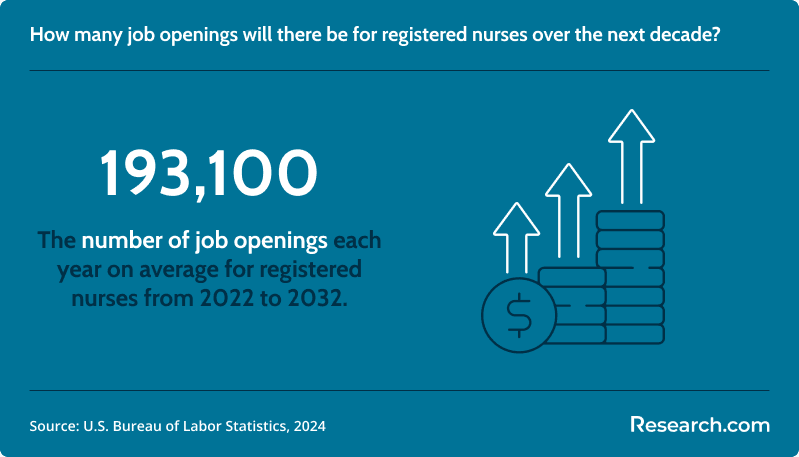
The RN labor market remains favorable in many settings, although opportunities vary by location, experience, specialty, and employer. According to statistics, employment of registered nurses is projected to grow by six percent from 2022 to 2032, which is faster than the average for all occupations. There will be about 193,100 job openings each year on average over the next decade for RNs.
This demand is linked to preventive care, chronic condition management, and healthcare needs among the aging baby-boom population. Paramedic-to-RN graduates may be attractive for emergency department roles because they bring emergency care exposure, rapid assessment experience, and familiarity with high-pressure patient situations, but RN hiring is never guaranteed.
What challenges should paramedics expect when becoming RNs?
The bridge from paramedic to RN is not only academic. It also requires a change in professional identity, workflow, communication style, and patient-care time horizon.
Broader scope of care
Paramedics often stabilize patients in urgent, time-sensitive situations. RNs manage ongoing care, chronic conditions, medication plans, patient education, documentation, and coordination with multiple disciplines. The RN role is broader and often more continuous.
Different workplace culture
Pre-hospital care rewards independent rapid decision-making. Hospital and facility-based nursing depends heavily on collaboration with physicians, nurses, therapists, case managers, and support staff. Learning team-based workflows can take time.
More documentation and care planning
RN work includes detailed charting, care plans, handoffs, discharge planning, and regulatory documentation. Paramedics who are used to shorter encounter documentation may need to adjust to more extensive recordkeeping.
Managing several patients at once
Paramedics often focus intensely on one patient or incident. RNs may manage multiple patients with different medications, assessments, risks, and family communication needs. Time management becomes essential.
| Common mistake | Better approach |
| Choosing a program only because it is fast | Confirm accreditation, NCLEX-RN outcomes, clinical quality, and state licensure eligibility. |
| Comparing tuition but ignoring fees | Calculate total cost, including books, testing, uniforms, labs, travel, and lost income. |
| Assuming online means fully remote | Ask where labs and clinical rotations occur and who arranges placements. |
| Ignoring transfer-credit policies | Request a formal credit evaluation before committing. |
| Assuming paramedic experience guarantees nursing success | Prepare for nursing-specific reasoning, long-term care coordination, and documentation. |
How can I advance my career after becoming an RN?
After earning RN licensure, paramedic-to-RN graduates can build toward specialty, leadership, education, or advanced-practice roles. Advancement usually requires experience, additional education, certification, or a combination of all three.
- Nurse Manager: Supervise nursing teams, staffing, care delivery, and unit performance.
- Clinical Educator: Train new nurses, support continuing education, and help staff improve clinical practice.
- Nurse Practitioner (NP): Pursue graduate education and certification to provide advanced care in areas such as pediatrics, emergency care, or family medicine.
- Specialized Nursing Roles: Use nursing certifications to demonstrate expertise in areas such as emergency nursing, oncology, or intensive care.
What trends are shaping paramedic-to-RN bridge programs?
Several trends are influencing how bridge programs are designed and how students evaluate them. These trends do not replace accreditation or licensure requirements, but they do affect program delivery and employer expectations.
- More online and hybrid learning: Schools are using flexible formats to serve working paramedics, while still requiring clinical and lab competency checks.
- Interest in advanced practice: Some paramedics view RN licensure as the first step toward NP or other advanced roles, including paths connected to online BSN to FNP programs.
- Expanded clinical exposure: Programs may seek placements across emergency, urgent care, pediatrics, mental health, and community settings.
- Ongoing RN demand: Healthcare systems continue to need registered nurses in many care environments, especially as patient complexity increases.
- Technology in nursing education: Simulation, telehealth exposure, and digital learning tools are increasingly part of healthcare training.
Exploring advanced RN bridge pathways for career growth
Many paramedic-to-RN graduates eventually pursue a BSN, MSN, or specialty certification to qualify for broader opportunities. An RN-to-BSN pathway can strengthen leadership, evidence-based practice, community health, and population health skills while serving as a stepping stone to graduate study.
A BSN can also support movement into specialties such as pediatrics, oncology, critical care, leadership, research, or advanced practice. If speed is a key factor after RN licensure, compare the fastest RN to BSN program options and ask how transfer credits, clinical requirements, and start dates affect the true completion timeline.
Do employers value paramedic-to-RN bridge credentials?
Employers generally evaluate bridge-program graduates the same way they evaluate other RN candidates: licensure status, accredited education, clinical readiness, communication skills, professionalism, and ability to work safely within the RN scope of practice. Paramedic experience can be an advantage in fast-paced settings, but it must be paired with nursing judgment and strong documentation habits.
Graduates who continue their education through options such as top RN to BSN programs with no clinicals may further demonstrate leadership preparation and long-term professional commitment.
How can I transition into executive nursing roles after a paramedic-to-RN bridge program?
Executive nursing roles usually require several steps beyond RN licensure: clinical experience, leadership exposure, formal education, and skill development in budgeting, staffing, quality improvement, policy, compliance, and organizational strategy. A former paramedic can use field leadership and crisis-management experience as a foundation, but executive roles demand broader systems thinking.
If nurse leadership is your long-term goal, review what can you do with an MSN degree in nurse executive leadership and seek mentorship from nurse managers, directors, or chief nursing officers early in your RN career.
What graduates say about paramedic-to-RN degrees
-
: "“I enjoyed the pace of paramedic work, but RN licensure gave me access to more settings, especially ICU and ER roles. The transition took effort, but the added knowledge changed how I understand patient care.”
— Mike"
-
: "“Moving from paramedic to RN helped me broaden my clinical skills and take on more responsibility. The bridge program was demanding, but it gave me a stronger sense of direction in nursing.”
— Sarah"
-
: "“The program helped me see patient recovery beyond the emergency call. I gained a deeper appreciation for long-term care, teamwork, and the nursing role.”
— Esmeralda"
Can additional certifications accelerate the transition to advanced practice roles?
Certifications can strengthen a nurse’s specialty profile, but they do not replace required degrees, RN licensure, graduate education, or state certification for advanced practice. Certifications in emergency nursing, critical care, and other specialties may help demonstrate commitment and competence after the required experience is gained.
If your goal is advanced practice, compare specialty requirements carefully and review the easiest way to become a nurse practitioner to understand realistic timelines and credential steps.
What career support services should a bridge program offer?
Strong paramedic-to-RN bridge programs support students before and after graduation. Look for academic advising, NCLEX-RN preparation, tutoring, resume help, interview coaching, clinical placement guidance, employer connections, alumni networking, and transfer advising for BSN or MSN pathways.
Career support is especially useful if you plan to move quickly from RN licensure into a bachelor’s pathway, such as the top RN to BSN programs with no clinicals.
References:
- Florida Gateway College. (2024). Tuition, Fees, and Bill Payment. https://www.fgc.edu/students/fee-payment
- Kent State University. (2024). Nursing ADN Program Information Session. https://www-s3-live.kent.edu/s3fs-root/s3fs-public/NursingADNinfosession_combined_2025.pdf
- Utah Tech University. (2024). Tuition & Fees. https://catalog.utahtech.edu/tuitionfees
- U.S. Bureau of Labor Statistics. (2024). Occupational Outlook Handbook: Registered Nurses. https://www.bls.gov/ooh/healthcare/registered-nurses.htm
- U.S. Bureau of Labor Statistics. (2024). Occupational Outlook Handbook: EMTs and Paramedics. https://www.bls.gov/ooh/healthcare/emts-and-paramedics.htm
Key Insights
- Paramedic-to-RN bridge programs are usually one to two years long, but prerequisites, clinical scheduling, transfer credits, and enrollment pace can change the timeline.
- Accreditation and licensure eligibility should be checked before cost or speed. A fast program is not useful if it does not meet nursing board expectations in the state where you plan to practice.
- Online and hybrid formats can work for paramedics, but clinical rotations and skills labs still require in-person participation.
- Total cost is more than tuition. Include fees, books, uniforms, testing, commuting, clinical travel, and possible lost income from reduced work hours.
- Paramedic experience helps, but nursing is a different role. Expect more care planning, documentation, long-term patient management, and team-based coordination.
- Career growth does not stop at RN licensure. Many graduates later pursue BSN, MSN, specialty certifications, leadership roles, or advanced practice pathways.
Other Things You Should Know About Paramedic-to-RN Bridge Programs
Graduates take the NCLEX-RN, the national licensing exam for registered nurses. After completing the bridge curriculum and clinical requirements, they must receive authorization to test from their state board of nursing and pass the exam before practicing as an RN.


