2027 Best Online Theology Degree Programs

Co-Founder and Chief Data Scientist
Interest in theology hasn’t disappeared; it’s just shifting in new directions. More students are choosing programs that offer flexibility and focus on research, like online MAs and doctorates. In fact, enrollment in doctoral theology programs grew by 4.3%, and students increased their enrollment in Master of Arts programs by 1%.
To help students find strong theology programs in the U.S., I looked at recent data from different schools. I focused on programs that reflect current trends and offer flexibility. Based on what I found and my experience in academic advising, I put together a list of top options. Each program includes key details to help students choose the right path for their goals.
What are the benefits of taking an online theology degree program for 2027?
- Online degrees from accredited institutions hold the same value as on-campus programs in most ministry and academic settings.
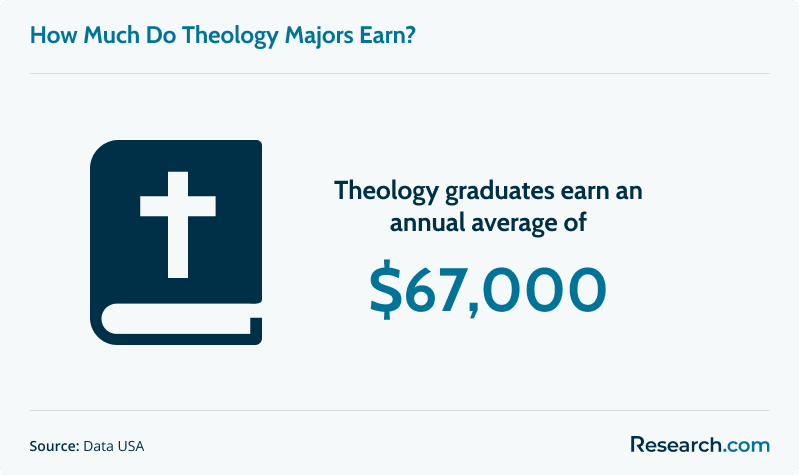
- The average salary for theology graduates is around $67,000 per year.
- Graduates can pursue careers as clergy, chaplains, religious educators, nonprofit leaders, or managers in faith-based organizations.
What can I expect from an online theology program?
An online theology program typically blends rigorous academic study with spiritual growth and practical ministry training, making it accessible to students wherever they are.
You can expect to explore courses in biblical studies, systematic and historical theology, ethics, and church history, along with specialized topics such as pastoral care, worship leadership, or missions. These programs often integrate theological reflection with real-world application, helping you connect academic concepts to personal faith and ministry practice.
Learning is delivered through interactive online platforms that may include live or recorded video lectures, digital readings, quizzes, and virtual group discussions to encourage collaboration with peers. Many programs also feature opportunities for independent research or guided projects, allowing you to delve deeper into areas of personal interest.
Faculty and mentors are typically accessible through virtual office hours, email, or discussion boards, providing guidance, academic feedback, and spiritual encouragement. In addition, some institutions offer career counseling, ministry placement assistance, or spiritual formation resources—such as online prayer groups or chapel services—designed specifically for distance learners.
Depending on the program, you may also complete internships, practicums, or field ministry projects in your local community to put your learning into practice.
Where can I work with an online theology degree?
An online theology degree doesn’t limit you to the pulpit. Graduates often find roles in chaplaincy, education, nonprofit leadership, and other fields where ethical thinking, spiritual care, and communication skills are in demand.
Here are some common workplaces for graduates:
- Churches or religious institutions
- Faith-based nonprofits
- Hospitals or healthcare centers
- Schools and universities
- Correctional facilities
- Publishing or media organizations
- Mission organizations
How much can I make with a theology degree for 2027?
Online theology degrees from accredited schools offer the same career options as on-campus programs. Entry-level jobs, especially in ministry or nonprofit work, typically start around $34,500 per year, with mid-career professionals earning closer to $52,000. Some roles, like chaplains, earn between $62,000 and $76,000. Meanwhile, a clergy leader usually makes around $48,000 to $53,000.
If you pursue advanced degrees, your earning potential increases. Religion professors, for example, earn an average of $79,000 to $145,000 annually. Leaders in faith-based nonprofits or education can make $40,000 to $100,000, depending on the position.
- The Best Online Theology Degree Programs for 2027 List of Programs
- How long does it take to complete an online theology program? Completion Time
- How does an online theology degree compare to an on-campus program? How does an online theology degree compare to an on-campus program?
- What is the average cost of an online theology degree program? Average Cost
- What are the financial aid options for students enrolling in an online theology degree program? Financial Aid
- What are the prerequisites for enrolling in a theology degree program? Requirements
- What courses are typically in a theology degree program? What courses are typically in a theology degree program?
- What types of specializations are available in an online theology degree program? What types of specializations are available in an online theology degree program?
- What career paths are available for graduates of online theology degree programs? Career Paths
- What is the job market for graduates with an online theology degree? Job Market
- How can I determine the best online theology degree program for my needs? How can I determine the best online theology degree program for my needs?
- How can an online theology degree foster interdisciplinary expertise? How can an online theology degree foster interdisciplinary expertise?
- How Can an Online Theology Degree Drive Long-term Career Advancement? How Can an Online Theology Degree Drive Long-term Career Advancement?
The Best Online Theology Degree Programs for 2027
Choosing an online theology degree is not just a question of convenience. Students usually need to weigh academic rigor, denominational fit, ministry preparation, accreditation, cost, transfer policies, and whether the degree will support future study or employment. This guide is for prospective undergraduate and graduate students who want a theology, Christian studies, ministry, or advanced theological degree online without losing sight of formation, faculty access, and career outcomes.
Below, you will find a practical comparison of online theology programs, what they cost, how long they take, what students study, how online learning compares with campus-based theological education, and how to decide whether this path fits your goals in ministry, teaching, chaplaincy, nonprofit leadership, or further graduate study.
Quick Answer: What Is the Best Online Theology Degree for You?
The best online theology degree depends on your goal. A bachelor’s degree in theology or Christian studies is usually the right starting point for students preparing for ministry, church leadership, religious education, or graduate seminary study. A master’s degree, M.Div., or Th.M. is better suited for students seeking advanced theological training, chaplaincy preparation, doctoral study, or senior ministry leadership. Before applying, confirm accreditation, total tuition, credit requirements, field experience options, and whether the program’s faith tradition aligns with your beliefs and career plans.
How Research.com Evaluates Online Theology Programs
Research.com builds rankings to help readers compare online theology programs using clear academic and institutional factors rather than marketing claims. Our process considers school data, program structure, distance learning availability, accreditation, affordability, and student-facing support where available.
To prepare this list, our research team reviewed information from established education data sources, including the IPEDS database, Peterson's database with attention to its Distance Learning Licensed Data Set, the College Scorecard database, and the National Center for Education Statistics (NCES).
Readers who want a closer look at how Research.com evaluates institutions can review our ranking methodology.
Best Online Theology Degree Programs: At-a-Glance Comparison
| School | Online Program | Cost | Credits | Accreditation Listed | Best Fit |
| Biola University | Bachelor of Arts in Theology | $446 per credit hour | 120 | Western Association of Schools and Colleges (WASC), ATS | Students wanting rigorous evangelical theological study with close academic support |
| Regent University | BA in Theology and Ministry | $395 per credit hour | 120 | Southern Association of Colleges and Schools (SACSCOC), ATS | Learners seeking flexible terms and practical ministry preparation |
| Moody Bible Institute | BA in Theology | $425 per credit | 120 | Higher Learning Commission (HLC), ATS | Students focused on biblical scholarship, discipleship, and ministry readiness |
| Franciscan University of Steubenville | Online Theology BA | $620 per credit hour | 120 | HLC, ATS | Students looking for a Catholic theology degree with formation emphasis |
| DeSales University | Accelerated BA in Theology | $560 per credit hour | 120 | Middle States Commission (MSCHE), ATS | Adult learners who want Catholic theological study in an accelerated format |
| Liberty University | Master of Theology (Th.M.) | $410 | 24 | ATS | Graduate students seeking a fast online Th.M. with specialization choices |
| Oklahoma Baptist University | BA in Christian Studies | $350 per credit hour | 120 | SACSCOC, ATS | Students who want biblical studies, leadership skills, and liberal arts breadth |
| Palm Beach Atlantic University | BA in Christian Studies | $410 per credit hour | 120 | Southern Association (SACSCOC), ATS | Learners interested in ethics, discipleship, ministry, and spiritual leadership |
| Cairn University | BS in Christian Studies | $425 per credit hour | 120 | Middle States (MSCHE), ATS | Students who want flexible electives and a Christian worldview core |
| Crown College | MA in Christian Studies | $635 per credit hour | 36 | ATS | Graduate students preparing for intercultural ministry or pastoral leadership |
1. Biola University – Bachelor of Arts in Theology
Biola University offers an online theology degree built around biblical interpretation, doctrine, church history, ethics, apologetics, and spiritual formation. Students study through the Talbot School of Theology and benefit from an environment designed to combine academic seriousness with faith development.
- Cost: $446 per credit hour
- Required credits to graduate: 120
- Accreditation: Western Association of Schools and Colleges (WASC), ATS
- Why consider it: Biola is a strong option for students who want a structured theology curriculum with close academic guidance and an evangelical academic setting.
2. Regent University – BA in Theology and Ministry
Regent University combines theological foundations with ministry application. Students may encounter coursework in apologetics, biblical languages, worship leadership, ministry leadership, and Christian worldview engagement, making the program useful for learners who want both doctrinal training and practical church leadership preparation.
- Cost: $395 per credit hour
- Required credits to graduate: 120
- Accreditation: Southern Association of Colleges and Schools (SACSCOC), ATS
- Why consider it: Regent’s accelerated term schedule may appeal to working adults who need a more flexible academic calendar.
3. Moody Bible Institute – BA in Theology
Moody Bible Institute offers an online theology program centered on Scripture, theological reasoning, evangelism, discipleship, hermeneutics, church history, and ministry leadership. The degree is especially relevant for students who want a Bible-centered education that can support church work, missions, or future seminary study.
- Cost: $425 per credit
- Required credits to graduate: 120
- Accreditation: Higher Learning Commission (HLC), ATS
- Why consider it: Moody is well suited for learners who want online study that remains closely connected to ministry preparation and student support.
4. Franciscan University of Steubenville – Online Theology BA
Franciscan University of Steubenville delivers an online theology degree shaped by Catholic intellectual and spiritual tradition. Students typically study Scripture, doctrine, ecclesiology, moral theology, sacraments, and Christian formation within a broader liberal arts framework.
- Cost: $620 per credit hour
- Required credits to graduate: 120
- Accreditation: HLC, ATS
- Why consider it: This program is a strong match for students who want Catholic theological formation in an online format.
5. DeSales University – Accelerated BA in Theology
DeSales University offers an accelerated theology bachelor’s program grounded in Catholic humanist education. The curriculum brings together Scripture, doctrine, ethics, church history, and philosophy of religion for students who want a broad theological and liberal arts foundation.
- Cost: $560 per credit hour
- Required credits to graduate: 120
- Accreditation: Middle States Commission (MSCHE), ATS
- Why consider it: DeSales may work well for students who want an accelerated path, advising support, and Catholic liberal arts integration.
6. Liberty University – Master of Theology (Th.M.)
Liberty University provides an online Master of Theology for students who already have a strong theological background and want advanced study. Coursework may include systematic theology, biblical languages, hermeneutics, church history, pastoral theology, and contemporary theological issues. The program also offers specialization options in areas such as biblical studies, apologetics, and leadership.
- Cost: $410
- Required credits to graduate: 24
- Accreditation: ATS
- Why consider it: Liberty may appeal to graduate students who want a short credit requirement and multiple Th.M. concentration paths.
7. Oklahoma Baptist University – BA in Christian Studies
Oklahoma Baptist University offers an online Christian studies degree with a ministry-focused liberal arts foundation. Students develop biblical knowledge while also building communication, leadership, and elective-based skills that can support church, nonprofit, or community work.
- Cost: $350 per credit hour
- Required credits to graduate: 120
- Accreditation: SACSCOC, ATS
- Why consider it: OBU is a practical choice for students seeking biblical studies, leadership training, and room to tailor electives.
8. Palm Beach Atlantic University – BA in Christian Studies
Palm Beach Atlantic University emphasizes Scripture, ethics, discipleship, spiritual formation, evangelism, pastoral ministry, and church leadership. The program can serve students preparing for ministry, faith-based service, or further graduate work.
- Cost: $410 per credit hour
- Required credits to graduate: 120
- Accreditation: Southern Association (SACSCOC), ATS
- Why consider it: The program is a good fit for students who want Christian studies with a strong emphasis on ethics and practical leadership.
9. Cairn University – BS in Christian Studies
Cairn University structures its BS in Christian Studies around liberal arts, Christian worldview, Bible and theology foundations, and a large elective component. The curriculum includes 66 core credits in university-wide liberal arts and Christian worldview courses, 6 credits in Bible/Theology foundations, and 45 elective credits that allow students to shape the degree around ministry or vocational interests.
- Cost: $425 per credit hour
- Required credits to graduate: 120
- Accreditation: Middle States (MSCHE), ATS
- Why consider it: Cairn is a strong option for students who want flexibility, elective space, and accessible faculty interaction online.
10. Crown College – MA in Christian Studies
Crown College offers an online master’s degree focused on theological understanding, spiritual formation, pastoral leadership, and intercultural ministry. Courses such as Alliance Distinctives, Biblical Theology, and Spiritual Formation for Leaders help students connect doctrine with ministry practice.
- Cost: $635 per credit hour
- Required credits to graduate: 36
- Accreditation: ATS
- Why consider it: Crown’s cohort model and intercultural ministry focus may suit students preparing for pastoral, missions, or global ministry leadership.
How Long Does It Take to Complete an Online Theology Degree?
Most online bachelor’s degrees in theology, Christian studies, or ministry require about 120 credits. Full-time students commonly finish in three to four years, although transfer credits, accelerated terms, and year-round enrollment can change the timeline.
Online master’s programs in theology usually take two to three years of full-time study. Requirements often range from 30 to 50 credits, depending on whether the degree includes a thesis, capstone, field education, language work, or ministry practicum.
Some accelerated graduate programs can be completed in as little as 10 to 18 months, but faster formats can be demanding. Students already serving in ministry should compare weekly workload, course length, and assignment pace before choosing the shortest option.
| Degree Level | Typical Credits | Common Full-Time Timeline | Best For |
| Bachelor’s degree | About 120 credits | Three to four years | First-time degree seekers, transfer students, ministry volunteers, future seminary applicants |
| Master’s degree | 30 to 50 credits | Two to three years | Students seeking advanced theological study, ministry leadership, teaching, or chaplaincy preparation |
| Accelerated master’s track | Varies by program | As little as 10 to 18 months | Students with strong academic preparation who can handle compressed coursework |
Online Theology Degree vs. On-Campus Theology Program
An online theology degree can cover the same academic material as an on-campus program, but the learning experience is different. Instead of daily chapel rhythms, hallway conversations, and in-person mentoring, online students often interact through video meetings, discussion boards, digital libraries, recorded lectures, and virtual office hours.
Online theological education has become more common among accredited schools. According to In Trust Magazine, 70% of ATS-accredited schools offer fully approved online programs, and nearly half of students at those schools take at least one online course. Many online programs use the same faculty and curriculum as campus-based versions.
The trade-off is formation and practice. Preaching, pastoral care, spiritual direction, and communal worship can be harder to develop fully online. Students preparing for hands-on ministry should look for internships, supervised field education, hybrid intensives, mentoring groups, or local church partnerships.
| Factor | Online Theology Degree | On-Campus Theology Degree |
| Flexibility | Better for working adults, ministry volunteers, parents, and students outside commuting range | Best for students who can relocate or attend classes at fixed times |
| Community | Built through virtual discussions, cohorts, video sessions, and local ministry contexts | Often stronger through chapel, campus events, meals, and in-person faculty access |
| Practical training | Depends heavily on internships, local placements, and optional intensives | Often easier to integrate through campus ministries, preaching labs, and supervised practice |
| Academic quality | Can be equivalent when taught by the same faculty and supported by strong online systems | Can offer richer informal learning and immediate classroom interaction |
| Best choice when | You need schedule flexibility and can create local ministry connections | You want immersive community, residential formation, and frequent face-to-face mentoring |
What Is the Average Cost of an Online Theology Degree?
For 2027, the average cost of an online bachelor’s degree in theology is about $467 per credit hour. A full 120-128 credit program usually totals between $42,000 and $77,000 in tuition. Graduate theology programs, including M.A., M.Div., and Th.M. options, often cost between $525 and $670 per credit hour.
Tuition is only one part of the total cost. Students should also ask about technology fees, graduation fees, books, required software, background checks for field placements, travel for intensives, and whether online learners pay the same rates as campus students.
Some theology programs lower the final cost through transfer credits, church partnership discounts, institutional scholarships, or reduced tuition for ministry professionals. A lower sticker price is helpful, but the better question is total cost to completion after scholarships, transfer evaluation, and required fees.
Students comparing theology with other education-related graduate paths can also review how advanced credentials connect to specialized roles, such as career options for graduates with a master’s degree in multilingual learner education.
Financial Aid Options for Online Theology Students
Online theology students may qualify for several forms of aid, but eligibility depends on the school, degree level, accreditation, enrollment status, and federal aid participation. The usual first step is completing the FAFSA, which determines access to federal grants and loans. In 2023–24, the maximum Pell Grant was $7,395.
Many theology schools also award institutional scholarships. Some scholarships cover up to 100% of tuition, especially for students preparing for ministry, demonstrating strong academic performance, or receiving support from a church body.
Church matching grants can also reduce costs. Under this model, a congregation contributes a set amount toward the student’s education, and the school matches part or all of that contribution according to its policy. Students can also search for external scholarships from denominations, religious foundations, ministry organizations, and education-focused nonprofits.
If your long-term plan includes counseling, education, or ministry-related student support roles, it may be useful to compare theology pathways with other accelerated graduate options, including fast-track online master’s programs in educational counseling.
Prerequisites for Online Theology Degree Programs
Admission requirements vary by school and degree level, but most theology programs look for academic readiness, writing ability, and some evidence that the applicant understands the religious or reflective nature of the field. Some programs are open to students from many faith backgrounds, while others expect alignment with a specific Christian tradition.
Applicants comparing theology with other service-oriented graduate programs can also review admission expectations for fields such as an online master’s in TESOL, where academic preparation and professional goals also play an important role.
- Academic background: Bachelor’s applicants usually need a high school diploma or GED. Many schools set a minimum GPA between 2.5 and 3.0. Master’s applicants generally need a bachelor’s degree from an accredited institution and often a GPA near 3.0.
- Previous coursework: Some programs prefer or require prior college courses in religion, theology, philosophy, biblical studies, or the humanities. Certain Master of Theology programs may require Greek or Hebrew proficiency.
- Application materials: Schools commonly ask for official transcripts, a personal statement, a cover letter, and sometimes a writing sample.
- Recommendations: Applicants may need letters from professors, clergy, ministry supervisors, or community leaders.
- Faith or ministry statement: Some institutions request a statement of faith, church involvement description, or explanation of ministry goals.
Common Courses in an Online Theology Degree
Theology curricula usually combine biblical interpretation, doctrine, historical study, ethics, and applied ministry. The exact course mix depends on whether the program is academic, pastoral, Catholic, evangelical, ecumenical, or oriented toward Christian studies rather than formal theology.
Students who need to complete prerequisites or general education requirements more quickly can compare options such as 4-week online college credit courses, though they should confirm transfer acceptance before enrolling.
- Biblical studies: Courses such as Old Testament Introduction, New Testament Studies, and Biblical Hermeneutics train students to read Scripture in literary, historical, and theological context.
- Systematic theology: Students study major doctrines, including Christology, pneumatology, soteriology, and ecclesiology, and learn how beliefs fit together within a theological framework.
- Historical theology: These courses examine how Christian thought, worship, institutions, and controversies developed from the early church to modern traditions.
- Ethics and moral theology: Learners evaluate questions involving justice, bioethics, sexuality, public life, personal conduct, and social responsibility through theological lenses.
- Practical theology and ministry: Students may study preaching, pastoral care, discipleship, worship, church administration, leadership, and congregational life.
- Biblical languages: Greek and Hebrew are especially common in Bachelor of Theology, Master of Divinity, and research-oriented graduate programs.
Students interested in combining theology with family systems, pastoral counseling, or mental health-related service can also explore fast-track online master’s programs in marriage and family counseling, while noting that counseling licensure requirements are separate from theology degree requirements.
Online Theology Degree Specializations
Specializations help students connect theological study to a specific goal, such as pastoral ministry, biblical scholarship, chaplaincy, missions, ethics, or leadership. For example, United Theological Seminary’s Master of Divinity offers concentrations such as Church Renewal and Pastoral Caregiving, and at the doctoral level, United offers over 40 concentration options.
Students comparing theology with other fields can also look at how credentials shape employment in areas such as health education careers and salary outcomes.
- Biblical studies: Focuses on interpretation, exegesis, historical context, and deeper engagement with Old and New Testament texts.
- Church history: Examines Christian communities, institutions, doctrines, and movements across time.
- Ministry leadership: Covers preaching, pastoral care, worship leadership, discipleship, administration, and ethical leadership.
- Theology and philosophy: Explores belief, ethics, metaphysics, reason, suffering, human nature, and the relationship between theology and philosophical inquiry.
- Intercultural and global theology: Prepares students for missions, cross-cultural ministry, multicultural congregations, and interfaith engagement.
- Christian counseling and pastoral care: Supports students interested in spiritual care, chaplaincy, church-based counseling, or care ministries. Students seeking a budget-conscious counseling path can compare theology training with options such as the most affordable online counseling degrees.
How to Choose the Right Online Theology Degree Program
Start with accreditation. A degree from a school recognized by regional accreditors or theological accreditors such as ATS is more likely to be accepted by graduate schools, employers, denominations, and ministry organizations. Accreditation can also affect financial aid eligibility and transfer credit acceptance.
Next, examine the program’s theological identity and academic purpose. Some degrees are designed for pastoral formation, some for biblical scholarship, some for lay leadership, and others for interdisciplinary Christian studies. Students interested in broader faith-based administration may also compare theology programs with an accelerated online master’s degree in organizational leadership.
Finally, ask about field experience. Internships, supervised ministry placements, and chaplaincy-related experience can help students build a network and test their calling in real settings. Over 80% of theology interns report expanding their professional networks during placements, and research indicates that interns are 6.5% more likely to find a job quickly than students without internship experience.
Questions to Ask Before Enrolling
| Question | Why It Matters |
| Is the school regionally accredited, ATS-accredited, or both? | Accreditation affects transferability, graduate admission, employer recognition, and aid eligibility. |
| Does the program match my faith tradition or ministry goals? | Theological assumptions shape course content, faculty expectations, and vocational preparation. |
| How many credits will transfer? | Transfer credit can substantially change total cost and completion time. |
| Are internships, practicums, or supervised ministry experiences available online? | Practical experience is especially important for pastoral ministry, chaplaincy, and nonprofit leadership. |
| Are there required campus visits or intensives? | Hybrid requirements can improve formation but add travel costs and scheduling demands. |
| What career services are available to online students? | Online learners should have access to advising, placement support, alumni networks, and ministry connections. |
| What is the total cost after scholarships and fees? | Tuition alone does not show the full financial commitment. |
Career Paths for Graduates of Online Theology Degree Programs
Online theology graduates work in churches, schools, hospitals, universities, prisons, military settings, nonprofits, missions organizations, and community programs. Many roles are faith-based, but theology also develops writing, research, public speaking, ethical reasoning, intercultural understanding, and leadership skills that can apply outside formal ministry.
| Career Path | What Graduates Do | Salary or Employment Detail Provided |
| Clergy or pastoral ministry | Lead congregations, preach, teach, provide pastoral care, administer sacraments or ordinances, and guide community life. | Around 27% of theology graduates work as pastors, priests, or ministers. Clergy earn a median salary of $58,920 per year. |
| Religious education instructor | Teach religion, Bible, theology, ethics, or related subjects in educational settings. | Postsecondary religion teachers earn a median salary of $83,980. |
| Chaplain or spiritual care provider | Offer spiritual and emotional support in hospitals, the military, prisons, universities, or community organizations. | The average salary for chaplains is about $65,588, with experienced professionals earning over $75,000. |
| Nonprofit or ministry organization leader | Manage outreach programs, social services, fundraising, volunteers, operations, or faith-based initiatives. | About 12% of theology majors work in nonprofit, faith-based outreach, or social service leadership. Salaries range from $55,000 to $80,000. |
| Missionary or global outreach worker | Serve in cross-cultural ministry, missions, community development, or multicultural urban outreach. | Salaries vary widely and are often church-funded, ranging from $40,000 to $70,000 annually depending on location and funding model. |
Students who want to move toward management in social service or faith-based organizations may also compare theology degrees with the shortest online master’s degrees in nonprofit management.
What Is the Job Market for Online Theology Degree Graduates?
The job market for theology graduates is steady but not uniform. Demand is strongest for graduates who combine theological training with ministry experience, teaching ability, counseling-adjacent care skills, nonprofit leadership, or cross-cultural competency. Jobs for clergy and religious workers are expected to grow by about 3% from 2023 to 2033, with approximately 266,700 positions projected in that field alone.
Students should understand that theology degrees do not guarantee ordination, chaplaincy certification, teaching appointments, or counseling licensure. Requirements vary by denomination, employer, state, and role. For graduates drawn to teaching adults, community education, or faith-based training programs, the shortest online master’s degrees in adult education may also be worth comparing.
How Can I Determine the Best Online Theology Degree Program for My Needs?
The best program is the one that matches your academic level, theological commitments, ministry goals, schedule, and budget. Review accreditation first, then compare faculty expertise, course requirements, spiritual formation opportunities, research expectations, internships, and online student support. A strong program should make it clear how students interact with professors, access theological libraries, complete field experience, and receive career or ministry advising.
If you are considering advanced academic leadership or doctoral study outside theology, it may also help to compare degree structures with options such as fast-track online EdD degree programs.
How Can an Online Theology Degree Build Interdisciplinary Expertise?
Theology often overlaps with philosophy, ethics, history, literature, anthropology, counseling, education, political thought, and cultural studies. Online programs that encourage interdisciplinary work can help students interpret religious communities, analyze moral questions, understand social contexts, and communicate across cultural differences.
This broader training is useful for students interested in missions, nonprofit work, education, interfaith dialogue, public ethics, or graduate study. Learners who want a more direct social-science route can also compare theology with a degree in anthropology online.
Common Mistakes to Avoid When Choosing an Online Theology Degree
- Ignoring accreditation: Always confirm institutional and theological accreditation before applying.
- Choosing only by tuition: A cheaper credit hour may not be cheaper overall if fewer credits transfer or fees are higher.
- Assuming online means less rigorous: Strong online theology programs can require extensive reading, writing, discussion, and research.
- Overlooking denominational fit: A program’s theological tradition can shape everything from doctrine courses to ministry expectations.
- Skipping field experience: Students preparing for ministry, chaplaincy, or nonprofit leadership need practical settings, not only coursework.
- Assuming the degree leads directly to licensure: Theology degrees alone usually do not qualify graduates for counseling licensure, teaching licensure, or board-certified chaplaincy.
- Not asking about online support: Advising, library access, writing help, career services, and faculty availability matter more when students study remotely.
Current Trends Affecting Online Theology Education
Online theological education is now a mainstream delivery format among many accredited seminaries and Christian universities. The growth of approved online programs gives students more flexibility, but it also makes careful comparison more important because programs differ widely in formation, community, field education, and denominational expectations.
Theology students should also watch changes in seminary enrollment and degree preferences. Reporting from Ministry Watch in 2025 noted that seminary enrollment is up, while Religion News Service reported in 2022 a continued drop in Master of Divinity degrees. These shifts suggest that students are increasingly comparing different theological credentials rather than assuming one standard path fits every ministry or academic goal.
Technology is also changing how theology is taught. Online programs now use learning management systems, digital theological libraries, video-based seminars, and virtual discussion formats. These tools improve access, but they do not replace the need for mentoring, spiritual formation, and supervised practice.
What Graduates Say About Online Theology Study
- : "The online discussions were more valuable than I expected. Working through ethics, doctrine, and ministry scenarios with classmates in different states pushed me to explain my views clearly and listen more carefully. — Andre"
- : "I was already serving heavily at my church, so studying online allowed me to keep ministering while finishing my degree. The weekly structure kept me accountable without forcing me to leave my community. — Grace"
- : "My online program required serious research, but the pace was manageable. I eventually turned one project into a student journal paper, and that experience helped me pursue a chaplaincy internship. — Eli"
Can an Online Theology Degree Support Long-Term Career Growth?
An online theology degree can support long-term advancement when students use it strategically. The degree builds research ability, ethical reasoning, communication skills, biblical and historical literacy, and leadership capacity. Those strengths can support advancement in ministry, religious education, chaplaincy-adjacent roles, nonprofit leadership, and graduate study.
Career growth is strongest when theology graduates add practical experience, mentorship, denominational credentials, internships, or complementary training. Some students broaden their options through related credentials in information, education, or community service fields, such as an affordable online MLIS degree.
Key Insights
- An online theology degree can be worthwhile if the program is accredited, aligned with your faith and career goals, and offers meaningful faculty interaction and field experience.
- Bachelor’s programs usually require about 120 credits and often take three to four years full time; master’s programs commonly require 30 to 50 credits and take two to three years.
- For 2027, online bachelor’s theology tuition averages about $467 per credit hour, with full programs typically ranging from $42,000 to $77,000.
- Online and campus theology programs may use the same curriculum, but students who need preaching practice, pastoral care training, or formation should prioritize internships, intensives, and mentoring.
- Theology careers can include clergy, religious education, chaplaincy, nonprofit leadership, and missions, but salary and credential requirements vary widely by role and employer.
- Do not assume a theology degree automatically leads to ordination, counseling licensure, teaching licensure, or chaplaincy certification. Always check role-specific requirements before enrolling.
- The strongest choice is not always the highest-ranked or cheapest program. The right fit balances accreditation, theological tradition, cost to completion, transfer policy, practical training, and long-term vocational goals.
References:
- Data USA. (n.d.-a). Theology (CIP code). https://datausa.io/profile/cip/theology
- Data USA. (n.d.-b). Other theology & religious vocations (CIP code). https://datausa.io/profile/cip/other-theology-religious-vocations
- Employed Historian. (n.d.). Theology major facts & statistics. https://employedhistorian.com/humanities/theology-major-facts-statistics/
- Insight. (n.d.). Studying theology. Charles Sturt University. https://insight.study.csu.edu.au/studying-theology/
- Ministry Watch. (2025). Seminary enrollment is up, but some big seminaries are stalled. https://ministrywatch.com/seminary-enrollment-is-up-but-some-big-seminaries-are-stalled/
- Religion News Service. (2022, December 2). Theological schools report a continued drop in Master of Divinity degrees. https://religionnews.com/2022/12/02/theological-schools-report-continued-drop-in-master-of-divinity-degrees/
- U.S. Bureau of Labor Statistics. (n.d.). Theology field of study. https://www.bls.gov/ooh/field-of-degree/theology/theology-field-of-degree.htm
- In Trust Magazine. (2021, Winter). How effective is online theological education? Just ask the students. https://www.intrust.org/in-trust-magazine/issues/winter-2021/how-effective-is-online-theological-education-just-ask-the-students
Other Things You Should Know About Online Theology Degree Programs for CURRENT_YEAR
Online theology degree programs in 2027 are often overseen by accrediting bodies such as the Association for Biblical Higher Education (ABHE) and the Association of Theological Schools (ATS). Accreditation ensures program quality and can affect credit transferability and eligibility for federal financial aid.
Graduates of 2027 online theology degree programs can pursue careers such as pastoral leadership, religious education, counseling, or nonprofit management. Many programs offer specialized tracks or internships to prepare students for these roles, emphasizing practical applications of theological studies.
Yes, but only if the program is from an accredited school and the receiving denomination or seminary accepts it. Many churches require a Master of Divinity or specific theology credits, while some ordination paths also require supervised ministry or field education hours.