
2027 Most Affordable Online Christian Leadership Degree Programs

Co-Founder and Chief Data Scientist
Choosing an online Christian leadership degree is usually not just an academic decision. It is a decision about ministry preparation, cost, denominational fit, leadership formation, and whether the credential will help you serve more effectively in a church, nonprofit, school, chaplaincy setting, or mission organization.
This guide is for prospective students comparing affordable online Christian leadership programs, especially working adults, ministry volunteers, church staff members, and career changers who need flexible study options. You will learn what these programs teach, how long they take, what they cost, which schools offer lower tuition, what careers may be available, and how to evaluate accreditation, financial aid, and return on investment before enrolling.
For 2026 planning, the most important point is this: an online Christian leadership degree can be valuable when it matches your ministry goals, your theological tradition, your budget, and the expectations of the churches or organizations where you hope to serve.
Quick Answer: Is an Online Christian Leadership Degree Worth Considering?
An online Christian leadership degree can be a practical option for students who want formal training in biblical studies, theology, pastoral care, ministry leadership, church administration, and faith-based organizational management. It is especially useful for people already serving in churches or Christian nonprofits who need a flexible program that fits around work, family, and ministry responsibilities.
Career outcomes vary by denomination, location, experience, and role. The Bureau of Labor Statistics projects 3% growth in clergy positions from 2023 to 2033, and clergy workers have an annual median salary of $60,820. ZipRecruiter salary data also shows role-specific averages, including $60,902 for pastors, $44,979 for church administrators, $40,815 for youth ministers, and $63,587 for chaplains.
What are the main benefits of earning an Online Christian Leadership Degree?
- Preparation for ministry and faith-based leadership: Graduates may pursue roles such as senior pastor, associate pastor, youth minister, church administrator, chaplain, Christian education director, missionary, or nonprofit leader.
- Flexible learning for working adults: Online delivery can make it easier to continue serving in a church, working full time, or caring for family while completing coursework.
- Structured theological and leadership training: Programs usually combine biblical interpretation, theology, discipleship, pastoral care, ethics, and organizational leadership.
- Relevant labor-market context: Clergy roles are projected to grow by 3% from 2023 to 2033, according to the Bureau of Labor Statistics.
- Modest but meaningful earning potential: The median salary for clergy workers is $60,820 based on Bureau of Labor Statistics wage data, though compensation can vary widely by role and organization.
What can I expect from an Online Christian Leadership Degree?
An online Christian leadership degree is designed to help students lead people, ministries, and faith-based organizations with biblical knowledge, ethical judgment, and practical administrative skill. Most programs include courses in Scripture, theology, leadership development, church operations, discipleship, pastoral care, and ministry communication.
Students should expect more than lecture-based Bible study. A strong program usually asks learners to apply theology to real ministry decisions, such as managing volunteers, planning outreach, handling conflict, teaching across age groups, supporting people in crisis, and leading diverse congregations or mission teams.
Some programs include internships, supervised ministry placements, practicums, or field-based assignments. These experiences matter because many churches and Christian organizations value demonstrated ministry experience as much as classroom achievement.
| Program component | What it usually covers | Why it matters |
| Biblical and theological studies | Old and New Testament interpretation, doctrine, Christian tradition, and theological reflection | Builds the foundation for preaching, teaching, discipleship, and ministry decision-making |
| Leadership and administration | Church governance, team leadership, budgeting, planning, conflict resolution, and organizational systems | Prepares students for the operational realities of churches and nonprofits |
| Pastoral care and discipleship | Spiritual formation, mentoring, crisis care, grief support, and small-group leadership | Helps future leaders support individuals and communities with care and maturity |
| Practical ministry experience | Internships, ministry projects, supervised service, or applied assignments | Gives students evidence of readiness for real-world ministry responsibilities |
Where can I work with an Online Christian Leadership Degree?
Graduates can work in churches, Christian schools, mission organizations, parachurch ministries, faith-based nonprofits, camps, community outreach programs, hospitals, correctional facilities, and military-related chaplaincy environments. The exact options depend on the degree level, denominational requirements, ordination expectations, and the graduate’s prior ministry experience.
Common church-based roles include senior pastor, associate pastor, youth pastor, worship leader, small-group director, discipleship coordinator, and church administrator. Outside traditional congregational ministry, graduates may work in nonprofit leadership, Christian education, outreach coordination, missions, or chaplaincy.
| Work setting | Possible roles | Best fit for students who want to... |
| Local churches | Pastor, associate pastor, youth minister, church administrator, discipleship director | Lead congregations, preach, teach, mentor, and manage ministry programs |
| Christian nonprofits | Program director, outreach coordinator, nonprofit manager, mission leader | Serve communities through faith-based programs, fundraising, and social impact work |
| Christian education | Christian education director, curriculum coordinator, Bible teacher | Teach biblical content and organize faith formation programs |
| Chaplaincy settings | Hospital chaplain, military chaplain, correctional chaplain | Provide spiritual care in institutions where people face crisis, transition, or trauma |
| Global missions | Missionary, church planter, global outreach coordinator | Work across cultures and support evangelism, service, and ministry development |
How much can I make with an Online Christian Leadership Degree?
Pay in Christian leadership is highly variable. Salaries depend on the role, size of the organization, region, denomination, education level, years of experience, and whether compensation includes housing, healthcare, retirement contributions, or other benefits.
According to ZipRecruiter (2025), average annual earnings include:
- Pastors: $60,902
- Church administrators: $44,979
- Youth ministers: $40,815
- Chaplains: $63,587
Students should not choose a Christian leadership degree based only on salary. Ministry careers often involve mission fit, calling, service expectations, and community impact. However, cost still matters. Before enrolling, compare total tuition, financial aid, transfer credits, degree completion time, and realistic job options in your denomination or region.
- Affordable online Christian leadership degree programs
- Typical completion time for online Christian leadership degrees
- Average cost of an online Christian leadership program
- Financial aid options for Christian leadership students
- Admissions requirements and prerequisites
- Common courses in Christian leadership programs
- Specializations available in Christian leadership degrees
- How to choose the right online Christian leadership program
- Career paths after an online Christian leadership degree
- Job market outlook for Christian leadership graduates
- Return on investment for Christian leadership degrees
- Advanced study and accelerated EdD options
- Christian leadership degree ROI compared with other online degrees
- Digital ministry and online leadership preparation
- Whether churches hire Christian leadership graduates
- How to verify program quality and accreditation Hiring expectations for ministry roles
Most Affordable Online Christian Leadership Degree Programs
How do we rank schools?
Affordability is important, but it should not be the only factor in a ministry education decision. Research.com rankings are built to help students compare programs using transparent information on academic quality, cost, and student outcomes. Our ranking process follows a detailed Research.com methodology.
The ranking review uses established education data sources, including the IPEDS database, Peterson’s database, the College Scorecard, and the National Center for Education Statistics. Students should still verify current tuition, admissions requirements, accreditation status, and denominational alignment directly with each school before applying.
| Rank | School | Program names | Cost per credit | Credits required | Accreditation |
| 1 | SUM Bible College and Theological Seminary | Bachelor of Arts in Christian Leadership; Master of Divinity | $200 | 120 Bachelor's; 60 Master's | Association for Biblical Higher Education (ABHE) |
| 2 | Manna University | Bachelor of Ministry; Master of Ministry | $200 | 120 Bachelor's; 36-48 Master's | Accrediting Commission International (ACI) |
| 3 | Hobe Sound Bible College | Bachelor of Arts in Bible and Theology; Master of Ministry | $203 | 120 Bachelor's; 36-48 Master's | Transnational Association of Christian Colleges and Schools (TRACS) |
| 4 | Bethesda University | Bachelor of Arts in Christian Ministry; Master of Divinity | $235 | 120 Bachelor's; 60 Master's | Transnational Association of Christian Colleges and Schools (TRACS) |
| 5 | Luther Rice College and Seminary | Bachelor of Arts in Christian Studies; Master of Divinity | $238 | 120 Bachelor's; 90 Master's | Transnational Association of Christian Colleges and Schools (TRACS) |
| 6 | America Evangelical University | Bachelor of Theology; Master of Divinity | $250 | 120 Bachelor's; 60 Master's | Transnational Association of Christian Colleges and Schools (TRACS) |
| 7 | Horizon University | Bachelor of Arts in Christian Leadership; Master of Ministry | $250 | 120 Bachelor's; 36-48 Master's | Distance Education Accrediting Commission (DEAC) |
| 8 | City Vision University | Bachelor of Arts in Christian Leadership; Master of Arts in Ministry | $250 | 120 Bachelor's; 36-48 Master's | Distance Education Accrediting Commission (DEAC) |
| 9 | God's Bible School and College | Bachelor of Arts in Christian Ministry; Master of Divinity | $250 | 120 Bachelor's; 60 Master's | Association for Biblical Higher Education (ABHE) |
| 10 | World Mission University | Bachelor of Arts in Christian Ministry; Master of Divinity | $260 | 120 Bachelor's; 60 Master's | Association for Biblical Higher Education (ABHE) |
Program notes for affordability-focused students
- SUM Bible College and Theological Seminary: A ministry-centered option for students seeking biblical training, leadership development, and practical preparation for church or mission service. Program length is approximately 4 years for the bachelor’s degree and 3 years for the master’s degree.
- Manna University: A flexible online choice for students balancing ministry, work, and family while pursuing bachelor’s or master’s training. Program length is approximately 4 years for the bachelor’s degree and 2-3 years for the master’s degree.
- Hobe Sound Bible College: A Bible-focused school for students preparing for pastoral ministry, missions, or Christian education. Program length is approximately 4 years for the bachelor’s degree and 2 years for the master’s degree.
- Bethesda University: A Christian ministry option for students seeking preparation for church, nonprofit, or faith-based organizational leadership. Program length is approximately 4 years for the bachelor’s degree and 2-3 years for the master’s degree.
- Luther Rice College and Seminary: A theological education pathway for students who want undergraduate or graduate preparation for ministry leadership. Program length is approximately 4 years for the bachelor’s degree and 3 years for the master’s degree.
- America Evangelical University: A low-cost option with programs in theology, ministry, ethics, and Christian leadership. Program length is approximately 4 years for the bachelor’s degree and 2-3 years for the master’s degree.
- Horizon University: A flexible online program emphasizing biblical principles, Christian leadership, and ministry practice. Program length is approximately 4 years for the bachelor’s degree and 2-3 years for the master’s degree.
- City Vision University: A working-adult-friendly program focused on Christian leadership, ministry, ethics, and nonprofit or church service. Program length is approximately 4 years for the bachelor’s degree and 2-3 years for the master’s degree.
- God's Bible School and College: A Bible-centered program for students pursuing pastoral ministry, theological study, or Christian leadership roles. Program length is approximately 4 years for the bachelor’s degree and 2-3 years for the master’s degree.
- World Mission University: A ministry and missions-focused option for students interested in local or international Christian service. Program length is approximately 4 years for the bachelor’s degree and 2-3 years for the master’s degree.
How long does it take to complete an Online Christian Leadership Degree program?
Completion time depends on the degree level, number of transfer credits, enrollment pace, and whether the program uses standard semesters, accelerated terms, or self-paced online courses. In general, a bachelor’s degree takes three to four years, while a master’s degree takes about two to three years.
Most undergraduate programs require about 120 credit hours. Graduate programs commonly require 36 to 60 credit hours, although a Master of Divinity may require more, such as 90 credits in the Luther Rice College and Seminary example above.
| Degree level | Typical credits | Common completion time | Who it fits best |
| Bachelor’s degree | 120 credit hours | Three to four years | Students starting ministry education or seeking a first degree for church, nonprofit, or Christian education roles |
| Master’s degree | 36 to 60 credit hours | About two to three years | Students with a bachelor’s degree who want advanced ministry, leadership, or theological preparation |
| Master of Divinity | 60 to 90 credits in listed programs | Often about three years, depending on program structure | Students pursuing pastoral leadership, ordination preparation, or more intensive theological study |
Part-time students may need longer, especially if they are also working, serving in ministry, or caring for family. Full-time students usually finish faster, but a heavier course load can be difficult for those already involved in church leadership.
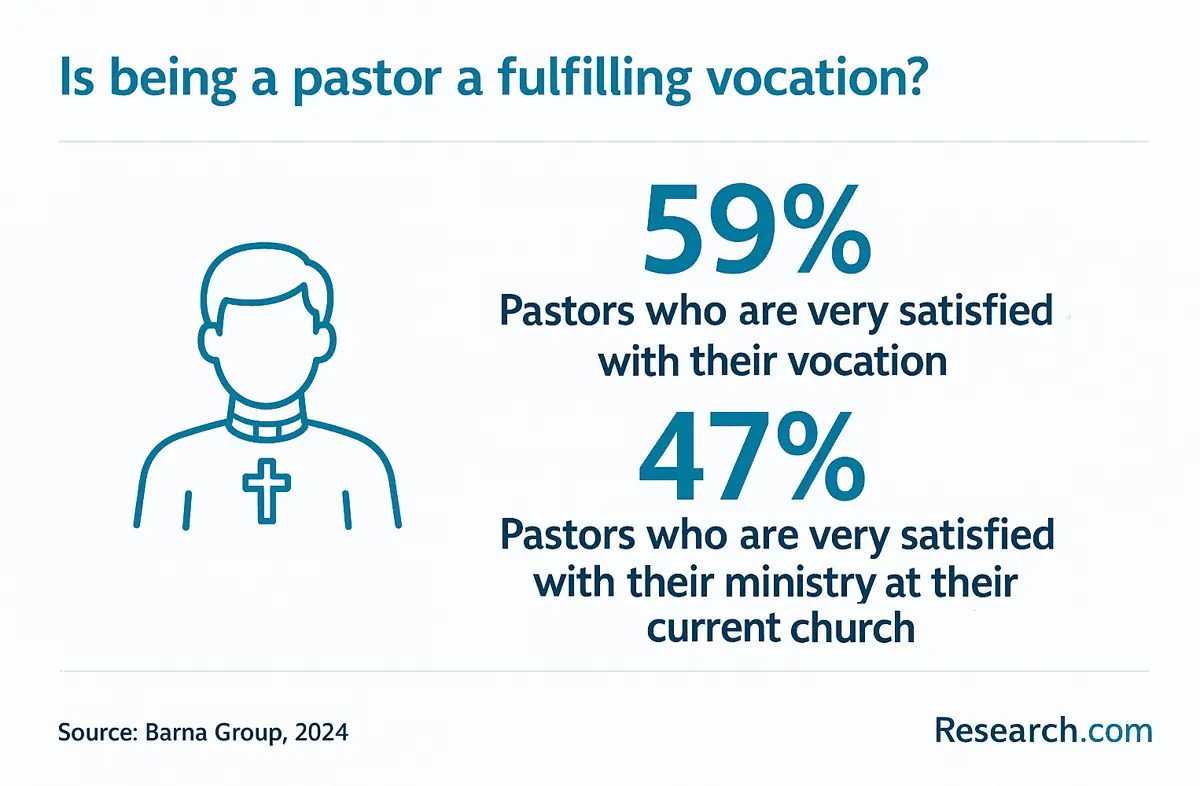
Ministry preparation can require significant time, sacrifice, and financial planning. Still, many pastors report strong vocational satisfaction. Barna Group (2024) reported that 59% of pastors are very satisfied with their vocation, while 47% are highly satisfied with their ministry at their current church.
Those figures do not guarantee that every graduate will feel the same way, but they do show that ministry can provide a strong sense of purpose for people who are well matched to the work.
What is the average cost of an Online Christian Leadership Degree program?
Tuition varies substantially by institution, degree level, accreditation type, and credit requirement. The cost per credit hour for an online Christian leadership degree ranges from $185 to $723.
Huntsville Bible College is cited at the lower end with a cost of $185 per credit, while Harding University is cited at the higher end at $723 per credit.
Because bachelor’s programs typically require about 120 credits, total tuition can range from approximately $22,200 to $86,760. Master’s programs often require 36 to 60 credits, which can place total tuition between $6,600 and $43,380.
| Cost factor | Why it affects total price | What to ask before enrolling |
| Cost per credit | A small difference per credit becomes significant across 120 credits or 60 credits | Is the published rate the same for online students, part-time students, and out-of-state students? |
| Transfer credits | Accepted credits can reduce both time and tuition | How many prior credits can transfer, and will ministry training or prior learning be evaluated? |
| Fees | Technology, graduation, course, and administrative fees can increase the real cost | What is the full program cost beyond tuition? |
| Financial aid | Scholarships, grants, loans, and church support may reduce out-of-pocket expenses | Which aid options apply to this specific online program? |
| Program length | Longer programs may increase tuition, fees, and opportunity cost | Can I study full time, part time, or in an accelerated format? |
Students comparing ministry programs with other helping professions may also review affordable online counseling and social psychology programs, especially if their long-term goal involves counseling, human services, or community support outside church-based ministry.
What are the financial aid options for students enrolling in an Online Christian Leadership Degree program?
Students in online Christian leadership programs may be able to use scholarships, institutional grants, federal aid, church support, denominational assistance, employer support, or payment plans. Aid availability depends heavily on the school’s accreditation, the student’s eligibility, and the specific program.
Some schools and ministry training organizations offer aid aimed at students preparing for Christian service. For example, Christian Leaders Institute scholarship information describes opportunities that support access to more than 100 college and ministry training classes. It also describes Pool of Bethesda Scholarships for students who cannot afford even the lowest monthly payment; these donation-funded scholarships cover degree program administration fees.
Eligible students may also be able to complete the Free Application for Federal Student Aid (FAFSA) to seek Pell Grants or federal student loans, but this usually requires enrollment in a qualifying accredited institution or program. Do not assume every Bible college, seminary, or online ministry program qualifies for federal aid.
Churches, denominations, and Christian foundations may also provide tuition support, especially for students already serving in ministry. Ask whether aid is a scholarship, a grant, a loan, a reimbursement arrangement, or a service commitment.
Financial aid checklist
- Confirm whether the school participates in federal student aid programs.
- Ask whether online students qualify for the same scholarships as campus students.
- Check whether your church or denomination offers ministry education support.
- Review whether scholarships renew each year or apply only once.
- Calculate the full cost after tuition discounts, fees, books, and technology expenses.
- Avoid borrowing more than your likely ministry salary can reasonably support.
What are the prerequisites for enrolling in an Online Christian Leadership Degree program?
Admissions requirements differ by school and degree level, but Christian leadership programs usually evaluate academic readiness, faith commitment, ministry experience, and alignment with the institution’s mission or theological perspective.
| Requirement | Common expectation | Why it matters |
| High school diploma or GED equivalent | Usually required for undergraduate admission | Shows baseline academic eligibility for college-level study |
| Christian faith background | Many programs expect a clear commitment to Christian belief and service | Helps schools assess fit with ministry-focused coursework and community expectations |
| Prior undergraduate coursework | Often required for graduate programs; some may prefer theology, religion, or related study | Ensures students can handle advanced theological and leadership material |
| Letters of recommendation | Often requested from pastors, mentors, ministry leaders, or academic references | Provides evidence of character, leadership potential, and readiness for ministry |
| Personal statement | Usually explains ministry goals, calling, experience, and reasons for choosing the program | Helps admissions teams understand purpose and fit |
| Church or ministry involvement | Some programs ask for evidence of active service | Shows that the applicant has practical exposure to faith-based leadership |
| Interview or statement of faith | May be required by schools with specific doctrinal commitments | Clarifies theological alignment and expectations before enrollment |
Formal education often builds on discipleship and ministry experience students already have. Barna Group (2024) data shows that 29% of adults are discipled by a personal mentor, 26% by the pastor at their current church, and 25% through small groups or Bible studies.
Those informal pathways can shape future leaders before they ever enter a degree program. A Christian leadership degree then adds structure, academic training, supervised reflection, and practical leadership tools.
What courses are typically in an Online Christian Leadership Degree program?
Most online Christian leadership programs combine biblical literacy, theological reasoning, ministry practice, organizational leadership, and personal spiritual development. Course names vary, but the core subject areas are often similar.
| Course area | What students usually study | How it applies in ministry |
| Biblical studies | Old Testament, New Testament, hermeneutics, historical context, and interpretation | Supports preaching, teaching, Bible study leadership, and theological reflection |
| Theology | Christian doctrine, the nature of God, salvation, church, ethics, and faith traditions | Helps leaders make decisions grounded in coherent theological understanding |
| Church leadership and administration | Governance, budgets, staff oversight, planning, communication, and operations | Prepares graduates to manage the practical side of ministry organizations |
| Ministry and discipleship | Evangelism, spiritual mentoring, outreach, small groups, and faith formation | Equips leaders to guide people toward long-term spiritual growth |
| Pastoral care | Caregiving, crisis response, grief support, counseling boundaries, and referral practices | Builds skills for supporting people in emotionally and spiritually difficult moments |
| Ethics in ministry | Integrity, power, confidentiality, conflicts of interest, accountability, and moral leadership | Helps leaders handle responsibility with wisdom and transparency |
| Spiritual formation | Prayer, reflection, character development, discipline, and personal growth | Connects leadership practice with personal maturity and faithfulness |
| Group dynamics and support groups | Small-group leadership, group facilitation, recovery support, and community care | Prepares leaders to guide Bible studies, support groups, and ministry teams effectively |
Pastoral care coursework may overlap with some of the steps involved in becoming a spiritual counselor, although spiritual counseling, pastoral counseling, and licensed clinical counseling are different pathways with different training and credentialing expectations.
Support-group facilitation can also touch on skills used by an addiction counselor, but ministry leaders should understand boundaries and referral responsibilities when people need clinical treatment.
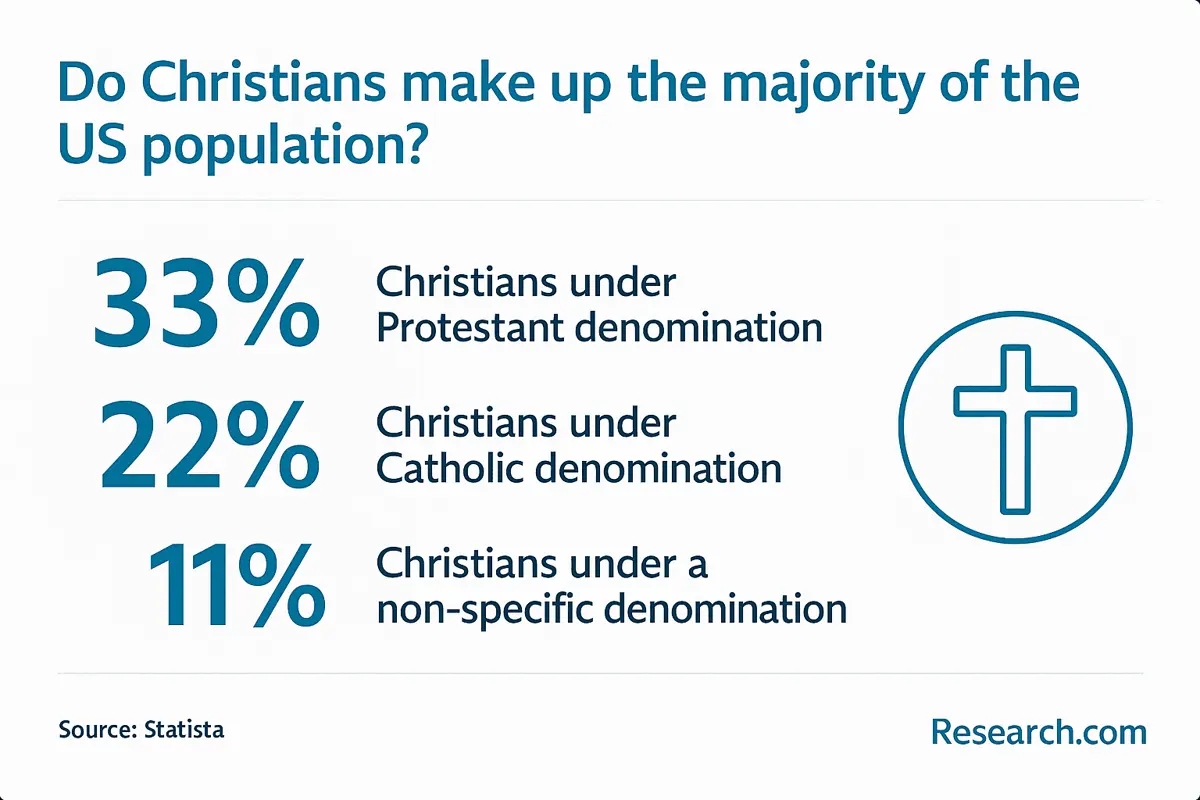
Christian leadership programs also help students understand denominational diversity. Statista (2025) reports that 33% of people identify as Christians under Protestant denominations, 22% as Christians under the Catholic denomination, and 11% as Christians with no specific denomination. Future leaders may need to work with people whose worship practices, governance structures, and theological assumptions differ from their own.
Students comparing online study across very different fields can also review affordable online aerospace engineering degree options, although the admissions requirements, career outcomes, and technical preparation differ substantially from ministry education.
What types of specializations are available in an Online Christian Leadership Degree program?
Specializations help students align coursework with a specific ministry setting or career goal. The right concentration depends on whether you want to lead a congregation, teach, counsel within a ministry context, oversee worship, manage a nonprofit, or serve cross-culturally.
Church Leadership
This concentration focuses on congregational leadership, church governance, ministry planning, team development, staff supervision, and organizational decision-making. It is a strong fit for students preparing for senior pastor, associate pastor, executive pastor, or church administrator roles.
Youth Ministry
Youth ministry emphasizes spiritual formation for children, teenagers, and young adults. Students may study age-specific discipleship, mentoring, retreat planning, youth outreach, family ministry, and safeguarding practices.
Christian Education
Christian education prepares students to design curriculum, teach biblical content, train volunteers, and lead faith formation programs in churches, Christian schools, or ministry organizations.
Biblical Counseling
Biblical counseling focuses on spiritual guidance, conflict resolution, relationship support, crisis response, and Scripture-informed care. Students who want deeper preparation in this area may also compare online Christian counseling master’s programs.
Worship Leadership
Worship leadership is designed for students who want to plan worship services, lead music ministry, coordinate worship teams, and shape spiritually meaningful congregational gatherings.
Nonprofit Leadership
This track develops skills in fundraising, program management, community outreach, resource stewardship, volunteer leadership, and mission-driven administration. Students who want broader management preparation may also examine online dual MBA degree programs, particularly if they expect to oversee complex nonprofit operations.
Global Missions and Evangelism
Global missions and evangelism prepares students for cross-cultural ministry, church planting, outreach strategy, international service, and mission leadership. It is best suited to students who are comfortable with cultural adaptation, travel, language learning, and community-based service.
How to choose the best Online Christian Leadership Degree program?
The best online Christian leadership program is not always the cheapest or the highest ranked. It is the one that fits your calling, theology, budget, schedule, learning style, and career requirements. Students comparing faith-based online options can also review broader online Christian college programs to understand how institutions differ.
| Selection factor | What to evaluate | Why it matters |
| Accreditation | Institutional and programmatic accreditation, plus eligibility for federal aid if needed | Affects credibility, transferability, financial aid access, and graduate school options |
| Theological fit | Statement of faith, denominational alignment, faculty perspective, and curriculum emphasis | Ensures the program supports your ministry context rather than creating conflict with it |
| Curriculum | Bible, theology, leadership, pastoral care, administration, discipleship, and field experience | Determines whether the degree prepares you for your intended role |
| Online format | Asynchronous courses, live sessions, accelerated terms, and part-time options | Impacts whether you can study while working or serving in ministry |
| Faculty and mentoring | Academic credentials, ministry experience, advising, and spiritual formation support | Strong mentoring can be especially valuable in ministry preparation |
| Cost and aid | Tuition, fees, scholarships, transfer credits, and payment plans | Helps you avoid unnecessary debt for typically modest-paying ministry roles |
| Practical experience | Internships, practicums, supervised ministry, and portfolio projects | Gives employers evidence that you can lead in real ministry settings |
Common mistakes to avoid when choosing a program
- Choosing only by tuition: A low-cost program may still be a poor fit if credits do not transfer, accreditation is limited, or the curriculum does not match your goals.
- Ignoring accreditation: Accreditation can affect financial aid, graduate admission, employer confidence, and transfer credit decisions.
- Assuming online means easier: Online ministry programs still require reading, writing, theological reflection, group work, and field-based application.
- Overlooking denominational requirements: Some pastoral or chaplaincy pathways require specific degrees, ordination steps, clinical training, or denominational approval.
- Not calculating total cost: Tuition is only one part of the expense. Fees, books, technology, travel for intensives, and delayed graduation can increase the real cost.
- Relying only on rankings: Rankings can guide your search, but your final decision should include fit, support, curriculum, and ministry outcomes.
What career paths are available for graduates of Online Christian Leadership Degree programs?
Christian leadership graduates can pursue many types of faith-based work, but the degree alone may not qualify someone for every role. Churches and organizations often consider spiritual maturity, ministry experience, denominational approval, references, preaching or teaching ability, leadership capacity, and theological fit.
| Career path | Typical responsibilities | Additional preparation that may be needed |
| Pastoral leadership | Preaching, teaching, shepherding congregants, leading staff or volunteers, setting ministry direction | Ordination, denominational approval, internship, Master of Divinity, or preaching experience |
| Pastoral counseling | Providing spiritual guidance, premarital support, crisis care, and referrals when clinical needs arise | Students should understand how to become a pastoral counselor and how that path differs from licensed counseling |
| Church administration | Managing operations, budgets, facilities, communication, records, and staff systems | Administrative experience, budgeting skills, and familiarity with church governance |
| Nonprofit leadership | Directing programs, fundraising, supervising staff, managing volunteers, and measuring community impact | Grant writing, nonprofit management, financial stewardship, and board communication |
| Youth ministry | Leading youth discipleship, events, mentoring, camps, outreach, and family engagement | Safeguarding training, volunteer management, and age-specific ministry experience |
| Christian education | Developing curriculum, training teachers, leading Bible education, and supporting faith formation | Teaching experience, curriculum design skills, and sometimes school-specific requirements |
| Missionary work | Serving communities, leading outreach, church planting, teaching, and cross-cultural ministry | Language learning, cultural preparation, missions agency requirements, and fundraising |
| Chaplaincy | Offering spiritual care in hospitals, military settings, correctional facilities, or institutions | Often requires advanced theological study, supervised clinical training, endorsement, or certification |
Youth and community leaders often support young adults who are exploring education and employment choices. For example, some may point students toward practical training such as affordable online appliance repair trade school programs when a vocational path fits their goals.
Missionary compensation may differ from a typical Christian counselor salary or other professional salaries, but many people choose missions because of service, faith commitment, and community impact rather than income alone.
Career entry into ministry is not limited to people who began in church work. Lifeway Research (2023) reported that 34% of pastors spent five years or less in non-ministry jobs, while 24% spent six to ten years in secular work before ministry. Some pastors reported 26-30 years at 7%, and more than 30 years at 8%.
This shows that ministry careers often include second-career leaders who bring experience from business, education, trades, counseling, military service, nonprofit work, or other fields.
What is the job market for graduates with an Online Christian Leadership Degree?
The job market for Christian leadership graduates is steady but not uniform. Opportunities depend on geography, church size, denominational hiring patterns, nonprofit funding, chaplaincy requirements, and whether the graduate has both education and ministry experience.
The U.S. Bureau of Labor Statistics projects clergy employment to grow by 3% from 2023 to 2033. Religious workers are expected to grow by 2% over the same period, which is about as fast as the average for all occupations.
Church planting is another area of need. The Great Opportunity initiative states that approximately 4,000 churches are planted annually in the U.S., while about 3,700 churches close each year, resulting in a net increase of only about 300 churches. The same initiative states that about 416,000 churches would be needed by 2050.
These figures point to a continuing need for trained leaders, but students should interpret them carefully. A degree can improve preparation, but hiring still depends on theological fit, leadership ability, pastoral maturity, references, and the needs of each church or organization.
Is the Cost of an Online Christian Leadership Degree Justified by Its Returns?
The financial return on an online Christian leadership degree is different from the return on many business, engineering, or technology degrees. Ministry work may provide purpose, community impact, leadership opportunity, and spiritual fulfillment, but salaries are often modest and vary widely.
To evaluate ROI, compare the full program cost with realistic job options. Use salary data for the roles you are actually considering, not the highest-paying ministry titles. Consider whether you will need a master’s degree, ordination, chaplaincy certification, or supervised experience after the bachelor’s degree.
Students weighing ministry education against other service-oriented careers may compare costs and outcomes with programs such as a low-cost online master’s in early childhood education. The right choice depends on whether your primary goal is church leadership, education, counseling, nonprofit work, or another form of community service.
How Can an Accelerated Online EdD Degree Enhance Your Christian Leadership Trajectory?
An advanced doctorate is not necessary for most entry-level ministry roles, but experienced Christian leaders may consider doctoral study if they want to teach, lead complex organizations, conduct applied research, improve educational programs, or guide institutional change.
An EdD can be useful for leaders working in Christian education, seminary administration, nonprofit executive leadership, denominational training, or organizational development. Students seeking a faster doctoral pathway may compare options such as an accelerated online EdD degree.
Before choosing this route, confirm that the degree supports your actual goals. A doctorate can deepen expertise, but it also requires time, research commitment, and financial investment.
How Does an Online Christian Leadership Degree Compare to Other Online Programs in Terms of ROI?
An online Christian leadership degree should be evaluated through both financial and nonfinancial outcomes. Financially, graduates may enter roles with modest salaries. Nonfinancially, the degree can support preaching, discipleship, pastoral care, nonprofit service, missions, and community transformation.
Other online degrees may have clearer technical career pathways. For instance, a student comparing quick entry into a quantitative field might examine the fastest online bachelor’s degree programs in mathematics. Those programs usually serve different goals than Christian leadership programs.
The main question is not which degree has the highest generic ROI. The better question is which degree leads to the kind of work you are prepared to do, can afford to pursue, and will still value after graduation.
How Can an Online Christian Leadership Degree Prepare You for the Evolving Digital Ministry Landscape?
Digital ministry is now part of many churches and faith-based organizations. Leaders may need to teach online, manage livestream worship, engage people through social media, organize digital discipleship groups, maintain online giving systems, communicate across platforms, and support remote or hybrid communities.
A strong online Christian leadership program may help students develop digital communication skills, online teaching practices, ethical media use, virtual community-building strategies, and technology-informed ministry planning. These skills do not replace in-person ministry, but they can extend a church’s reach and improve communication.
Students who want to strengthen digital resource management and information organization may also compare related programs such as a low-cost online master’s degree in library science, especially if their ministry work involves archives, research, education, or digital learning resources.
Do churches and organizations typically hire leaders with a degree in Christian leadership?
Yes, some churches and faith-based organizations hire graduates with Christian leadership degrees, but the degree is rarely the only hiring factor. Employers often look for theological alignment, proven character, preaching or teaching ability, ministry experience, references, leadership maturity, and denominational approval.
Degrees in biblical studies, theology, religious education, ministry, divinity, counseling, education, nonprofit leadership, or related fields may also be accepted depending on the role. For pastoral positions, some churches may prefer or require a Master of Divinity, ordination, or denominational credentials.
Educational attainment among pastors shows that formal education is common. The referenced chart reports that 51% of pastors hold a bachelor’s degree, 31% hold a master’s degree, 8% hold an associate degree, 4% hold a doctorate, and 6% have other degrees.
This suggests that a bachelor’s or master’s degree is a common route into pastoral leadership, though not the only one. Practical experience, spiritual maturity, and fit with a congregation remain essential.
How Can You Verify the Quality and Accreditation of an Online Christian Leadership Degree?
Accreditation should be one of your first checks. It can affect whether your credits transfer, whether you qualify for federal financial aid, whether graduate schools recognize your degree, and how employers view your credential.
For Christian leadership programs, students may encounter institutional accreditation, faith-based accrediting bodies, or distance education accreditation. Compare the accreditor with your goals. A program may be acceptable for church service but less useful for transfer, graduate school, chaplaincy, or licensure-related pathways.
Students who want a broader understanding of accreditation can compare quality signals used in accredited online education degree programs, such as transparent curriculum information, faculty qualifications, student support, outcomes data, and clear admissions policies.
Questions to ask before applying
- Is the institution accredited, and by which agency?
- Does the accreditation support federal financial aid eligibility?
- Will credits transfer to other colleges, seminaries, or graduate programs?
- Does the program meet expectations for ordination, chaplaincy, or denominational service?
- Who teaches the courses, and what are their academic and ministry qualifications?
- Does the curriculum include supervised ministry experience or practical projects?
- What student support is available for online learners?
- What is the total cost after tuition, fees, books, and technology expenses?
What Graduates Often Value About an Online Christian Leadership Degree
Graduate feedback often points to three themes: flexibility, confidence, and clearer ministry direction. Online study can allow students to keep serving in their church while completing assignments, discussing ministry problems with classmates, and applying leadership concepts immediately.
- Flexibility: Students often value being able to study while managing work, family, and ministry responsibilities.
- Practical leadership growth: Coursework can help students become more confident in leading groups, mentoring individuals, organizing ministry projects, and managing church activities.
- Renewed sense of calling: Some students enter with a general passion for ministry and leave with a clearer understanding of how they want to serve.
Key Insights
- An online Christian leadership degree is best for students who want flexible preparation for church, nonprofit, ministry, education, chaplaincy, or mission-related leadership.
- Undergraduate programs typically require 120 credit hours, while graduate programs commonly range from 36 to 60 credit hours.
- Online Christian leadership tuition can range from $185 to $723 per credit, creating a large difference in total cost between programs.
- Cost matters because ministry salaries are often modest. ZipRecruiter reports averages of $60,902 for pastors, $44,979 for church administrators, $40,815 for youth ministers, and $63,587 for chaplains.
- The Bureau of Labor Statistics projects 3% growth for clergy roles from 2023 to 2033 and reports a clergy median salary of $60,820.
- Accreditation, theological fit, transfer credit policy, faculty experience, online flexibility, and supervised ministry opportunities should matter more than rankings alone.
- Churches may hire Christian leadership graduates, but they usually also evaluate calling, character, experience, denominational fit, and leadership maturity.
- Formal education is common among pastors: 51% hold a bachelor’s degree, 31% hold a master’s degree, 8% hold an associate degree, 4% hold a doctorate, and 6% have other degrees.
- Ministry is not always a first career. Lifeway Research reported that 34% of pastors spent five years or less in non-ministry jobs, while 24% spent six to ten years in secular work before ministry.
- The strongest program choice is the one that supports your specific ministry path without creating unnecessary debt or credential limitations.
References:
- Barna Group. (2024). Hopeful increases among pastors. Retrieved from https://www.barna.com/research/hopeful-increases-pastors/
- Bureau of Labor Statistics. (2023). Clergy: Occupational outlook handbook. Retrieved from https://www.bls.gov/emp/tables/occupational-projections-and-characteristics.htm
- Bureau of Labor Statistics. (2023). Occupational employment and wages, May 2023: 21-2011 clergy. Retrieved from https://www.bls.gov/oes/2023/may/oes212011.htm
- Lifeway Research. (2024, August 6). Most pastors have limited non-ministry work experience. Retrieved from https://research.lifeway.com/2024/08/06/most-pastors-have-limited-non-ministry-work-experience/
- Statista. (2023). Self-described religious identification of Americans. Retrieved from https://www.statista.com/statistics/245478/self-described-religious-identification-of-americans/
- U.S. Department of Labor. (2023). Religious workers: Occupational outlook handbook. Retrieved from https://www.onetonline.org/link/localtrends/21-2099.00?st=
- ZipRecruiter. (2023). Church office administrator salary. Retrieved from https://www.ziprecruiter.com/Salaries/Church-Office-Administrator-Salary#Yearly
- ZipRecruiter. (2023). Pastor salary. Retrieved from https://www.ziprecruiter.com/Salaries/Pastor-Salary
- ZipRecruiter. (2023). Youth pastor salary. Retrieved from https://www.ziprecruiter.com/Salaries/Youth-Pastors-Salary
- ZipRecruiter. (2023). Chaplain job salary. Retrieved from https://www.ziprecruiter.com/Salaries/Chaplain-Job-Salary
- Great Opportunity. (2023). Starting more churches. Retrieved from https://www.greatopportunity.org/starting-more-churches
Other Things You Need to Know About an Online Christian Leadership Degree
Yes, many online Christian Leadership degree programs in 2027 allow credit transfer. However, transfer policies vary by institution. Typically, schools require a minimum grade and will evaluate the relevance and accreditation of previous courses for eligibility.
Most affordable online Christian leadership bachelor’s programs require about 120 semester credits, including general education, Bible or theology courses, and leadership classes. Some completion tracks accept up to 60 transfer credits, which can shorten time to graduation to about two years for transfer students.
In 2027, institutions like Liberty University, Southeastern University, and Crown College offer some of the most affordable online Christian Leadership degree programs. These programs provide flexible learning options while integrating faith-based leadership training with practical skills applicable to various ministry and non-ministry careers.


