
2027 Is Environmental Engineering a Hard Major? What Students Should Know

Co-Founder and Chief Data Scientist
Choosing environmental engineering means choosing a major that sits at the intersection of engineering, chemistry, biology, math, public health, infrastructure, and environmental regulation. It can be rewarding for students who want to solve practical problems such as clean water access, pollution control, sustainable design, and waste management. It can also be a tough academic path because the work is both technical and applied.
Environmental engineering is often viewed as a demanding major because students must move between equations, lab data, design constraints, field conditions, and legal requirements. According to data, enrollment in environmental engineering programs grew by nearly 15% in the U.S. over the past decade, reflecting rising interest as well as a more competitive academic environment. Many students underestimate the workload, especially the time required for labs, reports, team projects, and prerequisite-heavy STEM courses.
This guide explains how hard environmental engineering is, where it ranks among difficult majors, what makes the coursework challenging, who tends to do well, and how students can make the major more manageable. It also covers admissions competitiveness, online and accelerated formats, part-time work, common careers, and whether the degree’s difficulty translates into higher pay.
Key Benefits of Environmental Engineering as a Major
- Environmental engineering develops practical problem-solving skills, beneficial for career changers adapting to technical fields.
- The discipline offers flexible learning pathways, supporting full-time workers returning to school with part-time and online options.
- Environmental engineering fosters confidence in managing complex technical projects, ideal for undergraduates seeking specialized expertise.
Where does environmental engineering rank among the hardest college majors?
Environmental engineering is usually considered one of the more difficult college majors, but it is not typically viewed as the hardest engineering discipline. Its difficulty comes less from one extremely advanced subject and more from the need to combine several demanding areas: math, chemistry, biology, physics, engineering design, environmental systems, lab work, fieldwork, and regulation.
According to a 2024 ranking by Big Economics, environmental engineering ranks as the 28th hardest major out of 118, with 62.5% of professors rated as challenging. That placement reflects a major that is clearly rigorous, especially compared with many non-engineering fields, but often somewhat less math- and physics-intensive than chemical, electrical, or aerospace engineering.
The ranking also does not tell the whole story. A student who is comfortable with chemistry, data analysis, and applied problem-solving may find environmental engineering more manageable than a student who prefers purely conceptual or writing-based coursework. On the other hand, students who struggle with quantitative reasoning, multi-step design problems, or long lab reports may experience the major as very demanding.
Several academic features explain why the major ranks high in difficulty:
- Interdisciplinary course load: Students must understand engineering fundamentals while also learning environmental science, public health concepts, and regulatory frameworks.
- Math and science prerequisites: Many accredited programs require calculus-based statistics and differential equations, along with chemistry, biology, and physics.
- Applied assignments: Coursework often requires students to design systems, analyze samples, interpret data, and explain decisions in technical reports.
- Lab and field expectations: Time outside class can be substantial because experiments, site visits, group projects, and design work cannot always be completed quickly.
In practical terms, environmental engineering is a hard major for students who want a light schedule or minimal quantitative work. It is a more reasonable challenge for students who like applied science, can stay organized, and are motivated by environmental problem-solving.
What factors make environmental engineering a hard major?
Environmental engineering is difficult because it asks students to master technical content and then apply it to real-world systems that are messy, regulated, and rarely solved by a single formula. A homework problem may involve calculations, but a design project may also require cost awareness, safety considerations, stakeholder needs, environmental impact, and compliance standards.
The hardest parts of the major usually fall into four areas:
- Academic rigor: The curriculum blends engineering principles with environmental science. Students are expected to build competence in chemistry, biology, physics, advanced mathematics, fluid mechanics, environmental systems, and design. While the major may be less math-intensive than some engineering fields, its breadth requires steady study habits and the ability to connect ideas across subjects.
- Time commitment: Environmental engineering course workload and demands often extend well beyond lectures. Labs, field studies, group design work, data analysis, and technical reports can create heavy workload peaks during the semester. Students who wait until the end of the week to begin assignments often fall behind quickly.
- Technical and analytical complexity: Students must learn how to analyze scientific data, evaluate uncertainty, follow quality control procedures, and interpret environmental regulations. This can be challenging because the “right” answer may depend on assumptions, site conditions, regulatory thresholds, and engineering judgment.
- Field-specific demands: Environmental legislation, site inspections, hazardous waste management, water and wastewater treatment, pollution control, and remediation introduce responsibilities that are specific to the field. Students must be comfortable with both technical detail and public-impact decisions.
A common mistake is assuming that environmental engineering is mainly an environmental science major with a few engineering classes added. In reality, it is an engineering degree. Students should expect design problems, quantitative analysis, laboratory procedures, technical documentation, and professional standards.
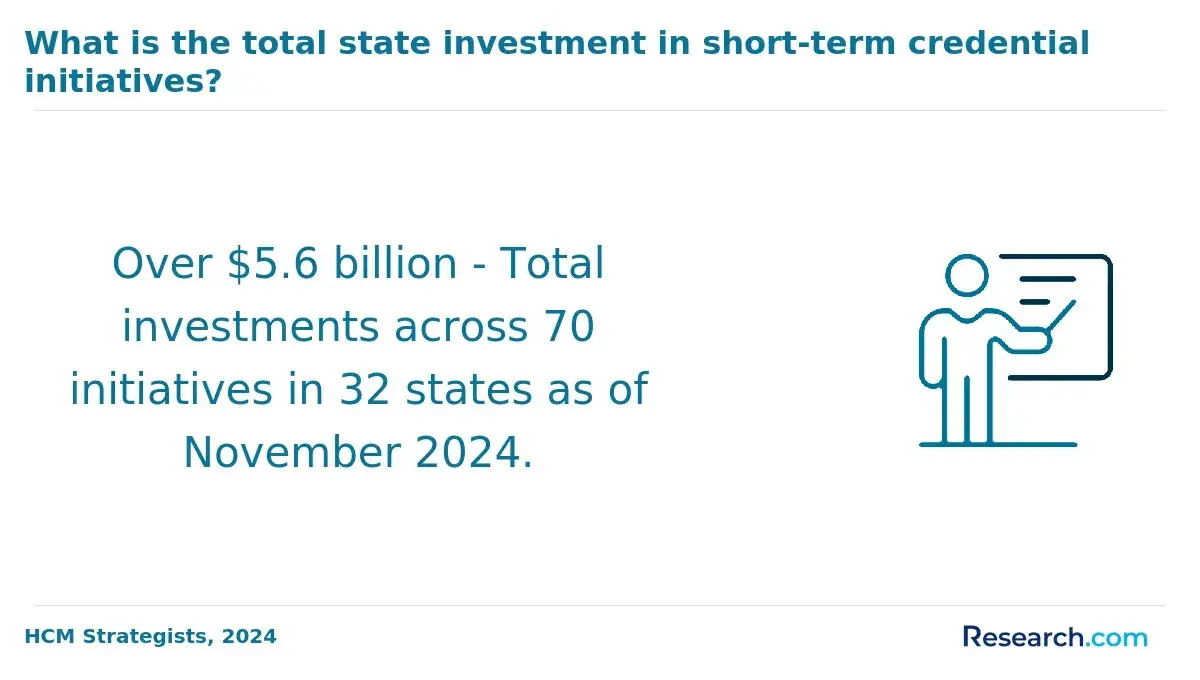
For students who are interested in environmental or technical work but want a shorter training path, exploring 6 month certificate courses that lead to high paying careers may help identify faster alternatives in related career areas. These options are not a direct substitute for an engineering degree, but they can be useful for students comparing time, cost, and career goals.
Who is a good fit for an environmental engineering major?
A good fit for environmental engineering is not simply someone who “cares about the environment.” Motivation matters, but students also need the patience and discipline to handle technical coursework, lab procedures, group design projects, and detailed problem-solving.
Students who tend to do well in environmental engineering often share these traits:
- Analytical thinkers: They are comfortable using math, chemistry, biology, and data to understand complex systems. They may not find every technical course easy, but they are willing to practice until the logic becomes clear.
- Creative problem solvers: Environmental problems often involve constraints such as budget, location, public safety, infrastructure limits, and regulation. Strong students can compare imperfect options and justify a practical solution.
- Team-oriented communicators: Many courses include labs, design teams, presentations, and written reports. Students who can explain technical ideas clearly and work through group conflict have an advantage.
- Passionate advocates for sustainability: A real interest in environmental protection, public health, and community impact can help students persist through difficult semesters.
- Holistic critical thinkers: Environmental engineering problems rarely stay inside one discipline. Successful students can connect engineering design with ecology, public policy, economics, and human behavior.
This major may be a poor fit for students who strongly dislike math, avoid laboratory work, or prefer assignments with simple right-or-wrong answers. It may also be frustrating for students who want quick results, because environmental engineering often involves long-term systems, permitting processes, and careful risk analysis.
Students comparing difficulty across majors can review what are the easiest degrees to get, but environmental engineering should be approached as a serious technical degree. It is best suited for students who want a challenging path with applied social and environmental value.
How can you make an environmental engineering major easier?
You cannot make environmental engineering easy, but you can make it much more manageable. The students who struggle most are often not the least intelligent; they are the ones who treat engineering courses like classes that can be handled through last-minute reading or memorization. This major rewards steady practice, early help-seeking, and organized project planning.
These strategies can reduce stress and improve performance:
- Strengthen your STEM foundation before courses become advanced: Review algebra, trigonometry, calculus basics, chemistry, and physics regularly. Weak foundations make later topics feel much harder, especially fluid mechanics, treatment processes, statistics, and design courses.
- Practice problems before you feel ready: Reading solutions is not the same as solving problems. Work through calculations, make mistakes, and learn the steps. Engineering understanding usually comes from repeated application.
- Treat labs and reports as major assignments: Lab work can consume more time than students expect. Start data analysis and report writing early so you have time to check assumptions, units, citations, and conclusions.
- Use office hours before you are lost: Faculty and teaching assistants can often identify one misunderstanding that is affecting an entire problem set. Waiting until exam week reduces the benefit.
- Build reliable study groups: Peer study can expose you to different problem-solving approaches. The best groups compare reasoning and teach each other, rather than simply splitting up homework.
- Protect your weekly schedule: Block time for lectures, labs, commuting, meals, exercise, sleep, and project work. Environmental engineering becomes harder when students overload themselves with too many commitments.
- Connect coursework to real applications: Internships, engineering clubs, design competitions, research projects, and field experiences can make difficult concepts easier to understand because they show why the methods matter.
When I spoke with a graduate who majored in environmental engineering, she recalled feeling overwhelmed by the coursework and fast pace at first. She said joining peer study groups “opened up new ways of thinking about problems” that she had struggled to solve alone. Using several learning formats, including videos, practice problems, and hands-on projects, helped her stay engaged when the material felt abstract.
She also emphasized that learning to say no to extra commitments was a “game changer.” Looking back, she said, “It wasn't easy, but adopting small, consistent habits made the workload manageable and gave me confidence to push through tough classes.”
Are admissions to environmental engineering programs competitive?
Admissions to environmental engineering programs in the US can be competitive, especially at highly selective universities and schools with limited engineering lab, design, and fieldwork capacity. The level of competition varies widely by institution, so students should avoid judging the entire field by a few elite programs.
Top schools such as Stanford, MIT, and UC Berkeley often have acceptance rates in the single digits. At these institutions, applicants are usually competing with students who have strong grades, advanced math and science preparation, high test scores where considered, and meaningful extracurricular or research experience.
Elite universities typically require median SAT scores between 1470 and 1550, ACT scores ranging from 33 to 35, and strong GPAs. Applicants may also strengthen their profile with advanced coursework in calculus, chemistry, and physics, as well as environmental clubs, engineering competitions, science research, volunteering, or internships related to sustainability or infrastructure.
Mid-tier programs can be more accessible, with acceptance rates sometimes exceeding 40%. These programs may still be academically demanding once admitted, so students should look beyond admission odds and evaluate curriculum structure, academic support, lab access, internship connections, accreditation status, and transfer pathways.
Students applying to environmental engineering should focus on the following:
- Math readiness: Admissions committees and engineering departments expect applicants to be prepared for calculus and science-heavy coursework.
- Science preparation: Chemistry and physics are especially important because they appear throughout the curriculum.
- Evidence of fit: Projects, research, volunteering, or coursework related to water, energy, pollution, sustainability, or public health can show genuine interest.
- Program quality: Students should verify whether the program fits their goals, including preparation for engineering practice, graduate study, or licensure-related pathways where applicable.
When I spoke with a professional who majored in environmental engineering, he described the admissions process as daunting but worthwhile. “Preparing for the intense coursework and meeting all the prerequisites felt like climbing a steep mountain,” he said. He noted that balancing strong academics with extracurricular involvement made the application process rigorous, but the preparation helped him enter the major with more confidence.
Is an online environmental engineering major harder than an on-campus program?
An online environmental engineering major is not necessarily harder academically, but it can be harder to manage. The core subjects are still technical, and reputable programs should require serious work in math, science, engineering analysis, design, and environmental systems. The main difference is how students access instruction, labs, peer support, and hands-on learning.
For many students, online study adds flexibility but removes structure. That trade-off matters in a major where missing one concept can make the next unit harder. Online learners must be proactive about deadlines, communication, tutoring, group projects, and any in-person requirements.
- Academic expectations and workload: Both online and on-campus formats require advanced math, physics, chemistry, biology, and engineering coursework. The degree should not be assumed easier simply because it is delivered online.
- Flexibility and self-discipline: Online programs can make scheduling easier for working adults or students with family responsibilities. However, students need strong self-motivation because there may be fewer built-in reminders and less face-to-face accountability.
- Interaction and support: On-campus students usually have more immediate access to faculty, classmates, labs, and study spaces. Online students may need to rely on virtual office hours, discussion boards, email, recorded lectures, and scheduled meetings.
- Hands-on experience: Environmental engineering often requires lab and field components. Online students should ask how the program handles labs, simulations, local placements, field experiences, and design projects before enrolling.
- Group work: Team projects can be harder online because students may be in different time zones or balancing different schedules. Clear communication and early planning are essential.
The better choice depends on the student. On-campus programs may be better for students who want structured support, direct lab access, and in-person collaboration. Online programs may work well for disciplined students who need flexibility and can arrange or complete required hands-on components.
For students exploring flexible graduate options in other fields, PhD with no dissertation programs may also be worth comparing. They are not the same as environmental engineering degrees, but they illustrate how program format can affect workload, research expectations, and scheduling.
Are accelerated environmental engineering programs harder than traditional formats?
Accelerated environmental engineering programs are generally harder than traditional formats because they compress demanding technical material into a shorter timeline. The content may be similar, but the pace gives students less time to absorb concepts, recover from weak exam performance, complete projects, and balance outside responsibilities.
The challenge is especially high because engineering courses often build in sequence. If a student rushes through prerequisite math, chemistry, or mechanics, later design and analysis courses may become much harder.
- Course pacing and content density: Accelerated programs may compress the same 120 credits into 2-3 years with 8-week sessions, doubling content delivery speed compared to the typical 4-year structure with 14-16 week semesters.
- Workload management: Students may handle 4-5 concurrent courses, which requires strict time management. This can be especially demanding when labs, design projects, and technical reports overlap.
- Prerequisite sequencing: Math and science courses often must be taken in order. That limits how easily students can rearrange courses and can make accelerated planning difficult.
- Learning retention: Traditional formats usually provide more time to revisit complex topics such as pollution control, water treatment, modeling, and environmental systems. Accelerated students may have less time for reflection and deeper practice.
- Stress and recovery time: Faster sessions can leave little room for illness, work conflicts, family obligations, or a difficult exam. One missed week can have a larger impact than it would in a longer semester.
- Flexibility: Some accelerated programs offer online asynchronous delivery, which can help working professionals. However, flexibility in schedule does not necessarily mean a lighter workload.
Accelerated programs are best for students with strong academic preparation, few competing obligations, reliable time-management habits, and a clear reason to finish faster. Students who need more time to master technical subjects may be better served by a traditional format, even if it takes longer.
Students comparing accelerated and traditional options should also consider cost. Reviewing online college low tuition schools can help students evaluate whether a faster or more flexible pathway is financially realistic.
Can you manage a part-time job while majoring in environmental engineering?
Yes, some students can manage a part-time job while majoring in environmental engineering, but it requires careful planning. The major can create a weekly workload often exceeding 40 hours when lectures, labs, homework, readings, group projects, exam preparation, and reports are included. A job becomes much harder to manage during weeks with lab deadlines, design presentations, fieldwork, or multiple exams.
The feasibility depends on three main factors: how many credits you are taking, how flexible your job is, and how efficiently you study. A student working a predictable campus job for limited hours may be able to balance both. A student with long shifts, late nights, commuting demands, or unpredictable scheduling may struggle.
Students who work while majoring in environmental engineering should consider these strategies:
- Choose flexible work when possible: Campus jobs, tutoring, research assistant roles, remote work, or jobs with adjustable shifts may fit better than rigid schedules.
- Avoid overloading lab-heavy semesters: If several courses require labs, reports, or group projects, reducing work hours may be necessary.
- Plan around project deadlines early: Group projects often require meetings outside class. Waiting until the final week can create conflicts with work shifts.
- Use summer and breaks strategically: Internships, co-ops, or seasonal work may provide income and career experience without overwhelming the regular semester.
- Be realistic about sleep and health: Working too many hours can damage academic performance, especially in calculation-heavy courses where focus matters.
Some students manage part-time work successfully by taking fewer credits, spreading electives over a longer timeline, or choosing jobs related to engineering, sustainability, tutoring, or campus operations. Others find that reducing work hours during the most difficult semesters is the better long-term decision.
What jobs do environmental engineering majors get, and are they as hard as the degree itself?
Environmental engineering graduates can enter roles in consulting, government, infrastructure, water resources, waste management, energy, construction, sustainability, and environmental compliance. Some jobs feel as technically demanding as the degree, while others shift the challenge toward communication, project management, client service, regulation, or field coordination.
Common career paths include:
- Environmental Engineer: Designs and evaluates solutions for pollution control, waste management, site remediation, water systems, and compliance. This role can be as demanding as the major because it requires technical analysis, design judgment, documentation, and regulatory awareness.
- Water Resources Engineer: Works on water supply, treatment, stormwater, flood control, hydraulic modeling, and infrastructure planning. The role can be rigorous because mistakes in calculations or assumptions can affect public safety and system performance.
- Environmental Consultant: Helps organizations understand environmental requirements, conduct assessments, prepare reports, and coordinate projects. The difficulty often comes from deadlines, client communication, fieldwork, and regulatory complexity rather than constant advanced calculations.
- Air Quality Engineer: Develops strategies to monitor, model, and reduce air pollution. This role may involve data analysis, emissions estimates, computer modeling, permitting, and compliance work, making it technically demanding.
- Project Engineer: Coordinates engineering projects, schedules, budgets, teams, contractors, and environmental standards. The role may be less specialized day to day, but it can be stressful because it involves responsibility for timelines, coordination, and outcomes.
According to the American Society for Engineering Education, environmental engineering majors report an average GPA of 3.22, slightly higher than many other fields. That does not mean the major is easy; it suggests that students who enter and persist in the field may be relatively prepared and motivated. The curriculum remains rigorous because it combines engineering fundamentals, environmental science, design, and regulatory coursework.
In the workplace, the difficulty changes shape. School emphasizes exams, problem sets, and lab reports. Jobs often emphasize judgment, communication, professional standards, field conditions, deadlines, and accountability. Some graduates find work less intense than school because tasks are more focused. Others find it harder because real projects involve budgets, clients, regulators, public impact, and uncertainty.
For students who want to compare work environments and day-to-day demands, reviewing the best jobs for introverts can help identify roles that better match different communication styles and preferences within environmental or technical fields.
Do environmental engineering graduates earn higher salaries because the major is harder?
Environmental engineering graduates do not automatically earn higher salaries just because the major is hard. Employers pay for skills, experience, responsibility, industry demand, location, licensure-related qualifications where relevant, and the value of the work performed. A difficult degree can help students build marketable skills, but difficulty alone does not set salary.
Starting salaries from top programs range from about $43,000 to $63,000. That can be competitive, but it is not necessarily the highest among engineering fields. Students comparing majors should be careful not to assume that the hardest program always produces the highest pay.
Earnings for environmental engineering graduates are shaped by several factors:
- Industry sector: Consulting, government, energy, construction, water utilities, and private industry can offer different pay structures and advancement paths.
- Job function: Design, project management, environmental compliance, remediation, modeling, and field-based roles may be compensated differently.
- Experience level: Entry-level salaries are usually lower than salaries for senior engineers, project managers, and specialists.
- Location: Geographic markets matter. Regions like California with dense environmental industries often offer salaries exceeding $100,000.
- Credentials and responsibility: Certifications, advanced technical skills, management duties, and licensure-related progress where applicable can affect long-term earnings.
Median salaries can be around $104,170 annually according to U.S. data, but students should interpret that figure carefully. A median salary does not represent every graduate’s first job, and pay can vary substantially by region, employer, role, and experience.
The better question is not whether the major is hard enough to “deserve” higher pay. The better question is whether the degree builds skills that employers need and whether the student is willing to develop those skills into professional expertise over time.
What Graduates Say About Environmental Engineering as Their Major
- Ellie: "Pursuing environmental engineering was definitely challenging, but incredibly rewarding. The courses pushed me to think critically about real-world problems like water treatment and sustainable design. Although the average cost of attendance was high, around $30,000 a year, the knowledge and career opportunities I gained made it worth every penny."
- Quentin: "Reflecting on my time studying environmental engineering, I'd say it's a demanding major with a steep learning curve, especially in math and chemistry. The financial investment, including tuition and materials, was substantial, but understanding how to positively impact environmental policies and infrastructure has been fulfilling both personally and professionally."
- Jace: "Environmental engineering was tough, no doubt, but it gave me invaluable skills that opened doors in the green technology sector. Balancing coursework with the cost-often averaging $25,000 annually-required careful planning. Still, the career impact and chance to contribute meaningfully to the environment make it all worthwhile."
Other Things You Should Know About Environmental Engineering Degrees
Core courses for an Environmental Engineering degree typically include Fluid Mechanics, Thermodynamics, Environmental Chemistry, and Soil Mechanics. In 2027, students must complete about 120-130 credit hours, depending on the institution, to fulfill degree requirements. Additionally, lab and fieldwork are often integral components of the curriculum.
Job prospects for Environmental Engineering graduates in 2027 are promising due to increasing environmental regulations and sustainability initiatives. The U.S. Bureau of Labor Statistics projects a 4% growth in employment for environmental engineers by 2027, driven by the need for sustainable practices across industries.
References
- How to prepare for a career in environmental engineering https://www.blackengineer.com/imported_wordpress/prepare-career-environmental-engineering/
- The Best Study Methods for Engineering Students - Engineering Institute of Technology :Engineering Institute of Technology https://www.eit.edu.au/the-best-study-methods-for-engineering-students/
- Top 8 reasons to pursue an environmental engineering degree https://www.cmich.edu/blog/all-things-higher-ed/reasons-to-pursue-environmental-engineering-degree
- What was the hardest part of majoring in Environmental Engineering? https://www.careervillage.org/questions/151733/what-was-the-hardest-part-of-majoring-in-environmental-engineering
- Highest-Paying Engineering Careers in 2024 https://und.edu/blog/highest-paying-engineering-careers.html
- Is Environmental Science Hard? Uncovering the Difficult Aspects of Environmental Science https://sustainablebusinessmagazine.net/eco-review/is-environmental-science-hard-uncovering-the-difficult-aspects-of-environmental-science/
- The Ultimate Environmental Engineer Career Guide https://www.4cornerresources.com/career-guides/environmental-engineer/
- Why I'm happy I chose to study Environmental Engineering at ASU https://www.kaplanpathways.com/blog/why-im-happy-i-chose-to-study-environmental-engineering-at-asu/
- Environmental Engineers https://www.bls.gov/ooh/architecture-and-engineering/environmental-engineers.htm





