2027 Are There Any One-Year Online Neuroscience Degree Programs Worth Considering?

Co-Founder and Chief Data Scientist
If you are looking for a one-year online neuroscience degree, the first thing to know is that the term can be misleading. Neuroscience is a laboratory- and research-intensive field, and accredited full degrees usually require more time than a single year. What you are more likely to find are online certificates, graduate certificates, individual course sequences, or flexible master’s programs that can strengthen your neuroscience background without promising an unrealistic completion timeline.
This guide is for students, working professionals, career changers, and pre-health or research-oriented learners who want a faster way to study brain function, behavior, neurobiology, and neurological disease. It explains what is and is not feasible, what alternatives exist, how to judge program quality, and what to consider before spending money on an accelerated online option.
Use this article to separate credible neuroscience education from marketing claims, compare degree and non-degree pathways, and decide whether an online neuroscience program fits your academic goals, career plans, schedule, and budget.
Key Points About One-Year Online Neuroscience Degree Programs
- One-year online neuroscience degrees offer accelerated, focused curricula, emphasizing neurobiology and cognitive science, unlike traditional programs that span several years and cover broader foundational topics.
- These programs often lack extensive lab work, replacing hands-on experiments with virtual simulations, which may impact practical skill development valued by neuroscience employers and researchers.
- Students should expect limited availability, as less than 10% of accredited neuroscience degrees offer a one-year online option, often targeting professionals seeking specialization or certification rather than entry-level study.
Is It Feasible to Finish a Neuroscience Degree in One Year?
For most students, finishing a complete online neuroscience degree in one year is not realistic. A bachelor’s degree often requires about 120 credits and typically spans four years. A master’s degree generally requires 30 credits and is usually completed over two to three years. Neuroscience also depends on prior coursework in biology, psychology, chemistry, statistics, and research methods, which can make accelerated completion difficult even for strong students.
The main exception is when a student brings substantial transfer credit, advanced standing, or prior graduate coursework. Even then, the remaining neuroscience requirements may include sequenced courses, research training, or lab-related components that cannot always be compressed into a single year.
What can often be completed in one year is a focused online certificate or graduate certificate. These options may help students build knowledge in areas such as neuroanatomy, neurochemistry, neuroendocrinology, behavioral neuroscience, or neurological disease. However, certificates are not the same as full degrees and may not carry the same admissions, employment, or graduate-school value.
Prospective students should be cautious with any school or provider advertising a one-year online neuroscience degree without clearly explaining accreditation, credit requirements, course sequencing, transfer policies, and whether the credential is a degree or certificate. In this field, a faster option is only useful if it is academically credible and aligned with the next step you want to take.
Are There Available One-year Online Neuroscience Degree Programs?
There are currently no accredited one-year online neuroscience degree programs available for U.S. students or professionals. Traditional neuroscience degrees, whether undergraduate or graduate and whether online or on campus, typically require at least two years to complete. Bachelor’s programs often take up to four years, and master’s programs generally last two or more years.
Students who want an accelerated neuroscience-related credential still have useful alternatives. The key is to understand what each option provides: a certificate may build targeted knowledge, while a master’s degree may offer broader academic training but require a longer timeline. Neither should be evaluated only by speed.
Some students also explore shorter online credentials before moving into neuroscience-related study. For example, resources on the best online associate degree in 6 months accredited can help learners understand how accelerated formats work, although associate-level pathways are not substitutes for advanced neuroscience preparation.
- University of Pennsylvania Online Certificate in Neuroscience: This undergraduate-level certificate includes 4 courses (around 4 credits) and can be completed in under a year if taken intensively. It covers neurochemistry, neuroendocrinology, pharmacology, and behavioral neuroscience. The program requires completion of NEUR 1000 plus three more neuroscience courses, and is flexible and asynchronous to accommodate working students.
- University of Florida Online Master's in Biomedical Neuroscience: This fully online master's degree emphasizes normal brain function and neural diseases. Targeted at working adults, most finish the 30-credit curriculum in two to three years. Though paced flexibly, it is not designed to be completed within one year.
- King's College London Applied Neuroscience MSc (Online): This reputable part-time master's program offers a Postgraduate Diploma in 16 months or a full MSc in two years. It delves into molecular biology, psychological neuroscience, and clinical applications with flexible entry but does not support a one-year completion timeline.
The practical takeaway is simple: if you need a full degree, plan for a longer program. If your goal is targeted professional development, graduate preparation, or exploration of the field, an online certificate or course sequence may be a better match.
Why Consider Taking Up One-year Online Neuroscience Programs?
Because accredited one-year online neuroscience degrees are not currently available, the strongest reason to consider a one-year online neuroscience program is targeted learning rather than degree completion. A shorter program can be useful if you need to strengthen your scientific background, test your interest in neuroscience, support work in a related field, or prepare for a longer graduate program.
These programs can be especially helpful for students and professionals in psychology, biology, health sciences, education, data science, rehabilitation, or allied health who want a more formal understanding of the brain and nervous system without immediately committing to a multi-year degree.
- Faster skill building: A condensed online program can help motivated learners study neurobiology, behavior, neurological disorders, and research concepts in a shorter period than a full degree.
- Flexible scheduling: Many online options use asynchronous coursework, which can make study more manageable for working adults and students balancing family or professional obligations.
- Focused academic exposure: A certificate or course sequence can introduce specialized topics such as neuropsychology, neuroeducation, applied neuroscience, pharmacology, or clinical neuroscience.
- Better preparation for future study: Learners considering graduate school, medical-related pathways, or research roles can use a shorter program to identify gaps in biology, statistics, or experimental methods.
- Lower commitment than a full degree: A one-year certificate may cost less and require less time than a multi-year program, although students should confirm whether the credential is eligible for financial aid.
- Career relevance in adjacent fields: While a short program alone may not qualify someone for neuroscience research or clinical roles, it can strengthen knowledge for work involving mental health, learning, health technology, patient education, or biomedical communication.
A one-year online neuroscience option is most valuable when it has a clear purpose. Before enrolling, define whether you want academic preparation, professional development, a bridge to graduate study, or a credential to support your current role. If you are still comparing foundational online pathways, Research.com’s guide to what is the easiest associates degree to get may help you think through workload and program fit.
What Are the Drawbacks of Pursuing One-year Online Neuroscience Programs?
The biggest drawback is that “one-year online neuroscience program” often refers to a certificate or limited course sequence, not a full degree. Students who do not notice that distinction may overestimate the credential’s value for employment, graduate admissions, or research preparation.
Neuroscience is also a demanding field to study quickly. It combines biological systems, cognition, chemistry, behavior, statistics, and experimental design. A compressed format can work for disciplined learners, but it leaves little room for weak prerequisites or inconsistent study habits.
- Heavy academic pace: Complex subjects such as biology and chemistry may be difficult to master in a condensed schedule, especially for students returning to science after a long break.
- Limited hands-on training: Online formats may not provide the same laboratory, wet lab, animal research, neuroimaging, or in-person research experience expected in many neuroscience pathways.
- Reduced faculty and peer interaction: Asynchronous courses can be convenient, but they may limit mentorship, research networking, and informal academic support.
- Unclear career payoff: A certificate can add knowledge, but it usually does not replace a bachelor’s or master’s degree for research, clinical, or academic roles.
- Financial aid limitations: Non-degree certificates may not qualify for federal financial aid, which can make out-of-pocket cost a major factor.
- Risk of misleading marketing: Some programs may use accelerated language without making it obvious whether the outcome is a degree, certificate, continuing education credential, or individual course record.
Students should look for programs that are transparent about credential type, accreditation, course level, credit value, prerequisites, and student support. If laboratory or research experience is important for your next step, prioritize programs that offer virtual labs, research projects, faculty interaction, or in-person residencies where available.
What Are the Eligibility Requirements for One-year Online Neuroscience Programs?
Eligibility depends on whether the program is an undergraduate certificate, graduate certificate, master’s degree, or individual online course sequence. Since full one-year online neuroscience degrees are not currently available, applicants should read admissions pages carefully to confirm the credential level and prerequisites.
Most credible neuroscience programs expect students to have some academic preparation in biology, psychology, chemistry, statistics, or health-related coursework. Graduate-level options usually require a stronger background than undergraduate certificates because the coursework may assume familiarity with scientific literature, experimental methods, and human physiology.
- Certificate programs: Applicants often need some prior college coursework or equivalent professional experience. For example, the University of Pennsylvania's Online Certificate in Neuroscience requires completion of an introductory course like NEUR 1000: Introduction to Neuroscience.
- Master's-level programs: These require a bachelor's degree from an accredited institution and usually a strong academic record. Prerequisites might include courses in biology, psychology, or related fields.
- Academic transcripts: Most programs ask for official or unofficial transcripts to verify previous coursework and degree completion where applicable.
- Background checks: These may be necessary, especially if a program connects to clinical, medical, or patient-facing settings.
- Interviews: Competitive master’s tracks may use interviews to evaluate academic readiness, goals, and fit.
- Proof of English proficiency: This is typically required for non-native speakers.
Before applying, compare the admissions requirements with your current preparation. If you have not completed recent science coursework, ask whether the program offers bridge courses or whether you should complete prerequisites first. Students comparing lower-cost online pathways outside neuroscience can also review Research.com’s cheapest associates degree listings.
What Should I Look for in One-year Online Neuroscience Degree Programs?
Since accredited one-year online neuroscience degrees are not currently available, the right question is not simply “Can I finish fast?” but “Is this credential legitimate, rigorous, and useful for my goal?” A short program may be worthwhile if it comes from a properly accredited institution, teaches substantive neuroscience content, and fits your next academic or professional step.
Start with accreditation and credential type. Neuroscience does not have a common subject-specific accreditation requirement at the undergraduate level, so institutional accreditation matters. It affects credit transfer, graduate-school recognition, employer trust, and access to federal financial aid for eligible degree programs.
- Accreditation: Ensure the institution holds regional accreditation from recognized bodies like the Higher Learning Commission or the Southern Association of Colleges and Schools Commission on Colleges to support educational quality and credit transferability.
- Credential clarity: Confirm whether the program awards a degree, graduate certificate, undergraduate certificate, continuing education credential, or transcripted course credit.
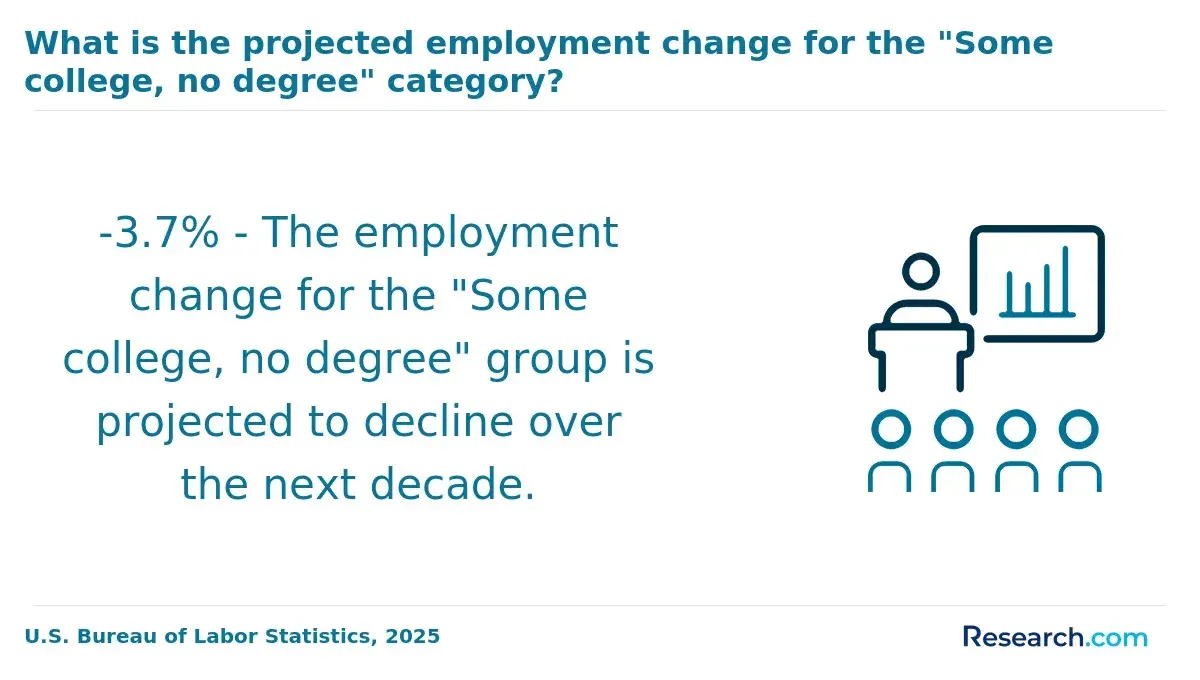
- Curriculum quality: Neuroscience degree requirements for online students differ significantly; some programs demand as little as 28% neuroscience-specific credits, while others require full immersion. Look for courses covering neuroanatomy, neurophysiology, neurochemistry, and neuroendocrinology that balance biological, psychological, and clinical perspectives.
- Faculty expertise: Review whether instructors have neuroscience research experience, relevant publications, clinical or laboratory backgrounds, and experience teaching online learners.
- Research and lab exposure: Ask how the program teaches experimental design, data interpretation, scientific writing, laboratory concepts, or research ethics in an online format.
- Course delivery: Check whether classes are asynchronous, synchronous, or hybrid. A flexible schedule is helpful, but live sessions may improve discussion, accountability, and faculty access.
- Student support: Look for academic advising, library access, tutoring, technical support, career guidance, and faculty office hours for online students.
- Credit transfer and focus: Confirm that credits earned align with your professional objectives and can transfer to advanced programs if desired, as some neuroscience degrees require less than 50% neuroscience-specific coursework.
- Cost and aid eligibility: Ask whether the program is aid-eligible, whether tuition differs by residency, and whether certificate students have payment plans, scholarships, or employer reimbursement options.
For students seeking affordable, accredited online institutions that may accept financial aid, Research.com’s guide to affordable online schools that accept financial aid can help broaden the search beyond neuroscience-specific programs.
How Much Do One-year Online Neuroscience Degree Programs Typically Cost?
Costs for online neuroscience-related programs and comparable annual degree tuition vary widely, typically ranging from about $5,657 to $59,090 annually. Public universities tend to offer the most affordable options, while private institutions usually charge significantly higher tuition rates.
Tuition depends on the institution, residency status, program level, credit load, and whether the credential is a degree or certificate. For example, the University of Nevada, Reno offers in-state tuition starting around $5,657, whereas Tulane University's private tuition can reach $59,090 per year.
Graduate certificate pricing may work differently from degree tuition. The University of Florida charges $550 per credit hour for its Biomedical Neuroscience certificate, regardless of residency.
Students should also account for costs beyond tuition, including technology fees, textbooks, software, application fees, transcript fees, and any required campus visits or residencies. These expenses can matter more in short programs because the full cost may be concentrated into a compressed timeline.
Compared with traditional two-year master's degrees, a shorter neuroscience certificate may require less total tuition. However, certificate students should be aware they typically do not qualify for federal financial aid, although other funding options might exist. Always confirm total program cost, refund policies, and aid eligibility before enrolling.
What Can I Expect From One-year Online Neuroscience Degree Programs?
Students should expect a one-year online neuroscience option to be intensive, science-heavy, and more focused than a full degree. These programs are usually designed to build foundational or specialized knowledge quickly, not to replace the breadth of a bachelor’s or master’s curriculum.
Coursework commonly covers topics such as neurobiology of disease, neuroimaging, research methods, neurochemistry, neuroendocrinology, ethics, and the social implications of neuroscience. Depending on the program, students may also study behavior, cognition, pharmacology, neurological disorders, or clinical applications.
Delivery is often asynchronous, which gives working adults more control over when they study. However, flexibility does not mean the workload is light. Students may need to read scientific literature, complete discussion posts, analyze case material, interpret research findings, and write evidence-based assignments with limited live instruction.
The most successful students usually have strong time-management skills and enough science background to keep pace. If you are new to biology, chemistry, or statistics, a compressed online neuroscience program may require substantial independent review outside assigned coursework.
By the end of a credible program, students can expect stronger familiarity with neuroscience terminology, major brain systems, current research questions, and the relationship between neural mechanisms and behavior. The credential may support career development or further academic study, but students should verify whether it meets specific admissions, employment, or licensure-related requirements. To evaluate institutional quality, Research.com’s overview of national accredited online colleges can be a useful starting point.
Are There Financial Aid Options for One-year Online Neuroscience Degree Programs?
Financial aid depends heavily on the credential type. Accredited degree-granting programs generally provide the opportunity to apply for federal and state aid, while non-degree certificates often have more limited options. Because many one-year neuroscience options are certificates rather than degrees, students should verify aid eligibility before applying.
The safest approach is to contact the school’s financial aid office and ask whether the specific program, not just the institution, qualifies for aid. A university may participate in federal aid programs while a particular certificate does not.
- Federal Financial Aid: Available for accredited, degree-granting programs like a Master of Science focusing on Biomedical Neuroscience. Eligibility requires completing the Free Application for Federal Student Aid (FAFSA), with aid dispersed according to the school's academic calendar. Aid amounts depend on financial need and program costs.
- State and Institutional Aid: Public university students may qualify for state grants or scholarships if they are residents, though non-residents typically face higher tuition and fewer state aid opportunities. Some universities and organizations offer general graduate scholarships relevant to neuroscience students.
- Employer Tuition Assistance and Private Financing: Working professionals may receive tuition reimbursement through their employers, subject to company policies. Certificate programs, not qualifying for federal aid, might still be covered by employer assistance or payment plans. Private loans are an alternative but require careful review of terms and interest rates.
Before borrowing, compare the total cost of the program with its likely academic or career value. A neuroscience certificate can be worthwhile for targeted learning, but students should avoid taking on debt for a credential that does not support a clearly defined next step.
What Neuroscience Graduates Say About Their Online Degree
Student feedback about accelerated online neuroscience study often emphasizes flexibility, speed, and the ability to apply brain science concepts to current work. However, readers should evaluate any testimonial alongside the program’s accreditation status, credential type, cost, curriculum, and whether it is a degree or certificate.
- Fisher: "Completing the one-year online Neuroscience degree was a game-changer for my career. The accelerated format allowed me to quickly apply new knowledge in my job, and the hands-on projects really deepened my understanding of brain functions. Given the average cost of attendance was quite reasonable, this program offered excellent value for fast career advancement."
- Cairo: "The competency-based approach of the Neuroscience program gave me the flexibility to learn at my own pace while still finishing within just twelve months. It was challenging but rewarding to demonstrate mastery through real-world applications rather than traditional exams. This degree not only enriched my scientific perspective but also boosted my confidence to pursue research opportunities."
- Austin: "What impressed me most about this one-year Neuroscience degree was the balance between rigor and accessibility. The curriculum was thoughtfully designed to cover core concepts without unnecessary filler, enabling me to finish efficiently while grasping complex material thoroughly. The affordable tuition made this an easy decision that opened doors to new professional pathways in neurotechnology."
Other Things You Should Know About Pursuing One-Year Neuroscience Degrees
Prerequisites often include a bachelor's degree in a related field, such as biology or psychology. Some programs may require specific coursework in neuroscience. Check individual school websites for additional requirements like GRE scores or letters of recommendation for 2027 admissions.
Graduates with a one-year online Neuroscience degree in 2027 can pursue entry-level roles such as research assistant, lab technician, or health educator. These programs offer foundational knowledge that can be the first step towards advanced studies or careers in biotech and healthcare sectors.
References
- Effective Development of a Remote Full-Day Summer Neuroscience Program at the University of Pennsylvania https://pmc.ncbi.nlm.nih.gov/articles/PMC11256385/
- Application Requirements & Instruction https://neuroscience.berkeley.edu/grad/admissions/requirements
- Best Neuroscience Courses & Certificates [2025] | Coursera Learn Online https://www.coursera.org/courses
- What can you do with a Certificate in Neuroscience? https://lpsonline.sas.upenn.edu/features/what-can-you-do-certificate-neuroscience
- Curriculum and Requirements » Department of Neuroscience » College of Medicine » University of Florida https://neuroscience.ufl.edu/training/online-masters-in-medical-sciences-with-a-concentration-in-biomedical-neuroscience/online-masters-curriculum-and-requirements/
- Neuroscience - Dominican University https://www.duny.edu/academic-divisions/math-and-science-division/neuroscience/
- Neuroscience BSc | Undergraduate Study | University of Exeter https://www.exeter.ac.uk/study/undergraduate/courses/neuroscience/neuroscience/
- Online Learning Scholarships | Scholarships and Student Funding | Student Administration https://registryservices.ed.ac.uk/student-funding/postgraduate/e-learning
- Neuroscience BSc https://www.ucl.ac.uk/prospective-students/undergraduate/degrees/neuroscience-bsc
- Applied Neuroscience MSc, PG Dip (online) | King's College London https://www.kcl.ac.uk/study/postgraduate-taught/courses/applied-neuroscience-msc