
2027 Credit Requirements for a Speech Pathology Degree Explained

Co-Founder and Chief Data Scientist

Reviewed by Rhea Paul, PhD
SLP Education & Research Expert
Credit hours are one of the biggest planning issues for students considering speech pathology. The number of credits you need affects tuition, financial aid eligibility, transfer options, clinical placement timing, and how quickly you can qualify for professional practice. Misreading a program’s credit structure can lead to extra semesters, repeated prerequisites, or courses that do not count toward licensure.
The stakes are also practical. According to the Bureau of Labor Statistics, employment in speech-language pathology is projected to grow 17% from 2025 to 2035, faster than average for all occupations, increasing demand for qualified professionals. Students who understand degree requirements early can choose programs more carefully, map prerequisites before applying, and avoid delays during the clinical portion of training.
This guide explains how many credits speech pathology degrees usually require, how credits are divided between core courses and electives, how online and accelerated programs compare, and when transfer credits or work experience may reduce your course load. It also explains why licensure and accreditation requirements matter as much as the total number of credits listed in a catalog.
Key Things to Know About Credit Requirements for Speech Pathology Degrees
- Speech pathology degrees typically require a comprehensive credit load over multiple years, balancing theoretical knowledge with clinical practice for licensure readiness.
- Transfer credits and recognition of prior learning can significantly reduce required coursework, accelerating program completion and easing financial burdens.
- Credit structure influences academic progression pace, impacting overall costs and timely graduation essential for entering a growing job market, projected to expand by over 25% this decade.
How Many Credits Are Required for a Speech Pathology Degree?
The number of credits required for a speech pathology degree depends mainly on the degree level. Undergraduate programs build the academic foundation in communication sciences and disorders, while graduate programs focus on advanced assessment, intervention, clinical practice, and preparation for licensure.
| Degree level | Typical credit requirement | What the credits usually cover |
| Bachelor's degree | Approximately 120 to 130 credits | General education, communication sciences, speech and hearing foundations, language development, phonetics, and introductory disorder coursework |
| Master's degree | About 60 to 75 credits | Advanced clinical coursework, assessment and treatment methods, research methods, supervised clinical practice, and preparation for certification and licensure |
| Doctoral or professional degrees | 60 to 90 credits beyond the master's degree | Research, advanced clinical specialization, leadership, academic preparation, or high-level professional practice |
For most students who want to become speech-language pathologists, the master’s degree is the key credential because entry-level professional practice typically requires graduate-level preparation and clinical training. A bachelor’s degree may qualify graduates for support roles or provide the prerequisites needed for graduate admission, but it is usually not the final step for independent clinical practice.
When comparing programs, do not look only at the total credit count. Review whether prerequisites are included in the listed credits, whether clinical practicum credits are built into the curriculum, and whether any leveling courses are required before full admission. Students coming from another major may need additional prerequisite coursework before starting the graduate sequence.
Students interested in broader technology-supported communication tools may also explore related programs such as an online artificial intelligence degree, but those credits generally do not replace required speech pathology coursework unless a program specifically approves them.
How Many Core and Elective Credits Are Required for a Speech Pathology Degree?
Speech pathology programs are usually built around a required core. Electives add flexibility, but the core courses carry the most weight because they connect directly to clinical competence, accreditation expectations, and licensure preparation. Approximately 70% of students select electives that focus on practical, real-world applications across diverse settings.
A typical program divides credits this way:
- Core courses: Core courses usually make up 60% to 75% of the total credit requirements, amounting to 40 to 60 credit hours. These courses commonly cover anatomy and physiology of speech and hearing, phonetics, language development, speech sound disorders, fluency, voice, swallowing, audiology foundations, assessment methods, intervention planning, and clinical practicum experiences.
- Elective courses: Electives typically make up 25% to 40% of the credit load, generally between 15 and 30 credit hours. Electives may allow students to study bilingual service delivery, augmentative and alternative communication, literacy, autism spectrum disorders, gerontology, counseling, cultural and linguistic diversity, or school-based practice.
The best elective choices are not always the easiest or most convenient. Students should choose electives that strengthen the settings where they hope to work. For example, a student aiming for pediatric practice may benefit from coursework in early intervention, language disorders, and family-centered care. A student interested in medical settings may prioritize dysphagia, neurological communication disorders, and interprofessional healthcare courses.
Before registering for electives, students should ask three questions: Does this course satisfy a graduation requirement? Does it support licensure or certification preparation? Does it help me build a coherent professional profile? Electives that do all three are usually more valuable than unrelated credits that merely fill a schedule.
Students comparing helping-profession pathways may also review accelerated social work programs, especially if they are interested in interdisciplinary healthcare, schools, disability services, or family support roles.
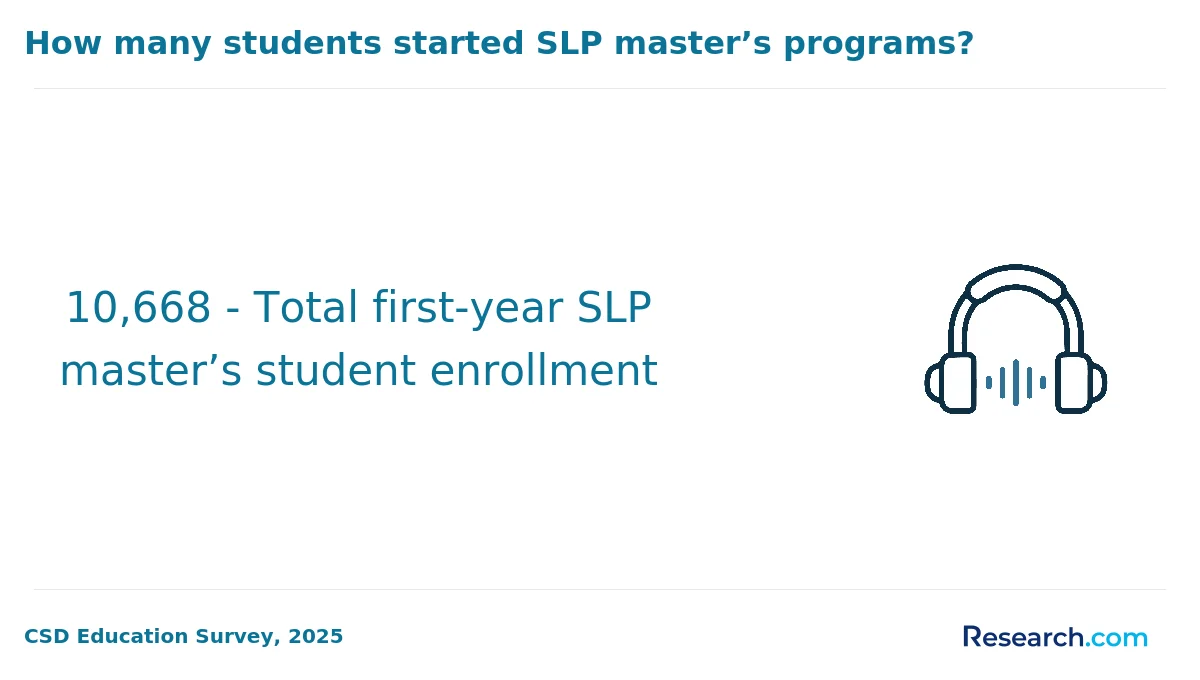
Do Online Speech Pathology Programs Require the Same Number of Credits?
Online speech pathology programs generally require the same number of credits as comparable campus-based programs at the same degree level. The delivery format may change how students attend class, interact with faculty, or complete assignments, but it usually does not reduce the academic and clinical requirements needed for graduation, accreditation, or licensure preparation.
Enrollment in online speech pathology programs has surged by more than 20% recently, making it especially important for students to compare programs carefully rather than assume that online study is automatically shorter or lighter.
- Credit load equivalency: Online and traditional speech pathology programs generally demand between 60 and 120 credits, depending on the degree level. A master’s program should still include graduate clinical coursework and supervised practice requirements, even if lectures are delivered online.
- Course structure and pacing: Online courses may be synchronous, asynchronous, or a combination of both. Flexible scheduling can help working students, but the same credit hours still represent a significant weekly workload.
- Clinical placement requirements: Online students still need supervised clinical experiences. The key difference is often placement logistics, not the number of required credits. Students should confirm who arranges placements, whether local sites are available, and whether travel is required.
- Transfer credit policies: Online programs may evaluate transfer credits differently, especially for prerequisites or graduate clinical courses. Policies can affect both cost and time to completion.
- Workload considerations: A three-credit online course can be as demanding as a three-credit campus course. Students should plan for readings, recorded lectures, discussion posts, exams, projects, and clinical documentation.
When comparing campus programs with online masters in speech pathology, the better question is not whether online programs require fewer credits. The better question is whether the format, clinical placement model, accreditation status, and pacing fit your responsibilities and intended state of practice.
One graduate described the adjustment this way: "It wasn't about fewer credits but about managing the same demands alongside work and family." That distinction matters. Online study can improve access and scheduling flexibility, but it does not remove the need for disciplined planning, clinical readiness, and regular communication with advisors.
He added, "Knowing the credits matched traditional programs gave me confidence in my preparation." For students evaluating quality, that parity can be reassuring, provided the program also meets accreditation and licensure expectations.
How Many Credits Are Required in Accelerated Speech Pathology Programs?
Accelerated speech pathology programs are designed to shorten the calendar time to completion, not necessarily to remove essential academic or clinical requirements. Students should expect a compressed schedule, fewer breaks, and heavier term-by-term course loads.
- Credit Ranges: Accelerated undergraduate programs usually demand between 60 and 90 credits, concentrating largely on fundamental speech pathology subjects with few electives. For graduate and professional accelerated tracks, credit requirements typically fall between 36 and 60, tailored to fulfill licensure and certification criteria promptly.
- Course Structure: Most credits focus on required areas such as anatomy, phonetics, speech disorders, language development, assessment, intervention, and clinical practicum experiences. Electives are often limited because the program is built for speed and sequence control.
- Pacing and Workload: Accelerated programs compress learning into shorter terms and may require students to complete more credits per semester, including summer sessions. This can make the program difficult to combine with full-time work, caregiving, or long commutes to clinical sites.
Accelerated formats can be useful for students who have already completed prerequisites, can study full time, and are comfortable with intensive clinical preparation. They may be less suitable for students who need to work many hours, strengthen foundational science coursework, or arrange clinical placements around family responsibilities.
Before enrolling, ask whether the accelerated schedule affects clinical placement options, remediation policies, financial aid disbursement, and withdrawal deadlines. A faster program can save time, but only if the pace is realistic for your academic preparation and personal obligations.
How Many Transfer Credits Are Accepted Toward a Speech Pathology Degree?
Transfer credit policies vary widely, but they can have a major effect on cost and graduation timing. Around 40% of students in this field transfer credits from previous coursework, making it important to request an official transfer evaluation before assuming that prior credits will apply.
- Associate Degrees: These programs usually accept between 50% and 75% of transfer credits, often applying them to general education or foundational requirements.
- Bachelor's Degrees: Transfer credit limits are commonly 60% to 75%. Many accepted credits may apply to general education rather than specialized speech pathology requirements.
- Master's and Professional Degrees: Graduate programs are more restrictive, with most programs accepting roughly 12 to 30 transfer credits. Programs often protect advanced clinical and accreditation-related coursework by requiring it to be completed in-house.
- Doctoral Programs: Doctoral programs also tend to limit transfer credits because research, specialization, and advanced clinical coursework must align closely with faculty expectations and program outcomes.
- Accelerated Programs: Accelerated programs generally accept fewer transfer credits than traditional paths because their courses are tightly sequenced.
- Application of Credits: Transferred credits usually fulfill elective requirements first. Core speech pathology courses often require separate approval, current syllabi, and evidence that learning outcomes match the receiving program’s standards.
Students can improve their chances of receiving transfer credit by collecting syllabi, catalog descriptions, official transcripts, lab or clinical hour documentation, and examples of major assignments. A course title alone is often not enough, especially for graduate-level or clinical coursework.
One graduate described the process as a careful balancing act: "I had to submit detailed syllabi and course descriptions, which was stressful but necessary." She also noted, "Some courses I thought would transfer easily didn't, and that set me back a semester. Still, working closely with advisors helped me find alternatives instead of repeating material."
The lesson is simple: confirm transferability before enrolling, not after. Ask whether accepted credits reduce tuition, shorten the timeline, satisfy prerequisites, or merely appear on the transcript without changing the graduation plan.
Can Work Experience Count Toward Speech Pathology Degree Credits?
Some colleges allow students to earn credit through prior learning assessment, often called PLA. In speech pathology, this option is usually limited because clinical competence, supervised practice, and licensure-related coursework must meet strict academic standards. Work experience may help with admissions or placement readiness, but it does not automatically replace required courses.
- Clinical Roles: Direct patient care or speech therapy-related work may be considered if the student can document duties, supervision, training, and learning outcomes. Programs may request employer letters, job descriptions, certifications, or interviews.
- Supervision and Training: Experience supervising speech therapy assistants, onboarding staff, or providing training may support a PLA portfolio if it maps clearly to course objectives.
- Related Healthcare Experience: Roles adjacent to speech pathology, including work as a speech therapy assistant, may be eligible for review. The program will usually determine whether the experience matches academic content closely enough to award credit.
Programs generally limit PLA credits to 30-50% of total requirements to maintain academic rigor. Even when PLA is available, it is more likely to apply to lower-division, elective, or general professional coursework than to advanced clinical requirements.
Students considering PLA should ask about fees, documentation standards, appeal procedures, financial aid effects, and whether PLA credits are accepted by graduate schools or licensing boards. Saving tuition on one course is not helpful if the credit later creates a licensure or admissions problem.
Students interested in related counseling and family-support pathways may also compare an online master's in marriage and family therapy, though those credits generally serve a different licensure pathway.
Do Licensure Requirements Affect Credit Hours in a Speech Pathology Degree?
Yes. Licensure requirements can affect both the number and type of credits required in a speech pathology degree. A program may list a total credit requirement, but students also need to verify that those credits include the coursework and supervised clinical experiences expected by professional standards and state licensing boards.
Accreditation bodies like the American Speech-Language-Hearing Association (ASHA) set essential academic and clinical standards, requiring students to complete specific coursework and supervised practicum hours. These requirements are one reason speech pathology programs include structured clinical experiences rather than only classroom-based courses.
Licensure-related credits may include assessment and intervention coursework, clinical methods, ethics, diagnostic procedures, supervised practicum, externships, and documentation training. These practical experiences ensure graduates are practice-ready but may extend the credit load beyond typical theory and general education classes. Practicum or externship hours mandated by licensure boards can increase both program length and tuition costs.
Requirements can also vary by state or licensing board. A program that is appropriate for one state may not automatically satisfy every requirement in another. Students planning to move after graduation should contact the licensing board in the state where they intend to practice before choosing a program.
Aligning program credits with licensure expectations helps students avoid delays after graduation. It can also limit flexibility because credits from non-accredited or unrelated programs may not satisfy clinical or professional standards. Students weighing education as a financial investment may also compare the highest-paying college majors, while remembering that salary outcomes depend on field, location, credentials, and labor market conditions.
How Do Universities Calculate Credits for a Speech Pathology Degree?
Universities calculate credits based on the amount and type of academic work required. A credit hour typically represents one hour of classroom instruction and two hours of outside study per week during a standard semester. In speech pathology, however, labs, simulations, clinics, and practicum experiences may require more clock hours than a lecture course with the same credit value.
- Lecture courses: Lecture courses usually assign one credit hour for each hour spent in class weekly. These courses build foundational knowledge in areas such as phonetics, anatomy, language development, disorders, research, and assessment.
- Labs and clinicals: Labs and clinical courses often require scheduled practice, observation, simulation, or supervised service. A three-credit lab may involve more total hours than a three-credit lecture because hands-on learning requires preparation, practice, and feedback.
- Practicums and clinical experiences: Practicum credits are commonly tied to supervised clinical work, documentation, meetings, and evaluation. These credits are essential because they connect classroom knowledge to real clients and professional standards.
- Capstone or project-based courses: Capstone, thesis, or project courses may combine research, writing, presentation, and applied practice. The assigned credits reflect the total workload rather than weekly lecture time alone.
Graduate credits may feel more intensive than undergraduate credits because assignments often require clinical reasoning, evidence-based decision-making, diagnostic interpretation, treatment planning, and professional documentation. Online and on-campus formats may use different delivery methods, but both should follow credit-hour expectations and program standards.
Students should review the plan of study, not just the course list. A course may carry three credits, but if it includes clinical documentation, synchronous meetings, group projects, or fieldwork, the weekly time commitment can be higher than expected. Students exploring other entry-level options can also review easiest associate degree programs, though those programs are not a substitute for graduate preparation in speech-language pathology.
How Do Speech Pathology Degree Credit Requirements Affect Graduation Timelines?
Credit requirements directly shape how long it takes to graduate. Speech pathology degree programs usually require students to complete between 120 and 140 total credits, including core courses, electives, and clinical practice hours. However, the timeline depends not only on the total number of credits but also on course sequencing, prerequisite rules, and clinical placement availability.
- Required core credits: Core courses often must be taken in a specific order. If a prerequisite is offered only once per year, missing it can delay the entire plan of study.
- Elective requirements: Electives provide flexibility, but students should choose courses that fit graduation requirements and career goals. Taking electives outside the approved list may add credits without moving the student closer to graduation.
- Transfer credits: Accepted transfer credits can reduce the total course load, but only if they apply to required areas. Credits that transfer as general electives may not shorten the program.
- Accelerated formats: Fast-track options can shorten calendar time by increasing the number of credits taken per term or requiring summer enrollment. The trade-off is a heavier workload and less schedule flexibility.
- Prior learning assessment: Exams, portfolio reviews, or documented professional learning may reduce some credit requirements where allowed. Students should confirm that these credits count toward graduation and do not create licensure issues.
Online and campus-based programs may have similar credit requirements but different pacing options. Online programs may allow students to continue working while studying, while campus programs may offer more predictable access to labs, faculty, and local clinical networks. Neither format guarantees faster graduation by itself.
To stay on track, students should build a term-by-term degree map with an advisor, identify courses that are offered only in certain semesters, confirm when clinical placements begin, and leave room for application deadlines, background checks, health requirements, and remediation if needed.
Do More Credits Lead to Better Career and Salary Outcomes for Speech Pathology Graduates?
More credits do not automatically lead to better career or salary outcomes. In speech pathology, employers and licensing boards usually care more about the right credentials, accredited preparation, supervised clinical experience, licensure eligibility, and demonstrated competence than the total number of extra credits on a transcript.
Additional credits may be useful when they support a clear professional goal:
- Advanced concentrations: Coursework in areas such as pediatric speech pathology, neurogenic disorders, dysphagia, bilingual service delivery, or augmentative and alternative communication may strengthen a graduate’s fit for specialized roles.
- Licensure preparation: Extra coursework may help students satisfy state-specific requirements or strengthen readiness for clinical practice.
- Technical skill development: Courses in research methods, assistive technologies, data-informed practice, or interdisciplinary collaboration can add practical value when connected to job responsibilities.
Extra credits may be less useful when they are unfocused:
- Basic credential sufficiency: Once a graduate has the required degree, clinical preparation, and licensure pathway, employers frequently prioritize applied skills and experience over additional unrelated coursework.
- Limited wage impact: Labor data indicate added credits alone rarely boost salaries without corresponding advanced certifications or job responsibilities.
- Academic vs. professional pathways: Excess credits beyond program requirements may delay graduation and increase cost without producing a clear employment advantage.
The better strategy is targeted credit selection. Choose courses that support the population, setting, or specialization you want. Extra credits should help you become more qualified for a specific role, not simply make the transcript longer.
What Graduates Say About The Credit Requirements for Their Speech Pathology Degree
- : "Completing extra credits through my online speech pathology program proved to be a worthy investment. The program's cost per credit was reasonable, especially given the convenience of virtual classes that fit around my family responsibilities. This flexibility, combined with the enhanced knowledge from extra coursework, has significantly impacted my ability to provide advanced care and pursue specialized certifications. — Andrew"
- : "When I started my speech pathology degree, I was concerned about the cost and time commitment. The online program's flexible credit structure allowed me to pace my studies and manage expenses effectively, with credits priced moderately compared to in-person classes. Reflecting now, those additional credits enriched my professional skills and gave me a competitive edge in the job market. — Peter"
- : "The flexibility of the online speech pathology degree program was a game-changer for me, allowing me to complete required credits around my busy work schedule. Considering the average cost per credit was much lower than traditional programs, it made advanced education financially feasible without compromising quality. Earning those extra credits has not only deepened my expertise but also opened doors to leadership roles in clinical settings. — Westin"
Other Things You Should Know About Speech Pathology Degrees
In 2027, completing a bachelor's degree in speech pathology typically requires 120-130 credits. For a master's degree, expect to complete an additional 55-75 credits. These credits include core courses, electives, and clinical practice hours essential for obtaining licensure.
To meet the credit requirements for a speech pathology degree in 2027, typically students must complete courses in linguistics, audiology, neuroanatomy, and phonetics. Additionally, some programs may require clinical practicum credits to provide hands-on experience in real-world settings.
References
- U.S. Bureau of Labor Statistics - Speech-Language Pathologists https://www.bls.gov/ooh/healthcare/speech-language-pathologists.htm
- ASHA EdFind - Accredited Speech-Language Pathology Programs https://find.asha.org/ed/
- O*NET OnLine - Speech-Language Pathologists https://www.onetonline.org/link/summary/29-1127.00
- Ithaca College - Online Master of Science in Speech-Language Pathology https://slponline.ithaca.edu/programs/masters-speech-language-pathology-online
- Pepperdine University - Master of Science in Speech-Language Pathology https://healthscience.pepperdine.edu/online-masters-in-speech-language-pathology/
- Baylor University - Master of Science in Speech-Language Pathology (Online) https://csd.robbins.baylor.edu/graduate/online-csd-graduate-program
- James Madison University - Master of Science (M.S.) in Speech-Language Pathology (Distance Education / Online) https://www.jmu.edu/chbs/csd/online_ms/index.shtml
- University of Wisconsin-Eau Claire - Master of Science in Speech-Language Pathology (Online) https://www.uwec.edu/speech-language-and-hearing-sciences-department/graduate-program/speech-language-pathology-online


