2027 Licensing Exams Required After Completing a Speech Pathology Degree Program

Co-Founder and Chief Data Scientist

Reviewed by Rhea Paul, PhD
SLP Education & Research Expert
After earning a speech pathology degree, the next major decision is how to move from graduation to legal, employable practice. For most speech-language pathology roles, the degree alone is not enough: graduates must meet state licensing requirements, pass required exams, complete supervised clinical experience, and often pursue professional certification. Missing one step can delay hiring, clinical privileges, insurance billing eligibility, or independent practice.
According to the American Speech-Language-Hearing Association, approximately 85% of licensed speech-language pathologists successfully pass the national examination on their first attempt. That makes the licensing exam a major career checkpoint, but it is only one part of the process. This guide explains which exams are commonly required after a speech pathology degree, what they cover, who is eligible to take them, how online degrees are evaluated, what costs to expect, and how licensure affects jobs, mobility, and earning potential.
Key Things to Know About Licensing Exams Required After Completing a Speech Pathology Degree Program
- Candidates must hold a master's degree in speech pathology and complete supervised clinical hours before eligibility for the national examination, ensuring readiness for professional practice.
- The licensing exam covers assessment, diagnosis, and treatment, with sections timed to evaluate competency comprehensively across speech, language, and swallowing disorders.
- Many states require passing the exam within a set period post-graduation; early preparation improves pass rates and eligibility for higher employment opportunities in healthcare and education.
What Licensing Exams Are Required After Completing a Speech Pathology Degree?
After completing a speech pathology degree, most graduates must pass the Praxis® Speech-Language Pathology exam and satisfy state licensing requirements before they can practice as speech-language pathologists. Some states also require a jurisprudence exam, and many employers prefer or require the ASHA Certificate of Clinical Competence in Speech-Language Pathology (CCC-SLP). Nearly 90% of new speech pathologists secure licensure within two years of completing their degree, but the exact path depends on the state board, the graduate program, and the applicant’s supervised clinical experience.
The main licensing-related requirements typically include the following:
- Praxis® Speech-Language Pathology (SLP) Exam: This national exam, administered by ETS, is the core knowledge exam used by most states. It assesses areas such as speech and language development, communication and swallowing disorders, anatomy, assessment, intervention, and professional ethics. Passing it is commonly required for state licensure and is also tied to professional credentialing.
- Clinical Fellowship (CF): Graduates typically complete a supervised 36-week professional experience after the degree. The clinical fellowship gives new clinicians structured mentorship while they move from student-level practice to independent professional judgment.
- State Jurisprudence Exam: Some states require a separate exam on state laws, scope of practice, mandatory reporting, documentation, supervision rules, and professional conduct. This exam is usually shorter than the Praxis but should not be treated casually, because it determines whether the applicant understands local legal obligations.
- Certificate of Clinical Competence in Speech-Language Pathology (CCC-SLP): The CCC-SLP is offered by the American Speech-Language-Hearing Association (ASHA). It is not always identical to state licensure, but many employers view it as a strong professional credential, and some roles may expect it.
Students comparing graduate pathways should confirm that a program is designed around licensure preparation, supervised clinical placement, and state board documentation. If cost and flexibility are major concerns, compare accredited slp masters programs online carefully, especially their clinical placement support and Praxis preparation resources.
What Topics Are Covered on the Speech Pathology Licensing Exam?
The speech pathology licensing exam tests whether a graduate can apply graduate-level clinical knowledge to real communication and swallowing cases. Candidate surveys reveal that over 40% of questions are dedicated to assessment and diagnosis, which means test preparation should go beyond memorizing definitions. Strong candidates know how to select an assessment, interpret results, identify contributing factors, and connect findings to treatment planning.
Core content areas commonly tested include:
- Foundations of practice: This area includes anatomy, physiology, neuroanatomy, speech and hearing mechanisms, language development, swallowing, and the scientific basis of communication disorders. Candidates need enough biological and developmental knowledge to understand why a disorder occurs and how it may affect treatment.
- Assessment and diagnosis: This section focuses on evaluating speech, language, voice, fluency, cognition, hearing-related communication, and swallowing concerns. It may cover standardized and informal assessment tools, differential diagnosis, case history interpretation, cultural and linguistic considerations, and clinical decision-making.
- Intervention: Candidates are tested on treatment planning and evidence-based strategies for speech sound disorders, language disorders, fluency disorders, voice disorders, cognitive-communication issues, and swallowing disorders. The exam may ask what goal, approach, or therapy technique is most appropriate for a specific case.
- Professional issues: This area includes ethics, documentation, confidentiality, collaboration, service delivery models, supervision, professional responsibilities, and regulatory standards. These questions often test judgment, not just recall.
Most questions are multiple-choice and may be written as brief clinical scenarios. A practical study plan should combine content review with case-based practice: review the disorder area, practice choosing assessments, write sample treatment goals, and explain why one intervention is better than another. Candidates who are balancing work, clinical hours, and exam preparation may benefit from the same scheduling discipline often required in intensive programs such as MSW accelerated programs.
The best preparation strategy is to focus first on weak clinical reasoning areas, then build speed and accuracy with timed practice questions. Passing the exam matters because it directly affects licensure eligibility, hiring timelines, and access to clinical roles.
What Requirements Must Be Met to Take the Speech Pathology Licensing Exam?
To take the speech pathology licensing exam, candidates usually must complete a qualifying graduate degree, document supervised clinical experience, and receive approval from the relevant licensing or credentialing authority. Requirements are not identical in every state, so graduates should verify the rules before assuming they are eligible to register.
Common eligibility requirements include:
- Completion of a graduate degree in speech pathology: Most candidates must hold a master's degree from an accredited program. Accreditation matters because state boards use it as evidence that the curriculum met expected professional preparation standards.
- Clinical practicum hours: Many licensing boards require between 300 and 400 supervised clinical hours. These hours should expose students to different communication disorders, age groups, service settings, and intervention needs.
- Practicum evaluation: Candidates may need positive clinical performance evaluations showing that they can apply knowledge safely, communicate professionally, document services, and work under supervision.
- Jurisdiction-specific requirements: Depending on the state, applicants may need a jurisprudence exam, background check, additional coursework, proof of citizenship or residency status, or documentation related to professional conduct.
- Application approval: Candidates typically submit transcripts, clinical hour verification, program documentation, fees, and other records before they can be cleared to schedule or use exam results for licensure.
A common mistake is treating exam registration and state licensure as the same process. They are connected, but the exam provider, state licensing board, graduate program, and ASHA may each require separate documentation. Keep copies of transcripts, practicum logs, supervisor forms, and exam score reports, because these records may be needed again for employment, certification, or licensure in another state.
Requirements can also vary by program format. Unlike an affordable online psychology masters, a speech pathology program intended for SLP licensure must account for discipline-specific clinical training and state board expectations. Before enrolling, students should ask how the program verifies clinical hours, supports placements, and documents eligibility for the speech-language pathology licensure test.
Can You Get Licensed with an Online Speech Pathology Degree?
Yes, graduates can generally pursue licensure with an online speech pathology degree if the program meets the same professional and accreditation expectations as an on-campus program. Licensing boards focus less on whether coursework was online and more on whether the degree came from an acceptable institution, whether the program aligns with speech-language pathology standards, and whether the graduate completed required in-person clinical practicum experiences.
Accreditation is the first issue to verify. Graduates from online speech pathology programs are generally eligible for licensure if their degree comes from an accredited institution, with emphasis on accreditation by the Council on Academic Accreditation in Audiology and Speech-Language Pathology (CAA). Even when lectures, assignments, and discussions are online, clinical practicum hours usually must be completed in person under approved supervision.
Around 85% of online program graduates successfully obtain licensure, showing that accredited distance education is increasingly accepted. Still, state rules can differ, especially around clinical placements, supervisor qualifications, documentation, and whether the program’s structure satisfies local licensing standards. Students should check both the state where they study and the state where they plan to work.
Before choosing an online program, ask these questions:
- Is the program accredited in a way your target state board accepts? Do not rely only on general institutional accreditation if the state expects professional program accreditation.
- Who arranges clinical placements? Some programs provide strong placement support, while others expect students to identify local sites and supervisors.
- Will the program document clinical hours in the format required by your state? Poor documentation can slow licensure even when the hours were completed correctly.
- Does the program disclose Praxis pass support and licensing outcomes? Ask for exam preparation resources and guidance on state-specific applications.
When I spoke with a graduate of an online speech pathology degree about his licensing journey, he said the flexible coursework helped, but state-specific clinical placement approvals were difficult. He explained, “Securing a supervisor for my in-person practicum felt like the toughest part because not all sites were familiar with online program credentials.” Passing the licensure exam, he added, was a “huge relief” because it confirmed that the online route could still lead to professional practice when carefully planned.
Do Speech Pathology Programs Prepare Students for Licensing Exams?
Strong speech pathology programs are designed to prepare students for licensing exams, but the quality of preparation varies. Research shows graduates who study exam-relevant material report 20% greater confidence in their preparedness. Confidence alone does not guarantee a passing score, but it often reflects a program that connects coursework, clinical reasoning, and exam practice.
Programs commonly support licensing exam readiness through:
- Curriculum alignment: Core courses should cover communication development, disorders, assessment, intervention, research, ethics, and professional practice in ways that match the knowledge expected for licensure.
- Exam-focused coursework: Some programs build review questions, case discussions, and licensing exam-style assignments into regular classes rather than saving all preparation for the end of the degree.
- Practice exams: Mock exams help students learn timing, question style, and content gaps. They are most useful when students review not only the correct answer but also why the other options are weaker.
- Internship and practicum experience: Clinical placements turn classroom concepts into decision-making skills. This matters because licensing exams often ask candidates to interpret cases rather than repeat textbook language.
- Faculty support: Faculty can help students identify weak areas, choose study resources, interpret practice test results, and create a realistic exam timeline.
Students should not assume that completing the degree automatically means they are ready for the exam. A better approach is to start tracking readiness before graduation: compare course topics with exam content, review clinical notes for recurring weak areas, complete timed practice sets, and ask faculty or supervisors for feedback on diagnostic reasoning.
How Much Does the Licensing Exam Cost After a Speech Pathology Degree?
The licensing exam is only one part of the total cost of becoming licensed after a speech pathology degree. Graduates should budget for the exam, state applications, possible retakes, study materials, and any extra documentation or training required by their licensing board. Planning early helps avoid delaying job applications because of unpaid fees or missing paperwork.
Common expenses include:
- Exam fee: The Praxis Speech-Language Pathology exam administered by ETS generally costs about $229. This fee covers exam administration and scoring.
- Application fee: State licensing boards charge separate application fees, often ranging between $50 and over $100 depending on the state.
- Retake fees: Candidates who do not pass on the first attempt generally must pay the full exam fee again, so a retake can significantly increase total costs.
- Study materials: Review books, practice tests, online review courses, and tutoring can add $100 or more, depending on how much support the candidate needs.
- Additional training or documentation: Some applicants may need workshops, background checks, transcript orders, clinical verification forms, or other items connected to state requirements.
The best way to control costs is to map the full licensing process before graduation. List every required fee, deadline, document, and testing step for your state. Then add a buffer for score reporting, transcript processing, and possible retake costs. Graduates comparing the return on educational investment can also review broader salary and career context through resources on high paying degrees, while remembering that speech pathology licensure has its own required professional costs.
Understanding licensing exam fees for speech pathology graduates helps candidates avoid surprises and focus on passing the exam, completing licensure, and entering the workforce as efficiently as possible.
How Often Is the Speech Pathology Licensing Exam Offered?
The speech pathology licensing exam is generally available throughout the year, but appointment availability depends on testing centers, remote proctoring options, state board rules, and peak testing periods. Pass rates may vary slightly depending on testing periods, with busier seasons like spring and fall often resulting in higher candidate numbers. Graduates should plan their test date around readiness, application deadlines, clinical fellowship timing, and job start dates.
Key scheduling factors include:
- Year-round availability: Candidates can usually schedule the Praxis Speech-Language Pathology exam throughout the year at authorized testing locations. This gives graduates flexibility, but popular dates can fill quickly.
- Testing format options: Some candidates may have access to remote online proctoring, while others may need or prefer in-person testing. State rules and exam provider policies can affect what is available.
- Retake regulations: Retake rules vary, and candidates should expect mandatory waiting periods between attempts. Build this possibility into your timeline if a job offer or licensure deadline depends on passing.
- State board rules: Some boards require approval or specific documentation before exam results can be used for licensure. Others may allow testing before the full licensing application is complete.
A practical timeline starts with the state board, not the test calendar. Confirm eligibility, collect required records, choose a realistic exam window, then schedule the test far enough ahead to allow score reporting and any follow-up paperwork. Avoid scheduling only because an early appointment is available; taking the exam before you are ready can add retake costs and delay licensure.
When I spoke to a recent speech pathology graduate about her experience, she described the scheduling process as a balance between persistence and patience. She said, “I had to plan around work and personal commitments, which wasn’t always easy.” The ability to choose a date helped her manage preparation, but state-specific requirements still added complexity. For her, passing the exam became the point when years of coursework, practicum, and planning finally translated into professional eligibility.
Do You Need a License to Get a Job With a Speech Pathology Degree?
For most direct clinical speech-language pathology jobs, yes, you need a state license or must be working toward one under an approved supervised pathway. A speech pathology degree may qualify graduates for some related roles, but independent diagnosis and treatment typically require licensure. Surveys indicate that over 90% of employers expect candidates to possess state licensure before hiring, especially in healthcare, schools, and clinical service settings.
Whether a license is required depends on several factors:
- Regulatory requirements: State laws define who may practice as a speech-language pathologist, what services require a license, and what supervision is needed before full licensure.
- Job role: Clinical roles involving evaluation, diagnosis, treatment planning, and therapy generally require licensure. Research, program coordination, admissions, administrative, or support roles may have different requirements.
- Employer standards: Hospitals, schools, rehabilitation centers, and private practices often require licensure because of compliance, liability, reimbursement, and quality-of-care expectations.
- Specialization: Pediatric, geriatric, swallowing, medical, or school-based roles may involve additional employer preferences or credentials beyond the basic license.
- State-specific rules: A graduate eligible for one state may not automatically qualify in another. Candidates planning to relocate should review licensure requirements before accepting a position.
Unlicensed graduates should be careful about job titles and scope of practice. A role that allows supervised work may be appropriate during a clinical fellowship, but a job that expects independent clinical services before licensure can create legal and ethical problems. Before accepting an offer, ask whether the employer will provide required supervision, how the position is classified, and whether the role satisfies state requirements for progression to full licensure.
Do Licensed Speech Pathology Professionals Earn More Than Unlicensed Graduates?
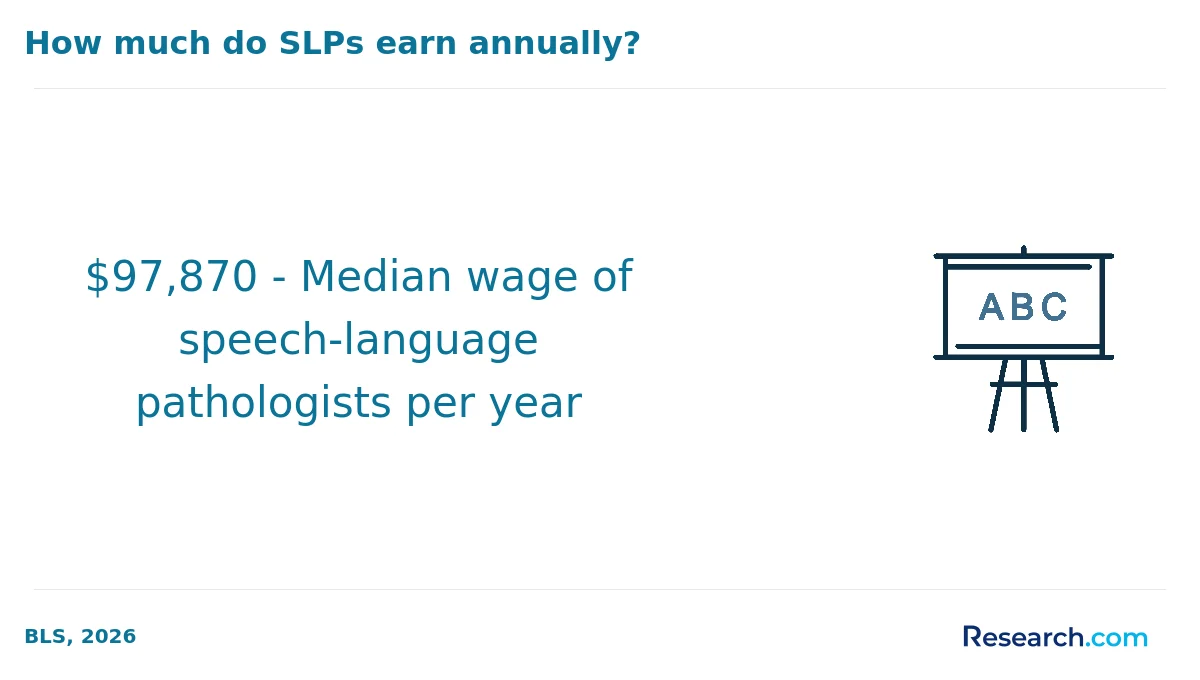
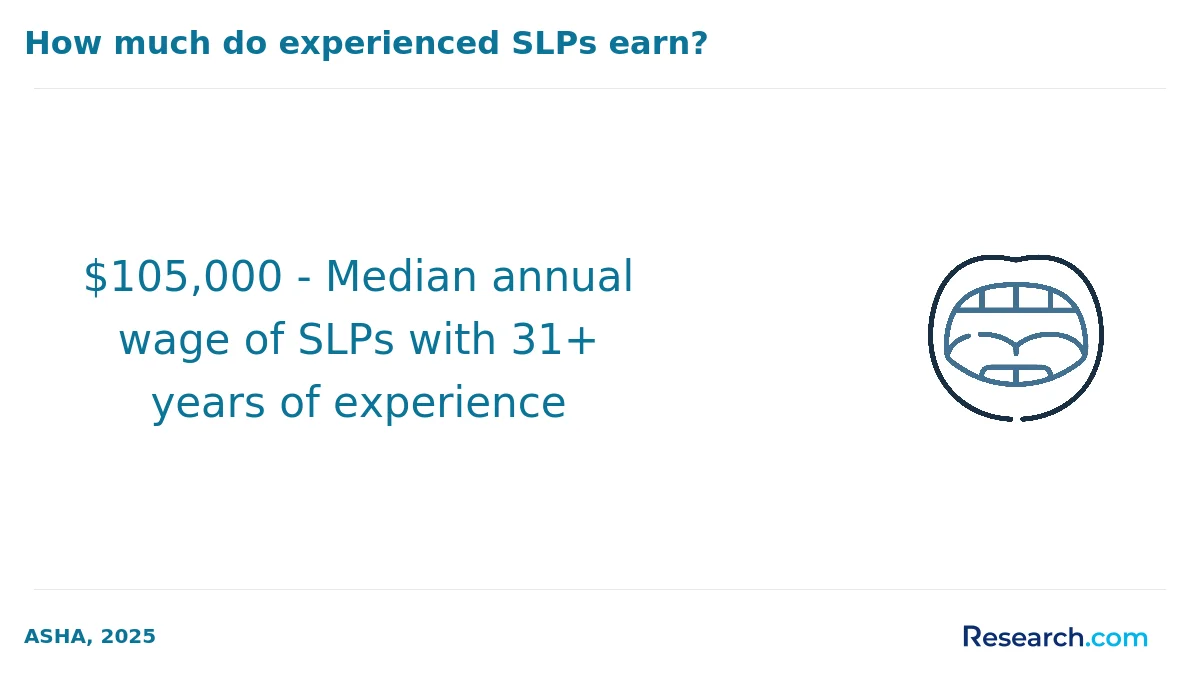
Licensed speech pathology professionals typically earn more than unlicensed graduates because licensure expands the roles they can legally perform. Salary ranges for licensed speech pathologists generally fall between $62,900 and $134,160 annually, depending on factors such as location and experience. Unlicensed graduates or assistants usually earn less because their responsibilities, autonomy, and billing eligibility are more limited.
The pay difference is usually tied to these practical factors:
- Scope of practice: Licensed clinicians can often evaluate, diagnose, treat, document, and make clinical decisions within the scope allowed by state law. Unlicensed graduates may need supervision or may be limited to support tasks.
- Access to higher-paying roles: Licensure can open positions in hospitals, schools, rehabilitation centers, private practice, and specialized clinics that may not be available to unlicensed applicants.
- Employer requirements: Many employers require licensure for compliance and reimbursement reasons. A candidate without a license may be screened out before salary is even negotiated.
- Career advancement: Licensure is often necessary for promotions, supervisory roles, independent practice, and long-term professional growth.
- Geographic variation: State licensing rules and local labor markets affect both job availability and salary levels, so location remains an important factor.
Licensure should be viewed as both a legal requirement and a career investment. The degree builds the academic foundation, but the license is what allows many graduates to convert that education into full clinical responsibility and stronger earning potential.
Can I Use My Speech Pathology License in Another State?
Usually, a speech pathology license is issued by a specific state, so holding a license in one state does not automatically authorize practice in another. Each state sets its own requirements for education, exams, clinical experience, background checks, jurisprudence exams, and documentation. This matters for clinicians who relocate, provide telepractice, work near state borders, or want to serve clients in multiple states.
Over 20 states participate in the Audiology and Speech-Language Pathology Interstate Compact (ASLP-IC) as of early 2024, allowing eligible licensed clinicians to practice across member states without obtaining separate traditional licenses in each participating state. For clinicians outside a compact pathway, common options include applying for licensure by endorsement, submitting proof of equivalent credentials, completing a state jurisprudence or ethics exam, or providing additional clinical documentation.
Before accepting cross-state work, contact the licensing board in the state where the client or job is located. This is especially important for telepractice, because the legal practice location may depend on the client’s state, not only the clinician’s physical location. Keep records of your original license, exam scores, graduate transcripts, clinical fellowship documentation, CCC-SLP status if applicable, and continuing education, because these materials are often needed for endorsement or compact eligibility.
What Graduates Say About The Licensing Exams After Completing a Speech Pathology Degree
- Westin: "As an online graduate, preparing for the licensing exam was challenging but manageable with the flexibility my program offered. Considering the average cost of speech pathology licensure fees, which can be a few hundred dollars, I felt well-prepared and confident. Holding my license has truly opened doors to rewarding career opportunities in various settings, making every investment worthwhile."
- Petra: "Taking the licensing exam after completing my speech pathology degree online made me reflect on how far I've come. The licensure process, including costs, felt like a necessary step to affirm my commitment to this profession. Having the license now adds a layer of credibility and trust with clients and employers that I deeply value."
- Drew: "The process of sitting for the speech pathology licensing exam as an online graduate was straightforward but rigorous, reflecting the profession's high standards. Factoring in licensure fees, which are fairly reasonable compared to the career benefits, it was a smart financial and professional move. My license has significantly enhanced my career trajectory, allowing me to work independently and confidently as a clinician."
Other Things You Should Know About Speech Pathology Degrees
In 2027, retake policies for the speech pathology licensing exam vary by state. Generally, candidates can retake the exam; however, restrictions might include waiting periods and limits on the number of attempts. It’s crucial to consult the specific regulations of the state’s licensing board for detailed information.
Most states require a passing score set by Praxis and used by ASHA and licensure boards; the current passing scaled score is 162 on the Speech-Language Pathology test. Some state boards also require passing the full Praxis test registration and reporting through ETS.
Most speech pathology licensing exams are administered exclusively in English, reflecting the language of practice in the U.S. Some states may provide accommodations for candidates with disabilities but typically do not offer the exam in other languages. It is advisable to consult the state licensing board for any available exceptions or accommodations.
References
- U.S. Bureau of Labor Statistics - Speech-Language Pathologists https://www.bls.gov/ooh/healthcare/speech-language-pathologists.htm
- ASHA EdFind - Accredited Speech-Language Pathology Programs https://find.asha.org/ed/
- Audiology and Speech-Language Pathology Interstate Compact https://aslpcompact.com/compact-map/
- New England Institute of Technology - Master of Science in Speech Language Pathology https://www.neit.edu/academics/graduate-degrees/speech-language-pathology-ms
- Maryville University - Master of Science in Speech-Language Pathology https://www.maryville.edu/masters/speech-language-pathology/
- California State University-San Marcos - Online MS in Speech-Language Pathology https://www.csusm.edu/slp/programs/mastersonline/index.html
- University of Nebraska at Kearney - Speech-Language Pathology, Master of Science in Education (Online Track) https://www.unk.edu/online/degrees-programs/speech-language-pathology-online.php
- University of Wisconsin-Eau Claire - Master of Science in Speech-Language Pathology (Online) https://www.uwec.edu/speech-language-and-hearing-sciences-department/graduate-program/speech-language-pathology-online