
2027 Is a 2-Year Speech Pathology Degree Worth It: Accelerated Bachelor's ROI & Time Trade-Offs

Co-Founder and Chief Data Scientist

Reviewed by Rhea Paul, PhD
SLP Education & Research Expert
A 2-year accelerated bachelor's in speech pathology can shorten the path into communication sciences, but it is not automatically the best choice for every student. The real decision is whether the faster timeline, heavier workload, and possible limits on work hours are worth the earlier start in the field.
Demand is a major reason students consider this route. The Bureau of Labor Statistics projects a 17% growth in speech-language pathology jobs from 2025 to 2035, faster than average for all occupations. That outlook makes the field attractive, but students should understand that many clinical speech-language pathologist roles require graduate education, state licensure, and supervised experience beyond the bachelor's level.
This guide explains how accelerated speech pathology programs work, what admissions and weekly workload may look like, how online and hybrid options differ, what costs and aid to review, and which career outcomes are realistic after graduation. The goal is to help you judge the return on investment before committing to an intensive degree path.
Key Benefits of a 2-Year Speech Pathology Degree
- Accelerated 2-year speech pathology degrees reduce time to workforce entry by nearly half, enabling quicker earning potential and earlier career advancement compared to traditional programs.
- Graduates often experience a strong ROI as median salaries for speech pathologists exceed $80,000 annually, offsetting upfront educational costs within a few years.
- Condensed curriculums demand intense study but align with high industry demand, resulting in sustained job security and professional growth opportunities post-graduation.
How Do 2-Year Speech Pathology Programs Work?
A 2-year speech pathology bachelor's program compresses the undergraduate curriculum into a much shorter timeline. Instead of spreading general education, major courses, labs, and applied learning over a traditional schedule, students usually take heavier credit loads, shorter terms, and year-round classes.
These programs are designed for students who can treat school as a primary commitment. They may be a strong fit for transfer students with completed general education credits, career changers with prior college coursework, or highly organized first-time students who are ready for an intensive academic pace.
- Accelerated pacing: Students may complete work that normally takes four years in roughly two years by taking more courses each term and moving quickly from foundational topics to applied content.
- Year-round enrollment: Many programs reduce long breaks and use summer terms so students can continue making progress without stopping between academic years.
- Condensed course terms: Courses may run in 6 to 8 week formats instead of standard semesters, which means readings, assignments, exams, and projects arrive faster.
- Higher credit expectations: The weekly workload can be difficult to combine with full-time employment. Students should confirm whether the program recommends limiting outside work.
- Instructional format: Many programs use online lectures, campus-based labs, simulations, and supervised practical experiences to help students connect theory with communication disorders practice.
- Assessment methods: Students may complete quizzes, exams, research assignments, case analyses, and performance-based assessments tied to screening, documentation, diagnostic reasoning, and intervention planning.
- Curriculum sequence: Common study areas include speech and language development, phonetics, anatomy and physiology of speech and hearing, language disorders, audiology basics, and introductory clinical procedures.
The main advantage is time. Accelerated programs can save 1 to 2 years compared to traditional degrees, which may reduce some tuition, fee, housing, and opportunity costs. The trade-off is intensity: falling behind in one condensed term can affect the next term quickly.
Students should also distinguish between a bachelor's degree in speech pathology and the education needed to become a fully licensed speech-language pathologist. Employers value strong undergraduate preparation, and job growth in speech-language pathology is projected to rise 17% from 2025 to 2035, but many clinical roles still require graduate-level training. For those comparing other fast-track healthcare routes, the shortest dnp program online can provide a useful point of comparison for workload and career progression.
What Are the Admission Requirements for a 2-Year Speech Pathology Degree?
Admission requirements vary by institution, but accelerated speech pathology programs usually look for evidence that applicants can handle a compressed academic schedule. Meeting the minimum requirement may not be enough if the program is competitive, so students should prepare a complete application that shows academic readiness, communication skills, and commitment to the field.
- Prior education: Applicants usually need a high school diploma or equivalent. Some programs are better suited to students who already have college credits or an associate degree because completed general education courses can make the two-year timeline more realistic.
- GPA expectations: A minimum GPA of about 2.5 to 3.0 is commonly required. A higher GPA in science, psychology, education, or communication-related courses can strengthen an application.
- Standardized tests: Some schools may ask for SAT or ACT scores, but many accelerated programs waive testing for transfer students or applicants with prior college coursework.
- Prerequisite courses: Programs may require or prefer biology, psychology, statistics, linguistics, communication basics, or other foundational courses before students begin major requirements.
- Relevant experience: Volunteer work, observation hours, tutoring, healthcare experience, childcare, or school-based support roles can help applicants demonstrate that they understand the populations served in speech and language services.
Questions to ask before applying
- Will my transfer credits count toward the two-year plan, or will they only count as electives?
- Does the program prepare students for speech-language pathology assistant roles, graduate study, or both?
- Are in-person labs, observations, or clinical experiences required?
- What GPA must I maintain to stay in the accelerated sequence?
- Does the school publish graduation, retention, or graduate school placement information?
Accelerated speech pathology programs can reduce study time from four years to two, but the shorter schedule works best when prerequisites and transfer credits are clear before enrollment. According to the Bureau of Labor Statistics, the field's job growth is projected at 17% through 2035, reflecting strong demand. Students exploring adjacent healthcare careers may also compare admission pathways for medical coding and billing classes online with financial aid.
What Does a Typical Week Look Like in a 2-Year Speech Pathology Program?
A typical week in a 2-year speech pathology program is structured, deadline-heavy, and less flexible than many standard bachelor's programs. Students should expect frequent lectures, fast-moving readings, applied assignments, and regular assessments. In hybrid programs, travel time for labs or practical experiences can add another layer of planning.
- Class sessions and lectures: Students may attend multiple lectures covering anatomy, phonetics, language development, linguistics, audiology basics, and introductory clinical methods. Because courses move quickly, missing class can create immediate gaps.
- Assignments and assessments: Written assignments, discussion posts, case studies, quizzes, and exams may be due in the same week. Short terms leave little time to recover from poor time management.
- Group work: Many programs use peer projects, role-playing, case discussions, and presentations to build professional communication and collaboration skills.
- Independent study time: Students need consistent time outside class to review notes, practice transcription or analysis tasks, prepare for exams, and complete research-based assignments.
- Instructor interaction: Office hours, feedback sessions, and lab supervision can be especially important because students have less time to master each topic before moving on.
- Time management expectations: Successful students usually plan each week in advance, track all deadlines, and avoid postponing readings until exams approach.
When asked about completing a 2-year bachelor's degree in speech pathology, one professional described the experience as "intense but rewarding." He remembered weeks with overlapping deadlines and limited downtime, adding, "There were moments when it felt like two full-time jobs at once."
He also said the rapid progression had benefits: "The constant feedback and teamwork boosted my confidence in clinical skills faster than I expected." His experience reflects a common pattern in accelerated programs. The pace is demanding, but students who stay organized and seek feedback early may build confidence quickly.
Breakdown of All Fully Online Title IV Institutions

Are 2-Year Speech Pathology Programs Available Online?
Some 2-year speech pathology programs offer online coursework, but fully online bachelor's options are less common when programs include labs, observations, or applied practice. Most flexible programs use a hybrid model: lecture-based content may be online, while hands-on learning, assessments, or supervised experiences may require scheduled in-person participation.
- Fully online vs. hybrid programs: Fully online options can be convenient, but students should verify whether any campus visits, local placements, labs, or proctored activities are required. Hybrid programs often provide a better fit for skill-based learning.
- Asynchronous and synchronous learning: Asynchronous modules allow students to complete lectures and assignments on their own schedule, while synchronous sessions require live attendance for discussion, demonstrations, or feedback.
- Technology needs: Students typically need reliable internet, a webcam, a quiet testing or class space, and access to any required software for speech analysis, simulations, or online assessment activities.
- Student support: Online students should look for advising, tutoring, library access, writing support, career services, and clear technical support because accelerated courses leave little room for unresolved problems.
- Pacing and engagement: Online acceleration requires strong self-discipline. Students who need frequent structure should prioritize programs with regular live sessions, small cohorts, and accessible faculty.
Online format should not be the only deciding factor. Students should confirm accreditation status, transfer policies, clinical or observation requirements, and whether the bachelor's curriculum supports their next step. If the long-term goal is graduate education, comparing options for speech pathology masters online can help students understand how undergraduate choices may affect future study plans.
How Much Does a 2-year Speech Pathology Degree Cost?
The cost of a 2-year speech pathology degree depends on tuition, fees, transfer credits, residency status, program format, and whether students can work while enrolled. Accelerated programs may reduce the number of semesters you pay for, but they do not always reduce the price per credit.
- Tuition structure: Some accelerated programs charge similar tuition per credit as traditional programs, while others may cost more per term because students take more credits at once. Compare total program cost, not just term-by-term tuition.
- Mandatory fees: Technology fees, student service fees, lab fees, graduation fees, and program-specific charges may be assessed by term or credit. A shorter timeline may reduce some recurring fees.
- Textbooks and learning materials: Speech pathology courses may require textbooks, assessment materials, anatomy resources, software, or digital learning platforms. These costs can arrive quickly in shortened terms.
- Technology and lab costs: Online and hybrid students may need upgraded equipment, specialized software, recording tools, or travel funds for in-person requirements.
- Potential savings from accelerated pacing: Finishing sooner can reduce living expenses and opportunity costs. It may also allow earlier entry into assistant, support, or graduate-preparation roles.
Cost questions to ask the school
- What is the full estimated cost of attendance for the entire program?
- Are tuition and fees charged by credit, term, or cohort?
- How many of my existing credits will apply to graduation requirements?
- Are there required campus visits, labs, background checks, or placement-related costs?
- Can students realistically work while enrolled in the accelerated schedule?
When comparing tuition fees for 2-year speech pathology program options, include both direct costs and lost income if the schedule limits employment. Students considering broader health science pathways may also compare the structure of a fast track healthcare administration degree.
Can You Get Financial Aid for 2-Year Speech Pathology Programs?
Financial aid may be available for 2-year speech pathology programs, but eligibility depends on the school, program structure, enrollment status, and accreditation. Students should speak with the financial aid office before enrolling because accelerated calendars can affect when funds are disbursed and whether aid covers each term on time.
- Federal student aid eligibility: Most two-year speech pathology tracks that are Title IV accredited may qualify for federal aid such as Pell Grants and Direct Loans. Students should complete the FAFSA and confirm that the specific program, not just the institution, is eligible.
- Scholarships and grants: Professional associations, state programs, nonprofits, and colleges may offer scholarships for speech pathology, education, disability services, healthcare, or communication sciences students.
- Employer tuition assistance: Working adults may qualify for employer reimbursement or tuition assistance, especially if they already work in schools, clinics, rehabilitation settings, or healthcare support roles.
- Flexible payment plans: Some institutions allow monthly payment plans, which can help students manage costs during compressed terms.
- Effect of accelerated pacing on aid: Because accelerated programs may use nontraditional terms, aid disbursement may not align neatly with tuition due dates. Students should ask how loans, grants, and scholarships are released across the program calendar.
One graduate of an accelerated bachelor's in speech pathology said, "The biggest hurdle was navigating how quickly the semesters moved and making sure my loans and grants arrived on time." She added, "Employer tuition assistance was a game-changer for me since I worked full-time. Balancing work, studies, and payments was tough, but having a clear financial plan made finishing the degree in two years feel achievable and worth the effort."
The lesson is practical: do not wait until the first bill arrives. Confirm aid eligibility, scholarship deadlines, payment plan terms, and employer reimbursement rules before the program starts.
What Jobs Can You Get With a 2-Year Speech Pathology Degree?
A 2-year speech pathology bachelor's degree can prepare graduates for support, assistant, education, and rehabilitation-related roles. It is important, however, to separate jobs available with a bachelor's degree from licensed speech-language pathologist positions, which often require graduate education, supervised clinical experience, and state licensure.
- Speech-language pathology assistants (SLPAs): In states and settings where this role is recognized, SLPAs may support licensed speech-language pathologists by helping implement treatment plans, preparing materials, documenting progress, and assisting during sessions under supervision.
- Rehabilitation aides and therapy technicians: Graduates may work in outpatient clinics, rehabilitation centers, long-term care facilities, or related environments assisting with therapy activities and patient support.
- Educational support roles: Schools may hire graduates for classroom, special education, early intervention support, tutoring, or communication-focused assistance roles, depending on district requirements.
- Workforce readiness and advancement: The compressed format saves 1-2 years compared to traditional degrees, which can help graduates gain experience earlier. Some may pursue SLPA credentials where available.
- Health administration crossover: Graduates who enjoy systems, coordination, and leadership may combine communication sciences knowledge with an online healthcare administration degree to pursue administrative roles in clinical or educational settings.
This degree can be useful for early workforce entry, but students should verify job titles and credential requirements in their state before enrolling. If the goal is independent clinical practice as a speech-language pathologist, a bachelor's degree is usually one step in a longer education and licensure pathway.
How Do Salaries Compare for 2-year Speech Pathology Degree vs. Traditional Bachelor's Degrees?
Salary comparisons between a 2-year accelerated speech pathology degree and a traditional bachelor's degree depend less on the calendar length of the program and more on the role, credentials, state rules, employer setting, and whether the graduate continues to a master's degree.
- Early-career earnings: Graduates from 2-year accelerated speech pathology programs may begin working sooner, often in assistant or support roles with annual earnings typically between $40,000 and $60,000.
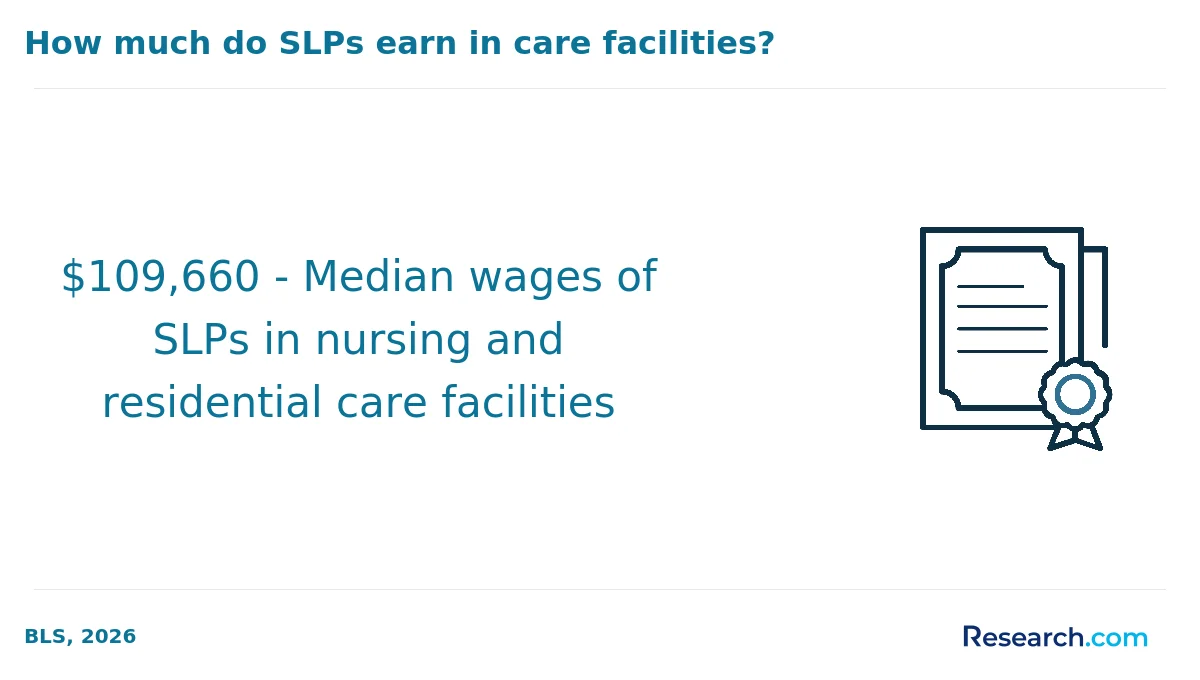
- Long-term earning potential: A master's degree remains the standard for full certification and higher salaries-around a median of $81,000 per year as of 2023 per U.S. Bureau of Labor Statistics data.
- Employer perception and career progression: Employers may focus on accreditation, clinical exposure, GPA, recommendations, and readiness for graduate study rather than whether the bachelor's degree was completed in two years or four.
- Impact of faster workforce entry: Finishing earlier may increase total earnings by reducing time out of the workforce. The limitation is that bachelor's-level roles may have salary ceilings without advanced credentials.
The stronger salary strategy is not simply choosing the fastest degree. It is choosing a program that keeps graduate school, assistant credentialing, and state requirements open. Students comparing salary improvement routes in healthcare may also review cheap rn to bsn online programs as a separate example of how degree completion can affect advancement.
Which Factors Most Affect ROI for Accelerated Speech Pathology Degrees?
The return on investment for an accelerated speech pathology degree depends on how much time and money the program saves, how quickly the graduate can work, and whether the degree supports future credentials. A lower-cost, faster program can still be a poor investment if credits do not transfer, the school lacks appropriate recognition, or graduates cannot qualify for the roles they want.
- Time-to-completion: Accelerated programs reduce the usual four-year timeline by one or two years, allowing students to start working or enter graduate study sooner.
- Tuition and total cost: Students should compare total program cost, including tuition, fees, books, technology, travel, and any lost income from reducing work hours.
- Opportunity cost savings: Entering the workforce earlier can allow graduates to build experience before peers in traditional programs. This matters more when graduates can secure relevant roles quickly.
- Employment outcomes and salary growth: Median wages for speech pathologists were around $82,000 in 2022, with career progression tied to experience and credentials. Bachelor's graduates should understand which jobs they can hold immediately and which require graduate education.
- Industry demand: Demand exists across healthcare, education, and rehabilitation settings, but local hiring requirements can vary. Students should check state rules and employer expectations before assuming job eligibility.
- Transferability of skills: Programs that emphasize evidence-based practice, communication, documentation, ethics, and supervised applied learning may give students more flexibility across schools, clinics, rehabilitation settings, and graduate pathways.
The best ROI usually comes from a program that is affordable, properly recognized, realistic to complete, and aligned with the student's next credential. Speed matters, but only when the degree leads to usable academic and career outcomes.
How Do You Decide If a 2-year Speech Pathology Degree Is Right for You?
A 2-year speech pathology degree may be right for you if you want a faster undergraduate route, can manage a heavy academic schedule, and understand that bachelor's-level outcomes may differ from licensed speech-language pathologist roles. It may be less suitable if you need maximum schedule flexibility, must work full time, or prefer a slower pace for science-heavy and clinically oriented coursework.
Choose an accelerated program if:
- You already have transfer credits or can commit to year-round study.
- You are comfortable with frequent deadlines and limited breaks.
- You want to enter support roles sooner or prepare for graduate study faster.
- You have a clear financial plan for tuition, fees, materials, and living expenses.
- You have confirmed the program's fit with state requirements and future career goals.
Be cautious if:
- You need to work full time and the program does not offer enough flexibility.
- You have not confirmed whether credits will transfer or count toward graduation.
- You assume the bachelor's degree alone will qualify you for every clinical speech pathology role.
- You are unsure about graduate school but want the option later.
- You do not have reliable support for transportation, technology, study time, or caregiving responsibilities.
From a financial standpoint, shorter degrees often reduce tuition costs by 20-30% compared to traditional four-year options, which can ease debt burdens. Career outlook remains strong, with median wages around $81,000 annually and job growth expected at 17% through 2035. Still, many employers prefer or require master's degrees for clinical roles, so students should check requirements in their state and target work setting.
The right choice balances immediate affordability with long-term mobility. A strong accelerated program should help you finish faster without closing doors to graduate education, credentialing, or career advancement.
What Graduates Say About Their 2-Year Speech Pathology Degree
- : "I chose the 2-year accelerated bachelor's degree in speech pathology because I wanted to jumpstart my career without the typical four-year wait. The intense schedule was challenging, but I stayed organized with a strict routine and constant focus, managing both coursework and practical sessions effectively. Given the average cost of attendance was manageable, this program was a perfect balance of time and investment, and now I'm confidently working in a clinical setting helping clients daily. — Westin"
- : "Reflecting on my time in the 2-year speech pathology program, I appreciated how streamlined and focused it was compared to traditional routes. Juggling such a compact curriculum required discipline and sacrifices, but the hands-on experience and expert faculty made it worth every moment. This degree accelerated my entry into the workforce and significantly boosted my professional skills and job prospects in a competitive field. — Peter"
- : "From a professional standpoint, the 2-year speech pathology bachelor's degree was a strategic choice to minimize academic expenses and quickly qualify for industry roles. Managing a rigorous timeline alongside part-time work meant I often prioritized efficiency and time management above all else. The advanced pace equipped me with essential clinical competencies sooner, and it has had a measurable positive impact on my career trajectory and earning potential. — Andrew"
Other Things You Should Know About Speech Pathology Degrees
An accelerated 2-year program can maintain education quality if the curriculum is well-designed, but students may face intense workloads. Some programs balance speed and quality by integrating practical experiences, ensuring that graduates are well-prepared for clinical roles. Evaluation of faculty expertise and resources is crucial when considering such programs.
An accelerated 2-year Speech Pathology degree typically reduces tuition costs due to the shorter duration. Students spend less on extended semesters and associated living expenses, potentially leading to a more favorable return on investment compared to traditional 4-year programs.
References
- U.S. Bureau of Labor Statistics - Speech-Language Pathologists https://www.bls.gov/ooh/healthcare/speech-language-pathologists.htm
- ASHA EdFind - Accredited Speech-Language Pathology Programs https://find.asha.org/ed/
- ETS Praxis - Speech-Language Pathology (5331) https://praxis.ets.org/test/speech-language-pathology-5331.html
- University of Wisconsin-Eau Claire - Master of Science in Speech-Language Pathology (Online) https://www.uwec.edu/speech-language-and-hearing-sciences-department/graduate-program/speech-language-pathology-online
- University of North Carolina at Greensboro - Speech-Language Pathology, M.A. (Online) https://csd.uncg.edu/graduate/masters-of-arts-online/
- Delaware Valley University - Master of Science in Speech-Language Pathology (M.S.) https://delval.edu/programs/graduate-programs/speech-language-pathology
- James Madison University - Master of Science (M.S.) in Speech-Language Pathology (Distance Education / Online) https://www.jmu.edu/chbs/csd/online_ms/index.shtml
- Pepperdine University - Master of Science in Speech-Language Pathology https://healthscience.pepperdine.edu/online-masters-in-speech-language-pathology/


