2027 What Do You Learn in a Speech Pathology Degree: Curriculum, Skills & Core Competencies

Co-Founder and Chief Data Scientist

Reviewed by Rhea Paul, PhD
SLP Education & Research Expert
Choosing a speech pathology degree means weighing more than a major name. You need to know what the program actually teaches, how much clinical training it includes, whether it prepares you for licensure and certification steps, and what kinds of roles graduates typically pursue.
Speech-language pathology is a healthcare and education-related field focused on communication, speech, language, voice, fluency, cognition, and swallowing disorders. According to the U. S. Bureau of Labor Statistics, employment in speech-language pathology is projected to grow 17% from 2025 to 2035, reflecting continued demand in schools, hospitals, rehabilitation centers, clinics, and private practice settings.
This guide explains what students study in a speech pathology degree, the technical and interpersonal skills they build, the specializations available, how long programs usually take, what clinical placements involve, and how graduates commonly use the degree. It is designed for prospective students, career changers, and early-career professionals comparing speech pathology with related health and education pathways.
Key Benefits of a Speech Pathology Degree
- The curriculum combines linguistics, neuroscience, and communication sciences, providing a well-rounded foundation essential for diagnosing and treating speech and language disorders.
- Students develop practical skills in clinical assessment, therapeutic techniques, and evidence-based intervention, preparing them for diverse professional settings.
- Core competencies include patient-centered care, interdisciplinary collaboration, and cultural sensitivity, which are crucial for effective treatment across varied populations and age groups.
What Is a Speech Pathology Degree?
A speech pathology degree prepares students to understand, assess, and treat communication and swallowing disorders. Programs are offered at the undergraduate and graduate levels, but entry into professional speech-language pathology practice typically requires graduate study, supervised clinical experience, and completion of applicable certification and state licensure requirements.
The curriculum combines science, clinical reasoning, and hands-on practice. Students study how people produce speech, process language, hear sounds, swallow safely, and communicate across the lifespan. Coursework commonly draws from linguistics, anatomy, physiology, psychology, neuroscience, audiology, and research methods.
Students may encounter several program formats, including on-campus, online, hybrid, accelerated, and part-time options. Format matters because speech pathology is not a purely classroom-based field. Even when didactic coursework is online, students should expect supervised clinical work, practicum requirements, and site coordination.
According to the U.S. Bureau of Labor Statistics, employment of speech-language pathologists is projected to grow 17% from 2025 to 2035. That projection can make the field attractive, but students should still evaluate program accreditation, clinical placement support, cost, graduation requirements, and licensure alignment before enrolling.
Students comparing flexible or lower-cost pathways may want to review cheapest slp master's programs while confirming that any program they consider meets the clinical and academic expectations for their career goals.
What Core Courses Are Included in a Speech Pathology Degree?
Core courses in a speech pathology degree build the academic foundation students need before they can make clinical decisions. A strong curriculum should teach how communication works, how disorders are identified, how treatment plans are selected, and how progress is documented.
Although course titles vary by institution, most speech pathology programs include the following areas:
- Introduction to Communication Disorders: This course surveys speech, language, hearing, fluency, voice, cognitive-communication, and swallowing disorders. It helps students understand the scope of the profession and recognize how disorders affect learning, work, health, and daily interaction.
- Anatomy and Physiology of the Speech and Hearing Mechanism: Students study the structures involved in breathing, voicing, articulation, hearing, and swallowing. This knowledge is essential for understanding why a disorder occurs and how treatment should be planned.
- Phonetics: Phonetics teaches students to identify, describe, and transcribe speech sounds. Accurate transcription supports assessment, goal writing, therapy planning, and progress monitoring.
- Language Development: This course covers typical and atypical language growth across the lifespan. Students learn developmental milestones, warning signs, and the difference between language difference and language disorder.
- Speech Science: Students examine the acoustic, physiological, and neurological features of speech production. This course strengthens the evidence base behind assessment and intervention decisions.
- Clinical Methods and Practicum: Clinical methods courses introduce case management, assessment selection, therapy design, documentation, ethics, and client-centered care. Practicum experiences allow students to apply classroom knowledge under supervision and begin developing professional judgment consistent with expectations from organizations like ASHA.
Students who are also interested in counseling, mental health, or school-based support roles may compare speech pathology with adjacent fields, including CACREP online counseling programs, but they should understand that counseling and speech-language pathology lead to different scopes of practice and licensure pathways.
What Specializations Are Available in a Speech Pathology Degree?
Speech pathology programs may allow students to focus electives, clinical placements, research projects, or capstone work around a population or disorder area. Specialization can help students clarify career goals, but it should not replace broad clinical preparation. Most graduates still need foundational competence across multiple communication and swallowing domains.
- Pediatric speech pathology: This focus prepares students to work with infants, toddlers, children, and adolescents who have speech sound disorders, language delays, developmental disabilities, fluency concerns, or school-based communication needs.
- Adult neurogenic disorders: This area emphasizes communication and swallowing challenges related to stroke, traumatic brain injury, degenerative disease, and other neurological conditions. Students learn how rehabilitation goals differ from developmental treatment goals.
- Voice and swallowing therapy: Students interested in medical settings may focus on voice disorders, vocal health, and dysphagia. This specialization often requires strong knowledge of anatomy, physiology, instrumentation, and interdisciplinary care.
- Augmentative and alternative communication (AAC): AAC training prepares students to support people who communicate through devices, communication boards, symbols, switches, or other supports. It requires attention to access, language development, technology, caregiver training, and long-term usability.
- Telepractice: Telepractice focuses on delivering services remotely. Students learn how to adapt assessment, therapy activities, documentation, privacy practices, and family collaboration for virtual care models.
When comparing specializations, students should ask whether the program offers relevant clinical placements, faculty expertise, simulation labs, research opportunities, or partnerships with schools, hospitals, clinics, or community agencies. A specialization listed on a website is most valuable when it is backed by supervised experience.
How Long Does It Take to Complete a Speech Pathology Degree?
The time required depends on the degree level, enrollment pace, prerequisites, clinical requirements, and program format. For students planning a professional speech-language pathology career, the master's stage is especially important because it typically includes advanced coursework and supervised clinical preparation.
| Program format | Typical length | Best fit | Key trade-off |
| Traditional full-time master's | About two years | Students who can prioritize school and clinical training full time | Faster completion than part-time study, but less schedule flexibility |
| Part-time master's | Three to four years | Working adults, caregivers, or students balancing major obligations | More manageable pace, but a longer time before graduation |
| Accelerated master's | 12 to 18 months | Students with strong preparation and availability for an intensive schedule | Shorter timeline, but heavier workload and less room for outside commitments |
| Online and hybrid programs | Generally aligned with full- or part-time timelines | Students who need remote coursework or geographic flexibility | Flexible classes, but clinical placements still require planning and supervision |
Time to completion is not only about credit hours. Students should also account for prerequisite courses, background checks, immunization or health documentation, clinical site availability, semester sequencing, and any required in-person intensives.
After completing a hybrid speech pathology program, one graduate described the format as both flexible and demanding. He noted, "Balancing coursework at my own pace was a relief, but coordinating in-person practicum amidst remote learning demanded extra planning." His experience reflects a common reality: flexible delivery can reduce commuting and scheduling pressure, but it does not eliminate the clinical responsibilities of the degree.
What Technical Skills Do Students Gain in a Speech Pathology Program?
Speech pathology students develop technical skills that support assessment, diagnosis, intervention, documentation, and progress monitoring. These skills are important because clinical decisions must be based on observable data, client needs, professional standards, and evidence-based methods.
- Use of diagnostic tools: Students learn to administer, score, and interpret standardized and informal assessments for speech, language, fluency, voice, cognitive-communication, and swallowing concerns. They also learn when a tool is appropriate and when additional observation or referral is needed.
- Clinical documentation: Programs train students to write evaluation reports, treatment goals, session notes, progress summaries, and discharge recommendations. Clear documentation is essential for continuity of care, school services, insurance processes, and professional accountability.
- Speech and language analysis: Students practice phonetic transcription, language sampling, acoustic analysis, and error pattern identification. These skills help clinicians move beyond general impressions and identify specific treatment targets.
- Specialized software and clinical technology: Training may include tools used to analyze speech patterns, voice characteristics, and swallowing mechanics. Students learn to use technology as a support for clinical reasoning, not as a substitute for it.
- Augmentative and alternative communication devices: Students learn how to evaluate communication needs, select AAC supports, teach device use, and involve families, teachers, or caregivers in implementation.
- Evidence-based intervention planning: Students learn to connect assessment findings to therapy methods, select measurable goals, and adjust treatment when a client is not making expected progress.
What Soft Skills do Speech Pathology Students Develop?
Speech pathology depends heavily on human interaction. Students must learn not only how to assess and treat disorders, but also how to build trust, explain complex information clearly, and work with people who may feel frustrated, anxious, or overwhelmed by communication difficulties.
- Communication: Students practice explaining diagnoses, therapy plans, progress, and home strategies in language that clients and families can understand. Strong communication also supports collaboration with teachers, physicians, therapists, and caregivers.
- Empathy and active listening: Effective clinicians listen carefully to client goals, family concerns, cultural context, and emotional reactions. This skill helps students avoid one-size-fits-all treatment and build stronger therapeutic relationships.
- Teamwork: Speech-language pathologists often work with educators, audiologists, occupational therapists, physical therapists, nurses, physicians, psychologists, and social workers. Students learn how to contribute to interdisciplinary care without exceeding their role.
- Problem-solving: Clients rarely present with identical needs. Students learn to adjust materials, goals, cues, and therapy approaches based on age, diagnosis, motivation, access needs, and progress data.
- Critical thinking: Case studies, research appraisal, and supervised practice help students evaluate evidence, question assumptions, and make defensible clinical decisions.
- Adaptability: Clinical settings can change quickly. Students learn to respond to cancellations, fatigue, behavioral needs, technology issues, caregiver concerns, and unexpected assessment results while maintaining professional standards.
A practicing clinician reflected that her speech pathology education challenged her beyond academics. Managing client emotions strengthened her patience, empathy, and active listening, while team projects helped her become more confident in collaborative settings. She also found that case-based learning improved her ability to solve problems under pressure. In her view, soft skills were not secondary to technical training; they were essential to using that training well.
Do Speech Pathology Programs Include Internships or Co-ops?
Approximately 85% of accredited speech pathology programs in the United States require students to complete internships or clinical placements as a core part of their studies. These experiences are usually called clinical practicums, externships, or supervised clinical placements rather than co-ops.
Clinical placements are central to speech pathology training because students must learn to work with real clients under qualified supervision. During these experiences, students may observe sessions, conduct portions of assessments, write treatment plans, deliver therapy, document progress, and receive feedback from licensed professionals.
Placements often occur in settings such as schools, hospitals, outpatient clinics, rehabilitation centers, private practices, university clinics, and community agencies. Exposure to more than one setting can help students understand how caseloads, documentation, schedules, and client needs differ across the profession.
Students should ask direct questions before enrolling: Who finds the placements? How far might students need to travel? Are evening or weekend placements available? What happens if a placement falls through? How are supervisors selected and evaluated? These details can significantly affect the student experience, especially in online and hybrid programs.
Internships and practicums also build professional habits that are difficult to learn from lectures alone, including ethical judgment, cultural responsiveness, confidentiality, time management, caregiver coaching, and interdisciplinary collaboration. They can also lead to mentorship, references, and stronger job readiness after graduation.
Are Certifications Included in a Speech Pathology Curriculum?
Certifications are related to speech pathology education, but they are not usually “included” in the degree in the same way that courses and clinical credits are. A program may prepare students for certification requirements, advise them on next steps, or align coursework with professional standards, but the formal credentialing process is typically completed separately.
The Certificate of Clinical Competence in Speech-Language Pathology (CCC-SLP) is the most recognized credential and is administered by the American Speech-Language-Hearing Association (ASHA). Students usually pursue this certification after graduation by completing required post-degree steps, including a supervised clinical fellowship and a national exam.
State licensure is also a separate consideration. Certification and licensure are related, but they are not the same thing. Licensure determines whether a graduate can legally practice in a state, while certification is a professional credential that may support employability and mobility. Requirements can vary, so students should review the rules for the state where they plan to work.
Some programs may offer workshops, exam preparation, clinical advising, or documentation support, but students should not assume that graduation automatically equals certification or licensure. Before enrolling, ask how the program tracks clinical hours, prepares students for post-graduation requirements, and supports applications for credentials.
Professionals who later move into administration, training, or organizational roles may also consider leadership-focused education, such as a PhD in organizational leadership online, although that path serves different goals from clinical speech-language pathology certification.
What Types of Jobs Do Speech Pathology Graduates Get?
Speech pathology graduates work in settings where communication, learning, rehabilitation, and swallowing support are needed. The exact job options depend on degree level, certification status, state licensure, clinical experience, and specialization.
- Clinical Speech-Language Pathologists: These professionals work in hospitals, rehabilitation centers, outpatient clinics, skilled nursing facilities, and other healthcare environments. They assess and treat speech, language, cognitive-communication, voice, fluency, and swallowing disorders related to conditions such as stroke, injury, illness, or developmental differences.
- Educational Speech Pathologists: School-based speech pathologists support children and adolescents with communication needs that affect learning and participation. They may evaluate students, provide therapy, contribute to individualized plans, consult with teachers, and communicate with families.
- Private Practice Therapists: Some graduates work in or eventually open private practices. This path may offer more control over services, scheduling, and niche focus areas, but it also requires attention to referrals, billing, compliance, documentation, and business operations.
- Research Professionals: Graduates with strong research interests may contribute to studies on communication disorders, assessment tools, intervention methods, language development, voice, swallowing, or service delivery models. Research roles often require strong analytical skills and may call for additional graduate preparation depending on the position.
Students who want to enter the workforce sooner in a related area may compare speech pathology timelines with accelerated online degrees, but they should remember that becoming a practicing speech-language pathologist typically involves specific graduate-level and clinical requirements.
How Much Do Speech Pathology Degree Graduates Earn on Average?
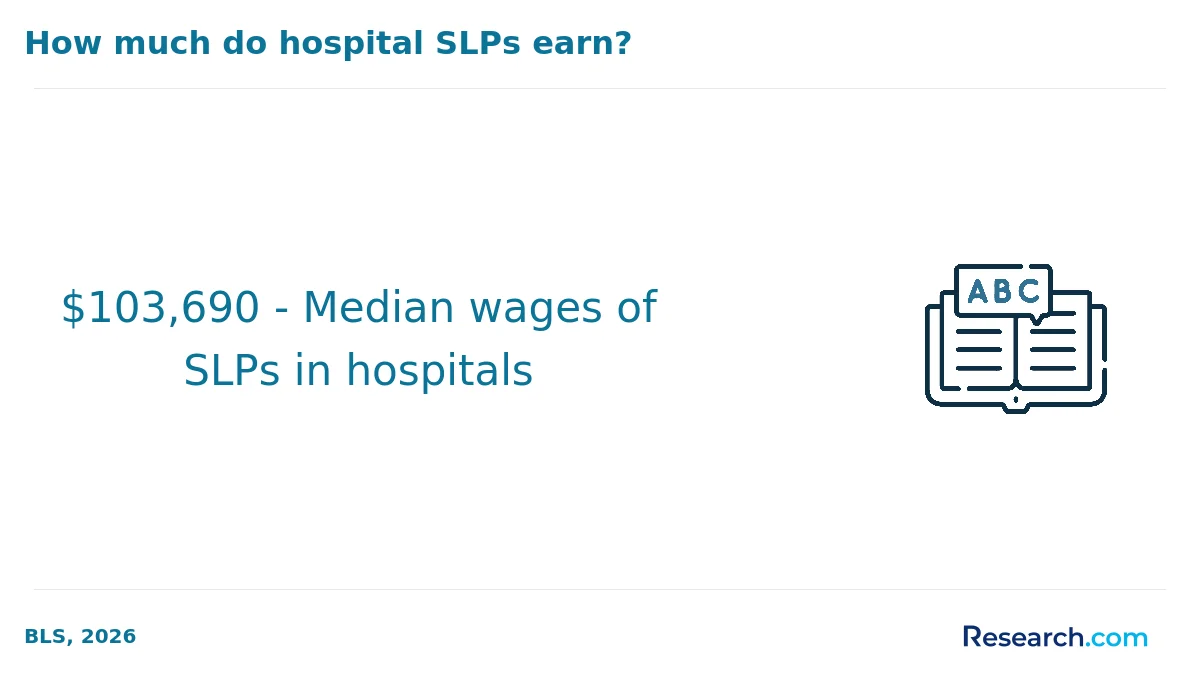
Salary is an important part of evaluating a speech pathology degree, but it should be interpreted carefully. Graduates with a speech pathology degree typically earn an average salary ranging from $62,900 to $134,160 per year. Actual earnings can vary based on role, setting, location, experience, credentials, and whether the graduate works in schools, healthcare, private practice, or another environment.
- Entry-Level Salaries: Recent graduates or professionals in their first roles tend to earn between $55,000 and $65,000 annually. Starting pay may depend on geographic area, employer type, caseload, contract length, and whether the role is school-based or medical.
- Mid-Career Growth: With experience, stronger clinical judgment, and advanced skills, salaries can rise to between $75,000 and $90,000 or more. Specialization in areas such as pediatric speech therapy or neurological disorders may improve opportunities, although salary gains are not automatic.
- Influencing Factors: Private clinics and hospitals generally offer higher pay compared to public schools or nonprofit organizations. Geographic location also matters, especially in metropolitan areas and states with higher living costs. Credentials such as the Certificate of Clinical Competence in Speech-Language Pathology (CCC-SLP) often correlate with increased pay and advancement opportunities.
Students should compare salary expectations with total program cost, debt, clinical placement logistics, time out of the workforce, and licensure requirements. Those exploring shorter or lower-cost entry points into adjacent healthcare fields may also look at easiest associate degree programs, while recognizing that associate-level pathways do not replace the graduate preparation required for speech-language pathology practice.
What Graduates Say About Their Speech Pathology Degree
- : "The speech pathology degree program offered a well-rounded core curriculum that thoroughly covered anatomy, linguistics, and therapy techniques. I developed essential clinical skills and a deep understanding of communication disorders that have been invaluable in my day-to-day work. Considering the average cost of attendance was reasonable, the investment truly paid off as it boosted my confidence and employability. — Calvin"
- : "Reflecting on my time in the speech pathology program, I appreciate how it balanced theoretical knowledge with practical experience. The competencies I gained in assessment and intervention strategies have equipped me to make a meaningful impact in diverse clinical settings. While the program required dedication, the average cost of attendance felt justified by the professional growth I achieved. — Samantha"
- : "From a professional standpoint, the speech pathology degree has been instrumental in shaping my career. The curriculum not only enhanced my diagnostic and communication skills but also helped me develop critical thinking essential for patient care. Despite the financial commitment, the skills I acquired have opened numerous career opportunities and justified every penny spent. — Sloane"
Other Things You Should Know About Speech Pathology Degrees
Most accredited speech pathology programs require several hundred supervised practicum hours before graduation. In the United States, graduate programs must include at least 375 clock hours of supervised clinical practice, with experiences in schools, hospitals, and outpatient settings.
In 2027, speech pathology programs include dedicated courses on counseling and patient interaction. These focus on developing empathetic communication, interview techniques, and therapeutic rapport, ensuring students can effectively support and guide patients throughout treatment.
References
- U.S. Bureau of Labor Statistics - Speech-Language Pathologists https://www.bls.gov/ooh/healthcare/speech-language-pathologists.htm
- ASHA EdFind - Accredited Speech-Language Pathology Programs https://find.asha.org/ed/
- O*NET OnLine - Speech-Language Pathologists https://www.onetonline.org/link/summary/29-1127.00
- California State University-Northridge - Master of Science in Communicative Disorders (Online) https://tsengcollege.csun.edu/programs/CDS
- University of Scranton - Master of Science (M.S.) in Speech-Language Pathology https://www.scranton.edu/academics/pcps/health-and-human-performance/programs/speech-language-pathology/index.shtml
- Pennsylvania Western University - Master of Science in Speech-Language Pathology https://online.pennwest.edu/programs/speech-language-pathology-grad/index.php
- University of Nebraska at Kearney - Speech-Language Pathology, Master of Science in Education (Online Track) https://www.unk.edu/online/degrees-programs/speech-language-pathology-online.php
- Emerson College - Master of Science (M.S.) in Communication Disorders (Speech@Emerson, online) https://speech.emerson.edu/