2027 Best Medical Assistant Schools & Programs in Minnesota – How to Become a Medical Assistant in Minnesota

Co-Founder and Chief Data Scientist
Choosing a medical assistant school in Minnesota is not just about finding the nearest program. You need a program that fits your timeline, budget, certification goal, and preferred work setting—clinic, hospital, specialty practice, or administrative healthcare role. Minnesota can be a strong state for this career: medical assistants earn nearly 48% more in Minnesota than medical assistants in other states, and the role can also serve as a practical first step toward nursing, healthcare administration, medical billing, nutrition, pharmacy, or other healthcare careers.
This guide explains how to become a medical assistant in Minnesota, what program formats and credentials to compare, how long training usually takes, what schools offer medical assistant programs, and how to evaluate cost, accreditation, certification eligibility, and career advancement options. It also points readers who want long-term healthcare leadership roles toward related paths such as high-level healthcare delivery and administration jobs.
Quick Answer: Are Medical Assistant Schools in Minnesota Worth Considering?
Yes—medical assistant programs in Minnesota can be worth considering if you want a relatively direct path into healthcare work without spending several years in school. The best choice is usually a CAAHEP- or ABHES-accredited program that includes supervised clinical experience, prepares you for CMA or RMA certification, and has strong employer connections in the region where you want to work.
Students who want the fastest route may prefer a diploma. Students who want broader transfer options or future advancement may prefer an associate degree. Before enrolling, confirm the school’s accreditation, certification exam eligibility, externship requirements, total cost, schedule format, and job placement support.
Best Medical Assistant Schools in Minnesota Table of Contents
- Is medical assisting a good career in Minnesota?
- How do you become a medical assistant in Minnesota?
- How long do medical assistant programs take in Minnesota?
- How much do medical assistant programs cost in Minnesota?
- Minnesota schools with medical assistant programs for 2027
- How to choose a medical assistant program in Minnesota
- Should medical assistants join professional organizations?
- How can Minnesota medical assistants advance their careers?
- How can medical assistants move into nutrition careers in Minnesota?
- How can medical assistants become nurse practitioners in Minnesota?
- Can medical assistants bridge into LPN programs?
- Are accelerated medical assistant programs a good option?
- Can medical assistants transition into medical billing and coding?
- How can medical assistants move into healthcare administration?
- How should you write a medical assistant resume in Minnesota?
- How can medical assistants transition into pharmacy roles?
- How are medical assistant programs using healthcare technology?
- How can medical assistants track healthcare trends and rules?
- How can students pay for medical assistant education?
- How can medical assistants become registered nurses?
Is Medical Assistant a Good Job in Minnesota?
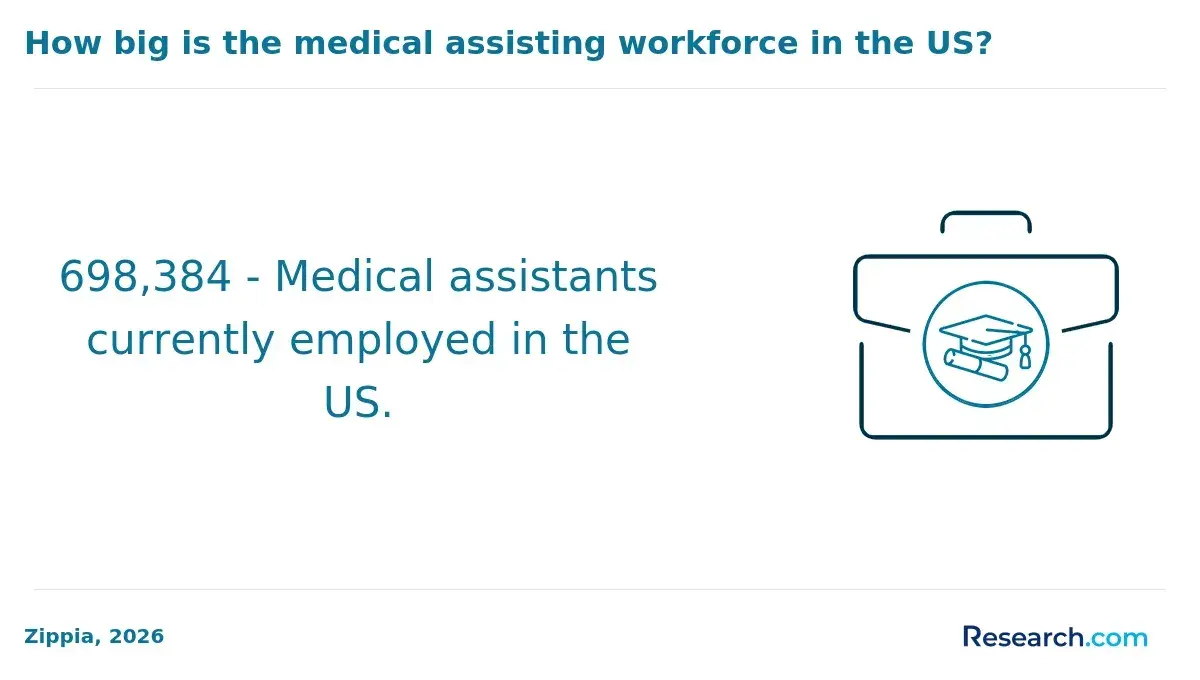
Medical assisting can be a strong entry-level healthcare job in Minnesota for people who want patient contact, administrative duties, and a shorter training path than nursing or many allied health roles. In 2025, Minnesota employed approximately 18,112 medical assistants. The U.S. Bureau of Labor Statistics projects faster-than-average in-state demand for these workers, with growth of 13.1% through the decade.
Projections Central reports that employment opportunities for graduates of medical assistant schools in Minnesota will grow by 16.1% by 2030, producing 1,320 average annual openings. These openings include new positions and replacement jobs created when workers retire or leave the occupation. Demand is tied to Minnesota’s healthcare needs, including an aging population, chronic disease management, and continued use of outpatient and clinic-based care.
| Location | Projected Job Growth By 2030 | Average Annual Job Openings |
| Minnesota | 16.1% | 1,320 |
| Nationwide | 18.4% | 104,400 |
Pay is another reason Minnesota stands out. Medical assisting is among the better-paying medical jobs available to many entry-level healthcare workers in the state. Minnesota is the fifth-highest-paying state for medical assistants, with a median wage of $51,330. The Minneapolis-St. Paul-Bloomington area reports a median salary of $56,170 for medical assistants, making it the top-paying employment area in the state. Other higher-paying areas include Rochester, St. Cloud, Duluth, and the Southwest Minnesota nonmetropolitan area.
Who Is This Career Best For?
- Good fit: Students who want a patient-facing healthcare role with both clinical and office responsibilities.
- Good fit: Career changers who want a faster route into healthcare before deciding whether to pursue nursing, administration, or another field.
- Possible poor fit: Students who want independent clinical decision-making right away; nursing, physician assistant, or advanced practice tracks may be better long-term goals.
- Possible poor fit: People who strongly dislike multitasking, frequent patient interaction, documentation, or fast-paced clinic workflows.
What Are the Steps to Becoming a Medical Assistant in Minnesota?
Minnesota does not require medical assistants to hold a state license, but employers often prefer applicants who have completed formal training and earned a recognized national credential. A practical route includes high school completion, accredited training, clinical experience, certification preparation, and a focused job search.
Step 1: Complete High School or an Equivalent Credential
A high school diploma is the baseline educational requirement for most medical assistant jobs in Minnesota. Students who did not finish high school can usually start by earning a GED before applying to a postsecondary medical assistant program. High school courses in biology, anatomy, health science, computer applications, and communication can make the transition easier.
Step 2: Choose a Minnesota Medical Assistant Training Program
After secondary education, students can apply to medical assistant schools in Minnesota. Programs may be campus-based, hybrid, or online with in-person clinical requirements. Fully online coursework can be convenient, but students should verify where labs, practicums, and externships take place before enrolling.
Medical assistant coursework usually combines science, patient care, office procedures, and healthcare documentation. Common subjects include:
- Anatomy
- Physiology
- Medical terminology
- Pharmacology
- First aid
- Administrative procedures used in healthcare facilities
Minnesota schools commonly offer either a diploma or an associate degree in medical assisting. Both routes may include supervised clinical practice, which gives students experience in real healthcare settings before they apply for jobs.
Step 3: Compare Diploma and Associate Degree Options
| Program Type | Best For | Typical Advantage | Trade-Off |
| Medical Assistant Diploma | Students who want to enter the workforce quickly | Shorter program length and fewer required credits | May offer fewer general education credits for future transfer |
| Associate Degree in Medical Assisting | Students considering future education or advancement | Broader coursework and a stronger academic foundation | Usually takes longer and costs more overall |
Step 4: Complete Supervised Clinical Experience
Hands-on practice matters because medical assistants perform patient intake, prepare exam rooms, measure vital signs, support procedures, maintain records, and communicate with patients and healthcare teams. To qualify for certification as a Certified Medical Assistant, students can meet the experience requirement through a 160-hour practicum or 1,000 hours of medical assisting work experience.
Step 5: Consider National Certification
Certification is not legally required for every medical assistant job in Minnesota, but it can improve your competitiveness and may be preferred by clinics and health systems. The two major options discussed for Minnesota medical assistants are the CMA credential and the RMA credential.
Certified Medical Assistant (CMA)
The Certified Medical Assistant credential is awarded by the American Association of Medical Assistants. The exam includes 200 questions, is divided into four 40-minute sections, and costs $250.
CMA holders must recertify every five years. They can do this by retaking the exam or completing continuing education. Recertification by exam costs $250, while recertification through continuing education costs $130.
Registered Medical Assistant (RMA)
The Registered Medical Assistant credential is administered by American Medical Technologists. The RMA exam contains more than 200 multiple-choice questions and costs $135.
RMA certification lasts three years. To keep the credential active, certificants must pay a $75 annual fee, complete 30 continuing education credits, and pay a $205 recertification fee every three years.
Step 6: Apply for Medical Assistant Jobs in Minnesota
After completing training and, when applicable, earning certification, graduates can apply to clinics, hospitals, specialty practices, outpatient centers, and health systems. Minnesota has 123 hospitals, including Abbott Northwestern Hospital, St. Cloud Hospital, and the Mayo Clinic, all of which reflect the scale of the state’s healthcare employment market.
Medical assisting can also support long-term growth. After gaining experience, some professionals move into team lead, clinical office, billing, nursing, or management roles. Those interested in administrative leadership may later compare options such as the cheapest online master degree in healthcare administration.
Medical Assistant Program Length in Minnesota
The time required to become a medical assistant depends on your starting point and the credential you choose. A student who completes high school and then an associate degree may spend about six years from the start of high school through postsecondary completion. A student who already has a diploma or GED and chooses a shorter medical assistant diploma can finish much sooner.
How Long Are Medical Assistant Programs?
Many Minnesota students complete medical assistant certification-focused training in two to three years when high school and postsecondary preparation are considered together. At the college level, diploma programs often take three semesters, or about 10 months. Associate degree programs generally take about 24 months.
| Path | Approximate Program Length | When It Makes Sense |
| Diploma | Three semesters, or approximately 10 months | You want a faster workforce entry route |
| Associate degree | About 24 months | You want broader coursework and possible future academic mobility |
| High school plus associate degree | May take six years | You are planning the full pathway from secondary school through college |
Tuition and Costs of Medical Assistant Programs in Minnesota
Some Minnesota healthcare training options, such as certain nursing assistant pathways, may be tuition-free. Accredited medical assistant programs in Minnesota, however, are not generally free. Students should compare total program cost rather than looking only at the advertised per-credit tuition.
Among the Minnesota medical assistant schools reviewed here, Hennepin Technical College lists the lowest estimated cost per credit at $198 for its diploma and associate degree options. Dakota County Technical College lists the highest estimated cost per credit among these featured programs at $237.
Cost Factors to Check Before Enrolling
- Tuition per credit: Multiply the per-credit cost by the number of credits required for the diploma or degree.
- Fees: Ask about lab, technology, clinical placement, background check, immunization, and graduation fees.
- Books and supplies: Medical assistant students may need textbooks, uniforms, clinical supplies, and exam preparation materials.
- Certification exam costs: Budget separately for CMA or RMA exam fees if they are not included in tuition.
- Transportation: Hybrid and online students may still need to travel for labs, practicums, or externships.
- Lost work time: Evening, weekend, part-time, and hybrid schedules can matter if you plan to work while enrolled.
Minnesota Schools Offering Medical Assistant Programs for 2027
The schools below offer Minnesota medical assistant programs with diploma, associate degree, online, hybrid, or campus-based options. Use this list as a starting point, then verify current admissions requirements, costs, schedules, externship rules, and certification eligibility directly with each school.
Dakota County Technical College
Dakota County Technical College offers a Medical Assistant program with both an Associate of Applied Science degree and a diploma track. Students may study online, on campus, or through a hybrid format. The curriculum emphasizes practical clinical and clerical skills used in medical offices and healthcare facilities. For 2024, 98% of graduates reported satisfaction with their education, and 92.5% passed the CMA (AAMA) certification exam.
- Program length: 10 months for the diploma; two years for the associate degree
- Track: Medical Assisting
- Estimated cost per credit: $237
- Credits required: 42 for the diploma; 60 for the associate degree
- Accreditation: Commission on Accreditation of Allied Health Education Programs (CAAHEP)
Hennepin Technical College
Hennepin Technical College’s Medical Assistant Program is designed to prepare versatile medical assistants who can support patients, providers, and healthcare teams in multiple settings. Students build clinical, administrative, and professional skills and complete hands-on learning through clinical site partnerships. The program reports that 100% of graduates passed the national certification exam for medical assistants.
- Program length: 10 months for the diploma; two years for the associate degree
- Track: Medical Assistance
- Estimated cost per credit: $198
- Credits required: 36 for the diploma; 60 for the associate degree
- Accreditation: Commission on Accreditation of Allied Health Education Programs (CAAHEP)
Anoka Technical College
Anoka Technical College offers an A.A.S. Medical Assistant degree that prepares students for the clinical and administrative responsibilities of medical assisting. The program includes classroom learning and clinical experience, and graduates earn an accredited 37-credit medical assistant diploma. Reported outcomes include a 100% student retention rate, graduate satisfaction rate, and employer satisfaction rate.
- Program length: Two years
- Track: Medical Assisting
- Estimated cost per credit: $209
- Credits required: 60
- Accreditation: Commission on Accreditation of Allied Health Education Programs (CAAHEP)
Century College
Century College’s Medical Assistant program has received the “Excellence in Curriculum Planning Award” from the Minnesota State System. The program covers clinical, laboratory, and administrative competencies and includes a 300-hour unpaid externship supervised directly by a physician. Students can use school resources to prepare for national certification, and course formats include in-person and online classes with daytime and evening options.
- Program length: 14 to 18 months
- Track: Medical Assisting
- Estimated cost per credit: $206
- Credits required: 51
- Accreditation: Commission on Accreditation of Allied Health Education Programs (CAAHEP)
Minnesota West Community and Technical College
Minnesota West Community and Technical College offers both an Associate of Applied Science degree and a diploma in medical assisting. The associate track adds general education coursework, while both options share the same core medical assistant training. The program combines classroom instruction with clinical practice. Minnesota West reports a 100% certification exam pass rate and job placement rate for medical assistant graduates, along with strong employer satisfaction.
- Program length: 10 months for the diploma; two years for the associate degree
- Track: Medical Assisting
- Estimated cost per credit: $216
- Credits required: 44 for the diploma; 60 for the associate degree
- Accreditation: Commission on Accreditation of Allied Health Education Programs (CAAHEP)
What To Look For in a Medical Assistant Program in Minnesota
The best medical assistant program is not always the cheapest, fastest, or closest. It is the one that prepares you for the credential you want, fits your schedule, and gives you access to supervised clinical experience and employer connections.
- Accreditation: Students who want to sit for the CMA (AAMA) exam should prioritize programs accredited by CAAHEP or ABHES. Programs with other forms of accreditation may require additional review, which can slow down the certification process. Minnesota has only nine CAAHEP-accredited medical assistant schools and one ABHES-accredited in-state school.
- Certification alignment: CMA exam eligibility requires a program with two semesters, equivalent to 560 contact hours. RMA exam eligibility requires 720 hours of instruction and at least 160 hours of externship experience.
- Clinical placement quality: Ask where students complete externships, how placements are assigned, and whether the sites match your career interests.
- Schedule format: Online and hybrid programs can help working students, but labs and externships may still require in-person attendance.
- Career support: Strong medical assistant and administration programs often provide certification preparation, resume help, interview coaching, job boards, and healthcare employer partnerships.
- Transfer potential: If you plan to pursue nursing, healthcare management, or another degree later, ask whether credits can transfer.
Questions to Ask Before You Enroll
- Is the program CAAHEP- or ABHES-accredited?
- Which certification exams does the curriculum prepare students for?
- How many externship hours are required, and where do students complete them?
- What is the total cost, including fees, books, supplies, and exam costs?
- Are courses offered during evenings, weekends, online, or in hybrid formats?
- What are the program’s certification pass rate, completion rate, and job placement outcomes?
- Will credits transfer into an associate, bachelor’s, nursing, or healthcare administration program?
Common Mistakes When Choosing a Program
- Choosing only by tuition: A lower per-credit price may not mean the lowest total cost if the program requires more credits or extra fees.
- Ignoring accreditation: Nonqualifying programs can create problems when you apply for certification.
- Assuming online means fully remote: Most medical assistant training still requires in-person labs, practicums, or externships.
- Overlooking schedule demands: Clinical placements may happen during business hours even if coursework is online or in the evening.
- Relying only on rankings: A highly rated school may not be the best fit if it does not match your location, schedule, budget, or credential goal.
What Are the Benefits of Joining Professional Medical Assistant Organizations?
Professional organizations can help students and working medical assistants stay connected to certification requirements, continuing education, job leads, and changes in healthcare practice. Membership is not mandatory, but it can be useful for people who want to build credibility and stay active in the field.
- Networking: Members can connect with medical assistants, educators, managers, and healthcare professionals in Minnesota and beyond.
- Continuing education: Associations may offer webinars, workshops, exam preparation, and updates on professional standards.
- Career tools: Some organizations provide job boards, resume resources, mentoring, and career development materials.
- Credential support: Groups such as the American Association of Medical Assistants and American Medical Technologists administer or support certifications that employers may value.
- Advocacy: Professional associations can help raise awareness of medical assistants’ role in healthcare teams and support workforce recognition.
Career Advancement Opportunities for Medical Assistants in Minnesota
Medical assisting can be a destination career, but it can also be a launch point. Minnesota medical assistants who want more responsibility can build on their clinical and administrative experience through certifications, additional education, or role-specific training.
- Specialized certifications: Medical assistants may pursue focused training in areas such as phlebotomy, EKG technology, or medical coding and billing. These credentials can help them qualify for specialized clinic, laboratory, or administrative roles.
- Advanced support roles: With experience and training, medical assistants may move into positions such as health information technician, patient care coordinator, or clinical office manager.
- Further education: Medical assistants interested in leadership may consider associate or bachelor’s programs in healthcare management. Online options can help working professionals balance employment and study.
- Professional networks: Participation in organizations such as the American Association of Medical Assistants or the Minnesota Society of Medical Assistants can provide continuing education, professional contacts, and job-search support.
Some medical assistants eventually compare related clinical careers. If nursing is a possible next step, review how to become a nurse in Minnesota through this guide to how to become a nurse in Minnesota.
How Can Medical Assistants Transition to Nutrition Careers in Minnesota?
Medical assistants who enjoy patient education and preventive care may consider nutrition-related careers. Their background in patient communication, medical terminology, chronic disease support, and clinic workflows can be useful, but nutrition roles may require additional academic preparation or credentials depending on the position. To understand the education and credential options for this transition, review Research.com’s guide on how to become a nutritionist in Minnesota.
How Can I Transition from a Medical Assistant to a Nurse Practitioner in Minnesota?
Becoming a nurse practitioner requires a much longer educational pathway than medical assisting. A medical assistant generally needs to progress into nursing first, earn registered nurse credentials, complete required clinical training, and then enter a nurse practitioner program. The medical assistant background can help with patient care fundamentals, but it does not replace nursing education or advanced practice preparation. For a complete pathway overview, see how to become a nurse practitioner in Minnesota.
Bridge Programs for Medical Assistants to Licensed Practical Nurses (LPNs)
Medical assistants who want a larger nursing scope of practice may explore MA-to-LPN bridge options in Minnesota. These programs build on prior clinical exposure while adding nursing theory, medication-related instruction, patient assessment, and supervised clinical practice. Bridge programs in Minnesota typically take 12 to 18 months. Some medical assistant to lpn bridge program options may offer accelerated formats for experienced medical assistants, with completion possible in as little as one year.
This path can make sense for medical assistants who want to stay close to direct patient care but take on more nursing-focused responsibilities. Before enrolling, confirm admissions requirements, credit for prior coursework, clinical placement expectations, state licensure preparation, and whether the program schedule is realistic for working students.
Accelerated Medical Assistant Programs in Minnesota: A Quick Path to Certification
Accelerated medical assistant programs may appeal to students who want to enter healthcare quickly, including career changers and working adults. The main advantage is speed. The main risk is that a shorter timeline can leave less room for skill practice, exam preparation, and clinical confidence if the program is not well structured.
What to Expect From Accelerated Programs
- Condensed coursework: Accelerated programs focus on core administrative and clinical skills and may allow completion in as little as six weeks.
- Flexible delivery: Some programs use online or hybrid coursework so students can manage school alongside work or family responsibilities.
- Hands-on practice: Strong programs still include externships, labs, or clinical practice despite the shorter timeline.
Students considering a fast route should compare accreditation, certification eligibility, externship hours, and employer recognition. To explore compressed training options, review fast track medical assistant programs.
How to Decide Whether a Minnesota Medical Assistant School Is Right for You
A Minnesota medical assistant program is worth serious consideration if it prepares you for certification, includes meaningful hands-on experience, and fits your financial and scheduling reality. The strongest programs do more than teach procedures; they help students understand patient communication, medical documentation, privacy expectations, clinical safety, and workflow in busy healthcare settings.
If your long-term plan is management rather than direct clinical work, you may also want to compare medical assisting with healthcare management online programs. Medical assisting can provide useful frontline experience, while healthcare management education focuses more on operations, finance, leadership, and organizational decision-making.
Can Medical Assistants Transition to Medical Billing and Coding Roles in Minnesota?
Yes. Medical assistants often have a useful foundation for billing and coding because they already understand medical terminology, patient records, diagnoses, procedures, and clinic documentation. A transition usually requires additional training in coding systems, reimbursement rules, claims processes, and compliance. For step-by-step career information, read how to become a medical biller and coder in Minnesota.
How Can Medical Assistants Transition to Healthcare Administration Roles?
Medical assistants who understand both patient care and office operations can be strong candidates for healthcare administration training. The next step is usually education in management, finance, healthcare policy, operations, and leadership. Experienced professionals who want a faster graduate-level route can compare options such as 1 year MHA programs online, especially if they already hold a qualifying undergraduate degree.
How Can I Craft an Effective Resume for Medical Assistant Positions in Minnesota?
A strong Minnesota medical assistant resume should show certification status, clinical skills, administrative abilities, externship or work experience, and comfort with healthcare technology. Use specific examples when possible: patient intake, vital signs, EHR documentation, scheduling, specimen handling, medication-related support, phlebotomy, or procedure preparation. Tailor each resume to the job posting and include keywords that match the employer’s requirements.
If you are comparing medical assisting with nursing-related routes, you may also want to review how to become a LVN nurse in Minnesota.
What Are the Steps to Transition from Medical Assisting to a Pharmacy Role in Minnesota?
Medical assistants interested in pharmacy should expect to complete additional education in pharmacology, medication safety, drug therapy, and pharmacy practice requirements. The roles are different, so clinical assisting experience can help but will not usually satisfy pharmacy credentialing expectations by itself. Students should compare pharmacy prerequisites, licensure steps, standardized exam requirements, and practical training options. For a detailed pathway, see how to become a licensed pharmacist in Minnesota.
How Do Medical Assistant Programs Integrate Emerging Healthcare Technologies in Minnesota?
Medical assistant programs increasingly need to prepare students for technology-supported care. Important areas include electronic health records, telehealth support, digital scheduling, diagnostic software, secure patient communication, and accurate data entry. These tools affect both clinical and administrative work, so students should ask schools how technology is taught and practiced during labs or externships. Students interested in more technology-focused clinical roles can also review how to become a radiology technician in Minnesota.
How Can I Stay Updated on Healthcare Trends and Regulations in Minnesota?
Medical assistants can stay current by following state health updates, employer compliance training, continuing education providers, professional associations, and certification renewal requirements. Important topics include patient privacy, infection control, documentation rules, telehealth procedures, scope-of-practice boundaries, and workplace safety. If you are considering a faster move into practical nursing, compare the requirements in how to become an LPN fast in Minnesota.
How Can I Fund My Medical Assistant Education in Minnesota?
Students can reduce out-of-pocket costs by comparing federal student aid, state grants, scholarships, payment plans, employer tuition assistance, and workforce training resources. Start early because some aid options require program eligibility, specific enrollment status, or deadlines. Also compare total cost, not just tuition, because fees, clinical requirements, transportation, and certification exams can change the real price of attendance.
If you are weighing medical assisting against a longer-term administrative route, compare costs and career goals with options such as the cheapest online healthcare management degree.
How Can I Transition from a Medical Assistant to a Registered Nurse in Minnesota?
Medical assistants who want to become registered nurses must complete additional nursing education and meet Minnesota licensure requirements. The usual route involves prerequisite coursework, admission to an accredited nursing program, supervised clinical training, and preparation for the NCLEX-RN exam. Medical assistant experience may strengthen your application and help with patient care confidence, but it does not replace required nursing coursework or licensure steps. To compare schools, review the top nursing schools in Minnesota.
What Are the Differences Between Medical Assisting and Nursing Roles in Minnesota?
Medical assistants typically support providers through patient intake, basic clinical tasks, exam preparation, scheduling, records, and administrative coordination. Nurses have a broader clinical scope that includes patient assessment, care planning, medication-related responsibilities, patient education, and more complex clinical judgment. Moving from medical assisting to nursing requires additional education, clinical hours, and licensure. Before making the shift, review the nursing license requirements in Minnesota so you understand the academic and legal expectations.
Key Insights
- Minnesota is a strong market for medical assistants: The state reports approximately 18,112 medical assistants employed in 2025, projected growth of 16.1% by 2030, and 1,320 average annual openings.
- Pay is a major advantage: Minnesota is the fifth-highest-paying state for medical assistants, with a median wage of $51,330; the Minneapolis-St. Paul-Bloomington area reports a median salary of $56,170.
- Accreditation should be nonnegotiable: CAAHEP- and ABHES-accredited programs are the safest options for students who want smooth eligibility for national certification exams.
- Diplomas and associate degrees serve different goals: A diploma can get you into the field faster, while an associate degree may be more useful if you plan to continue your education later.
- Certification can improve job competitiveness: CMA and RMA credentials are not the same, so compare exam costs, renewal rules, education requirements, and employer preferences before choosing.
- Medical assisting can lead elsewhere: With additional education, medical assistants may move into LPN, RN, nurse practitioner, billing and coding, healthcare administration, nutrition, pharmacy, or technology-supported healthcare roles.
Related Articles for Nearby States
- 2027 Best Medical Assistant Schools & Programs in Wisconsin – How to Become a Medical Assistant in Wisconsin
- 2027 Best Medical Assistant Schools & Programs in Iowa – How to Become a Medical Assistant in Iowa
- 2027 Best Medical Assistant Schools & Programs in North Dakota – How to Become a Medical Assistant in North Dakota
- 2027 Best Medical Assistant Schools & Programs in South Dakota – How to Become a Medical Assistant in South Dakota
- 2027 Best Medical Assistant Schools & Programs in Nebraska – How to Become a Medical Assistant in Nebraska
- 2027 Best Medical Assistant Schools & Programs in Illinois – How to Become a Medical Assistant in Illinois
- 2027 Best Medical Assistant Schools & Programs in Missouri – How to Become a Medical Assistant in Missouri
- 2027 Best Medical Assistant Schools & Programs in Michigan – How to Become a Medical Assistant in Michigan
- 2027 Best Medical Assistant Schools & Programs in Kansas – How to Become a Medical Assistant in Kansas
- 2027 Best Medical Assistant Schools & Programs in Indiana – How to Become a Medical Assistant in Indiana
References:
- Bureau of Labor Statistics. (2025). Medical Assistants: Occupational Outlook Handbook. https://www.bls.gov/ooh/healthcare/medical-assistants.htm
- CareerForce. (2026). Medical Assistants career profile for Minnesota. https://careerforce.mn.gov/explore/careers/31-9092.00
- CareerForce. (2026). Clinic Assistant and entry-level requirements. https://careerforce.mn.gov/training-programs/clinic-assistant-program
- Minnesota Department of Employment and Economic Development. (2026). Occupations in demand. https://apps.deed.state.mn.us/lmi/oid/Results_9Columns.aspx
- Minnesota Gov – HR Toolbox. (n.d.). Medical Assistant class specifications. https://mn.gov/mmb-stat/hr-toolbox/002-class-and-compensation/001-classification/class-specs/m/3791-medical-asst-certified.pdf
- Minnesota Department of Labor and Industry. (2025). Medical assistant apprenticeships. https://www.dli.mn.gov/business/workforce/medical-assistant-apprenticeships
- Minnesota State Colleges & Universities. (2025). DCTC Medical Assistant Program planning guide. https://www.dctc.edu/academics/programs-majors/health-education/medical-assistant/medical-assistant-program-planning-guide/
- Minnesota DLI. (2026). Competency model for Medical Assistant. https://www.dli.mn.gov/sites/default/files/pdf/health_medical_assistant_sum.pdf
Other Things You Should Know About Medical Assistant Schools & Programs in Minnesota
To enroll in a medical assistant program in Minnesota, candidates typically need a high school diploma or GED. Some programs may require prerequisite courses in biology or health sciences. It's advisable to check specific program requirements for additional prerequisites or assessments required before admission.
You need to earn a high school diploma or GED, followed by enrollment in a medical assistant training program that typically results in a diploma or an associate degree.
Look for programmatic accreditation from the Commission on Accreditation of Allied Health Education Programs, which reviews medical assisting programs through the Medical Assisting Education Review Board. Institutional accreditation should also come from a U.S. Department of Education-recognized agency for financial aid eligibility and transfer credit review.
After completing a medical assistant program in Minnesota, you can pursue certifications such as the Certified Medical Assistant (CMA) through the American Association of Medical Assistants (AAMA) and the Registered Medical Assistant (RMA) via the American Medical Technologists (AMT). These certifications enhance your credentials and expand job opportunities.