2027 Minnesota Nursing License Requirements

Co-Founder and Chief Data Scientist
Getting a Minnesota nursing license is the step that turns nursing education into legal authority to practice in the state. Whether you are finishing an LPN program, preparing for the NCLEX-RN, moving to Minnesota with an out-of-state license, or planning an advanced nursing role, the licensing process affects when you can start working, where you can practice, and what responsibilities you may take on.
Minnesota has its own application rules, documentation requirements, renewal standards, and continuing education expectations. The average annual registered nurse salary in Minnesota was $94,830 in 2023, with a job outlook of 6% through 2032, making licensure an important career investment for many healthcare students and working nurses.
This guide explains how Minnesota nursing licensure works, what documents and exams you need, how renewal and endorsement differ from initial licensure, what costs to budget for, and how to avoid common delays. It is designed to help you make practical decisions before you choose a program, submit an application, schedule the NCLEX, or pursue an advanced nursing credential.
Quick answer: What do you need for a Minnesota nursing license?
To become licensed as a nurse in Minnesota, you generally need to complete an approved nursing education program, meet clinical training expectations, pass the appropriate NCLEX exam, submit an application to the Minnesota Board of Nursing, complete fingerprinting and a background check, and pay required fees. Registered nurse candidates take the NCLEX-RN, while practical nurse candidates take the NCLEX-PN. Minnesota nursing licenses are renewed every two years, and nurses must complete 30 hours of continuing education to remain eligible for renewal.
Key things you should know about Minnesota nursing licenses
- The Minnesota Board of Nursing regulates nursing licensure, renewal, discipline, and practice standards in the state.
- RN applicants must pass the NCLEX-RN, while practical nursing applicants must pass the NCLEX-PN before they can receive licensure.
- Applicants must complete an accredited or state-approved nursing program. Practical nursing programs typically include a minimum of 60 credits, while registered nursing pathways commonly require a nursing degree, including bachelor’s degree options.
- The Minnesota nursing license application is typically completed online and requires education verification, transcripts or program confirmation, proof of clinical preparation, fingerprinting, and a background check.
- Minnesota nursing licenses are renewed every two years, and renewal requires 30 hours of continuing education.
- What is a Minnesota nursing license, and why do nurses need one?
- What nursing license types are available in Minnesota?
- What are the Minnesota nursing license requirements?
- How do you apply for a Minnesota nursing license?
- How much does it cost to become licensed as a nurse in Minnesota?
- How does Minnesota nursing license renewal work?
- How can you become a nurse practitioner in Minnesota?
- How can an MSN MBA dual degree support nursing leadership in Minnesota?
- What mistakes can delay a Minnesota nursing license?
- How should Minnesota students evaluate online LPN programs?
- How is nursing licensure different from pharmacy licensure in Minnesota?
- What are the requirements to become an LPN in Minnesota?
- Can extra certifications improve a nursing career in Minnesota?
- Can a compact nurse practice in Minnesota?
- How can out-of-state nurses get licensed in Minnesota?
- What alternative LVN pathways should Minnesota students understand?
- What resources can help you pass the nursing licensing exam?
- What nursing education options are available in Minnesota?
- How do you become a nurse midwife in Minnesota?
- How can professional organizations help Minnesota nurses?
- What career advancement options are available for Minnesota nurses?
What is a Minnesota nursing license, and why do nurses need one?
A Minnesota nursing license is the legal credential that allows a person to practice nursing within the state. It confirms that the nurse has completed required education, met clinical preparation standards, passed the appropriate licensing examination, and cleared state review processes intended to protect patients.
The Minnesota Board of Nursing is responsible for licensing nurses and enforcing nursing practice standards. For students and career changers, this means that completing a nursing program alone is not enough. You must also meet the Board’s licensure conditions before you can work as an RN or LPN in Minnesota.
A Minnesota nursing license serves three practical purposes:
- It protects patients. Licensure helps ensure that nurses have the knowledge and clinical judgment needed to provide safe care.
- It defines professional authority. A license determines which tasks a nurse may perform, what supervision may be required, and what responsibilities fall within that nurse’s scope of practice.
- It creates accountability. Licensed nurses are held to professional standards and may face Board action if they violate practice rules or patient safety expectations.
Minnesota issues different nursing credentials, most commonly Registered Nurse (RN) and Licensed Practical Nurse (LPN) licenses. Each role has its own education pathway, exam, and scope of practice. Nursing and residential care facilities employ 35% of licensed practical and vocational nurses, followed by hospitals at 15% and home healthcare services at 13%, so understanding the LPN pathway can be especially useful for students interested in long-term care, rehabilitation, and home-based patient support. If that route fits your goals, review this guide on how to become an LPN online.
| Why licensure matters | What it means for you |
| Legal permission to practice | You cannot work as a nurse in Minnesota unless you hold the appropriate license or qualify under compact rules. |
| Employer eligibility | Hospitals, clinics, long-term care facilities, and home health employers generally require an active license before hiring you into a nursing role. |
| Patient safety standards | The licensing process verifies education, testing, background review, and continuing competency. |
| Career mobility | A valid license can support advancement into specialty, leadership, or advanced practice roles. |
Many nurses describe licensure as more than a technical requirement. It represents the point at which education, clinical training, and responsibility come together. For new nurses, the license is also a reminder that patient care requires ongoing learning, ethical judgment, and careful practice.
What nursing license types are available in Minnesota?
Minnesota’s main entry-level nursing licenses are the Registered Nurse license and the Licensed Practical Nurse license. The best choice depends on how quickly you want to enter the workforce, how much education you are ready to complete, and what level of clinical responsibility you want.
- Registered Nurse (RN): RN candidates complete an approved nursing program, commonly through an associate or bachelor’s degree pathway, and pass the NCLEX-RN. RNs assess patients, administer medications, coordinate care plans, educate patients and families, and collaborate with physicians and other healthcare professionals. They often work in hospitals, clinics, community health settings, and specialty departments. The demand for RNs is projected to grow by 6% from 2022 to 2032, translating to an additional 177,400 job opportunities.
- Licensed Practical Nurse (LPN): LPN candidates complete a state-approved practical nursing program, often in about one year, and pass the NCLEX-PN. LPNs provide basic nursing care, monitor vital signs, help patients with daily activities, document patient changes, and may administer medications under the supervision of RNs or physicians, depending on setting and scope.
| License type | Typical education path | Licensing exam | Common responsibilities | Best fit for |
| Licensed Practical Nurse (LPN) | State-approved practical nursing program | NCLEX-PN | Basic bedside care, vital signs, medication support, patient assistance, documentation | Students who want a faster route into nursing support roles |
| Registered Nurse (RN) | Associate or bachelor’s nursing degree pathway | NCLEX-RN | Patient assessment, care planning, medication administration, care coordination, patient education | Students seeking broader clinical responsibility and more advancement options |
If you already have a non-nursing bachelor’s degree or want a faster route into RN preparation, an accelerated BSN may be worth comparing with ADN and traditional BSN options. Research program structure, clinical placement support, and admissions expectations before applying. You can start with this overview of the best accelerated BSN program options.
What are the Minnesota nursing license requirements?
Minnesota nursing license requirements vary by license type, but most applicants must satisfy three broad requirements: approved education, clinical preparation, and successful completion of the appropriate NCLEX exam.
- Complete a nursing education program: RN applicants must graduate from an approved nursing program, such as an Associate Degree in Nursing (ADN) or Bachelor of Science in Nursing (BSN). LPN applicants must complete an approved practical nursing program. The program should meet Minnesota Board of Nursing standards and prepare students for safe entry-level practice.
- Meet clinical training expectations: Nursing students must complete supervised clinical learning. A minimum of 400 clinical hours is mandated, giving students direct experience with patient care, documentation, communication, and clinical decision-making in healthcare settings.
- Pass the licensing exam: RN applicants take the NCLEX-RN, while practical nursing applicants take the NCLEX-PN. These exams evaluate whether candidates are ready to deliver safe, competent entry-level nursing care.
Minnesota is also part of the Nurse Licensure Compact (NLC), which can affect where nurses may practice if they hold a qualifying multistate license. Compact privileges are especially relevant for nurses who live near state borders, provide telehealth services, travel for assignments, or plan to relocate.
| Requirement | Why it matters | What to check before applying |
| Approved nursing program | Confirms that your education meets licensure standards | Verify approval or accreditation before enrolling, especially for online or out-of-state programs |
| Clinical hours | Builds hands-on patient care competency | Ask how placements are arranged and whether Minnesota requirements are met |
| NCLEX-RN or NCLEX-PN | Measures entry-level readiness for nursing practice | Review your program’s exam preparation resources and testing timeline |
| Background check and fingerprinting | Supports patient safety and public trust | Follow Board instructions carefully to avoid delays |
If you are considering advanced clinical roles later, your first license is the foundation for graduate nursing education. For example, future nurse anesthetists must plan ahead for competitive admissions, clinical experience, and graduate-level training. Learn more about that pathway in this guide on how hard to get into CRNA school.
How do you apply for a Minnesota nursing license?
The Minnesota nursing license application process is document-heavy, so the best strategy is to gather records before you begin. Missing transcripts, incorrect personal details, incomplete fingerprinting, or delayed school verification can slow approval.
- Confirm your license pathway. Decide whether you are applying by examination, endorsement, renewal, or advanced practice recognition. New graduates usually apply by examination.
- Complete the Minnesota Board of Nursing application. Applicants generally submit the required application through the Board’s official system and provide identifying information, education details, and licensing history if applicable.
- Submit education verification. Your nursing program must verify that you completed an approved course of study. Transcripts or official program confirmation may be required.
- Complete fingerprinting and the background check. Fingerprinting is a required part of the criminal background review. Follow the Board’s instructions exactly, including name format and submission procedures.
- Register for the NCLEX if applying by examination. RN candidates register for the NCLEX-RN, and LPN candidates register for the NCLEX-PN.
- Monitor your application status. Respond quickly if the Board requests corrections, additional documents, or clarification.
Fees may include the application fee, background check costs, fingerprinting charges, and exam registration. Because fees can change, applicants should verify current amounts directly with the Minnesota Board of Nursing before submitting payment.
In 2022, approximately 323,900 jobs were held by nurse anesthetists, nurse midwives, and nurse practitioners, showing how broad the advanced nursing workforce can become after initial RN licensure and graduate training.
Students who are still comparing education pathways should also think beyond initial licensure. If long-term goals include family practice, psychiatric care, or another advanced specialty, program choice matters. Some nurses later evaluate affordable online fnp programs to continue their education after gaining RN experience.
How much does it cost to become licensed as a nurse in Minnesota?
The total cost of becoming a nurse in Minnesota depends on the type of program you choose, how much financial aid you receive, whether you attend full time or part time, and how many licensing-related expenses you must cover. Tuition is usually the largest cost, but exam, application, fingerprinting, supplies, and continuing education expenses should also be included in your budget.
- Nursing program tuition: An associate degree in nursing (ADN) at a community college might cost between $6,000 and $20,000, while a bachelor of science in nursing (BSN) program at a university could be upwards of $40,000. Books, uniforms, lab fees, immunizations, transportation to clinical sites, and technology costs can add to the total.
- NCLEX registration: The NCLEX exam has a standard registration fee of $200. Candidates who retake the exam may face additional costs.
- Initial licensure application: In Minnesota, the initial nursing license application fee is $105.
- Renewal costs: Renewal fees cost $85 and occur every two years.
- Fingerprinting and background check: State-mandated fingerprinting or background check fees typically add $33.25.
- Continuing education: Required courses for renewal vary in price, so nurses should budget for ongoing learning throughout their careers.
- Advanced practice preparation: Nurses pursuing NP, nurse midwife, nurse anesthetist, or leadership roles should plan for graduate tuition, certification exams, and possible reduced work hours during clinical training.
| Cost category | Stated amount or range | Decision tip |
| ADN tuition | Between $6,000 and $20,000 | Compare total program cost, not just per-credit tuition. |
| BSN tuition | Upwards of $40,000 | Ask about transfer credits, scholarships, and clinical placement support. |
| NCLEX registration | $200 | Budget for preparation materials and possible retesting. |
| Initial Minnesota license application | $105 | Check the Board’s current fee schedule before applying. |
| License renewal | $85 every two years | Track renewal deadlines early to avoid lapse issues. |
| Fingerprinting or background check | Typically $33.25 | Follow submission instructions exactly to prevent processing delays. |
If your long-term plan is advanced practice, build that cost into your career strategy early. Prospective NPs can review how much does it cost to become a nurse practitioner in Minnesota for a more focused look at that pathway.
How does Minnesota nursing license renewal work?
Minnesota nursing licenses must be renewed every two years. Renewal is not the same as applying for your first license; it is a continuing eligibility process that confirms you remain in good standing and have completed required professional learning.
The main renewal requirements include:
- Continuing education: Nurses must complete 30 hours of continuing education during the renewal period. These hours help nurses stay current with clinical practice, patient safety, ethics, technology, and regulatory changes.
- Renewal application: Nurses submit a renewal application to the Minnesota Board of Nursing and pay the applicable fee.
- Professional conduct attestation: Renewal may require nurses to confirm that no disqualifying conduct or disciplinary concern affects their eligibility.
Renewal is also a good time to reassess your career direction. If you are interested in psychiatric care, for example, continuing education and graduate planning can support a transition into advanced practice. Researching affordable online psychiatric nurse practitioner programs may help you compare future education options.
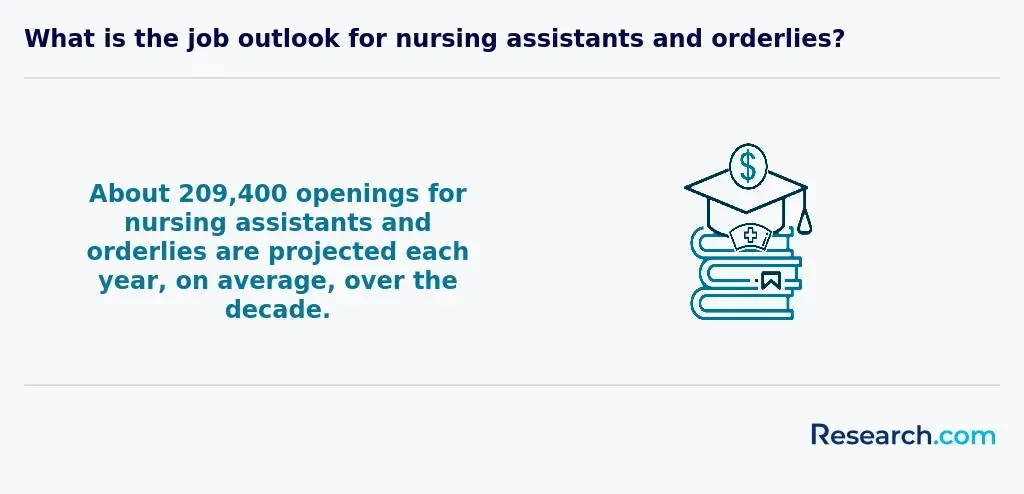
The projected average of 209,400 openings for nursing assistants and orderlies each year over the next decade also reflects continued demand for patient care workers across the healthcare system. For licensed nurses, staying current with renewal requirements helps preserve employment eligibility and professional flexibility.
How can you become a nurse practitioner in Minnesota?
To become a nurse practitioner in Minnesota, you first need an active RN license. From there, you typically complete an accredited graduate nursing program at the master’s or doctoral level, choose a population or specialty focus, complete advanced clinical training, earn national certification in that specialty, and apply for the appropriate Minnesota advanced practice recognition or licensure pathway.
Before enrolling, confirm that the program’s curriculum, clinical placements, and certification preparation align with Minnesota requirements and your intended NP specialty. Students comparing graduate options can review nurse practitioner programs in Minnesota to identify programs that match their location, format, and career goals.
How can an MSN MBA dual degree support nursing leadership in Minnesota?
An MSN MBA dual degree can be useful for Minnesota nurses who want to move beyond bedside care into leadership, operations, finance, policy, or executive decision-making. The MSN side strengthens advanced nursing knowledge, while the MBA side builds skills in budgeting, strategy, organizational management, analytics, and healthcare administration.
This pathway makes the most sense for nurses who want roles such as nurse manager, director of nursing, service line leader, or executive administrator. Nurses considering this direction can compare MSN MBA dual degree programs to see how programs balance clinical leadership and business training.
What mistakes can delay a Minnesota nursing license?
Licensing delays often come from avoidable errors rather than major eligibility problems. Applicants may submit incomplete forms, use inconsistent names across documents, miss fingerprinting instructions, delay transcript requests, or assume their school has sent verification when it has not.
| Common mistake | Why it causes problems | Better approach |
| Choosing a program without checking approval | Your education may not meet Minnesota licensure standards. | Verify program approval or accreditation before enrolling. |
| Waiting to request transcripts | Applications can sit incomplete until education records arrive. | Ask your school about submission timelines before you apply. |
| Entering inconsistent personal information | Name or date mismatches can trigger manual review. | Use the same legal name across your application, exam registration, and fingerprinting records. |
| Ignoring background check instructions | Incorrect fingerprinting can require resubmission. | Follow the Board’s directions line by line. |
| Assuming online programs automatically qualify | Not every online program meets Minnesota clinical or regulatory expectations. | Ask the program directly whether graduates are eligible for Minnesota licensure. |
If you want a broader career roadmap before applying, read this step-by-step guide on how to become a nurse in Minnesota.
How should Minnesota students evaluate online LPN programs?
Online LPN programs can be convenient, but practical nursing is not fully virtual because clinical training must happen in approved healthcare settings. Minnesota students should look for programs that clearly explain how labs, simulations, clinical placements, faculty support, and NCLEX-PN preparation are handled.
Before enrolling, ask whether the program meets Minnesota requirements, where clinical training takes place, how students are matched with sites, and what support is available if a placement falls through. You can compare program features through this guide to online LPN programs.
How is nursing licensure different from pharmacy licensure in Minnesota?
Nursing and pharmacy are both regulated healthcare professions, but they license different scopes of practice. Nursing licensure focuses on patient assessment, bedside care, care coordination, clinical judgment, and nursing interventions. Pharmacy licensure centers on medication preparation, dispensing, drug safety, medication therapy, and pharmacy law.
Students considering a healthcare career switch should compare daily responsibilities before choosing a path. Nursing generally involves more direct, continuous patient care, while pharmacy emphasizes medication expertise and drug-related decision-making. If you are exploring pharmacy instead, review how to become a licensed pharmacist in Minnesota.
What are the requirements to become an LPN in Minnesota?
To become an LPN in Minnesota, you must complete an approved practical nursing program, satisfy required academic and clinical components, complete fingerprinting and a background check, apply through the Minnesota Board of Nursing, and pass the NCLEX-PN. The program you choose should prepare you for basic nursing care, medication support, patient observation, documentation, and communication with RNs and other healthcare professionals.
Because practical nursing requirements can be specific, applicants should confirm program approval before committing to tuition. For a focused walkthrough, review What are the requirements to become a LPN in Minnesota?
Can extra certifications improve a nursing career in Minnesota?
Additional certifications can help Minnesota nurses build targeted expertise, shift into specialized units, or move toward administrative responsibilities. Clinical certifications may support roles in areas such as critical care, pediatrics, oncology, or geriatrics, while administrative credentials can strengthen knowledge in documentation, billing, coding, quality improvement, or operations.
For nurses interested in healthcare administration or revenue cycle work, a medical billing and coding certification in Minnesota may add useful nonclinical skills. This is most relevant for nurses who want to work in case management, utilization review, compliance, clinic operations, or health information roles.
Can a compact nurse practice in Minnesota?
The Nurse Licensure Compact (NLC) allows eligible RNs and LPNs to practice in participating states with one multistate license. Enacted in 2000, the NLC currently includes 39 states and is intended to improve nurse mobility, support workforce flexibility, and make cross-state practice easier for qualifying nurses.
A compact nurse may practice in Minnesota if the nurse holds a valid multistate license from a compact home state and follows Minnesota’s nursing practice rules while caring for patients in the state. Compact practice can be especially useful for travel nurses, telehealth nurses, border-region nurses, and employers serving patients across state lines.
| Situation | What to confirm |
| You hold a multistate license from another compact state | Confirm that the license is active, unencumbered, and valid for compact practice. |
| You move your primary residence to Minnesota | Check whether you must apply for a Minnesota license based on residency rules. |
| You provide telehealth services to Minnesota patients | Verify that your license authority and employer policies permit the arrangement. |
| You are unsure whether your license is single-state or multistate | Contact your licensing board before accepting work in Minnesota. |
How can out-of-state nurses get licensed in Minnesota?
Nurses who already hold a license in another state may be able to obtain a Minnesota nursing license by endorsement. Endorsement is for nurses who have already passed the NCLEX and want Minnesota authority to practice without repeating the licensing exam.
The endorsement process generally includes:
- Submitting a Minnesota endorsement application: You provide identifying information, license history, and details about your current nursing license.
- Verifying your existing license: Minnesota must confirm that your out-of-state license is valid and review whether there are any disciplinary or eligibility concerns.
- Documenting nursing education: Applicants may need to provide education verification or transcripts, depending on the pathway.
- Completing the background check: Fingerprinting and criminal background review are required.
Foreign-educated nurses may have additional steps:
- Credential evaluation: Nursing education completed outside the United States may need to be reviewed by an approved credential evaluation service.
- English proficiency: Applicants whose education or first language does not meet English-language criteria may need to show proficiency through a test such as the TOEFL.
Endorsement applicants should not assume that approval is automatic. Start early, especially if an employer has set a start date, because license verification, background checks, and international credential reviews can take time.
What alternative LVN pathways should Minnesota students understand?
Minnesota commonly uses the LPN title rather than LVN, but students may encounter the LVN term when researching programs or careers in other states. If you are searching for LVN pathways while planning to work in Minnesota, make sure the program you choose aligns with Minnesota practical nursing licensure requirements.
Focus on program approval, clinical training, NCLEX-PN preparation, and whether graduates are eligible to apply in Minnesota. For a broader explanation of this title and pathway, see how to become an LVN in Minnesota.
What resources can help you pass the nursing licensing exam?
The NCLEX is a readiness exam, not just a memorization test. To prepare well, candidates should combine content review with practice questions, test-taking strategy, time management, and remediation of weak areas.
- Start with the exam plan. Review the official NCLEX structure and content areas so you know what the exam measures.
- Use practice questions consistently. Practice exams help you recognize question styles, clinical judgment wording, and pacing issues.
- Review rationales, not just scores. The explanation behind each answer teaches you how to think through patient safety and priority-setting questions.
- Create a study schedule. Short, regular study sessions are often more effective than last-minute cramming.
- Join a study group carefully. A focused group can improve accountability, but an unfocused group can waste time.
- Use faculty and program resources. Many nursing programs provide NCLEX review tools, predictor exams, workshops, or remediation plans.
- Consider professional organizations. Groups such as the Minnesota Nurses Association (MNA) may offer networking, mentorship, continuing education, and professional development resources.
| Preparation tool | Best use | Common mistake to avoid |
| NCLEX review book | Organizing major content areas | Reading passively without answering questions |
| Question bank | Building clinical judgment and pacing | Focusing only on the percentage score |
| Practice exam | Simulating test-day pressure | Taking too many exams without reviewing rationales |
| Study group | Accountability and peer teaching | Letting sessions become social instead of structured |
| Faculty remediation | Targeting weak content areas | Waiting until the final week to ask for help |
Exam preparation is also a stress-management process. Candidates who plan early, identify weak areas honestly, and practice clinical reasoning are usually better positioned than those who rely only on content memorization.
What nursing education options are available in Minnesota?
Aspiring nurses in Minnesota can choose from practical nursing programs, associate degree pathways, bachelor’s degree programs, RN-to-BSN options, graduate nursing programs, and online or hybrid formats. The right choice depends on your current education, budget, timeline, work schedule, and long-term career goals.
When comparing schools, do not rely only on rankings or convenience. Ask about program approval, NCLEX preparation, clinical placement support, faculty availability, graduation requirements, transfer policies, and total cost. To begin comparing institutions, review the best nursing schools in Minnesota.
How do you become a nurse midwife in Minnesota?
To become a nurse midwife in Minnesota, you generally need to be an RN, complete an accredited graduate-level nurse midwifery program, meet clinical training expectations in maternal and reproductive healthcare, earn the required professional certification, and apply through the appropriate state process. Nurse midwives need advanced preparation in prenatal care, labor and birth, postpartum care, reproductive health, patient education, and risk recognition.
Before enrolling in a program, confirm that the curriculum supports Minnesota eligibility and includes the clinical experiences needed for certification. This guide explains the educational requirements for a nurse midwife in Minnesota.
How can professional organizations help Minnesota nurses?
Professional nursing organizations can support Minnesota nurses through continuing education, policy updates, advocacy, leadership training, mentoring, job networking, and specialty resources. They are not a substitute for licensure, but they can help nurses stay informed and connected after they enter practice.
Membership can be especially valuable during transitions: preparing for the NCLEX, applying for a first job, moving into a specialty, returning to school, or pursuing leadership roles. Nurses who need flexible education while working can also compare the top online nursing programs in Minnesota.
What career advancement options are available for Minnesota nurses?
A Minnesota nursing license can lead to several advancement paths. The best option depends on whether you want deeper clinical specialization, more autonomy, leadership responsibility, education work, or research involvement.
- Advanced Practice Registered Nursing (APRN): RNs may pursue graduate education to become a Nurse Practitioner, Clinical Nurse Specialist, Nurse Anesthetist, or Nurse Midwife. These roles generally require advanced education, clinical training, certification, and state recognition.
- Nursing leadership: Nurses with additional education and experience may move into roles such as nurse manager, director of nursing, or Chief Nursing Officer. These positions involve staffing, budgeting, quality improvement, policy implementation, and team leadership.
- Specialty certification: Nurses can build expertise in areas such as oncology, pediatrics, critical care, emergency care, or geriatrics. Specialty credentials may help nurses qualify for focused clinical roles.
- Nursing education: Nurses who enjoy teaching may pursue faculty, clinical instructor, preceptor, or staff development roles. Many academic teaching roles require at least graduate-level preparation.
- Research and quality improvement: Nurses interested in evidence-based practice may work on clinical research, patient safety initiatives, outcomes measurement, or process improvement projects.
| Advancement goal | Possible next step | Best for nurses who want |
| More clinical autonomy | Graduate APRN program | Diagnosis, treatment planning, and advanced patient care responsibilities |
| Unit or department leadership | BSN, MSN, leadership training, or management experience | Team supervision, operations, and organizational decision-making |
| Specialized bedside practice | Specialty certification and targeted experience | Expertise in a defined patient population or care setting |
| Teaching future nurses | Graduate nursing education and educator experience | Academic, clinical instruction, or staff development roles |
| Systems improvement | Quality, informatics, research, or policy training | Improving patient outcomes beyond individual bedside care |
Current trends affecting nursing licensure and careers in Minnesota
Nursing licensure is becoming more connected to mobility, technology, and continuing competency. Compact practice can make it easier for eligible nurses to work across state lines, while telehealth and digital documentation require nurses to understand both clinical care and privacy expectations. Employers also continue to value nurses who can adapt to changing care models, use electronic health records effectively, communicate across teams, and complete continuing education on time.
AI and automation may change parts of nursing workflow, such as documentation support, scheduling, triage tools, and decision-support systems. However, these tools do not replace licensure, clinical judgment, patient assessment, ethical responsibility, or the hands-on care nurses provide. Minnesota nurses should expect technology skills to become more important while the legal responsibility for safe practice remains tied to professional licensure.
Questions to ask before choosing a Minnesota nursing program
- Is the program approved or accredited for Minnesota nursing licensure?
- Does the program prepare students for the NCLEX-RN or NCLEX-PN?
- How many clinical hours are included, and where do clinical placements take place?
- Does the school arrange clinical placements, or must students find their own?
- What are the total costs, including tuition, fees, books, uniforms, testing, travel, and licensure expenses?
- What support is available for NCLEX preparation?
- Can prior college credits transfer into the program?
- Does the program format work with your job, family responsibilities, and commute?
- If the program is online or hybrid, does it meet Minnesota requirements?
- How does the program support students who fall behind academically or clinically?
Key Insights
- A Minnesota nursing license is required to practice as an RN or LPN in the state unless you qualify to practice under compact rules.
- New nurses generally need approved nursing education, clinical preparation, the NCLEX-RN or NCLEX-PN, fingerprinting, a background check, and a completed Board application.
- RN and LPN pathways differ in education length, scope of practice, exam type, and advancement potential, so choose based on your long-term goals rather than speed alone.
- Costs include more than tuition. Budget for NCLEX registration, application fees, fingerprinting or background checks, supplies, renewal, and continuing education.
- Minnesota licenses renew every two years, and nurses must complete 30 hours of continuing education.
- Out-of-state nurses may use endorsement, while eligible compact nurses may have multistate practice privileges depending on their license and residency.
- Most licensing delays are preventable. Check program approval, use consistent legal information, follow fingerprinting instructions, and track transcript or verification submissions.
- Licensure is the starting point for advancement into specialties, leadership, nurse practitioner roles, nurse midwifery, education, research, and healthcare administration.
Related Articles for Nearby States
- 2027 Wisconsin Nursing License Requirements
- 2027 Iowa Nursing License Requirements
- 2027 North Dakota Nursing License Requirements
- 2027 South Dakota Nursing License Requirements
- 2027 Nebraska Nursing License Requirements
- 2027 Illinois Nursing License Requirements
- 2027 Missouri Nursing License Requirements
- 2027 Michigan Nursing License Requirements
- 2027 Kansas Nursing License Requirements
- 2027 Indiana Nursing License Requirements
References:
- Minnesota Board of Nursing (2024). Licensure.
- U.S. Bureau of Labor Statistics. (2023). Occupational outlook handbook - Nursing assistants and orderlies.
Other Things You Should Know About Nursing Licenses in Minnesota
To obtain a nursing license in Minnesota in 2027, an applicant must complete an accredited nursing program, pass the NCLEX-RN exam, apply for licensure through the Minnesota Board of Nursing, and undergo a criminal background check.
To maintain a nursing license in Minnesota in 2027, RNs must complete 24 contact hours of approved continuing education every two years. This ensures that nurses remain updated with current practices and education within the healthcare field.
To become a registered nurse in Minnesota in 2027, you must complete an accredited nursing program, such as an associate degree in nursing (ADN) or a bachelor of science in nursing (BSN). Following graduation, you must pass the NCLEX-RN exam to obtain licensure.
In 2027, practicing as a registered nurse without a license in Minnesota is illegal and can lead to severe consequences. Violators may face fines, potential criminal charges, and disciplinary actions from nursing boards, including the possibility of future license revocation or suspension.