2027 Best Accelerated BSN Programs

Co-Founder and Chief Data Scientist
If you already have a bachelor’s degree and want to become a registered nurse without spending another four years in school, an Accelerated Bachelor of Science in Nursing (ABSN) program can be one of the fastest routes into the profession. These programs are built for career changers who have completed college-level general education coursework and are ready for a rigorous, full-time nursing curriculum that combines science, clinical practice, simulation, and NCLEX-RN preparation.
Choosing an ABSN program is not just about speed. The right program should be accredited, affordable enough to justify the investment, realistic for your schedule, and strong enough to prepare you for licensure and safe patient care. This guide explains how ABSN programs work, what they cost, how online and campus formats differ, which schools stand out, and what questions to ask before you enroll.
Quick Answer: What Is an Accelerated BSN Program?
An accelerated BSN program is a compressed nursing bachelor’s degree pathway for students who already hold a bachelor’s degree in another field. Most programs take 12 to 18 months and prepare graduates to sit for the NCLEX-RN exam. After passing the exam and meeting state board requirements, graduates can become licensed registered nurses.
ABSN programs can be a strong fit for motivated career changers who can handle intensive coursework, in-person clinical rotations, and limited schedule flexibility. They may not be ideal for students who need to work full time, are still completing multiple science prerequisites, or want a slower academic pace.
What are the benefits of getting an accelerated BSN degree?
- Faster entry into nursing: ABSN programs are designed for students who already completed a non-nursing bachelor’s degree, so they usually focus directly on nursing coursework, labs, clinical experiences, and licensure preparation.
- Eligibility for RN licensure: Graduates can pursue registered nurse licensure after finishing the program, passing the NCLEX exam, and meeting state requirements. RNs in the United States earn an average salary of $87,710.
- Broad career mobility: A BSN can support employment in hospitals, outpatient settings, public health, schools, government agencies, long-term care, and other healthcare environments. It can also serve as a foundation for future graduate study in nurse practitioner, nurse anesthesia, nursing education, administration, policy, or informatics pathways.
- Flexible didactic formats in some programs: Many ABSN programs deliver lectures online while requiring in-person labs, simulations, and clinical placements. This can reduce commuting time, although students should not assume that “online” means fully remote.
What can I expect from an accelerated BSN program?
An Accelerated Bachelor of Science in Nursing program is a second-degree nursing pathway for people who already completed a bachelor’s degree outside nursing and want to move into registered nursing as efficiently as possible. Instead of repeating general education courses, students enter a concentrated curriculum that often compresses nursing education into 12 to 18 months.
Most ABSN curricula are built around these core areas:
- Foundational nursing skills
- Evidence-based care
- Leadership
- Population-specific care
Students should expect a demanding schedule that blends classroom or online coursework with simulation labs and supervised direct patient care. The goal is to develop clinical judgment, communication, patient safety habits, medication knowledge, and care planning skills before graduates take the National Council Licensure Examination (NCLEX) exam.
Typical ABSN student experience
| Program component | What it usually involves | Why it matters |
| Didactic coursework | Nursing theory, pathophysiology, pharmacology, health assessment, leadership, and population health topics | Builds the scientific and professional knowledge tested in nursing practice and licensure exams |
| Skills labs | Practice with assessments, injections, wound care, sterile technique, medication administration, and patient communication | Allows students to learn procedures before performing them in clinical settings |
| Simulation | Scenario-based training using patient simulators, virtual cases, or controlled clinical situations | Strengthens decision-making, prioritization, teamwork, and response to changing patient conditions |
| Clinical rotations | Supervised patient care in approved healthcare sites | Provides real-world experience required for professional nursing preparation |
| NCLEX preparation | Practice questions, readiness assessments, review sessions, and competency checks | Helps students prepare for the licensure exam required to become an RN |
Where can I work with an accelerated BSN degree?
After completing an ABSN program, passing the NCLEX exam, and receiving an RN license, graduates can apply for nursing roles in a wide range of healthcare environments, including:
- Hospitals, including emergency rooms, intensive care units, surgical departments, oncology clinics, and maternal-child health units
- Physician's offices
- Schools
- Surgery centers
- Home healthcare companies
- Nursing care facilities
- Government agencies
- Aesthetic clinics
- The military
The BSN is a generalist nursing degree, so it does not lock graduates into one setting. Early-career nurses often begin in bedside or direct patient care roles, then move into specialty units, leadership, care coordination, education, research support, informatics, or public health as they gain experience and additional credentials.
How much can I make with an accelerated BSN degree?
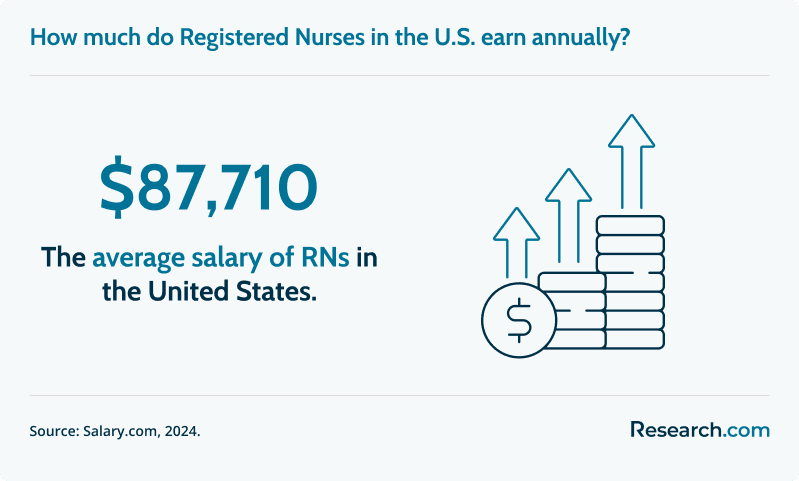
ABSN graduates typically pursue registered nurse licensure. After completing the degree, passing the NCLEX exam, and satisfying state licensing rules, they can work as RNs. Registered Nurses in the U.S. receive an average annual salary of $87,710.
The states below have the highest employment levels of Registered Nurses, along with the annual wages stated for each:
| State | Annual wage |
| California | $137,690 |
| Texas | $90,210 |
| Florida | $84,760 |
| New York | $106,620 |
| Pennsylvania | $87,530 |
According to the Bureau of Labor Statistics, these are the top industries employing RNs and their median annual wages:
| Industry | Median annual wage |
| Government | $99,840 |
| Hospitals; state, local, and private | $88,430 |
| Ambulatory healthcare services | $81,230 |
| Nursing and residential care facilities | $79,280 |
| Educational services; state, local, and private | $71,550 |
Salary outcomes vary by state, employer, shift differentials, specialty, union contracts, experience, and local demand. Students should avoid choosing a program based only on national averages and should compare local RN pay with the total cost of attendance and lost income during school.
Accelerated BSN Programs Table of Contents
- List of the Best Accelerated BSN Programs for 2027
- How long does it take to complete an accelerated BSN program?
- How does an online accelerated BSN program compare to an on-campus program?
- What is the average cost of an accelerated BSN program?
- What are the financial aid options for students enrolling in an accelerated BSN program?
- What are the prerequisites for enrolling in an accelerated BSN program?
- What courses are typically in an accelerated BSN program?
- What types of specializations are available in accelerated BSN programs?
- How to Choose the Best Accelerated BSN Program
- What are the key differences between accelerated and traditional BSN programs?
- How can an accelerated BSN degree accelerate my journey to advanced practice roles?
- How can you advance your practice through additional education after an accelerated BSN?
- What is the long-term ROI of an accelerated BSN program?
- How do accelerated BSN programs support high NCLEX pass rates?
- What student support services are offered in accelerated BSN programs?
- How can bridging programs enhance your nursing career after an accelerated BSN?
- What career paths are available for graduates of accelerated BSN programs?
- What is the job market for graduates with an accelerated BSN degree?
- What unique challenges should you consider before enrolling in an accelerated BSN program?
List of the Best Accelerated BSN Programs for 2027
How do we rank schools?
A second-degree nursing program is a major financial and professional commitment, so rankings should be used as a starting point rather than the only decision tool. Research.com reviewed accelerated BSN options for 2027 using current and comprehensive U.S. government and education data sources, including:
- The Integrated Postsecondary Education Data System (IPEDS) database
- Peterson’s database, including their Distance Learning Licensed Data Set
- College Scorecard database
- National Center for Education Statistics
The ranking process also considers indicators such as graduation rate, student-faculty ratio, and program focus. More detail is available on our methodology page.
Best Accelerated BSN Programs Compared
| Rank | School | Program length | Required credits | Published cost detail | Accreditation |
| 1 | University of Washington | N/A | 79 | $12,416/quarter | Commission on Collegiate Nursing Education (CCNE) |
| 2 | New York University | 15 months | 64 | $33,192 (Estimated tuition, 18 credits) | CCNE |
| 3 | Emory University | 15 months | 64 | $33,192 (Estimated tuition, 18 credits) | CCNE |
| 4 | Duke University | 16 months | 58 | $26,369 per semester | CCNE |
| 5 | Oregon Health and Science University | 15 months | 79 | $12,416 per quarter | CCNE |
| 6 | University of Pittsburgh | Three consecutive terms | 95 | not disclosed | CCNE |
| 7 | University of Florida | Four consecutive terms | 60 | $6,380 (In-state undergrad on/off campus) | CCNE |
| 8 | University of Nebraska Medical Center | 12 months | 62 | $1,053 | CCNE |
| 9 | University of Texas Health Science Center | 15 months | 60 | Not disclosed | CCNE |
| 10 | University of Kentucky | 16 months, includes summer term | 54-55 | Not disclosed | CCNE |
1. University of Washington
The University of Washington offers an Accelerated Bachelor of Science in Nursing for students who already have a bachelor’s degree and want a shortened route into nursing. The curriculum emphasizes critical thinking, patient care, and therapeutics, while clinical simulations and supervised patient care help students apply classroom learning in practice settings.
- Program Length: N/A
- Tracks/concentrations: N/A
- Cost per Credit: $12,416/quarter
- Required Credits to Graduate: 79
- Accreditation: Commission on Collegiate Nursing Education (CCNE)
2. New York University
New York University offers an accelerated 15-month BSN pathway for applicants who hold a bachelor’s degree in another discipline. Applicants must complete prerequisite coursework in nutrition, chemistry with lab, statistics, anatomy and physiology I and II, microbiology, and developmental psychology before entering the nursing curriculum.
- Program Length: 15 months
- Tracks/concentrations: N/A
- Cost per Credit: $33,192 (Estimated tuition, 18 credits)
- Required Credits to Graduate: 64
- Accreditation: CCNE
3. Emory University
Emory University’s Nell Hodgson Woodruff School of Nursing offers a Distance Accelerated Bachelor of Science in Nursing program for students located outside the Atlanta metro region. The program is designed to be completed in just one year, and its small cohort model, with classes limited to 30 students, supports closer faculty and peer interaction.
- Program Length: 15 months
- Tracks/concentrations: N/A
- Cost per Credit: $33,192 (Estimated tuition, 18 credits)
- Required Credits to Graduate: 64
- Accreditation: CCNE
4. Duke University
Duke University provides a full-time, campus-based ABSN for students who already hold a bachelor’s degree or higher. The 16-month prelicensure program focuses on nursing leadership, wellness, health promotion, disease prevention, evidence-based care, and culturally appropriate practice.
- Program Length: 16 months
- Tracks/concentrations: N/A
- Cost per Credit: $26,369 per semester
- Required Credits to Graduate: 58
- Accreditation: CCNE
5. Oregon Health and Science University
Oregon Health and Science University offers an accelerated BSN for students who already completed a bachelor’s degree in a non-nursing field. The program is available in Portland and Ashland, with a new learning opportunity in Bend, Oregon, starting in summer 2024.
- Program Length: 15 months
- Tracks/concentrations: N/A
- Cost per Credit: $12,416 per quarter
- Required Credits to Graduate: 79
- Accreditation: CCNE
6. University of Pittsburgh
The University of Pittsburgh offers an Accelerated 2nd Degree Bachelor of Science in Nursing for students who hold a bachelor’s degree in another field and have completed the basic BSN requirements. The program is structured as an intensive path into prelicensure nursing education.
- Program Length: Three consecutive terms
- Tracks/concentrations: N/A
- Cost per Credit: not disclosed
- Required Credits to Graduate: 95
- Accreditation: CCNE
7. University of Florida
The University of Florida’s Accelerated Bachelor of Science in Nursing combines classroom learning, lab work, supervised clinical practice, and professional nursing coursework. Students study clinical reasoning, evidence-based practice, and care for patients from diverse backgrounds and cultures.
- Program Length: Four consecutive terms
- Tracks/concentrations: N/A
- Cost per Credit: $6,380 (In-state undergrad on/off campus)
- Required Credits to Graduate: 60
- Accreditation: CCNE
8. University of Nebraska Medical Center
The University of Nebraska Medical Center offers its Accelerated BSN on the Omaha, Lincoln, Kearney, Norfolk, and Scottsbluff campuses. Students enter campus-based cohorts, attend synchronous lectures across campuses, and begin in January after annual admission. Class sizes are limited.
- Program Length: 12 months
- Tracks/concentrations: N/A
- Cost per Credit: $1,053
- Required Credits to Graduate: 62
- Accreditation: CCNE
9. University of Texas Health Science Center
The University of Texas Health Science Center offers a Bachelor of Science in Nursing Accelerated track for applicants with a baccalaureate degree or higher in another field. Accepted students must complete prerequisites before entering the 5th, 6th, 7th, and 8th semesters of the four-year degree sequence. The program prepares graduates for generalist nursing practice and frames health promotion as an act of social justice.
- Program Length: 15 months
- Tracks/concentrations: N/A
- Cost per Credit: Not disclosed
- Required Credits to Graduate: 60
- Accreditation: CCNE
10. University of Kentucky
The University of Kentucky College of Nursing offers an ABSN that combines online lectures with in-person labs and clinical experiences in Lexington or Ashland, Kentucky. The program admits students from several backgrounds, including second-degree students, military medics, and licensed practical nurses with active licenses.
- Program Length: 16 months, includes summer term
- Tracks/concentrations: N/A
- Cost per Credit: Not disclosed
- Required Credits to Graduate: 54-55
- Accreditation: CCNE
Fast Facts About Accelerated BSN Programs
- The Bureau of Labor Statistics projects about 193,100 RN openings each year over the next decade, largely because employers need to replace workers who retire, transfer careers, or leave the labor force.
- Accelerated BSN programs are intended for students who already earned a bachelor’s degree in another field and want to transition into nursing within 12 to 18 months.
- Program costs vary widely. Public universities charge an average of $54,183 for an online degree and $85,348 for in-person programs.
- Registered Nurses with a BSN earn an average salary of $87,710 annually, with higher wages reported in states such as California and New York.
- ABSN curricula usually include foundational nursing skills, evidence-based practice, leadership, and population-specific care, along with online or classroom instruction and in-person clinical training that prepares students for the NCLEX exam.
How long does it take to complete an accelerated BSN program?
Students who already hold a bachelor’s degree in another field commonly finish an Accelerated Bachelor of Science in Nursing program in 12 to 18 months. Students without prior college experience are not usually the target audience for second-degree ABSN pathways; when they enter BSN options from the beginning, the timeline can be four years, though some programs may be completed in as little as 33 months.
Before applying, confirm the program’s exact start dates, prerequisite deadlines, clinical hour expectations, lab requirements, and whether the schedule allows outside employment. If you are already an RN and are comparing lower-cost bachelor’s completion pathways, review affordable online RN to BSN programs. If clinical requirements are a major concern, you may also want to compare RN to BSN programs without clinicals.
ABSN timeline at a glance
| Stage | What to do | Why it affects your timeline |
| Prerequisite planning | Complete required science and support courses before the application deadline | Missing prerequisites can delay admission by a full term or year |
| Application review | Submit transcripts, recommendations, statements, test scores if required, and proof of completed or in-progress prerequisites | Competitive programs may admit only once or a few times per year |
| Accelerated coursework | Complete nursing classes, labs, simulations, and exams in a compressed sequence | The pace is fast, and course failures may interrupt progression |
| Clinical rotations | Attend supervised clinical experiences at approved sites | Clinical schedules may include early mornings, evenings, weekends, or travel |
| Licensure preparation | Graduate, apply to the state board of nursing, and take the NCLEX exam | You cannot practice as an RN until licensure requirements are complete |
How does an online accelerated BSN program compare to an on-campus program?
Online and campus-based accelerated BSN programs usually lead to the same goal: eligibility for RN licensure after graduation and successful NCLEX completion. The biggest difference is how lectures and academic content are delivered. Clinical rotations, skills labs, and many simulations still require in-person participation.
| Factor | Online or hybrid ABSN | On-campus ABSN |
| Course delivery | Lectures and assignments may be online, sometimes asynchronous | Classes usually meet in person on a fixed weekly schedule |
| Flexibility | Can reduce commute time and offer more control over when some coursework is completed | Provides more structure but less schedule control |
| Faculty and peer interaction | Interaction may occur through video meetings, discussion boards, email, and scheduled sessions | Students have more regular face-to-face contact with instructors and classmates |
| Clinical hours | Required in person at approved sites, often near the student if the school permits local placements | Required in person, typically arranged through the school’s regional clinical partners |
| Admissions | Competitive and often requires a prior bachelor’s degree, prerequisites, and a minimum GPA | Competitive and usually has similar academic requirements |
| Workload | Still intensive; students should expect a major time commitment | Also intensive, with frequent classes, labs, clinicals, and exams |
Do not assume an online ABSN is easier than a campus program. Accelerated nursing study can require 8-12 hours per day of classes, clinical preparation, studying, assignments, and exam review. The online format may improve convenience, but it does not remove the pace, accountability, or clinical requirements.
What is the average cost of an accelerated BSN program?
Research.com found that accelerated BSN programs often cost between $40,000 and $80,000, though the final price depends heavily on the institution, residency status, fees, program length, clinical expenses, and whether the school is public or private. As with the cheapest BCBA certification programs, advertised tuition does not always reflect the full cost of completion.
Education Data Initiative reported that private schools on average charge $60,593 for an online degree compared to $185,252 for an in-person degree. For public universities, the average cost is roughly $54,183 for an online degree and $85,348 for an in-person degree.
The chart below shows the average per-credit-hour tuition at private and public four-year institutions.
What ABSN costs should you budget for besides tuition?
| Cost category | Why it matters |
| University fees | Nursing programs may charge lab, simulation, technology, clinical, health screening, or program fees in addition to tuition |
| Books and digital resources | Accelerated programs often require multiple course materials at once because terms are compressed |
| Uniforms and equipment | Students may need scrubs, shoes, stethoscopes, badges, and other clinical supplies |
| Health and compliance requirements | Clinical sites may require immunizations, background checks, drug screening, CPR certification, and health documentation |
| Transportation | Clinical placements may not be near campus or home, so commuting costs can add up |
| Lost wages | Many ABSN students reduce work hours or stop working because of the program’s intensity |
| Licensure and exam costs | Graduates should plan for NCLEX-related and state board application expenses |
What are the financial aid options for students enrolling in an accelerated BSN program?
Financing an ABSN can be more complicated than financing a first bachelor’s degree because many students have already used undergraduate aid eligibility. Start with the school’s financial aid office and confirm whether the ABSN is treated as an undergraduate degree, second-degree program, or another aid category.
Federal Student Loans
Students can apply for Federal Direct Subsidized and Unsubsidized Loans by submitting the Free Application for Federal Student Aid through FAFSA. Borrowing eligibility depends on the student’s grade level, which may be influenced by transfer credits. Federal loan options should generally be reviewed before private loans.
Because ABSN students already hold a bachelor’s degree, federal grant eligibility may be limited. Federal Pell Grant and Federal Supplemental Educational Opportunity Grant (FSEOG) funding will no longer be an option for many second-degree students.
Private Student Loans
Private education loans can help cover remaining costs after federal aid is exhausted. Terms, interest rates, approval standards, deferment options, and borrower protections vary by lender. Students should compare multiple lenders carefully and avoid borrowing more than they reasonably expect to repay on an entry-level RN salary.
Scholarships
Nursing-focused scholarships may be available through professional organizations, hospitals, foundations, and schools. The American Association of Colleges of Nursing (AACN) is one source students can review. Scholarship amounts often range from $2,500 to $5,000, and eligibility rules differ by award.
Payment Plans
Some universities let students spread tuition and fee payments across monthly installments. Payment plans do not reduce the price of the program, but they can help with cash flow when combined with savings, employer support, loans, or scholarships.
Federal Parent PLUS Loans
Parents of dependent students may be able to apply for a Federal Direct Parent PLUS Loan. The loan is issued in the parent’s name and requires a credit check.
Questions to ask before borrowing
- What is the total cost of attendance, not just tuition?
- How much federal loan eligibility remains for a second bachelor’s degree?
- Are scholarships available specifically for ABSN or second-degree nursing students?
- Does the school offer payment plans, emergency aid, or clinical travel support?
- What monthly payment might be required after graduation based on the amount borrowed?
What are the prerequisites for enrolling in an accelerated BSN program?
Admission requirements vary, but most ABSN programs expect applicants to prove they can succeed in a fast, science-heavy curriculum. Common requirements include:
- Bachelor’s degree. Most programs require a bachelor’s degree in a non-nursing field from an accredited institution. The previous degree usually satisfies the general education portion of the BSN.
- Prerequisite courses. Applicants generally need specific courses completed before enrollment, often with a minimum grade such as B- or C.
- Minimum Grade Point Average (GPA). Programs commonly require a cumulative GPA around 3.0 or higher, based on transferable coursework, prerequisite coursework, or both.
- Other requirements. Applicants may need a personal statement, recommendations, entrance exams such as the Test of Essential Academic Skills (TEAS) or Health Education Systems (HESI), or an English proficiency exam such as the Test of English as a Foreign Language (TOEFL) for non-native English speakers.
Common prerequisite areas
| Prerequisite area | Why programs require it |
| Anatomy and physiology | Supports understanding of body systems, assessments, disease processes, and patient care |
| Microbiology | Builds knowledge of infection, immunity, organisms, and infection control |
| Chemistry | Provides scientific background for physiology, pharmacology, and metabolism |
| Statistics | Helps students interpret research, evidence-based practice, and healthcare data |
| Nutrition | Supports patient education, health promotion, and disease management |
| Developmental psychology | Prepares students to understand patient needs across the lifespan |
What courses are typically in an accelerated BSN program?
ABSN programs compress the essential BSN curriculum into a shorter sequence. Course names vary by school, but students commonly take classes such as:
- Foundations of Nursing Practice. Students learn core nursing concepts and essential skills such as communication, infection control, patient safety, and basic procedures.
- Health Assessment. This course develops the ability to gather health histories, perform physical assessments, recognize abnormal findings, and organize patient data.
- Pathophysiology. Students study how diseases and health conditions affect normal body function.
- Pharmacology I & II. These courses address medication classes, therapeutic uses, safe administration, side effects, and nursing responsibilities related to drugs.
Many programs also include adult health, mental health, pediatric nursing, maternity nursing, community health, leadership, research, ethics, and capstone or transition-to-practice experiences.
What types of specializations are available in accelerated BSN programs?
Most accelerated BSN programs do not offer undergraduate concentrations. Their purpose is to prepare students for generalist RN practice and licensure, not to qualify them immediately for advanced specialty roles.
Specialization usually comes after graduation through work experience, employer training, certification, or graduate education. Common post-BSN options include:
- Graduate Nursing Programs (MSN/DNP/PhD). BSN-prepared nurses can apply to Master of Science in Nursing programs in areas such as family nurse practitioner, adult-gerontology, pediatrics, nurse anesthesia, nurse midwifery, nursing administration, nursing education, and related fields. Students can compare a traditional MSN with an online MSN nursing program, or review shorter online MSN programs. Doctor of Nursing Practice and PhD options support advanced clinical practice, leadership, or research preparation.
- Post-Graduate Certificates. RNs with a BSN or higher degree may pursue certificates in areas such as emergency nursing, critical care, nurse education, nursing informatics, and other specialties.
- Workplace Training and Certifications. Hospitals and healthcare employers may train nurses in labor and delivery, neonatal intensive care, oncology, operating room nursing, and similar specialty areas. Nurses may also pursue specialty certification exams through organizations such as the American Nurses Credentialing Center (ANCC).
Students planning for doctoral study may also want to compare affordable online BSN to DNP programs.
How to Choose the Best Accelerated BSN Program
The best ABSN program is not automatically the fastest or most famous one. It is the program that is accredited, licensure-aligned, financially realistic, clinically strong, and manageable for your life circumstances.
| Selection factor | What to verify | Why it matters |
| Accreditation | Confirm institutional accreditation and nursing program accreditation, such as CCNE when applicable | Accreditation can affect licensure eligibility, graduate school admission, and employer recognition |
| State licensure alignment | Ask whether the program meets RN education requirements in the state where you plan to practice | Online and out-of-state programs may not automatically meet every state board requirement |
| NCLEX outcomes | Review recent NCLEX-RN pass rates and how the school supports students who are not yet exam-ready | Licensure depends on passing the NCLEX exam |
| Clinical placements | Ask where clinical sites are located, who arranges placements, and whether travel is required | Clinical quality and logistics can determine whether the program is feasible |
| Schedule intensity | Request a sample weekly schedule, including labs, clinicals, exams, and study expectations | ABSN programs often leave little room for full-time work or unpredictable obligations |
| Total cost | Compare tuition, fees, books, supplies, travel, compliance costs, and lost income | The lowest tuition may not mean the lowest total cost |
| Student support | Look for tutoring, advising, wellness services, NCLEX prep, disability services, and career support | Accelerated programs are demanding, and support can affect persistence |
School reputation, alumni networks, graduation outcomes, and employer relationships can also matter. However, students should not rely only on rankings. Confirm that the program fits your budget, your state, your schedule, and your clinical placement needs. If cost is a top priority, compare options such as the cheapest online nursing programs.
Accreditation should be checked directly, not assumed. Nursing programs often seek recognition from bodies such as CCNE. Other fields have their own specialized accreditors; for example, the Council for the Accreditation of Educator Preparation (CAEP) is relevant to some education programs, including programs discussed in Research.com’s guide to the best colleges for early childhood education.
Questions to ask ABSN admissions advisors
- Is the nursing program accredited, and when is the next accreditation review?
- Does the program meet RN licensure requirements in my intended state of practice?
- What are the most recent NCLEX-RN pass rates?
- Who secures clinical placements: the school or the student?
- How far do students typically travel for clinical rotations?
- Can students work during the program, or is work strongly discouraged?
- What happens if a student fails one course or cannot complete a clinical rotation on schedule?
- What support is available for tutoring, test preparation, mental health, and career placement?
- What is the complete cost of attendance for the full program?
What are the key differences between accelerated and traditional BSN programs?
Accelerated and traditional BSN programs can both lead to RN licensure, but they are built for different students. Traditional BSN programs usually serve first-time bachelor’s students and spread nursing preparation across a longer undergraduate timeline. Accelerated BSN programs serve second-degree students and compress nursing education into a much shorter schedule.
| Feature | Accelerated BSN | Traditional BSN |
| Best for | Students who already hold a bachelor’s degree in another field | Students beginning their first bachelor’s degree or entering nursing earlier in college |
| Typical pace | Fast, intensive, and often full time | More gradual, with more time to absorb material |
| Time to completion | Often 12 to 18 months for second-degree students | Often four years for first-time students |
| Work compatibility | Limited, especially during clinical terms | May allow more schedule flexibility depending on the program |
| Clinical preparation | Introduced quickly and integrated into a compressed sequence | Typically distributed over a longer academic plan |
| Outcome | BSN and preparation for NCLEX-RN eligibility | BSN and preparation for NCLEX-RN eligibility |
If you are already an RN rather than a non-nurse career changer, a completion pathway such as a 6-month RN to BSN program may be more relevant than an ABSN.
How can an accelerated BSN degree accelerate my journey to advanced practice roles?
An ABSN does not make graduates advanced practice nurses immediately. It gives second-degree students a faster way to earn a BSN, become eligible for RN licensure, and begin building clinical experience. From there, nurses who want advanced practice roles usually need graduate education, specialty clinical hours, and role-specific credentials.
For example, a nurse who wants to become a family nurse practitioner may later apply to a graduate pathway such as BSN to FNP programs online. The ABSN can shorten the time needed to reach the BSN starting point, but advanced practice licensure still requires additional education and state-specific approval.
How can you advance your practice through additional education after an accelerated BSN?
After earning an ABSN and becoming licensed as an RN, graduates can build toward leadership, specialty, or advanced clinical roles through graduate degrees, certificates, and employer-supported training. The right next step depends on whether the nurse wants direct advanced practice, administration, informatics, education, public health, or research.
Some nurses explore bridge-style pathways as they plan long-term advancement. Research.com’s guide to an RN to nurse practitioner bridge program can help readers understand how bridge programs are structured, although ABSN graduates with a BSN should confirm which pathways apply to their exact education level and license status.
What is the long-term ROI of an accelerated BSN program?
The return on investment of an ABSN depends on more than tuition. Students should compare the total cost of the program with expected RN earnings, the time it takes to enter the workforce, the amount borrowed, local job opportunities, and the value of future advancement options.
An accelerated program may improve ROI if it helps a student enter nursing sooner and avoid extra years in school. However, ROI can weaken if the program requires heavy borrowing, relocation, unpaid time away from work, or clinical travel that increases costs. Students comparing nursing pathways can also review other cost structures, such as LPN schooling cost, to understand how different entry points affect time, scope of practice, and long-term career options.
Simple ABSN ROI checklist
- Estimate total program cost, including tuition, fees, supplies, transportation, and living expenses.
- Calculate how much income you may lose if you reduce work hours during the program.
- Compare local entry-level RN wages with your expected debt payment.
- Ask about the school’s graduation rate, NCLEX support, and clinical placement reliability.
- Consider whether the BSN supports your long-term plan, such as graduate school or leadership roles.
How do accelerated BSN programs support high NCLEX pass rates?
Strong ABSN programs build NCLEX preparation into the curriculum instead of treating it as a final add-on. They often use simulation labs, frequent knowledge checks, case-based learning, clinical reasoning exercises, review resources, and faculty feedback to identify weak areas before graduation.
When comparing programs, ask for recent NCLEX-RN pass rates and find out what support is available for students who struggle with exams. Also ask whether practice testing is required, how remediation works, and whether the program delays graduation or testing for students who are not meeting benchmarks. Nurses who later pursue advanced family practice education may eventually compare options such as online post masters FNP programs, but NCLEX success comes first for prelicensure ABSN students.
What student support services are offered in accelerated BSN programs?
Because ABSN programs move quickly, student support can be as important as curriculum design. Useful services may include academic advising, tutoring, faculty office hours, exam remediation, writing support, mental health counseling, wellness programming, disability accommodations, career coaching, and NCLEX preparation.
Clinical support is especially important. Students should ask whether the school assigns clinical placements, how conflicts are handled, what happens if a site cancels, and whether students need to travel. If you are exploring alternative transfer pathways into nursing education, Research.com also discusses the easiest nursing programs to transfer into.
How can bridging programs enhance your nursing career after an accelerated BSN?
Bridge programs can help nurses move from one credential level to another, but ABSN graduates should choose carefully because not every bridge pathway is designed for BSN-prepared RNs. After completing an ABSN and earning RN licensure, graduates may be better suited for BSN-to-MSN, BSN-to-DNP, post-BSN certificates, or employer specialty training rather than RN-to-BSN options.
Still, understanding bridge programs can help nurses map future educational options. Research.com’s guide to the easiest online BSN bridge programs to get into may be useful for comparing how bridge admissions, flexibility, and progression policies work across nursing education.
What career paths are available for graduates of accelerated BSN programs?
After graduating from an ABSN program and receiving RN licensure, nurses can pursue entry-level and early-career roles across clinical and community settings. Common paths include:
- Staff Nurse. Staff nurses work in hospitals, clinics, and other healthcare facilities. They provide direct care, monitor vital signs, administer medications, document patient status, and collaborate with interdisciplinary teams.
- Public Health Nurse. Public health nurses work in community settings, where they support health education, prevention, outreach, and services for underserved populations.
- Nurse Educator. Nurse educators teach and train nursing students in colleges or universities, although many educator roles require experience and additional graduate preparation.
- Critical Care Nurse. Critical care nurses care for seriously ill patients in intensive care units, emergency departments, and similar high-acuity environments.
- Perioperative Nurse. Perioperative nurses support patients before, during, and after surgical procedures.
Career path decision guide
| If you want... | Consider starting in... | What to build next |
| Fast clinical skill development | Medical-surgical nursing, emergency departments, or intensive care units | Specialty training, preceptor feedback, and certification when eligible |
| Community impact | Public health, schools, clinics, or home health | Population health experience, case management skills, and community partnerships |
| Leadership opportunities | Hospital units, charge nurse pathways, or quality improvement roles | Experience, leadership training, and possible graduate study |
| Advanced practice | Clinical RN roles related to your intended specialty | Graduate education, advanced clinical hours, and state licensure requirements |
| Education or training | Clinical nursing roles with preceptor opportunities | Teaching experience, graduate education, and instructional skills |
What is the job market for graduates with an accelerated BSN degree?
Employers generally evaluate the BSN credential, RN license, clinical readiness, references, and fit for the role rather than whether the BSN was earned through an accelerated or traditional format. A BSN earned through an accredited ABSN program can qualify graduates for the same RN licensure pathway as other BSN-prepared graduates, provided state requirements are met.
The nursing field is projected to grow 6% from 2022 to 2032. About 193,100 openings for RNs are projected each year, on average, over the decade. Many openings are expected because workers transfer to other occupations or leave the labor force, including through retirement.
The chart below shows the percent change in employment in nursing from 2022 to 2032.
What unique challenges should you consider before enrolling in an accelerated BSN program?
ABSN programs can be effective, but they are not easy. The compressed format creates academic, financial, and personal pressure that students should evaluate honestly before committing.
- Intense Academic Pace. ABSN programs compress nursing content into 12 to 18 months. Students must manage lectures, exams, assignments, lab preparation, and clinical expectations with little downtime.
- Limited Flexibility. Class, lab, simulation, and clinical schedules can be tightly packed. Students with full-time jobs, caregiving responsibilities, or unpredictable schedules may struggle unless they have strong support systems.
- High Financial Commitment. Accelerated programs can be expensive, and second-degree students may have fewer grant options. Students should plan for tuition, fees, supplies, transportation, and potential income loss.
- Emotional and Physical Strain. The workload can be mentally and physically demanding. Students may face long clinical days, high-stakes exams, and difficult patient care situations in quick succession.
- Intensive Clinical Experience. Clinical rotations are essential but demanding. Students must adapt quickly to patient care settings, learn procedures under supervision, and handle long periods on their feet.
Common Mistakes to Avoid When Choosing an ABSN Program
| Mistake | Why it can hurt you | Better approach |
| Choosing the fastest program without checking fit | A shorter timeline can become unmanageable if the schedule conflicts with work, family, or health needs | Ask for a sample weekly schedule and speak with current students if possible |
| Ignoring accreditation and licensure alignment | Graduation does not help if the program does not support your intended licensure pathway | Verify accreditation and confirm state board requirements before applying |
| Looking only at tuition | Fees, supplies, travel, compliance costs, and lost wages can change the real price | Compare the full cost of attendance across programs |
| Assuming online means fully remote | Most online or hybrid ABSN programs still require in-person labs and clinical rotations | Confirm every campus visit, lab requirement, and clinical placement rule |
| Overlooking clinical placement responsibility | Some students may face delays or travel burdens if placements are limited | Ask who arranges placements and what happens if a site becomes unavailable |
| Relying only on rankings | A highly ranked school may still be too expensive, too far away, or misaligned with your state licensure goals | Use rankings as one input alongside cost, accreditation, NCLEX support, and logistics |
| Assuming salary outcomes are guaranteed | Pay varies by location, employer, specialty, experience, and shift | Research RN wages in the city or region where you plan to work |
Current Trends Affecting ABSN Students
- Clinical placement capacity matters more than ever. Nursing programs rely on approved healthcare partners for clinical training. Students should ask early how placements are secured and whether the school has enough sites for each cohort.
- Technology skills are becoming part of everyday nursing. New nurses are expected to use electronic health records, clinical decision tools, telehealth workflows, medication systems, simulation platforms, and sometimes AI-supported documentation tools while maintaining patient safety and professional judgment.
- Employers value readiness, not just credentials. A BSN can open the door, but hiring managers also look for communication skills, clinical reasoning, teamwork, adaptability, and safe practice habits.
- Cost pressure is a major decision factor. ABSN programs can help students enter nursing faster, but borrowing heavily without understanding repayment can reduce the value of the degree.
Step-by-Step: How to Decide If an ABSN Is Right for You
- Confirm your career goal. If your goal is to become an RN and you already have a bachelor’s degree, an ABSN may fit. If you are already an RN, an RN-to-BSN pathway may be more appropriate.
- Check prerequisites. List each required course, minimum grade, expiration rule, and deadline for every program you are considering.
- Verify accreditation and licensure. Confirm the school’s institutional accreditation, nursing accreditation, and state licensure alignment.
- Estimate the real cost. Include tuition, fees, books, equipment, clinical travel, compliance requirements, and lost wages.
- Evaluate schedule feasibility. Ask whether the program allows employment and how many hours students typically spend on coursework and clinical preparation.
- Review NCLEX support. Look for pass-rate transparency, practice testing, remediation, tutoring, and faculty support.
- Compare clinical placement quality. Ask where students train, how placements are assigned, and whether specialty exposure is available.
- Plan your first RN role. Consider which settings align with your interests, local openings, and long-term goals.
References
- Bureau of Labor Statistics, U.S. Department of Labor. (2024). Occupational outlook handbook: Registered nurses. https://www.bls.gov/ooh/healthcare/registered-nurses.htm
- Hanson, M. (2023, August 23). Cost of online education vs. traditional education. Education Data Initiative. https://educationdata.org/cost-of-online-education-vs-traditional-education
- Salary.com. (2024). Registered Nurse (RN) salary in the United States. https://www.salary.com/research/salary/general/registered-nurse-rn-salary
- U.S. Bureau of Labor Statistics. (2024). Occupational employment and wage statistics: Registered nurses. https://www.bls.gov/oes/current/oes291141.htm
Key Insights
- An accelerated BSN is best for second-degree students who want the fastest practical route to RN licensure preparation and can commit to a demanding full-time schedule.
- Most ABSN programs take 12 to 18 months, but prerequisites, admission cycles, clinical scheduling, and licensure processing can extend the total timeline.
- Online ABSN programs are usually hybrid in practice: lectures may be remote, but labs, simulations, and clinical rotations still require in-person participation.
- Cost should be evaluated as total cost of attendance, not tuition alone. Fees, supplies, travel, compliance requirements, and lost income can materially change ROI.
- Accreditation, state licensure alignment, NCLEX support, and reliable clinical placements are non-negotiable selection factors.
- ABSN graduates can pursue the same RN job market as traditional BSN graduates once they pass the NCLEX and meet state licensing requirements.
- The best program is the one that balances speed, quality, affordability, licensure readiness, and your ability to complete the curriculum without overextending financially or personally.
Other Things You Should Know About Accelerated BSN Programs
Yes. A strong accelerated BSN program should hold accreditation from either the Commission on Collegiate Nursing Education (CCNE) or the Accreditation Commission for Education in Nursing (ACEN). These accreditors review curriculum, faculty, and clinical preparation, and many state boards expect graduates to come from an accredited program.
To enroll in a 2027 accelerated BSN program, applicants typically need a non-nursing bachelor's degree and must complete prerequisite courses such as Human Anatomy, Microbiology, and Chemistry. Most programs also require a minimum GPA, often 3.0 or higher.
In 2027, accelerated BSN programs typically require between 700 to 850 clinical hours. These hours, mandated by nursing accreditation bodies, ensure that students gain practical experience in healthcare settings, preparing them for the NCLEX-RN licensure exam and nursing practice.