2027 Best ABSN Programs - Accelerated BSN Programs in Oregon: Online & Campus

Co-Founder and Chief Data Scientist
Choosing an accelerated Bachelor of Science in Nursing program in Oregon is usually a high-stakes decision: you already have a bachelor's degree, you want to become a registered nurse faster, and you need to know whether an ABSN program is worth the cost, pace, and clinical commitment. Oregon reports a registered nurse workforce growth of approximately 15% over the last five years, and healthcare employers continue to need nurses who can move quickly from training into practice.
This guide explains how accelerated BSN programs in Oregon work, who they are designed for, what admission requirements to expect, how online and on-campus formats differ, what accreditation matters, how costs and financial aid should be evaluated, and what career paths may follow after graduation. It is written for career changers, recent graduates with non-nursing degrees, and working adults comparing ABSN options in Oregon.
Quick Answer: What is an accelerated BSN program in Oregon?
An accelerated BSN in Oregon is a fast-track nursing degree for students who already hold a bachelor's degree in a non-nursing field. Instead of completing a traditional four-year BSN, qualified students complete nursing prerequisites, intensive coursework, simulation labs, clinical rotations, and NCLEX-RN preparation in a compressed timeline that may be as short as 12 months, depending on the school. Most programs require full-time study and in-person clinical training, even when some coursework is delivered online.
| Best fit | Important trade-off | What to verify before applying |
| Students with a completed non-nursing bachelor's degree who want to become RNs quickly | The pace is intensive, and working full time is often difficult | Prerequisites, GPA expectations, clinical locations, entrance exam policy, and Oregon State Board of Nursing approval |
| Career changers who can commit to full-time study and clinical hours | Tuition, fees, supplies, and travel can add up quickly | Total program cost, financial aid, scholarship eligibility, and loan repayment options |
| Students planning future graduate nursing study | An ABSN prepares students for RN licensure, not advanced practice by itself | Whether the BSN meets admission expectations for later MSN, FNP, DNP, or other advanced nursing pathways |
Key Benefits of ABSN Programs in Oregon
- Faster route to RN eligibility: Some Oregon ABSN programs can be completed in as little as 12 months, which may help qualified students enter the nursing workforce sooner than a traditional BSN route.
- Flexible academic delivery with required hands-on training: Many programs blend online coursework with local or regional clinical placements, giving students more scheduling flexibility while still requiring direct patient-care experience.
- Strong employment context: Oregon's nursing demand is reflected in a 15% projected job growth through 2030, which may improve opportunities for graduates who pass the NCLEX-RN and meet state licensure requirements.
- Who is eligible for an accelerated BSN in Oregon?
- What do Oregon ABSN programs require for admission?
- Do applicants need the TEAS, HESI, or GRE?
- What will you study in an Oregon ABSN program?
- Which accreditations and approvals matter?
- How long does an accelerated BSN take in Oregon?
- How much does an Oregon ABSN cost?
- What financial aid can ABSN students use?
- What jobs can ABSN graduates pursue?
- How much can nurses with an ABSN earn in Oregon?
- How should students compare ABSN options?
- What do graduates say about Oregon ABSN programs?
- How does an ABSN compare with an ADN?
- Can an ABSN lead to an MSN?
- What challenges should ABSN students expect?
- Can students work during an Oregon ABSN?
- References
Who can apply for accelerated BSN programs in Oregon?
Accelerated BSN programs in Oregon are generally intended for students who already completed a bachelor's degree in a field other than nursing and now want to qualify for registered nurse licensure. These programs do not start from the same place as a first bachelor's degree; they build on prior college-level learning and move quickly into nursing science, clinical judgment, patient care, and professional practice.
Applicants are typically expected to show that they can handle a demanding academic pace. Common expectations include prerequisite coursework such as anatomy and physiology with a "B-" or higher and a cumulative GPA of at least 3.0. Schools use these benchmarks to reduce the risk that students enter an accelerated program without the science foundation, study habits, or time management needed to succeed.
The typical applicant profile includes career changers from business, education, science, social services, public health, or other non-nursing fields; recent graduates who decided on nursing after earning a different degree; and working adults seeking a more stable or mission-driven healthcare career. Strong applicants usually demonstrate academic discipline, communication skills, emotional resilience, comfort with fast feedback, and a clear understanding that nursing includes physical, ethical, and interpersonal demands.
Students who already know they want long-term advancement should also think beyond the ABSN. For example, those comparing future advanced practice options may want to review how FNP and DNP pathways differ before deciding whether an ABSN is the right first step.
| Student type | Why an ABSN may fit | Possible concern |
| Career changer with a completed bachelor's degree | Uses prior education to move into nursing faster | May need several science prerequisites before applying |
| Recent graduate from a non-nursing major | Can enter nursing without starting a four-year degree from the beginning | Needs to confirm readiness for full-time, high-intensity study |
| Healthcare worker without an RN license | Prior patient-care exposure may strengthen motivation and confidence | Must meet all academic requirements, not just experience expectations |
| Working adult with family obligations | Shorter timeline can be attractive | Clinical scheduling may limit work and personal flexibility |
What are the admission requirements for accelerated BSN programs in Oregon?
Admission to Oregon accelerated BSN programs is selective because schools are evaluating whether applicants can complete a compressed nursing curriculum safely and successfully. Exact requirements vary by institution, but most applicants should be prepared to submit academic records, proof of prerequisites, professional materials, and evidence of readiness for clinical learning.
- Completed non-nursing bachelor's degree: ABSN applicants normally need a bachelor's degree in a field other than nursing. This prior degree allows the program to focus on nursing-specific coursework rather than general education requirements.
- Oregon accelerated BSN prerequisites: Schools commonly require coursework in anatomy, physiology, microbiology, chemistry, statistics, and related sciences. These courses support later study in health assessment, pharmacology, pathophysiology, and clinical decision-making.
- Minimum GPA expectations: Many programs look for a competitive GPA, often around 3.0 or higher overall and in prerequisite courses. Strong performance in science courses can be especially important because accelerated programs leave little time to relearn foundational material.
- Application documents: Applicants may need recommendation letters, a resume, and a personal statement explaining why they are pursuing nursing. These materials help admissions committees assess maturity, communication skills, service orientation, and understanding of the profession.
- Clinical readiness requirements: Accepted students should expect background checks, immunization documentation, health screenings, CPR certification, and other clinical-site requirements before patient-care rotations begin.
If your long-term goal includes psychiatric or behavioral health nursing at the advanced practice level, it may also help to understand how to become a psychiatric nurse practitioner after completing the required RN and graduate-level steps.
| Requirement | Why it matters | Question to ask the school |
| Prerequisite science courses | They show readiness for nursing science and clinical reasoning | How old can prerequisite courses be, and are online labs accepted? |
| Minimum GPA | It helps schools screen for academic preparedness | Is the GPA calculated overall, by prerequisites, or both? |
| Personal statement | It explains motivation, maturity, and fit for nursing | What qualities does the admissions committee value most? |
| Recommendation letters | They provide outside evidence of reliability and professionalism | Should letters come from professors, supervisors, clinicians, or all of these? |
Do accelerated BSN programs in Oregon require entrance exams?
Some Oregon accelerated BSN programs require an entrance exam, while others do not. Policies differ by school, campus, cohort, and format, so applicants should verify the current rule directly with each program before planning an application timeline.
One commonly referenced exam is the Test of Essential Academic Skills, or TEAS. Some schools, such as CSP Global in Portland, require the TEAS to assess reading, mathematics, science, and English language usage. Other programs, including Bushnell University's ABSN, may not require standardized entrance exams and may place more weight on GPA, prerequisite completion, and credentials such as CNA or LPN experience. The TEAS is more commonly mentioned for Oregon ABSN admission than the HESI or GRE, though applicants should never assume a policy without checking.
When schools use an entrance exam, the goal is not simply to add another barrier. The exam gives admissions teams a standardized way to estimate whether applicants are prepared for the reading load, science content, clinical math, and critical thinking expected in an accelerated nursing curriculum. A strong score can also help an applicant stand out in a competitive pool.
| Exam policy | What it means for applicants | Best next step |
| TEAS required | You need to schedule preparation time before the application deadline | Ask about minimum scores, retake limits, and score expiration |
| No entrance exam | Your GPA, prerequisites, resume, statement, and references may carry more weight | Strengthen academic and professional materials early |
| Policy varies by cohort or format | Online, hybrid, and campus pathways may not use identical rules | Confirm requirements for the exact start term and location |
A nurse who completed a hybrid Oregon ABSN program said the TEAS requirement changed how he prepared. He described feeling anxious at first, but the exam helped him identify weak academic areas before classes began. For students comparing online and campus options, that lesson is useful: entrance exam policy can affect both your application timeline and your confidence going into the first term.
What does the curriculum of an accelerated BSN program in Oregon include?
An Oregon accelerated BSN curriculum is built to move students from prior non-nursing education into entry-level professional nursing practice within a condensed 15- to 16-month timeframe. Although individual course names vary by school, most programs combine nursing theory, laboratory practice, simulation, clinical rotations, and NCLEX-RN preparation.
- Foundational nursing courses: Students study adult health, pediatrics, mental health, pharmacology, nursing ethics, and evidence-based care across the lifespan.
- Pathophysiology and health assessment: Coursework teaches students to connect disease processes, symptoms, assessment findings, and clinical decision-making.
- Microbiology and genetics: Students learn how infection, disease transmission, genetics, and prevention strategies affect patient care.
- Nutrition and human development: Programs address growth, aging, nutrition, and patient needs across different stages of life.
- Statistics and evidence-based practice: Students learn to read research, interpret data, and apply evidence to improve patient outcomes.
- Simulation labs: Labs allow students to practice assessment, medication administration, emergency response, communication, and teamwork before working with patients.
- Clinical training: Students complete supervised patient-care experiences in healthcare settings. Online students still complete in-person rotations at approved sites.
- NCLEX-RN preparation: Programs align instruction with licensure exam expectations and may include practice questions, review modules, and benchmark assessments. Some programs report pass rates above 90% in recent years.
- Professional development and leadership: Students build communication, delegation, conflict management, and interprofessional teamwork skills.
- Community and public health nursing: Coursework addresses prevention, health education, population health, and disparities affecting Oregon communities.
| Curriculum area | What students learn | Why it matters for practice |
| Health assessment | How to collect and interpret patient data | Supports safe, timely clinical decisions |
| Pharmacology | Medication actions, dosing concepts, and safety concerns | Reduces medication errors and improves patient education |
| Clinical rotations | Direct care under supervision | Builds competence in real healthcare environments |
| Simulation | Practice in controlled patient-care scenarios | Allows students to make and correct mistakes before clinical practice |
| Public health | Prevention, education, and community-based care | Prepares nurses to serve diverse populations and settings |
What accreditation should I look for in an ABSN program in Oregon?
Accreditation and state approval should be non-negotiable when comparing Oregon ABSN programs. They affect licensure eligibility, credit transfer, employer confidence, graduate school admission, and sometimes financial aid. Before applying, confirm both the institution's accreditation and the nursing program's approval status.
- Regional institutional accreditation: This applies to the college or university as a whole. It signals that the school meets recognized academic standards and can affect transfer credit, graduate admission, and federal financial aid access.
- Commission on Collegiate Nursing Education (CCNE) accreditation: CCNE evaluates baccalaureate and graduate nursing programs for curriculum quality, faculty qualifications, clinical preparation, and student outcomes.
- Accreditation Commission for Education in Nursing (ACEN): ACEN is another recognized nursing program accreditor. Either CCNE or ACEN accreditation can be important when students later seek employment or graduate nursing admission.
- Oregon State Board of Nursing approval: State approval is essential for programs preparing students for RN licensure in Oregon. Students should verify that the program they choose meets Oregon requirements for NCLEX-RN eligibility.
- Oregon Health Authority (OHA) compliance: Programs must satisfy clinical requirements tied to health documentation, background checks, training protocols, and placement readiness so students can participate in clinical learning.
| Credential to check | Applies to | Why students should care |
| Regional institutional accreditation | The college or university | Can affect aid, credit transfer, and academic legitimacy |
| CCNE or ACEN accreditation | The nursing program | Signals that the program meets recognized nursing education standards |
| Oregon State Board of Nursing approval | Licensure preparation | Supports eligibility to pursue RN licensure in Oregon |
| OHA-related compliance | Clinical participation | Allows students to meet health and safety requirements for clinical sites |
How long does it take to complete an accelerated BSN in Oregon?
Most accelerated BSN programs in Oregon are designed for students with a prior non-nursing bachelor's degree and usually require a full-time commitment. Program length depends on the school, prerequisite completion, clinical scheduling, and whether the program uses a cohort model.
- Typical completion range: Many programs take 12 to 15 months of full-time study, though some curriculum descriptions use a 15- to 16-month timeframe.
- Full-time structure: ABSN programs are generally not built for casual or part-time enrollment because courses and clinicals are tightly sequenced.
- Online, hybrid, and campus formats: Even when lectures are online, labs, simulations, skills checks, and clinical rotations require in-person participation.
- Clinical placement timing: Delays in health clearances, site availability, or scheduling can affect progression.
- Prerequisite sequencing: Students who still need anatomy, physiology, microbiology, chemistry, or statistics may need additional time before the ABSN clock officially begins.
| Timeline factor | How it can speed up completion | How it can delay completion |
| Prerequisites | All required courses completed before application | Missing or outdated courses must be retaken |
| Cohort start dates | Early admission into the next available cohort | Missing a deadline may mean waiting for the next start |
| Clinical readiness | Health records and background checks completed on time | Incomplete documentation can block clinical participation |
| Program format | Hybrid coursework may reduce commuting for lectures | Labs and clinicals still require fixed in-person attendance |
One Oregon ABSN graduate described the timeline this way: "The 15-month journey felt intense yet rewarding. Balancing rigorous clinical hours with on-campus classes was challenging, especially since breaks were minimal. Starting with a tight cohort schedule meant I had to plan meticulously around my previous job responsibilities. The steady pace helped me stay focused, though waiting for prerequisites to clear was frustrating early on. Overall, completing the program within this timeframe gave me confidence and prepared me well for licensure."
How much does an accelerated BSN program cost in Oregon?
The total cost of an accelerated BSN program in Oregon depends on tuition, fees, supplies, clinical travel, living expenses, and whether a student qualifies for grants, scholarships, employer support, or loans. Tuition is only one part of the budget, so students should request a full cost estimate before enrolling.
- Tuition rates: Tuition is usually the largest expense. Costs may differ by school and residency status, and the gap between in-state and non-resident pricing can affect the total by tens of thousands of dollars.
- Technology and lab fees: Online or hybrid students may pay technology fees, while campus-based students may also pay simulation or laboratory fees. These charges support platforms, equipment, and skills training.
- Clinical supplies: Students often need uniforms, shoes, a stethoscope, health documentation, background checks, and other required materials for clinical rotations.
- Travel and placement expenses: Even online ABSN students must attend in-person clinicals, labs, or simulations. Commuting, parking, lodging, and schedule disruptions can increase the true cost.
- Opportunity cost: Because ABSN programs are intensive, students may need to reduce work hours or stop working temporarily. Lost income should be included in the affordability calculation.
- Financial aid: Federal aid, institutional grants, scholarships, employer support, and service-based repayment programs may reduce out-of-pocket costs, but students should understand borrowing limits and repayment obligations.
Students comparing accelerated nursing formats may also find it useful to review related accelerated graduate pathways, such as 12-month FNP program options, to understand how program length, intensity, and cost can vary across nursing education levels.
| Cost category | Often overlooked? | What to ask before enrolling |
| Tuition | No | Is tuition charged by credit, term, cohort, or full program? |
| Fees | Yes | Are technology, simulation, lab, testing, and graduation fees included in the estimate? |
| Clinical expenses | Yes | Where are clinical sites, and how far might I need to travel? |
| Supplies and compliance | Yes | What uniforms, equipment, immunizations, background checks, and screenings are required? |
| Reduced work income | Yes | Can students realistically work during the program? |
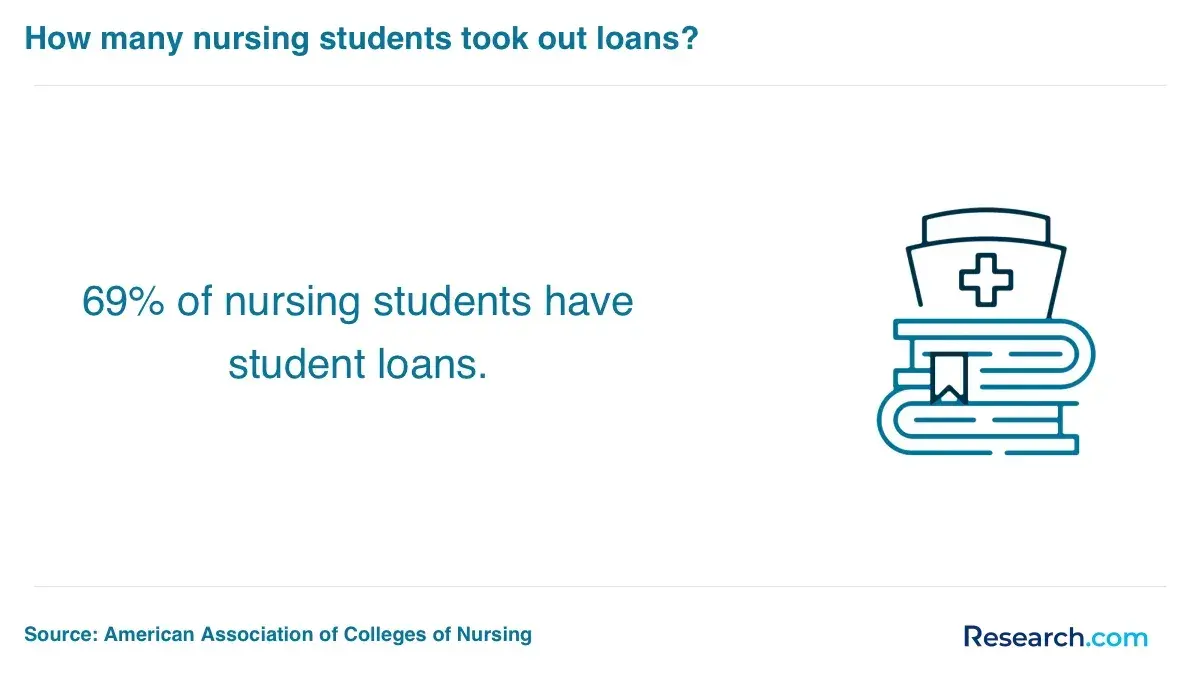
What financial aid options are available for ABSN students in Oregon?
ABSN students in Oregon should build a funding plan before accepting admission. Accelerated nursing programs move quickly, and financial stress can make an already demanding schedule harder to manage. Start with the FAFSA, then compare school-specific, state, employer, scholarship, and service-based options.
- Federal student loans: Completing the Free Application for Federal Student Aid, or FAFSA, is the standard first step for federal loan eligibility. Direct Unsubsidized Loans may help cover tuition and living costs, but students should review borrowing limits, interest, and repayment timelines carefully.
- State and institutional grants: Some grants are tied to a specific school or student profile. For example, the Bushnell Nursing Tuition Grant offers up to $7,000 per semester.
- Nursing scholarships: Nursing scholarships may consider academic strength, financial need, service goals, or specialty interests. Some Oregon Health & Science University awards range from $1,000 to $12,000.
- Employer tuition assistance: Healthcare employers may offer tuition reimbursement or education benefits for employees pursuing nursing credentials. Students should ask whether support requires continued employment after graduation.
- Loan forgiveness and repayment programs: Programs such as Primary Care Loan Forgiveness and the National Health Service Corps may provide repayment support in exchange for service in rural or underserved areas.
Students planning to continue beyond the ABSN can also compare online nurse practitioner programs when thinking about future graduate costs, employer benefits, and long-term credential planning.
| Aid option | Best for | Key caution |
| Federal loans | Students who need predictable funding access | Debt must be repaid, and accelerated programs may limit work income |
| Institutional grants | Students attending schools that offer nursing-specific support | Eligibility rules may be narrow and may change by term |
| Scholarships | Students with strong academics, need, service goals, or specialty interests | Deadlines can fall months before program start dates |
| Employer assistance | Current healthcare employees or workers with supportive employers | Benefits may require work commitments or reimbursement agreements |
| Service-based repayment | Graduates willing to work in qualifying shortage or underserved areas | Service obligations and eligible sites must be understood in advance |
What career paths are available after earning an ABSN in Oregon?
An ABSN prepares graduates to pursue RN licensure after meeting all program and state requirements and passing the NCLEX-RN. Once licensed, graduates may work in hospitals, clinics, community health organizations, long-term care facilities, schools, specialty units, and public health settings. Career options depend on licensure, experience, employer needs, location, and additional certifications.
- Registered Nurse (RN): RNs assess patients, administer medications, educate patients and families, coordinate care, document changes, and collaborate with physicians and other healthcare professionals.
- Critical Care Nurse: Critical care nurses work with seriously ill patients in intensive care, cardiac care, or emergency-related settings. These roles typically require strong assessment skills and may require additional training after hire.
- Public Health Nurse: Public health nurses focus on prevention, education, outreach, disease control, and community wellness, often serving populations with complex social and health needs.
- Nurse Educator: Nurse educators teach, mentor, or train other nurses and students. Many education roles require graduate study or substantial clinical experience.
- Nurse Manager: Nurse managers supervise nursing teams, support staffing and quality initiatives, and help coordinate safe patient care. These roles usually require experience and leadership ability.
For nurses who want advanced practice roles later, it is useful to understand the typical length of nurse practitioner schooling before mapping out a long-term education plan.
| Role | Typical setting | What helps graduates compete |
| Staff RN | Hospitals, clinics, long-term care, outpatient care | NCLEX-RN success, clinical references, patient-care readiness |
| Critical care nurse | ICU, cardiac care, emergency-related units | Strong assessment skills, adaptability, specialty onboarding |
| Public health nurse | Community agencies, public health programs, schools | Communication skills, prevention mindset, cultural competence |
| Nurse manager | Hospitals, clinics, long-term care organizations | Experience, leadership, quality improvement knowledge |
| Nurse educator | Academic or clinical training environments | Clinical expertise and often graduate education |
What is the average salary for nurses with an ABSN degree in Oregon?
Nursing pay in Oregon varies by employer, region, shift, specialty, union environment, experience, and additional credentials. An ABSN itself does not guarantee a specific salary; it provides the BSN-level academic preparation needed to pursue RN licensure. After licensure, compensation depends heavily on where and how the nurse works.
- Experience level: New ABSN graduates usually enter the market as beginning RNs, while experienced nurses with expanded responsibilities may exceed $106,000 annually.
- Employer type: Large hospitals and specialty care centers may offer different wage and benefit structures than outpatient clinics, rural facilities, or long-term care employers.
- Location: Nurses in metropolitan areas such as Portland or Eugene may see different compensation patterns than nurses in rural communities, often reflecting demand and cost-of-living differences.
- Specialization or certification: Specialty areas such as ICU or oncology nursing may increase earning potential, and some specialized nurses may earn above $125,000.
- Further education: Graduate study, leadership preparation, and advanced nursing credentials can open higher-responsibility roles, though they require additional time, cost, and licensure considerations.
| Factor | Potential effect on salary | What students should do |
| Experience | Pay often rises as clinical skill and responsibility increase | Compare new graduate RN roles with experienced RN postings separately |
| Specialty | High-acuity or hard-to-staff areas may pay more | Ask employers about specialty training and certification support |
| Location | Metro and rural compensation can differ | Compare pay alongside housing, commute, and lifestyle costs |
| Employer benefits | Benefits can change total compensation significantly | Evaluate retirement, health insurance, tuition assistance, and shift differentials |
How should students compare ABSN programs in Oregon?
The best Oregon ABSN program is not automatically the shortest, cheapest, or highest-profile option. The right choice depends on whether the program is approved, affordable, clinically accessible, compatible with your life, and strong enough to prepare you for the NCLEX-RN and entry-level practice.
| Selection factor | Why it matters | Red flag |
| Accreditation and state approval | Protects licensure eligibility and program credibility | The school cannot clearly explain its nursing approval status |
| Clinical placement support | Clinical access is essential for graduation and readiness | Students must arrange placements with little guidance |
| NCLEX-RN preparation | Passing the licensure exam is required for RN practice | No clear testing support, remediation plan, or outcomes discussion |
| Total cost | Tuition alone does not show the full financial commitment | Fees, supplies, travel, and lost income are not discussed |
| Schedule realism | Accelerated programs can be difficult to combine with work or caregiving | Admissions materials understate the time required for clinicals and study |
Questions to ask before applying
- Is the ABSN program approved by the Oregon State Board of Nursing?
- Is the nursing program accredited by CCNE or ACEN?
- Where are clinical sites located, and who secures placements?
- How many days per week should students expect to be unavailable for work?
- What happens if a student fails a course, clinical rotation, or benchmark exam?
- What is included in the published cost estimate?
- How does the program support NCLEX-RN preparation?
- Are prerequisites accepted from community colleges or online science courses?
- What percentage of students complete the program on time?
- What support is available for tutoring, advising, simulation practice, and wellness?
How does an accelerated BSN compare to an ADN program in Oregon?
An ABSN and an associate degree in nursing can both lead toward RN licensure pathways, but they serve different students. An ABSN is designed for people who already have a bachelor's degree and want a BSN-level nursing education quickly. An ADN may appeal to students seeking a community-college-based route, often with a different cost and timeline structure. The better choice depends on prior education, budget, local program availability, employer expectations, and long-term goals.
| Comparison point | Accelerated BSN | ADN |
| Typical student | Already has a non-nursing bachelor's degree | May not already hold a bachelor's degree |
| Credential earned | Bachelor of Science in Nursing | Associate degree in nursing |
| Pace | Compressed and intensive | Often less compressed, depending on school structure |
| Graduate school planning | Provides BSN preparation that may support later MSN admission | May require RN-to-BSN completion before some graduate pathways |
| Best for | Degree holders who can commit to fast, full-time study | Students prioritizing a different cost structure or local access |
Is an accelerated BSN a good step toward an MSN in Oregon?
An accelerated BSN can be a strong first step toward an MSN for students who want to become registered nurses first and later pursue advanced practice, leadership, education, informatics, or specialized clinical roles. However, the ABSN is not a shortcut around RN licensure, clinical experience, or graduate admission requirements. Students should confirm that the program's accreditation and curriculum will be acceptable to future MSN programs.
If graduate school is part of your plan, ask ABSN admissions advisors how graduates have used the degree after licensure. Also review future MSN prerequisites, experience expectations, GPA requirements, and whether the graduate pathway you want requires a specific type of RN background.
What are the common challenges students face in ABSN programs in Oregon?
Accelerated nursing programs are intentionally demanding. Students who succeed usually plan ahead, reduce avoidable obligations, and ask for help early. The most common problems are not always academic; they often involve time, money, travel, stress, and unrealistic expectations.
| Common mistake | Why it causes problems | Better approach |
| Choosing a program without verifying accreditation and state approval | It can affect licensure eligibility and future education options | Confirm institutional accreditation, CCNE or ACEN status, and Oregon State Board of Nursing approval |
| Looking only at tuition | Fees, supplies, travel, and lost wages can change affordability | Create a full budget before accepting admission |
| Assuming online means fully remote | Nursing requires in-person labs and clinical rotations | Ask exactly where and when in-person components occur |
| Underestimating the weekly workload | Compressed courses leave little time to catch up | Build a realistic study schedule before the first term |
| Waiting to prepare for the NCLEX-RN | Licensure preparation should build throughout the program | Use practice questions, remediation, and faculty feedback from the start |
| Ignoring support services | Stress and academic pressure can compound quickly | Use tutoring, advising, skills lab practice, and mental health resources early |
Can ABSN students work while completing their degree in Oregon?
Some students may work limited hours during an Oregon ABSN program, but full-time employment is often difficult because accelerated nursing education includes lectures, exams, labs, simulation, clinical shifts, preparation time, and commute time. Clinical schedules may include early mornings, evenings, weekends, or changing site assignments, depending on the program and healthcare partners.
Before deciding to work, students should ask the program for a sample weekly schedule and talk with current students or recent graduates. If employment is necessary, flexible part-time work, savings, employer support, or a reduced-hours arrangement may be more realistic than a fixed full-time schedule.
Here's What Graduates Have to Say About Their ABSN Degree in Oregon
- "The ABSN program at Oregon Health & Science University pushed me academically and clinically, but the hybrid structure helped me manage responsibilities outside school. Moving from student to nurse within a year gave me confidence, and the faculty and peer support made the workload feel possible." Vita
- "Southern Oregon University's on-campus ABSN gave me direct patient-care exposure in local healthcare settings. The experience strengthened my sense of purpose, helped me grow professionally, and later supported my work in school health and wellness education." Mon
- "The online ABSN track at Concordia University helped me balance family life with demanding coursework. Clinical exposure to Oregon's diverse patient population improved my cultural awareness and encouraged my interest in community health advocacy." Rebecca
Key Insights
- An Oregon ABSN is best suited for students who already hold a non-nursing bachelor's degree and can commit to a fast, full-time nursing curriculum.
- Program length may be as short as 12 months, but prerequisites, cohort timing, clinical scheduling, and readiness requirements can affect the actual timeline.
- Online or hybrid ABSN programs are not fully remote; clinical rotations, labs, and simulation experiences require in-person participation.
- Accreditation and Oregon State Board of Nursing approval should be checked before cost, convenience, or program reputation.
- Admission usually depends on a completed bachelor's degree, prerequisite science courses, GPA strength, application materials, and sometimes an entrance exam such as the TEAS.
- Total cost should include tuition, fees, clinical supplies, travel, technology, living expenses, and reduced work income—not tuition alone.
- Financial aid may include federal loans, grants such as the Bushnell Nursing Tuition Grant of up to $7,000 per semester, scholarships including some OHSU awards ranging from $1,000 to $12,000, employer assistance, and service-based repayment programs.
- An ABSN can support later MSN or advanced nursing goals, but students should verify graduate admission requirements before assuming the degree will meet every future pathway.
Related Articles for Nearby States
- 2027 Best ABSN Programs - List of Accelerated BSN Programs in Washington: Online & Campus
- 2027 Best ABSN Programs - List of Accelerated BSN Programs in California: Online & Campus
- 2027 Best ABSN Programs - Accelerated BSN Programs in Idaho: Online & Campus
- 2027 Best ABSN Programs - Accelerated BSN Programs in Nevada: Online & Campus
- 2027 Best ABSN Programs - Accelerated BSN Programs in Montana: Online & Campus
- 2027 Best ABSN Programs - Accelerated BSN Programs in Utah: Online & Campus
- 2027 Best ABSN Programs - Accelerated BSN Programs in Wyoming: Online & Campus
- 2027 Best ABSN Programs - Accelerated BSN Programs in Arizona: Online & Campus
- 2027 Best ABSN Programs - Accelerated BSN Programs in Colorado: Online & Campus
- 2027 Best ABSN Programs - List of Accelerated BSN Programs in New Mexico: Online & Campus
References:
- Accelerated Nursing Program - CSP Global https://absn.csp.edu/
- Accelerated Bachelor of Science in Nursing https://www.linfield.edu/admission/nursing-admission/accelerated-bsn/index.html
- Oregon Students Can Now Enroll in Joyce's Nursing Programs https://www.joyce.edu/press/joyce-launches-nursing-programs-in-oregon/
- Education https://www.ohsu.edu/education/financial-aid
- Oregon ABSN Programs https://www.absnprograms.org/programs/oregon/
- Registered Nurse Salary in Oregon (2024) | Trusted Health https://www.trustedhealth.com/nurse-salary-guide/oregon
- ABSN FAQ's - Bushnell University https://www.bushnell.edu/college-of-health-professions/absn/faqs/
- Punk Rock Nurses’ Corner | Thoughts on ADN vs ABSN | Facebook https://www.facebook.com/groups/6104094406326788/posts/9629577707111756/
- Nursing Schools in Oregon https://www.oregoncenterfornursing.org/resources/oregon-nursing-schools/
- ABSN Scholarships and Grants for Nursing Students - Accelerated BSN Degrees https://absn.org/resources/absn-scholarships/
Other Things You Should Know About Becoming a Nurse in Oregon
To enroll in a 2027 ABSN program in Oregon, students typically need a bachelor's degree in any field, a minimum GPA (often around 3.0), completion of science prerequisites (like anatomy and physiology), and a solid foundation in statistics or mathematics. Some programs may also require healthcare experience or certifications.
The application deadline for most ABSN programs in Oregon for 2027 typically falls around late April. However, it's best to check with individual programs, as deadlines may vary. Ensure that all application materials are submitted on time for consideration.
ABSN programs in Oregon typically take 12 to 18 months to complete. These accelerated programs are designed for students who have already completed a non-nursing bachelor's degree and wish to transition into nursing efficiently.
Most Oregon ABSN programs require a criminal background check, drug screening, and proof of current immunizations before clinical placement. Common records include MMR, varicella, hepatitis B, Tdap, influenza, TB testing, and sometimes COVID-19 documentation. Clinical sites can refuse students who do not meet these requirements.