
2027 Most Affordable Online Accelerated BSN Programs for Non-Nurses

Co-Founder and Chief Data Scientist
Choosing an online accelerated BSN program as a non-nurse is not just a school search; it is a career-change decision with licensing, clinical placement, tuition, and time-pressure consequences. If you already have a non-nursing bachelor’s degree, an accelerated BSN can shorten your path to registered nurse eligibility, but the fastest or cheapest program is not always the best fit. You need to know whether the program is accredited, whether it can place you for clinical rotations, whether it prepares you for the NCLEX-RN, and whether the total cost makes sense for your situation.
This 2027 guide explains how affordable online accelerated BSN programs for non-nurses work, what they cost, how long they take, and what to check before applying. It also compares program formats, career outcomes, financial aid options, common prerequisites, and alternatives such as LPN-to-RN, CNA-to-RN, RN-to-BSN, BSN-to-MSN, and DNP pathways. The goal is to help you choose a realistic, licensure-focused nursing route without relying only on rankings or tuition claims.
Quick answer: Are affordable online accelerated BSN programs for non-nurses worth considering?
Yes, an affordable online accelerated BSN program can be a strong option if you already hold a non-nursing bachelor’s degree, can handle a full-time intensive schedule, and want to qualify for RN licensure more quickly than through a traditional four-year BSN. Most programs combine online nursing coursework with in-person clinical rotations, labs, simulations, or short campus residencies. After graduation, students must pass the NCLEX-RN and meet state board of nursing requirements before practicing as registered nurses.
- Best for: Career changers who already completed a bachelor’s degree and want a direct RN-licensure path.
- Typical completion time: 12 to 18 months, depending on prerequisites, clinical scheduling, and program structure.
- Typical cost range: $20,000 to $60,000 for many affordable online accelerated BSN programs, not including all fees, supplies, travel, or clinical expenses.
- Career outcome: Graduates commonly pursue RN roles in hospitals, outpatient clinics, long-term care, community health, schools, home healthcare, and specialty units after licensure.
- Salary context: The article’s cited salary figures include median RN salaries reaching $93,600 nationwide and a U.S. Bureau of Labor Statistics median annual wage of $86,070 for registered nurses in 2023.
What are the main benefits of affordable online accelerated BSN programs for non-nurses?
- They create a structured route into high-demand nursing roles, including registered nurse, public health nurse, clinical care coordinator, and specialized bedside nursing positions.
- They can lead to RN careers with a median annual salary of $86,070 for registered nurses, according to the U.S. Bureau of Labor Statistics.
- They are designed for second-degree students, so the curriculum moves quickly and avoids repeating a full undergraduate degree when prior general education coursework already applies.
- They often provide more geographic flexibility than fully campus-based programs, although clinical rotations and labs still require in-person participation.
- They can support long-term nursing advancement into MSN, nurse practitioner, leadership, education, informatics, or DNP pathways after experience and additional graduate education.
What can I expect from an affordable online accelerated BSN program for non-nurses?
An affordable online accelerated BSN program for non-nurses is a second-degree nursing program built for students who already have a bachelor’s degree in another field. Instead of spending four years on a traditional BSN, students complete a compressed nursing curriculum that usually runs 12 to 18 months. The pace is demanding because students must cover classroom theory, nursing labs, simulations, clinical rotations, exam preparation, and professional skill development in a short period.
The “online” part usually applies to didactic coursework such as lectures, readings, case studies, discussions, exams, and virtual simulations. Nursing cannot be completed fully online because RN licensure requires supervised hands-on clinical experience. Expect to complete clinical hours at approved healthcare sites, attend labs or skills intensives, and possibly travel for short campus residencies.
Core subjects commonly include anatomy, physiology, microbiology, pharmacology, pathophysiology, health assessment, nursing fundamentals, adult health, mental health, pediatric nursing, maternal health, community health, nursing ethics, and leadership. Many programs also include a capstone, practicum, or transition-to-practice experience before graduation.
| Program feature | What it usually means for students | Decision point to check before applying |
| Accelerated schedule | Courses are condensed into a shorter timeline, often with limited breaks. | Ask whether you can work while enrolled or whether the program strongly discourages employment. |
| Online coursework | Lectures, assignments, discussions, exams, and simulations may be delivered virtually. | Confirm whether classes are synchronous, asynchronous, or a mix of both. |
| Clinical rotations | Students complete supervised patient-care experiences in person. | Ask who secures clinical placements and whether sites are available in your state or region. |
| Residencies or labs | Some programs require campus visits for skills checks, simulation, or hands-on instruction. | Budget for travel, lodging, time off work, and transportation. |
| NCLEX-RN preparation | Programs may include review resources, coaching, practice exams, and readiness assessments. | Request recent NCLEX pass-rate information and compare it with state expectations. |
Where can I work with an online accelerated BSN degree?
After completing an online accelerated BSN, passing the NCLEX-RN, and receiving RN licensure from the appropriate state board of nursing, graduates can pursue many of the same entry-level registered nursing roles as graduates of campus-based BSN programs. Employers are typically more concerned with licensure, accreditation, clinical readiness, professionalism, and unit fit than whether the lecture portion of the BSN was delivered online.
Common work settings include hospitals, emergency departments, surgical units, outpatient clinics, long-term care facilities, rehabilitation centers, home healthcare agencies, community health organizations, schools, correctional facilities, and travel nurse agencies. New nurses may begin in medical-surgical, telemetry, behavioral health, pediatrics, women’s health, oncology, perioperative, or critical care-adjacent roles depending on employer requirements and local hiring needs.
A BSN can also support future mobility. With experience, nurses may move into charge nurse roles, case management, quality improvement, care coordination, public health, education, informatics, leadership, or graduate nursing programs.
How much can I make with an online accelerated BSN degree?
Graduates of online accelerated BSN programs do not earn a separate “online BSN” salary. Pay depends on RN licensure, employer type, geographic location, shift differentials, specialty area, union contracts, experience level, and local labor demand. According to the U.S. Bureau of Labor Statistics, registered nurses earned a median annual wage of $86,070 in 2023.
Salary can vary widely. RNs in states such as California and New York tend to earn higher-than-average wages, while pay in lower-cost regions may be lower. Specialty practice areas such as critical care, labor and delivery, emergency nursing, perioperative nursing, and oncology may offer higher pay after nurses build experience and meet employer requirements. Additional certifications, graduate degrees, leadership responsibilities, and overtime or shift differentials can also influence earnings.
- Most Affordable Online Accelerated BSN Programs for Non-Nurses for 2027
- How long does an affordable online accelerated BSN program take?
- Online accelerated BSN vs. on-campus accelerated BSN
- Average cost of affordable online accelerated BSN programs
- Financial aid options for accelerated BSN students
- Common admissions prerequisites for non-nurse ABSN applicants
- Typical courses in an online accelerated BSN curriculum
- Specializations and focus areas for BSN-prepared nurses
- How to choose the best affordable online accelerated BSN program
- Career paths after an affordable online accelerated BSN
- Are 6 Month LPN to RN Programs a Viable Alternative for Expedited Nursing Entry?
- Job market for accelerated BSN graduates
- Can I Transition Directly From an Accelerated BSN to a DNP Program?
- Student support services in online accelerated BSN programs
- Common mistakes to avoid before enrolling
- Challenges students may face in affordable online accelerated BSN programs
List of the Most Affordable Online Accelerated BSN Programs for Non-Nurses for 2027
How do we rank the programs?
A nursing degree involves tuition, licensing steps, clinical expectations, and a major time commitment, so program comparisons should be based on more than marketing language. Research.com uses data sources such as the IPEDS database, Peterson's database, the College Scorecard database, and the National Center for Education Statistics to evaluate institutional and program-level information. Readers can review Research.com’s broader ranking process on the methodology page.
When using this list, do not treat rank alone as the final decision. Confirm current tuition, state authorization, clinical placement availability, accreditation status, NCLEX outcomes, admissions requirements, and whether the program meets the RN licensure rules for the state where you plan to practice.
1. Rockhurst University
Rockhurst University offers an Accelerated BSN through Saint Luke's College of Nursing and Health Sciences. The program uses a hybrid model with 100% online coursework plus a 10-day on-campus residency for applied skills instruction. The 16-month curriculum also includes personalized NCLEX coaching to help students prepare for licensure testing.
- Required Credits to Graduate: 60
- Cost: $50,000 total tuition
- Accreditation: Commission on Collegiate Nursing Education (CCNE)
2. Baylor University
Baylor University provides a Distance Accelerated BSN (ABSN) for students who already hold a non-nursing bachelor’s degree. Students can complete the full-time pathway in as little as 12 months. The program includes 62 credit hours of nursing coursework delivered through online learning and in-person clinical experiences.
- Required Credits to Graduate: 62
- Cost: $66,834 total tuition
- Accreditation: Commission on Collegiate Nursing Education (CCNE)
3. Holy Family University
Holy Family University offers an online Accelerated BSN for applicants with a bachelor’s degree outside nursing. The full-time program is structured for completion in 14 months and pairs online coursework with required in-person clinical experiences to prepare students for the NCLEX-RN exam.
- Required Credits to Graduate: Not specified
- Cost: $883 per credit hour
- Accreditation: Middle States Commission on Higher Education (MSCHE)
4. University of Wisconsin–Oshkosh
The University of Wisconsin–Oshkosh runs a 12-month Accelerated BSN for students who have completed a non-nursing bachelor’s degree. The program is designed as a rigorous one-year route that combines online coursework with clinical experiences for students seeking RN licensure preparation.
- Required Credits to Graduate: Not specified
- Cost: $49,000 total tuition
- Accreditation: Commission on Collegiate Nursing Education (CCNE)
5. Cleveland State University
Cleveland State University offers a 16-month full-time Accelerated BSN for students entering nursing from another academic background. The curriculum includes 69 credit hours, 734 clinical hours, and 201 lab hours. Students also complete two campus residencies for hands-on learning.
- Required Credits to Graduate: 69
- Cost: $21,196.80 total in-state tuition; $30,081.60 total out-of-state tuition
- Accreditation: Commission on Collegiate Nursing Education (CCNE)
6. Elmhurst University
Elmhurst University provides a 16-month Accelerated BSN for students with a bachelor’s degree in a non-nursing field. The program uses 100% online coursework, local clinical placements, and two on-campus residencies to develop clinical judgment, technical skills, and NCLEX-RN readiness.
- Required Credits to Graduate: Not specified
- Cost: Not specified
- Accreditation: Commission on Collegiate Nursing Education (CCNE)
7. Averett University
Averett University offers a 16-month full-time Accelerated BSN in Virginia for applicants with either a non-nursing bachelor’s degree or at least 60 non-nursing college credits. Students complete online coursework, hands-on labs, and clinical rotations as part of NCLEX-RN preparation.
- Required Credits to Graduate: 66
- Cost: $950 per credit hour; approximately $68,375 total estimated cost
- Accreditation: Commission on Collegiate Nursing Education (CCNE)
8. Herzing University
Herzing University offers an Accelerated BSN intended for students pursuing nursing as a second career. The program blends online coursework with required in-person clinical experiences so graduates can prepare for the NCLEX-RN and entry into professional nursing practice.
- Required Credits to Graduate: 120
- Cost: $99,000 total tuition
- Accreditation: Commission on Collegiate Nursing Education (CCNE)
9. Marymount University
Marymount University offers an Accelerated BSN for students who already hold a non-nursing bachelor’s degree and want to enter the nursing field. The program combines intensive coursework with clinical training to support NCLEX-RN preparation and transition into nursing practice.
- Required Credits to Graduate: Not specified
- Cost: Not specified
- Accreditation: Commission on Collegiate Nursing Education (CCNE)
10. Wilkes University
Wilkes University provides an Accelerated BSN curriculum for students with a bachelor’s degree in another field. The program includes online coursework and hands-on clinical learning to prepare graduates for the NCLEX-RN exam and entry-level nursing roles.
- Required Credits to Graduate: Not specified
- Cost: Not specified
- Accreditation: Commission on Collegiate Nursing Education (CCNE)
| School | Program length or structure noted | Cost information provided | Best-fit consideration |
| Rockhurst University | 16-month program with 10-day on-campus residency | $50,000 total tuition | Good to compare if you want online coursework but can travel for a focused residency. |
| Baylor University | As little as 12 months; full-time | $66,834 total tuition | Worth reviewing if speed is a top priority and you can manage a full-time course load. |
| Holy Family University | 14-month full-time program | $883 per credit hour | Useful for applicants comparing per-credit pricing and clinical placement expectations. |
| University of Wisconsin–Oshkosh | 12-month Accelerated BSN | $49,000 total tuition | Appropriate to review if you want a one-year model and can meet a rigorous schedule. |
| Cleveland State University | 16 months; 734 clinical hours and 201 lab hours | $21,196.80 total in-state tuition; $30,081.60 total out-of-state tuition | Important to compare if public-university pricing and documented clinical/lab hours matter to you. |
| Elmhurst University | 16 months with two on-campus residencies | Not specified | Ask for current tuition and residency costs before comparing affordability. |
| Averett University | 16-month full-time program | $950 per credit hour; approximately $68,375 total estimated cost | May fit students in or near Virginia who meet either bachelor’s-degree or 60-credit entry criteria. |
| Herzing University | Accelerated BSN with online coursework and in-person clinicals | $99,000 total tuition | Review carefully against lower-cost options and confirm total fees before applying. |
| Marymount University | Accelerated BSN with clinical experiences | Not specified | Request current cost, clinical site details, and NCLEX outcomes directly from the school. |
| Wilkes University | Accelerated BSN with online coursework and clinical training | Not specified | Compare only after confirming tuition, fees, state authorization, and placement support. |
How long does it take to complete an affordable online accelerated BSN program for non-nurses?
Most affordable online accelerated BSN programs for non-nurses take 12 to 18 months. The shortest options can be appealing, but they usually require full-time enrollment, strict sequencing, completed prerequisites, and limited flexibility for work or family obligations. Longer accelerated formats may still move quickly while giving students slightly more time to absorb clinical material.
Timeline depends on three major factors: whether your prerequisites are complete, whether clinical placements are available when needed, and whether the program requires campus residencies or lab intensives. Students who still need anatomy, physiology, microbiology, statistics, nutrition, or developmental psychology may need additional months before starting the nursing sequence.
- 12-month programs: Fastest option, but usually the most intense and least compatible with full-time employment.
- 16 to 18-month programs: Still accelerated, but often more manageable for students who need a slightly less compressed schedule.
- Prerequisite-dependent timelines: Applicants missing required science courses may need to complete them before formal admission or before the first nursing term.
- Clinical scheduling: Delays can occur if approved sites, preceptors, or shifts are limited in your area.
If you are comparing health and behavioral-care education more broadly, some students also review options such as the top APA-accredited PsyD programs to understand how clinical training timelines differ across professions. Nursing, however, has its own state board, clinical, and NCLEX-RN requirements.
Students starting from a patient-care support role may prefer a bridge sequence instead of jumping directly into a second-degree BSN. For example, a certified nursing assistant who wants to build toward RN licensure can compare the cheapest CNA to RN programs online and decide whether a bridge route is more realistic than an accelerated BSN.
Enrollment in entry-level baccalaureate nursing programs has moved unevenly in recent years. According to AACN data (2023), enrollment increased from 5.2% in 2019 to 5.6% in 2020, slowed to 3.3% in 2021, declined by -1.4% in 2022, and then increased modestly by 0.6% in 2023. These changes show why applicants should apply strategically, complete prerequisites early, and avoid assuming that every program has open seats or clinical capacity.
How does an affordable online accelerated BSN program for non-nurses compare to an on-campus program?
Online and on-campus accelerated BSN programs can both lead to the same degree type and RN licensure eligibility when they meet state and accreditation requirements. The main difference is delivery format. Online ABSN programs shift much of the academic coursework to a virtual learning environment, while on-campus programs deliver more of the classroom experience in person. Both require clinical training.
| Comparison factor | Online accelerated BSN | On-campus accelerated BSN | What to ask before choosing |
| Course delivery | Lectures and assignments are commonly completed online. | Classes are usually held at scheduled campus locations. | Do you learn well online, and are live sessions required? |
| Clinical training | Completed in person at approved sites, often near the student when available. | Completed in person through school-affiliated clinical partners. | Who finds the site: the school or the student? |
| Flexibility | May reduce relocation needs but still has deadlines, clinical shifts, and required labs. | Less location-flexible but may provide easier access to campus resources. | Can you attend required labs, simulations, or residencies? |
| Interaction | Faculty contact occurs through video meetings, discussion boards, email, and virtual office hours. | More routine face-to-face interaction with classmates and instructors. | What tutoring, advising, and peer support exist for remote students? |
| Best fit | Students who need location flexibility and can stay organized independently. | Students who prefer in-person structure and immediate campus access. | Which environment best supports your learning style and responsibilities? |
The better choice depends on your learning style, location, clinical availability, and support needs. An online ABSN is not automatically easier. In many cases, it requires stronger time management because students must coordinate virtual coursework with in-person clinical responsibilities.
What is the average cost of an affordable online accelerated BSN program for non-nurses?
The average cost of an affordable online accelerated BSN program for non-nurses commonly falls between $20,000 and $60,000 for tuition. That range does not always include application fees, background checks, drug screening, immunizations, uniforms, equipment, lab fees, technology fees, exam fees, travel, lodging for residencies, parking, textbooks, or clinical compliance costs.
Students comparing healthcare careers should look beyond sticker price. For example, someone also considering an online ultrasound tech school should compare not only tuition but also licensing pathway, clinical hour expectations, job duties, patient-care intensity, and long-term advancement options.
| Cost factor | Why it matters | Question to ask the school |
| Tuition model | Programs may charge per credit, per term, or by total program cost. | Is the published amount total tuition or only instructional tuition? |
| Credit requirements | Most ABSN programs require 50–65 credits, but requirements vary. | How many credits must I complete after transfer and prerequisite review? |
| Clinical expenses | Students may pay for screenings, transportation, parking, and compliance documentation. | What clinical-related costs are not included in tuition? |
| Residency travel | Hybrid programs may require campus visits for labs or skills assessments. | How many campus visits are required, and how long does each last? |
| Lost income | Accelerated nursing programs may limit the ability to work. | Do students typically work during the program, or is that discouraged? |
Affordability should be judged by total cost of attendance, not tuition alone. A lower-tuition program that cannot support clinical placement in your area may become more expensive if you must relocate or delay graduation.
What are the financial aid options for students enrolling in an affordable online accelerated BSN program for non-nurses?
Students in accelerated online BSN programs may qualify for several forms of aid, but eligibility depends on the school, enrollment status, prior degree history, federal aid limits, and program classification. Start early because ABSN programs move quickly and financial aid paperwork can take time.
- Federal financial aid: Eligible students can submit the FAFSA to be considered for federal grants and loans, subject to federal rules and remaining eligibility.
- School scholarships: Colleges may offer nursing scholarships based on need, merit, location, service commitments, or academic background.
- Private scholarships: Hospitals, foundations, professional associations, and community organizations may fund nursing students.
- Employer tuition assistance: Healthcare employers may help pay tuition for employees who agree to work during or after training.
- State grants and workforce programs: Some states provide aid for nursing students because of workforce needs.
- Loan forgiveness: Graduates working in qualifying public service or underserved settings may explore Public Service Loan Forgiveness (PSLF) or similar options.
Ask the financial aid office to estimate the full cost of attendance and explain how aid applies to second-degree students. Do not assume that aid available for a first bachelor’s degree will apply the same way to an accelerated second-degree nursing program.
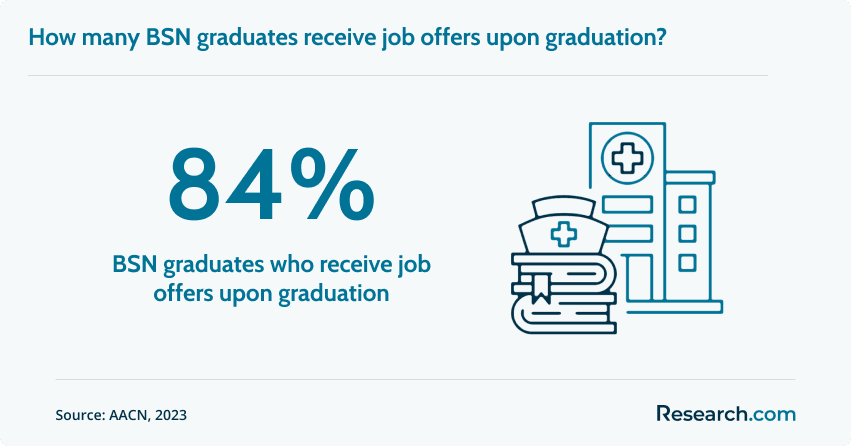
Return on investment also depends on employment outcomes. According to the AACN (2023), approximately 84% of BSN graduates receive job offers upon graduation, which reflects strong employer interest in new BSN-prepared nurses. Still, no program can guarantee a job, salary, specialty placement, or preferred location.
What are the prerequisites for enrolling in an affordable online accelerated BSN program for non-nurses?
Admission requirements vary, but most accelerated BSN programs for non-nurses expect applicants to have completed a bachelor’s degree in another field before starting the nursing sequence. Programs also commonly require prerequisite science and general education courses, minimum GPA standards, background checks, health documentation, and evidence of readiness for intensive professional study.
| Common requirement | What it may include | Why it matters |
| Prior bachelor’s degree | A completed non-nursing bachelor’s degree from an accredited institution. | ABSN programs are built for second-degree students and assume prior college-level work. |
| Science prerequisites | Anatomy, physiology, microbiology, chemistry, or related lab sciences. | These courses prepare students for pharmacology, pathophysiology, and health assessment. |
| General prerequisites | Statistics, psychology, nutrition, ethics, or developmental coursework. | Programs use these subjects as foundations for evidence-based and patient-centered care. |
| Minimum GPA | Overall and prerequisite GPA thresholds set by the school. | Accelerated nursing coursework is difficult, so programs screen for academic readiness. |
| Clinical compliance | Immunizations, CPR certification, drug screening, background check, and health clearance. | Clinical sites require students to meet safety and compliance standards before placement. |
| State eligibility | Authorization to enroll and complete clinicals in your state. | Online programs may not be approved for every state, even if coursework is remote. |
Applicants who already work as RNs and only need a bachelor’s completion pathway should not choose a prelicensure ABSN. Those nurses may prefer an RN to BSN online no clinicals pathway if they already hold RN licensure and want a more flexible bachelor’s completion route.
What courses are typically in an affordable online accelerated BSN program for non-nurses?
Accelerated BSN curricula are designed to move students from non-nursing academic backgrounds into entry-level professional nursing practice. Courses combine nursing theory, clinical judgment, patient assessment, evidence-based practice, and supervised care experiences.
- Anatomy and Physiology: Human body systems, structure, and function as a basis for clinical reasoning.
- Microbiology: Microorganisms, infection control, and disease processes relevant to patient care.
- Pharmacology: Medication classes, dosing principles, safety checks, patient education, and adverse effects.
- Pathophysiology: How illness and injury alter normal body function.
- Health Assessment: Techniques for collecting patient histories, performing physical assessments, and identifying abnormal findings.
- Nursing Fundamentals: Core skills such as hygiene, mobility, documentation, communication, safety, and basic interventions.
- Adult and Pediatric Nursing: Care of adult and child patients across acute and chronic conditions.
- Mental Health Nursing: Psychiatric assessment, therapeutic communication, crisis response, and emotional health support.
- Community and Public Health: Population health, prevention, health promotion, and care outside hospital settings.
- Leadership and Management: Delegation, interprofessional teamwork, quality improvement, and transition into professional practice.
Students who eventually want advanced clinical roles should review how early BSN choices support later graduate study. For example, those interested in advanced practice and specialist responsibilities can read about how to become a CNS after building the education and experience needed for that path.
What types of specializations are available in an affordable online accelerated BSN program for non-nurses?
Most accelerated BSN programs focus first on broad RN licensure preparation rather than deep specialization. Students may gain exposure to specialty areas through clinical rotations, electives, simulations, capstone experiences, or post-graduation employment. True specialization often occurs after licensure through unit experience, employer training, certifications, or graduate education.
- Pediatric Nursing: Care for infants, children, and adolescents.
- Geriatric Nursing: Nursing care focused on older adults and age-related health needs.
- Mental Health Nursing: Psychiatric, behavioral, and emotional health care.
- Critical Care Nursing: Higher-acuity care in intensive or step-down environments after appropriate preparation.
- Community Health Nursing: Prevention, education, outreach, and population-based care.
- Women’s Health Nursing: Maternal, reproductive, and related care settings.
- Emergency Nursing: Urgent, trauma, and rapid-response patient care after suitable training and experience.
Licensed RNs who already have an associate degree or diploma may not need an accelerated prelicensure BSN. They can compare the cheapest RN to BSN online programs to complete a bachelor’s degree while continuing to work as nurses.
Work schedules vary across nursing settings and specialties. Among licensed registered nurses, 70% work full time, 11% work part time, and 8% work per diem. This range matters when choosing a specialty because some units require nights, weekends, holidays, call shifts, or rotating schedules.
How to Choose the Best Affordable Online Accelerated BSN Programs for Non-Nurses
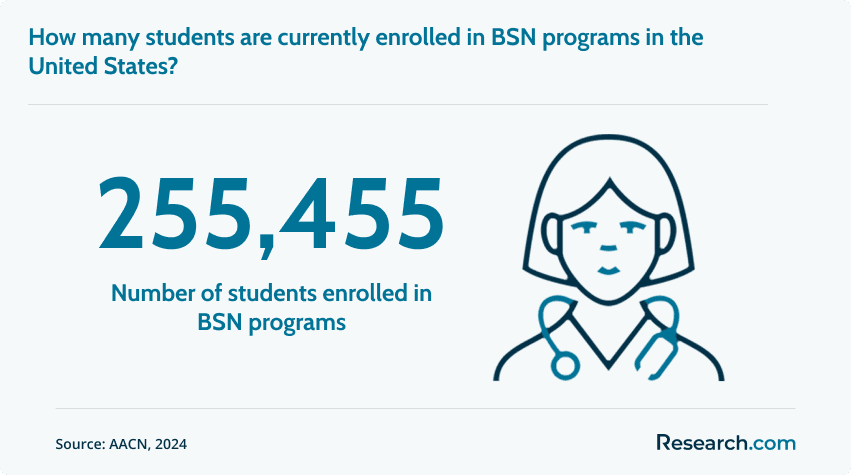
There are approximately 255,455 students enrolled in BSN programs across the United States, so applicants have many options but also more complexity to navigate. Choosing well requires checking licensing alignment, accreditation, clinical placement, real total cost, and student support. If you are comparing helping professions outside nursing, you may also find it useful to review pathways such as how to become a behavior therapist, but RN licensure follows a separate nursing education and state board process.
1. Confirm nursing accreditation and institutional accreditation
Look for recognized nursing accreditation, such as CCNE when applicable, and verify institutional accreditation. Accreditation can affect eligibility for financial aid, licensure, graduate school, and employer recognition. Do not rely only on a school’s homepage; verify with accreditor and state board resources.
2. Check whether the program meets your state’s RN licensure requirements
Online programs may be authorized in some states but not others. Ask the school directly whether it accepts students from your state, whether clinical placements are available there, and whether the curriculum meets educational requirements for RN licensure where you plan to practice.
3. Compare total cost, not just tuition
Tuition is only part of the expense. Add fees, supplies, equipment, travel, campus residencies, clinical compliance costs, technology fees, exam costs, and lost wages if you reduce work hours. If you are considering starting as a licensed vocational nurse first, compare the cheapest online LVN to RN programs to see whether a staged route is more affordable.
4. Evaluate program length against your real life
A 12-month program may sound ideal until you consider clinical shifts, exams, labs, group work, and limited downtime. A 16- or 18-month program may be more realistic if you have caregiving responsibilities, health constraints, or financial pressure to keep some employment.
5. Ask about clinical placement support
This is one of the most important questions for online ABSN students. Some schools arrange placements; others expect students to help identify sites. A program with weak clinical placement support can cause delays even if the coursework is strong.
6. Review NCLEX-RN preparation and pass-rate transparency
Ask for recent NCLEX pass rates, remediation policies, readiness testing procedures, and support for students who struggle. A low-cost program is not a bargain if it does not prepare students well for licensure.
7. Look at student support for accelerated learners
Strong advising, tutoring, faculty access, simulation support, mental health resources, and career services can make a major difference because accelerated nursing programs are academically and emotionally demanding.
| Question to ask | Why it matters | Warning sign |
| Is the program approved for students in my state? | State authorization affects enrollment and clinical eligibility. | The school gives vague answers about state approval. |
| Who secures clinical placements? | Clinical delays can delay graduation and licensure. | The student is responsible with little school support. |
| What is the total cost of attendance? | Fees, travel, supplies, and lost income can change affordability. | Only tuition is disclosed clearly. |
| What are recent NCLEX outcomes? | Licensure exam readiness is central to the program’s value. | The program will not provide recent results or context. |
| Can I work while enrolled? | Accelerated schedules may make employment unrealistic. | The program markets flexibility but has rigid clinical demands. |
What career paths are available for graduates of affordable online accelerated BSN programs for non-nurses?
After graduation and RN licensure, accelerated BSN graduates can pursue entry-level nursing roles and later move into specialized or advanced positions. The first job is often focused on building bedside judgment, documentation skills, patient communication, medication safety, and teamwork.
- Registered Nurse (RN): Provides direct patient care in hospitals, clinics, nursing homes, rehabilitation centers, and other healthcare settings.
- Public Health Nurse: Works on prevention, education, outreach, and population health in community settings.
- Case Manager: Coordinates care plans, services, resources, and transitions for patients with complex needs.
- Nurse Educator: Teaches patients, staff, or nursing students after gaining suitable experience and, in many cases, additional education.
- Nurse Researcher: Supports studies that examine care delivery, outcomes, safety, or nursing practice improvements.
- Specialty Nurse: Builds expertise in areas such as pediatrics, oncology, critical care, emergency care, perioperative nursing, or labor and delivery.
A BSN can also serve as a foundation for graduate nursing education. Students who plan to become nurse practitioners, nurse leaders, or advanced clinicians may later compare affordable BSN to MSN online programs, but graduate admission usually depends on licensure, GPA, experience, recommendations, and program-specific requirements.
Are 6 Month LPN to RN Programs a Viable Alternative for Expedited Nursing Entry?
Yes, for someone who is already a licensed practical nurse, an LPN-to-RN bridge may be a faster and more targeted route than a second-degree accelerated BSN. Programs such as 6 month LPN to RN programs build on existing nursing education and clinical experience, then focus on the competencies needed to move toward RN eligibility. These programs are not designed for non-nurses with unrelated bachelor’s degrees, so they are alternatives only for students who already hold the right practical nursing credential.
| Pathway | Best for | Potential advantage | Important limitation |
| Accelerated BSN for non-nurses | Students with a non-nursing bachelor’s degree | Direct prelicensure BSN route for career changers | Intensive schedule and required clinicals |
| LPN-to-RN bridge | Licensed practical nurses | Uses prior practical nursing preparation | Not available to applicants without LPN licensure |
| CNA-to-RN route | Certified nursing assistants building upward | Can support gradual progression from entry-level patient care | May take longer than a direct ABSN if a bachelor’s degree is already completed |
| RN-to-BSN | Already licensed RNs without a BSN | Completes the bachelor’s degree after RN licensure | Does not provide initial RN licensure for non-nurses |
What is the job market for graduates of affordable online accelerated BSN programs for non-nurses?
The job market for accelerated BSN graduates remains favorable in many regions because healthcare systems continue to need registered nurses across hospitals, outpatient care, long-term care, community health, and home-based services. Demand is shaped by aging populations, regional shortages, workforce turnover, and the need for BSN-prepared nurses in complex care settings. Nursing shortages are projected to persist through 2031, which is one reason accelerated programs appeal to career changers.
Employers may value accelerated BSN graduates because they often bring prior professional experience from other fields along with intensive nursing preparation. Still, job competitiveness depends on region, specialty, clinical performance, licensure status, references, and willingness to work nights, weekends, or high-need units.
Median annual wages differ by employment setting. Registered nurses employed by government agencies earn a median wage of $106,480 annually. Nurses in state, local, or private hospitals have a median wage of $97,260. Ambulatory healthcare services report a median wage of $83,780, nursing and residential care facilities report about $81,820, and educational services report median annual earnings of $74,360.
New graduates should be realistic about first roles. A first nursing job may not be in the preferred specialty or schedule, but it can provide the clinical foundation needed for later advancement. Strong clinical evaluations, NCLEX readiness, networking during rotations, and flexible location preferences can improve early job prospects.
Questions to Ask Graduates Before Enrolling in an Affordable Online Accelerated BSN Program
Instead of relying on promotional testimonials, ask current students and recent graduates direct questions about workload, clinical placement, faculty support, and job preparation. Their answers can reveal issues that are not obvious in brochures or ranking tables.
- How many hours per week did you actually spend on lectures, studying, simulations, assignments, and clinical preparation?
- Did the school arrange clinical placements, or did students have to find sites themselves?
- Were online courses organized clearly, with responsive instructors and predictable deadlines?
- How much did you pay beyond tuition for travel, supplies, testing, uniforms, screenings, and fees?
- Did the program provide meaningful NCLEX-RN preparation before graduation?
- Would you choose the same program again, knowing what you know now?
Can I Transition Directly From an Accelerated BSN to a DNP Program?
Some accelerated BSN graduates may eventually move into a DNP pathway, but direct progression depends on the admission rules of the graduate program. DNP programs often evaluate undergraduate performance, RN licensure, clinical experience, leadership potential, recommendations, specialty goals, and readiness for advanced doctoral-level practice. Some pathways require an MSN first, while others are structured for BSN-prepared nurses.
Students who already know they want advanced practice, executive leadership, or doctoral preparation should research requirements early. Comparing DNP programs online can help clarify timelines, clinical expectations, specialty tracks, and admission standards. However, the immediate priority after an ABSN is usually passing the NCLEX-RN, obtaining RN licensure, and building competent clinical experience.
What support services are offered to ensure success in affordable online accelerated BSN programs for non-nurses?
Support services are especially important in accelerated nursing programs because students must master difficult material quickly while completing clinical training. Before enrolling, ask whether online students receive the same advising, tutoring, library access, simulation resources, faculty availability, and career support as campus students.
- Academic advising: Helps students plan course sequencing, deadlines, prerequisite completion, and graduation requirements.
- Tutoring and remediation: Provides targeted help in pharmacology, pathophysiology, assessment, dosage calculation, and test-taking.
- Clinical coordination: Supports placement, compliance paperwork, onboarding, and communication with clinical sites.
- Simulation and skills support: Allows students to practice decision-making and technical skills before patient-care experiences.
- NCLEX preparation: Includes practice exams, review tools, readiness assessments, and coaching.
- Career services: Offers resume help, interview preparation, employer connections, and job-search guidance.
- Wellness and counseling: Supports stress management during a demanding academic and clinical schedule.
Students who are already licensed RNs and want a less intensive bachelor’s-completion path can compare the easiest online RN-BSN programs, which serve a different population than prelicensure accelerated BSN programs.
Common mistakes to avoid before enrolling in an online accelerated BSN program
| Mistake | Why it can hurt you | Better approach |
| Choosing based only on the lowest tuition | The cheapest listed tuition may exclude fees, travel, clinical expenses, and residency costs. | Ask for a full cost-of-attendance estimate in writing. |
| Ignoring accreditation and state approval | Licensure, financial aid, and graduate school options may be affected. | Verify nursing accreditation and state board alignment before applying. |
| Assuming “online” means fully remote | Clinical rotations, labs, simulations, and residencies may require in-person attendance. | Map every in-person requirement before committing. |
| Underestimating the workload | Accelerated programs can make full-time employment unrealistic. | Build a weekly schedule and financial plan before enrollment. |
| Not asking about clinical placement | Weak placement support can delay graduation and licensure eligibility. | Ask who secures placements and what happens if a site falls through. |
| Assuming salary outcomes are guaranteed | Pay varies by location, employer, specialty, shifts, and experience. | Research RN wages in your target region and setting. |
| Relying only on rankings | A ranked program may still be wrong for your state, schedule, budget, or learning style. | Use rankings as a starting point, then verify fit with advisors and state boards. |
What challenges might I face during an affordable online accelerated BSN program for non-nurses?
Accelerated BSN programs can be rewarding, but they are not easy shortcuts. Students often face compressed coursework, frequent exams, demanding clinical schedules, emotional stress, and a steep adjustment to patient-care responsibility. Online students also need strong technology skills, self-discipline, and proactive communication with faculty and clinical coordinators.
- Time pressure: A 12 to 18-month curriculum leaves little room for falling behind.
- Clinical logistics: Transportation, shift schedules, compliance documents, and site availability can complicate planning.
- Financial strain: Reduced work hours plus tuition and fees can create pressure.
- Academic adjustment: Nursing exams often test clinical judgment, not simple memorization.
- Emotional demands: Students may encounter illness, death, family distress, and high-stakes communication during clinicals.
- Technology requirements: Online testing, simulations, learning platforms, and virtual meetings require dependable equipment and internet access.
Students who are open to relocating after graduation may also evaluate regional quality of life, wages, and demand. Researching the best place to live for nurses can help align education choices with long-term career and lifestyle goals.
Key Insights
- Affordable online accelerated BSN programs are designed for non-nurses who already hold a bachelor’s degree and want a faster prelicensure route to RN eligibility.
- Most programs take 12 to 18 months, but the fastest option is only a good choice if you can handle full-time intensive study, clinical shifts, and limited flexibility.
- Online ABSN programs are not fully remote. Students should expect in-person clinical rotations and may also need labs, simulations, or campus residencies.
- Tuition for affordable online accelerated BSN programs typically ranges from $20,000 to $60,000, excluding fees, supplies, travel, clinical compliance expenses, and possible lost income.
- Accreditation, state authorization, NCLEX preparation, and clinical placement support are more important than rank alone.
- About 84% of BSN graduates receive job offers at the time of graduation, but employment outcomes still depend on licensure, region, specialty, experience, and employer needs.
- There are approximately 255,455 students enrolled in BSN programs across the United States, making it important to apply early and compare programs carefully.
- 70% of licensed RNs work full-time, 11% work part-time, and 8% work per diem, giving nurses multiple schedule possibilities after gaining licensure and experience.
- Non-nurses should choose an ABSN only if they want initial RN licensure; already licensed RNs, LPNs, LVNs, and CNAs may have better-fit bridge or completion pathways.
References:
- American Association of Colleges of Nursing. (2023, June 21). New data show enrollment declines in schools of nursing, raising concerns about the nation’s nursing workforce. American Association of Colleges of Nursing.
- American Association of Colleges of Nursing. (2023). New graduate employment data. American Association of Colleges of Nursing.
- American Association of Colleges of Nursing. (2024, February 13). New AACN data points to enrollment challenges facing U.S. schools of nursing. American Association of Colleges of Nursing.
- Fogg, N. K., et al. (2023). Employment outcomes for newly licensed registered nurses: A national study. Journal of Nursing Regulation, 14(3), 45-54.
- U.S. Bureau of Labor Statistics. (2023, April). Registered nurses. Occupational Outlook Handbook. U.S. Bureau of Labor Statistics.
Other Things You Should Know About the Most Affordable Online Accelerated BSN Programs for Non-Nurses
Yes. Most accelerated BSN programs require a non-nursing bachelor’s degree and completed prerequisite science courses, then grant transfer credit for general education requirements. Depending on the school, this can shorten the program to about 12 to 18 months instead of a full four-year BSN.
In 2027, states like Texas, Florida, and California permit fully online accelerated BSN programs for non-nurses, with prerequisites including a bachelor's degree and a specific GPA. Verify with each state's nursing board as regulations can change annually.
Non-nurses can explore federal grants, scholarships from nursing associations, and school-specific financial aid packages to reduce tuition costs for online accelerated BSN programs in 2027. Researching state-specific scholarships is also advisable for additional support.


