2027 How to Become a Behavior Therapist

Co-Founder and Chief Data Scientist
Becoming a behavior therapist is not a single, one-size-fits-all path. Some people enter the field as registered behavior technicians or therapy assistants with a bachelor’s degree, while others complete graduate training, supervised clinical hours, certification, and state licensure before practicing independently. The right route depends on the population you want to serve, whether you want to provide applied behavior analysis, counseling, or another evidence-based intervention, and whether your state requires a license for the work you plan to do.
This guide explains how to become a behavior therapist, what education and credentials are commonly required, where behavior therapists work, how much they earn, and how to compare career paths before investing time and money in training. It is designed for students, career changers, psychology graduates, counseling applicants, and working human services professionals who want a practical roadmap rather than a broad overview of therapy careers.
Quick answer: How do you become a behavior therapist?
Most aspiring behavior therapists start by earning a bachelor’s degree in psychology, counseling, social work, education, or a related field. Entry-level roles may be available with undergraduate training, especially under supervision. For independent, advanced, or higher-responsibility roles, many employers require a master’s degree, supervised experience, and a credential such as RBT, BCaBA, BCBA, LPC, or a state-specific license. The exact requirements depend on the state, employer, treatment model, and whether the role involves applied behavior analysis, counseling, school-based services, substance use treatment, or private practice.
Key things to know before choosing this career
- Employment for substance abuse, behavioral disorder, and mental health counselors is projected to grow 19% from 2023 to 2033, with nearly 49,000 openings annually.
- The Board Certified Behavior Analyst workforce has expanded quickly: as of January 2, 2025, there are 74,125 Board Certified Behavior Analysts (BCBAs) in the U.S., compared with over 36,000 worldwide in 2021.
- Behavior therapists earn an average of $50,799 per year, or $24.42 per hour, but pay varies by role, certification, state, employer, and experience.
- Work settings are diverse: 37% of behavior therapists work in healthcare, 15% work in education, and others are employed in private practice, nonprofits, government, technology, consulting, and community programs.
- Technology is changing the field. AI-supported documentation, digital progress tracking, telehealth, and virtual reality tools may help therapists personalize treatment, but they do not replace ethical judgment, clinical training, or supervision.
- What does a behavior therapist do?
- What degree do you need to become a behavior therapist for 2027?
- What certifications and licenses do behavior therapists need?
- What skills do you need to be a successful behavior therapist?
- Where do behavior therapists work?
- How much do behavior therapists make?
- What are the ethical and legal considerations in behavior therapy?
- What are the steps to becoming a behavior therapist?
- How do behavior therapists stay current with emerging research and best practices?
- What are the cost-effective pathways to become a behavior therapist?
- How do behavior therapists manage professional burnout?
- How do behavior therapists measure treatment outcomes?
- What are the career advancement opportunities in behavior therapy?
- How can online advanced degree programs enhance your behavior therapy career?
- What are the best behavior therapy specializations?
- How do behavior therapists work with different populations?
- What are the future trends in behavior therapy?
- How do behavior therapists integrate substance use disorder treatment?
- How do behavior therapists navigate insurance and reimbursement challenges?
- How can behavior therapy enhance organizational performance?
What does a behavior therapist do?
A behavior therapist helps clients understand, reduce, replace, or manage behaviors that interfere with learning, relationships, independence, emotional health, or daily functioning. The work is practical and measurable: therapists identify behavior patterns, develop treatment goals, apply evidence-based interventions, track progress, and adjust strategies when clients are not improving.
Behavior therapists may support people with mental health conditions, developmental disabilities, behavioral disorders, substance use challenges, trauma histories, or school and family difficulties. With over 59 million U.S. adults experiencing mental illness each year, professionals who can deliver structured, evidence-informed behavioral care are an important part of the mental health and human services workforce.
Common responsibilities
- Assessing client behavior through interviews, observation, rating scales, and progress data
- Creating behavior intervention plans or treatment plans tied to measurable goals
- Using approaches such as cognitive behavioral therapy, applied behavior analysis, skills training, exposure strategies, reinforcement systems, and relapse-prevention planning
- Teaching coping skills, communication skills, daily living skills, social skills, emotional regulation, or replacement behaviors
- Collaborating with families, teachers, physicians, social workers, psychologists, case managers, and other providers
- Documenting sessions, monitoring outcomes, and meeting ethical, legal, and payer documentation standards
Conditions and concerns behavior therapists often address
- Anxiety, depression, and stress-related concerns
- Autism spectrum disorder and ADHD
- Substance abuse and addiction
- Trauma and PTSD
- Behavioral challenges affecting children, adolescents, adults, and older adults
If your main goal is to enter a licensed therapy role as quickly as possible, compare behavior therapy pathways with broader counseling routes such as the fastest way to become a licensed counselor or therapist. Behavior therapy roles can overlap with counseling, ABA, school support, and mental health work, but requirements are not identical.
What degree do you need to become a behavior therapist for 2027?
The degree you need depends on the job title, state regulations, employer expectations, and whether you want an entry-level support role or independent clinical responsibilities. A bachelor’s degree can qualify you for supervised roles, while many advanced behavior therapy positions require a master’s degree. Doctoral training is generally reserved for clinical leadership, research, teaching, advanced assessment, or specialized practice.
| Education level | Typical role it can support | When this path makes sense | Limitations to check |
| Bachelor’s degree | Behavioral technician, case aide, therapy assistant, supervised behavioral support role | You want to enter the field, gain client experience, and decide whether graduate school is worth it | Independent practice and higher-level clinical roles usually require more training, supervision, certification, or licensure |
| Master’s degree | Behavior therapist, ABA practitioner, counselor, clinical supervisor, school or agency-based clinician | You want stronger career mobility, eligibility for certain certifications or licenses, and access to more advanced roles | Programs must align with your target credential, state rules, supervised experience requirements, and career goals |
| Doctorate degree | Researcher, professor, clinical director, specialist, advanced clinician, consultant | You want to teach, conduct research, lead programs, or pursue highly specialized clinical work | It is a longer and more expensive route than many behavior therapy jobs require |
Bachelor’s degree
Many behavior therapists begin with a bachelor’s degree in psychology, counseling, social work, education, human development, or a related discipline. Public colleges cost around $15,100 per year, while private colleges average $30,950 annually for undergraduate programs. After graduation, common starting roles include behavioral technician, direct support professional, case assistant, school behavior aide, or therapy assistant.
Master’s degree
A master’s degree is often the key credential for advanced behavior therapy roles, especially in applied behavior analysis, counseling, clinical mental health, school counseling, social work, or marriage and family therapy. If you are interested in working with couples, parents, and family systems, compare behavior therapy with paths such as how to become a marriage and family therapist, since licensure and clinical training requirements differ.
Doctorate degree
A Ph.D. or Psy.D. is not required for most behavior therapy jobs, but it can be valuable for professionals who want to conduct research, teach at the college level, supervise complex clinical programs, lead treatment centers, or specialize in advanced assessment and intervention.
How to choose the right degree path
- Identify your target job title before choosing a major or graduate program.
- Check your state licensing board if you plan to provide therapy independently.
- Ask whether the program prepares students for the credential you want, such as BCBA, LPC, or another state-recognized license.
- Compare supervised fieldwork options, not just coursework.
- Review total cost, transfer credit policies, internship support, and graduate outcomes before enrolling.
What certifications and licenses do behavior therapists need?
Behavior therapy credentials fall into two broad categories: professional certifications and state licenses. Certification shows that you meet standards set by a credentialing organization. Licensure gives legal permission to practice within a state-defined scope. Some jobs require one, some require both, and some entry-level roles allow supervised work before certification.
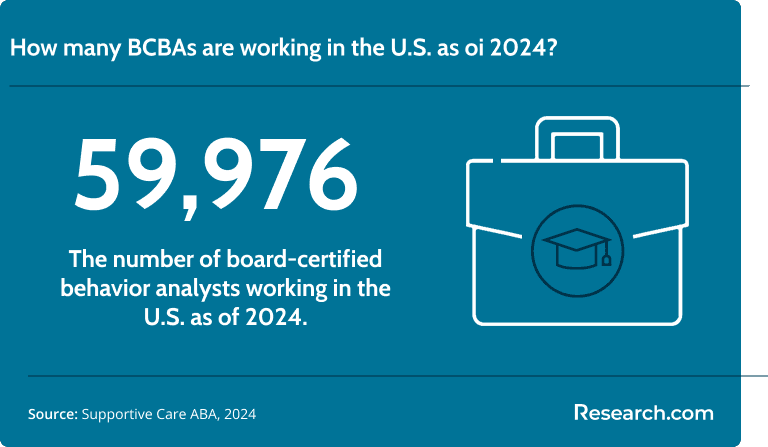
The applied behavior analysis workforce has grown quickly. As of January 2, 2025, there are 74,125 Board Certified Behavior Analysts (BCBAs) in the U.S., up from over 36,000 worldwide in 2021. That growth reflects increasing demand for trained ABA professionals, especially in services for autism, education, developmental disability support, and behavioral health programs.
| Credential | Who it is commonly for | What to verify before pursuing it |
| Registered Behavior Technician (RBT) | Entry-level staff who implement behavior plans under supervision | Training, supervision, exam, renewal, and employer expectations |
| Board Certified Assistant Behavior Analyst (BCaBA) | Bachelor’s-level practitioners who work under a BCBA | Degree, coursework, supervised fieldwork, and state-specific rules |
| Board Certified Behavior Analyst (BCBA) | Graduate-level ABA professionals who assess, design, and supervise behavior analytic services | Eligibility requirements in the official BCBA handbook, plus any state licensure requirements |
| Licensed Professional Counselor (LPC) | Counseling professionals who provide mental health services, often including CBT and related interventions | State-approved degree, supervised clinical hours, exam, and scope of practice |
| State-specific behavior analyst or therapist license | Professionals in states that regulate ABA, counseling, mental health therapy, or related services | State board rules, title protection, continuing education, and renewal standards |
Before you enroll in a program, ask the school in writing which credentials its curriculum is designed to support. Do not assume that a psychology, counseling, ABA, or online degree automatically meets licensure or certification requirements in your state.
What skills do you need to be a successful behavior therapist?
Behavior therapy requires both technical competence and strong interpersonal judgment. Clients may be frustrated, distressed, resistant, nonverbal, overwhelmed, or dealing with complex family, school, health, or social challenges. The therapist’s ability to communicate clearly, build trust, collect accurate data, and adjust treatment matters.
Mental healthcare satisfaction rates vary widely, from 39.3% to 91.9% worldwide, which reinforces an important point: outcomes are influenced not only by the treatment model, but also by access, fit, communication, cultural responsiveness, and therapist skill.
| Skill | Why it matters in behavior therapy | How to build it |
| Clear communication | Clients, families, teachers, and care teams need treatment goals and strategies explained in plain language | Practice documentation, role-play sessions, feedback-based supervision, and family training |
| Patience and consistency | Behavior change often happens gradually and may include setbacks | Use structured plans, reinforcement schedules, realistic goals, and supervision |
| Analytical thinking | Therapists must interpret behavior patterns and decide whether interventions are working | Learn data collection, graphing, functional assessment, and outcome measurement |
| Empathy and cultural humility | Clients are more likely to participate when they feel respected and understood | Seek diverse clinical experiences, reflective supervision, and ongoing ethics training |
| Problem-solving | Treatment plans often need revision when context, motivation, environment, or supports change | Use case consultation, research reviews, and team-based planning |
If you are still comparing therapy routes, reviewing what degree you need to become a therapist can help you understand how behavior therapy differs from counseling, psychology, social work, and marriage and family therapy.
Where do behavior therapists work?
Behavior therapists are employed across healthcare, education, community services, and private-sector settings. The best workplace for you depends on your preferred population, tolerance for documentation and caseload demands, desired schedule, supervision needs, and long-term credential plans.
| Work setting | Share of behavior therapists | Typical clients or services | Best fit for professionals who want |
| Healthcare settings | 37% | Hospitals, mental health clinics, rehabilitation centers, autism services, addiction programs | Clinical teamwork, structured documentation, and exposure to complex cases |
| Educational institutions | 15% | Schools, colleges, universities, special education programs, student support services | Work with children, adolescents, families, teachers, and individualized education supports |
| Professional and corporate settings | 15% | Private practices, consulting firms, employee wellness, organizational behavior support | Program design, consulting, flexible practice models, or workplace behavior change |
| Nonprofit and community organizations | 8% | Crisis services, community mental health, rehabilitation, family support, outreach programs | Mission-driven work and service to underserved populations |
| Other industries | 21% | Government, retail, media, and other organizations using behavioral support or research | Nontraditional applications of behavior science |
| Technology | 4% | Behavioral research, digital health tools, AI-supported intervention design, data tracking | Interest in behavioral data, product development, or tech-enabled care |
Timeline is another important factor. If you are asking how many years it takes to become a therapist, remember that entry-level behavior support roles may be available sooner than licensed independent therapy roles, but advancement often requires graduate education and supervised experience.
How much do behavior therapists make?
Behavior therapists earn an average salary of $50,799 per year, or $24.42 per hour. Actual earnings depend on credentials, employer, region, education level, caseload, years of experience, and whether the therapist holds a credential such as BCBA. Salary sources may also classify roles differently, so compare job descriptions carefully rather than relying only on job titles.
For behavior therapists without BCBA certification, reported median wages vary by state. The top states listed by median wage are:
| State | Median wage |
| Virginia | $60,069 |
| Massachusetts | $49,448 |
| Illinois | $47,013 |
| Maryland | $43,869 |
| Michigan | $42,090 |
How to improve earning potential
- Pursue credentials that match higher-responsibility roles, such as BCBA when appropriate.
- Gain supervised experience in high-demand settings such as autism services, schools, behavioral health clinics, or substance use treatment.
- Develop skills in assessment, treatment planning, parent training, staff supervision, and outcome measurement.
- Compare employers by total compensation, not only hourly wage or base salary.
- Consider graduate education if your target roles require a master’s degree or state licensure.
If your priority is entering the broader therapy workforce efficiently, compare behavior therapy with counseling pathways such as the fastest way to become a therapist or counselor.
What are the ethical and legal considerations in behavior therapy?
Behavior therapists work with vulnerable clients, sensitive records, family systems, schools, insurers, and interdisciplinary teams. Ethical practice is not optional; it is part of competent care. Therapists must understand confidentiality, informed consent, documentation, scope of practice, mandatory reporting, data security, supervision rules, and client rights.
Ethical issues to take seriously
- Informed consent: Clients or guardians should understand the goals, methods, risks, benefits, and alternatives to treatment.
- Confidentiality: Records, session details, behavioral data, and family information must be protected according to law and professional standards.
- Scope of practice: Therapists should not provide services they are not trained, supervised, certified, or licensed to deliver.
- Dual relationships: Boundary problems can arise when therapists have overlapping personal, financial, educational, or professional relationships with clients.
- Cultural responsiveness: Behavior plans should account for language, identity, family values, disability, culture, and client autonomy.
- Least restrictive care: Interventions should protect client dignity and avoid unnecessary control, coercion, or punishment-based strategies.
Professionals who expect to work with couples, parents, and family systems may also benefit from reviewing family therapy training options, including an online master’s in marriage and family therapy, because ethical issues often become more complex when multiple family members are involved.
What are the steps to becoming a behavior therapist?
The path to becoming a behavior therapist is easier to plan when you work backward from the role you want. A school-based behavior aide, RBT, BCBA, mental health counselor, and private practice therapist may all use behavioral techniques, but their training and legal requirements can be very different.
- Choose your target population and work setting. Decide whether you want to work with children, autistic clients, adults with mental health concerns, people in recovery, students, older adults, families, or organizations.
- Earn a relevant bachelor’s degree. Common majors include psychology, social work, counseling, education, human services, or behavior science.
- Get supervised entry-level experience. Look for roles such as behavioral technician, case aide, school behavior assistant, direct support professional, or mental health technician.
- Research certification and licensure requirements. Review state rules and national credential requirements before selecting a graduate program.
- Complete graduate education if your goal requires it. A master’s degree is often necessary for advanced ABA, counseling, supervisory, or licensed roles.
- Finish required supervised hours. Supervised practice helps you learn assessment, treatment planning, crisis response, documentation, and ethical decision-making.
- Pass required exams and apply for certification or licensure. Requirements vary by credential and state.
- Apply strategically for jobs. Match your resume to settings where your training is strongest, such as schools, clinics, autism service providers, hospitals, rehabilitation centers, or community agencies.
- Keep learning after you are hired. Continuing education, supervision, consultation, and research review are essential for safe and effective practice.
| Stage | Smart move | Mistake to avoid |
| Before college or graduate school | Interview working behavior therapists and review job postings in your state | Choosing a degree based only on the program title |
| During school | Seek internships or fieldwork with your target population | Graduating with coursework but little direct client experience |
| Before certification | Confirm exam, supervision, and coursework requirements from official sources | Assuming an employer or school advisor has checked every requirement for you |
| Job search | Compare supervision quality, caseload size, pay, benefits, and training support | Accepting the first offer without asking how success and workload are measured |
How do behavior therapists stay current with emerging research and best practices?
Behavior therapy changes as new research, technologies, ethical standards, payer rules, and population needs evolve. Strong practitioners do not rely only on what they learned in school. They use continuing education, supervision, peer consultation, journal reading, case review, and professional conferences to keep their work evidence-informed.
Ways to stay current
- Complete continuing education required by your credential or license.
- Read peer-reviewed research and clinical practice guidelines relevant to your specialization.
- Participate in supervision, consultation groups, or case conferences.
- Attend workshops on ethics, assessment, cultural responsiveness, trauma-informed care, data collection, and new intervention methods.
- Review changes in state law, payer documentation rules, and professional codes of conduct.
Professionals who want deeper clinical preparation can compare graduate options such as CACREP-accredited master’s programs, especially if they are pursuing counseling licensure or want a broader mental health foundation.
What are the cost-effective pathways to become a behavior therapist?
The least expensive path is not always the best path. A low-cost program that does not meet certification, licensure, practicum, or employer requirements can cost more in the long run. The most cost-effective route is the one that gets you to your target credential with the least unnecessary debt, while still providing appropriate coursework, supervision, and field experience.
Ways to reduce cost without weakening your preparation
- Start at a public college or use transfer credits when the receiving institution accepts them.
- Compare in-state and out-of-state tuition before applying.
- Ask employers whether they offer tuition assistance, paid supervision, or certification support.
- Look for graduate programs that include practicum placement support.
- Use scholarships, grants, work-study, and assistantships before relying on loans.
- Check whether online coursework will meet your credential and state requirements.
Students comparing counseling-related graduate options may want to review affordable online programs, including the cheapest master’s in counseling, while confirming that any program under consideration aligns with their intended license or certification.
How do behavior therapists manage professional burnout?
Behavior therapy can be deeply meaningful, but it can also be emotionally and physically demanding. Therapists may manage challenging behaviors, crisis situations, family stress, documentation pressure, travel between client sites, high caseloads, and slow progress. Burnout prevention should be part of career planning, not something addressed only after exhaustion sets in.
| Burnout risk | Why it happens | Better practice |
| High caseloads | Too many clients can reduce preparation time, documentation quality, and emotional recovery | Ask employers about productivity expectations, supervision access, and caseload caps |
| Limited supervision | New therapists may feel isolated when cases become complex | Seek regular supervision, peer consultation, and mentoring |
| Emotional fatigue | Repeated exposure to distress, conflict, or crisis can drain motivation | Use boundaries, recovery time, reflective practice, and support systems |
| Poor role fit | A therapist may be working with a population or setting that does not match their strengths | Reassess specialization, workplace culture, and long-term career goals |
Advanced training can also help therapists move into roles with better fit, stronger clinical autonomy, or supervisory responsibilities. For ABA-focused professionals, an online MS in psychology applied behavior analysis may support deeper knowledge in assessment, intervention design, and program leadership.
How do behavior therapists measure treatment outcomes?
Behavior therapy is strongest when progress is observable and measurable. Therapists should define goals clearly, collect baseline data, monitor changes over time, and revise treatment if the client is not improving. Outcome measurement also supports communication with families, schools, healthcare teams, and insurers.
Common outcome measures
- Frequency, duration, intensity, or latency of target behaviors
- Skill acquisition data, such as communication, self-care, social interaction, or coping skills
- Client self-reports and caregiver or teacher reports
- Standardized screening or assessment tools when appropriate
- Session notes documenting intervention use and client response
- Goal progress reviews completed at scheduled intervals
Behavior therapists often collaborate with social workers, counselors, psychologists, and other clinicians. If you are comparing roles, see how responsibilities differ in this guide to whether social workers can provide therapy like psychologists.
What are the career advancement opportunities in behavior therapy?
Behavior therapists can move from direct service roles into supervision, program management, clinical training, private practice, research support, consulting, school leadership, or specialized care. Advancement usually depends on education, credentials, documented competence, leadership ability, and the capacity to train others.
| Career stage | Possible roles | What helps you advance |
| Entry level | Behavior technician, mental health technician, school behavior aide, direct support professional | Bachelor’s degree, RBT or related training, strong supervision, direct client experience |
| Intermediate | Behavior therapist, case coordinator, assistant behavior analyst, counseling associate | Graduate coursework, supervised hours, BCaBA or other relevant credentials |
| Advanced | BCBA, licensed counselor, clinical supervisor, program coordinator | Master’s degree, certification, state licensure, treatment planning experience |
| Leadership or specialization | Clinical director, consultant, researcher, professor, private practice owner | Advanced degree, strong outcomes record, leadership training, niche expertise |
Graduate study can be a practical step for professionals seeking broader roles. Compare options such as affordable psychology master’s programs online if you want advanced academic preparation without ignoring cost.
How can online advanced degree programs enhance your behavior therapy career?
Online advanced degree programs can help working professionals continue their education while maintaining employment, but they require careful evaluation. The most important question is not whether the program is online; it is whether the program is properly accredited, meets your credential goals, provides appropriate fieldwork or practicum support, and is accepted by your state licensing or certification board.
Online programs may be a good fit if you need
- Flexible scheduling because you are already working in behavioral health, education, or human services
- Graduate coursework aligned with ABA, counseling, psychology, or clinical leadership
- A way to build credentials without relocating
- Access to specialized courses not available locally
Questions to ask before enrolling
- Is the institution accredited by a recognized accreditor?
- Does the curriculum meet requirements for my target certification or license?
- Who arranges practicum, internship, or supervised fieldwork?
- Are online students eligible for the same advising, career services, and faculty support as campus students?
- What is the total cost after fees, technology charges, books, travel, and supervision expenses?
For professionals considering advanced clinical or doctoral preparation, reviewing online PsyD programs can help clarify how doctoral pathways differ from master’s-level behavior therapy and counseling routes.
What are the best behavior therapy specializations?
The best specialization is the one that fits your interests, strengths, preferred client population, credential goals, and local job market. Some specializations are more clinical, while others are school-based, developmental, addiction-focused, or organizational.
Applied Behavior Analysis (ABA)
ABA focuses on how behavior is learned and changed through environmental conditions, reinforcement, skill-building, and data-based intervention. ABA therapists often work with children with autism, although behavior analysis can also apply to other populations and settings.
Cognitive Behavioral Therapy (CBT)
CBT helps clients identify and change patterns in thoughts, emotions, and behaviors. It is commonly used for anxiety, depression, stress, trauma-related symptoms, and other mental health concerns, depending on the therapist’s training and license.
Substance abuse counseling
This specialization uses behavioral strategies to help clients identify triggers, build coping skills, reduce relapse risk, and sustain recovery. It often requires additional addiction counseling training or credentials depending on the state and setting.
Pediatric behavior therapy
Pediatric behavior therapists work with children and adolescents who need support with emotional regulation, developmental challenges, social skills, school behavior, or family routines.
Geriatric behavior therapy
Geriatric behavior therapists support older adults dealing with cognitive changes, depression, anxiety, adjustment challenges, caregiver stress, or behavior changes associated with aging.
| Specialization | Best for someone interested in | Common settings |
| ABA | Skill acquisition, autism services, developmental disabilities, measurable behavior plans | Clinics, homes, schools, autism service providers |
| CBT | Mental health treatment, thought-behavior patterns, coping skills | Counseling centers, private practice, hospitals, community agencies |
| Substance abuse counseling | Addiction recovery, relapse prevention, behavior change | Rehabilitation centers, outpatient clinics, community programs |
| Pediatric behavior therapy | Children, families, schools, developmental and emotional support | Schools, pediatric clinics, home-based services |
| Geriatric behavior therapy | Aging, dementia-related behavior, emotional well-being in later life | Healthcare facilities, senior services, community programs |
How do behavior therapists work with different populations?
Behavior therapists adapt their approach to the client’s age, communication style, diagnosis, environment, culture, goals, and support system. The core process is similar across groups—assess, plan, intervene, measure, revise—but the methods and priorities change.
Children and adolescents
With children, therapists often use structured teaching, play-based strategies, parent training, school collaboration, reinforcement systems, and skill-building routines. Professionals interested in ABA-focused work can explore ABA online certification techniques while checking credential requirements carefully.
Adults
Adult behavior therapy may focus on anxiety, depression, stress management, habit change, emotional regulation, relationship patterns, work functioning, or recovery from trauma. CBT and other structured behavioral approaches are common, depending on the therapist’s training and scope.
People with substance use challenges
Therapists help clients recognize triggers, develop alternative coping behaviors, plan for cravings, strengthen motivation, and reduce relapse risk. Coordination with addiction specialists, physicians, peer recovery supports, and case managers may be necessary.
Older adults
Geriatric behavior therapy may address mood, isolation, adjustment to health changes, cognitive decline, caregiver stress, and behavior changes linked to dementia or other age-related conditions.
Families, caregivers, and schools
Many behavior plans fail when the client’s environment does not support change. Effective therapists train caregivers, teachers, and support staff so that strategies are consistent across settings.
What are the future trends in behavior therapy?
Behavior therapy is being shaped by workforce demand, digital tools, telehealth, integrated care, and greater attention to measurable outcomes. These trends create opportunities, but they also raise questions about privacy, access, quality, and clinical responsibility.
Technology-supported care
AI-powered tools may help with documentation, data review, progress tracking, and pattern recognition. Virtual reality may support exposure therapy, social skills practice, or simulated learning environments. These tools can assist care, but they should not replace clinical judgment, informed consent, privacy protections, or human supervision.
More personalized treatment planning
Behavior therapists are increasingly expected to tailor interventions based on client data, family context, cultural needs, co-occurring conditions, and response to treatment. Generic behavior plans are less defensible when better individualized data are available.
Integrated behavioral health
Schools, healthcare providers, addiction programs, and community agencies increasingly need professionals who can collaborate across disciplines. Behavior therapists who understand documentation, outcomes, teamwork, and referral boundaries may be better positioned for these roles.
Employer demand and credential expectations
Projected employment growth of 19% from 2023 to 2033 in the broader substance abuse, behavioral disorder, and mental health counselor category suggests continued need for trained professionals. At the same time, employers may place stronger emphasis on certification, licensure, supervised experience, and evidence-based practice.
How do behavior therapists integrate substance use disorder treatment?
Behavior therapists may work with clients whose substance use is connected to stress, trauma, social reinforcement, avoidance, cravings, or co-occurring mental health concerns. Effective care often combines behavioral strategies with addiction-specific assessment, relapse-prevention planning, medical coordination, peer support, and referral when the client needs services outside the therapist’s scope.
Common behavioral strategies in substance use treatment
- Identifying triggers and high-risk situations
- Building replacement behaviors and coping routines
- Strengthening motivation and goal commitment
- Planning for cravings, setbacks, and relapse warning signs
- Teaching problem-solving, emotion regulation, and social support skills
- Coordinating care with addiction counselors, physicians, and recovery programs
Students who want to specialize in addiction-related work should compare behavior therapy training with a drug and alcohol counselor degree, since substance use counseling may have its own state credentialing requirements.
How do behavior therapists navigate insurance and reimbursement challenges?
Insurance and reimbursement requirements can shape how behavior therapy is delivered, documented, authorized, and paid. Therapists who work in clinics, agencies, private practice, or ABA services often need to understand treatment authorization, session documentation, medical necessity, coding, payer policies, and audit risk.
Practical reimbursement habits
- Document goals, interventions, client response, and progress clearly after each session.
- Use payer-approved language and codes only when they accurately match the service provided.
- Track authorization limits, renewal dates, and required progress reports.
- Coordinate with billing staff before problems become denied claims.
- Know when a service is outside your scope, outside payer coverage, or requires referral.
Professionals who want broader training in social services, systems navigation, and healthcare documentation may also compare pathways such as MSW online programs.
How can behavior therapy enhance organizational performance?
Behavior therapy principles can also be used outside traditional clinical settings. In organizations, behavior-based methods may help leaders improve communication, reduce conflict, strengthen safety habits, support employee well-being, and build measurable performance systems. The goal is not to diagnose employees; it is to design environments that make effective behavior easier and counterproductive behavior less likely.
Organizational applications
- Analyzing workplace routines that reinforce poor communication or low accountability
- Designing feedback systems that support measurable improvement
- Training managers to use clear expectations and consistent reinforcement
- Improving team processes, conflict response, and behavior-based safety practices
- Evaluating whether interventions actually change workplace behavior
Professionals interested in applying behavioral science to teams and workplaces may want to explore affordable organizational psychology master’s programs as an alternative or complement to clinical behavior therapy training.
Common mistakes to avoid when becoming a behavior therapist
| Mistake | Why it can hurt you | Better decision |
| Choosing a program without checking accreditation or credential alignment | You may complete coursework that does not qualify you for your target certification or license | Confirm requirements with the credentialing body, state board, and program before enrolling |
| Focusing only on tuition | Fees, supervision costs, travel, books, lost work time, and delayed credentialing can change the real cost | Compare total cost and time to completion |
| Assuming all online programs meet state requirements | Licensure and certification rules vary by state and credential | Ask the school for written confirmation and verify independently with your state board |
| Ignoring supervised experience quality | Poor supervision can limit skill development and exam readiness | Ask who supervises, how often supervision occurs, and what cases students handle |
| Relying only on salary averages | Pay differs by role, credential, location, employer, and caseload model | Review local job postings and compare benefits, supervision, and workload |
| Confusing behavior therapy with every therapy career | Counseling, psychology, ABA, social work, and MFT pathways have different rules | Match your education plan to the exact role and population you want to serve |
Questions to ask before committing to this career path
- Do I want to work mostly with children, adults, families, schools, people in recovery, older adults, or organizations?
- Am I comfortable collecting data, documenting progress, and revising plans based on outcomes?
- Do I want an entry-level supervised role, or do I want independent practice eventually?
- Which credential or license is required in my state for the job I want?
- Can I handle the emotional demands, documentation workload, and possible crisis situations?
- Does my preferred degree program include supervised fieldwork that matches my career goal?
- Will the expected salary in my area justify the cost and time required for training?
References
- BACB CERTIFICANT DATA - Behavior Analyst Certification Board. (2025, January 7). Behavior Analyst Certification Board. https://www.bacb.com/bacb-certificant-data/
- Behavior Therapist. (n.d.). ABCT.org. Retrieved February 26, 2025, from https://jobbank.abct.org/salary/behavior-therapist-3
- Behavioral Therapist Demographics and Statistics [2025]: Number of behavioral therapists in the US. (2025, January 8). https://www.zippia.com/behavioral-therapist-jobs/demographics/
- Mental illness. (n.d.). National Institute of Mental Health (NIMH). https://www.nimh.nih.gov/health/statistics/mental-illness
- Occupational Outlook Handbook - Substance Abuse, Behavioral Disorder, and Mental Health Counselors. (2025, February). BLS. Retrieved February 26, 2025, from https://www.bls.gov/ooh/community-and-social-service/substance-abuse-behavioral-disorder-and-mental-health-counselors.htm
Key Insights
- Behavior therapy is a practical, outcomes-focused career for people who want to help clients change behavior, build skills, and improve daily functioning.
- A bachelor’s degree can open entry-level supervised roles, but many advanced positions require a master’s degree, supervised experience, certification, and sometimes state licensure.
- Do not choose a program until you know your target credential. ABA, counseling, social work, psychology, and marriage and family therapy pathways are related but not interchangeable.
- The field has strong demand indicators, including projected employment growth of 19% from 2023 to 2033 and nearly 49,000 openings annually in the broader behavioral disorder and mental health counselor category.
- Salary varies widely. The reported average is $50,799 per year, but location, certification, experience, and employer type can change earning potential.
- The best pathway balances cost, accreditation, fieldwork quality, supervision, credential eligibility, and long-term career fit.
- Technology may improve tracking, access, and personalization, but ethical care still depends on trained professionals who can interpret data, protect clients, and make sound clinical decisions.
Other Things You Should Know About Becoming a Behavior Therapist
The required exam is the RBT Competency Assessment and the RBT exam administered by the Behavior Analyst Certification Board. Candidates must also complete a 40-hour training course, be at least 18, and pass a criminal background check before certification.
In 2027, aspiring behavior therapists can pursue certifications like the Board Certified Behavior Analyst (BCBA) credential. This requires a master's degree, completion of specific coursework, and passing the BCBA exam administered by the Behavior Analyst Certification Board (BACB).