2027 Colorado Psychology Licensure Requirements – How to Become a Psychologist in Colorado

Co-Founder and Chief Data Scientist
Becoming a licensed psychologist in Colorado is a long-term professional commitment, not just a degree choice. The state requires doctoral-level training, supervised clinical experience, national and state exams, and ongoing professional development after licensure. The decision matters because Colorado continues to face significant mental health access needs: in May 2024, nearly a third of all Colorado adults reported symptoms of anxiety or depression, and 32.5% of those adults said they needed mental health treatment but did not receive it.
This guide explains how Colorado psychology licensure works, what degree you need, how supervised experience and exams fit into the process, what the job market looks like, and how to compare psychology with related mental health careers such as counseling, social work, marriage and family therapy, behavior analysis, and substance abuse counseling.
Quick answer: Is becoming a psychologist in Colorado worth considering?
- Yes, if you want independent clinical practice as a psychologist. Colorado requires a doctoral degree, supervised experience, and licensing exams before you can practice as a licensed psychologist.
- No, if you want the fastest route into counseling work. Master’s-level paths such as LPC, MFT, social work, or substance abuse counseling may be more direct for some students.
- A bachelor’s degree is useful but not enough for psychologist licensure. A bachelor’s in psychology can support roles in human services, education, addiction services, case support, or research assistance, but it does not qualify you to work independently as a licensed psychologist.
- Colorado offers meaningful career demand. Psychologists in Colorado can earn an estimated annual salary of $98,773, although actual earnings vary by setting, specialization, experience, and location.
- Licensure planning matters early. You should verify doctoral program accreditation, practicum and internship structure, supervised postdoctoral experience, exam requirements, and renewal obligations before enrolling.
- What degrees qualify for psychology licensure in Colorado?
- Do I need a doctoral degree to become a psychologist in Colorado?
- How many hours of supervised experience are required for a psychology license in Colorado?
- What exams are required for psychology licensure in Colorado?
- How much do the psychology licensing exams cost in Colorado?
- What resources are available to help me prepare for the psychology licensing exams in Colorado?
- What documents are required for a psychology license application in Colorado?
- How long does it take to process a psychology license application in Colorado?
- Can I use my psychology license from another state to practice in Colorado?
- What is the job market like for psychologists in Colorado?
- Career Opportunities and Growth in Psychology in Colorado
- What are the highest paying career paths for psychologists in Colorado?
- What are the advantages of pursuing board certification in behavior analysis for psychologists in Colorado?
- How can psychologists in Colorado contribute to community mental health initiatives?
- What are the steps to become a licensed professional counselor in Colorado?
- How can psychologists effectively collaborate with social workers in Colorado?
- How can mentorship and networking boost your psychology career in Colorado?
- How can psychologists address substance abuse challenges in Colorado?
- What challenges might I face when pursuing psychology licensure in Colorado?
- What are the Colorado LPC license requirements?
- How can I pursue a career in criminal psychology in Colorado?
- How to Choose the Right Psychology School in Colorado
- What other licensing options are available for mental health professionals in Colorado?
- What are the advantages of specializing in forensic psychology in Colorado?
- What are the online education options for aspiring psychologists in Colorado?
What to know before pursuing a Colorado psychology license
Colorado psychology licensure is designed for professionals who want to assess, diagnose, treat, and evaluate mental and behavioral health conditions at the doctoral level. The path is academically demanding and typically includes graduate coursework, practicum training, internship experience, postdoctoral supervised practice, the Examination for Professional Practice in Psychology, and the Colorado Mental Health Jurisprudence Examination.
Before choosing this route, ask whether you need the psychologist title for your goals. If you want to conduct psychological testing, provide advanced clinical services, lead clinical teams, teach, publish research, or specialize in areas such as neuropsychology or forensic psychology, the doctoral pathway may fit. If your main goal is to provide therapy as soon as possible, a master’s-level license may be a better match.
Key Findings
- Colorado requires a doctoral degree for psychology licensure; the doctoral program must include at least three academic years of full-time graduate study and a minimum practicum experience of 400 hours.
- Applicants must complete an APA-accredited internship lasting one full-time year or two half-time years for 1,500 hours.
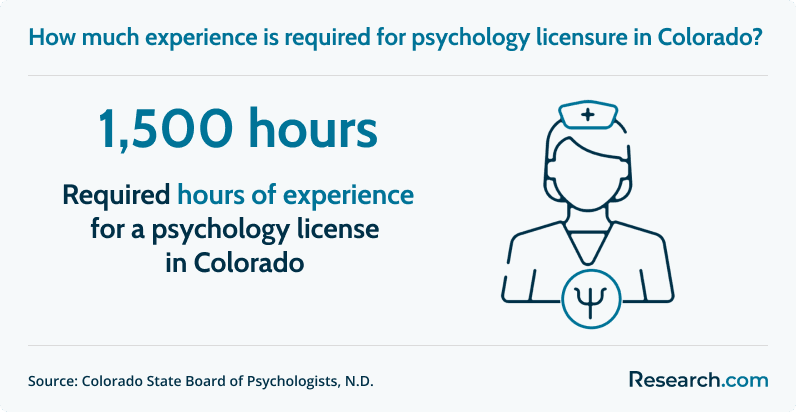
- Candidates for psychology licensure in Colorado must complete at least 1,500 hours of postdoctoral experience in psychology.
- The required exams are the Examination for Professional Practice in Psychology and the Colorado Mental Health Jurisprudence Examination.
- The psychology licensing exams in Colorado generally costs $600, and the EPPP requires a passing score of at least 500 out of 800.
- Psychologists in Colorado can earn an estimated annual salary of $98,773, but salary outcomes are not guaranteed and depend on role, employer, specialization, and experience.
What degrees qualify for psychology licensure in Colorado?
To qualify for licensure as a psychologist in Colorado, you must complete a doctoral degree in psychology. The most common qualifying degrees are the Doctor of Philosophy (Ph.D.) in Psychology and the Doctor of Psychology (PsyD). Colorado generally expects the degree to come from a program accredited by the American Psychological Association (APA) or from an equivalent program that meets state standards.
The doctoral program must include at least three academic years of full-time graduate study, a minimum practicum experience of 400 hours, and an APA-accredited internship completed over one full-time year or two half-time years for 1,500 hours. Students comparing schools should confirm these requirements directly with the program and the Colorado licensing board before enrolling.
| Education level | What it can prepare you for | Does it qualify you for Colorado psychologist licensure? |
| Bachelor’s degree in psychology | Entry-level roles in human services, behavioral health support, education-related settings, research assistance, or preparation for graduate school | No |
| Master’s degree in psychology or counseling-related field | Graduate preparation, research roles, or possible eligibility for other mental health licenses depending on the program and license type | No, not by itself |
| Ph.D. or PsyD in psychology | Doctoral-level assessment, diagnosis, intervention, research, teaching, supervision, and independent psychological practice after licensure | Yes, if the program and training meet Colorado requirements |
Do I need a doctoral degree to become a psychologist in Colorado?
Yes. A doctoral degree is required to become a licensed psychologist in Colorado. Undergraduate study can be a strong first step, and programs such as a behavioral psychology bachelor’s degree may help students build foundational knowledge in learning, behavior, research methods, and human development. However, a bachelor’s degree does not authorize independent practice as a psychologist.
A master’s degree also does not qualify you for psychologist licensure on its own in Colorado. It may still be valuable if you plan to apply to doctoral programs, pursue research positions, or choose a different mental health profession. Students interested in workplace behavior, organizational systems, or research-heavy career paths may also compare options such as advanced industrial-organizational psych degrees or specialized programs in I-O psychology.
The table below can help you compare the psychologist route with other mental health career paths before committing to a doctoral program.
| Goal | Path to consider | Why it may fit |
| Independent practice as a licensed psychologist | Doctoral psychology program leading to Colorado psychologist licensure | Required for the psychologist title and doctoral-level scope of practice |
| Therapy and counseling with a master’s-level license | LPC pathway | Often a more direct route for students focused on counseling practice rather than doctoral psychology |
| Family systems and couples therapy | MFT licensure | Designed around relationship, family, and systems-based clinical work |
| Community services, case coordination, and clinical social work | Social work pathway | Strong fit for students interested in client advocacy, public systems, and community-based care |
| Behavior intervention and applied behavior analysis | Behavior analysis certification or related credentialing | Useful for professionals focused on measurable behavior change and data-informed interventions |
How many hours of supervised experience are required for a psychology license in Colorado?
Colorado applicants must complete substantial supervised experience before licensure. The required internship must be APA-accredited and last one full-time year or two half-time years for 1,500 hours. The experience must include at least 75 hours of direct supervision by a licensed psychologist or psychiatrist, and at least 50 hours must involve individual interaction.
Candidates for psychology licensure in Colorado must also complete at least 1,500 hours of postdoctoral experience in psychology. Because practicum, internship, and postdoctoral requirements can affect your timeline, it is important to ask each doctoral program how it helps students secure approved placements and how those placements align with Colorado rules.
Supervised experience checklist
- Confirm that your practicum includes the minimum practicum experience of 400 hours.
- Verify that your internship is APA-accredited and structured as one full-time year or two half-time years for 1,500 hours.
- Track supervision carefully, including the required 75 hours of direct supervision.
- Make sure at least 50 hours of supervision include individual interaction.
- Keep documentation organized before you apply, especially if you train or work outside Colorado.
What exams are required for psychology licensure in Colorado?
Colorado requires candidates to demonstrate both broad professional psychology knowledge and understanding of state-specific mental health law. The two required exams are the Examination for Professional Practice in Psychology and the Colorado Mental Health Jurisprudence Examination.
- Examination for Professional Practice in Psychology (EPPP): This national exam is administered by the Association of State and Provincial Psychology Boards. It assesses knowledge and skills used in professional psychology practice.
- Colorado Mental Health Jurisprudence Examination: This state exam tests your understanding of Colorado laws and rules governing mental health practice, including confidentiality, ethics, professional responsibilities, and emergency-related procedures.
How much do the psychology licensing exams cost in Colorado?
The psychology licensing exams in Colorado cost approximately $600. The EPPP includes 225 multiple-choice questions and requires a passing score of at least 500 out of 800. The Colorado Mental Health Jurisprudence Examination focuses on the state rules that apply to psychology practice in Colorado and is available online for an $18 fee.
| Exam | Purpose | Important details |
| Examination for Professional Practice in Psychology | Measures national professional psychology knowledge | 225 multiple-choice questions; passing score of at least 500 out of 800 |
| Colorado Mental Health Jurisprudence Examination | Tests Colorado-specific mental health law and practice rules | Available online for an $18 fee |
What resources are available to help me prepare for the psychology licensing exams in Colorado?
Exam preparation should begin well before you submit your final licensing application. The best preparation plan combines official exam materials, structured review, timed practice, and focused review of Colorado law.
- Association of State and Provincial Psychology Boards: Use ASPPB materials to understand the EPPP structure, exam blueprint, sample questions, and approved preparation information.
- American Psychological Association: APA resources can help students and early-career professionals understand licensure expectations, professional ethics, and exam preparation options.
- Commercial study guides and online review courses: These can provide organized content review, practice questions, and study schedules for the EPPP.
- Peer study groups: A study group can help with accountability, difficult content areas, and consistent review habits.
- Practice exams: Timed practice can help you identify weak areas, build stamina, and become more comfortable with the exam format.
- Colorado law review: Set aside separate time for the Colorado Mental Health Jurisprudence Examination because it focuses on state rules rather than general clinical knowledge.
What documents are required for a psychology license application in Colorado?
A complete Colorado psychology license application requires documentation that verifies your education, training, licensure history, and eligibility. Missing or incomplete paperwork can delay the review process, so applicants should gather materials early.
- Official transcripts from your doctoral degree program, submitted in sealed envelopes when required.
- License verification from every state where you have held a mental health license, submitted in sealed envelopes when required.
- For out-of-state applicants, documentation of post-doctoral supervised practice or active practice, a Certificate of Professional Qualifications, or other evidence showing that Colorado’s requirements have been met.
- For licensure by endorsement, proof of passing the Colorado Mental Health Jurisprudence Examination.
- A completed online Health Care Professions Profile, which is needed before the application can be considered complete and is usually finalized after initial application information has been entered.
How long does it take to process a psychology license application in Colorado?
The processing time for a psychology license application in Colorado varies, but it generally takes between four and six months. Your timeline may be shorter or longer depending on the quality of your documentation, verification steps, and the board’s workload.
- Application completeness: Missing transcripts, supervision records, exam results, or verification forms can slow the process.
- Verification requirements: The board may need time to confirm education, supervised experience, prior licenses, and other application details.
- Application volume: Review timelines can be affected when the Colorado State Board of Psychologist Examiners is handling a higher number of applications.
Renew your license and complete continuing education
A Colorado psychology license is valid for two years. The license expires on August 31 of every odd-numbered year unless it was awarded within the 120 days before that date. To renew, licensees must pay the Colorado psychology license renewal fee of $208 and submit documentation of professional development.
Colorado psychology license continuing education requirements include creating a learning plan that accounts for 40 hours' worth of professional development activities during the license period. To earn the remaining five hours, psychologists can complete relevant academic or training activities such as presenting at a symposium, teaching a psychology course, or taking graduate-level on-site or online psychology courses.
Can I use my psychology license from another state to practice in Colorado?
Colorado does not provide automatic license reciprocity for psychologists. If you are already licensed in another state and want to practice in Colorado, you may apply for licensure by endorsement. This process requires you to show that your education, experience, and examination history satisfy Colorado’s standards.
Applicants seeking licensure by endorsement must also pass the Colorado Mental Health Jurisprudence Examination, even if they qualify for other exemptions. If you are relocating, start the endorsement process early and keep copies of transcripts, supervised experience documentation, prior license verifications, and professional qualifications.
What is the job market like for psychologists in Colorado?
The job market for psychologists in Colorado is generally favorable because the state has ongoing demand for mental health services across clinical, school, healthcare, community, and private-practice settings. Adults in Colorado experience mental health issues at rates similar to the national average, but they are more likely to seek treatment, which can increase demand for qualified providers.
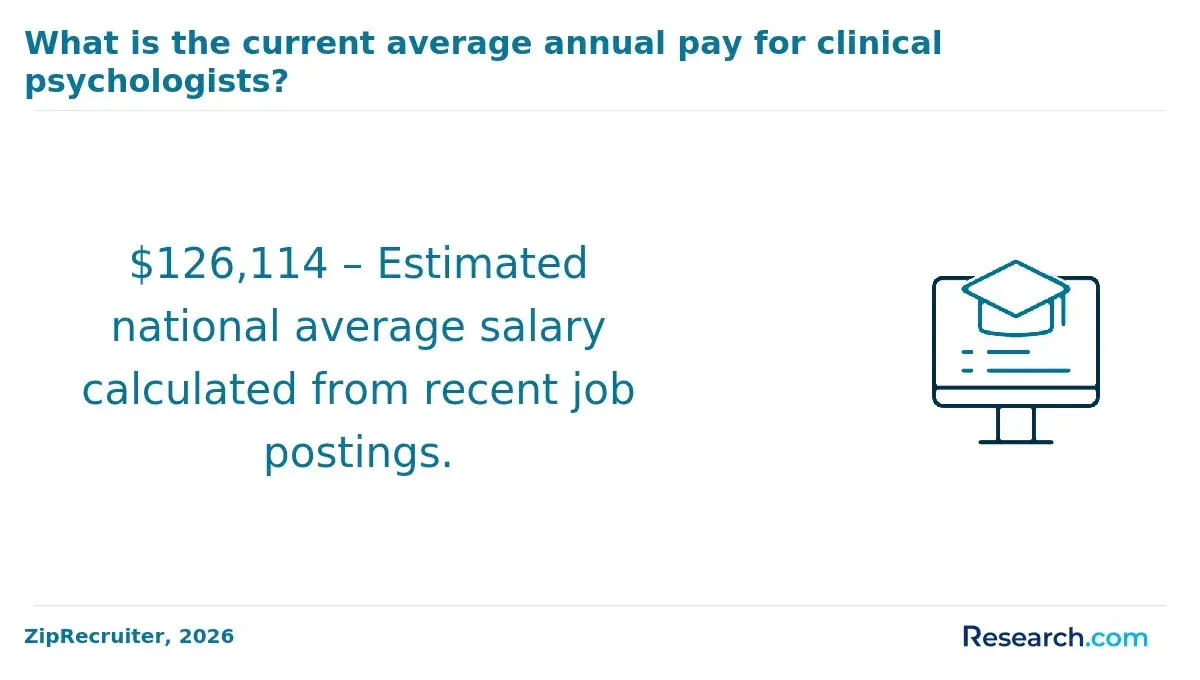
Colorado has some of the highest median wages for psychologists in the nation, with an average of $98,773 annually. There is a nearly 36% growth rate in job openings for clinical psychologists in Colorado through 2030, which is significantly higher than the national average. These figures are useful for career planning, but they should not be treated as guaranteed outcomes.
Career Opportunities and Growth in Psychology in Colorado
Psychologists in Colorado work in a range of settings, including private practices, hospitals, clinics, schools, rehabilitation centers, universities, government agencies, and corporate wellness programs. Mental health awareness has increased nationwide, and Colorado’s need is visible in the data: nearly 25% of adults reported experiencing anxiety or depression symptoms. According to the U.S. Bureau of Labor Statistics, demand for psychologists is expected to grow by 6% from 2024 to 2034, faster than the average for all occupations.
Colorado’s opportunities vary by region. Denver and other urban areas may offer more hospitals, clinics, universities, and group practices, while rural communities may have stronger provider shortages and broader service needs. Telehealth has expanded access in many settings, but psychologists still need to comply with licensure rules, privacy requirements, documentation standards, and employer policies.
| Work setting | Common responsibilities | Who may find it a good fit |
| Private practice | Therapy, assessment, intake, treatment planning, documentation, referral coordination, and practice management | Psychologists who want clinical independence and are prepared for business responsibilities |
| Healthcare systems | Behavioral health treatment, integrated care, crisis support, rehabilitation, substance abuse services, and PTSD-related care | Clinicians who want interdisciplinary work with physicians, nurses, social workers, and other providers |
| Academic and research institutions | Teaching, supervision, research, program evaluation, and student mentoring | Professionals interested in scholarship, higher education, and training future psychologists |
| Schools and community agencies | Assessment, intervention planning, consultation, family support, and prevention programming | Psychologists focused on youth, families, public service, and community mental health |
| Corporate wellness and organizational settings | Employee mental health programming, organizational behavior support, assessment, and consultation | Psychologists interested in workplace systems, performance, wellness, and applied organizational psychology |
For students who are not ready for a doctorate, online degree programs such as a 2-year psychology degree online can provide an early academic starting point, but further education is required for psychologist licensure.
What are the highest paying career paths for psychologists in Colorado?
Psychologists may improve earning potential by developing specialized expertise, taking on leadership responsibilities, building a private practice, or working in settings that require advanced assessment or consultation skills. Specializations such as neuropsychology, forensic psychology, and industrial-organizational psychology are often associated with strong compensation opportunities, although income depends heavily on employer, experience, market demand, and scope of work. For a broader comparison of roles, review Research.com’s guide to the highest paying psychology jobs.
What are the advantages of pursuing board certification in behavior analysis for psychologists in Colorado?
Board certification in behavior analysis can help psychologists add structured, data-based intervention methods to their clinical toolkit. This may be especially useful for professionals working with behavioral treatment plans, educational teams, autism-related services, organizational behavior, or measurable behavior-change goals.
Certification is not a substitute for Colorado psychology licensure, but it can complement a psychologist’s practice when the professional’s education, supervision, and scope of practice align. If this specialty interests you, Research.com explains how to become a BCBA in Colorado.
How can psychologists in Colorado contribute to community mental health initiatives?
Licensed psychologists can help address Colorado’s mental health access gaps by working beyond traditional one-on-one treatment. Community engagement may include prevention, education, consultation, crisis response, and partnerships with organizations serving underserved populations.
- Work with schools: Psychologists can support students, families, teachers, and administrators through workshops, consultation, screening support, and referral planning.
- Partner with clinics and nonprofits: Community health centers and nonprofit organizations may need assessment, consultation, supervision, or part-time clinical support.
- Lead public education efforts: Talks, Q&A sessions, webinars, and resource guides can reduce stigma and help residents understand when to seek care.
- Support rural and remote communities: Telehealth and online resources can help reach residents who face transportation, provider availability, or geographic barriers.
- Collaborate across professions: Psychologists can work with counselors, social workers, physicians, educators, and peer-support teams to coordinate care.
What are the steps to become a licensed professional counselor in Colorado?
The Licensed Professional Counselor pathway is separate from the psychologist pathway. In Colorado, LPC candidates generally complete a relevant master’s degree, supervised clinical experience, and required examinations before licensure. This path may appeal to students who primarily want to provide counseling and therapy without completing a doctoral program in psychology.
If you are comparing mental health careers, review Research.com’s guide on how to become an LPC in Colorado.
How can psychologists effectively collaborate with social workers in Colorado?
Psychologists and social workers often serve the same clients from different professional angles. Psychologists may focus on diagnosis, psychological assessment, treatment planning, and evidence-based intervention, while social workers may bring deep expertise in community resources, systems navigation, case management, advocacy, and family support.
Effective collaboration includes shared treatment goals, clear referral processes, coordinated documentation, culturally responsive care, and respect for each professional’s scope of practice. Students interested in this interdisciplinary work can explore Research.com’s guide, What degree do you need to be a social worker in Colorado?
How can mentorship and networking boost your psychology career in Colorado?
Mentorship can help aspiring psychologists make better decisions about doctoral programs, internships, postdoctoral placements, specialization, licensure timing, and early-career job options. A strong mentor can also explain local practice realities that are not always obvious from school websites, including referral networks, supervision expectations, telehealth norms, and underserved community needs.
Networking is also practical. Professional associations, university events, clinical training sites, research groups, and peer consultation groups can lead to referrals, supervision opportunities, research partnerships, and job leads. Students considering school-based work can also compare this path with Research.com’s guide on how to become a school psychologist in Colorado.
How can psychologists address substance abuse challenges in Colorado?
Psychologists can support substance abuse prevention and treatment through assessment, evidence-based therapy, relapse-prevention planning, trauma-informed care, family education, and coordination with medical and community providers. Because substance use concerns often intersect with depression, anxiety, trauma, housing instability, legal issues, and family stress, collaborative care is especially important.
Psychologists who want deeper specialization can use continuing education, supervised training, and interdisciplinary partnerships to build competence. Students interested in a more direct addiction-services credential can review how to become a substance abuse counselor in Colorado.
What challenges might I face when pursuing psychology licensure in Colorado?
The Colorado psychology licensure path is manageable when planned carefully, but several problems can delay or complicate the process. The most common issues involve choosing the wrong program, misunderstanding supervised experience requirements, waiting too long to prepare for exams, or submitting incomplete documentation.
| Common mistake | Why it causes problems | Better approach |
| Choosing a doctoral program without checking accreditation and internship alignment | The program may not meet Colorado’s licensure expectations | Confirm APA accreditation or equivalency and ask how students complete practicum and internship requirements |
| Assuming a master’s degree is enough to become a psychologist | Colorado requires a doctoral degree for psychologist licensure | Compare psychologist licensure with LPC, MFT, social work, and other paths before enrolling |
| Tracking supervision informally | Missing supervision records can delay application review | Document hours, supervisors, settings, and required forms throughout training |
| Focusing only on tuition | Total cost also includes fees, books, exam costs, internship expenses, relocation, and lost income during training | Compare total cost of attendance, funding, assistantships, transfer policies, and time to completion |
| Relying only on rankings | A highly ranked school may not fit your licensure goals, budget, location, or specialization | Use rankings as one factor, then verify accreditation, outcomes, faculty fit, clinical placements, and support services |
| Assuming online coursework automatically meets licensure rules | Licensure depends on program structure, clinical training, supervision, and state requirements | Ask the program and licensing board whether the online or hybrid format satisfies Colorado requirements |
If you decide the doctoral route is too long for your immediate goals, a counseling pathway may be worth comparing. Research.com covers the shortest path to become a counselor in Colorado for readers evaluating faster mental health career options.
What are the Colorado LPC license requirements?
Colorado LPC license requirements are separate from psychology licensure requirements. LPC candidates typically need a master’s degree in counseling or a closely related field from an accredited institution, supervised clinical experience, and required examinations that assess clinical knowledge and ethical practice.
This route may be a better fit if your main objective is counseling practice rather than doctoral-level psychological assessment, research, or the psychologist title. For a detailed breakdown, see Research.com’s guide to Colorado LPC license requirements.
How can I pursue a career in criminal psychology in Colorado?
Criminal psychology connects psychological science with legal, investigative, correctional, and public safety settings. In Colorado, professionals interested in this area may pursue training in assessment, risk evaluation, criminal behavior, trauma, interviewing, consultation, and collaboration with justice-system agencies.
Some roles may require psychologist licensure, while others may be available through research, counseling, forensic mental health, or criminal justice pathways. For a focused overview, read Research.com’s guide on how to become a criminal psychologist in Colorado.
How to Choose the Right Psychology School in Colorado
Choosing a psychology school should start with licensure fit, not branding. A program that looks attractive on the surface may not be the best option if it lacks the right accreditation, does not support required clinical placements, offers limited faculty expertise in your intended specialty, or has poor transparency around costs and outcomes.
Students comparing programs should review APA accreditation or equivalency, practicum structure, internship match support, faculty research areas, specialization options, clinical training sites, graduate assistantships, financial aid, student support, and alumni outcomes. If you are comparing in-state options, Research.com’s list of the best colleges for psychology in Colorado can help you begin your research.
Questions to ask before enrolling
- Does the doctoral program meet Colorado psychology licensure education requirements?
- Is the program APA-accredited or clearly equivalent under Colorado standards?
- How does the school help students obtain practicum and internship placements?
- What percentage of students complete the program, secure internships, and move into licensure-eligible roles?
- What is the full cost of attendance, including fees, clinical training expenses, and exam costs?
- Are assistantships, scholarships, or tuition support available?
- Does the program support your intended specialty, such as clinical, forensic, neuropsychology, health psychology, or industrial-organizational psychology?
- Can online or hybrid coursework meet the same licensure expectations as campus-based study?
What other licensing options are available for mental health professionals in Colorado?
Psychologist licensure is not the only way to work in Colorado’s mental health field. Depending on your interests, you may consider professional counseling, marriage and family therapy, clinical social work, school psychology, behavior analysis, or substance abuse counseling.
For example, an MFT license in Colorado prepares professionals to provide counseling services to individuals, couples, and families through a relational and systems-focused lens. MFT candidates must meet specific education, supervised experience, and examination requirements, including earning a master’s degree in marriage and family therapy or a related field, completing required supervised clinical experience, and passing the Association of Marital and Family Therapy Regulatory Boards exam.
| License or credential path | Best fit for students who want to | Key decision point |
| Licensed psychologist | Practice at the doctoral level, conduct assessment, diagnose, treat, supervise, teach, or conduct research | Requires doctoral-level training and a longer timeline |
| Licensed Professional Counselor | Provide counseling and therapy through a master’s-level path | May be more direct than doctoral psychology for counseling-focused students |
| Marriage and Family Therapist | Work with couples, families, relationships, and systems-based concerns | Training is specialized around family and relational dynamics |
| Social worker | Combine clinical care, advocacy, case coordination, and community systems | Strong option for public service and community-based practice |
| Substance abuse counselor | Focus on addiction prevention, treatment, and recovery support | May align well with behavioral health and community treatment settings |
What are the advantages of specializing in forensic psychology in Colorado?
Forensic psychology may appeal to students who want to apply psychological expertise in courts, correctional settings, law enforcement consultation, victim services, competency-related work, expert evaluation, or legal decision-making contexts. This specialty can expand professional options, but it also requires strong ethical judgment, careful documentation, and a clear understanding of the limits of psychological testimony and evaluation.
Students who want to build focused expertise may compare doctoral training, forensic practica, research opportunities, continuing education, and graduate options such as an online master's in forensic psychology.
What are the online education options for aspiring psychologists in Colorado?
Online education can make psychology study more accessible, especially for working adults, rural students, caregivers, and students who cannot relocate easily. However, online learning does not remove Colorado’s licensure requirements. Aspiring psychologists still need a qualifying doctoral program, appropriate practicum and internship training, supervised experience, and required exams.
- Online undergraduate psychology programs: These programs introduce core topics such as development, cognition, research methods, abnormal psychology, and social behavior. They can prepare students for entry-level support roles or graduate study.
- Online master’s programs: A master’s degree can support research, applied psychology, counseling-related preparation, or doctoral admissions, but it does not qualify someone for Colorado psychologist licensure by itself.
- Online or hybrid doctoral programs: PsyD and Ph.D. programs may include online coursework, but students must verify accreditation, residency requirements, practicum expectations, internship eligibility, and whether the program satisfies Colorado licensure rules.
- Online continuing education: Licensed Colorado psychologists can use approved online professional development to support renewal requirements, ethics training, emerging practice knowledge, and specialty development.
Students considering doctoral-level distance learning should carefully compare online PsyD programs accredited by reputable organizations and confirm that the program’s clinical training structure aligns with Colorado licensing expectations.
Current trends affecting psychology careers in Colorado
Several forces are shaping psychology practice in Colorado. Telehealth remains important for access, especially in rural and underserved communities, but psychologists must follow licensing, privacy, documentation, and emergency-response rules. Employers are also placing more emphasis on integrated care, where psychologists collaborate with primary care providers, social workers, counselors, psychiatrists, educators, and community organizations.
Technology is changing workflow as well. Psychologists may use digital assessment tools, electronic health records, teletherapy platforms, outcome tracking, and AI-supported administrative tools. These technologies can improve efficiency, but they do not replace clinical judgment, ethical responsibility, informed consent, or careful supervision.
Finally, students should expect continued scrutiny around cost, program quality, and licensure outcomes. A program’s convenience or reputation is not enough; the best choice is the one that meets licensing standards, supports clinical placement, fits your budget, and moves you toward the type of work you actually want to do.
Step-by-step plan to become a licensed psychologist in Colorado
- Start with undergraduate preparation. Complete psychology, statistics, research methods, biology, writing, and human development coursework that strengthens graduate school readiness.
- Decide whether you truly need psychologist licensure. Compare doctoral psychology with LPC, MFT, social work, school psychology, behavior analysis, and substance abuse counseling paths.
- Choose a qualifying doctoral program. Prioritize APA accreditation or equivalency, practicum access, internship support, faculty fit, cost, and outcomes.
- Complete doctoral coursework and practicum. Make sure your training includes at least three academic years of full-time graduate study and a minimum practicum experience of 400 hours.
- Complete the required internship. The internship must be APA-accredited and last one full-time year or two half-time years for 1,500 hours.
- Complete postdoctoral supervised experience. Candidates for psychology licensure in Colorado must complete at least 1,500 hours of postdoctoral experience in psychology.
- Prepare for and pass required exams. Complete the EPPP and the Colorado Mental Health Jurisprudence Examination.
- Submit a complete application. Include transcripts, license verifications, supervised experience documentation, exam results, endorsement materials if applicable, and the Health Care Professions Profile.
- Plan for renewal. Track professional development activities and renewal deadlines so your license remains active.
Related Articles for Nearby States
- 2027 Wyoming Psychology Licensure Requirements – How to Become a Psychologist in Wyoming
- 2027 Nebraska Psychology Licensure Requirements – How to Become a Psychologist in Nebraska
- 2027 Kansas Psychology Licensure Requirements – How to Become a Psychologist in Kansas
- 2027 New Mexico Psychology Licensure Requirements – How to Become a Psychologist in New Mexico
- 2027 Utah Psychology Licensure Requirements – How to Become a Psychologist in Utah
- 2027 Oklahoma Psychology Licensure Requirements – How to Become a Psychologist in Oklahoma
- 2027 Arizona Psychology Licensure Requirements – How to Become a Psychologist in Arizona
- 2027 Texas Psychology Licensure Requirements – How to Become a Psychologist in Texas
- 2027 South Dakota Psychology Licensure Requirements – How to Become a Psychologist in South Dakota
- 2027 Nevada Psychology Licensure Requirements – How to Become a Psychologist in Nevada
References:
- Colorado Department of Regulatory Agencies. (n.d.). Colorado Credential Requirements | Mental Health [PDF]. Colorado Department of Regulatory Agencies Division of Professions and Occupations. https://drive.google.com/file/d/0BzKoVwvexVATYVlBV0hRYTd4THc/view?resourcekey=0-8b8Tjf-QPsLui2iptANywQ
- Colorado Department of Regulatory Agencies. (n.d.). Psychologist Candidate (PSYC) Temporary Permit Application Checklist [PDF]. Colorado Department of Regulatory Agencies Division of Professions and Occupations. https://drive.google.com/file/d/0BzKoVwvexVATOXFsZ3BldmdCcWs/view?resourcekey=0-KqBT0ytQ9Iyf62nz9gwmZg
- Colorado Department of Regulatory Agencies. (n.d.). Psychologist (PSY) Examination/Endorsement Application Checklist [PDF]. Colorado Department of Regulatory Agencies Division of Professions and Occupations. https://drive.google.com/file/d/0BzKoVwvexVATOXFsZ3BldmdCcWs/view?resourcekey=0-KqBT0ytQ9Iyf62nz9gwmZg
- Colorado State Board of Psychologists Examiners. (n.d.). Code of Colorado Regulations [PDF]. Colorado State Board of Psychologists Examiners. https://www.sos.state.co.us/CCR/GenerateRulePdf.do?ruleVersionId=9810&fileName=3%20CCR%20721-1
- Kaiser Family Foundation. (n.d.). Mental Health and Substance Use State Fact Sheets. KFF. https://www.kff.org/statedata/mental-health-and-substance-use-state-fact-sheets/colorado
- ZipRecruiter. (2026). Salary: Clinical Psychologist (Feb, 2026). https://www.ziprecruiter.com/Salaries/Clinical-Psychologist-Salary
- U.S. Bureau of Labor Statistics. (2025). Psychologists: Occupational Outlook Handbook. https://www.bls.gov/ooh/life-physical-and-social-science/psychologists.htm
- U.S. Bureau of Labor Statistics. (2025). Psychologists: Occupational Outlook Handbook. https://www.bls.gov/ooh/life-physical-and-social-science/psychologists.htm
Key Insights
- Colorado psychologist licensure requires doctoral-level preparation; a bachelor’s or master’s degree alone is not enough to practice independently as a psychologist.
- The core licensure sequence includes a qualifying doctoral program, at least three academic years of full-time graduate study, 400 hours of practicum, a 1,500-hour APA-accredited internship, at least 1,500 hours of postdoctoral experience, and required exams.
- The EPPP and Colorado Mental Health Jurisprudence Examination are both required; the EPPP has 225 multiple-choice questions and requires a passing score of at least 500 out of 800.
- Application review generally takes between four and six months, so complete documentation and early planning are essential.
- Colorado’s mental health needs create meaningful opportunities, but salary and job outcomes vary. Use the estimated annual salary of $98,773 as a planning reference, not a guarantee.
- If you want to provide therapy but do not need the psychologist title, compare LPC, MFT, social work, school psychology, behavior analysis, and substance abuse counseling before committing to a doctorate.
- The best psychology program is not simply the most recognizable one. Choose based on accreditation, licensure alignment, supervised training, internship support, faculty fit, cost, and career outcomes.
Other Things You Should Know About Colorado Psychology Licensure Requirements
In 2027, to become a licensed psychologist in Colorado, candidates must complete 2 years of supervised professional experience. This includes a year during a pre-doctoral internship and an additional year post-doctoral. Both must be documented to meet the state's licensure requirements.
To obtain psychology licensure in Colorado in 2027, candidates must pass the Examination for Professional Practice in Psychology (EPPP) and the Colorado Jurisprudence Exam. These exams are crucial steps in ensuring understanding of professional practice and state-specific laws governing psychology.
Colorado psychologist licenses are renewed every two years through the Colorado Department of Regulatory Agencies, Division of Professions and Occupations. Licensees must complete 40 continuing education hours per renewal cycle, including at least 3 hours in ethics and 2 hours in behavioral health equity.