2027 Fastest Way To Become a Counselor in Colorado

Co-Founder and Chief Data Scientist
Becoming a licensed counselor in Colorado is not a single-step career change. It usually requires the right graduate degree, supervised clinical experience, state applications, and licensing exams. The process can feel especially confusing if you are trying to move quickly, compare online programs, or decide whether a fast-track counseling pathway is worth the cost and workload.
This guide explains the fastest practical route to counseling licensure in Colorado for 2027 without skipping required steps. You will learn which credentials matter, what can and cannot be accelerated, how bachelor’s-level roles differ from licensed counseling, how online and accelerated programs compare, what employers look for, and how to avoid delays that can slow down your path to practice. Colorado currently has 21,070 people employed as counselors, according to the U.S. Bureau of Labor Statistics, and demand for behavioral health services continues to make counseling a serious career option for students and career changers.
Quick answer: Is Colorado a good state for aspiring counselors?
- Colorado offers a strong employment outlook for counselors, with a projected growth rate of 15% through 2030.
- The average counselor salary in Colorado is approximately $55,000 annually, though pay varies by specialty, setting, license level, and experience.
- Students who plan carefully can shorten avoidable delays by choosing a qualifying program, organizing documentation early, and securing supervised experience as soon as they are eligible.
- What is the fastest realistic path to licensed counseling in Colorado?
- Which counseling-related jobs are available in Colorado with a bachelor’s degree?
- Are accelerated counseling programs available in Colorado?
- Can online counseling programs help students finish sooner?
- What should fast-track counseling students prepare for?
- Do Colorado employers respect fast-track counseling graduates?
- Do online and accelerated counseling programs reduce costs?
- How do Colorado counselors maintain licensure and keep growing professionally?
- What are the Colorado LPC licensure requirements?
- How strong is counselor demand in Colorado?
- What do counselors earn in Colorado?
- Is an accelerated route worth the pressure?
- How can certifications improve a counseling career in Colorado?
- How are counseling and social work credentials different in Colorado?Certification options for counselorsFast-track counseling value
What is the fastest way to become a licensed counselor in Colorado?
The fastest way to become a licensed counselor in Colorado is to choose a qualifying graduate counseling program from the start, complete required clinical training without gaps, submit licensing paperwork early, and prepare for exams before you reach the final application stage. The process cannot be shortened by bypassing state requirements, but it can be slowed down by choosing the wrong program, missing documentation, delaying exam preparation, or waiting too long to secure supervised hours.
For most students pursuing Licensed Professional Counselor status, the core pathway is graduate education, supervised post-degree practice, examination, and state approval. Students who want speed should focus less on “shortcuts” and more on removing bottlenecks.
- Choose a qualifying counseling degree before enrolling: A master’s or doctoral program in counseling should meet Colorado’s educational expectations. CACREP accreditation or an equivalent curriculum can reduce uncertainty when your education is reviewed.
- Confirm equivalency early if the program is not CACREP-accredited: If your degree does not carry CACREP accreditation, start the educational equivalency review through the Center for Credentialing & Education (CCE) as soon as possible so you are not waiting on curriculum verification later.
- Keep transcripts and application documents organized: Save syllabi, course descriptions, supervised experience records, background check materials, and the healthcare professional profile information in one place. Small paperwork errors can create long delays.
- Plan supervised experience before graduation: Colorado requires 2,000 hours of supervised post-degree experience. Students who already know where they will work and who will supervise them can begin progressing sooner after degree completion.
- Study for required exams before the deadline pressure builds: Use exam preparation resources from organizations such as the Colorado Counseling Association and the National Board for Certified Counselors (NBCC) so you have a better chance of passing the first time.
- Prepare for the Colorado jurisprudence exam strategically: Because the state jurisprudence exam is open-book, organize statutes, rules, and ethical references so you can locate information quickly during the test.
- Build relationships with licensed professionals: Supervisors, mentors, internship coordinators, and professional association contacts can help you find supervised roles, understand employer expectations, and avoid common licensing mistakes.
| Step | What to do | How to avoid delays |
| Education | Complete a qualifying graduate counseling program. | Verify CACREP accreditation or equivalency before enrolling. |
| Clinical training | Complete practicum, internship, and post-degree supervised experience. | Ask programs how they help students secure placements and supervisors. |
| Exams | Complete required national and Colorado-specific testing. | Begin studying before your application deadline is close. |
| Application | Submit transcripts, forms, background checks, and required profiles. | Track every document and keep copies of all submissions. |
| Career launch | Move into associate, candidate, or licensed roles depending on status. | Target employers that provide approved supervision and clear documentation. |
If you are still comparing roles, settings, and compensation, Research.com’s guide to counseling careers salary can help you understand how different counseling paths compare before you commit to a program.
What counseling careers can you pursue in Colorado with only a bachelor’s degree?
A bachelor’s degree alone does not qualify someone for independent licensed counseling practice in Colorado. However, it can open the door to supervised behavioral health, human services, case management, and addiction-support roles. These positions are useful for students who want direct experience before committing to graduate school or for career changers who want to test whether counseling work fits their strengths.
Common bachelor’s-level counseling-related roles in Colorado include:
- Mental health technician: Supports clients or patients in residential, hospital, crisis, or treatment settings. The work may include monitoring safety, helping with daily routines, documenting observations, and supporting care plans under licensed supervision.
- Behavioral health technician or specialist: Works in schools, community agencies, clinics, or treatment programs to assist with behavior plans, skill-building activities, and client support services.
- Substance abuse counselor with added certification: With credentials such as Certified Addiction Technician (CAT), bachelor’s-level workers may support people in recovery in community programs, rehabilitation settings, or related treatment environments.
- Case manager or direct care professional: Helps clients connect with housing, healthcare, benefits, transportation, crisis resources, and other supports while coordinating with clinicians and community agencies.
| Path with a bachelor’s degree | Typical focus | Best fit for | Limitations |
| Mental health technician | Client monitoring and daily support | Students seeking hands-on behavioral health experience | Usually not independent therapy work |
| Behavioral health specialist | Behavior support and intervention assistance | People interested in schools, youth services, or community care | May require employer-specific training |
| Substance abuse support role | Recovery support and addiction services | Students considering addiction counseling | Additional certification may be required |
| Case manager | Resource coordination and client advocacy | People with strong organization and communication skills | Clinical authority is limited without graduate licensure |
These roles can make your graduate school application stronger and help you decide whether you want to pursue licensed clinical counseling. If you are comparing counseling with other therapy-related routes, see Research.com’s guide on how to start as therapist.
Are there accelerated counseling degree programs in Colorado?
Yes. Colorado students can find accelerated or structured counseling pathways, but “accelerated” does not mean the state’s clinical or licensure requirements disappear. A faster program may shorten the academic calendar, combine undergraduate and graduate planning, or offer year-round coursework, but students still need the required education, clinical training, supervised experience, and exams.
- Colorado Christian University: Colorado Christian University offers a Master of Arts in Clinical Mental Health Counseling that may be completed at an accelerated pace depending on course load. The program is CACREP-accredited and includes emphasis options. Tuition ranges from approximately $12,348 to $19,158 per year for Colorado residents.
- Colorado State University (CSU): Colorado State University offers an Accelerated Addiction Counseling Master’s Program designed as a five-year pathway that blends undergraduate and graduate study. Students complete the first two years at a community college and then finish online with an internship component. The program prepares graduates for Licensed Addiction Counselor preparation, including service in rural communities.
Colorado’s licensure pathway emphasizes a 60-credit, CACREP-accredited master’s degree or an equivalent qualifying education. Because accreditation affects licensure review, students should understand the benefits of CACREP accreditation before choosing a fast-track option.
| Program feature | Why it matters for speed | Question to ask before enrolling |
| CACREP accreditation | Can simplify education review for licensure planning | Is the exact program track CACREP-accredited? |
| Year-round courses | May reduce waiting time between semesters | Are required courses available every term? |
| Practicum and internship support | Clinical placement delays can slow graduation | Does the school help secure Colorado-approved sites? |
| Online or hybrid format | Can help working adults maintain progress | Are any campus visits or local placement requirements required? |
| Licensure alignment | Prevents problems after graduation | Does the curriculum meet Colorado LPC or addiction credential expectations? |
Are online counseling programs in Colorado faster than traditional ones?
Online counseling programs can be faster for some Colorado students, but the format itself does not guarantee earlier licensure. Online study may help students move efficiently because it reduces commuting, offers more flexible scheduling, and may include multiple start dates. The real speed advantage depends on course availability, clinical placement support, and whether the student can handle a heavier workload.
Online programs may help students finish sooner when they offer:
- Flexible weekly scheduling: Students can complete lectures, readings, and assignments around work or family obligations instead of commuting to fixed class meetings.
- No daily travel requirement: Eliminating commute time can free up hours for coursework, practicum preparation, internship work, and exam study.
- Several entry points during the year: Multiple start dates can prevent students from waiting for one annual or semester-based cohort.
- Continuous course sequencing: Summer, winter, or year-round terms may help students avoid long breaks between required courses.
| Online counseling program | Campus-based counseling program | Decision point |
| Often better for working adults who need schedule flexibility | Often better for students who want in-person structure | Choose based on discipline, support needs, and placement access |
| Can reduce commuting and relocation costs | May provide easier access to campus clinics or faculty | Ask how clinical placements are arranged |
| May offer more frequent start dates | May follow a traditional semester sequence | Compare actual graduation timelines, not marketing language |
| Requires strong self-management | Provides more built-in face-to-face accountability | Be honest about your learning style |
A career changer coming from teaching may find that online study makes it possible to keep working while completing graduate courses and fieldwork. However, students should not assume every online program is faster. Ask for a written degree plan showing course sequence, practicum timing, internship expectations, and estimated completion time.
What challenges do fast-track counseling students face?
Accelerated counseling students in Colorado often move through demanding coursework, clinical skill development, and field placement expectations at the same time. The faster pace can be useful, but it also increases the risk of overload. Students should evaluate whether they can sustain the academic, emotional, and logistical demands before choosing a compressed format.
- Intensive academic expectations: Counseling theory, ethics, diagnosis, assessment, multicultural practice, and clinical methods require more than memorization. Condensed terms leave less time to absorb complex material.
- Heavy fieldwork requirements: Colorado pathways include significant supervised experience, including a 100-hour practicum and up to 2,000 hours of post-degree supervised practice. Students must plan for these commitments early.
- Competing responsibilities: Many students continue working or caregiving while enrolled. Accelerated schedules can make missed deadlines, fatigue, and reduced study time more likely.
- Emotional adjustment to clinical work: Counseling students encounter trauma, crisis, addiction, family conflict, and severe distress. Fast programs may offer less time to gradually build tolerance and reflective practice.
- Licensure planning pressure: Exams, applications, supervision documentation, and continuing professional development still apply. A fast degree does not remove regulatory steps.
| Common mistake | Why it slows students down | Better approach |
| Choosing the shortest program without checking licensure fit | Graduates may face extra review or missing coursework | Verify Colorado alignment before applying |
| Ignoring practicum and internship availability | Field placement delays can extend the program | Ask about placement support and site approval timelines |
| Taking too many courses while working full time | Burnout can lead to withdrawal or poor performance | Use a realistic course load based on weekly hours |
| Waiting to study for exams | Retakes or late testing can delay licensure | Build exam preparation into the final year |
| Assuming online means easier | Online programs require strong independence | Review support services, faculty access, and cohort expectations |
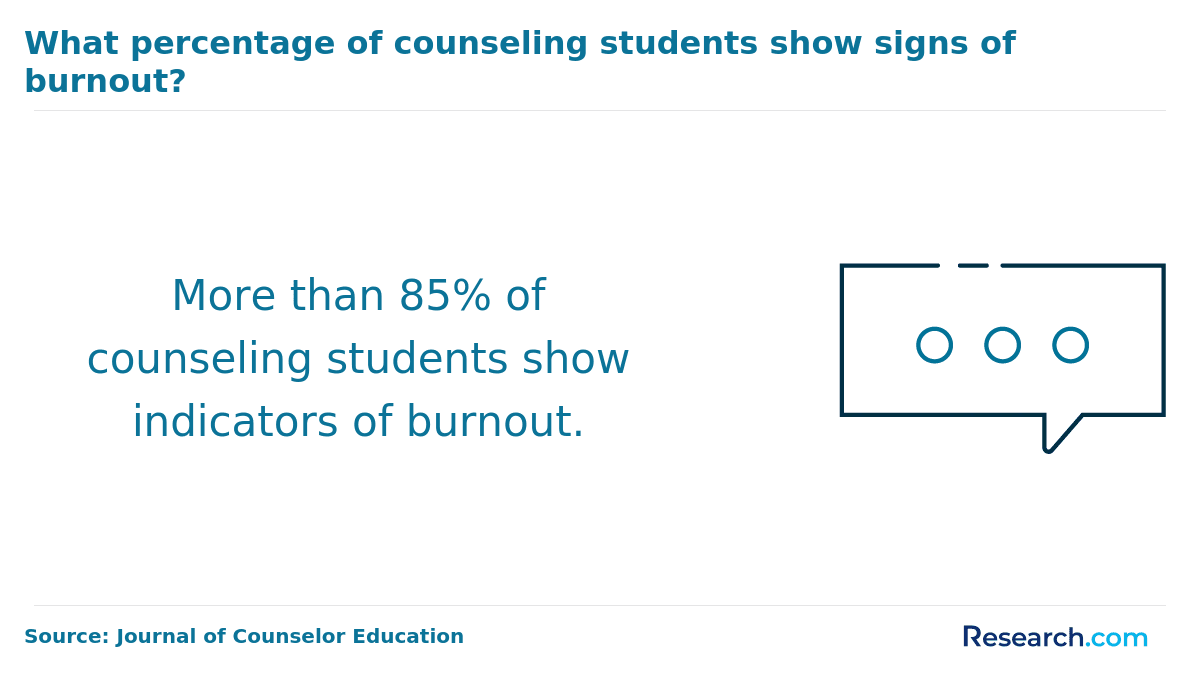
Fast-track students can succeed when they plan carefully, protect time for supervision and self-care, and use faculty and professional mentors early. The image below highlights burnout as a real concern for counseling students, especially in accelerated training environments.
How do employers in Colorado view fast-track counselors?
Colorado employers generally care less about the label “fast-track” and more about whether a candidate meets licensure requirements, has strong supervised clinical experience, communicates well, and can work safely with clients. A graduate from an accelerated program can be competitive if the program is reputable, clinically rigorous, and aligned with Colorado licensing expectations.
Some hiring managers may look more closely at fast-track graduates to confirm they had enough direct client exposure, supervision, ethical training, crisis preparation, and experience with diverse populations. This is especially important in community mental health, rural practice, addiction treatment, school-based counseling, and high-need settings where early-career counselors may face complex cases quickly.
Fast-track candidates can strengthen their applications by documenting practicum and internship responsibilities, supervisor credentials, populations served, assessment experience, group counseling exposure, and crisis-related training. Career changers from education, social services, healthcare, or human services may also bring transferable skills in communication, documentation, teamwork, conflict resolution, and client advocacy.
| What employers want to see | How fast-track graduates can demonstrate it |
| Licensure eligibility | Show that the degree, coursework, exams, and supervised hours meet Colorado requirements. |
| Clinical readiness | Describe practicum, internship, direct client work, and supervision experience clearly. |
| Ethical judgment | Discuss training in confidentiality, mandated reporting, boundaries, and risk assessment. |
| Population experience | Highlight work with youth, adults, families, addiction, trauma, rural clients, or school settings. |
| Professional maturity | Use references from supervisors and faculty who can speak to reliability and growth. |
Are fast-track and online counseling programs in Colorado more affordable?
Fast-track and online counseling programs can reduce some costs, but they are not automatically cheaper. The final price depends on tuition, fees, books, technology charges, travel for campus intensives, clinical placement costs, lost wages, and how long the student remains enrolled. A shorter program may save money if it reduces extra semesters and allows earlier entry into supervised employment.
- Shorter academic timeline: Some students can finish counseling credentials in as little as two years, which may reduce total tuition exposure and help them start earning in the field sooner.
- Ability to keep working: Online and flexible formats may allow students to maintain income while completing coursework.
- Lower transportation and relocation costs: Remote study can help students avoid commuting, parking, moving, or housing expenses, especially in higher-cost Colorado communities.
- Affordable in-state options: Schools such as Adams State University and Colorado Christian University are often considered among the more affordable Colorado options, depending on residency, enrollment status, and aid.
- Financial aid access: Many online counseling programs participate in grants and scholarships, and students typically receive over $10,000 in aid.
| Cost factor | What to compare | Why it matters |
| Tuition | Per-credit cost and total required credits | A low per-credit rate may not be cheapest if the program requires more credits. |
| Fees | Technology, clinical, graduation, exam, and student service fees | Fees can significantly change the true cost of attendance. |
| Fieldwork expenses | Background checks, liability insurance, transportation, and site requirements | Clinical training can add costs beyond tuition. |
| Time to completion | Actual course sequence and placement timeline | A program advertised as accelerated may still take longer if courses are not offered often. |
| Income impact | Whether you can work while enrolled | Lost wages can be a larger cost than tuition differences. |
A student transitioning from high school teaching, for example, may find an online fast-track format financially useful because it allows continued employment, avoids relocation, and may preserve eligibility for state grants. Still, students should request a full cost breakdown before enrolling rather than relying only on tuition estimates.
How can I maintain my counseling license and advance my professional development in Colorado?
Colorado counselors must keep their licenses in good standing by following renewal rules, completing required continuing education, and staying current on ethical and legal responsibilities. License maintenance is not just an administrative task. It protects clients, supports clinical competence, and helps counselors remain competitive for promotions, supervision roles, private practice, and specialized positions.
Professional development can include workshops, advanced clinical training, ethics updates, supervision training, trauma-informed care, addiction counseling education, school-based mental health training, and leadership development. Counselors interested in education settings can also review Research.com’s guide on how to become a school counselor in Colorado to understand specialized preparation for school-based roles.
What are the LPC license requirements in Colorado?
Colorado LPC candidates must meet defined education, supervised experience, examination, and state application requirements. The commonly cited academic requirement is a CACREP-accredited 60-credit master’s degree or an equivalent counseling education. Candidates must also complete supervised clinical experience, pass a recognized clinical exam, and complete Colorado’s jurisprudence assessment.
Because licensing rules can be detailed and documentation-sensitive, students should review requirements before choosing a program and again before applying for licensure. For a focused breakdown, see Research.com’s guide to LPC license requirements in Colorado.
Is there a demand for counselors in Colorado?
Yes. Colorado continues to show strong demand for counseling and behavioral health professionals. Demand is connected to broader awareness of mental health needs, substance use treatment needs, family and community support services, and workforce shortages in rural and underserved areas.
Statewide trends align with national projections. Mental health, behavioral disorder, and substance abuse counseling roles are expected to grow significantly, matching the nationwide growth rate of 19% between 2023 and 2033.
Schools are another important employment setting. Employment for school and guidance counselors in Colorado is projected to grow by 18%, moving from 7,860 jobs in 2022 to around 9,300 by 2032.
Rural and underserved communities may offer meaningful opportunities for early-career counselors who are willing to work in high-need environments. Specialties such as addiction counseling, school counseling, marriage and family therapy, and trauma-informed care may also be valuable depending on employer needs.
If you are weighing graduate school against other options, Research.com’s guide on is getting a masters in counseling easy can help you understand what the degree requires before committing to the path.
How much do counselors get paid in Colorado?
Counselor pay in Colorado depends on license level, specialty, employer type, location, experience, and whether the counselor works in private practice, schools, government, community mental health, hospitals, or addiction treatment. The average counselor salary in Colorado is reported at about $62,510 annually, with entry-level roles near $45,956 and experienced or specialized counselors earning up to $94,604. These salaries are approximately 7% below the national average, but they can still compare favorably with some related human services roles.
Reported salary differences include:
- Licensed Professional Counselors: LPCs typically earn an average of $74,212 per year, with reported pay ranging from $67,000 to $115,000 depending on role, specialization, employer, and responsibility level.
- School counselors: School counselors generally report median salaries around $61,000 annually.
- Mental health and substance abuse counselors: These counselors may earn between $73,000 and $115,000, especially in government roles or private practice settings.
- Entry-level counselors and candidates: New professionals usually begin at the lower end of the pay range but may increase earnings through licensure, experience, supervision credentials, specialized training, and work in high-demand communities.
| Factor | How it can affect pay |
| Licensure status | Fully licensed counselors often qualify for more independent and higher-responsibility roles. |
| Specialty | Addiction, trauma, school counseling, and private practice may have different pay structures. |
| Employer type | Government, healthcare, nonprofit, school, and private employers may use different salary scales. |
| Location | Urban, rural, and underserved communities may differ in demand, cost of living, and incentives. |
| Experience | Supervision experience, leadership duties, and advanced credentials can influence compensation. |
Students should treat salary figures as planning estimates, not guarantees. To compare possible jobs after graduation, review Research.com’s guide on what can I do with a counseling degree.
Is taking the fast route to become a counselor in Colorado worth it?
A fast route can be worth it for disciplined students who choose a licensure-aligned program, can manage a demanding schedule, and want to enter supervised practice as soon as possible. It is less likely to be worth it for students who need a slower academic pace, have limited time for practicum and internship, or are unsure whether counseling is the right long-term profession.
One advantage of moving efficiently is that graduates can begin accumulating the required 2,000 hours of supervised post-degree experience sooner. Of those hours, 1,500 must involve direct client contact. This period is essential because it develops real clinical judgment, documentation habits, ethical decision-making, and confidence with clients.
Early entry can also help new counselors build relationships with supervisors under Colorado’s 3-3-4 Rule. Strong supervision can shape professional identity, improve clinical skill, and create job leads. A faster path may also position graduates earlier for high-need areas such as addiction counseling, trauma recovery, rural behavioral health, and school-based mental health.
| Fast-track route may be a good fit if... | A slower route may be better if... |
| You can handle intensive reading, writing, clinical practice, and supervision. | You need more time to balance work, caregiving, or health responsibilities. |
| You already have human services, education, healthcare, or behavioral health experience. | You are still unsure whether you want a counseling career. |
| You have confirmed that the program aligns with Colorado licensure. | The program’s accreditation, clinical placement support, or licensure fit is unclear. |
| You are comfortable with online or compressed learning formats. | You learn better with in-person structure and a traditional pace. |
| You have a plan for practicum, internship, and post-degree supervision. | You have not identified how you will complete fieldwork requirements. |
The best fast route is not the shortest advertised program. It is the shortest route that still provides strong training, licensure alignment, ethical preparation, and enough support to help you complete the process without avoidable setbacks.
How can specialized certifications enhance my counseling career in Colorado?
Specialized certifications can help Colorado counselors build expertise beyond general licensure. They may be useful for counselors who want to work with trauma, families, addiction, crisis response, school populations, or other focused client groups. Certifications can also signal commitment to ongoing training, which may matter for employers, referral networks, and private practice positioning.
Certifications should be chosen strategically. A credential is most valuable when it matches employer demand, client needs, your supervision background, and your long-term practice goals. For example, substance use training can be especially relevant in treatment centers, community agencies, corrections-related programs, and integrated behavioral health settings. Students interested in that specialty can explore Research.com’s guide on how to become a substance abuse counselor in Colorado.
| Certification focus | How it may support career growth | Best for counselors interested in |
| Addiction counseling | Builds skills for substance use assessment, treatment planning, and recovery support | Treatment centers, community programs, and integrated care |
| Trauma-informed care | Strengthens work with clients affected by violence, grief, crisis, or adverse experiences | Community mental health, private practice, crisis services |
| Family or couples counseling | Expands competence in relational and systems-based work | Family agencies, private practice, relationship counseling |
| School-based mental health | Supports work with students, families, educators, and youth systems | K-12 settings and youth-serving agencies |
How do counseling and social work credentials differ in Colorado?
Counseling and social work are related helping professions, but they are not the same credential path. In Colorado, counseling training typically centers on therapeutic assessment, diagnosis, counseling techniques, ethics, and supervised clinical practice. Social work training often includes clinical care as well, but it also places substantial emphasis on systems, advocacy, community resources, policy, case management, and social conditions affecting clients.
Students should choose counseling if they are primarily drawn to therapy, clinical mental health treatment, and counseling interventions. Social work may be a better fit for students who want a broader practice model that can include clinical services, community advocacy, program coordination, and policy-related work. For education requirements in that field, see Research.com’s guide to Colorado social worker educational requirements.
| Comparison point | Counseling | Social work |
| Primary training emphasis | Therapeutic counseling, assessment, clinical techniques, and mental health treatment | Client systems, advocacy, resources, policy, case management, and clinical practice depending on credential |
| Common settings | Private practice, clinics, schools, hospitals, addiction programs, community mental health | Hospitals, agencies, schools, government, nonprofits, community programs, clinical practices |
| Best fit | Students focused on counseling and psychotherapy | Students who want clinical and systems-level career flexibility |
| Decision question | Do you want therapy to be your central professional activity? | Do you want to combine direct service with advocacy and resource coordination? |
What Counselors in Colorado Say About Their Careers
- Taking an accelerated path into counseling helped me enter a field where the need is clear and the work feels meaningful. The process was demanding, but the job stability and opportunity to serve my community made the effort worthwhile. Emily
- Colorado’s mix of rural and urban communities pushed me to grow quickly. Moving through training efficiently helped me start serving different populations sooner, and supervision helped me turn that pressure into stronger clinical judgment. Javier
- The fast-track route connected me with supervisors, professional associations, and advanced training earlier than I expected. Continuous learning has been essential, and it has helped me stay grounded in ethical and compassionate care. Monica
Related Articles for Nearby States
- 2027 Fastest Way To Become a Counselor in Wyoming
- 2027 Fastest Way To Become a Counselor in Nebraska
- 2027 Fastest Way To Become a Counselor in Kansas
- 2027 Fastest Way To Become a Counselor in New Mexico
- 2027 Fastest Way To Become a Counselor in Utah
- 2027 Fastest Way To Become a Counselor in Oklahoma
- 2027 Fastest Way To Become a Counselor in Arizona
- 2027 Fastest Way To Become a Counselor in Texas
- 2027 Fastest Way To Become a Counselor in South Dakota
- 2027 Fastest Way To Become a Counselor in Nevada
Key Insights
- The fastest route to counseling licensure in Colorado is not a shortcut. It is a carefully planned path through a qualifying graduate program, supervised clinical experience, exams, and state application requirements.
- Program choice matters. CACREP accreditation or clear educational equivalency can prevent licensing delays after graduation.
- Bachelor’s degree holders can work in counseling-adjacent roles such as mental health technician, behavioral health specialist, case manager, or substance use support worker, but independent licensed counseling requires graduate-level preparation.
- Online and accelerated programs may save time and money, especially for working adults, but only if they offer reliable course sequencing, clinical placement support, and Colorado licensure alignment.
- Colorado demand is strong, with counselor growth projected at 15% through 2030 and school and guidance counselor employment projected to grow by 18% from 7,860 jobs in 2022 to around 9,300 by 2032.
- Salary outcomes vary widely. Reported Colorado counselor pay includes an average of about $62,510 annually, with entry-level roles near $45,956 and experienced or specialized counselors earning up to $94,604.
- A fast-track route is worth considering if you can manage the workload, verify licensure fit, and secure supervised experience early. It is risky if you choose based only on speed or tuition.
- Before enrolling, ask every school about accreditation, Colorado licensure alignment, practicum placement, internship support, total cost, course availability, and exam preparation.
References:
- Berardi, A. (n.d.). Can I Become a Counselor With a Bachelor’s Degree? georgefox.edu.
- BetterHelp. (2025). Careers In Psychology And Counseling With A Bachelor’s. betterhelp.com.
- BLS. (2024). May 2023 State Occupational Employment and Wage Estimates: Colorado. BLS.
- BLS. (2024, January 9). Strong growth projected in mental health-related employment. BLS.
- Bucher, A. (2024). 12+ Colorado Master in Counseling Programs (CACREP Accred.) onlinemftprograms.com.
- CCU Online. (n.d.). Master's Degree in Mental Health Counseling. ccu.edu.
- CSU. (n.d.). Undergraduate Accelerated Program – Department of Psychology. psychology.colostate.edu.
- CSU Online. (n.d.). Online Accelerated Master's in Addictions Counseling. online.colostate.edu.
- Online Counseling Programs. (n.d.). Master's in Counseling Degrees in Colorado [Online & On-Campus]. onlinecounselingprograms.com.
- Regis University. (n.d.). M.A. Counseling: Clinical Mental Health Counseling. regis.edu.
- UCCS. (n.d.). Degree Programs | College of Education. coe.uccs.edu.
Other Things You Should Know About the Fastest Way to Become a Counselor in Colorado
The Colorado Board of Licensed Professional Counselor Examiners, under the Department of Regulatory Agencies, handles LPC licensure. Applicants must meet Colorado’s education, examination, and supervised experience rules before the board can issue a license.
To quickly become a counselor in Colorado, you need a master's degree in counseling from a CACREP-accredited program, which typically requires 60 credit hours. This ensures you meet state educational requirements swiftly and prepares you for the National Counselor Examination.