
2027 How to Become a School Counselor in Colorado

Co-Founder and Chief Data Scientist
If you want to become a school counselor in Colorado, the main decision is not whether the work is meaningful—it is how to meet Colorado’s licensure rules without wasting time, money, or credits. Colorado schools are reporting a 15% statewide shortage, and demand for qualified professionals is tied to student mental health needs, academic planning, college and career readiness, and family support.
This 2026 guide explains the education, fieldwork, licensure, renewal, salary, job outlook, and advancement options for aspiring school counselors in Colorado. It is designed for career changers, counseling students, educators considering a student-support role, and licensed counselors who want to move into K–12 schools.
Quick answer: How do you become a school counselor in Colorado?
- Complete a school counseling master’s program, typically 60–63 credits, with supervised school-based fieldwork.
- Choose a CACREP-accredited or state-approved pathway that prepares you for Colorado’s Special Services Provider License with a School Counselor Endorsement.
- Expect the degree to take about 22 to 36 months, depending on whether you study full time, part time, online, hybrid, or on campus.
- Prepare for 600–700 supervised practicum and internship hours, usually completed near the end of the program.
- Apply through the Colorado Department of Education, submit transcripts and program verification, complete fingerprinting and a background check, and pay the required fee.
- Plan for ongoing professional development, including renewal requirements of six semester hours or 90 clock hours within the renewal cycle.
- What degree do I need to become a school counselor in Colorado?
- What specializations are available for Colorado school counselors?
- How long does a Colorado school counseling degree take?
- What license or certification do Colorado school counselors need?
- Can a Colorado school counseling license transfer to another state?
- How often must Colorado school counselors renew their credentials?
- Are there alternative pathways into Colorado school counseling?
- What skills matter most for Colorado school counselors?
- How much do school counselors earn in Colorado?
- Can additional licensure expand a Colorado school counseling career?
- What is the job outlook for school counselors in Colorado?
- What advancement options are available?
- What challenges do Colorado school counselors face?
- What should you ask before choosing this career path?
What degree do I need to become a school counselor in Colorado?
The standard route to becoming a school counselor in Colorado is a graduate-level school counseling program that combines counseling theory, child and adolescent development, ethics, assessment, career planning, and supervised practice in school settings. A bachelor’s degree alone is not enough for full school counselor licensure in Colorado public schools.
Most candidates complete a Master of Arts or Master of Science in school counseling. These programs are built to prepare graduates for work with students from PreK–12 and to satisfy the education and fieldwork expectations used in the licensure process.
- Graduate degree requirement: Colorado candidates typically complete an MA or MS in school counseling with 60–63 credits of graduate coursework.
- Accreditation expectation: A CACREP-accredited program is the clearest pathway because it aligns with nationally recognized counseling standards and is commonly used to meet licensure preparation requirements.
- Admissions benchmark: Many programs expect an undergraduate GPA of 3.0. Applicants below that level may be asked for additional evidence of readiness, such as GRE scores that meet program thresholds.
- School-based experience: Fieldwork is not optional. Candidates complete supervised practicum and internship hours in school environments so they can apply counseling methods with real students under professional supervision.
- Licensure preparation: The degree, internship verification, background check, and state application form the foundation for Colorado’s school counselor credentialing process.
| Degree or pathway | Best for | What to check before enrolling |
| MA or MS in School Counseling | Students who want the direct route into K–12 school counseling | Program approval, CACREP status, internship placement support, and Colorado licensure alignment |
| School Counseling Endorsement | Graduate counseling degree holders who need school-specific preparation | Required coursework, supervised fieldwork, and whether the program serves candidates without teaching experience |
| Certificate route for licensed clinical counselors | Licensed mental health counselors moving into school settings | Whether prior CACREP coursework applies and whether temporary authorization is available during completion |
| Online or hybrid school counseling program | Working adults or students outside major metro areas | Colorado field placement support, synchronous meeting requirements, and state authorization rules |
If you are comparing counseling careers more broadly, the fastest way to become a licensed counselor or therapist can help you understand how school counseling differs from clinical therapy routes.
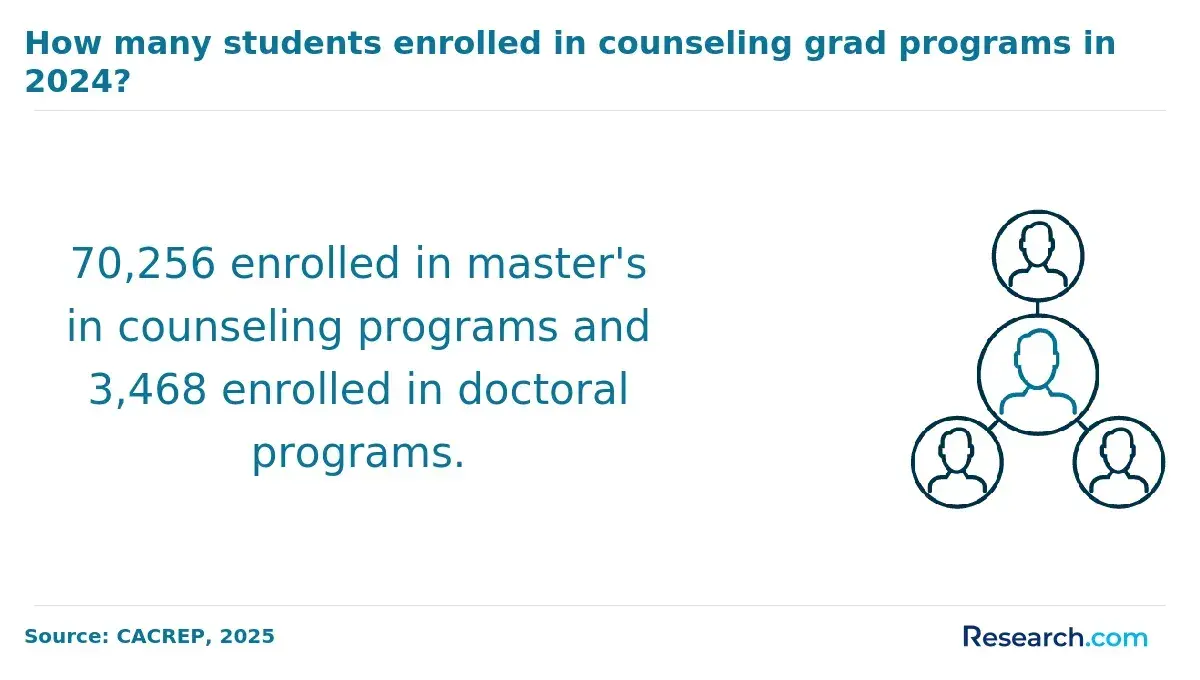
Are there school counseling specializations in Colorado?
Yes. Colorado school counseling programs often allow students to focus their training around grade levels, equity-centered practice, college and career readiness, or pathways for already licensed counselors. These options matter because school counselors do not all perform the same work. An elementary counselor may spend more time on developmental and behavioral support, while a high school counselor may focus heavily on graduation planning, crisis response, course selection, and postsecondary transitions.
- K–12 school counseling: Prepares counselors to support academic, career, and social-emotional development across elementary, middle, and high school settings.
- Comprehensive developmental guidance: Focuses on building schoolwide counseling programs rather than only reacting to individual student concerns.
- Equity-focused and culturally responsive counseling: Trains counselors to recognize barriers affecting students from different cultural, linguistic, socioeconomic, and family backgrounds.
- Career development and postsecondary readiness: Emphasizes career exploration, college planning, workforce readiness, scholarship navigation, and transition support.
- Alternative pathway for licensed clinical counselors: Helps CACREP-prepared clinical counselors add school counseling preparation without completing a second full master’s degree.
| Specialization focus | Typical work setting | When it may be the right fit |
| K–12 counseling | Elementary, middle, and high schools | You want broad eligibility and flexibility across grade levels |
| Equity and culturally responsive practice | Diverse urban, rural, and multilingual school communities | You want to focus on access, inclusion, advocacy, and student belonging |
| Postsecondary and career readiness | High schools, college access programs, and district initiatives | You enjoy helping students connect coursework to college, training, military, or workforce goals |
| Clinical-to-school counseling pathway | K–12 schools after additional school-specific preparation | You already have counseling training and want to shift from clinical practice into education |
Career changers who are still exploring counseling routes may also find value in learning how to become a therapist without a psychology degree, especially if they are deciding between clinical counseling and school-based student support.
How long does it take to complete a school counseling degree in Colorado?
A Colorado school counseling master’s degree usually takes 22 to 36 months. Full-time students commonly finish in two to three years, while part-time students may need more time because they spread coursework and fieldwork across additional terms. Programs generally require 60 to 63 credit hours, and the practicum or internship sequence often determines the final timeline.
Accelerated options, including programs like those at the University of Denver, can shorten completion to under two years. That speed can be helpful, but it is not always the best choice for students who work full time, need a local school placement, or want more time to prepare for counseling practice.
| Timeline factor | Typical Colorado expectation | How it affects your plan |
| Graduate credits | 60 to 63 credit hours | More credits usually mean a heavier course load or a longer program calendar |
| Overall completion time | 22 to 36 months | Full-time students generally move faster than part-time students |
| Supervised fieldwork | 600–700 hours across two to three semesters | You may need daytime availability in a school setting |
| Licensure processing | One to three months | Transcripts, internship records, background checks, and application review can affect your start date |
| Program format | Campus, online, or hybrid | Online study may add flexibility, but fieldwork still happens in approved schools |
What certification is required to work as a school counselor in Colorado?
Colorado public school counselors need the Special Services Provider License with a School Counselor Endorsement. This credential shows that you have completed the required graduate preparation, school-based fieldwork, and background screening to serve students in K–12 settings.
The process is handled through the Colorado Department of Education’s online licensure system. Colorado does not require a state-specific exam for initial school counselor licensure, which makes documentation accuracy especially important.
- Complete the approved education pathway: Finish your school counseling master’s degree, endorsement, or approved alternative route.
- Document your fieldwork: Keep official verification of practicum and internship hours, including the supervised school placement requirement.
- Submit official transcripts: Provide records showing completion of the required graduate program.
- Complete fingerprinting: Submit fingerprints for the criminal background check through the Colorado Bureau of Investigation process.
- Apply through CDE: Use the online system to request the Special Services Provider License with a School Counselor Endorsement.
- Pay the required application fee: Submit the non-refundable fee listed in the state licensure portal.
- Track renewal obligations: Once licensed, keep records of approved professional development so renewal does not become a last-minute problem.
Before applying, compare your program’s licensure checklist with the state application requirements. Small documentation issues—such as missing internship verification or delayed transcripts—can slow approval even when you have completed all coursework.
The following chart from the National Association for College Admission Counseling shows how public secondary school counselors divide their time across major responsibilities.
Can I transfer my Colorado school counseling license between states?
A Colorado school counseling credential does not automatically convert into a license in every other state. Most states evaluate out-of-state counselors through reciprocity, endorsement, or a comparable review process. In practice, that means you apply to the new state, prove your Colorado credential is active, and meet any extra requirements the new state imposes.
If you may move later, choose your Colorado program carefully. A CACREP-aligned degree and complete fieldwork records can make future license review easier, but they do not guarantee approval in another state.
- Current license verification: The destination state may require official proof that your Colorado credential is active and in good standing.
- Graduate coursework review: You may need transcripts showing school counseling coursework at the master’s level.
- Experience documentation: Some states ask for evidence of two to three years of full-time counseling work.
- Additional exams: A state that requires a school counselor assessment may ask you to pass it even if Colorado did not.
- New background check: Fingerprinting and criminal history screening are commonly repeated during interstate licensure.
- State-specific training: Local education law, child abuse reporting, ethics, or induction coursework may be required after relocation.
How often do Colorado school counselors need to renew their credentials?
Colorado school counselors renew their professional credentials every seven years. Renewal is not only an administrative step; it is how counselors show they have continued learning as student needs, legal expectations, intervention models, and school systems evolve.
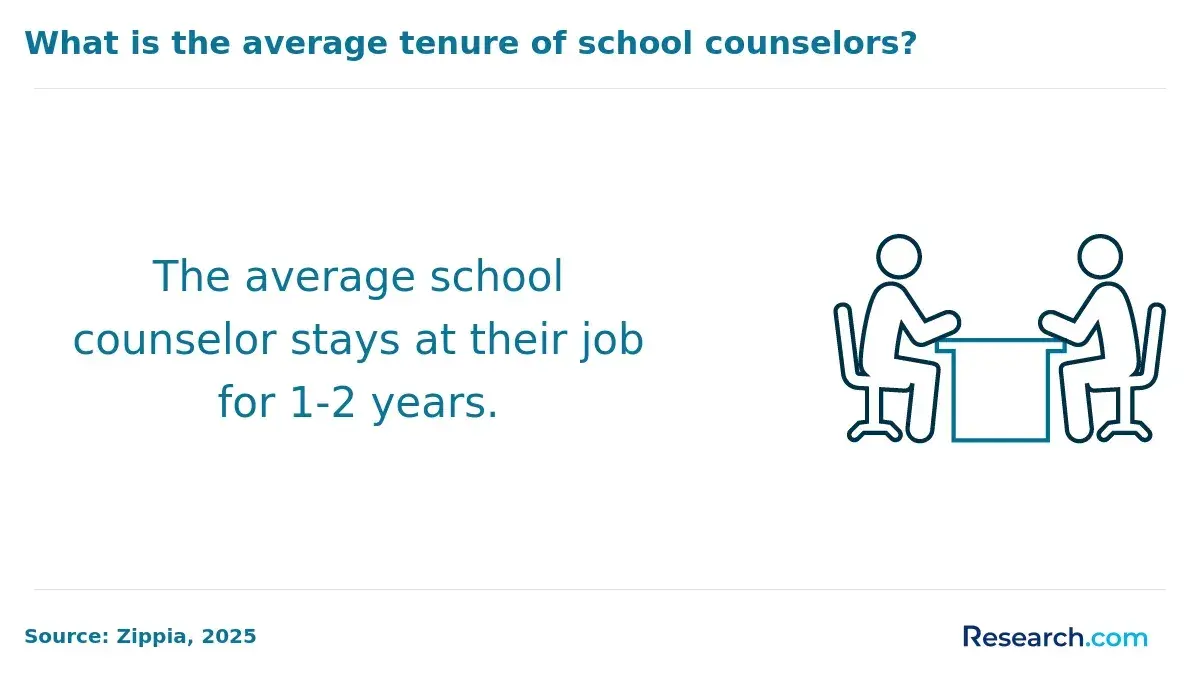
The Colorado Department of Education manages renewal online. Start early, especially if you need updated fingerprinting, employer documentation, or professional development transcripts. The chart at the end of this section provides context on average school counselor tenure in the U.S.
- Renewal cycle: Colorado credentials must be renewed every seven years to stay active.
- Professional development: Complete six semester hours or 90 clock hours of approved learning during the renewal period.
- Online application: Submit the renewal form and required records through the CDE licensure system.
- Renewal fee: Pay the $90 non-refundable fee when you file.
- Background screening: Provide an updated fingerprint-based background check through the Colorado Bureau of Investigation and FBI if required.
- Temporary authorization documentation: If you hold a Temporary Educator Eligibility authorization, submit evidence of employment and progress toward full licensure.
- Early filing window: Begin up to 90 days before expiration to reduce the risk of a credential lapse.
| Renewal task | Why it matters | Common mistake to avoid |
| Track professional development hours | You need documented learning to renew | Waiting until the final year to find eligible training |
| Save certificates and transcripts | CDE may require proof of completed hours | Relying on memory or incomplete employer records |
| Confirm background check rules | Updated screening may be required | Assuming a previous fingerprint check is still valid |
| Apply before expiration | A lapse may affect employment eligibility | Submitting renewal paperwork after the deadline |
What are the alternative pathways to become a school counselor in Colorado?
Colorado offers routes for candidates who did not begin in a traditional school counseling master’s program. These alternatives are most useful for licensed clinical counselors, graduate counseling degree holders, and career changers who can meet school counseling requirements through additional coursework, supervision, or temporary authorization.
Alternative does not mean easier. Most candidates still need graduate-level preparation, supervised school-based experience, background screening, and approval through the state licensure system.
- Special Services Internship Authorization: Allows a district-hired candidate to work while completing required coursework and practicum, provided the candidate can document enrollment, transcripts, and background clearance.
- Licensed clinical counselor pathway: Gives CACREP-trained clinical counselors a route to add school counseling preparation, often through certificate coursework and supervised school experience.
- School Counselor Endorsement Program: Serves candidates who already hold a counseling graduate degree and need school-specific training rather than an entirely new master’s program.
- Alternative licensure programs: May support bachelor’s degree holders or career changers through structured graduate certificate coursework, supervised practice, and, in some cases, exams such as the Praxis.
| Your background | Likely pathway to explore | Question to ask the program |
| Bachelor’s degree, no counseling graduate degree | Full school counseling master’s program or approved alternative licensure route | Will this pathway qualify me for the Colorado School Counselor Endorsement? |
| Graduate counseling degree, not school counseling | School counselor endorsement or certificate program | Which courses and fieldwork can transfer, and what must I still complete? |
| Licensed clinical counselor | Clinical-to-school counseling certificate or endorsement pathway | Can I work under temporary authorization while finishing school counseling requirements? |
| Educator moving into counseling | School counseling MA/MS or endorsement route, depending on prior graduate coursework | Does prior teaching experience reduce any requirement, or is the full counseling sequence still required? |
To compare counseling credentials before committing, review the guide to different types of counseling degrees.
What essential skills are needed for success as a school counselor in Colorado?
Licensure gets you into the profession; skill determines whether you can handle the work well. Colorado school counselors must support students across academic, social-emotional, family, career, and crisis-related needs while also collaborating with teachers, administrators, parents, community agencies, and district leaders.
- Active listening: Students need counselors who can hear what is said, notice what is not said, and respond without rushing to judgment.
- Crisis response: Counselors must know how to respond to safety concerns, grief, trauma, bullying, self-harm risk, and urgent family situations within school protocols.
- Confidentiality and ethics: School counselors balance student privacy with mandated reporting, parent communication, and legal responsibilities.
- Cultural competence: Effective counseling requires awareness of language, race, disability, immigration status, identity, family structure, and community context.
- Data-informed practice: Counselors use attendance, grades, behavior patterns, course progress, and student outcomes to identify needs and improve services.
- Collaboration: The work depends on partnerships with teachers, school psychologists, nurses, social workers, administrators, and outside providers.
- College and career advising: Especially at the secondary level, counselors help students plan courses, applications, financial aid steps, and career pathways.
If you are comparing counseling roles beyond schools, the fastest way to become a counselor in Colorado explains broader credential routes in the state.
What is the average salary of school counselors in Colorado?
The median salary for school counselors in Colorado is approximately $73,478. Actual pay varies by district, school level, union or salary schedule, years of experience, graduate credits beyond the master’s degree, and local funding.
Salary should be evaluated alongside benefits, calendar structure, caseload, supervision quality, professional development funding, and the cost of living in the district where you plan to work.
- Location: Denver, Boulder, and other higher-cost areas may offer stronger pay, though housing and commuting costs can offset that advantage.
- Experience: Counselors generally move up salary schedules as they gain years of service.
- Education: Advanced graduate credits, specialized training, or additional credentials may affect placement on district pay scales.
- School setting: High schools and specialized programs may carry different responsibilities and compensation structures.
- District resources: Funding levels influence pay, staffing, technology access, and professional support.
- Labor demand: A steady market can improve opportunities, but no salary outcome is guaranteed for every applicant.
| Salary factor | Why it matters | What to ask before accepting a role |
| District salary schedule | Most public school pay is structured by education and experience | Where will my master’s degree and prior experience place me? |
| Caseload size | High caseloads can affect workload and student access | How many students is each counselor expected to serve? |
| Contract length | Some roles may involve different work calendars | Is this position based on a standard school-year contract or extended days? |
| Professional development support | Training can help with renewal and advancement | Does the district pay for conferences, supervision, or continuing education? |
Can additional licensure elevate my career as a school counselor in Colorado?
Additional licensure can expand your options, especially if you want to provide clinical counseling, move into private practice, supervise other professionals, or work across both school and community mental health settings. School counseling licensure is designed for K–12 educational environments; clinical licensure has different training, supervised experience, examination, and practice requirements.
Before pursuing a second credential, compare the cost, supervision timeline, required exams, career goals, and legal scope of practice. The guide to LPC licensure requirements in Colorado explains the steps for counselors considering a broader clinical pathway.
What is the job outlook for school counselors in Colorado?
Colorado school counselor employment is projected to grow 18.3% from 2022 to 2032, compared with the 4% national average. Demand is connected to population growth, student mental health needs, academic recovery efforts, and state-level attention to school-based support services.
The job market is strongest for candidates who can combine licensure readiness with crisis response skills, college and career advising, cultural responsiveness, data use, and the ability to work across multidisciplinary teams.
- Population growth: Nearly 1 million new residents over the past decade have increased pressure on schools and student support services.
- Youth population: About one-quarter of Colorado’s population is under 18, creating ongoing need for academic, emotional, and career guidance.
- Mental health demand: Schools are relying more heavily on counseling teams to address anxiety, stress, behavioral concerns, grief, and crisis situations.
- State education initiatives: Efforts to improve counselor-to-student ratios and expand support programs contribute to hiring demand.
- Regional variation: Salaries and openings differ across the state, with reported salary ranges from $82,378 in Boulder to $65,391 in Pueblo.
- Above-average growth: Colorado’s 18.3% projected increase signals stronger expansion than the 4% national figure.
Students deciding between school counseling and clinical social work should compare roles carefully. The guide to the difference between LPC and LCSW degree programs can help clarify how counseling and social work pathways diverge. The chart below shows the largest employers of school and career counselors and advisors in 2023.
What are the career advancement opportunities for school counselors in Colorado?
Colorado school counselors can advance by taking on leadership, supervision, specialized program design, district coordination, college access work, or counselor education. Advancement usually depends on experience, documented impact, professional development, and the ability to lead systems—not only individual counseling sessions.
- Lead school counselor or department chair: Coordinates a school counseling team, supports case distribution, guides program planning, and mentors newer counselors.
- District counseling coordinator or supervisor: Oversees counseling services across multiple schools and may manage data, policy, staffing, and program evaluation.
- School counseling specialist: Supports statewide, district, or grant-funded initiatives, including programs connected to student outcomes and access.
- Postsecondary or college counselor: Moves into college advising, admissions support, transfer planning, or career services roles.
- Counselor educator or faculty member: Teaches and supervises future counselors in graduate programs, often combining instruction, supervision, and research.
- CSCA Emerging Leaders Program participant: Builds professional leadership capacity through service and engagement in Colorado’s counseling community.
- Educational consultant or program developer: Advises schools, districts, and agencies on counseling program models, policy, student support systems, and best practices.
If you are still choosing a graduate program, understanding the difference between an MS and MA in counseling can help you evaluate whether a curriculum is more practice-oriented, research-oriented, clinical, or school-focused.
What challenges do Colorado school counselors face and how can they overcome them?
Colorado school counselors often manage competing demands: student mental health concerns, crisis response, academic planning, administrative tasks, family communication, postsecondary advising, and limited time. In rural areas, counselors may also face provider shortages and geographic isolation. In larger districts, caseload size and role confusion can make it difficult to deliver comprehensive counseling services.
| Challenge | Why it affects counselors | Practical response |
| High student need | Mental health, academic, and family concerns can exceed available counseling time | Use tiered supports, referral networks, crisis protocols, and coordinated care teams |
| Administrative overload | Non-counseling tasks reduce direct student service time | Clarify role expectations with administrators and use data to show counseling impact |
| Rural access gaps | Students may have fewer community providers nearby | Build partnerships with telehealth providers, community agencies, and regional support networks |
| Cultural and linguistic diversity | One approach will not work for every family or student group | Invest in culturally responsive training and use interpreters or family liaisons when needed |
| Crisis and safety responsibilities | Counselors must respond quickly while following legal and district protocols | Refresh training in risk assessment, mandated reporting, documentation, and emergency response |
School counselors also benefit from understanding adjacent roles. Learning how to become a school psychologist in Colorado can clarify how counselors, psychologists, social workers, and administrators coordinate student support.
What do school counselors in Colorado say about their career?
- Working as a school counselor in Colorado gives me the chance to support students in communities with many different cultures, strengths, and needs. The stability matters, but the most rewarding part is helping students make progress academically and personally. Joseph
- Colorado schools bring unique counseling challenges, including rural isolation and stressors tied to geography and community access. I stay motivated because the state encourages professional growth, and student success makes the work worthwhile. Kendra
- Wellness, connection, and outdoor learning are part of how many Colorado schools think about student development. That makes counseling here feel practical, creative, and deeply connected to the whole student. Renee
Related Articles for Nearby States
- 2027 How to Become a School Counselor in Wyoming
- 2027 How to Become a School Counselor in Nebraska
- 2027 How to Become a School Counselor in Kansas
- 2027 How to Become a School Counselor in New Mexico
- 2027 How to Become a School Counselor in Utah
- 2027 How to Become a School Counselor in Oklahoma
- 2027 How to Become a School Counselor in Arizona
- 2027 How to Become a School Counselor in Texas
- 2027 How to Become a School Counselor in South Dakota
- 2027 How to Become a School Counselor in Nevada
Common mistakes to avoid when pursuing school counseling in Colorado
| Mistake | Why it can hurt you | Better decision |
| Choosing a program without checking licensure alignment | You may complete credits that do not fully prepare you for the Colorado School Counselor Endorsement | Ask the program for a written licensure map before enrolling |
| Looking only at tuition | Fees, internship travel, lost work hours, and delayed completion can change the true cost | Compare total cost, field placement support, completion time, and employment outcomes |
| Assuming online programs are automatically accepted | Online coursework still must meet Colorado preparation and fieldwork expectations | Confirm state authorization, school placement procedures, and endorsement eligibility |
| Ignoring practicum and internship logistics | Fieldwork may require daytime availability during school hours | Plan your work schedule before the internship year begins |
| Assuming salary outcomes are guaranteed | Pay varies by district, experience, education credits, and local funding | Review actual district salary schedules before committing to a region |
| Relying only on rankings | A highly visible school may not be the best fit for your location, budget, or licensure goals | Prioritize accreditation, placement support, cost, flexibility, and Colorado licensure fit |
Questions to ask before choosing a Colorado school counseling program
- Is the program CACREP-accredited or otherwise structured to meet Colorado school counselor licensure requirements?
- Does the curriculum lead specifically to the Special Services Provider License with a School Counselor Endorsement?
- How many supervised school-based hours are required, and who helps secure placements?
- Can working adults complete the practicum and internship requirements without leaving employment?
- What is the typical completion time for full-time and part-time students?
- Are online students placed in Colorado schools, or must they arrange their own placements?
- What happens if a student enters with a counseling graduate degree from another program?
- Does the program prepare students for elementary, middle, and high school counseling?
- What professional development, alumni network, or district partnerships support job placement?
- How does the program teach crisis response, ethics, cultural responsiveness, and college and career readiness?
References
- Adams State University. School counseling certificate pathway for Colorado mental health counselors. Retrieved from Adams State University
- Colorado Christian University. Online master’s degree information for school counseling. Retrieved from CCU
- Colorado State University Graduate School. Counseling and career development M.A. program details. Retrieved from CSU Graduate School
- Denver Seminary. Master of Arts school counseling program information. Retrieved from Denver Seminary
- Morgridge College of Education, University of Denver. Guidance on becoming a school counselor. Retrieved from University of Denver
- School Counselor Certification. Colorado school counseling certification reciprocity overview. Retrieved from School Counselor Certification
- School-Counselor.org. Colorado school counselor career and credential information. Retrieved from School-Counselor.org
- University of Colorado Denver. School counseling MA program information. Retrieved from UC Denver
- University of Northern Colorado. School counseling master’s degree program information. Retrieved from UNCO
- University of Colorado Colorado Springs. School counselor education endorsement information. Retrieved from UCCS
Key Insights
- Colorado school counselors generally need a graduate school counseling pathway, supervised school-based fieldwork, and the Special Services Provider License with a School Counselor Endorsement.
- The typical degree requires 60–63 credits and takes 22 to 36 months, with 600–700 fieldwork hours often spread across two to three semesters.
- Colorado does not require a state-specific exam for initial school counselor licensure, but transcripts, internship verification, fingerprinting, and background checks must be handled carefully.
- Renewal planning matters. Colorado school counselors renew every seven years and must document six semester hours or 90 clock hours of approved professional development.
- The career outlook is strong: Colorado school counselor employment is projected to grow 18.3% from 2022 to 2032, compared with the 4% national average.
- Salary varies by district and region, with a Colorado median of approximately $73,478 and reported regional ranges from $82,378 in Boulder to $65,391 in Pueblo.
- The best program is not always the fastest or cheapest. Prioritize licensure alignment, CACREP or state-approved preparation, field placement support, total cost, and fit with your desired school setting.
Other Things You Need to Know About Becoming a School Counselor in Colorado
Colorado requires a master’s degree or higher in school counseling or a closely related field for school counselor licensure. The program must include supervised practicum and internship hours that meet Colorado Department of Education standards before a candidate can apply for endorsement.
To become a school counselor in Colorado in 2027, you must pass the Praxis School Counselor Exam. This exam assesses your knowledge and skills relevant to counseling in educational settings. Ensure to register with ETS and prepare for the specific content covered in this exam.


